The mayor of Chicago has signed an order to counter a potential immigration enforcement operation threatened by the Trump administration. The order outlines how city agencies should respond and emphasizes protecting residents' rights. This is part of a disagreement between the city's officials and the White House over immigration and crime.
Key Facts
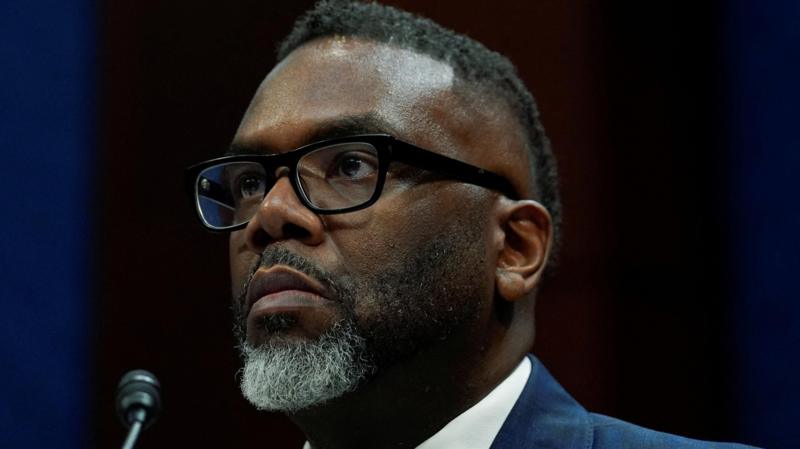
Chicago Mayor Brandon Johnson signed an order to resist a possible federal immigration crackdown.
The order is in response to threats by the Trump administration to deploy federal troops to the city.
The order includes guidelines for city agencies on how to handle immigration enforcement actions.
There is a conflict between Chicago officials and the White House over crime and immigration.
The order asserts that law enforcement officers must wear body cameras and have identifying information visible.
Over 20% of Chicago's residents are immigrants, with many from Latin American countries.
Trump's administration has described Chicago as facing a crime emergency.
Illinois officials have criticized Trump's threats as an abuse of power.
Read the Original
Want the full story? Tap a source to open the original
article.
Longtime Utah violinist Donggin Shin, known as John, was detained by U.S. Immigration and Customs Enforcement (ICE) in Colorado. The music community is showing support for him after his arrest due to overstaying his visa and a 2019 DUI conviction. Shin's wife started a GoFundMe to help with legal fees, and musicians are protesting his detention.
Key Facts
Donggin Shin, a violinist, was detained by ICE in Colorado on August 18, 2025.
He overstayed his visa, and was previously convicted of a DUI in 2019.
Shin is being held at the Denver Contract Detention Facility in Aurora, Colorado.
Musicians are protesting his detention by performing at the Utah State Capitol.
Shin has been part of the Utah Symphony and other music groups.
His wife, DaNae Shin, started a GoFundMe page that raised over $72,000 for legal expenses.
Shin originally came from South Korea and entered the U.S. on a tourist visa in 1998.
He was later part of the Deferred Action for Childhood Arrivals (DACA) program.
Read the Original
Want the full story? Tap a source to open the original
article.
The mayor of Chicago, Brandon Johnson, signed an executive order to prevent collaboration between city law enforcement and federal troops amid reports that President Trump's administration might deploy military forces to cities like Chicago. This is in response to Trump's possible expansion of National Guard deployment, which he argues is to curb crime, but has been met with criticism and legal pushback from officials who claim it oversteps authority.
Key Facts
Chicago's mayor signed an order to stop city police from working with US military forces.
The order responds to reports of possible military deployment in Chicago by President Trump's administration.
Mayor Johnson referred to the measure as a significant effort to protect the city from federal actions.
The Trump administration considered sending National Guard troops to other cities, expanding a current deployment in Washington, DC.
Trump claims troop deployment helped reduce violence in Washington, despite data showing crime was already low.
The US House Minority Leader stated Trump lacks the authority to deploy federal troops to Chicago.
Illinois Governor JB Pritzker rejected the idea, accusing Trump of creating a crisis for political reasons.
CNN reported potential plans for significant immigration enforcement in Chicago, separate from crime crackdown efforts.
Read the Original
Want the full story? Tap a source to open the original
article.
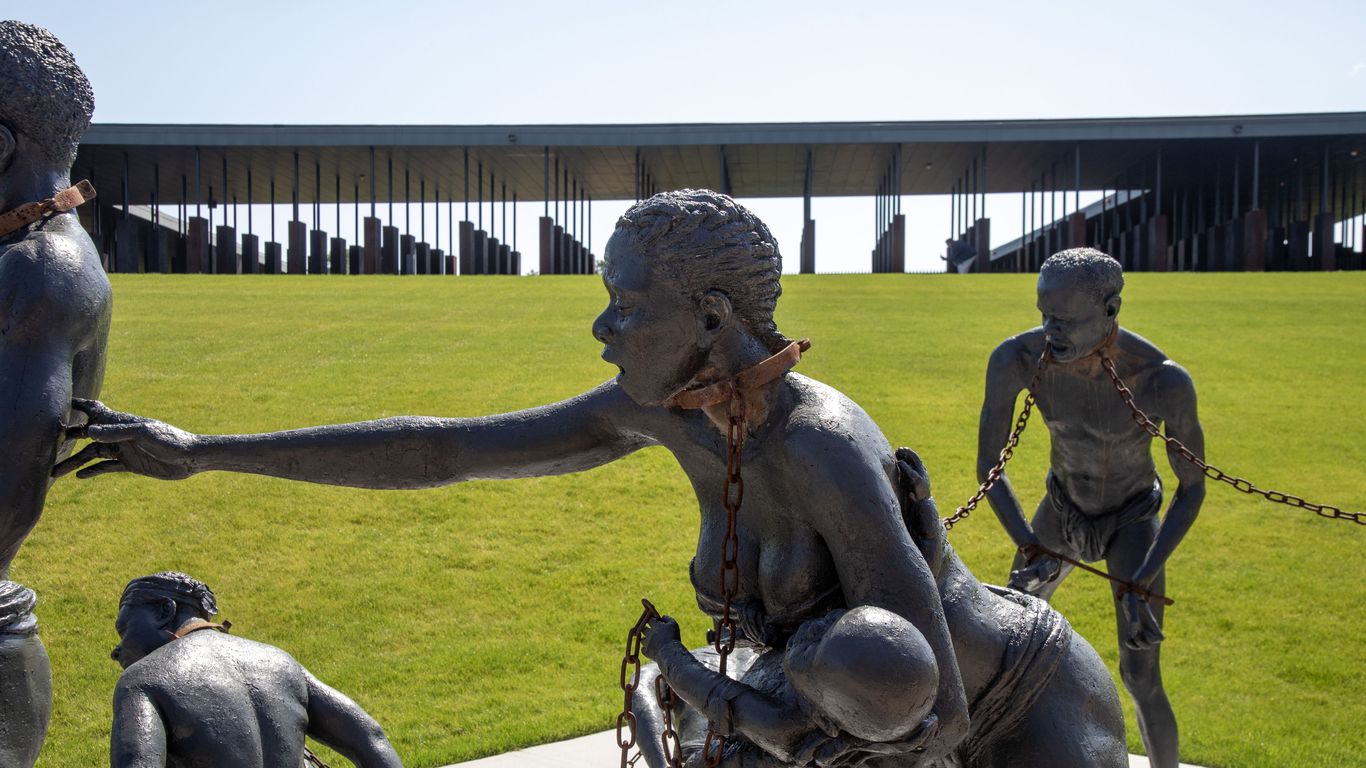
Over the past two decades, U.S. history has been reexamined to include a wider array of voices and stories, sparking controversy among some conservatives. This has led to battles over how U.S. history is taught in schools and displayed in museums, with actions taken by former President Trump to review and potentially change these narratives. Prominent historians have expressed concern over these efforts, emphasizing the importance of a nuanced understanding of history.
Key Facts
U.S. history has been reinterpreted to include more diverse perspectives over the last 20 years.
Some conservatives, including former President Trump, criticize these changes.
Trump has focused on reviewing U.S. museums for content he views as promoting "woke" ideology, especially the Smithsonian.
A Trump executive order threatens to cut federal funding to schools that maintain Diversity, Equity, and Inclusion (DEI) programs.
Prominent scholars argue that rewriting history can affect public understanding and memory.
New books and voices are challenging traditional narratives of pivotal figures like George Washington.
Some museums have returned Indigenous remains and artifacts, reflecting new research.
Legislation in some states seeks to limit how topics like slavery are discussed in schools.
Read the Original
Want the full story? Tap a source to open the original
article.
The Trump administration plans to fire over 500 people working for the US Agency for Global Media, mainly targeting Voice of America staff. This move is part of ongoing actions since June to significantly reduce the agency's workforce.
Key Facts
The plan is to fire 486 Voice of America staff and 46 US Agency for Global Media staff.
Acting CEO Kari Lake said the firings would reduce bureaucracy and save money.
A judge recently ruled that the administration did not follow proper procedures when trying to fire VOA's director.
The firings would leave 108 employees at VOA and 158 at the larger agency.
Critics claim that reducing VOA's staff is an attack on press freedom.
VOA broadcasts in nearly 50 languages, serving as a major global broadcaster.
Some employees are fighting the cuts in court, arguing they bypass legal procedures.
The layoffs do not affect staff in the Office of Cuba Broadcasting.
Read the Original
Want the full story? Tap a source to open the original
article.
A federal judge stopped the Trump administration's plan to quickly deport certain undocumented migrants without a court hearing. The decision challenges efforts to use a fast-track deportation process for those in the U.S. and raises concerns about their legal rights.
Key Facts
A judge halted the plan to expand speedy deportations for undocumented migrants not near the U.S. border.
This decision temporarily blocks the Trump administration's use of expedited removal inside the U.S.
Expedited removal allows the fast deportation of migrants without a court hearing.
The judge argued that the process might violate due process rights, which are the legal rights owed to everyone.
Originally, expedited removal was for migrants found near the border who had been in the U.S. for less than two weeks.
The Department of Homeland Security disagreed with the ruling, saying it ignores presidential powers and legal guidelines.
Immigrant rights groups have challenged these actions in court.
Read the Original
Want the full story? Tap a source to open the original
article.
Coyotes are becoming more common in urban areas across the United States. They are increasingly spotted in places like parks and golf courses as they adapt to city living.
Key Facts
Coyotes are commonly seen in U.S. cities now.
Urban areas they visit include parks and golf courses.
This change shows coyotes are adapting to urban life.
Urban ecologists study how animals like coyotes change with city environments.
Wildlife experts are interested in how urban living impacts coyote behavior and survival.
Read the Original
Want the full story? Tap a source to open the original
article.
The article discusses historian Garrett Graff's view that the United States may be moving toward authoritarianism. He believes that recent events indicate a shift in the country's political landscape.
Key Facts
Historian Garrett Graff shared his analysis on U.S. political changes.
Graff suggests that the U.S. may be moving toward authoritarianism.
The discussion took place on NPR's "All Things Considered."
The analysis highlights concerns about shifts in U.S. governance.
The topic of authoritarianism involves concerns about power and freedom.
Read the Original
Want the full story? Tap a source to open the original
article.
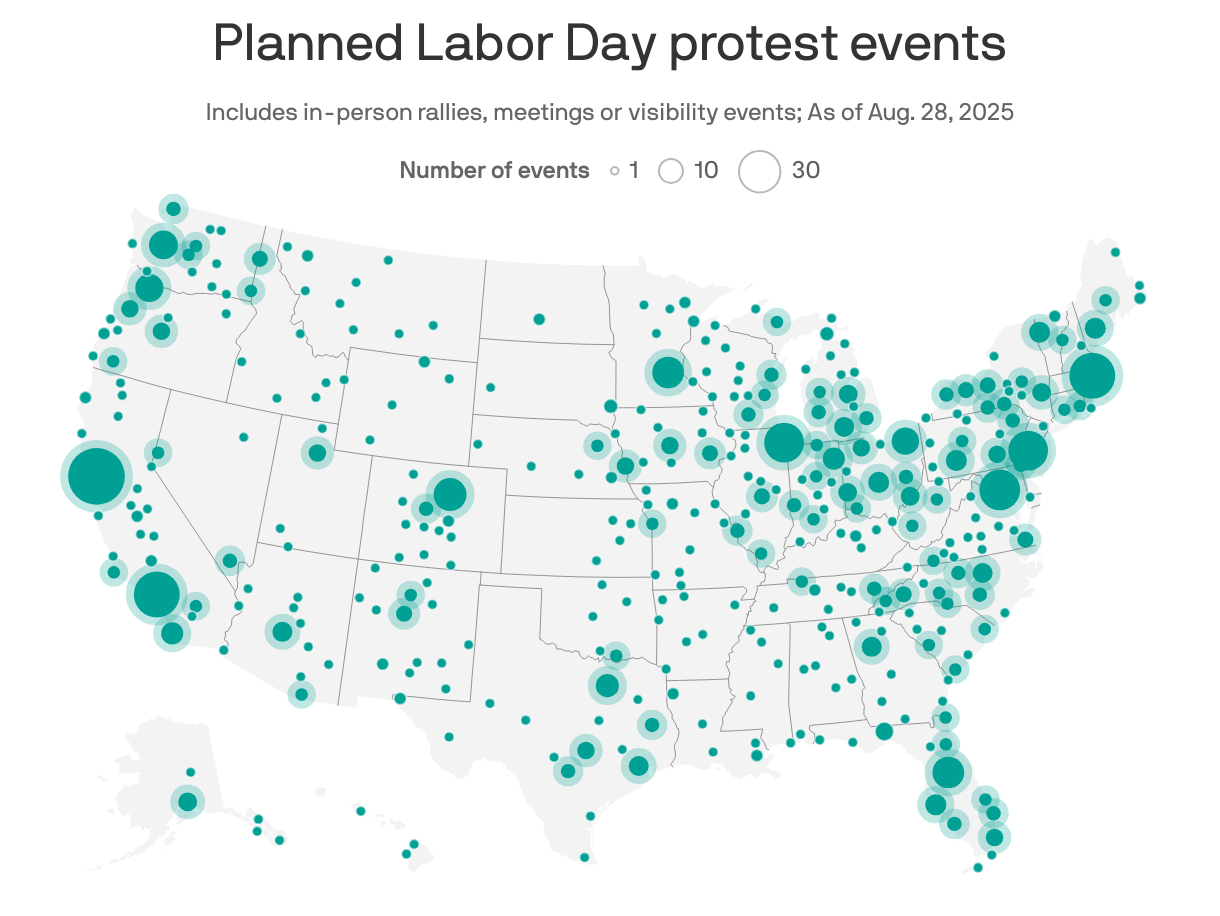
Protests focused on worker rights and economic inequality are set to happen on Labor Day, led by the AFL-CIO and other groups. Thousands of events will take place across the U.S., including a notable protest at Trump Tower in New York City. The protests aim to highlight the importance of workers over billionaires.
Key Facts
The protests are organized by the AFL-CIO, a large U.S. labor union group.
Over 1,000 events are planned for Labor Day across the country.
Several groups like the National Education Association and Working Families Party are involved.
A major protest is organized at Trump Tower in New York City.
The protests include a symbolic "restaurant in the street" event.
The events highlight issues of economic inequality and worker rights.
The May Day Strong coalition, known for May 1 rallies, is participating.
Read the Original
Want the full story? Tap a source to open the original
article.
A 16-year-old boy was arrested in London for carrying an imitation firearm. Police detained him after receiving reports of someone with a weapon heading to a crowded area. He was reportedly on his way to a comic book convention.
Key Facts
A 16-year-old was arrested in Fulham Broadway, London.
He was suspected of having an imitation firearm.
The arrest happened around 14:40 BST on a Saturday.
Police received reports of someone with a weapon in a public area.
No injuries were reported during the incident.
The boy remains in police custody.
Carrying an imitation firearm without a good reason is against the law under the Violent Crime Reduction Act 2006.
Read the Original
Want the full story? Tap a source to open the original
article.
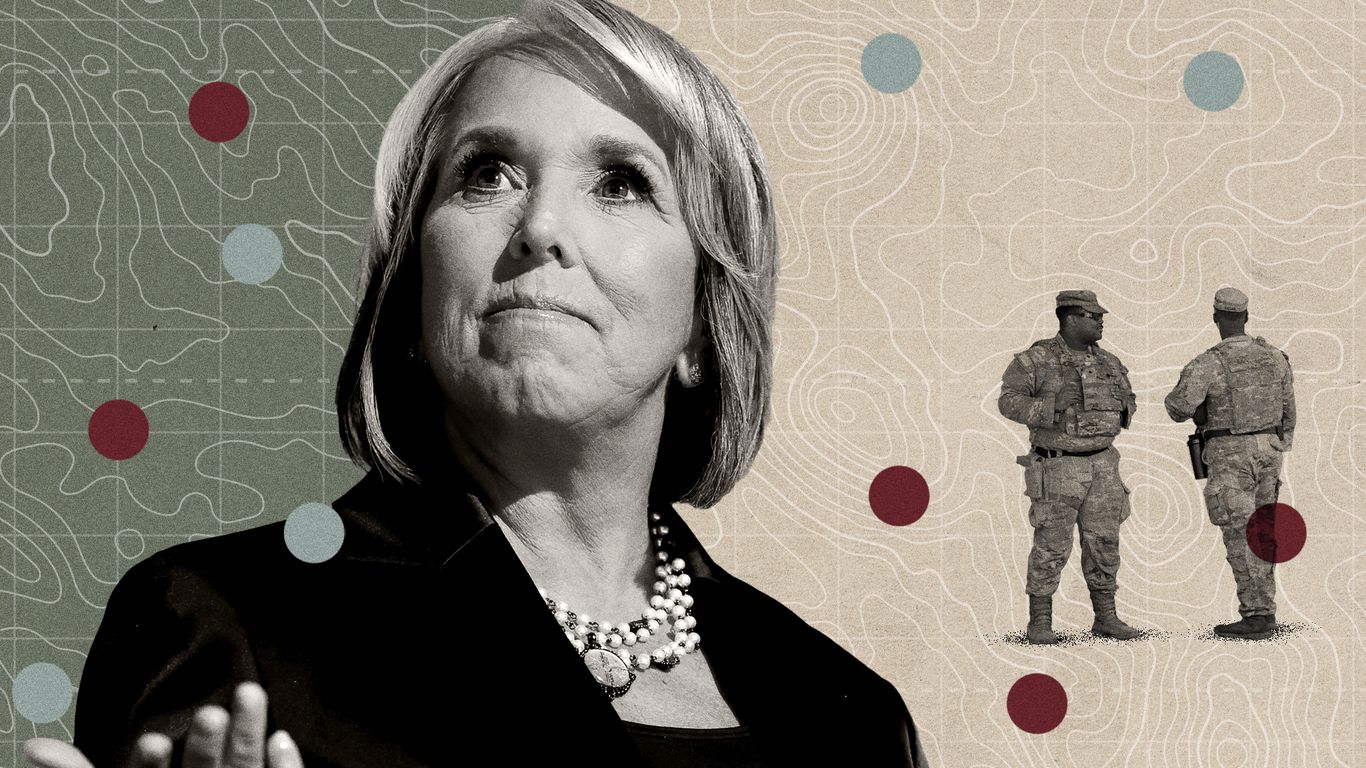
New Mexico's Governor, Michelle Lujan Grisham, deployed the National Guard in Albuquerque to help reduce violent crime, which has led to a decrease in homicides. This decision contrasts with President Trump's use of the National Guard in Washington, D.C., as Grisham worked with local officials and did not seek to control the city's law enforcement.
Key Facts
Gov. Michelle Lujan Grisham deployed the National Guard in Albuquerque at the local mayor's request.
The National Guard helped reduce homicides in Albuquerque by 24% during the first half of the year.
Guard members assist with non-law enforcement tasks, such as securing crime scenes and traffic control.
In Albuquerque, they do not wear military uniforms, carry weapons, or perform arrests.
This move was to aid local police so they can focus more on active policing.
The National Guard's presence in D.C. involves armed troops in military outfits guarding federal property.
New Mexico's Republican Party criticized the governor's decision, while others support the strategy.
Last year, Albuquerque had a high homicide rate, ranking 19th among large U.S. cities.
Read the Original
Want the full story? Tap a source to open the original
article.
On the biggest stories we show what the outlets agree on and where they differ. Readers keep that going, and get the daily digest by email every morning. Most choose $3.99/month.
Many experienced officials from key U.S. government agencies like the CDC and Pentagon have recently left their jobs. This follows actions by President Trump and his allies aimed at reducing what they see as entrenched bureaucracy. As a result, agencies responsible for public health, national security, and more are losing veteran staff members.
Key Facts
Several top scientists left the CDC after its director was fired, and hundreds of staff staged a walkout.
The CDC, FDA, and other health agencies have seen thousands of staff departures this year.
High-ranking officials in national security, such as the Defense Intelligence Agency director and Pentagon leaders, have also resigned or been fired.
Intelligence chief Tulsi Gabbard reduced her staff by 40%, calling the agency bloated and power-abusing.
President Trump and his team view these staff changes as necessary to reform what they call the "Deep State."
The White House did not provide comments on the staff exits.
Read the Original
Want the full story? Tap a source to open the original
article.
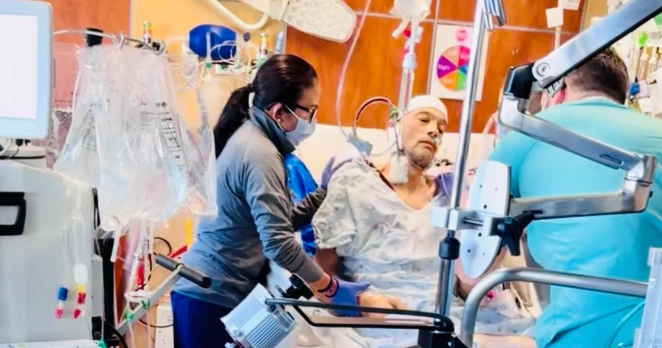
Pastor Kelvis Reid, diagnosed with a rare heart and kidney disease called AL amyloidosis, suffered a major heart attack while wrapping Christmas presents with his family. After weeks in the hospital, he received a combined heart and kidney transplant that saved his life.
Key Facts
Kelvis Reid was diagnosed with AL amyloidosis, a disease where abnormal proteins harm the heart and kidneys.
His doctor warned Reid and trained his family in CPR due to the risk of heart failure.
Reid collapsed after a Christmas service while wrapping presents and experienced a cardiac arrest.
His family’s CPR helped save him until he was hospitalized and unconscious for weeks.
AL amyloidosis is often misdiagnosed and can cause common heart problems like irregular heartbeat and fluid buildup.
Once the heart is severely damaged by the disease, a transplant is the only treatment option.
Reid’s doctors worked to keep him stable and successfully advocated for a heart and kidney transplant.
On February 10 and 11, 2024, Reid underwent his transplants, saving his life.
Read the Original
Want the full story? Tap a source to open the original
article.
A federal appeals court ruled that most of Donald Trump's tariffs were illegal because he overstepped his powers by using emergency economic laws to impose them. The court stated the tariffs would remain in place until mid-October despite this ruling, and the decision might be reviewed by the Supreme Court. The ruling questioned the limits of presidential authority under the International Emergency Economic Powers Act (IEEPA).
Key Facts
A federal appeals court found that Trump's tariffs were imposed illegally.
The court said Trump misused emergency powers by using the International Emergency Economic Powers Act for the tariffs.
The tariffs will stay in place until mid-October despite the ruling.
The decision followed a May ruling from the Court of International Trade with the same conclusion.
The Supreme Court may review this case next, as the current ruling can be challenged.
Trump expressed strong disagreement with the court's decision and called it partisan.
The case revolves around the interpretation of the IEEPA and presidential powers related to economic measures.
If the Supreme Court sides with Trump in the future, it could set a precedent for presidential authority on tariffs.
Read the Original
Want the full story? Tap a source to open the original
article.
COVID-19 cases are rising in the U.S., and new vaccine guidelines are in place. The FDA approved the 2025-26 vaccines for people aged 65 and older and those with certain health conditions. Other people might still get vaccinated through doctor consultations, although insurance coverage is unclear due to pending CDC recommendations.
Key Facts
COVID-19 cases are increasing in the U.S. as winter approaches.
The FDA approved new vaccines for those aged 65 and over and individuals six months and older with underlying health conditions.
People outside these groups can get a COVID-19 vaccine through their doctor’s advice.
Insurance coverage for the vaccine is uncertain without CDC recommendations.
The CDC's Advisory Committee on Immunization Practices has not yet updated its vaccine recommendations.
Doctors can prescribe vaccines for "off-label" use, which is not restricted by FDA categories.
Federal law usually requires insurance to cover CDC-recommended vaccines.
COVID-19 vaccines cost about $142, according to the CDC’s price lists.
Read the Original
Want the full story? Tap a source to open the original
article.
A school shooting occurred at Annunciation Catholic Church in Minneapolis, marking the first such incident of the new school year. Two people died in the shooting, and community leaders stress the need for action alongside prayers to prevent future incidents.
Key Facts
There was a school shooting at Annunciation Catholic Church in Minneapolis.
This is the first school shooting of the new school year.
Two people died in the incident.
Education Week reported more than two dozen school shootings last year.
Community leaders, including the school's principal, are urging action to prevent future shootings.
The principal of the school quoted a proverb suggesting the need for action beyond just prayers.
Archbishop Bernard Hebda emphasized the importance of prayer and action.
Read the Original
Want the full story? Tap a source to open the original
article.
Texas is moving forward with a bill that would let citizens sue the makers and distributors of abortion pills, aiming to further restrict access to these medications. The bill has passed the Texas House and is expected to be approved by the State Senate. It could allow people to sue and potentially collect money from lawsuits, even if they are not directly affected by the use of the abortion pills.
Key Facts
Texas banned abortion after the Supreme Court overturned Roe v. Wade.
The new bill targets the distribution and use of abortion pills coming from other states.
Citizens could file lawsuits against prescribers and manufacturers of these pills, seeking at least $100,000.
The bill proposes financial incentives for those who successfully sue.
Medication abortion is already banned in Texas, but people still obtain pills from out-of-state providers.
The law could lead to legal battles between states with differing abortion laws.
Supporters say the bill is to protect women and children from chemical abortions.
Opponents worry it will increase legal conflicts and motivate people to profit from lawsuits.
Read the Original
Want the full story? Tap a source to open the original
article.
A news report discusses views from a church in Washington, D.C. about former President Trump's decision to deploy the National Guard in the city. The report features opinions from a pastor and church members on how this action affects crime in the area.
Key Facts
The National Guard was deployed to Washington, D.C. by former President Trump.
NPR's Scott Simon interviewed people at East Washington Heights Baptist Church.
The discussion centered around the impact of the National Guard on crime in Washington, D.C.
The report includes perspectives from both a pastor and church members.
The interviews explore whether the National Guard presence is helpful or harmful to the community.
The focus is on the local community's reaction and thoughts about federal intervention in their city.
Read the Original
Want the full story? Tap a source to open the original
article.