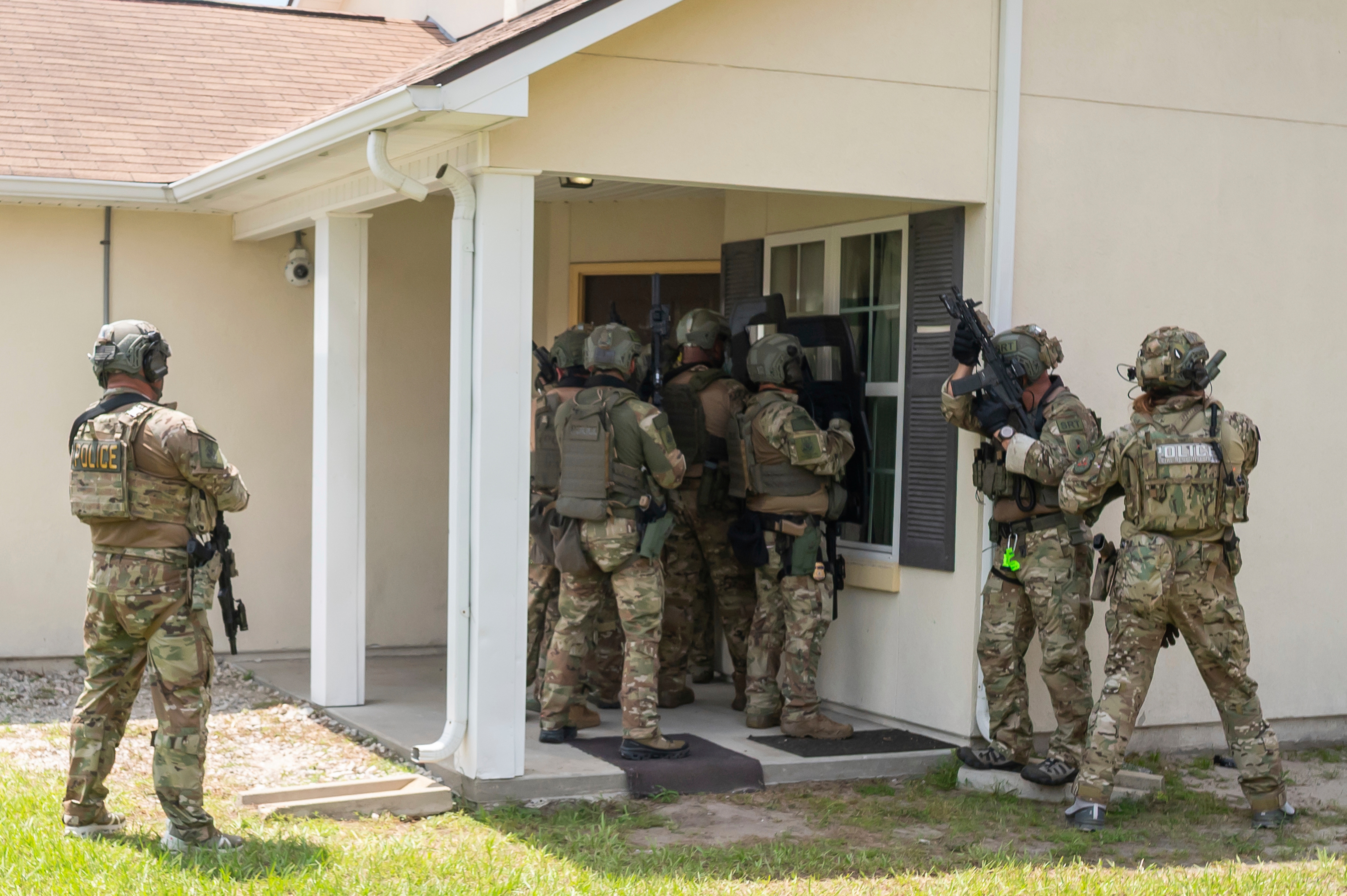
A church in Washington, D.C., experienced robberies, but its pastor, Rev. Kip Banks, believes the National Guard's presence isn't necessary for reducing crime. Although crime in the area was already decreasing, the city's leaders reported that it declined further since the federal troops began patrolling. The pastor and his congregation are concerned about the impact of military presence on their community's daily life.
Key Facts
Rev. Kip Banks is the pastor of East Washington Heights Baptist Church in D.C.'s Ward 7.
The church has been robbed several times, with incidents involving theft of laptops and vandalism.
President Trump sent the National Guard to D.C. in response to a declared "crime emergency."
D.C. officials report a significant reduction in crime since the National Guard's deployment.
The pastor and his church members feel uneasy about the military presence in their neighborhood.
They are worried about potential targeting and disruptions to their way of life, such as issues with food delivery services.
D.C.'s mayor supports additional law enforcement, citing a decrease in carjackings and overall crime.
Read the Original
Want the full story? Tap a source to open the original
article.
Drug-related deaths in the U.S. have dropped to a five-year low, despite President Trump highlighting fentanyl as a major issue. Trump continues to implement tough policies against fentanyl, including signing a law for stricter prison sentences for traffickers.
Key Facts
Drug deaths in the U.S. have decreased significantly since mid-2023.
CDC data shows 77,648 overdose deaths for the year ending in March 2025, a low not seen since March 2020.
President Trump signed the "Halt Fentanyl Act," which includes 10-year mandatory jail terms for fentanyl traffickers.
Despite the drop in deaths, Trump describes fentanyl as a growing problem and has based some policies on that view.
Trump proposed tariffs and tougher criminal penalties partly due to fentanyl concerns.
Drug deaths have decreased by about one-third from the 2023 peak.
States like West Virginia, California, Florida, and New York have seen large reductions in drug deaths.
Experts attribute the decline to improved healthcare, treatment, and disruption of fentanyl supply.
Read the Original
Want the full story? Tap a source to open the original
article.
The NPR advice column "Dear Life Kit" addressed a question from an aunt about the financial burden of buying birthday gifts for 18 nieces and nephews. Experts provided insights on balancing family relationships and financial responsibilities, suggesting alternative ways to show care without spending money. A related question involved deciding financial support for a friend facing a health crisis.
Key Facts
An aunt asked about the obligation to buy gifts for 18 nieces and nephews.
The advice highlighted the complexity of money issues as relationship challenges.
Katie Gatti Tassin noted that buying gifts for 18 nieces and nephews could lead to 36 presents a year, including birthdays and holidays.
The article suggested alternative ways to acknowledge occasions, like sending cards.
Wendy De La Rosa emphasized understanding core relationship concerns rather than just money.
Another part of the column discussed deciding how much financial help to give a friend with stage 4 cancer.
Read the Original
Want the full story? Tap a source to open the original
article.
A federal judge temporarily stopped the Trump administration from expanding a program for quick deportations of undocumented migrants. The judge's decision is based on concerns that the process violates individuals' rights to due process.
Key Facts
A federal judge blocked the Trump administration's plan to expand fast deportations of undocumented migrants.
The administration wanted to use a fast-track process called expedited removal for more people inside the U.S.
Expedited removal allows deportation without a court hearing.
The judge, Jia Cobb, argued that this expansion might violate due process rights.
Previously, expedited removal was only for people near the border who had been in the U.S. for less than 14 days.
The Department of Homeland Security expanded the use after Trump took office.
Immigrant rights groups have filed lawsuits against this expansion.
Read the Original
Want the full story? Tap a source to open the original
article.
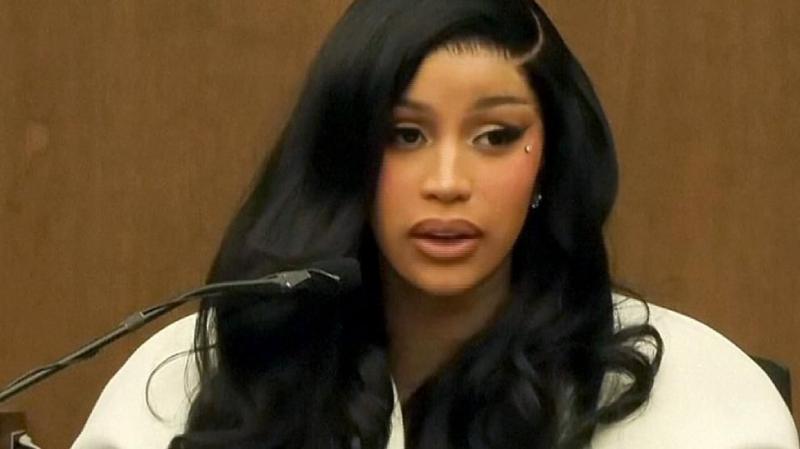
Cardi B is involved in a court case in Los Angeles, where she is accused of attacking a security guard in 2018. The guard, Emani Ellis, says Cardi B cut her cheek with a fingernail and spat on her. Cardi B denies these claims and says the altercation did not become physical.
Key Facts
Cardi B is facing a lawsuit for assault and battery from an alleged 2018 incident.
The security guard, Emani Ellis, claims Cardi B attacked her outside a doctor's office.
Cardi B was pregnant at the time and says the conflict was only verbal.
Ms. Ellis accuses Cardi B of cutting her cheek and spitting on her.
A doctor testified that Ms. Ellis had a sensitive scar on her cheek potentially from fingernails.
Cardi B testified she felt her privacy was invaded by Ms. Ellis's actions.
The trial has gained attention due to Cardi B's courtroom comments and expressions, which have been widely shared online.
The trial is expected to conclude next week.
Read the Original
Want the full story? Tap a source to open the original
article.
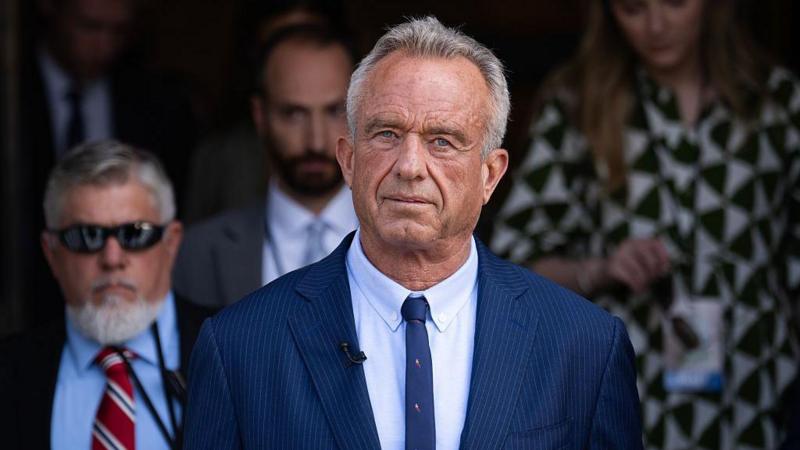
The White House is defending Robert F Kennedy Jr, the Health Secretary, amidst turmoil at the Centers for Disease Control (CDC). Chaos at the CDC, including the firing of its chief, has led to multiple resignations and criticism of Kennedy's leadership and vaccine policies from both sides of the political spectrum.
Key Facts
Robert F Kennedy Jr is a vaccine critic and currently serves as the US Health Secretary.
The CDC experienced significant upheaval, including the firing of its chief, Dr. Susan Monarez.
Three senior CDC leaders resigned due to frustration with Kennedy's leadership.
The White House praised Kennedy as an important voice in public health despite criticisms.
Kennedy has made funding cuts and changed US vaccination recommendations.
Critics, including lawmakers, have called for Kennedy's resignation.
A union stated that earlier this month, the CDC laid off 600 employees involved in various health responses.
There is concern that Kennedy's policies may disrupt vaccine schedules and lead to disease spread in the US.
Read the Original
Want the full story? Tap a source to open the original
article.
President Donald Trump's administration cancelled $679 million in federal funding for offshore wind projects in the U.S., affecting 12 planned projects. This decision is part of a wider focus on fossil fuels and deregulation. The move reverses green energy initiatives from the previous administration.
Key Facts
$679 million in federal funding for offshore wind projects has been cancelled by the Trump administration.
The cancellations impact 12 offshore projects, including a $427 million project in California.
The funding was initially awarded during former President Joe Biden's administration to boost green energy.
The decision is aimed at reprioritizing fossil fuels, according to the Trump administration.
Notable cancellations include a $47 million grant in Maryland and a $48 million project in New York.
The decision affects ongoing projects, with Massachusetts losing a $33 million grant, risking 800 construction jobs.
Trump's administration halted construction of another wind farm off Rhode Island and Connecticut due to national security concerns.
Trump has been critical of renewable energy, particularly wind power, calling it expensive and inefficient.
Read the Original
Want the full story? Tap a source to open the original
article.
A U.S. appeals court ruled that former President Donald Trump's broad tariff policy was mostly illegal. However, the tariffs will continue until October 14 as the decision may be appealed to the Supreme Court. The court said Trump's use of emergency powers to impose these tariffs overstepped his authority.
Key Facts
A U.S. appeals court declared Trump's broad tariff policy illegal.
The court upheld a previous decision that Trump exceeded his authority by imposing universal tariffs.
Trump claimed a "national emergency" justified the tariffs, using a law called the International Emergency Economic Powers Act (IEEPA).
The court ruled that the IEEPA does not grant the president the power to impose tariffs or taxes.
Trump planned to use the tariffs to negotiate better trade deals with other countries.
The appeals court ruling allows the tariffs to stay in place until October 14.
Trump is expected to challenge the ruling in the Supreme Court.
According to U.S. law, Congress, not the president, is given the authority to issue taxes and tariffs.
Read the Original
Want the full story? Tap a source to open the original
article.
A US appeals court has decided that many of the tariffs set by former President Donald Trump are illegal. The court ruled that the power to impose tariffs belongs to Congress, not the president. The decision may be taken to the Supreme Court for further review.
Key Facts
A US appeals court ruled that many of Trump's global tariffs are illegal.
The ruling focused on tariffs Trump used against countries like China, Mexico, and Canada.
The court decided that the president cannot use the International Emergency Economic Powers Act to impose tariffs.
The power to set tariffs belongs to Congress, according to the court.
The decision was made by a 7-4 vote.
The ruling will not take effect until October 14, allowing for a possible appeal to the Supreme Court.
The decision responded to lawsuits filed by small businesses and US states.
Trump declared a trade emergency but the court said tariffs must be clearly authorized by Congress.
Read the Original
Want the full story? Tap a source to open the original
article.
Texas Governor Greg Abbott has signed a law to change the state's congressional boundaries, aiming to help Republicans win more seats in the US House. The new map has faced criticism for potentially reducing the voting power of minority groups and has led to legal challenges. This change is part of a broader political strategy involving several states.
Key Facts
Governor Greg Abbott signed a bill to redraw Texas's congressional maps.
The goal is to help Republicans win more seats in the US House of Representatives.
The new map could affect the 2026 elections, with at least one Democratic representative considering not seeking reelection.
The redistricting process has sparked protests and a legal challenge, claiming it diminishes minority voting power.
The change was influenced by President Donald Trump, aiming to flip Democratic seats to Republicans.
Other states controlled by Republicans are considering similar redistricting efforts.
California, controlled by Democrats, is also redrawing maps to gain more seats and counter Republican actions.
A recent poll showed many Americans see redistricting for political gain as harmful to democracy.
Read the Original
Want the full story? Tap a source to open the original
article.
The Conservative Party is asking for an investigation into Deputy Prime Minister Angela Rayner's tax dealings related to a property purchase. They say she avoided extra stamp duty by claiming her new flat in Hove as her main home. A spokesperson for Rayner states she paid all necessary taxes correctly.
Key Facts
The Conservatives want an investigation into Angela Rayner's tax affairs by the prime minister's independent standards adviser.
Rayner reportedly avoided £40,000 in stamp duty by declaring her Hove property as her main home.
She paid £30,000 in stamp duty instead of the £70,000 that would apply to a second home.
No laws are claimed to have been broken, but allegations suggest inappropriate tax avoidance.
Rayner's main residence for council tax is listed as her family home in Ashton-under-Lyne.
Conservatives argue Rayner's tax arrangement violates the Ministerial Code.
Rayner's spokesperson insists she paid the correct duty entirely and properly.
The Tories have written to Tameside Council to remove Rayner from the electoral roll, claiming it's not her permanent home.
Read the Original
Want the full story? Tap a source to open the original
article.
The Trump administration has canceled $679 million in funding for offshore wind projects in 11 states. This move is part of a broader effort by the administration to cut support for renewable energy, redirecting funds to other infrastructure projects.
Key Facts
The Transportation Department canceled $679 million for 12 offshore wind projects.
Projects in 11 states lost funding, including $435 million for a floating wind farm in California.
$47 million meant for a Maryland offshore wind project was rescinded.
The administration plans to use canceled funds for port and infrastructure upgrades.
Trump aims to promote fossil fuels over renewable energy, calling wind power costly and inefficient.
The Energy Department withdrew a $716 million loan guarantee for a New Jersey wind project.
Construction of the Revolution Wind project off Rhode Island and Connecticut was halted for a review.
Opposition from Democratic officials and union workers has arisen in response to these actions.
Read the Original
Want the full story? Tap a source to open the original
article.
There are no ads, so there is no reason to bait you. Readers who chip in keep it that way. Most choose $3.99/month, and get the daily digest every morning.
President Donald Trump is trying to stop the release of about $5 billion in foreign aid that Congress has already approved. An emergency hearing about Trump's firing of a Federal Reserve Governor ended without a decision. Additionally, reports say Senator Joni Ernst from Iowa will not run for reelection, and Trump has taken away Secret Service protection from former Vice President Kamala Harris.
Key Facts
Trump is attempting to block almost $5 billion in foreign aid.
Congress had previously approved this foreign aid funding.
An emergency hearing was held concerning Trump's firing of Federal Reserve Governor Lisa Cook, but there was no immediate outcome.
Iowa Senator Joni Ernst, a Republican, reportedly won’t run for another term.
Trump has revoked Secret Service protection for former Vice President Kamala Harris.
Read the Original
Want the full story? Tap a source to open the original
article.
The Utah Supreme Court has stopped the execution of Ralph Leroy Menzies, who was scheduled to be executed by firing squad. His lawyers argued that due to severe dementia, he could not understand why he faced execution. The court decided that a lower court needs to reevaluate his mental fitness for execution.
Key Facts
Ralph Leroy Menzies, 67, was supposed to be executed by firing squad on September 5, 2023.
He was convicted of abducting and killing Maurine Hunsaker in 1986.
Menzies' lawyers say his dementia makes him unable to understand the execution process.
The Utah Supreme Court halted the execution, requiring a lower court to reassess his competency.
Significantly, the U.S. Supreme Court has previously blocked executions for people with severe mental illness.
The last execution by firing squad in Utah was in 2010.
Menzies would have been the sixth U.S. prisoner executed by firing squad since 1977.
Read the Original
Want the full story? Tap a source to open the original
article.
Missouri's Governor, Mike Kehoe, has called for a special session to redraw the state's U.S. House districts to favor Republicans, following similar actions in other states. This move aligns with former President Trump's efforts to strengthen Republican positions in future elections. Missouri's new map targets a Democratic district, sparking criticism from Democrats who argue it undermines democratic representation.
Key Facts
Governor Mike Kehoe of Missouri has called a special session to redraw congressional districts in the state.
The redistricting aims to strengthen Republican control in future elections, as encouraged by former President Trump.
Missouri is the third state taking mid-decade redistricting steps for partisan advantage, following Texas and California.
The new map affects Democratic Rep. Emanuel Cleaver’s district by extending it into Republican-leaning areas.
A proposed constitutional amendment making citizen ballot initiatives harder is also part of the special session agenda.
Missouri currently has six Republican and two Democratic representatives in the U.S. House.
Democrats criticize the move, calling it an attempt to "steal" a congressional seat and weaken the ballot initiative process.
Missouri Democrats have limited options to block the new redistricting due to Republican control in the state legislature.
Read the Original
Want the full story? Tap a source to open the original
article.
Columnists David Brooks and Kimberly Atkins Stohr discussed political topics with Amna Nawaz. They talked about the political response to a school shooting in Minnesota, changes made by the Trump administration, and the ongoing Ukraine conflict.
Key Facts
David Brooks is from the New York Times, and Kimberly Atkins Stohr is from the Boston Globe.
They appeared on a program with Amna Nawaz.
The discussion included a school shooting that happened in Minnesota.
They talked about the political response to the school shooting.
The conversation also covered changes made by the Trump administration.
The Ukraine conflict was discussed, which continued two weeks after the Trump-Putin summit.
Read the Original
Want the full story? Tap a source to open the original
article.
A federal appeals court has stopped the Trump administration's plan to end Temporary Protected Status (TPS) for Venezuelans in the United States. This ruling means many Venezuelans can stay and work legally while legal challenges continue in court. The Biden administration had extended TPS for these individuals until 2026.
Key Facts
A federal court blocked the Trump administration's effort to end TPS for Venezuelans.
The 9th US Circuit Court of Appeals upheld an earlier decision to keep TPS in place.
Temporary Protected Status allows people from certain countries to stay in the US if it’s unsafe to return home.
Over 600,000 Venezuelans had their TPS extended until 2026 by the Biden administration.
The Trump administration planned to end TPS for 350,000 Venezuelans by April and 250,000 by September.
A judge previously ruled that challengers were likely to win claims that the administration overstepped its authority.
TPS was created in 1990 to help people fleeing dangerous conditions in their home countries.
The Trump administration has also attempted to end TPS for other countries.
Read the Original
Want the full story? Tap a source to open the original
article.
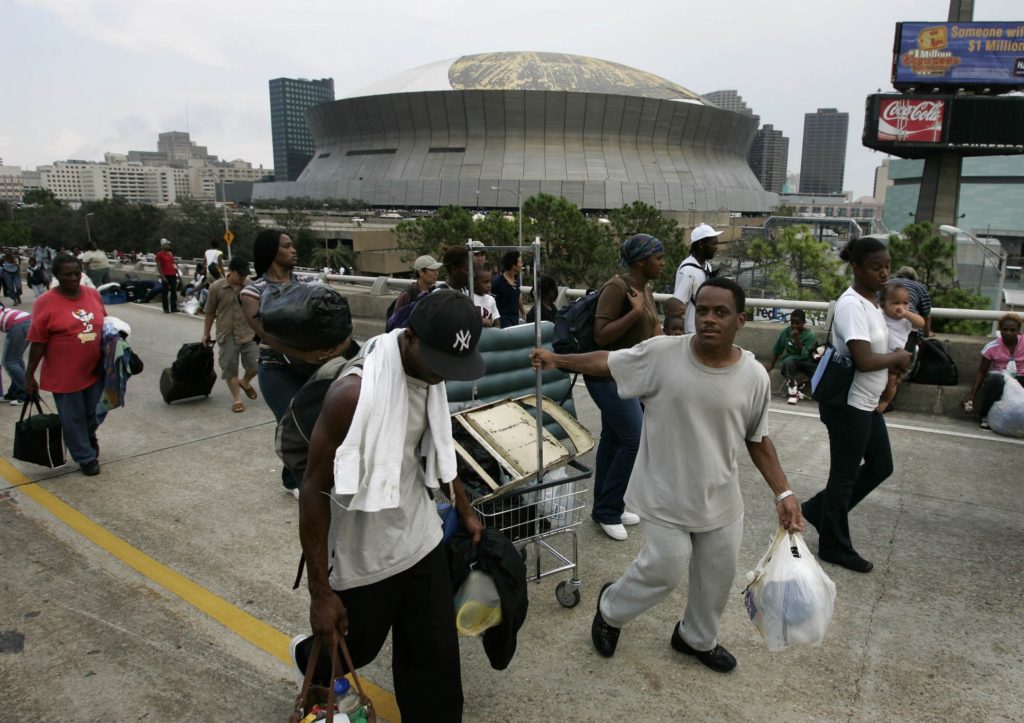
This article discusses how Hurricane Katrina affected people's lives as it hit New Orleans and the Gulf Coast 20 years ago. It led to a major displacement of about 1.2 million people from Louisiana, many of whom relocated permanently.
Key Facts
Hurricane Katrina struck New Orleans and the Gulf Coast 20 years ago.
The storm caused widespread damage and led to a large-scale relocation.
Approximately 1.2 million people from Louisiana were displaced by Katrina.
Many people had to move for months or years due to the storm.
Some survivors of the hurricane permanently relocated.
The anniversary prompts reflection on the impact of the storm on individuals' lives.
Read the Original
Want the full story? Tap a source to open the original
article.
Staying informed here is free for everyone. If it's worth something to you, pay what you want. Supporters also get the daily digest by email every morning.
The Trump administration is trying to cut $5 billion from foreign aid that Congress already approved. This involves a method called a pocket rescission, where funds could remain unused if Congress does not act quickly. The move could face legal challenges because it bypasses Congressional approval.
Key Facts
The Trump administration wants to cut $5 billion in foreign aid that has already been approved by Congress.
The method used is called a pocket rescission, which could let the funds go unspent if Congress does not intervene.
This action targets money for peacekeeping operations and USAID, among other programs.
The White House claims the cuts will help control government spending.
Some question the legality of the pocket rescission as it bypasses Congress's usual budgeting power.
The last time a president used a pocket rescission was over 40 years ago by President Jimmy Carter.
Some politicians, like Senator Susan Collins, argue that this method violates the law.
The current fiscal year ends on September 30, giving Congress limited time to act.
Read the Original
Want the full story? Tap a source to open the original
article.
Former Vice-President Kamala Harris' Secret Service protection has been stopped by President Donald Trump, seven months after her term ended. A law provides former vice-presidents security for six months, with possible extensions. The decision has sparked controversy and questions about whether Harris still faces threats.
Key Facts
Kamala Harris no longer has Secret Service protection as of seven months after leaving office.
By law, former vice-presidents get six months of protection, which can be extended.
President Biden extended Harris’ security for one year before leaving office.
The Department of Homeland Security can order extra protection if needed.
Recent threat assessments found no new risks requiring continued protection for Harris.
Threats against Harris, particularly due to her being the first female and person of color VP, were made public during her time in office.
Her security removal comes before her upcoming book tour, raising concerns about resource strain on the Secret Service.
Read the Original
Want the full story? Tap a source to open the original
article.