Rep. Ashley Hinson, a Republican running for Senate in Iowa, urged the U.S. House of Representatives to return to work immediately. She wants lawmakers to address high diesel fuel prices by pausing diesel exports and suspending the federal gas tax.
Key Facts
Rep. Ashley Hinson is the GOP candidate for Senate in Iowa.
She called for the House of Representatives to come back to session without delay.
Hinson wants to stop diesel exports temporarily to help lower prices.
She also supports suspending the federal gas tax to reduce fuel costs.
The call to action is linked to voter concern over the economy.
Rising diesel prices are connected to the ongoing war in Iran.
Read the Original
Want the full story? Tap a source to open the original
article.
An inmate named Reginald Steed, charged with killing a correctional officer in Tennessee, died unexpectedly in his prison cell. The prosecutor said this death shows that "God is the ultimate arbiter of justice" and an investigation into Steed's death is ongoing.
Key Facts
Reginald Steed was charged with first-degree murder for killing correctional officer Dustin Pedigo in February.
Pedigo was 35 years old and was fatally stabbed while checking Steed's prison cell.
Steed died suddenly and was found lifeless in his cell at the Riverbend Maximum Security Institution in Nashville.
Prosecutor Russell Johnson said Steed would have likely received the death penalty if convicted.
Steed was already serving 27 years for previous violent crimes, including a 2015 shooting.
The Tennessee Department of Correction and Tennessee Bureau of Investigation are investigating Steed’s death.
A grand jury is set to meet in November about Steed's case.
Issues with prison conditions, such as cell locks, were reported following the stabbing incident.
Read the Original
Want the full story? Tap a source to open the original
article.
President Donald Trump has quickly changed his approach to media and policy by launching a 24-hour White House TV channel called Trump TV after barring several news outlets. He is known for rapidly shifting positions on major issues like TikTok, tariffs, and artificial intelligence, treating sudden changes as strategic moves rather than retreats.
Key Facts
President Trump barred CNN, MSNBC, and Politico reporters from the White House.
Within two days, the White House started Trump TV, showing presidential speeches and appearances nonstop.
Trump often changes his political positions very quickly, a style described as a "supersonic pivot."
In 2020, Trump tried to ban TikTok for security reasons but delayed enforcement after returning to office in 2025.
In April 2025, Trump imposed broad tariffs but paused many of them within days to allow for negotiations.
The U.S. and China agreed to suspend extra tariffs for 90 days following those negotiations.
At the United Nations in 2025, Trump suggested renaming “artificial intelligence” to “super intelligence” because the word “artificial” sounds fake.
Trump's rapid changes aim to show flexibility and control, avoiding appearing to back down.
Read the Original
Want the full story? Tap a source to open the original
article.
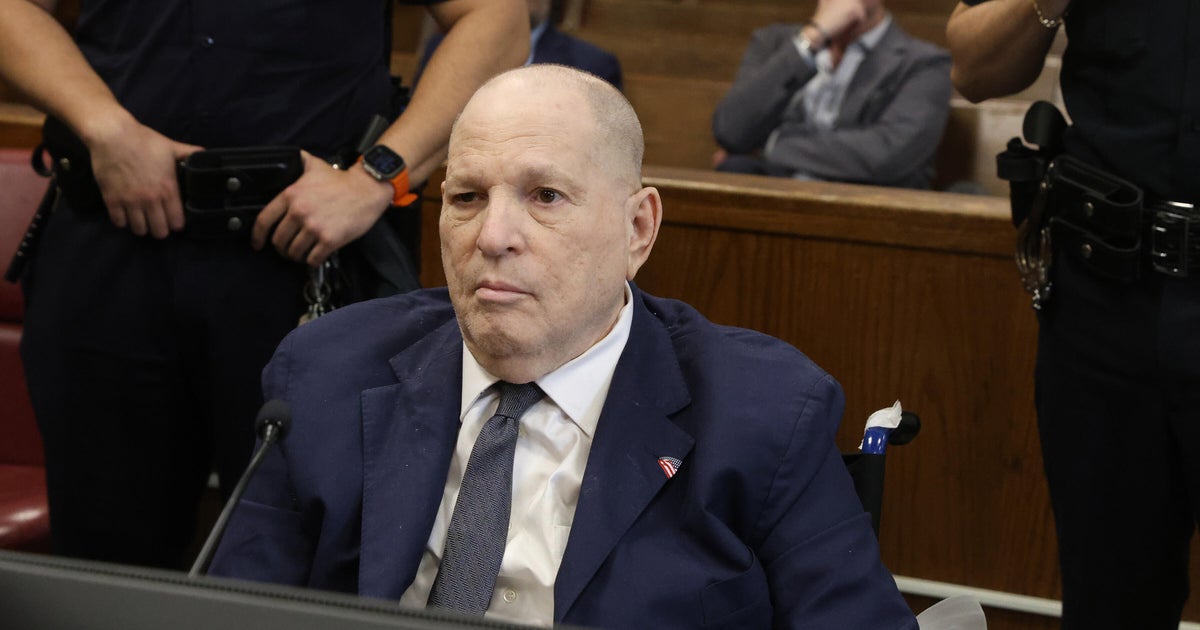
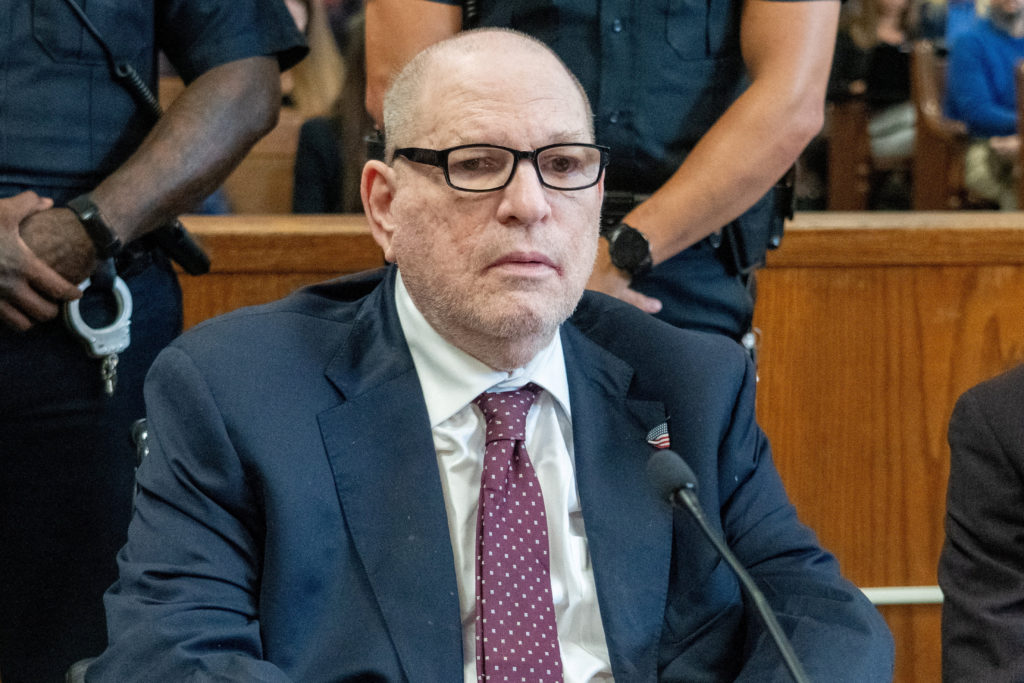
Harvey Weinstein was sentenced to 15 years in prison for sexually assaulting Miriam Haley in 2006. This is after a new jury convicted him in 2025 following an earlier conviction that was overturned by New York’s highest court.
Key Facts
Weinstein, 74, was found guilty of sexual assault against Miriam Haley in his Manhattan apartment in 2006.
He was originally convicted in 2020 on this and another charge but the sentence was overturned in 2024.
A new jury reconvicted Weinstein in 2025 for the assault on Haley.
Prosecutors said Weinstein has shown no remorse and accused him of online harassment and blaming victims.
Haley spoke about the lasting impact of the attack, including PTSD and feeling harassed during legal proceedings.
Weinstein’s defense called the cases complex and noted he has been convicted in two cases in California as well.
Prosecutors requested a 20-year sentence plus 5 years of supervision after release, but the judge sentenced him to 15 years.
Haley said she felt the process was very difficult but wanted to continue seeking justice.
Read the Original
Want the full story? Tap a source to open the original
article.
Harvey Weinstein was sentenced to 15 years in prison for sexually assaulting a TV production assistant in 2006. His original conviction was erased, but after a retrial, a jury found him guilty again. Weinstein has already spent over six years in jail during the legal process.
Key Facts
Weinstein was sentenced on Wednesday for assaulting Miriam Haley in his Manhattan apartment in 2006.
His original 2020 conviction was overturned by New York's highest court in 2024 due to unfair testimony from other women.
After a retrial last year, he was again convicted of a first-degree criminal sex act related to Haley.
Weinstein was acquitted of forcibly performing oral sex on another woman, and another rape charge ended without a verdict.
Prosecutors dropped a rape charge after the accuser could not testify again.
Weinstein has served more than six years in prison during multiple trials and appeals.
Weinstein has denied raping or assaulting anyone but expressed remorse for Haley’s pain in court.
Haley said the assault and legal process have caused long-lasting trauma and fear.
Read the Original
Want the full story? Tap a source to open the original
article.
Harvey Weinstein was sentenced to 15 years in prison after being found guilty of sexually assaulting Miriam Haley in 2006. He has faced multiple trials, including a retrial after a previous conviction was overturned, and is also facing other legal cases related to sexual assault.
Key Facts
Weinstein was sentenced to 15 years for sexually assaulting Miriam Haley in 2006.
Haley gave a statement describing the lasting impact of the assault on her life.
Prosecutors asked for a 20-year sentence, claiming Weinstein showed no remorse.
Weinstein apologized and expressed regret for his actions during his statement.
His defense requested a shorter sentence due to his health problems, including blood cancer and heart disease.
A judge noted Weinstein’s role in sparking the #MeToo movement due to many sexual assault allegations against him.
Weinstein’s original 23-year sentence from 2020 was overturned because the trial was ruled unfair; he was retried and reconvicted.
He faces other legal cases, including a upheld 2022 conviction in California and possible additional prison time.
Read the Original
Want the full story? Tap a source to open the original
article.
A congressman in Southern California is investigating claims that Bee & Co., a skincare store, pressured customers with disabilities and older adults into spending large amounts of money. The store's parent company denies wrongdoing, and the mall where the store is located is reviewing possible legal responses.
Key Facts
Customers with disabilities and older adults say they were pressured to spend thousands at Bee & Co. stores in Southern California malls.
Victor Chisholm, a man with an intellectual disability, reported spending over $50,000 and feeling pressured.
Gabe Cota, who has a learning disability, said he was drawn in by free samples and compliments, then pushed to spend over $3,000.
Both Chisholm and Cota said the same salesperson used flirting and sales tactics to pressure them.
Bee & Co.’s parent company, Mazal Group, settled a class-action lawsuit over similar claims in Hawaii but denies wrongdoing in this case.
The company offered to refund Chisholm’s money if he and his lawyer deleted negative comments and wrote a letter protecting the company’s reputation.
The mall operator, Westfield, called the treatment of customers “deeply troubling” and is considering legal options.
Congressman Brad Sherman warned the allegations could cause legal and reputation problems for the mall.
Read the Original
Want the full story? Tap a source to open the original
article.
The Education Department has made the FAFSA forms available earlier than ever for the 2027-2028 school year. This change aims to help students apply for federal student aid sooner.
Key Facts
The FAFSA forms opened on Wednesday for the 2027-2028 school year.
This is the earliest launch date in the history of the FAFSA program.
FAFSA is the Free Application for Federal Student Aid used to apply for financial help for college.
The forms usually open on October 1 each year.
Previous early launches under the Biden administration had some problems as they updated the system.
This early launch is intended to make the application process smoother for students.
The Education Department manages FAFSA and federal student aid programs.
Read the Original
Want the full story? Tap a source to open the original
article.
Michigan Senate candidate Abdul El-Sayed responded strongly to a reporter who asked if he changed his opinion about Vice President Kamala Harris after they appeared together at a campaign event. The reporter referred to El-Sayed’s earlier support for an "uncommitted vote" in the 2024 presidential primary.
Key Facts
Abdul El-Sayed is running for the U.S. Senate in Michigan.
A reporter asked him if he "flip-flopped" on his view of Vice President Kamala Harris.
This question was based on El-Sayed and Harris appearing together at a campaign event.
El-Sayed had previously endorsed an "uncommitted vote" during the 2024 presidential primary.
El-Sayed’s reaction to the question was intense and defensive.
The issue relates to his political positioning during the current election cycle.
Kamala Harris is currently the Vice President under President Donald Trump’s administration.
Read the Original
Want the full story? Tap a source to open the original
article.
Representative Alexandria Ocasio-Cortez (AOC) faces challenges in her home state as recent polls show a decline in her popularity. While she is considered a leading candidate for the 2028 Democratic presidential nomination, polls indicate she might struggle in a general election matchup against Republican candidates.
Key Facts
A Siena College poll found AOC’s net favorability in her home state dropped from +5 in 2025 to –1 recently.
She is seen as a frontrunner for the 2028 Democratic nomination for president by prediction markets and some polls.
Polymarket gives her an 18% chance to win the Democratic nomination and a 13% chance to win the 2028 presidential election.
Polls show she would lose to Republican JD Vance in a head-to-head election by a narrow margin (around 44% to 46%).
AOC’s favorability among independents and union households has decreased in her home state.
Her favorability among young voters (18-34) has improved from 22% to 33% net positive.
She has not decided whether to run for Senate or president in 2028 and acknowledges that being a Latina woman might make her campaign more difficult.
AOC is up for reelection this year but has not ruled out trying for Senator Chuck Schumer’s seat in 2028.
Read the Original
Want the full story? Tap a source to open the original
article.
Couples in England and Wales are waiting longer to get divorced because money is tight. The average marriage before divorce lasted 13 years in 2025, the longest since records began in 1963.
Key Facts
The average length of a marriage before divorce was 13 years in 2025.
The cost of living, including higher rent and childcare, makes divorce expensive.
There were 105,002 divorces in England and Wales in 2025, fewer than in past decades.
More same-sex marriages ended in divorce in 2025 than ever before since legalization in 2014.
Some couples stay in unhappy relationships or live together after separating to save money.
Mediation and arbitration are cheaper alternatives to court for divorce.
Financial worries can stop people from divorcing, including fear of managing alone.
Divorce rates have been stable recently but are lower than in the 1980s to early 2000s.
Read the Original
Want the full story? Tap a source to open the original
article.
Two students at the University of Mississippi died, and investigations found kratom in both cases. Kratom is a plant-based substance that has effects similar to opioid drugs.
Key Facts
Two students died at the University of Mississippi.
Kratom was found during the investigations of both deaths.
Kratom is an herbal substance related to opioids, which are drugs that can affect the brain and body.
The local narcotics team conducted the investigations.
Officials reported these findings publicly on a Tuesday.
Read the Original
Want the full story? Tap a source to open the original
article.
Social Security’s current funding is expected to run out by 2032, meaning it would only be able to pay about 78% of promised benefits unless changes are made. Lawmakers are considering options such as raising payroll taxes or removing the income cap on taxable wages to close this funding gap.
Key Facts
The Social Security trust fund will run out of reserves by 2032.
After 2032, Social Security could only pay about 78% of scheduled benefits without changes.
Payroll taxes are currently 6.2% for workers and 6.2% for employers, applied to earnings up to $184,500 in 2026.
To fix the gap by raising taxes, workers’ payroll tax rates might increase to between 8.3% and 8.7%.
For example, a worker earning $50,000 might pay $1,100 to $1,200 more per year in Social Security taxes.
Some lawmakers propose removing or raising the $184,500 income cap so that higher earners pay Social Security taxes on more of their income.
About 71 million people receive Social Security benefits, including retirees, survivors, and disabled workers.
The program has paid out more in benefits than it has received in income since 2021.
Read the Original
Want the full story? Tap a source to open the original
article.
More than 6,000 Americans, including national security experts, have supported the Principles for Trusted Elections. These principles aim to strengthen democracy by encouraging fair elections and peaceful campaigns across political groups.
Key Facts
Over 6,000 people have signed the Principles for Trusted Elections.
The signers include experts in national security.
The principles focus on fair and honest election processes.
They emphasize nonviolent political campaigns.
The goal is to protect and stabilize democracy.
The effort aims to unite people across political differences.
The message comes four years after warnings about democracy.
Read the Original
Want the full story? Tap a source to open the original
article.
The article discusses the high cost of healthcare in the United States and how, despite spending trillions of dollars, many Americans struggle to access affordable care. Research suggests that a national public insurance program like Medicare for All could reduce costs and save lives, but political and corporate interests have prevented such changes.
Key Facts
The U.S. spends $5.3 trillion on healthcare in 2024, which is 18% of GDP.
A Yale-led study estimates that national public insurance could cut healthcare spending by about $1 trillion annually.
This insurance model could prevent nearly 63,000 deaths each year.
Administrative costs and technology make up 25% to 35% of healthcare spending.
Many Americans face high out-of-pocket costs, delayed care, and job lock due to insurance tied to employment.
The current system is fragmented and influenced by corporate and billionaire money affecting politics.
Social issues like food insecurity and unstable housing also impact overall health beyond medical care.
The article calls for combined efforts in social movements to push for healthcare reform and basic human needs access.
Read the Original
Want the full story? Tap a source to open the original
article.
Criminal groups in West Yorkshire are using social media to recruit students and vulnerable adults as "parcel mules" to handle packages containing illegal drugs, weapons, stolen goods, or dirty money. Police warn that accepting these parcels can lead to criminal charges, even if the person does not know what is inside.
Key Facts
Criminals use social media platforms like Snapchat, Instagram, TikTok, and Facebook to recruit parcel mules.
Targets are mainly students and vulnerable adults who are offered cash to receive illegal packages.
Packages may contain drugs, weapons, stolen items, counterfeit goods, or criminal cash.
People who accept parcels can face charges such as possession, handling stolen goods, money laundering, or conspiracy.
Warning signs include offers of easy money for accepting deliveries, unclear package contents, and pressure to act quickly.
Police advise parents to talk to university-age children to raise awareness of this crime.
Similar warnings have been issued in Lincolnshire about parcel delivery scams and fraud.
Anyone involved is told to stop immediately, keep evidence like messages, and report to police.
Read the Original
Want the full story? Tap a source to open the original
article.
Chinese President Xi Jinping is arriving in Washington for a state visit. President Donald Trump will meet him directly on the airport runway, which is an unusual way to receive a visiting leader.
Key Facts
President Xi Jinping is visiting Washington for a state visit.
President Donald Trump will greet Xi on the tarmac at Joint Base Andrews.
This type of welcome is rare for visiting foreign leaders.
Usually, presidents meet guests at the White House, not at the airport.
First Lady Melania Trump said the president chose this greeting because of a good relationship with Xi.
This is Xi’s first state visit to the U.S. in more than ten years.
The visit shows a sign of respect from President Trump to President Xi.
Read the Original
Want the full story? Tap a source to open the original
article.
The U.S. Department of Agriculture (USDA) has recalled over 167,000 pounds of raw pork, beef, and goat products. These products were made without federal inspection, which is required to ensure food safety.
Key Facts
The recall involves more than 167,000 pounds of meat.
The meat includes pork, beef, and goat products.
The products were produced without federal inspection.
Federal inspection helps make sure meat is safe to eat.
The USDA is responsible for overseeing this recall.
Consumers should check if they have these products and avoid eating them.
The recall aims to prevent unsafe meat from reaching the public.
Read the Original
Want the full story? Tap a source to open the original
article.
Donna Ganger, whose daughter Renee Good was fatally shot by a federal immigration officer in Minneapolis, said she voted for President Donald Trump. She expressed that she expected immigration officers to protect Americans but now wants accountability from the immigration agency ICE.
Key Facts
Renee Good was shot and killed by a federal immigration officer in Minneapolis earlier this year.
Donna Ganger is Renee Good’s mother.
Ganger voted for President Donald Trump.
She believed federal immigration officers would protect American citizens.
Ganger described the loss of her daughter as “torture” for her family.
She is calling for accountability from ICE, the U.S. immigration enforcement agency.
The shooting raised concerns about the actions of federal immigration officers.
Read the Original
Want the full story? Tap a source to open the original
article.
The Victorian Labor government in Australia is introducing portable ultrasound machines to improve access to medical abortion, especially for women in regional areas. The party warns that the One Nation political party could try to limit abortion rights if it gains power, while the opposition says it will not change current abortion laws.
Key Facts
Victorian Labor will provide portable ultrasound machines to 20 sexual and reproductive health centers.
These machines help confirm early pregnancies, allowing women to access medical abortion within nine weeks.
Medical abortion is a drug-based procedure that can be used up to nine weeks of pregnancy.
Abortion was decriminalized in Victoria in 2008, allowing termination up to 24 weeks with doctor approval.
Labor has introduced safe access zones around clinics and mobile and virtual health clinics to improve abortion care.
One Nation’s platform includes plans to reduce access to abortion, though its federal leader says she supports abortion in the first trimester.
The opposition leader, Jess Wilson, promises no changes to abortion laws if the Coalition wins the election.
Victoria’s deputy premier is concerned One Nation could have influence if the Coalition does not win a majority.
Read the Original
Want the full story? Tap a source to open the original
article.