The U.S. Forest Service started a 30-day public comment period on a rare-earth mining project in northeast Wyoming, which is being fast-tracked by President Donald Trump’s administration. The project aims to mine important minerals used in technology and defense, but locals have concerns about the short review time and environmental impacts.
Key Facts
The mining project is located at Bull Hill in the Black Hills National Forest, near Sundance, Wyoming.
Rare Earth Resources, a Colorado company, plans to build an open-pit mine and a processing plant nearby.
The public has only 30 days to review and comment on the federal environmental review, which some locals say is too short.
The Trump administration is fast-tracking over 50 projects like this under a program called FAST-41 to reduce U.S. reliance on China for rare-earth minerals.
Rare-earth elements mined include neodymium, praseodymium, samarium, and terbium, which are important for magnets in high-tech and defense equipment.
President Trump signed an order last year to speed up mineral production using the Defense Production Act.
Local officials generally support the project but want more information to address their concerns.
Conservation groups worry about rushing mining projects on national forest land without proper review of environmental impacts.
Read the Original
Want the full story? Tap a source to open the original
article.
Robert White Jr., the likely next delegate to Congress from Washington, D.C., announced a campaign called "Defend DC" to fight against Republican efforts that limit the city’s self-rule. The plan involves sending D.C. residents to nearby states to support candidates who favor greater independence and local control for the capital.
Key Facts
Robert White Jr. is the Democratic nominee for D.C.’s nonvoting congressional delegate seat.
He launched "Defend DC" to recruit and send D.C. residents to canvass for pro-autonomy candidates in nearby states.
The goal is to oppose federal lawmakers, especially Republicans, who challenge D.C.’s autonomy.
D.C. residents have limited self-government; Congress controls the city’s budget and laws.
The delegate can speak and introduce bills in Congress but cannot vote.
During President Donald Trump’s second term, federal control over D.C. increased, including National Guard deployment extended to 2029.
White’s campaign will focus on Republican districts near D.C. with lawmakers who support Trump’s policies on the city.
The first target is Rep. John McGuire of Virginia, who supported legislation to make Trump’s order on federal law enforcement in D.C. permanent.
Read the Original
Want the full story? Tap a source to open the original
article.
Abdul El-Sayed, a Democratic candidate for U.S. Senate in Michigan, distanced himself from remarks made by streamer Hasan Piker about pro-Israel views and American Jews. El-Sayed emphasized his campaign focuses on issues like the economy and healthcare, while condemning antisemitism in all forms.
Key Facts
Abdul El-Sayed is running for U.S. Senate in Michigan as a Democrat.
Hasan Piker, a popular streamer, made comments suggesting some pro-Israel rhetoric could lead to backlash against American Jews.
Piker said American Jewish communities are not all the same, but some institutions promote the idea that they are.
House Minority Leader Hakeem Jeffries called Piker’s remarks antisemitic and dangerous.
El-Sayed said he supports the rights of all Americans to express beliefs without fear of violence and condemned antisemitism.
El-Sayed said only he and his campaign spokespeople represent his views.
Hasan Piker defended his comments, saying he warned about dangerous rhetoric, not advocated violence.
El-Sayed’s Republican opponent, Mike Rogers, criticized El-Sayed’s response and questioned his suitability to represent Michigan.
Read the Original
Want the full story? Tap a source to open the original
article.
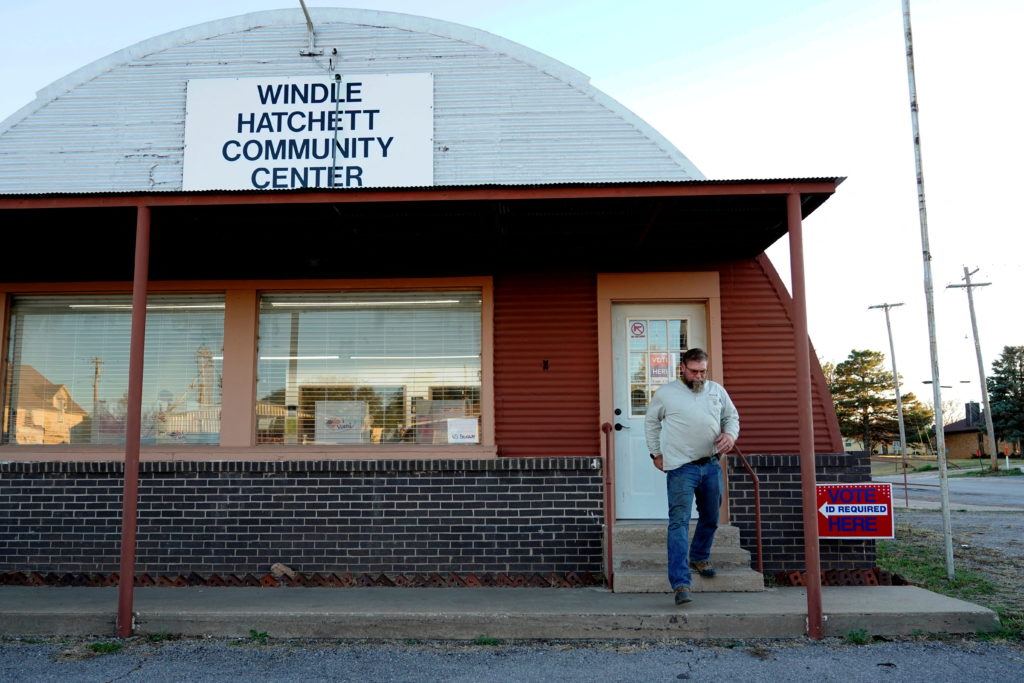
Oklahoma voters will hold a runoff election to choose a Republican nominee for governor and a Democratic nominee for U.S. Senate. Voters will also decide on two statewide ballot measures, including one about requiring voter ID in the state constitution.
Key Facts
Oklahoma Republicans face a runoff for the governor nomination to replace Governor Kevin Stitt, who cannot run again due to term limits.
Democrats will pick their nominee for the U.S. Senate.
Two statewide ballot measures are on the ballot, one would add a voter ID requirement in the state constitution.
The governor race is important because Democrats have not won that office in Oklahoma in 20 years.
The runoff tests the influence of President Donald Trump's endorsement.
In the June 16 primary, Attorney General Gentner Drummond received 26.25% of the vote, and Mike Mazzei received 25.97%.
Neither candidate got a majority, so a runoff election is needed.
Read the Original
Want the full story? Tap a source to open the original
article.
Christina Bohannan, a university professor and Democratic candidate, is campaigning again for a U.S. House seat in a large Iowa district that voted strongly for President Donald Trump in 2022. She is focusing on meeting voters in rural areas to build trust and name recognition in her third attempt to win the seat.
Key Facts
Christina Bohannan is a university professor running as a Democrat for Congress in Iowa.
She is campaigning in a large district that includes rural areas where President Trump won by a large margin in 2022.
Bohannan spoke to voters at a small bar and grill in Columbus Junction, a town in Louisa County.
This is her third time running for this congressional seat.
Bohannan believes meeting voters personally is important to gain their trust and support.
The district covers a wide area, making it challenging to reach all voters.
She is working to expand her recognition beyond liberal parts of the district like Iowa City.
Read the Original
Want the full story? Tap a source to open the original
article.
Support in the United States for war against Iran has dropped to its lowest point since the conflict began, according to a recent poll. At the same time, President Donald Trump’s approval rating remains very low, with only 33 percent of Americans approving of his job performance.
Key Facts
Only 31 percent of Americans support U.S. military action against Iran, down from 37 percent in March.
Republican support for the war fell from 77 percent in March to 69 percent.
President Trump’s approval rating is at 33 percent, the lowest recorded in recent polls during his terms.
The conflict began on February 28 with U.S. and Israeli attacks on Iran.
Iran has blocked oil exports from the region, causing U.S. petrol prices to rise near record highs.
The U.S. is increasing economic pressure on Iran through sanctions targeting all Iranian revenue sources, including oil.
A large majority (83 percent) of Americans expect the war to last a long time.
Independent voters currently favor Democrats over Republicans in a possible congressional election by 33 percent to 19 percent.
Read the Original
Want the full story? Tap a source to open the original
article.
South Carolina Republicans are voting in a runoff election to choose a new candidate for the U.S. Senate seat left vacant by the death of Senator Lindsey Graham. The runoff is between Lindsey Graham’s sister, Senator Darline Graham, and Congressman Ralph Norman.
Key Facts
Senator Lindsey Graham won the Republican primary on June 9 but died unexpectedly on July 11.
His death created a vacancy in the U.S. Senate and left the Republican nominee spot open for the November election.
Senator Darline Graham, Lindsey Graham’s sister, was appointed to finish his current term.
Congressman Ralph Norman, who previously ran for governor, is the other candidate in the runoff.
This runoff vote is the fourth time South Carolina Republicans have voted since June.
The winner will be the Republican candidate in the general election this fall.
Lindsey Graham had held the Senate seat since 2002.
The runoff helps decide who will represent the GOP in the upcoming six-year Senate term election.
Read the Original
Want the full story? Tap a source to open the original
article.
Activist David Hogg said he finds it strange that the media is paying so much attention to Hasan Piker, a left-wing online streamer. Hogg pointed out that Piker is not an elected official, while many elected officials make harmful statements without receiving similar media focus.
Key Facts
David Hogg is an activist who spoke about the media's focus on Hasan Piker.
Hasan Piker is a left-wing streamer who shares political opinions online.
Hogg thinks it is unusual that media attention is on Piker rather than elected officials.
He emphasized that elected officials sometimes make worse statements.
Hogg suggests media should focus more on elected officials' words than on streamers.
Read the Original
Want the full story? Tap a source to open the original
article.
More than one-third of Social Security benefits go to retirees who earn over $100,000 a year, based on recent IRS data. The Social Security program faces financial challenges, with its trust fund expected to run out by 2032, sparking debates about how benefits should be distributed between lower- and higher-income retirees.
Key Facts
Social Security benefits are paid to over 70 million Americans and are the main retirement income source for many seniors.
More than one-third of these benefits go to retirees with annual incomes above $100,000.
The Social Security retirement trust fund is projected to become insolvent by 2032 if Congress does not act.
Some experts say higher-income retirees receive larger benefits because they paid more into the system, and employer contributions are part of the total.
The benefit formula is designed to replace a bigger portion of income for lower-wage earners.
The Committee for a Responsible Federal Budget proposed capping Social Security benefits at $100,000 for couples and $50,000 for single retirees to save money.
This proposed cap aims to reduce budget deficits and encourage personal savings and investment.
There is ongoing debate about whether benefits should be more focused on people who rely on Social Security the most.
Read the Original
Want the full story? Tap a source to open the original
article.
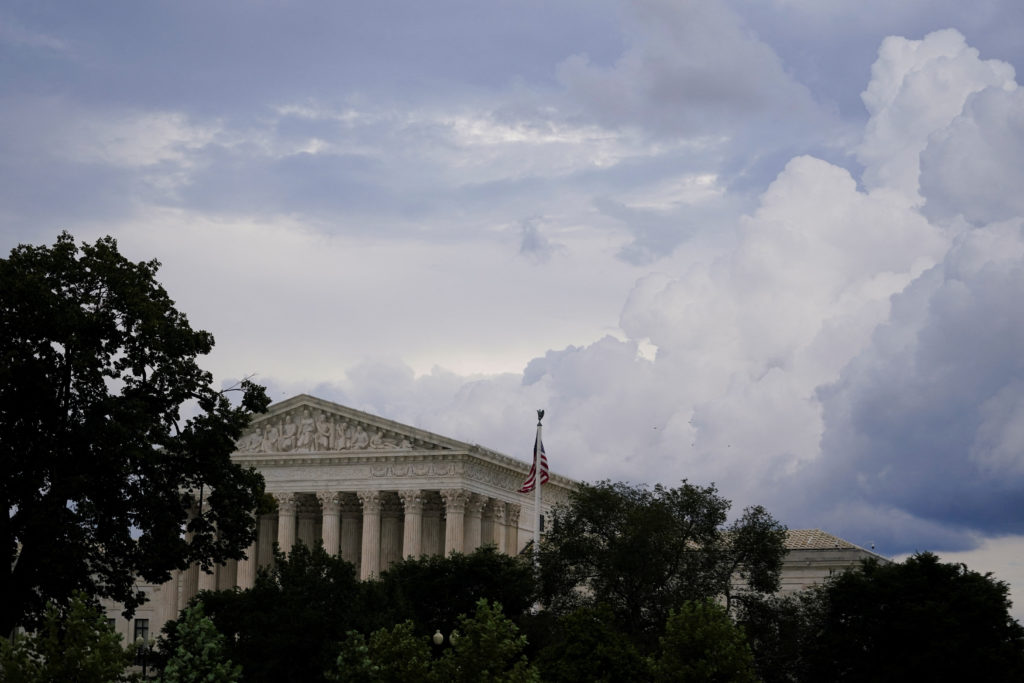
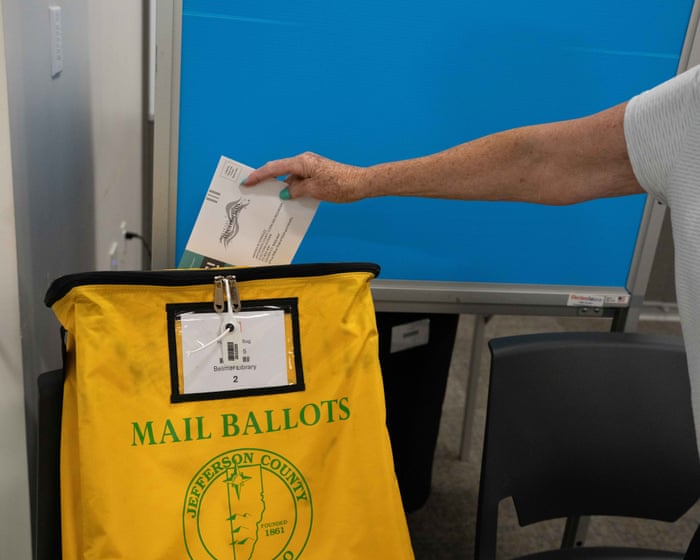
The Supreme Court allowed President Trump to enforce a new rule that limits mail-in voting just months before the midterm elections. This decision creates challenges for election officials and raises concerns about voter privacy.
Key Facts
The Supreme Court ruled that President Trump’s executive order on mail-in ballots can be used before the midterm elections.
The order restricts how mail-in ballots are handled and counted.
Election officials must quickly adjust to these new rules ahead of the elections.
Some people worry the changes could affect voter privacy.
President Trump has long criticized mail-in voting, saying it causes fraud, although there is no proof of this.
About one-third of Americans voted by mail in the 2024 elections.
President Trump voted by mail in Florida’s 2026 special election.
The news is recent and may be updated as more information comes in.
Read the Original
Want the full story? Tap a source to open the original
article.
The U.S. Justice Department said it plans to appeal a court decision that requires it to remove some blacked-out information from documents related to Jeffrey Epstein. The court had ordered the department to reveal more details in these files after a lawsuit brought by attorney and journalist Katie Phang.
Key Facts
The Justice Department (DOJ) will appeal a judge's order to remove certain redactions in Epstein-related documents.
The ruling came from a lawsuit filed by attorney and independent journalist Katie Phang.
A preliminary injunction was issued in June to unredact key documents in the Epstein files.
The redactions are in documents considered important and of public interest.
The DOJ disagrees with the court order and is seeking to keep some information confidential.
The Epstein files relate to the investigation and legal matters surrounding Jeffrey Epstein.
The case highlights tension between transparency and privacy or security concerns in law enforcement documents.
Read the Original
Want the full story? Tap a source to open the original
article.
Caroline Bryan died at age 46 from mesothelioma, a cancer caused by asbestos exposure, which her family believes happened while she attended high school in Cardiff during the 1990s. Her family is suing Cardiff council, claiming the local authority failed to protect her from asbestos in the school buildings.
Key Facts
Caroline Bryan was diagnosed with mesothelioma and died three months later at age 46.
Mesothelioma is an incurable cancer linked to breathing in asbestos fibers.
Caroline’s family believes she was exposed to asbestos at her old high school in Cardiff, where asbestos was used extensively.
The school buildings were reportedly in poor condition, with damaged walls, ceiling tiles, and floor tiles.
Caroline’s daughter, Brooklyn, says her mother did not have jobs or homes that would explain asbestos exposure.
The family’s lawyers found council documents showing asbestos use at the school during Caroline’s attendance.
Cardiff council is being sued by the family and has stated it is managing asbestos in buildings seriously but cannot comment on the ongoing legal case.
The court case is expected in early 2027.
Read the Original
Want the full story? Tap a source to open the original
article.
Senate Democrats on the Armed Services Committee want a hearing with Pentagon leaders about how long deployments related to the Iran war affect U.S. troops. They are concerned about the mental health and well-being of service members who have been deployed for a long time.
Key Facts
Nearly all Senate Armed Services Committee Democrats asked for a hearing on Monday.
The hearing would focus on the impact of extended military deployments connected to the Iran war.
They want Pentagon leaders to explain the situation and conditions of U.S. troops.
Reports have shown that sailors are experiencing serious mental health problems.
There are concerns about worsening conditions for service members during these deployments.
The hearing aims to address the strain on military personnel and find solutions.
Read the Original
Want the full story? Tap a source to open the original
article.
Karen Solomon, wanted in the death of her police officer husband Kurt Solomon in Worcester, Massachusetts, was found dead after a multi-day search. Police say this appears to be a tragic murder-suicide, with a gun found near Karen's body and no history of domestic abuse between the couple.
Key Facts
Kurt Solomon, a 31-year veteran of the Worcester Police Department, was found dead at their home.
Karen Solomon was wanted for questioning in connection to his death and was considered armed and dangerous.
Karen’s body was found by two hospital employees in nearby woods after a search involving multiple agencies.
Police do not believe domestic abuse was a factor in the case.
A gun was found near Karen Solomon's body.
The Solomons had no known history of domestic violence.
Karen Solomon founded an organization meant to support the mental health of first responders.
Kurt Solomon was close to retirement and had two adult sons.
Read the Original
Want the full story? Tap a source to open the original
article.
Voters in Georgia’s 13th Congressional District are choosing a new U.S. House member after Democratic Rep. David Scott passed away in April. Two Democrats, Everton Blair and Marcye Scott, will compete in a runoff election to fill his seat.
Key Facts
The special election is to replace Rep. David Scott, who died on April 22.
The district is located just outside Atlanta, Georgia.
Two Democrats, Everton Blair and Marcye Scott, are in the runoff.
Marcye Scott is the daughter of the late Rep. David Scott.
In the initial election on July 28, Marcye Scott received about 46% of the vote; Everton Blair got about 38%.
There were five candidates in the first election, from all political parties.
The winner will reduce the small Republican majority in the U.S. House of Representatives.
Read the Original
Want the full story? Tap a source to open the original
article.
The Supreme Court allowed parts of President Donald Trump's election executive order about mail-in ballots to move forward temporarily. Justice Ketanji Brown Jackson warned this could cause confusion and hurt public trust in fair elections because key legal questions remain undecided.
Key Facts
The Supreme Court lifted a lower court's block on parts of Trump's March executive order on election integrity.
The order includes actions like creating state citizenship lists and changing mail ballot rules.
The Court did not decide if the order is legal but said states challenging it may not yet be harmed enough to sue.
The majority said the order mostly directs federal agencies and does not force states to act right now.
Justice Jackson wrote a dissent saying states already face problems preparing for changes, risking election chaos.
Jackson warned the ruling could harm states, election officials, and voters by leaving issues unresolved.
Justices Sotomayor and Kagan also dissented supporting states' right to challenge the order now.
The legal fight will continue in lower courts since the Supreme Court did not settle the order’s lawfulness.
Read the Original
Want the full story? Tap a source to open the original
article.
The Trump administration plans to cancel up to 200,000 business and tourist visas held by people who have asked for asylum in the United States. This would be the largest visa cancellation in U.S. history and may lead to legal challenges.
Key Facts
The administration will revoke visas of foreigners who came as short-term visitors but then applied for asylum to stay permanently.
The exact number of visa cancellations is not fixed and will occur gradually.
This mass revocation effort is part of President Trump’s focus on stricter immigration enforcement during his second term.
The government has begun continuous checks on more than 55 million visa holders for possible violations.
Visa cancellations have happened before for reasons like pro-Palestinian activism or comments about public figures.
The U.S. State Department and Citizenship and Immigration Services have not yet commented further on the plan.
The news was first reported by the Associated Press and is still developing.
Read the Original
Want the full story? Tap a source to open the original
article.
The Supreme Court allowed President Trump’s executive order on mail voting rules to take effect by removing a judge’s block. The court ruled that the judge did not have the power to stop the order before a full case review.
Key Facts
The Supreme Court lifted a block put in place by a judge on President Trump’s mail voting order.
This decision lets the new mail voting rules apply in the upcoming midterm elections.
Three liberal justices disagreed with the court’s decision.
The court said the judge acted without authority in blocking the order early.
The ruling means the case can proceed but the order will be in effect for now.
The executive order added new requirements to mail-in voting methods.
The decision affects voting procedures in certain states that sued against the order.
This ruling involves how elections are conducted, especially regarding mail ballots.
Read the Original
Want the full story? Tap a source to open the original
article.
The Supreme Court allowed President Trump to continue enforcing his order limiting mail-in voting ahead of the midterm elections. However, it is uncertain how much of the order can be put into effect before the elections because legal challenges may still slow the process.
Key Facts
The Supreme Court gave approval for President Trump’s order restricting mail-in voting to move forward.
The order aims to limit how mail-in ballots are handled before the midterm elections.
There is still uncertainty about how much of the order will take effect due to possible new court challenges.
The U.S. Postal Service announced plans last week to carry out the order.
Some states will start sending out mail ballots to voters soon, leaving little time to make big changes.
The issue is happening close to the upcoming midterm election dates.
Read the Original
Want the full story? Tap a source to open the original
article.
The US Supreme Court has allowed President Donald Trump’s administration to continue efforts to limit mail-in voting nationwide. The court’s decision supports Trump’s plan to send mail ballots only to people on a government list of registered voters, but legal challenges could still follow.
Key Facts
President Trump ordered a “state citizenship list” to send mail-in ballots only to verified voters.
The Supreme Court approved an emergency appeal to proceed with this plan.
A lower court had blocked the order for 23 states and Washington, D.C., representing about half the country.
Democrats in those states sued, saying only states and Congress can set election rules.
The ruling comes less than 100 days before the midterm elections in November.
About 25% of registered Democrats voted by mail in 2024, compared to 20% of Republicans.
The decision may affect how people vote in the upcoming congressional elections.
Legal battles over the order may continue despite the Supreme Court ruling.
Read the Original
Want the full story? Tap a source to open the original
article.