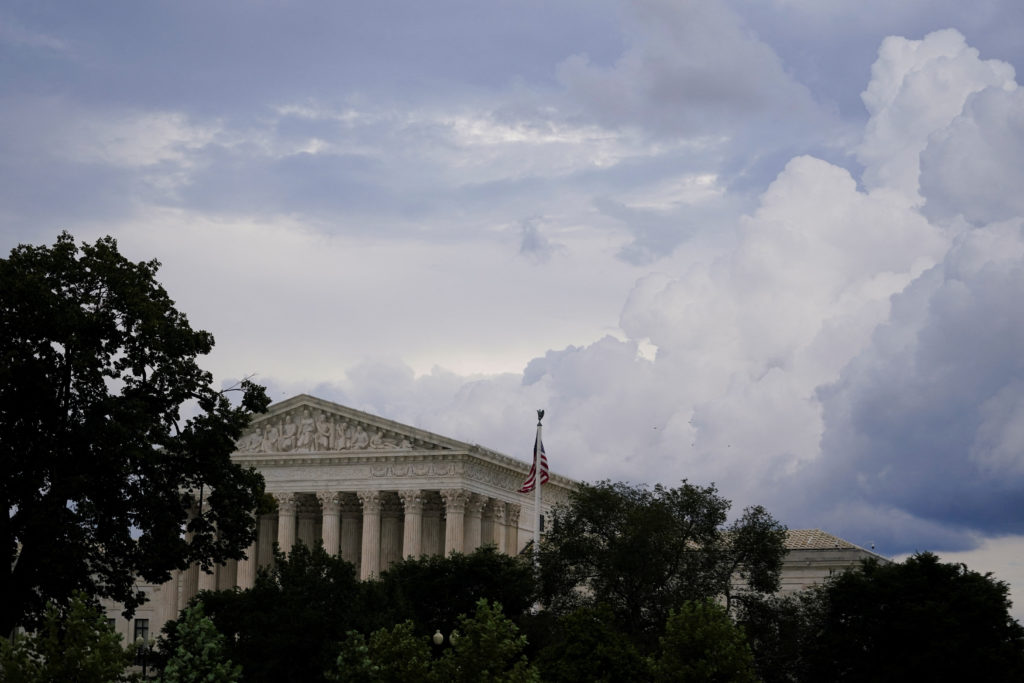
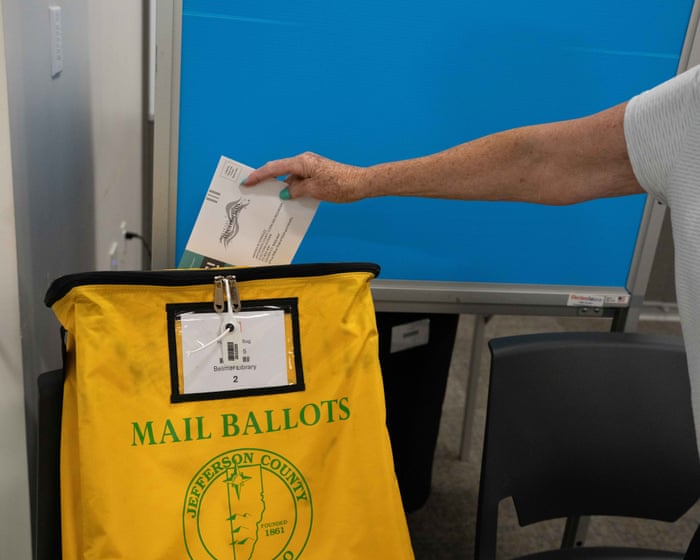
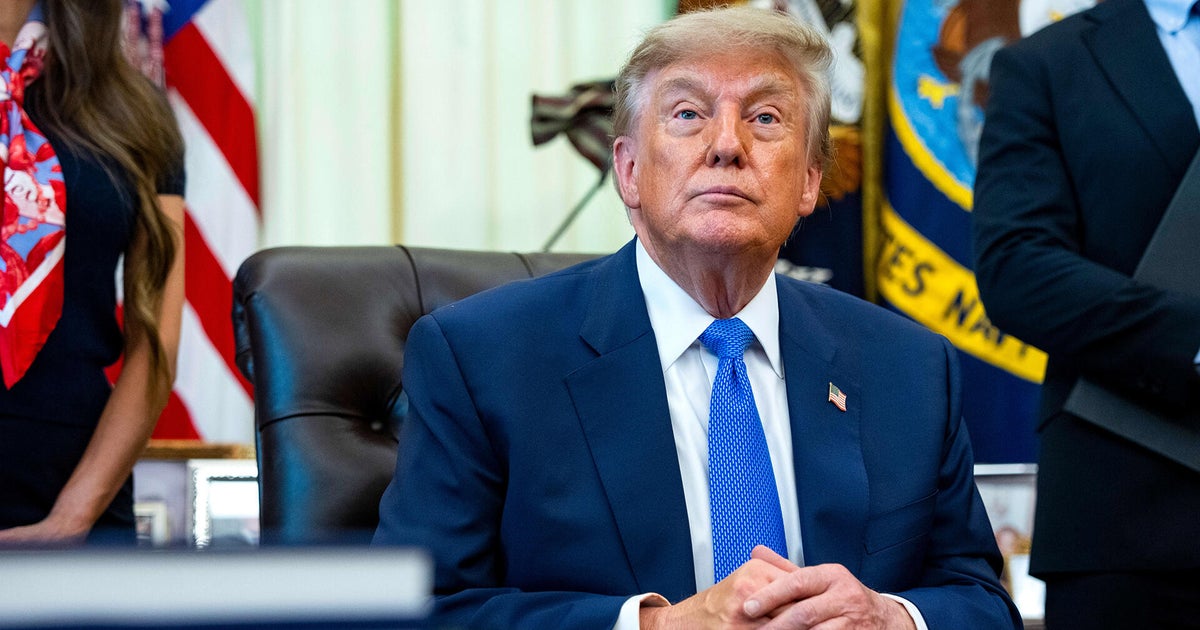
The Supreme Court allowed President Trump to continue enforcing his order limiting mail-in voting ahead of the midterm elections. However, it is uncertain how much of the order can be put into effect before the elections because legal challenges may still slow the process.
Key Facts
The Supreme Court gave approval for President Trump’s order restricting mail-in voting to move forward.
The order aims to limit how mail-in ballots are handled before the midterm elections.
There is still uncertainty about how much of the order will take effect due to possible new court challenges.
The U.S. Postal Service announced plans last week to carry out the order.
Some states will start sending out mail ballots to voters soon, leaving little time to make big changes.
The issue is happening close to the upcoming midterm election dates.
Read the Original
Want the full story? Tap a source to open the original
article.
The US Supreme Court has allowed President Donald Trump’s administration to continue efforts to limit mail-in voting nationwide. The court’s decision supports Trump’s plan to send mail ballots only to people on a government list of registered voters, but legal challenges could still follow.
Key Facts
President Trump ordered a “state citizenship list” to send mail-in ballots only to verified voters.
The Supreme Court approved an emergency appeal to proceed with this plan.
A lower court had blocked the order for 23 states and Washington, D.C., representing about half the country.
Democrats in those states sued, saying only states and Congress can set election rules.
The ruling comes less than 100 days before the midterm elections in November.
About 25% of registered Democrats voted by mail in 2024, compared to 20% of Republicans.
The decision may affect how people vote in the upcoming congressional elections.
Legal battles over the order may continue despite the Supreme Court ruling.
Read the Original
Want the full story? Tap a source to open the original
article.
The Supreme Court has allowed President Trump's administration to begin enforcing parts of an order that changes rules for mail voting before the November midterm elections. The court's decision lifts a lower court block but does not stop states from suing over the new policies.
Key Facts
The Supreme Court voted 6-3 to permit key parts of President Trump's executive order on mail voting to move forward.
The order affects the Department of Homeland Security and the U.S. Postal Service in 23 Democratic-led states and Washington, D.C.
The administration can now create lists of residents eligible to vote in each state.
A lower court had blocked parts of the order, ruling the president lacks authority to change federal election procedures.
The Supreme Court said its decision doesn’t guarantee the order is lawful but allows its implementation to continue.
States can still challenge the new mail voting rules in court.
Some states will soon start sending mail ballots for the midterm elections.
Read the Original
Want the full story? Tap a source to open the original
article.
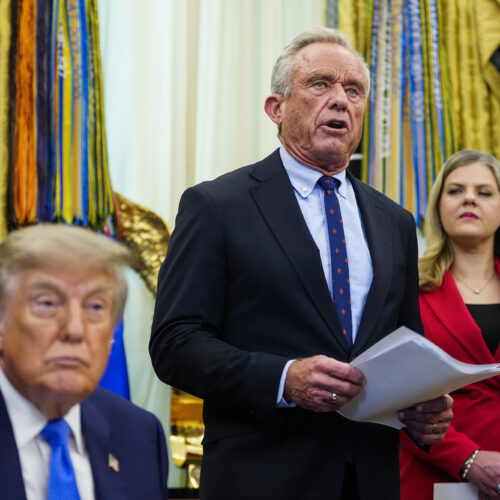
The U.S. Department of Health and Human Services, led by Health Secretary Robert F. Kennedy Jr., is considering changing the way vaccine recommendations are labeled and explained. They have asked the public for input on possible new categories that may be less certain or more personalized than current ones. These potential changes follow an executive order from President Donald Trump aiming to reform vaccine rules.
Key Facts
Robert F. Kennedy Jr. is the current U.S. Health Secretary.
The department posted a Request for Information (RFI) to gather public opinions on vaccine recommendation categories.
Current vaccine categories include "routine" (universal), "risk-based," and "shared clinical decision-making" (SCDM).
Kennedy proposes new categories like “recommended with qualification” to replace or modify existing ones.
The RFI deadline for public comments is September 20.
The Centers for Disease Control and Prevention (CDC) and its advisory panel (ACIP) traditionally use evidence-based methods for vaccine guidance.
Kennedy’s previous actions include replacing the ACIP experts with allies who oppose vaccines and attempting to reduce childhood vaccine recommendations.
A federal judge has temporarily blocked many of Kennedy’s vaccine recommendation changes and appointments due to legal concerns.
The initiative is linked to an executive order signed recently by President Donald Trump aimed at reforming federal vaccine policies.
Read the Original
Want the full story? Tap a source to open the original
article.
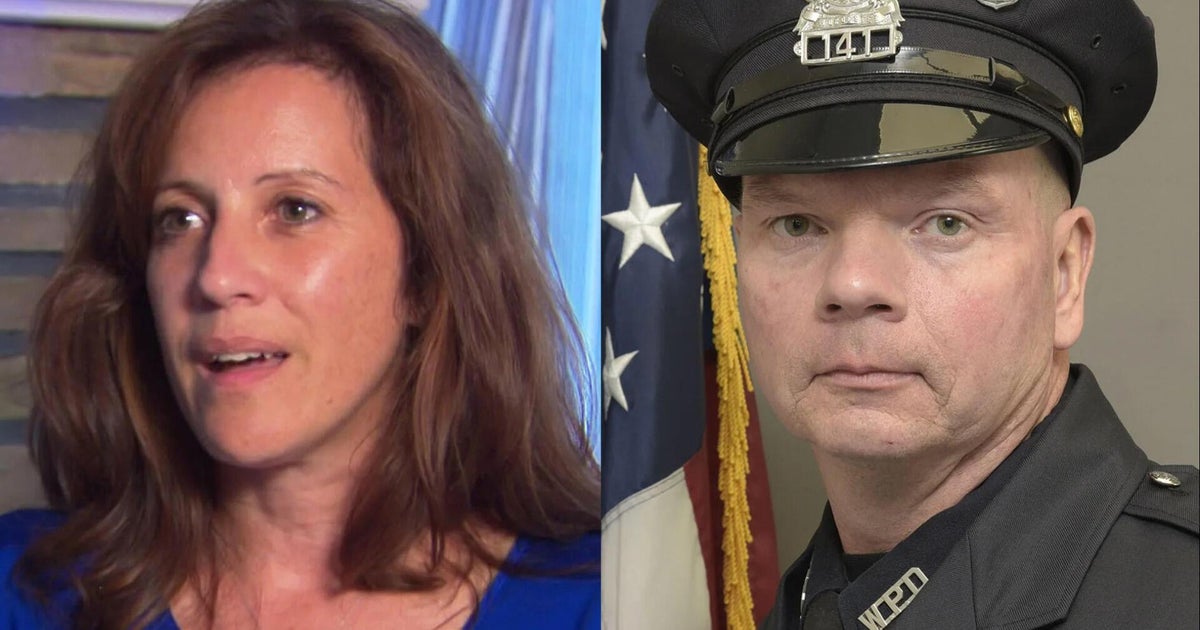
Karen Solomon, a woman from Massachusetts suspected in the death of her police officer husband, was found dead by authorities. The police described the case as a murder-suicide.
Key Facts
Karen Solomon was wanted for questioning in her husband’s death.
Her husband was a police officer.
Authorities in Worcester, Massachusetts, found Karen Solomon dead.
The case has been called a "tragic murder-suicide" by law enforcement.
The announcement was made by local authorities on a Monday.
Read the Original
Want the full story? Tap a source to open the original
article.
The Trump administration announced new sanctions against Iran. Meanwhile, the Supreme Court allowed President Donald Trump’s order changing mail-in voting rules to move forward temporarily.
Key Facts
The Trump administration introduced new sanctions targeting Iran.
These sanctions aim to increase pressure on Iran’s government.
President Donald Trump issued an order to change mail-in voting procedures.
The Supreme Court allowed this voting order to continue for now.
The decision by the court is temporary and may be reviewed later.
The news was shared on the CBS News program "The Takeout with Major Garrett."
The story involves U.S. government actions on international policy and election rules.
Read the Original
Want the full story? Tap a source to open the original
article.
President Donald Trump's administration plans to cancel the business (B1) and tourist (B2) visas of up to 200,000 foreigners who have applied for or are seeking asylum in the United States. This action would be the largest mass visa revocation in U.S. history and is expected to face legal challenges.
Key Facts
The administration targets visas issued between 2016 and 2026 for individuals who have sought asylum.
The cancellation will be coordinated between the State Department and the Department of Homeland Security.
Revoked visas do not automatically mean immediate deportation for affected individuals.
B1 visas are for business trips; B2 visas are for tourism, family visits, or medical care.
Visa holders currently must confirm they will not seek asylum when applying.
In the past 18 months, about 175,000 visas were revoked for criminal convictions or other concerns.
The administration is also cracking down on "birth tourism," where some pregnant women come to the U.S. to give birth for citizenship benefits.
Screening of visa holders started after asylum request information was shared between government agencies.
Read the Original
Want the full story? Tap a source to open the original
article.
Nevada has filed a lawsuit against the U.S. government challenging a new plan that reduces water use from the Colorado River by about 20% for lower basin states, including Nevada, Arizona, and California. The plan aims to address the river's serious water shortage, but there is conflict between states over how much each should cut.
Key Facts
Nevada, along with the Colorado River Commission of Nevada and the Southern Nevada Water Authority, sued the U.S. Department of Interior and the Bureau of Reclamation.
The federal plan cuts water supplies to Nevada, Arizona, and California for two years, with possible deeper cuts later.
Nevada Governor Joe Lombardo says Southern Nevada could lose over 70% of its water share.
Upper basin states (Colorado, Utah, New Mexico, Wyoming) are not required to reduce their water use under the plan.
The seven states that use the Colorado River have struggled to agree on sharing water cuts fairly.
The Colorado River provides water to about 40 million people, tribal nations, and farms, and supports cities like Las Vegas, Phoenix, and Los Angeles.
Long-term overuse and climate change have severely reduced water levels in major reservoirs Lake Mead and Lake Powell.
Negotiations for a new water-sharing agreement have been difficult, and the current framework expires in October 2026.
Read the Original
Want the full story? Tap a source to open the original
article.
A victim of the September 11, 2001 attacks has been identified nearly 25 years later using a new forensic technique that combines DNA testing with family tree research. This is the first time this method, called forensic investigative genetic genealogy, has been used to identify a 9/11 victim, and officials hope it will help identify more victims in the future.
Key Facts
The victim’s family chose not to share her name publicly.
This identification marks the 1,654th confirmed 9/11 victim from the World Trade Center attacks.
About 1,099 victims, or 40%, from the attacks still remain unidentified.
The new method uses DNA taken from remains and compares it with genetic data from relatives in specialized databases.
Forensic genetic genealogy has potential to solve many unidentified human remains cases across the U.S., estimated to be between 50,000 and 75,000.
New York City’s Office of the Chief Medical Examiner will continue trying to identify more victims using this approach.
DNA testing has improved over time, aiding the long-term effort to identify remains from the attacks.
Experts are currently reviewing dozens of DNA samples that may be suitable for this new identification method.
Read the Original
Want the full story? Tap a source to open the original
article.
A Massachusetts woman named Karen Solomon, who was wanted as a suspect in the death of her husband, a Worcester police officer, was found dead near a hospital. Her husband, Kurt Solomon, who worked for the Worcester police for 31 years, was found dead at their home.
Key Facts
Karen Solomon was wanted in connection with the death of her husband.
Kurt Solomon was a Worcester police officer for 31 years.
Kurt Solomon was found dead at their home on Tuesday morning.
Authorities conducted a large search with drones, boats, and tracking dogs.
Karen Solomon was found dead near a hospital during the search.
Karen Solomon had earlier disappeared after her husband’s death.
She was known as an advocate for police mental health awareness and improvements.
Read the Original
Want the full story? Tap a source to open the original
article.
The Supreme Court allowed President Donald Trump to continue with his order to restrict mail-in voting ahead of the upcoming midterm elections. However, it is uncertain how much of the order can be put in place before the elections, as several legal challenges remain.
Key Facts
President Trump signed an executive order in March to limit mail-in voting by requiring voter eligibility lists for mail ballot delivery.
The U.S. Postal Service outlined plans to follow this order last week, but time is limited before midterm ballots are sent out.
Twenty-three states and Washington D.C., mostly led by Democrats, sued to stop the order, arguing states control elections.
A Massachusetts judge blocked the order for those states, and an appeals court upheld part of that block nationwide.
The Trump administration appealed to the Supreme Court, which allowed the order to move forward on legal procedural grounds.
About a dozen Republican-leaning states support the Trump administration’s appeal and say they will have input on final voter lists.
The Supreme Court has previously ruled states can count some mail-in ballots received after Election Day, against Trump-backed arguments.
President Trump has claimed, without strong evidence, that mail-in voting leads to fraud.
Read the Original
Want the full story? Tap a source to open the original
article.
The Trump administration is planning to cancel the business (B1) and tourism (B2) visas of up to 200,000 people who applied for or are seeking asylum in the U.S. This would be the largest visa revocation in U.S. history and could face legal challenges. The decision aims to stop people from entering the U.S. on short-term visas and then trying to stay permanently by asking for asylum.
Key Facts
The U.S. plans to revoke B1 (business) and B2 (tourism) visas issued from 2016 to 2026 for those who sought asylum.
Up to 200,000 visa holders could be affected.
The State Department is working with the Department of Homeland Security on this action.
Visa revocation does not mean immediate deportation; those with pending asylum cases would lose their business or tourist visa status.
Since President Trump’s second term began, visa restrictions have increased, including demands for social media information and bonds.
Deputy Secretary of State Christopher Landau criticized people who use tourist or business visas to get into the U.S. and then apply for asylum.
B1 visas are for business trips; B2 visas are for tourism, family visits, or medical reasons.
This move is seen as an attempt to close what officials call a "loophole" in immigration law.
Read the Original
Want the full story? Tap a source to open the original
article.
An 8-year-old girl in Louisiana died after being infected by a rare brain-eating amoeba called Naegleria fowleri. The infection likely happened while she was swimming in a local lake, and such infections are very rare but usually fatal.
Key Facts
The girl’s name was Lillian Smart; she died over the weekend from the infection.
Naegleria fowleri is an amoeba found in warm freshwater like lakes and ponds.
The amoeba infects people when water enters the nose and reaches the brain.
Infections are extremely rare, with fewer than 10 cases per year in the U.S.
The infection causes a disease called primary amebic meningoencephalitis (PAM), which is almost always fatal.
The last confirmed case in Louisiana was in 2013 before Lillian’s infection.
To reduce risk, people are advised to hold their nose or use a nose clip when swimming in warm freshwater.
Symptoms of infection include headache, fever, nausea, neck stiffness, and seizures.
Read the Original
Want the full story? Tap a source to open the original
article.
President Donald Trump supports new USPS rules that would limit mail-in voting by requiring extra federal checks before mail ballots are accepted. Voting rights groups warn this could cause problems for voters and election officials, especially before the 2026 midterm elections. Several lawsuits are underway to block these changes, and the Supreme Court may soon decide their fate.
Key Facts
The USPS rule requires checking mail ballot envelopes for federal compliance before accepting them.
Election officials must use a new federal system to report information on voters receiving mail ballots.
Voting rights groups say the rule would make it hard for some places to run elections and could prevent some voters from getting ballots.
The rule could hurt elderly, disabled people, rural residents, students, and others who depend on mail voting.
Several lawsuits, including one from the League of Women Voters of Massachusetts, seek to stop the rule.
The Supreme Court may rule soon on whether the rule can be enforced nationwide.
President Trump has previously used mail-in voting despite claiming it is unsafe.
States already have fraud protections like signature checks and ID requirements in place for mail ballots.
Read the Original
Want the full story? Tap a source to open the original
article.
Defense Secretary Pete Hegseth said the U.S. economic pressure on Iran is currently causing significant harm to the Iranian government. He also said the U.S. military may use airstrikes if Iran acts aggressively in a way that forces a response.
Key Facts
The Trump administration is applying economic pressure on Iran.
Defense Secretary Pete Hegseth stated this pressure is hurting the Iranian regime the most right now.
Hegseth did not rule out the possibility of the U.S. military using airstrikes against Iran.
The use of military force would depend on Iran's future actions.
Hegseth suggested airstrikes would be considered if Iran "overplays their hand," meaning if Iran acts recklessly or aggressively.
These comments were made publicly on a Monday.
Read the Original
Want the full story? Tap a source to open the original
article.
A forensic psychologist testified that Lindsay Clancy has bipolar disorder and was dealing with anxiety, depression, insomnia, and suicidal thoughts before she killed her three children. This testimony differs from another doctor’s opinion, and both were part of a trial focusing on Clancy’s mental state during the incident.
Key Facts
Lindsay Clancy is on trial for killing her three children in January 2023.
A forensic psychologist evaluated Clancy and said she has bipolar disorder.
Clancy was reportedly experiencing anxiety, depression, difficulty sleeping, and suicidal thoughts before the event.
Another forensic psychiatrist examined Clancy and said she did not have bipolar disorder or psychosis.
Both doctors testified for the prosecution as rebuttal witnesses.
The case focuses on Clancy’s mental condition at the time of the killings.
Clancy strangled her children and then jumped from a second-story window.
Closing arguments in the trial are expected later this week.
Read the Original
Want the full story? Tap a source to open the original
article.
Texas Governor Greg Abbott told a judge that he does not have to send an ICE officer to Minnesota. The officer, Christian Castro, is charged with shooting a Venezuelan man during a police operation in Minnesota earlier this year. Minnesota wants Texas to extradite the officer, meaning to hand him over for trial.
Key Facts
Governor Greg Abbott said Texas is not required to send ICE officer Christian Castro to Minnesota.
Christian Castro is charged with shooting a Venezuelan man in Minnesota.
The shooting happened during a police operation called “Operation Metro Surge.”
Minnesota authorities want Texas to extradite Castro for legal proceedings.
Extradition means officially transferring a person from one state to another for a trial.
The case is now before a judge who will decide if extradition is required.
Governor Abbott’s argument is that Texas does not have to comply with Minnesota’s request.
Read the Original
Want the full story? Tap a source to open the original
article.
Police in Massachusetts were searching for Karen Solomon after her husband, Officer Kurt Solomon, was found dead. Authorities now believe Karen Solomon has also been found dead, and the case is being called a murder-suicide.
Key Facts
Karen Solomon, 58, was being sought by police after the death of her husband.
Kurt Solomon, 57, was a patrol officer with the Worcester Police Department.
Kurt Solomon was found dead in their home last week.
Police now believe Karen Solomon has also died.
This situation is being described as a "tragic murder-suicide" by the police.
The case is still developing, and more information may come later.
Read the Original
Want the full story? Tap a source to open the original
article.
Country singer Kacey Musgraves asked fans at her Chicago concert to donate to a group that helps immigrant children separated from their parents under President Trump's administration. This request caused strong reactions from some conservative commentators and social media users.
Key Facts
Musgraves paused her concert to promote the Young Center for Immigrant Children's Rights, which supports immigrant children in government custody.
She asked fans to donate money, saying even small amounts would help the children.
The Young Center pairs volunteers, lawyers, and social workers with unaccompanied or separated immigrant children.
Conservative media figures and some social media users criticized her request and questioned the fairness of deportations.
Musgraves has previously supported the Young Center and spoken out against some policies of President Trump.
The artist has won eight Grammy Awards and blends country music with pop and psychedelic styles.
Country music tends to be associated with Republican voters, but Musgraves has maintained her criticism of some conservative policies.
The concert took place during her "Middle of Nowhere" tour, which includes stops across North America.
Read the Original
Want the full story? Tap a source to open the original
article.
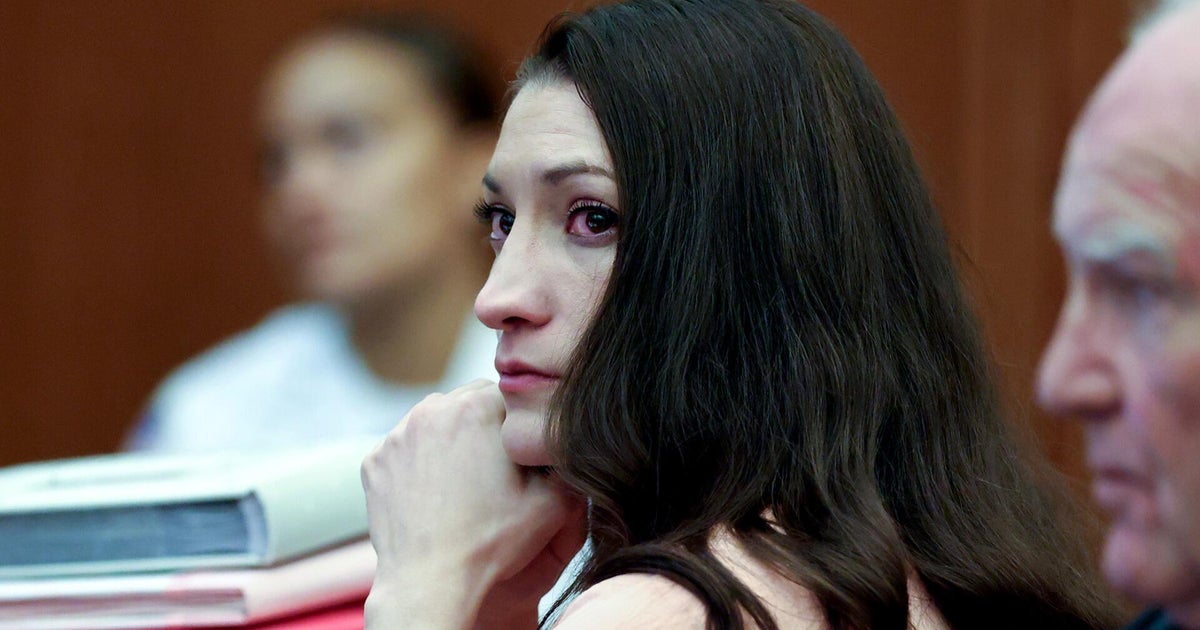
The judge in the Lindsay Clancy murder case refused the defense’s request to declare a mistrial. Lindsay Clancy admitted to killing her children but says she is not guilty because she was affected by postpartum psychosis.
Key Facts
The case involves Lindsay Clancy, who killed her children.
Clancy admits to the killings but claims she was mentally unwell.
She argues postpartum psychosis caused her to act that way.
The defense asked for a mistrial, which means restarting the trial from the beginning.
The judge denied the defense’s request and will continue the trial.
Postpartum psychosis is a rare mental illness that some women develop after childbirth.
CBS News reporters are covering the case closely.
Read the Original
Want the full story? Tap a source to open the original
article.