Retired General Jack Keane said it is likely that President Donald Trump will start combat operations against Iran again as the conflict nears seven months. The statement was made during an interview about possible future U.S. actions toward Iran.
Key Facts
Jack Keane is a retired U.S. Army General.
He said it is "inevitable" that President Trump might resume military attacks on Iran.
The conflict with Iran has been going on for almost seven months.
The comment was made during a Fox Business interview with host Larry Kudlow.
Kudlow asked if President Trump should give a strong warning to Iran.
Read the Original
Want the full story? Tap a source to open the original
article.
Former President Bill Clinton criticized President Donald Trump’s plans to build a triumphal arch and to rename the Kennedy Center after himself. Clinton said that leaders should focus less on personal credit and more on solving global problems.
Key Facts
Bill Clinton spoke at the opening of the annual Clinton Global Initiative event.
Clinton expressed disapproval of President Trump’s plan for a triumphal arch.
Clinton also opposed efforts to rename the Kennedy Center after President Trump.
Clinton suggested global challenges are easier to handle when leaders do not focus on personal credit.
The discussion highlights differences between the two presidents’ leadership styles.
Read the Original
Want the full story? Tap a source to open the original
article.
Katie Porter, who ran for governor of California and finished fifth in the primary, said she was stepping away from politics earlier this year. Recently, she spoke again about the topic of a tax on billionaires and explained that such a tax keeps things the same instead of making changes.
Key Facts
Katie Porter ran for governor of California in 2024.
She finished in fifth place in the primary election.
In July, Porter said she was taking a break from politics.
She referred to this break as starting a “new chapter.”
Porter recently commented on a proposed billionaire tax.
She said this billionaire tax “perpetuates the status quo,” meaning it keeps the system unchanged.
The tax discussion involves how wealthy people are taxed.
Porter is a former lawmaker, meaning she used to be a member of government.
Read the Original
Want the full story? Tap a source to open the original
article.
President Donald Trump launched a 24/7 YouTube channel run by the White House to share speeches and announcements directly with the public. This move comes after banning CNN, MS NOW, and Politico from White House reporting, which led major networks to suspend coverage in protest and lawsuits from the banned outlets.
Key Facts
President Trump started a continuous YouTube channel called "Trump TV: The Essentials Station" featuring his speeches and official events.
The channel does not have traditional news anchors or reporters and shows no original journalism.
Trump banned CNN, MS NOW, and Politico from reporting at the White House on Friday, accusing them of spreading "fake news" without giving specific examples.
Major TV networks protested by suspending their coverage of Trump’s events and refused to replace CNN in the White House press rotation.
Several news organizations including Associated Press and major newspapers chose not to publish White House event photos during the protest.
The banned news outlets sued the Trump administration over the denial, claiming it violated their First Amendment rights, which protect freedom of the press.
Trump has previously tried to avoid mainstream media by using his own social media platform, Truth Social, and took legal action against outlets like AP.
This conflict reflects an ongoing effort by Trump to communicate directly with the public while limiting traditional media access.
Read the Original
Want the full story? Tap a source to open the original
article.
Clavicular, an online influencer who promotes risky do-it-yourself beauty procedures, has been charged with rape. Reports have connected these charges with his online activities.
Key Facts
Clavicular is known for sharing dangerous DIY beauty procedures.
He aims to help people improve their looks through these risky methods.
Clavicular now faces criminal charges for rape.
The charges are reported in the news but details are limited.
His online influence is tied to his reputation for dangerous behavior.
Read the Original
Want the full story? Tap a source to open the original
article.
The chairman of the Marquette County Republican Party in Michigan, Jackson Karki, resigned after controversy over social media posts. The posts suggested low enthusiasm among Republicans for the upcoming midterm elections and were linked to an anonymous account called “Red Lion Politics.”
Key Facts
Jackson Karki, 19 years old, was the Marquette County GOP chair.
He resigned following criticism about his social media activity.
Karki was connected to an anonymous account named "Red Lion Politics."
The posts indicated that Republicans were not very excited about the midterm elections.
The controversy took place on a social media platform.
The resignation happened amid growing scrutiny from others in the party and public.
The focus was on local Republican Party leadership in Michigan.
Read the Original
Want the full story? Tap a source to open the original
article.
The Pentagon invited YouTube influencers Jake and Logan Paul to speak to U.S. military personnel and discuss financial empowerment for young Americans. This move comes amid ongoing tensions with Iran and criticism of the Trump administration’s approach to the war and education.
Key Facts
The U.S. war with Iran is now in its seventh month with rising prices and low troop morale.
President Donald Trump previously said the war would end quickly but it has continued longer than expected.
Jake and Logan Paul, known for YouTube stunts and boxing, visited the Pentagon to meet military members and give motivational talks.
Jake Paul also met with Treasury officials to discuss financial empowerment for young people.
Both Paul brothers have faced legal issues related to crypto promotions.
Jake Paul has criticized the U.S. education system, saying it doesn’t teach useful life skills.
Some critics see the use of celebrities instead of experts in government efforts as a sign of declining seriousness.
The article connects this trend to broader cuts in research funding and a decrease in expertise under the Trump administration.
Read the Original
Want the full story? Tap a source to open the original
article.
Secretary of State Marco Rubio and Vice President JD Vance defended President Donald Trump’s decision to ban CNN, MS NOW, and Politico from working inside the White House. The media outlets were denied physical access but can still operate independently. The banned outlets have sued the administration, claiming the ban violates their First Amendment rights.
Key Facts
President Trump banned CNN, MS NOW, and Politico from working inside the White House, citing “fake news” claims.
The ban prevents journalists from these outlets from accessing the White House and having press credentials.
Secretary of State Marco Rubio said the outlets are not shut down, only barred from the White House workspace.
Vice President JD Vance called the ban about “basic fairness” and accused the outlets of pushing far-left propaganda.
The banned outlets filed a lawsuit claiming their First Amendment rights to free press access were violated.
A federal judge may decide soon whether to temporarily reverse the ban.
The ban disrupted the White House television pool, causing some networks to withhold coverage.
The White House started “Trump TV,” a 24-hour streaming channel showing videos and speeches from President Trump.
Read the Original
Want the full story? Tap a source to open the original
article.
Braden Peters, an online influencer known as "Clavicular," has been charged with rape and other related crimes in Massachusetts. The alleged incidents happened in May 2025, and Peters denies the accusations.
Key Facts
Braden Peters, aka "Clavicular," is an influencer involved in promoting looksmaxxing, which is about improving physical appearance.
He faces charges of rape, giving alcohol to someone underage, and drugging for sexual intercourse.
The alleged crimes occurred in Massachusetts in May 2025.
A woman previously sued Peters, claiming he gave her vodka and had sex without consent while she was a minor.
Peters denied these allegations and called the recent charges "bogus."
The criminal case does not name the victim.
Peters was also charged earlier in Florida for firing a gun in public after shooting at what seemed to be a dead alligator.
He pleaded no contest to the firearm charge.
Read the Original
Want the full story? Tap a source to open the original
article.
The Department of Veterans Affairs (VA) will pay disability benefits twice in October 2026. Veterans and eligible family members receive monthly payments for health conditions linked to military service, usually paid the following month.
Key Facts
VA disability benefits support veterans with service-connected illnesses or injuries.
Payments are made in arrears, meaning benefits for one month are paid at the start of the next.
On October 1, recipients will get their September benefits; on October 30, they will receive October benefits early due to November 1 being a Sunday.
Around 6.5 million veterans currently receive VA disability compensation.
Payment amounts depend on the disability rating from 0% to 100% and family dependents.
Veterans with a 100% rating and a spouse plus one child can receive over $4,300 per month.
Qualifying conditions include physical issues like back pain and respiratory diseases, and mental health conditions like PTSD and depression.
A new bill proposes allowing combat-injured veterans to receive full military retirement pay and VA disability without reductions.
Read the Original
Want the full story? Tap a source to open the original
article.
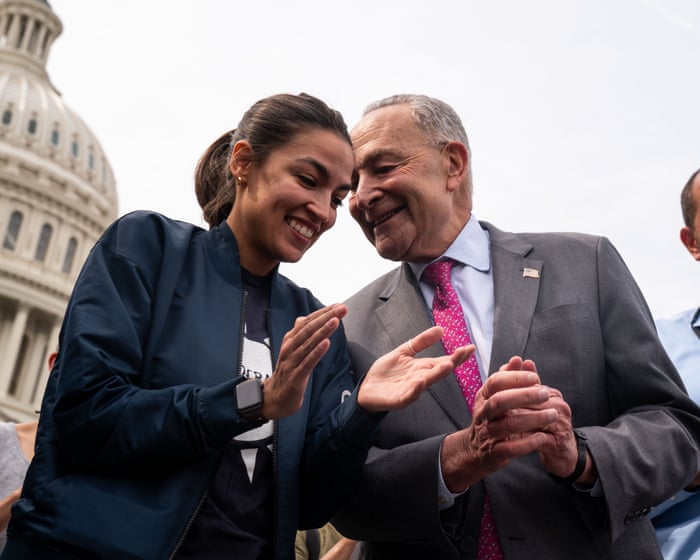
Alexandria Ocasio-Cortez has not ruled out running against Senate leader Chuck Schumer in 2028. She said her decision would be personal and that a Democratic Senate majority would be a good outcome for the country.
Key Facts
Ocasio-Cortez was asked if she might challenge Schumer when his term ends in 2028 and did not say no.
She is a progressive congresswoman from New York, known for appealing to younger Democrats, women, and Hispanic voters.
Schumer is currently the Democratic leader in the Senate and is 75 years old.
Ocasio-Cortez has raised over $32 million in campaign funds since 2025 and had more than $15 million available by mid-2026.
Polls show about 55% of likely Democratic voters support or lean toward Ocasio-Cortez, compared to 36% for Schumer.
She faces strong opposition from Republicans and is seen as a polarizing figure.
Ocasio-Cortez has also been mentioned as a possible presidential candidate in 2028 but has not confirmed any plans.
She recognizes challenges because she is a Latina woman and because of current political conditions.
Read the Original
Want the full story? Tap a source to open the original
article.
Rep. Alexandria Ocasio-Cortez talked about the possibility of running for president in 2028. She said she thinks carefully about how her personal identity might affect her campaign.
Key Facts
Alexandria Ocasio-Cortez is a representative from New York and a well-known Democrat.
She considered running for president in the 2028 election.
Ocasio-Cortez spoke about this possibility in an interview with The New York Times.
She mentioned that her identity plays a role in her thoughts about running.
The interview was published on a Tuesday.
Read the Original
Want the full story? Tap a source to open the original
article.
Air travel in the United States faced significant problems after the Federal Aviation Administration (FAA) experienced equipment failures in its main and backup communication systems. This caused many flight delays and cancellations, and airports are still working to return to normal operations.
Key Facts
The FAA's communication system and its backup both failed.
The failure happened over a short period, causing disruptions.
Many U.S. airports experienced delayed or canceled flights.
The problems led to travel chaos for passengers and airlines.
FAA and airport staff have been working to fix the issues.
The incident affected a large number of flights across the country.
CBS News reported on the situation and its ongoing impact.
Read the Original
Want the full story? Tap a source to open the original
article.
President Donald Trump met with New York City Mayor Zohran Mamdani to discuss a housing and jobs plan for Sunnyside Yard, Queens. Despite previous harsh criticisms of each other, they showed willingness to work together on this project to help New Yorkers.
Key Facts
President Trump and Mayor Zohran Mamdani had a private meeting at Gracie Mansion in New York City.
They discussed a plan to develop 12,000 homes and create 30,000 jobs in Sunnyside Yard, Queens.
Earlier, Trump called Mamdani a "100% Communist Lunatic" and threatened him with arrest.
Mamdani accused Trump of having a "fascist agenda" and called him a "despot."
After their meeting, both displayed a more cooperative tone and praised each other publicly.
The plan will require federal approvals and likely federal funding.
Mamdani supports working with anyone willing to lower living costs for New Yorkers.
The meeting shows political opponents working together despite previous intense disagreements.
Read the Original
Want the full story? Tap a source to open the original
article.
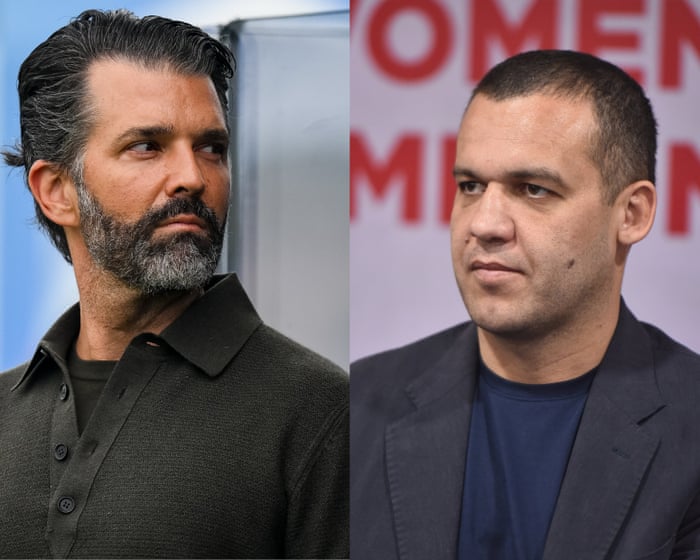
A Republican senator, John Curtis from Utah, has asked the Senate to investigate if Russian money helped pay for Donald Trump Jr’s wedding in the Bahamas. Curtis wants to look into Trump Jr’s business connections, especially those linked to foreign figures, and whether his family name was used to gain benefits.
Key Facts
Senator John Curtis, a Republican, called for a Senate investigation into Donald Trump Jr’s wedding expenses.
A Russian oligarch, Umar Kremlev, helped pay for the wedding party on a private island, including fireworks.
Trump Jr’s wife described Kremlev as a close friend who hosted part of the celebration.
President Donald Trump said he was told Trump Jr would pay back the money and said such gifts are allowed and common.
Trump Jr was also investigated by Robert Mueller for contacts with Russians during the 2016 election.
Curtis compared this situation to past Republican efforts investigating Hunter Biden’s foreign business ties.
Curtis’ letter was sent to Senate Judiciary Committee leaders Chuck Grassley and Dick Durbin.
Curtis was elected in 2024 and has promised to speak out even against President Trump when necessary.
Read the Original
Want the full story? Tap a source to open the original
article.
The UK Supreme Court ruled that removing a chance to shorten a life sentence given to someone who committed murder as a child does not break human rights laws. This ruling ends the current legal challenge but the case might still be taken to the European Court of Human Rights.
Key Facts
Jesse Quaye (17) and Ayomindy Bile (15) were sentenced to life in prison with at least 15 years to serve for a 2014 murder in Norfolk, UK.
Quaye could not request a review of his minimum sentence because he turned 18 before being sentenced, due to a 2022 UK law change.
Normally, juvenile offenders can ask to reduce their minimum term after serving half, based on evidence that young people can change as they grow older.
Quaye’s legal team argued the new law violated rights against unfair detention and age discrimination under the European Convention on Human Rights (ECHR).
The UK High Court initially found in favor of Quaye, but the Court of Appeal and then the Supreme Court rejected his appeal.
The Supreme Court said setting a clear age limit (18 years at sentencing) is common in justice systems and the decision is a matter for lawmakers, not courts.
The case could still be brought before the European Court of Human Rights in Strasbourg, though this may take years to resolve.
Sentencing lawyers argue there is an unfairness because the outcome depends on whether a trial happens before or after someone turns 18, which can be a matter of timing unrelated to the crime itself.
Read the Original
Want the full story? Tap a source to open the original
article.
The United States has a National Plan to Address Alzheimer’s disease, aiming to improve research, care, support, and public awareness for dementia. However, recent reports show the government lacks clear short-term goals, measurable progress, and effective coordination to meet the growing crisis.
Key Facts
Over 7.4 million Americans have Alzheimer’s disease, with costs expected to reach $409 billion by 2026 and nearly $1 trillion annually by 2050.
The National Alzheimer’s Project, extended through 2035, sets broad goals for handling dementia but lacks specific, timely targets.
The Government Accountability Office found in 2026 that clearer deadlines and progress tracking are still missing.
The World Health Organization says up to 45% of dementia risk is linked to factors people can manage, such as smoking, inactivity, and high blood pressure.
Approximately 13 million Americans provide unpaid care for people with dementia.
The Centers for Medicare & Medicaid Services (CMS) runs a model program to support caregivers with education and services but it is not yet widely available.
Experts call for a plan that combines prevention, treatment, and care support with clear responsibilities and results measurement.
Read the Original
Want the full story? Tap a source to open the original
article.
American students’ math and reading scores have dropped to very low levels, and many feel disconnected from school. Experts say schools should focus less on preparing kids for specific jobs and more on teaching them how to solve real-life problems using knowledge from different subjects.
Key Facts
The 2024 NAEP report shows a big drop in math and reading scores for U.S. 12th graders.
Only 55.3% of U.S. high school students said they feel close to people at school in 2023, according to the CDC.
Current education systems still rely heavily on separate subjects, fixed schedules, and standard tests.
Real-world problems don’t fit into one subject area, so students need to learn how to apply knowledge in new ways.
Artificial intelligence is changing the job market; many current skills will become outdated by 2030.
Experts suggest asking students “What problem do you want to solve?” instead of “What job do you want?” to encourage curiosity and adaptability.
Teachers remain important to help students understand material and think critically, even with AI tools available.
Schools should consider adopting interdisciplinary learning and assessments that go beyond memorization to better prepare students.
Read the Original
Want the full story? Tap a source to open the original
article.
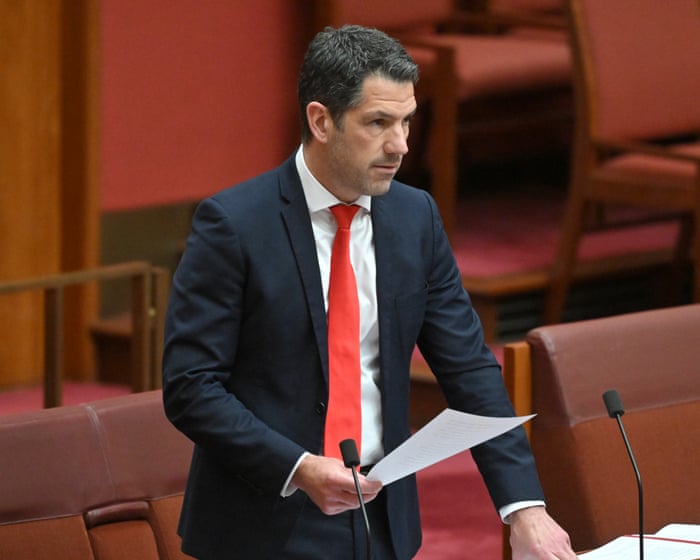
Alex Antic has been elected president of the South Australian Liberal Party. Since his rise to power, the party has lost many votes in recent elections, and some members worry about his close ties to One Nation and his strong conservative views.
Key Facts
Alex Antic won the South Australian Liberal Party presidency by 119 to 73 votes.
He recruited a group called "Alex’s Army," mainly evangelical and Pentecostal Christians, to increase his influence.
Since Antic’s rise, the Liberals performed poorly in both federal and state elections, winning only five lower house seats in South Australia.
Some party members, including moderates, are concerned his views on vaccines, climate change, and transgender issues may harm the party’s image.
Antic plans to give party members more influence but it is unclear how he will do this, as the party’s operational wing cannot make policy.
Antic is close to One Nation, a far-right political party, and has voted with them on issues like vaccine legislation.
State health minister Blair Boyer called on Antic to say if he wants to form a coalition with One Nation.
Liberal senator Anne Ruston congratulated Antic on managing two big roles: senator and party president.
Read the Original
Want the full story? Tap a source to open the original
article.
A U.S. Census Bureau report says thousands of people who are not U.S. citizens voted in the 2020 election. This has raised questions about whether Texas Attorney General Ken Paxton and the federal government are properly addressing or prosecuting these cases and whether the data in the report is correct.
Key Facts
The U.S. Census Bureau released a report alleging thousands of noncitizens voted in 2020.
Noncitizen voting is illegal in U.S. elections.
The report has sparked concern about enforcement by Texas Attorney General Ken Paxton.
It also raises questions about the federal government’s role in investigating or prosecuting noncitizen voters.
Some people are questioning if the Census Bureau data is accurate.
The issue is focused on Texas, where Ken Paxton serves as Attorney General.
The report relates to the 2020 U.S. election.
Read the Original
Want the full story? Tap a source to open the original
article.