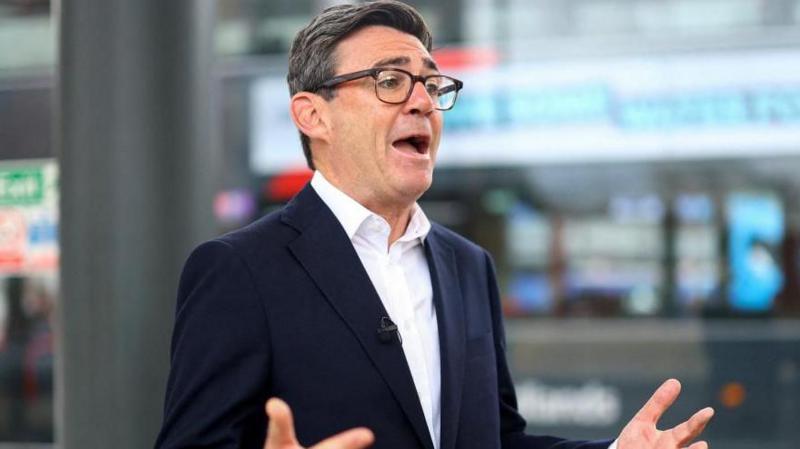
Andy Burnham, a UK political leader, said he is not embarrassed about exchanging messages with someone pretending to be President Donald Trump’s chief of staff. He said the exchange involved little information and was reported quickly. A UK MP has asked for an investigation into the security breach.
Key Facts
Andy Burnham exchanged messages with a person pretending to be Susie Wiles, President Trump’s chief of staff.
The exchange contained minimal information and no sensitive details.
Burnham reported the incident as soon as he realized what happened.
Liberal Democrat MP James MacCleary requested an investigation by the UK Intelligence and Security Committee.
It is unclear when or how many messages were exchanged, or which messaging app was used.
The White House said this event was not related to the hacking of Wiles’ phone.
In 2024, UK Foreign Secretary Lord Cameron also was tricked by an impersonator posing as former Ukrainian President Poroshenko.
UK officials emphasized the importance of securing political communications to avoid repeated breaches.
Read the Original
Want the full story? Tap a source to open the original
article.
The U.S. Justice Department has created a process to allow some people convicted of certain nonviolent felonies to regain their right to own guns. Attorney General Todd Blanche announced this change to address concerns from people who support gun rights.
Key Facts
The DOJ finalized a method to restore gun rights to some nonviolent felony convicts.
This move applies only to people convicted of certain nonviolent crimes.
Attorney General Todd Blanche made the announcement on Monday.
The change is meant to address disagreements with gun rights supporters.
The administration continues to support some federal gun rules while offering this new option.
The process is designed to comply with the Second Amendment, which protects the right to bear arms.
Read the Original
Want the full story? Tap a source to open the original
article.
Senator Jon Ossoff from Georgia said he is not interested in running for president in 2028. He made this clear during an interview where he pushed back against speculation about his possible candidacy.
Key Facts
Jon Ossoff is a U.S. Senator from Georgia.
Some people have suggested he might run for president in 2028.
Ossoff said he has "zero interest" in running for president in 2028.
He expressed this in an interview with Jen Psaki on MS NOW.
Ossoff also dismissed the idea as a "fantasy football," meaning a game or unrealistic speculation.
Read the Original
Want the full story? Tap a source to open the original
article.
A man from Georgia, Edward Zimbardi, was sent back from Fiji to the U.S. to face charges for a large cryptocurrency fraud. He is accused of running a scheme that caused over $165 million in losses to more than 6,000 investors by falsely promising high monthly returns.
Key Facts
Edward Zimbardi, 59, is charged with wire fraud, money laundering, and conspiracy.
He promoted The Crypto Program, promising 25% monthly returns on a $550 investment.
Instead of using money for advertising as claimed, Zimbardi lost millions on currency bets and spent $10 million on personal items.
The scheme ran from June 2022 to August 2023.
Zimbardi fled to Fiji in July 2025 when he learned the FBI was investigating him.
FBI agents went to Fiji and brought him back to the U.S. through Los Angeles.
Prosecutors said Zimbardi used new investors’ money to pay earlier investors, a key sign of a Ponzi scheme.
He is now set to appear in a federal court in Los Angeles.
Read the Original
Want the full story? Tap a source to open the original
article.
The article says that if President Donald Trump wants to reduce costs for consumers, he should cancel a special permission the Environmental Protection Agency (EPA) gave to California. This permission allows California to set its own environmental rules for cars, which the article implies may increase costs.
Key Facts
California has a special waiver from the EPA to set its own car pollution rules.
This waiver allows California to have stricter environmental standards than the rest of the country.
The article suggests that these stricter rules could raise costs for consumers.
President Donald Trump has the authority to repeal or block this waiver.
Repealing the waiver might help lower consumer costs on car-related expenses.
The focus is on reducing costs and changing environmental regulations in California.
Read the Original
Want the full story? Tap a source to open the original
article.
Students in England, Northern Ireland, and Wales are waiting for their GCSE exam results, which will be released on 20 August 2026. If students are unhappy with their grades, they can ask their school to review or appeal the marks, and they may also resit exams next year.
Key Facts
GCSE results for England, Northern Ireland, and Wales will be released on 20 August 2026 from 08:00 BST.
In England, GCSE grades use a number scale from 9 to 1 (9 is highest). Grades 4 and 5 are considered passing marks.
Students unhappy with their grades should first speak to their school or college, which can request a review or appeal with the exam board.
If still dissatisfied, students can ask the exam regulator, Ofqual, to review the decision.
Students can resit any GCSE exam the following academic year; English and maths resits are expected in November 2026.
In Wales and Northern Ireland, GCSEs use letter grades except for exams managed by English boards.
After GCSEs, students in England must stay in education or training until age 18; options include A-levels, vocational courses, apprenticeships, or part-time study with work.
Scotland uses a different system with Nationals and Highers, and results are released on a different date.
Read the Original
Want the full story? Tap a source to open the original
article.
Fourteen people connected to Penn State University fraternities were charged in a drug trafficking case called "Operation Drugs Unlimited." The arrests include former students and fraternity members, announced by Pennsylvania Attorney General Dave Sunday.
Key Facts
Fourteen individuals linked to Penn State fraternities face drug trafficking charges.
The case is named "Operation Drugs Unlimited."
Those charged include former Penn State students and fraternity members.
Pennsylvania Attorney General Dave Sunday made the announcement.
The operation targeted illegal drug activities involving university fraternities.
Read the Original
Want the full story? Tap a source to open the original
article.
More than half of U.S. states are suing Meta, the company behind Instagram and Facebook, accusing it of making addictive products that harm children. The case, starting next week, could lead to large fines or changes in how Meta designs its social media platforms to protect young users.
Key Facts
Over 25 U.S. states have joined a lawsuit against Meta focused on harm to children using social media.
The lawsuit claims Meta collects data on children under 13 without permission.
The states say Meta knowingly uses harmful features in its apps to increase profits.
If Meta loses, fines could reach $200 billion, matching Meta’s estimated revenue for 2025.
The lawsuit also asks Meta to change product designs to make them safer for children.
Meta denies all claims and calls the lawsuit’s financial demands unreasonable.
The trial begins on Tuesday and is seen as a major case for social media companies.
Read the Original
Want the full story? Tap a source to open the original
article.
Democrats believe they can win more governor seats in the 2026 midterm elections. Gaining these positions could help them balance the power of President Donald Trump.
Key Facts
The focus is on the 2026 midterm elections.
Democrats aim to increase the number of governors they control.
Governors are state leaders who manage state governments.
Winning more governorships may give Democrats more influence against President Trump’s policies.
The 2026 midterms are seen as a key moment for political power shifts in the U.S.
Control of governorships can affect state-level decisions and national politics.
Democrats view this as a major chance to improve their political standing.
Read the Original
Want the full story? Tap a source to open the original
article.
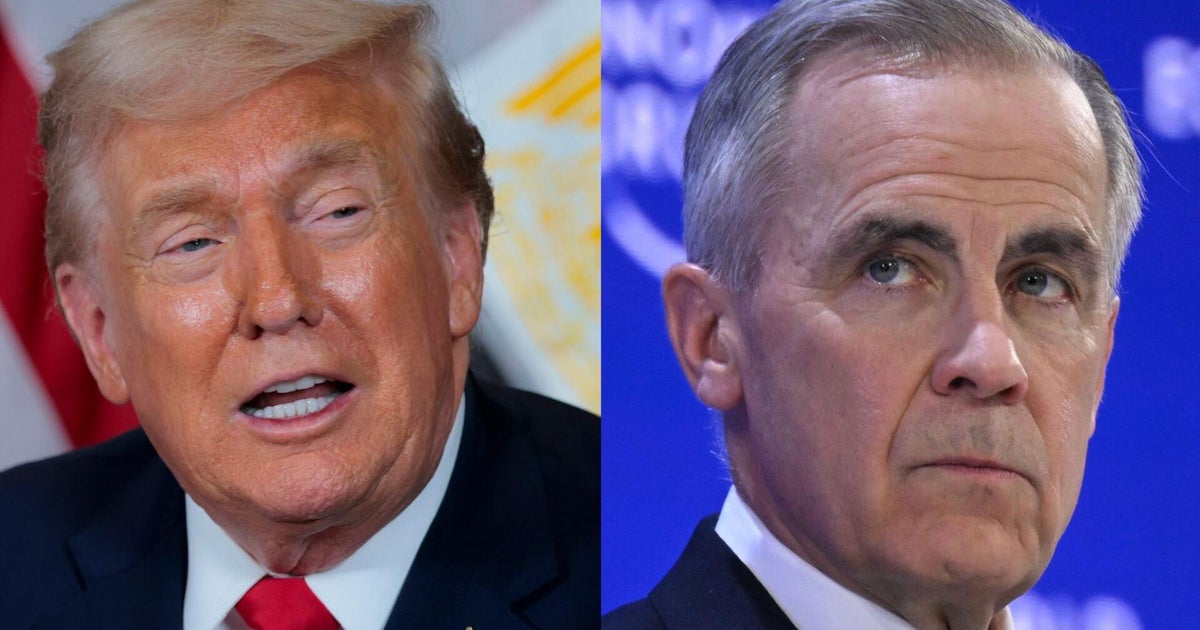
The United States and Canada are in urgent talks to avoid new U.S. tariffs that could raise taxes by 50% on $20 billion worth of Canadian products. President Trump has used tariffs as part of his economic strategy and wants Canada to increase purchases of U.S. military equipment and give more access to minerals, while Canada seeks relief from existing tariffs on steel, aluminum, and lumber.
Key Facts
The U.S. and Canada have a long history of friendly trade and military cooperation despite some disputes.
President Trump has imposed tariffs on Canadian goods to encourage U.S. manufacturing.
New tariffs of 50% on $20 billion of Canadian products may start on Wednesday unless talks succeed.
Most Canadian exports to the U.S. currently face a 10% tariff or are exempt under the U.S.-Mexico-Canada Agreement.
Canada wants relief from U.S. tariffs on steel, aluminum, and softwood lumber.
The U.S. seeks Canada to buy more U.S. military gear, participate in missile defense programs, and increase access to critical minerals.
President Trump uses tariffs as a key part of his economic policy and has imposed taxes on imports from many countries.
The U.S. Supreme Court ruled that some tariffs overstepped presidential authority, leading Trump to find other tariff routes.
Read the Original
Want the full story? Tap a source to open the original
article.
Florida voters will decide on Amendment 3 in November, a law that would raise the property tax exemption on homes and limit local government spending to core services. Supporters say it would reduce taxes for homeowners, while opponents warn it could cut funding for hospitals and essential services.
Key Facts
Amendment 3 would increase the homestead tax exemption from $50,000 to $150,000 in 2027, and to $250,000 in 2028.
The amendment limits local government spending to essential areas like public safety, education, infrastructure, and natural resource management.
The proposal is similar to a plan supported by Governor Ron DeSantis to eliminate property taxes on homesteads.
Opponents include economists, health officials, mayors, and former Republican lawmakers who fear the amendment will reduce funding for crucial services.
Courts ordered the amendment’s wording to be changed because it was found to be misleading about the benefits for all Floridians.
The amendment would reduce the yearly tax assessment increase on non-homestead properties from 10% to 5%.
It requires counties and municipalities to use property taxes only for specific purposes unless local governments approve other uses.
To pass, the amendment needs support from at least 60% of Florida voters on November 3, 2024.
Read the Original
Want the full story? Tap a source to open the original
article.
Voters in California’s 14th Congressional District are choosing a Democrat to replace former Representative Eric Swalwell, who resigned amid sexual assault allegations. State Senator Aisha Wahab and transit official Melissa Hernandez are competing in a special election marked by heavy spending from outside groups, including pro-Israel political action committees.
Key Facts
The special election is to fill Eric Swalwell’s seat after his April resignation.
Aisha Wahab and Melissa Hernandez were the top two candidates in a June nonpartisan primary.
California uses a "jungle primary" system where the top two candidates advance if no one wins over 50%.
Outside groups, including AIPAC-related super PACs, have spent about $4.1 million mainly supporting Hernandez.
Wahab is the first Muslim woman elected to California’s state Senate and has criticized Israel’s actions in Gaza.
Wahab is filing a complaint with the Federal Election Commission citing coordinated interference by outside groups on social media.
A supporter of Hernandez has also filed an FEC complaint against Wahab alleging illegal campaign support.
The 14th District’s boundaries will change in January 2025 due to Proposition 50, but the special election uses the current map.
Read the Original
Want the full story? Tap a source to open the original
article.
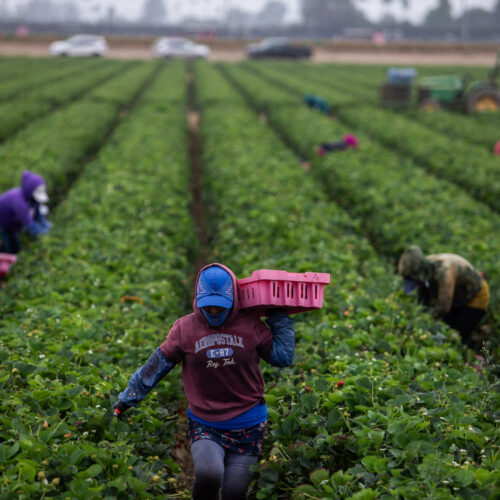
Climate change is making pesticides more dangerous for the 2.4 million farmworkers in the United States. Hotter temperatures increase the risk of pesticide exposure and harm because heat stresses the body, raises pesticide evaporation, and can turn pesticides into more toxic chemicals.
Key Facts
Heat makes farmworkers’ bodies more vulnerable to pesticides and other toxic chemicals.
Protective clothing adds to heat stress, which can increase pesticide absorption through the skin.
Hot weather causes more pesticides to evaporate, increasing air exposure.
Rising temperatures can create more toxic forms of pesticides through chemical changes.
More pests and weeds due to heat lead to greater pesticide use.
Many farmworkers are people of color and immigrants, making this an issue of environmental justice.
Most pesticide poisonings affect workers who do not handle pesticides directly.
Protective gloves can become less effective in high heat.
Pesticide exposure is linked to serious health problems like cancer, depression, and diabetes.
Family members of farmworkers can also be exposed to pesticide residues brought home on skin and clothes.
Heat-related illnesses and deaths among workers have been increasing, with about 34 deaths per year in the U.S.
Read the Original
Want the full story? Tap a source to open the original
article.
The article discusses the importance of teaching patriotism in American colleges. It emphasizes that loving one’s country means understanding and critically thinking about its history and actions, not just accepting everything without question.
Key Facts
Patriotism involves caring for the country with both support and critical thinking.
American colleges have a long history of teaching patriotism.
Loving the country does not mean agreeing with every decision made.
Education should encourage students to reflect on the nation's past and present.
Critical understanding helps deepen true love for the country.
Read the Original
Want the full story? Tap a source to open the original
article.
Duane ‘Keffe D’ Davis, a former gang leader, is on trial for the 1996 murder of rapper Tupac Shakur. This is the first time anyone has been officially charged in connection with Tupac’s death.
Key Facts
Duane ‘Keffe D’ Davis was a gang boss in the past.
He is accused of killing Tupac Shakur in 1996.
This trial is the first legal prosecution related to Tupac’s murder.
Prosecutors say Davis admitted to the crime in his memoir and interviews.
Davis’s defense team argues that his statements were false.
Tupac Shakur was a famous American rapper known worldwide.
The trial is happening over thirty years after Tupac’s death.
Read the Original
Want the full story? Tap a source to open the original
article.
Prescription drug prices in the U.S. have decreased by 3.1% over the past year, the largest drop since 1963. President Donald Trump credits his drug pricing deals and efforts like the TrumpRx website, but experts say many factors, including policies from President Joe Biden’s administration and increased competition from generic drugs, also contributed to the price declines.
Key Facts
U.S. prescription drug prices fell 0.8% in July 2026 and 3.1% over the previous year.
This is the biggest yearly drop in prescription drug prices since 1963.
President Trump says his “most favored nation” drug deals and the TrumpRx website helped lower prices.
Experts note that Biden-era laws, like the Inflation Reduction Act, let Medicare negotiate drug prices, which also helped reduce costs.
New generic and biosimilar drugs have created competition, pushing prices down for expensive brand-name drugs.
The official drug price index measures payments to pharmacies, not necessarily what consumers pay out of pocket.
Healthcare researchers say it is hard to attribute the price drop to one single policy or factor.
The Trump administration continues some of the negotiating policies started under Biden’s administration.
Read the Original
Want the full story? Tap a source to open the original
article.
The CDC still has several health programs funded by Congress, such as for Alzheimer’s disease and smoking prevention, but many have few or no staff due to layoffs under President Donald Trump’s administration. The new CDC director, Dr. Erica Schwartz, faces pressure from lawmakers to restart these reduced programs.
Key Facts
Congress allocated millions of dollars for CDC programs, including $41 million for Alzheimer’s and $246 million for smoking and health.
Many of these programs have little or no staff because of layoffs that began in April 2025 under President Trump’s administration.
The layoffs were part of a plan to reorganize health agencies into a new subagency called the Administration for a Healthy America.
This reorganization faced opposition in Congress and has not been completed.
Layoffs affected many employees, including researchers, doctors, and support staff.
Some staff cuts have been reversed after lawsuits and political pressure, but many remain.
Senator Tim Kaine asked Dr. Erica Schwartz at her confirmation hearing if she would follow the law to revive the smoking prevention program.
Dr. Erica Schwartz said she would always follow the law as CDC director.
Read the Original
Want the full story? Tap a source to open the original
article.
Early Tuesday morning, two explosions caused a large fire at Brent Industries, an industrial recycling business in Toledo, Ohio. Firefighters responded quickly, and authorities asked people to avoid the area while they worked to put out the fire. There is no information yet about any injuries or deaths.
Key Facts
The incident happened shortly before 5 a.m. at Brent Industries in Toledo, Ohio.
Two explosions occurred, leading to a large fire at the site.
The Toledo Fire & Rescue Department responded with many fire engines.
Flames and thick smoke were visible coming from the building.
Officials asked the public to stay away for safety while firefighting continued.
Brent Industries is a company that does textile reconditioning and industrial recycling.
The company was founded in 1977 in Brent, Alabama, and also has operations in Toledo.
No reports have been given yet about casualties or injuries.
Read the Original
Want the full story? Tap a source to open the original
article.
Florida and Alaska held key Republican primaries affected by recent redistricting efforts. In Alaska, a unique Senate race features two candidates named Dan Sullivan, while Florida's redrawn maps have led to competitive and notable contests, including one involving Representative Debbie Wasserman Schultz.
Key Facts
Florida and Alaska held Republican primary elections influenced by recent redistricting, changing congressional district boundaries.
Republicans currently hold a slim majority in Congress ahead of the fall midterm elections.
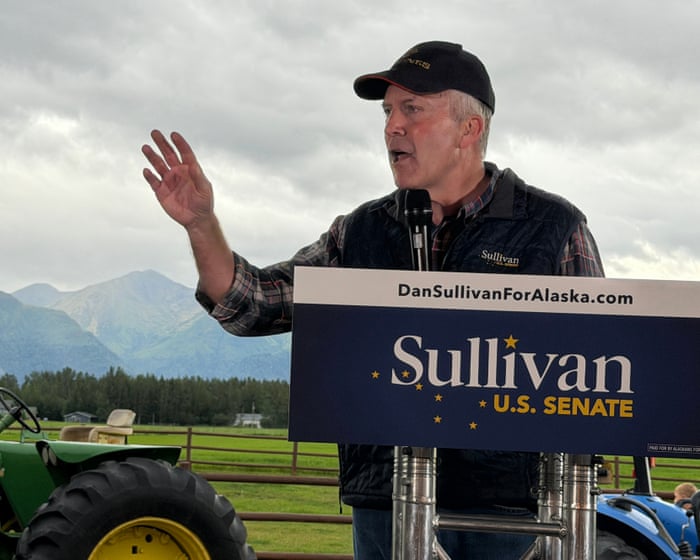
Alaska’s Senate race includes incumbent Republican Dan Sullivan and another candidate named Daniel J. Sullivan Jr., who some Republicans claim is a fake candidate.
Mary Peltola, a former representative and the first Alaska Native in Congress, is also competing in Alaska’s Senate race.
In Florida, Debbie Wasserman Schultz is running in a newly drawn district that has created unusual matchups and raised concerns about Black representation after a Supreme Court decision.
Wasserman Schultz faces competition from Black candidates, including rapper Luther “Uncle Luke” Campbell and former representative Sheila Cherfilus-McCormick, who resigned amid criminal charges.
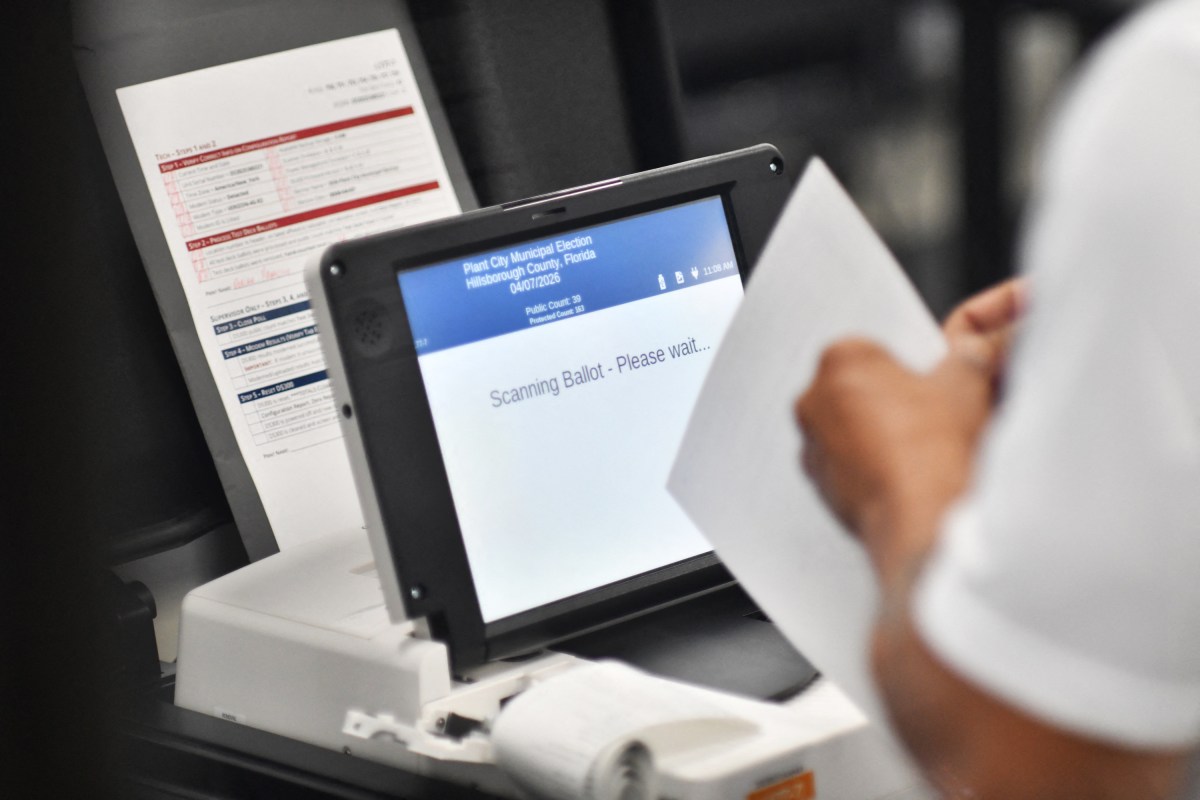
President Donald Trump voted by mail in Florida’s Republican primary; this is at least his third time voting by mail.
Other developments include a California county hiring an election denier and tensions between President Trump and CNN reporter Kristen Holmes during a White House confrontation.
Read the Original
Want the full story? Tap a source to open the original
article.
The Trump administration has removed or changed nearly 400 federal datasets on topics like public health, education, and the environment. These changes include deleting data on LGBTQ+ people and stopping updates on key health surveys, which experts say could harm public decision-making.
Key Facts
About 28 federal datasets have been deleted and 338 altered since President Trump began his second term.
The changes affect data from over 60 government agencies in areas like environment, law enforcement, labor, and health.
Health datasets are most affected, making up roughly 40% of the altered or deleted collections.
Several Centers for Disease Control and Prevention (CDC) surveys removed questions about gender identity due to an executive order by President Trump.
Four important health datasets, including those tracking drug overdoses, have stopped being updated.
Removal of data could harm efforts to track and respond to epidemics and public health trends.
Agricultural and education surveys, such as those on farmworker employment and teacher pay, were also deleted or altered.
Dataindex.us, a group monitoring these changes, warns about losing crucial information needed for public health and policy decisions.
Read the Original
Want the full story? Tap a source to open the original
article.