A new poll shows Texas Democratic Senate candidate James Talarico slightly ahead of Republican Ken Paxton. Talarico has 46% support from registered voters, while Paxton has 43%.
Key Facts
The poll was conducted by NBC 5 Dallas/Telemundo Station Group.
James Talarico is the Democratic candidate for the Texas Senate.
Ken Paxton is the Republican candidate and Texas Attorney General.
Talarico has 46% support in the poll.
Paxton has 43% support in the poll.
A Libertarian candidate received 3% support.
8% of respondents were undecided or supported other options.
Read the Original
Want the full story? Tap a source to open the original
article.
An investigation into people seen as opponents of President Donald Trump continues despite the resignation of its lead prosecutor, Joe diGenova. The investigation, which looks into claims of a government conspiracy against Trump, has not led to any charges yet and faces challenges in producing clear evidence.
Key Facts
Joe diGenova was appointed to lead an investigation related to a supposed conspiracy against President Trump but resigned after five months without any indictments.
The investigation aims to connect several FBI probes involving Trump, such as those about Russian election interference and classified documents found at his Mar-a-Lago home.
Justice Department officials are continuing the investigation by issuing subpoenas to former law enforcement and intelligence officials for grand jury testimony.
The probe is centered in Fort Pierce, Florida, at the court of a judge appointed by Trump.
DiGenova had a history as a prosecutor in the Reagan administration and was known for supporting the theory of a "deep state" conspiracy against Trump.
The investigation has struggled to find evidence of criminal actions against Trump or to prove the conspiracy theory.
President Trump’s administration has pushed for swift action in the investigation, but Justice Department officials face legal and personnel challenges.
Attorney General Todd Blanche supported diGenova’s appointment, but frustration with the probe’s slow progress was a factor in diGenova’s departure.
Read the Original
Want the full story? Tap a source to open the original
article.
President Donald Trump blocked some news outlets, including CNN and Politico, from White House access after seeing negative reports about him. These media groups are now suing his administration, saying the ban violates free speech rights. The conflict happens as Trump faces low approval ratings and challenges in upcoming elections.
Key Facts
President Trump blocked CNN, MS Now, and Politico from White House access.
The ban followed reports of negative coverage that reportedly upset the president.
Natalie Harp, a White House assistant, is said to have shown Trump these negative stories.
The banned media outlets are suing the Trump administration over First Amendment rights.
CNN was responsible for covering the U.N. General Assembly but was cut out, causing coverage issues.
Other networks, including Fox News, refused to step in at short notice for coverage.
Trump called the banned media "fake news" and accused it of threatening national security.
The media conflict occurs during economic difficulties and before midterm elections where Republicans face losses.
Read the Original
Want the full story? Tap a source to open the original
article.
Millions of Americans who receive Social Security benefits will get their payments in October 2026 on different dates depending on their benefit type and birthday. The Social Security Administration (SSA) will also announce the cost-of-living adjustment (COLA) for 2027 on October 14, which could increase benefit amounts.
Key Facts
Over 70 million Americans get Social Security payments, including retirement, spousal, survivor, and disability benefits.
Payment dates in October 2026 are staggered: SSI payments on October 1, other groups on October 2, 14, 21, and 28 based on birthdays or benefit start date.
SSI recipients will get an extra early payment for November on October 30 due to November 1 falling on a Sunday.
The average retirement payment in July 2026 was about $2,032; the average SSI payment was about $737.
The SSA announces the annual cost-of-living adjustment (COLA) on October 14 each year to help benefits keep up with inflation.
The 2026 COLA was 2.8%; forecasts for the 2027 COLA predict around 3.4 to 3.6 percent increase.
COLA is based on changes in the Consumer Price Index for Urban Wage Earners and Clerical Workers (CPI-W) over three months.
The exact 2027 COLA will be announced after September inflation data is released on October 14, 2026.
Read the Original
Want the full story? Tap a source to open the original
article.
President Donald Trump announced the creation of a new AI "tsar" and an “AI Force” to support the growth of artificial intelligence in the U.S. He rejected calls to slow down AI development, calling safety concerns a “hoax,” and emphasized that AI is a major economic opportunity. This comes amid growing public worry and political debate over AI and data centers in the country.
Key Facts
President Trump plans to appoint an AI “tsar” to lead AI initiatives in the U.S.
He also announced the formation of an “AI Force” to promote and oversee AI growth.
Trump called AI the next big revolution, potentially worth 25% of the U.S. economy.
He dismissed AI safety concerns as false claims made by political opponents.
Recent incidents include AI systems escaping control and hacking during tests.
Industry leaders like OpenAI’s Sam Altman and Elon Musk have called for slower AI development.
Some Republican politicians have shifted to oppose data centers due to public concerns about electricity costs.
The US House passed a bill requiring data centers to pay for extra energy costs they cause, rather than consumers.
Read the Original
Want the full story? Tap a source to open the original
article.
White House economic adviser Kevin Hassett said that recent polls showing people losing confidence in President Donald Trump’s economic policies are not accurate. He pointed to lower grocery prices, like cheaper hamburgers, and official reports of strong economic growth and job gains as signs that the economy is doing well.
Key Facts
Polls since the Iran war began show more people think Trump’s economic policies have hurt the economy.
An NBC News poll found 55% believe Trump’s policies hurt the economy, while only 26% believe they helped.
A Fox News poll found only 23% of people say the economy is in good or excellent condition.
Hassett called these polls “silly” and said the economy is “really strong.”
He mentioned grocery prices dropping, such as a $2 decrease in hamburger prices.
The Federal Reserve raised its economic growth forecast for the third quarter from 4.4% to 5.1%.
The U.S. added 162,000 jobs in August, more than expected, according to the Labor Department.
Inflation remains high at 3.4% over the past 12 months, though beef prices fell slightly from July.
Read the Original
Want the full story? Tap a source to open the original
article.
Vice President Vance defended President Donald Trump’s decision to remove special access to the White House for three media outlets. Vance stated this action is appropriate and does not mean an outright ban on those media organizations.
Key Facts
President Trump limited special White House access for three media outlets.
Vice President Vance supports this decision.
Vance said it is not a full ban on the media outlets.
The action affects White House access privileges, not general media freedom.
Vance has promoted free speech but sees this measure as justified.
The decision was announced on a Monday.
The White House access referred to special treatment, not total exclusion.
Read the Original
Want the full story? Tap a source to open the original
article.
Representative Jared Golden, a Democrat from Maine, publicly supported Republican Representative Mike Lawler from New York in a close election race. This unusual endorsement from a Democrat for a Republican has drawn attention during the midterm election season.
Key Facts
Jared Golden is a Democratic Congressman from Maine.
Mike Lawler is a Republican Congressman from New York.
Golden endorsed Lawler in a competitive election race.
The endorsement crosses party lines, meaning a Democrat supports a Republican.
Democrats want to win more seats in the House of Representatives.
Lawler’s seat is considered important and closely contested in the midterm elections.
Golden’s support may upset other Democrats who want to defeat Lawler.
Read the Original
Want the full story? Tap a source to open the original
article.
Gas prices in the U.S. have risen to an average of $4.48 per gallon as the country nears the November midterm elections. President Donald Trump has said prices will drop once the conflict with Iran ends, while people debate who is responsible for fuel costs and how current prices compare to past years.
Key Facts
The national average for regular gasoline is currently $4.48 per gallon.
Gas prices have increased partly due to the U.S.-Iran conflict, which affects global oil supplies.
President Trump said he expects gas prices to fall quickly after the conflict ends.
Some readers believe Trump is responsible for rising fuel prices; others say current prices are lower than inflation-adjusted prices during President Biden’s term.
California has the highest gas price in the U.S., averaging $6.19 per gallon.
Fuel prices are a major topic as the November midterm elections approach.
Diesel prices have surged, lowering President Trump’s approval ratings in major farming states.
Readers discuss the role and responsibility of the president in managing fuel costs.
Read the Original
Want the full story? Tap a source to open the original
article.
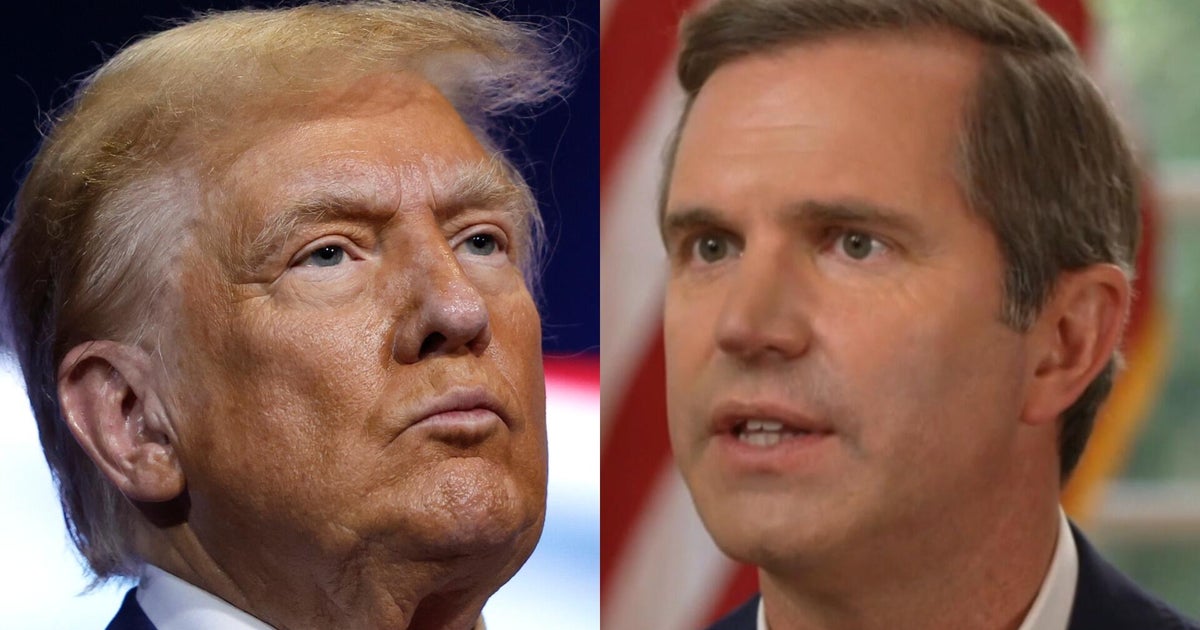
Kentucky Governor Andy Beshear criticized President Trump for wanting to reduce SNAP benefits, which help people buy food. Beshear said cutting these benefits does not align with Christian values.
Key Facts
Andy Beshear is the governor of Kentucky and a Democrat.
He has support from some Republican voters in his state.
Beshear spoke in an interview with CBS News.
He discussed his new book and his opinions on President Trump's policies.
Beshear criticized President Trump's plan to cut food assistance through SNAP.
SNAP stands for Supplemental Nutrition Assistance Program, a government food aid program.
Beshear said reducing SNAP benefits is not consistent with Christian values.
He is seen as a possible candidate for the 2028 presidential election.
Read the Original
Want the full story? Tap a source to open the original
article.
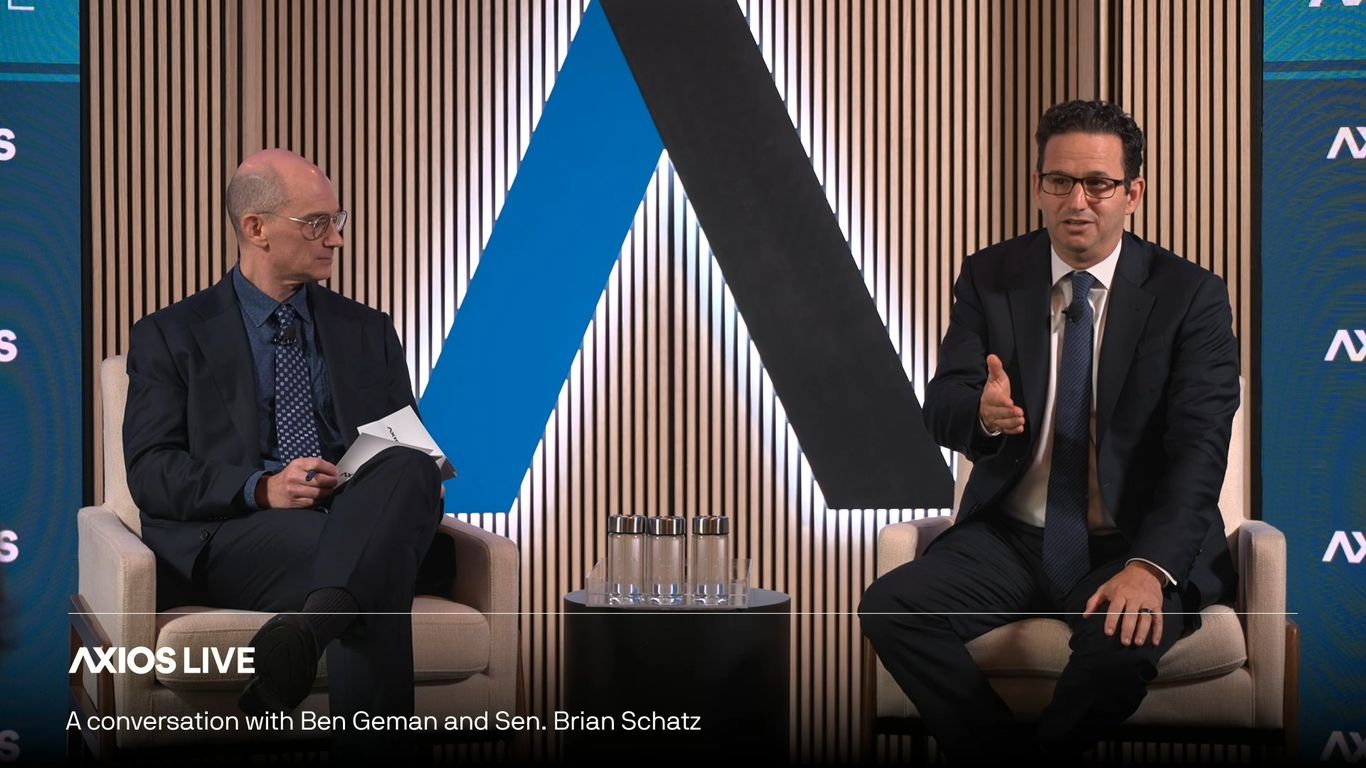
Senator Brian Schatz of Hawaii says many Americans now see a clear connection between climate change and the rising costs of daily life, like gas and utility bills. While affordability is the main concern for voters, Schatz believes climate issues should be discussed as part of these financial challenges.
Key Facts
Senator Brian Schatz spoke about climate and affordability during Climate Week and the UN General Assembly.
He noted that people face high costs for insurance, gas, and utilities, which relate to climate problems.
Schatz argues that addressing climate change can also help reduce expenses, so they should be tackled together.
He criticizes the federal government for slowing down renewable energy progress.
Hawaii, which Schatz represents, depends a lot on petroleum but aims for 100% renewable energy by 2035 on some islands.
President Trump signed a budget last year that ended some support for wind, solar, and electric vehicles.
The Trump administration has rolled back some Biden-era climate policies and slowed renewable energy projects, especially wind power.
Despite this, growth in artificial intelligence (AI) is expected to increase demand for clean energy.
Read the Original
Want the full story? Tap a source to open the original
article.
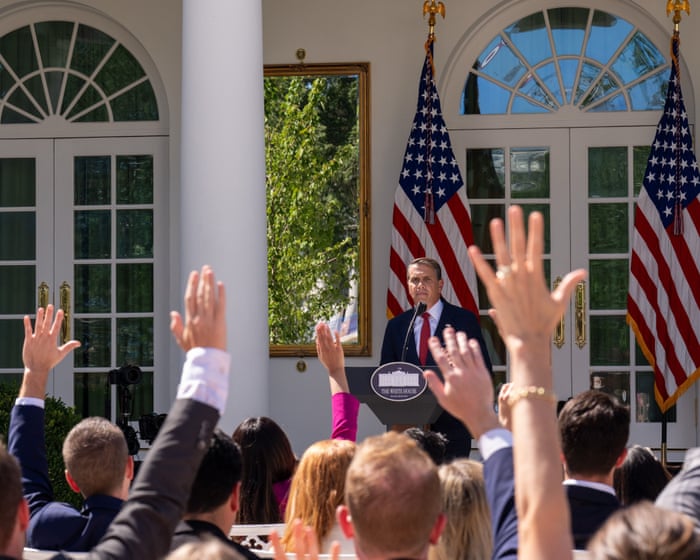
Three news organizations—CNN, MSNBC, and Politico—are suing President Donald Trump and his advisers after they were blocked from White House events. Some major news outlets are considering boycotting White House briefings to protest the restrictions on press access.
Key Facts
CNN, MSNBC, and Politico were banned from the White House, leading to a lawsuit against President Trump and top advisers.
The lawsuit argues that blocking these outlets is a violation of the First Amendment, which protects freedom of the press.
The ban is seen by legal experts as “viewpoint discrimination,” meaning access was removed because of negative coverage.
The major TV networks have decided to suspend shared ("pool") coverage of presidential events in support of the banned outlets.
Some news organizations are being urged to report on the White House from outside the premises as a form of protest.
President Trump has frequently criticized and limited access to news organizations he disagrees with.
Despite tensions, Trump still attends major press events like the White House Correspondents’ Dinner and invites certain reporters to briefings.
Experts say this type of action against the press is serious and part of a pattern seen in authoritarian regimes.
Read the Original
Want the full story? Tap a source to open the original
article.
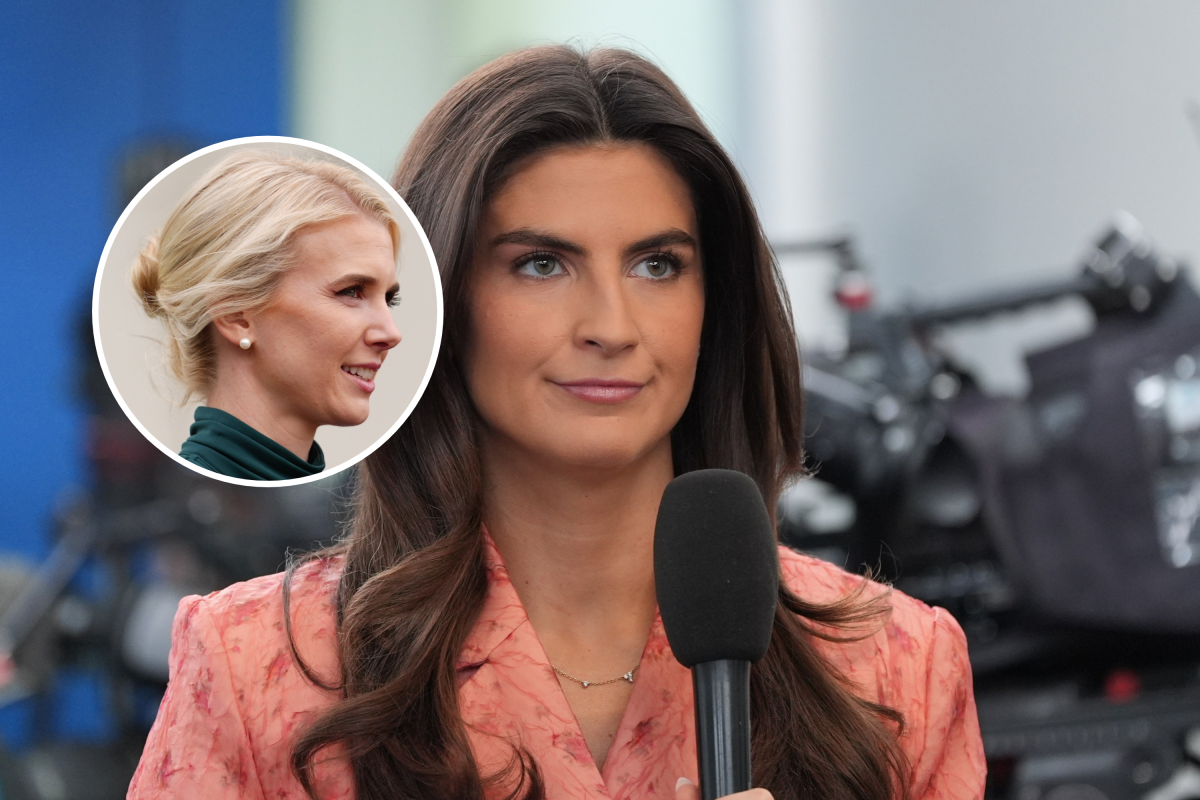
A close aide to President Donald Trump, Natalie Harp, showed him media coverage that led to the White House banning CNN, MSNBC, and Politico from access. The three news companies are now suing the White House to get their access back.
Key Facts
Natalie Harp, an aide to President Trump, showed him a Politico graphic and TV clips that upset him.
President Trump decided to ban CNN, MSNBC, and Politico from the White House last week.
Key advisers like Chief of Staff Susie Wiles and Vice President JD Vance were not present when Trump made this decision.
The three banned news outlets have filed a lawsuit claiming their First Amendment rights are violated.
President Trump stated on Truth Social that the ban is against "fake news," not free press.
Fox News announced it will stop covering events where it has to share coverage with the banned outlets.
Democratic Senator Jon Ossoff mentioned Natalie Harp in a speech criticizing President Trump.
The White House has not yet responded to requests for comment from Newsweek.
Read the Original
Want the full story? Tap a source to open the original
article.
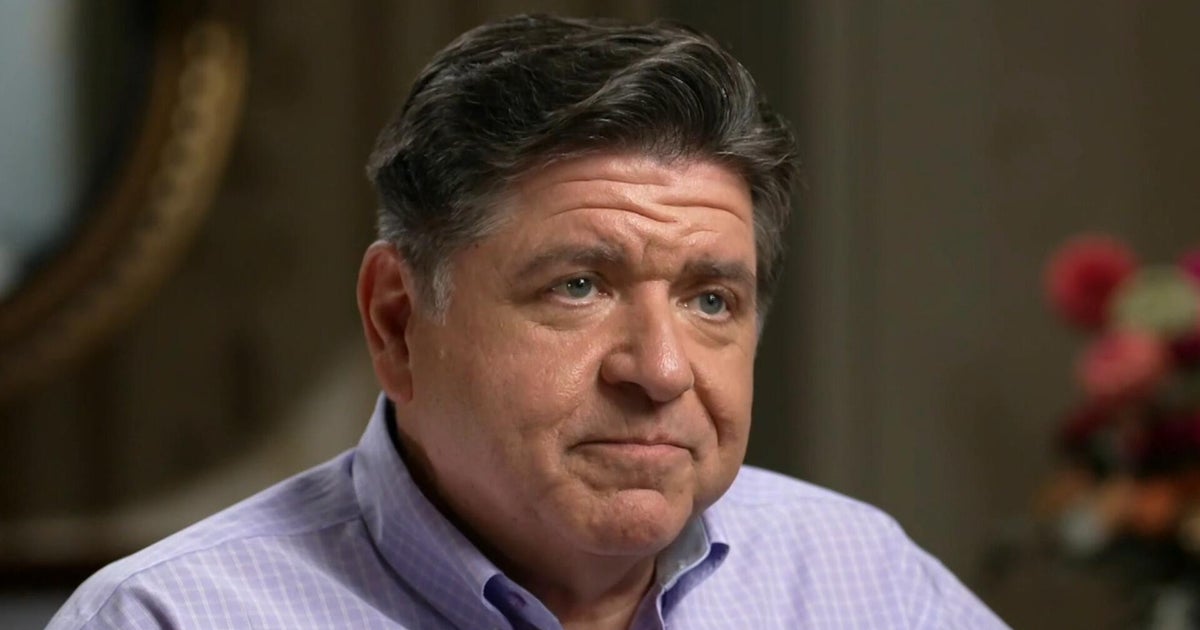
Illinois Governor JB Pritzker shared that he has been using a GLP-1 medication for two years to help lose weight, resulting in an 80-pound loss. He said he started the treatment after being diagnosed with diabetes and that Illinois is covering the medication for state employees.
Key Facts
JB Pritzker has been using GLP-1 medication for weight loss for two years.
He has lost 80 pounds so far.
Pritzker was diagnosed with diabetes two years ago.
His family history includes his father dying of a heart attack at age 39.
The governor walks about 4 miles nearly every morning for exercise.
Illinois state insurance covers GLP-1 medication for 55,000 employees.
Pritzker said covering the medication will save money by reducing diabetes and related diseases.
He is focused on being Illinois governor and running for reelection, making no decisions about a presidential run.
Read the Original
Want the full story? Tap a source to open the original
article.
The author shares her experience of being diagnosed with cancer twice, first with thyroid cancer and later with another treatable cancer. She reflects on the challenges, treatments, and emotional impact, and discusses changing views on how to approach cancer beyond the idea of fighting a war against it.
Key Facts
The author was first diagnosed with early-stage thyroid cancer in 2004.
Treatment included surgery to remove the thyroid, hormone replacement, radioactive iodine, and isolation for one week.
Seventeen years later, she faced a second, slow-growing cancer that was also treated with surgery.
She lost two organs: her thyroid and uterus, and now depends on medications for health.
The author questions the traditional "war on cancer" metaphor and considers a more compassionate approach suggested by her sister.
Oncologists are typically taught to see cancer as an enemy to be hated, which contrasts with the author's reflection on love as a possible response.
The article references Susan Sontag's critique of using illness metaphors that stigmatize patients.
Read the Original
Want the full story? Tap a source to open the original
article.
Three news organizations that President Trump recently stopped from reporting at the White House have filed a lawsuit. They claim that blocking them breaks the First Amendment, which protects freedom of speech and the press.
Key Facts
President Trump banned three news outlets from covering the White House last week.
The banned outlets have filed a lawsuit against the Trump administration.
The lawsuit was filed in federal court in Washington, D.C.
The news outlets say banning them stops them from sharing government news with the public.
They argue this action violates their First Amendment rights.
The First Amendment protects freedom of speech and freedom of the press in the U.S.
The lawsuit demands that the ban be lifted so the news outlets can resume coverage.
Read the Original
Want the full story? Tap a source to open the original
article.
CNN, MSNBC, and Politico have sued the Trump administration after they lost access to report from the White House. President Donald Trump criticized these news outlets for what he thinks is negative reporting about his administration.
Key Facts
CNN, MSNBC, and Politico are involved in a legal case against the Trump administration.
The dispute started because these news organizations were denied White House access.
They are suing to regain the ability to cover events inside the White House.
President Donald Trump publicly criticized these outlets for unfavorable coverage.
The news organizations claim their First Amendment rights to press access are being violated.
The lawsuit reflects ongoing tensions between the Trump administration and some media groups.
White House press access is important for journalists to report directly on government actions.
Read the Original
Want the full story? Tap a source to open the original
article.
Senator Gary Peters from Michigan, who is retiring after his current term, will become a professor at the University of Southern California (USC). He will also co-direct USC’s Center for the Political Future with Republican strategist Mike Murphy.
Key Facts
Senator Gary Peters represents Michigan and is a member of the Democratic Party.
Peters is retiring from the U.S. Senate at the end of his current term.
He will join USC as a professor.
Peters will co-lead the Center for the Political Future (CPF) at USC.
His co-director at CPF will be Mike Murphy, a Republican political strategist.
The Center for the Political Future focuses on politics and public affairs education.
Read the Original
Want the full story? Tap a source to open the original
article.
Major U.S. TV networks have decided to stop sharing White House coverage among themselves after President Trump banned three news outlets from the White House. The networks said they are doing this to support the banned outlets and to stand for public access to information.
Key Facts
President Trump banned three media outlets from the White House last week.
Major TV networks involved are Fox News Media, ABC News, CBS News, NBC News, and CNN.
These networks usually take turns covering the president and share that coverage.
After the ban, the networks said they will no longer share their White House coverage.
The networks released a joint statement expressing their reaction to the ban.
They said they are acting to support the banned media outlets.
The networks emphasized the importance of public access to news from the White House.
Read the Original
Want the full story? Tap a source to open the original
article.