The White House announced new tariff rates for over 65 countries and the European Union, with implementation starting soon. The new tariffs reflect recent trade deals and ongoing negotiations, and they vary by country.
Key Facts
President Trump set new tariff rates for more than 65 countries and the European Union.
The tariffs include rates from previous announcements and new trade deals.
Most new tariffs will not start immediately and will take effect at least a week after August 1.
An additional 10% tariff will apply to countries not listed in the executive order by next week.
Canadian goods outside the USMCA agreement face a 35% tariff starting Friday due to drug trafficking concerns.
Negotiations with China are ongoing; current tariffs from a prior order remain in place.
Mexico's new tariff rates are on hold pending further negotiations.
U.S. importers pay tariffs directly, which can lead to higher prices for American businesses and consumers.
The U.S. Senate recently voted on a resolution to block a weapons sale to Israel. Although the measure did not pass, a notable number of Democratic senators supported it, signaling a potential shift in U.S. support for Israel. The vote reflects growing concerns about the humanitarian situation in Gaza and ongoing debates over U.S. military aid to Israel.
Key Facts
The Senate voted on a resolution to stop a weapons sale to Israel, but the measure failed in a 27-70 vote.
The proposal was introduced by Senator Bernie Sanders.
This vote had more support than past attempts, showing a shift, especially among Democratic senators.
All Republican Senators opposed the measure, while 27 Democratic Senators voted in favor.
A separate bill to block bomb shipments to Israel also did not pass, with a 24-73 vote.
The vote comes amid criticism of Israel's actions in Gaza, which some groups describe as genocidal.
Senator Tammy Duckworth, among others, cited humanitarian concerns as a reason for her support of the resolution.
The Council on American Islamic Relations (CAIR) called the vote a "historic sign of progress" for those advocating for Palestinian rights.
The U.S. Department of Defense will continue sharing important satellite data that helps track hurricanes. This decision comes after plans to stop sharing the data raised concerns among scientists about hurricane tracking accuracy. The data will now remain available until the satellite program ends in 2026.
Key Facts
The U.S. Department of Defense will keep sharing data from three weather satellites.
This data helps meteorologists accurately track hurricanes.
The plan to stop sharing was postponed due to cybersecurity and modernization issues.
Officials found a way to continue sharing the data without interruptions until 2026.
The data helps provide crucial information not available from regular satellites.
With the data, forecasters can better predict storms and issue timely warnings.
Other data sources would have provided only half the information without this satellite data.
The data also aids in tracking Arctic sea ice loss.
Thousands of police officers in New York City lined the streets to honor Didarul Islam, a police officer who was killed in a shooting at an office building. Islam was providing security when he was shot, and city officials attended his funeral to pay their respects.
Key Facts
Didarul Islam, a New York police officer, was shot and killed in a shooting in a New York City office building.
The shooting occurred on Park Avenue in Midtown Manhattan.
Islam was 36 years old and had moved to the United States from Bangladesh.
He had two children and was expecting a third with his pregnant wife.
Thousands of police officers attended the funeral to honor him.
New York Governor Kathy Hochul and New York City Mayor Eric Adams were present at the funeral.
A funeral was held for NYPD Officer Didarul Islam, who was killed in a shooting at an office building in New York City. Officer Islam was a Bangladeshi immigrant who served with the NYPD and was working a security detail when he died. Community members, fellow officers, and dignitaries gathered to honor his service and commitment.
Key Facts
Officer Didarul Islam was shot and killed in an office building in Manhattan.
The building houses the NFL headquarters among other offices.
Islam was originally from Bangladesh and later joined the NYPD.
He was a married father with two children and a third on the way.
The funeral included a large turnout from the community and his fellow officers.
He was posthumously promoted to detective.
U.S. President Donald Trump sent condolences to Islam’s family.
A digital billboard displayed photos and tributes for Officer Islam during the service.
The Tennessee Supreme Court ruled that Byron Black, a man on death row with a defibrillator, can be executed without removing the device, contrary to a lower court's decision. His defense argued that the defibrillator could cause complications during execution, but the state argued this decision goes beyond the lower court's power.
Key Facts
The Tennessee Supreme Court allowed Byron Black's execution to proceed without removing his implanted defibrillator.
Byron Black is on death row for a 1988 triple murder.
His execution date was set, but his defense argued the defibrillator might cause a painful death.
The lower court had ruled for the device’s removal, but the higher court overturned this.
The Supreme Court stated removing the defibrillator would delay the execution unlawfully.
Medical workers declined participation, citing ethical concerns.
The court did not address whether defibrillator complications could breach constitutional rights.
The US remains one of the few Western countries still using capital punishment, with ongoing debates about its methods.
The family of Virginia Giuffre expressed surprise over statements made by former President Donald Trump, claiming Jeffrey Epstein "stole" her from his spa. Trump shared this claim while discussing his past relationship with Epstein and called for further government document releases related to the Epstein case. Giuffre, who previously accused Epstein of sex trafficking, died by suicide in April 2023.
Key Facts
Virginia Giuffre accused Jeffrey Epstein of sex trafficking and assault.
Trump claimed Epstein "stole" Giuffre from his spa, Mar-a-Lago.
Giuffre died by suicide in April 2023 in Australia.
Trump mentioned this while discussing his past links with Epstein.
The Giuffre family wants more information released about the Epstein case.
Trump has called for releasing government records related to high-profile cases, including Epstein's.
Conspiracy theories surround Epstein's 2019 death and his connections with influential people.
The FBI and Justice Department state no evidence of a "client list" from Epstein exists.
President Donald Trump's friendship with Jeffrey Epstein ended around the mid-2000s, with different accounts about why and when it happened. Trump claims Epstein was banned from his Mar-a-Lago club for inappropriate behavior and for taking spa employees. The timeline and reasons are unclear, with various reports offering different explanations.
Key Facts
Trump and Epstein were friends before Trump's presidency, attending parties and social events together.
Trump publicly praised Epstein in 2002, calling him a “terrific guy.”
Trump claims he banned Epstein from Mar-a-Lago for taking spa employees and inappropriate behavior toward a teenager.
In 2019, Trump said he had not spoken to Epstein for 15 years, implying their friendship ended in 2004.
Different accounts from Trump and his circle suggest multiple reasons and timelines for their fallout.
Virginia Giuffre, an accuser of Epstein, reportedly worked at Mar-a-Lago and was allegedly taken by Epstein.
Edward Zakrzewski was executed in Florida for the 1994 murder of his wife and two children. His execution is the ninth in Florida this year, setting a new state record since the death penalty's return in 1976.
Key Facts
Edward Zakrzewski was convicted of killing his wife and two children in 1994.
He was executed by a three-drug injection at Florida State Prison near Starke.
His execution marks Florida's ninth this year, the most since the reinstatement of the death penalty in 1976.
Florida's previous highest number of executions in a year was eight, achieved in 2014.
Zakrzewski's final words included a statement of thanks and a poem.
The execution was witnessed by 14 people, including reporters and prison staff.
No family members of the victims spoke to the media after the execution.
President Trump is considering imposing tariffs on various countries, but there is uncertainty about the deadline. He extended the deadline for Mexico by 90 days. Economist Jason Furman discussed these developments.
Key Facts
President Trump set a deadline for implementing tariffs on dozens of countries.
Trump announced a 90-day extension on tariffs for Mexico.
Economist Jason Furman discussed these trade developments.
Furman is an economics professor at Harvard Kennedy School.
He previously led the Council of Economic Advisers.
The situation involves uncertainty due to the mixed messages about the tariff deadlines.
More than half of the Democratic senators voted to block weapons sales to Israel in a recent congressional vote, although the vote did not pass. Sen. Jeanne Shaheen, a leading Democrat on the Senate Foreign Relations Committee, was among those who supported the measure.
Key Facts
A vote was held in Congress to block weapons sales to Israel.
The vote did not reach the number needed to stop the sales.
More than half of Democratic senators supported the blocking measure.
This level of support from Democrats is the highest it has been so far.
Sen. Jeanne Shaheen is a leading Democrat who voted in favor of blocking the sales.
The discussion about this issue took place in an interview with Amna Nawaz.
President Trump's changing responses about his past relationship with Jeffrey Epstein are drawing more attention. Julie Brown from the Miami Herald, whose reports led to Epstein's charges, discusses the situation further.
Key Facts
President Trump is being asked to release files related to Jeffrey Epstein.
Trump's answers about his past relationship with Epstein have changed over time.
Julie Brown is a reporter for the Miami Herald.
Julie Brown's reporting in 2017 and 2018 helped lead to sex trafficking charges against Jeffrey Epstein.
Brown's work identified nearly 80 victims of Epstein.
The discussion about Trump's relationship with Epstein is ongoing.
Glenn Kessler, a fact checker at The Washington Post for 14 years, is leaving his position. He used a scale with up to four Pinocchios to evaluate the truthfulness of political claims. Kessler is among several journalists leaving the publication as it takes new directions.
Key Facts
Glenn Kessler worked as a fact checker for 14 years at The Washington Post.
The fact-checking project used a four Pinocchio scale to rate truthfulness.
Kessler's final column focused on the challenge of getting people to pay attention to fact-checkers.
Several journalists are leaving The Washington Post due to changes in the paper's leadership.
Kessler talked about the history and importance of fact-checkers in an NPR interview.
The podcast episode was produced by Alejandra Marquez Janse and Connor Donevan.
The Trump administration is questioning an intelligence report that says Russia tried to interfere in the 2016 U.S. election to help Trump win. Former CIA analyst Michael Van Landingham spoke to Geoff Bennett about these claims.
Key Facts
U.S. intelligence concluded that Russia interfered in the 2016 election.
The interference was said to be ordered by Russian President Vladimir Putin.
The goal of the Russian interference was allegedly to help Donald Trump get elected.
The Trump administration claims the intelligence report is part of a conspiracy.
The administration's claims suggest involvement by the Obama White House.
Former CIA analyst Michael Van Landingham shared his insights on the matter.
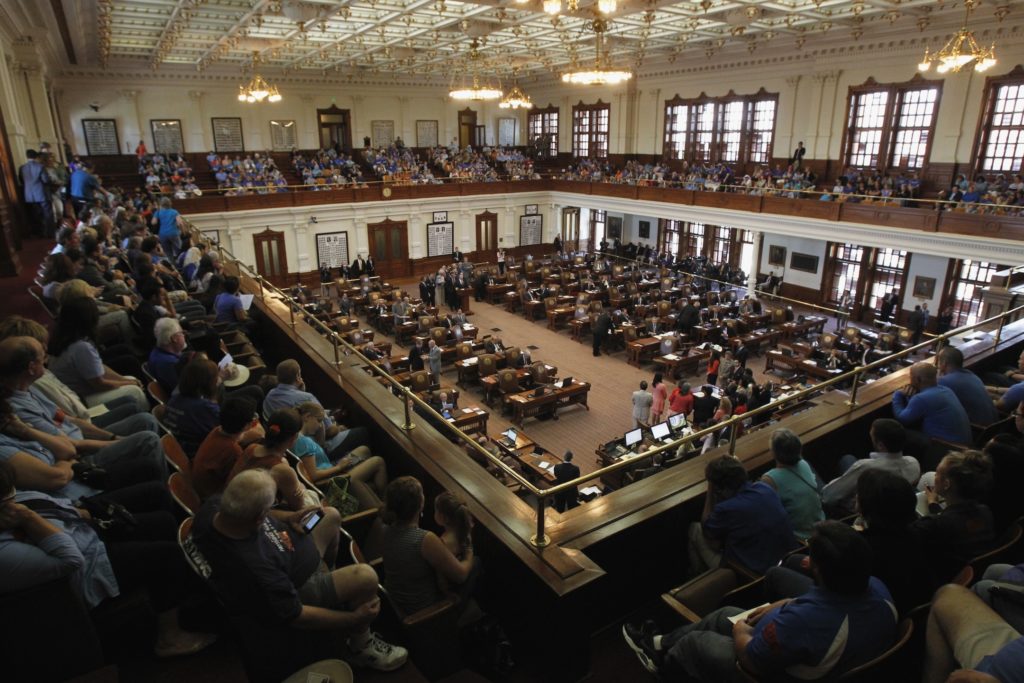
Texas is changing its congressional district maps to favor Republicans, influenced by former President Trump's encouragement. This effort aims to help Republicans keep control of the House of Representatives.
Key Facts
Texas is reviewing its congressional district maps in the middle of the decade.
The goal is to redraw the maps to benefit Republican candidates.
Former President Trump urged Texas leaders to make these changes.
Redistricting can affect which party has more control in elections.
The changes are part of a strategy to maintain Republican control of the House.
This action could impact next year's midterm elections.
Ali Rogin and Abby Livingston discussed these changes and their implications.
Texas lawmakers held a public hearing in Kerrville to discuss the response to the deadly floods that hit central Texas on July 4. Flood survivors and local officials provided testimony, highlighting issues like poor communication and delayed warnings during the emergency. The floods resulted in over 130 deaths, sparking discussions about improving disaster preparedness.
Key Facts
The hearing took place in Kerrville, Texas and focused on the recent floods that occurred on July 4.
Over 130 people died in the floods, especially in areas along the Guadalupe River.
Key local officials, such as emergency coordinators and the sheriff, were unavailable during the early hours of the flood.
Lawmakers questioned the lack of timely alerts and the apparent disorganization at the local level.
Survivors and officials cited poor cell service and challenging conditions as communication problems.
First responders faced difficulties, including submerged roads and lost vehicles.
Testimonies included stories of tragic losses and calls for better warning systems.
The Texas Legislature is in a special session to discuss better disaster preparedness and other issues.
Glenn Kessler, a longtime writer for the Washington Post's Fact Checker, discussed his 14-year career and recent buyouts at the newspaper. He talked about the role of fact-checking in today's media world.
Key Facts
Glenn Kessler worked at the Washington Post for 14 years as the lead Fact Checker.
Fact-checking involves verifying facts and claims in news articles and public statements.
Kessler spoke about recent buyouts at the Washington Post, which result in job reductions.
He discussed how fact-checking is important in the current media environment.
NPR reporters Alejandra Marquez Janse, Mary Louise Kelly, and Tinbete Ermyas were part of the discussion.
The conversation was featured on the NPR program "All Things Considered."
In Texas, state lawmakers held a meeting with local officials and people affected by the July Fourth floods. The meeting took place in Kerrville, where many lives were lost during the floods.
Key Facts
Texas lawmakers organized a meeting to discuss flood preparedness.
The meeting was held in Kerrville, Texas.
Kerrville was a major site of fatalities during the July Fourth floods.
Local officials and flood survivors attended the meeting.
The purpose was to improve the state's readiness for future floods.
The United States Court of Appeals is reviewing whether former President Donald Trump had the legal authority to impose widespread tariffs using emergency powers. A lower court previously ruled that Trump exceeded his authority, and now judges are examining arguments from both the government and groups challenging the tariffs.
Key Facts
The case is about whether Trump could use emergency powers to impose tariffs on imported goods.
A previous court decided Trump exceeded his authority; now, a higher court is looking into it.
Trump used a 1977 law, the International Emergency Economic Powers Act (IEEPA), to justify the tariffs.
This law is usually used to sanction enemies or freeze assets, not for tariffs.
Trump is the first president to use IEEPA for imposing tariffs.
Businesses and several states argue that only Congress has the power to impose such tariffs.
The tariffs have significantly increased revenue for the federal government.
Critics argue the tariffs raise consumer prices and affect company profits.
A recent poll shows that only 40% of people in the U.S. think Black and Hispanic people face significant discrimination. The survey also found that fewer people now see Asian and Black people as experiencing a high level of discrimination compared to 2021.
Key Facts
A poll found 40% of Americans believe Black and Hispanic people face "quite a bit" or "a great deal" of discrimination.
Only 30% believe the same for Asian people, and 10% think white people are discriminated against.
In 2021, 60% thought Black people faced high levels of discrimination, but this has now dropped below 50%.
74% of Black respondents say their communities still face major discrimination.
Between 33% and 41% of people think diversity efforts (DEI) do not make a difference, and a quarter think they could increase minority discrimination.
58% of people believe undocumented immigrants face discrimination, the highest among any group.
The poll found that over half of Americans think Muslims face substantial discrimination, while about one-third think the same for Jewish people.