The Trump administration is questioning an intelligence report that says Russia tried to interfere in the 2016 U.S. election to help Trump win. Former CIA analyst Michael Van Landingham spoke to Geoff Bennett about these claims.
Key Facts
U.S. intelligence concluded that Russia interfered in the 2016 election.
The interference was said to be ordered by Russian President Vladimir Putin.
The goal of the Russian interference was allegedly to help Donald Trump get elected.
The Trump administration claims the intelligence report is part of a conspiracy.
The administration's claims suggest involvement by the Obama White House.
Former CIA analyst Michael Van Landingham shared his insights on the matter.
Texas is changing its congressional district maps to favor Republicans, influenced by former President Trump's encouragement. This effort aims to help Republicans keep control of the House of Representatives.
Key Facts
Texas is reviewing its congressional district maps in the middle of the decade.
The goal is to redraw the maps to benefit Republican candidates.
Former President Trump urged Texas leaders to make these changes.
Redistricting can affect which party has more control in elections.
The changes are part of a strategy to maintain Republican control of the House.
This action could impact next year's midterm elections.
Ali Rogin and Abby Livingston discussed these changes and their implications.
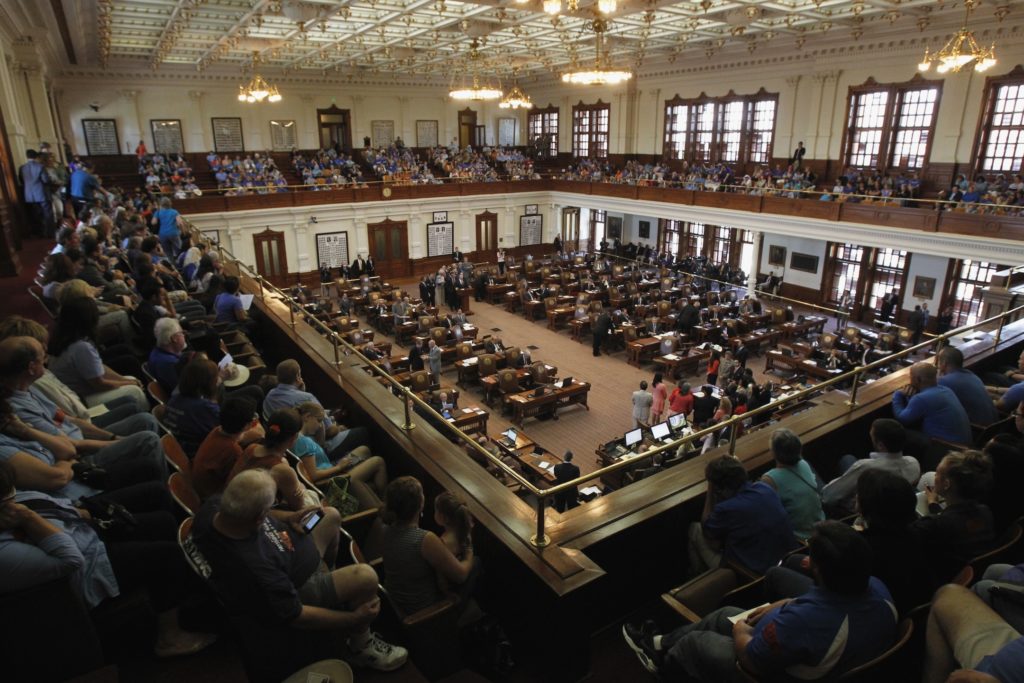
Texas lawmakers held a public hearing in Kerrville to discuss the response to the deadly floods that hit central Texas on July 4. Flood survivors and local officials provided testimony, highlighting issues like poor communication and delayed warnings during the emergency. The floods resulted in over 130 deaths, sparking discussions about improving disaster preparedness.
Key Facts
The hearing took place in Kerrville, Texas and focused on the recent floods that occurred on July 4.
Over 130 people died in the floods, especially in areas along the Guadalupe River.
Key local officials, such as emergency coordinators and the sheriff, were unavailable during the early hours of the flood.
Lawmakers questioned the lack of timely alerts and the apparent disorganization at the local level.
Survivors and officials cited poor cell service and challenging conditions as communication problems.
First responders faced difficulties, including submerged roads and lost vehicles.
Testimonies included stories of tragic losses and calls for better warning systems.
The Texas Legislature is in a special session to discuss better disaster preparedness and other issues.
Glenn Kessler, a longtime writer for the Washington Post's Fact Checker, discussed his 14-year career and recent buyouts at the newspaper. He talked about the role of fact-checking in today's media world.
Key Facts
Glenn Kessler worked at the Washington Post for 14 years as the lead Fact Checker.
Fact-checking involves verifying facts and claims in news articles and public statements.
Kessler spoke about recent buyouts at the Washington Post, which result in job reductions.
He discussed how fact-checking is important in the current media environment.
NPR reporters Alejandra Marquez Janse, Mary Louise Kelly, and Tinbete Ermyas were part of the discussion.
The conversation was featured on the NPR program "All Things Considered."
In Texas, state lawmakers held a meeting with local officials and people affected by the July Fourth floods. The meeting took place in Kerrville, where many lives were lost during the floods.
Key Facts
Texas lawmakers organized a meeting to discuss flood preparedness.
The meeting was held in Kerrville, Texas.
Kerrville was a major site of fatalities during the July Fourth floods.
Local officials and flood survivors attended the meeting.
The purpose was to improve the state's readiness for future floods.
The United States Court of Appeals is reviewing whether former President Donald Trump had the legal authority to impose widespread tariffs using emergency powers. A lower court previously ruled that Trump exceeded his authority, and now judges are examining arguments from both the government and groups challenging the tariffs.
Key Facts
The case is about whether Trump could use emergency powers to impose tariffs on imported goods.
A previous court decided Trump exceeded his authority; now, a higher court is looking into it.
Trump used a 1977 law, the International Emergency Economic Powers Act (IEEPA), to justify the tariffs.
This law is usually used to sanction enemies or freeze assets, not for tariffs.
Trump is the first president to use IEEPA for imposing tariffs.
Businesses and several states argue that only Congress has the power to impose such tariffs.
The tariffs have significantly increased revenue for the federal government.
Critics argue the tariffs raise consumer prices and affect company profits.
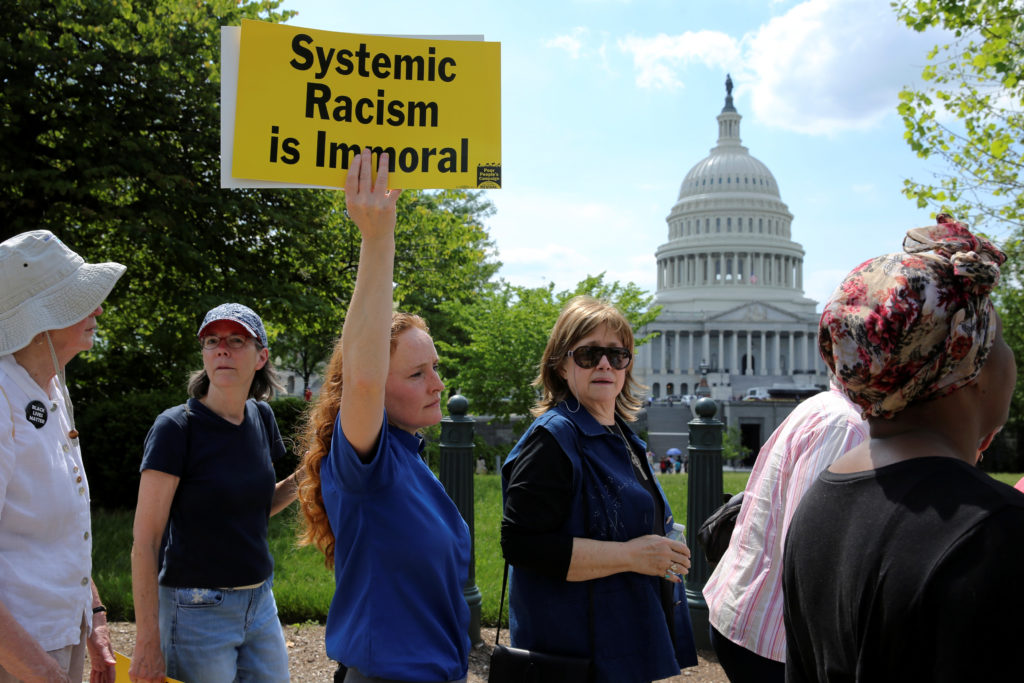
A recent poll shows that only 40% of people in the U.S. think Black and Hispanic people face significant discrimination. The survey also found that fewer people now see Asian and Black people as experiencing a high level of discrimination compared to 2021.
Key Facts
A poll found 40% of Americans believe Black and Hispanic people face "quite a bit" or "a great deal" of discrimination.
Only 30% believe the same for Asian people, and 10% think white people are discriminated against.
In 2021, 60% thought Black people faced high levels of discrimination, but this has now dropped below 50%.
74% of Black respondents say their communities still face major discrimination.
Between 33% and 41% of people think diversity efforts (DEI) do not make a difference, and a quarter think they could increase minority discrimination.
58% of people believe undocumented immigrants face discrimination, the highest among any group.
The poll found that over half of Americans think Muslims face substantial discrimination, while about one-third think the same for Jewish people.
In Kerr County, Texas, key leaders were not on duty during the early hours of a severe flood that killed more than 130 people. The sheriff and emergency management director were asleep, while the county's chief executive officer was out of town. Officials testified about their absence and emphasized the need for better flood warning systems.
Key Facts
The flood in Kerr County, Texas, killed over 130 people, including 27 people at an all-girls camp.
County leaders, including the sheriff and emergency coordinator, were not immediately available as the crisis began.
Judge Rob Kelly, the county's top executive, was out of town on the morning of the flood.
Requests for public records related to the leaders' actions during the flood have been denied or are pending.
Local officials testified about the need for better communication and warning systems for future emergencies.
The sheriff shared a timeline showing emergency responders recognized the crisis early, but leadership wasn't alerted until later.
Improvements in flood warning and mitigation systems were identified as necessary by several officials.
Pam Bondi, the U.S. Attorney General, faces criticism for her handling of the Jeffrey Epstein sex trafficking case. While President Trump supports her, the controversy continues as both Democrats and Republicans push for further investigation and transparency on the issue.
Key Facts
Pam Bondi is the U.S. Attorney General under President Donald Trump.
Bondi is criticized for her actions related to the Jeffrey Epstein case.
President Trump has publicly supported Bondi during this controversy.
Democrats are using the issue for political advantage, and Republicans plan further investigation.
Bondi served as a public prosecutor in Florida for 18 years before becoming Attorney General.
She worked on high-profile issues like opposing the Affordable Care Act and advocating against so-called "pill mills".
Bondi also established efforts against sex trafficking and child abuse in Florida.
Critics say Bondi was inactive on the Epstein case and could have challenged a previous agreement Epstein made with prosecutors.
The White House announced it will start building a $200 million ballroom in September, aiming for completion before President Donald Trump's term concludes in 2029. This new structure will be the first major change to the Executive Mansion since the Truman balcony's addition decades ago. The ballroom will replace the East Wing, providing a larger space for events.
Key Facts
The White House plans to begin the construction of a $200 million ballroom in September.
The goal is for the ballroom to be ready before President Trump's term ends in 2029.
This will be the first major structural change to the White House in several decades.
The new ballroom will replace the current East Wing of the White House.
The ballroom will have space to seat 650 people, compared to the East Room's capacity of about 200.
Offices currently in the East Wing, including the first lady's, will move during construction.
President Trump and donors will raise the $200 million needed for construction.
Design images of the planned ballroom are available on the White House website.
A shooting in New York City resulted in the death of a police officer and three other people. The gunman had known mental health issues, raising questions about how he obtained a gun despite existing laws.
Key Facts
A shooting happened in a high-rise building in New York City.
Four people, including a police officer, died in the incident.
The shooter had documented mental health issues.
There are laws meant to prevent people with mental illness from getting guns.
The incident has sparked discussions about gun access and mental health.
Large companies could be fined if they do not pay their suppliers on time. The government plans to limit the time companies have to pay invoices to 60 days, which may later become 45 days in five years. The proposals aim to support small businesses affected by late payments.
Key Facts
Large companies might face fines for paying suppliers late.
New plans suggest a maximum invoice period of 60 days, dropping to 45 days in five years.
Around 1.5 million businesses are affected by late payments, with £26 billion owed at any time.
The small business commissioner could get new powers to fine late-paying firms.
Fines would be double the amount owed in late-payment interest.
The change depends on available parliamentary time for new legislation.
Companies with over 250 employees must already report payment times twice yearly.
These measures aim to support small businesses with fewer resources.
The White House is starting construction on a new ballroom this September, which President Trump has been planning for 15 years. The ballroom will be about 90,000 square feet and cost around $200 million, funded by Trump and other donors. It will seat 650 guests, solving issues with past state dinners held in tents.
Key Facts
The new White House ballroom will be approximately 90,000 square feet.
It is expected to cost around $200 million.
Construction is set to begin in September and finish before the end of Trump's term.
The ballroom will seat 650 guests, compared to the current East Room's capacity of 200.
Trump and other donors will finance the ballroom.
The ballroom will replace the East Wing of the White House.
Trump has been planning this ballroom for at least 15 years.
Current state dinners often use outdoor tents due to lack of space.
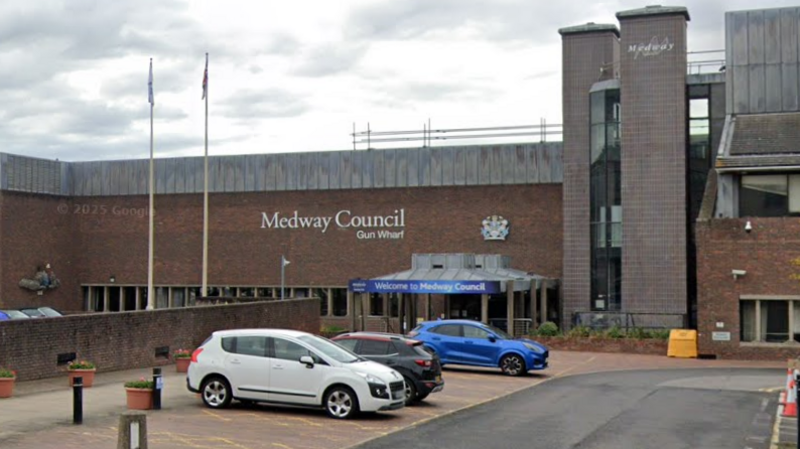
Medway Council has extended its support plan to help low-income households in Kent with the cost of living for another year. The plan, in place since July 2023, offers advice and financial aid for housing, energy, and essentials, and it will continue being updated annually to address residents' needs.
Key Facts
Medway Council's cost of living plan started in July 2023.
The plan helps people with housing, energy, and other basic needs.
It was renewed for another year to continue supporting low-income households.
In the previous year, 1,537 pensioner households received financial help from the household support fund.
The council's financial welfare service provided guidance and support to over 1,000 households.
Each month, around 24,300 people and 1,350 families received food parcels and hot meals.
The plan includes a new discounted entry price for The Historic Dockyard Chatham for those on Universal Credit.
The council invested in extra staff to prevent 314 households from needing emergency accommodation.
The U.S. Senate confirmed Emil Bove, President Donald Trump’s pick for a lifelong federal appeals court judge position. Criticism arose from both political opponents and some conservative groups due to Bove's past actions and alleged unethical behavior.
Key Facts
The Senate confirmed Emil Bove to the U.S. Third Circuit Court of Appeals with a 50 to 49 vote.
Only two Republican senators voted against Bove's confirmation.
Bove previously worked as Trump’s personal lawyer and served as acting deputy attorney general.
There have been at least three whistleblower complaints against Bove related to his time in the Justice Department.
Allegations against Bove include attempting to halt prosecution of New York City’s mayor and advising defiance of court orders.
Bove denied acting unethically during his Senate hearing.
Some critics see his appointment as part of a strategy to influence the judiciary in line with Trump’s policies.
In his first presidency, Trump appointed 226 federal judges, including 54 appellate judges.
The Trump administration has canceled plans for new offshore wind energy projects in U.S. federal waters. Over 3.5 million acres that were set aside for wind development will no longer be used for new wind farm projects. This follows a shift in energy policy aimed at supporting more traditional energy sources like oil and gas.
Key Facts
The Trump administration canceled plans for new offshore wind projects in federal waters.
More than 3.5 million acres were initially designated for wind energy projects.
The Bureau of Ocean Energy Management is ending the designation of areas for wind development.
Offshore wind lease sales were planned near Texas, Louisiana, Maine, New York, California, and Oregon.
An early executive order paused approvals and permits for wind projects.
There is opposition to wind projects, particularly in New Jersey.
Attorneys general from 17 states and Washington D.C. are suing to challenge the policy.
The U.S.'s first commercial-scale offshore wind farm opened last year near Montauk Point, New York.
A recent poll shows that less than half of U.S. adults believe that Black people face high levels of discrimination in the U.S., a decrease from 60% in 2021. The poll also finds mixed views on diversity, equity, and inclusion (DEI) efforts, with many people thinking DEI either doesn't help or may even increase discrimination.
Key Facts
About 45% of U.S. adults think Black people face significant discrimination, down from 60% in 2021.
The perception of discrimination against Asian people dropped from 45% in 2021 to 32%.
Around 44% of people believe Hispanic people face a lot of discrimination, a number that remains similar to 2021 data.
Fewer than half see DEI initiatives as beneficial; only about 40% believe they help reduce discrimination against Black people.
Approximately 33% of adults feel that DEI efforts do not change discrimination levels, with around 25% thinking DEI increases discrimination.
Black and Hispanic adults are more likely than white adults to think DEI efforts increase discrimination against them.
Among white adults, Democrats are more likely to think DEI reduces discrimination compared to independents and Republicans.
Appellate court judges questioned whether President Trump's use of a law for imposing tariffs without Congress's approval was valid. The case revolves around Trump's "Liberation Day" tariffs, and it’s expected to potentially reach the U.S. Supreme Court.
Key Facts
A group of judges expressed doubts about Trump's legal reasoning for using a 1977 law to impose tariffs.
The law used by Trump, IEEPA, is usually for seizing assets during national emergencies but does not mention tariffs.
Trump argues the U.S. trade deficit is a national emergency that justifies his use of the law.
An attorney for the plaintiffs argued that Trump’s actions amounted to a misuse of presidential power.
The case focuses on tariffs called "Liberation Day" tariffs and excludes other tariffs like those on steel and aluminum.
A ruling by the U.S. Court of International Trade found Trump exceeded his powers, leading to the appeal.
The U.S. Constitution usually gives Congress the power to set tariffs, but this has been increasingly delegated to the President.
The issue is expected to eventually reach the U.S. Supreme Court.
A Swedish court sentenced Osama Krayem to life in prison for his involvement in the killing of Jordanian pilot Moaz al-Kasasbeh, who was burned alive by the Islamic State in 2015. Krayem, already serving a 30-year sentence for terror attacks in Paris and Brussels, was found guilty of serious war and terrorist crimes.
Key Facts
Osama Krayem, a Swedish national, received a life sentence for his role in the death of Lt Moaz al-Kasasbeh.
Moaz al-Kasasbeh was a Jordanian air force pilot whose plane crashed in Syria during a mission against the Islamic State in 2014.
The Islamic State released a video showing the pilot being burned alive in a cage.
Krayem denied knowing about the pilot's planned killing despite being present at the execution site.
The court ruled that Krayem actively participated in the crime by guarding the victim and taking him to the location where he was killed.
Krayem is also serving a 30-year sentence for involvement in the 2015 Paris attacks and the 2016 Brussels attacks.
The court ordered compensation of about 80,000 Swedish kronor to each of Lt Kasasbeh’s parents and siblings.
Krayem reportedly traveled to Syria in 2014 to join the Islamic State and participate in their activities.
Many Jewish American groups are urging Israel to increase efforts to deliver food and medicine to Gaza due to a humanitarian crisis. These groups, which usually avoid criticizing Israeli policies, express concern about the impact on Palestinian civilians while also supporting Israel's security actions against Hamas.
Key Facts
Many Jewish Americans are concerned about the humanitarian crisis in Gaza and want Israel to help more.
The American Jewish Committee supports Israel's actions against Hamas but is worried about food shortages in Gaza.
The Rabbinical Assembly also supports aid delivery to Gaza while holding Hamas responsible for the crisis.
Rabbi Moshe Hauer from the Orthodox Union expressed mixed feelings of pride, sadness, and anger about the situation.
The American Israel Public Affairs Committee believes Hamas should surrender to help improve the crisis.
The Reform Jewish Movement criticized both Hamas and Israel's role in the humanitarian issues in Gaza.
There is a noticeable shift in Jewish community discussions about these issues, indicating changing views.