The U.S. Senate confirmed Emil Bove, President Donald Trump’s pick for a lifelong federal appeals court judge position. Criticism arose from both political opponents and some conservative groups due to Bove's past actions and alleged unethical behavior.
Key Facts
The Senate confirmed Emil Bove to the U.S. Third Circuit Court of Appeals with a 50 to 49 vote.
Only two Republican senators voted against Bove's confirmation.
Bove previously worked as Trump’s personal lawyer and served as acting deputy attorney general.
There have been at least three whistleblower complaints against Bove related to his time in the Justice Department.
Allegations against Bove include attempting to halt prosecution of New York City’s mayor and advising defiance of court orders.
Bove denied acting unethically during his Senate hearing.
Some critics see his appointment as part of a strategy to influence the judiciary in line with Trump’s policies.
In his first presidency, Trump appointed 226 federal judges, including 54 appellate judges.
The Trump administration has canceled plans for new offshore wind energy projects in U.S. federal waters. Over 3.5 million acres that were set aside for wind development will no longer be used for new wind farm projects. This follows a shift in energy policy aimed at supporting more traditional energy sources like oil and gas.
Key Facts
The Trump administration canceled plans for new offshore wind projects in federal waters.
More than 3.5 million acres were initially designated for wind energy projects.
The Bureau of Ocean Energy Management is ending the designation of areas for wind development.
Offshore wind lease sales were planned near Texas, Louisiana, Maine, New York, California, and Oregon.
An early executive order paused approvals and permits for wind projects.
There is opposition to wind projects, particularly in New Jersey.
Attorneys general from 17 states and Washington D.C. are suing to challenge the policy.
The U.S.'s first commercial-scale offshore wind farm opened last year near Montauk Point, New York.
A recent poll shows that less than half of U.S. adults believe that Black people face high levels of discrimination in the U.S., a decrease from 60% in 2021. The poll also finds mixed views on diversity, equity, and inclusion (DEI) efforts, with many people thinking DEI either doesn't help or may even increase discrimination.
Key Facts
About 45% of U.S. adults think Black people face significant discrimination, down from 60% in 2021.
The perception of discrimination against Asian people dropped from 45% in 2021 to 32%.
Around 44% of people believe Hispanic people face a lot of discrimination, a number that remains similar to 2021 data.
Fewer than half see DEI initiatives as beneficial; only about 40% believe they help reduce discrimination against Black people.
Approximately 33% of adults feel that DEI efforts do not change discrimination levels, with around 25% thinking DEI increases discrimination.
Black and Hispanic adults are more likely than white adults to think DEI efforts increase discrimination against them.
Among white adults, Democrats are more likely to think DEI reduces discrimination compared to independents and Republicans.
Appellate court judges questioned whether President Trump's use of a law for imposing tariffs without Congress's approval was valid. The case revolves around Trump's "Liberation Day" tariffs, and it’s expected to potentially reach the U.S. Supreme Court.
Key Facts
A group of judges expressed doubts about Trump's legal reasoning for using a 1977 law to impose tariffs.
The law used by Trump, IEEPA, is usually for seizing assets during national emergencies but does not mention tariffs.
Trump argues the U.S. trade deficit is a national emergency that justifies his use of the law.
An attorney for the plaintiffs argued that Trump’s actions amounted to a misuse of presidential power.
The case focuses on tariffs called "Liberation Day" tariffs and excludes other tariffs like those on steel and aluminum.
A ruling by the U.S. Court of International Trade found Trump exceeded his powers, leading to the appeal.
The U.S. Constitution usually gives Congress the power to set tariffs, but this has been increasingly delegated to the President.
The issue is expected to eventually reach the U.S. Supreme Court.
A Swedish court sentenced Osama Krayem to life in prison for his involvement in the killing of Jordanian pilot Moaz al-Kasasbeh, who was burned alive by the Islamic State in 2015. Krayem, already serving a 30-year sentence for terror attacks in Paris and Brussels, was found guilty of serious war and terrorist crimes.
Key Facts
Osama Krayem, a Swedish national, received a life sentence for his role in the death of Lt Moaz al-Kasasbeh.
Moaz al-Kasasbeh was a Jordanian air force pilot whose plane crashed in Syria during a mission against the Islamic State in 2014.
The Islamic State released a video showing the pilot being burned alive in a cage.
Krayem denied knowing about the pilot's planned killing despite being present at the execution site.
The court ruled that Krayem actively participated in the crime by guarding the victim and taking him to the location where he was killed.
Krayem is also serving a 30-year sentence for involvement in the 2015 Paris attacks and the 2016 Brussels attacks.
The court ordered compensation of about 80,000 Swedish kronor to each of Lt Kasasbeh’s parents and siblings.
Krayem reportedly traveled to Syria in 2014 to join the Islamic State and participate in their activities.
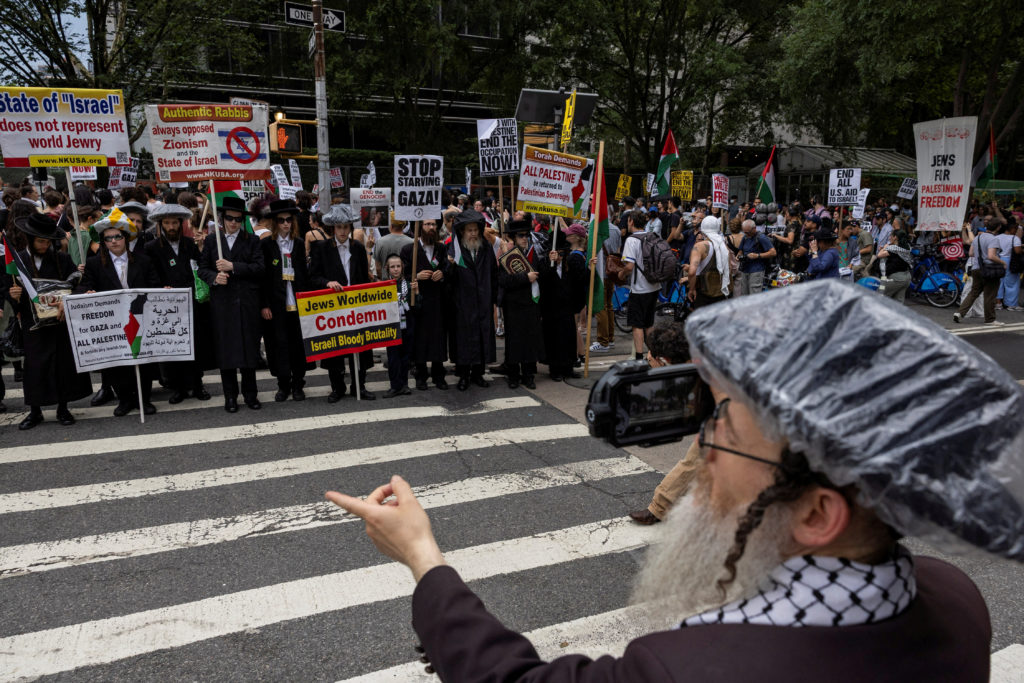
Many Jewish American groups are urging Israel to increase efforts to deliver food and medicine to Gaza due to a humanitarian crisis. These groups, which usually avoid criticizing Israeli policies, express concern about the impact on Palestinian civilians while also supporting Israel's security actions against Hamas.
Key Facts
Many Jewish Americans are concerned about the humanitarian crisis in Gaza and want Israel to help more.
The American Jewish Committee supports Israel's actions against Hamas but is worried about food shortages in Gaza.
The Rabbinical Assembly also supports aid delivery to Gaza while holding Hamas responsible for the crisis.
Rabbi Moshe Hauer from the Orthodox Union expressed mixed feelings of pride, sadness, and anger about the situation.
The American Israel Public Affairs Committee believes Hamas should surrender to help improve the crisis.
The Reform Jewish Movement criticized both Hamas and Israel's role in the humanitarian issues in Gaza.
There is a noticeable shift in Jewish community discussions about these issues, indicating changing views.
Courts are evaluating if President Trump can legally impose tariffs, a move originally meant for Congress. The case could alter Trump's tariff strategy, based on his use of a specific law to justify tariffs as a response to national threats.
Key Facts
President Trump has imposed tariffs on various countries, claiming national security threats.
The U.S. Constitution grants Congress the power to impose tariffs.
Over time, Congress has allowed the president some authority over tariffs.
Trump cites the 1977 International Emergency Economic Powers Act to justify his tariffs.
The current legal case, VOS Selections v Trump, questions if Trump can use this law for tariffs.
Critics argue the law does not specifically mention tariffs as an action.
The U.S. Court of Appeals will hear arguments about Trump's use of emergency powers for tariffs.
The case may proceed to the Supreme Court after the appeals court decision.
Myanmar's military government has ended a state of emergency to prepare for elections, which are expected within six months. The military leader, Min Aung Hlaing, who led the coup in 2021, has maintained control and will oversee the election process.
Key Facts
Myanmar's military government ended the state of emergency to plan elections.
The military took over the government in a coup in 2021, ousting Aung San Suu Kyi's civilian administration.
Military leader Min Aung Hlaing remains in power and will lead the election process.
Elections are promised within six months, but no specific date is set.
Opposition groups plan to boycott the elections, calling them a way for the military to keep control.
Min Aung Hlaing is wanted by the International Criminal Court for alleged crimes against the Rohingya people.
The military seized power in 2021, claiming fraud in the 2020 elections, which Suu Kyi's party won.
Some training on electronic voting machines has already occurred, and political parties are registering.
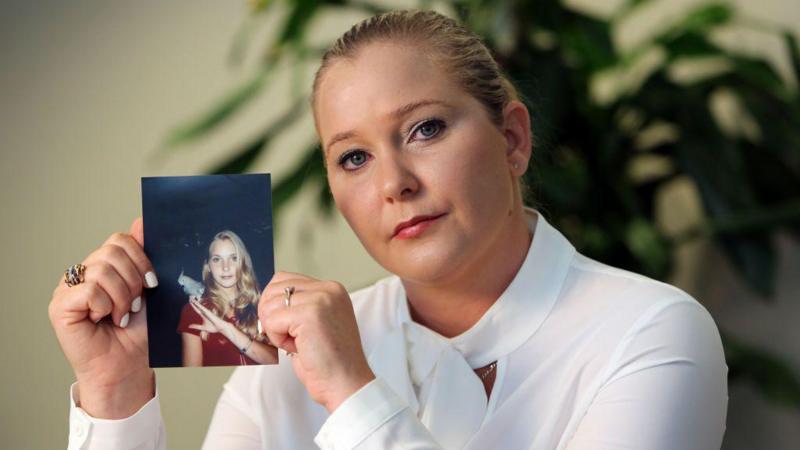
Virginia Giuffre, who accused Jeffrey Epstein, Britain's Prince Andrew, and others of sex trafficking, died by suicide this year. Her family reacted to former President Donald Trump's comments about Epstein taking Giuffre from his club and stressed the need for justice. Ghislaine Maxwell, Epstein's former girlfriend, remains in prison on related charges.
Key Facts
Virginia Giuffre accused Epstein, Prince Andrew, and others of sex trafficking.
Giuffre died by suicide earlier this year.
Former President Donald Trump stated Epstein took Giuffre from his Florida club.
Ghislaine Maxwell, Epstein’s former associate, is serving a 20-year sentence.
Maxwell was interviewed by the Justice Department regarding the case.
Maxwell’s lawyers want her to have immunity for further testimony to Congress.
Prince Andrew settled with Giuffre in 2022, denying the accusations.
Giuffre's family called for justice and responses from authorities.
President Donald Trump announced a 90-day negotiating period with Mexico, during which a 25% tariff on goods from Mexico will remain. The tariffs are related to issues like fentanyl trafficking, and while some Mexican goods are protected by the USMCA trade agreement, auto imports and certain metals will face higher tariffs.
Key Facts
Trump spoke with Mexican leader Claudia Sheinbaum and described the call as successful.
A 90-day negotiating period with Mexico has begun.
A 25% tariff will continue on goods from Mexico, linked to fentanyl trafficking.
Autos will face a 25% tariff; copper, aluminum, and steel will have a 50% tariff.
Trump mentioned Mexico ending "Non Tariff Trade Barriers" without details.
Some goods from Mexico remain protected by the USMCA agreement.
The USMCA deal, negotiated during Trump's first term, will be up for renegotiation next year.
Last year, the U.S. had a $171.5 billion trade deficit with Mexico.
Federal grand juries indicted Jeffrey Epstein and Ghislaine Maxwell on sex trafficking charges without hearing directly from alleged victims. The Justice Department is asking a court to unseal the grand jury transcripts, which include testimonies from law enforcement officers, citing public interest.
Key Facts
Grand juries indicted Epstein and Maxwell on sex trafficking charges.
Alleged victims did not testify before the grand juries.
The testimonies came from law enforcement officials.
The Justice Department wants to unseal the grand jury transcripts.
Officials claim public interest justifies releasing the transcripts.
The Epstein grand jury heard from an FBI agent in 2019.
The Maxwell grand jury heard from the same FBI agent and a police detective in 2020 and 2021.
Maxwell is serving a 20-year sentence for sex trafficking.
Donald Trump has been elected for a second term as the President of the United States. His agenda includes strict immigration policies, tariffs on global trade, and an unclear foreign policy approach. A debate features former Trump staff and political experts discussing his policies and leadership style.
Key Facts
Donald Trump has started his second term as U.S. President.
His main policies focus on immigration, international trade, and foreign relations.
Trump's immigration policies include deportations.
He has introduced tariffs, which are taxes on imports, as part of his trade strategy.
Trump's leadership style has been described as unpredictable and controversial.
Experts are debating whether his approach is authoritarian, which means favoring strict obedience to authority at the expense of personal freedom.
The discussion involves Mick Mulvaney, Trump's former chief of staff, and other political experts.
The debate includes opinions from George Conway, Christina Greer, and Greg Swenson.
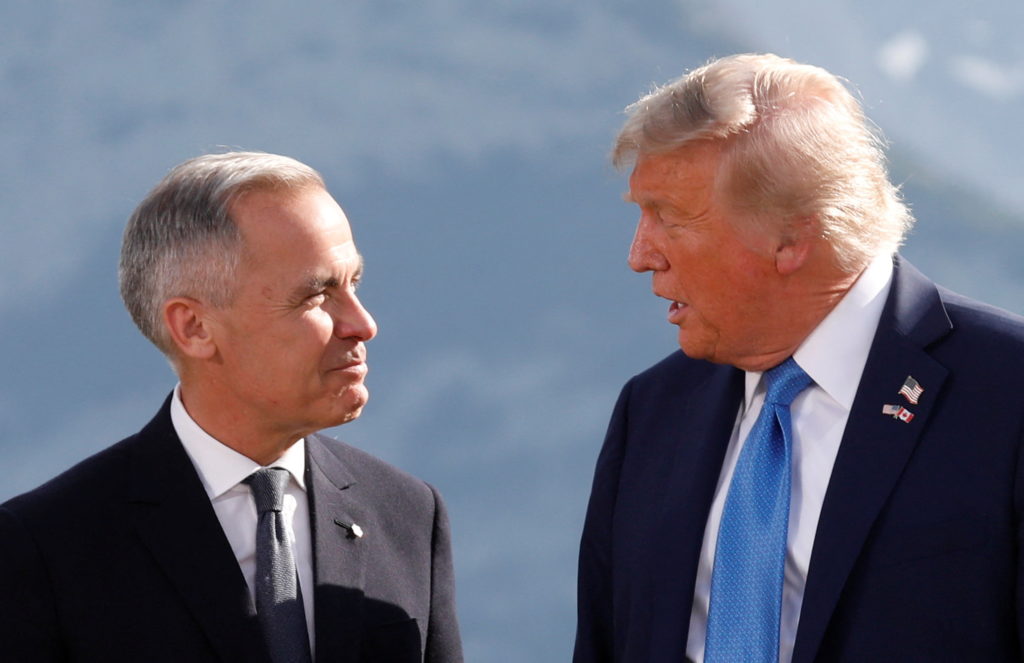
President Donald Trump announced that Canada's decision to recognize a Palestinian state could complicate the U.S.'s ability to reach a trade agreement with Canada. Trump threatened to impose tariffs on Canadian goods if a trade deal isn't reached by Friday, linking the issue to the broader context of his trade policies and ongoing global events.
Key Facts
President Trump said Canada's recognition of a Palestinian state could affect U.S.-Canada trade talks.
Trump posted this statement on his social media network.
Trump has threatened a 35% tariff on Canadian goods if no trade deal is reached by Friday.
The current trade relationship between the U.S. and Canada is partly governed by the 2020 United States-Mexico-Canada Agreement, which is due for renegotiation next year.
Trump's statement is part of broader trade actions linked to various global issues.
Trump's response to Canada's announcement contrasts with his previous reactions to similar decisions made by the UK and France.
Canada’s decision is part of a larger international criticism of Israeli policies related to Gaza.
Recent geopolitical events include an attack by Hamas on Israel and subsequent military actions.
High Noon is recalling some of its vodka seltzers because they were mistakenly packaged in cans labeled as Celsius energy drinks. The recall affects certain packs sent to six U.S. states, and the FDA says no health issues have been reported.
Key Facts
High Noon is recalling some 12-packs of vodka seltzers.
The cans were mislabeled as Celsius energy drinks due to a packaging error.
The recall affects retailers in Florida, New York, Ohio, South Carolina, Virginia, and Wisconsin.
The U.S. Food and Drug Administration (FDA) announced the recall.
Some cans were mistakenly filled with vodka seltzer instead of blue raspberry-flavored Celsius energy drink.
Celsius and High Noon used the same third-party packaging supplier.
Celsius drinks can contain 200-270 milligrams of caffeine.
No reported illnesses or adverse reactions have occurred due to this issue.
Chef Kenji López-Alt, known for his work in both cooking and music, has launched a project called "Tasting Notes." This project combines live music, cooking demonstrations, and discussions about creativity, highlighting how both music and food connect people across different cultures and backgrounds.
Key Facts
Kenji López-Alt is a chef, food writer, and musician.
He is a New York Times best-selling author.
Kenji started playing the violin when he was 4 years old and still plays chamber music.
His new project, "Tasting Notes," combines music, cooking, and conversation.
Kenji's work focuses on explaining cooking techniques and the science behind them.
He believes that both cooking and music are ways to express emotions and share experiences.
Kenji grew up in New York City and was influenced by its cultural diversity and his Japanese grandmother's recipes.
The project highlights how food and music can connect people across different cultures.
The National Transportation Safety Board (NTSB) is holding hearings to investigate a midair collision in January between a military helicopter and a passenger plane. This accident killed all 67 people onboard both aircraft. Investigators identified several possible factors that led to the crash, but the exact cause is still unknown. A final report is expected next year.
Key Facts
The crash involved an Army Black Hawk helicopter and a passenger plane.
All 67 people on the two aircraft died in the accident.
The Federal Aviation Administration (FAA) was warned about heavy helicopter traffic near Reagan Airport but did not add a caution to pilot charts.
The helicopter was flying higher than the altimeter showed, causing investigators to test other helicopters for similar issues.
There are new altimeter technologies that provide more accurate readings than those in older helicopters like the Black Hawk.
The acceptable margin of error for the helicopter's altimeters is within 70 to 100 feet.
Concerns were raised about insufficient separation distances between helicopters and planes near Reagan Airport.
In the minutes before the crash, one air traffic controller was managing communication with multiple aircraft, including the Black Hawk and other planes and helicopters.
Sports leagues are dealing with the challenges of legal sports betting, which is raising concerns about the fairness of sports events. Recent investigations into baseball and basketball players have highlighted the risk of game manipulation that can arise from widespread sports gambling.
Key Facts
Major sports leagues are facing issues with sports betting potentially affecting the fairness of games.
Since the Supreme Court allowed states to legalize sports betting in 2018, more than half of U.S. states have done so.
Americans bet about $150 billion legally on sports in 2024, boosting industry revenue significantly.
Some players, like MLB's Emmanuel Clase and Luis Ortiz, are under investigation for betting-related activities, though not accused of wrongdoing.
Former NBA player Jontay Porter was accused and banned for sharing inside information for betting purposes.
States like New Jersey are considering laws to limit specific types of sports bets, such as microbets on individual plays.
The legalization of sports betting provides better tools to detect suspicious activities compared to illegal offshore betting.
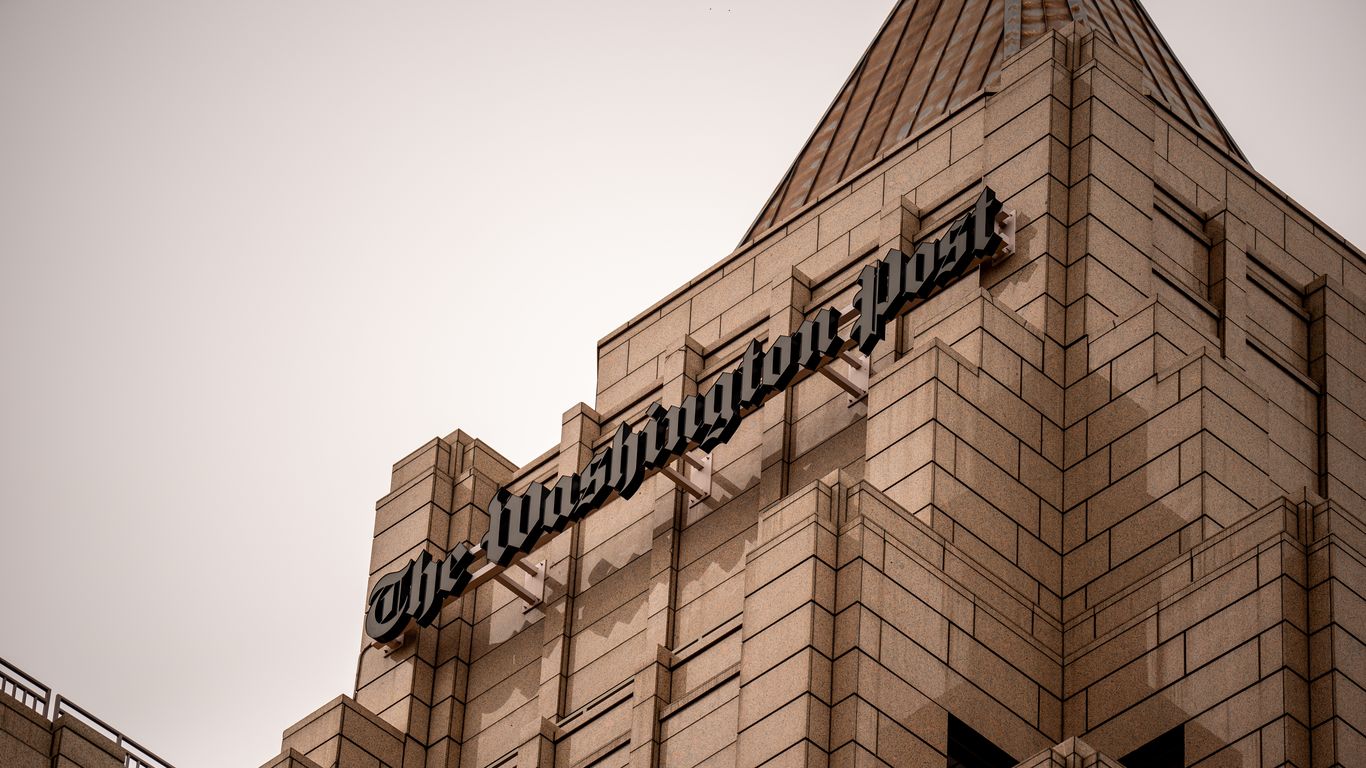
Many journalists at the Washington Post are accepting buyouts and leaving the newspaper. These departures are part of changes in the Post's strategy, encouraging staff not in line with leadership plans to exit. This has affected well-known teams and comes amid broader shifts in the paper's management and editorial policy.
Key Facts
The Washington Post is experiencing a significant number of journalist departures due to buyouts.
The buyouts allow staff who disagree with leadership to leave the company.
Over 100 journalists have left since November, including notable names like Jonathan Capehart and Philip Bump.
Departures include top editors and reporters such as Matea Gold and Phil Rucker.
The video team, known for its work on TikTok and Instagram, saw several exits, including performer Dave Jorgenson.
The newspaper plans to hire more multimedia journalists despite these departures.
The changes are part of a broader strategy under CEO Will Lewis and owner Jeff Bezos to attract a wider audience.
These buyouts follow other layoffs in the Post's Metro section and areas like gaming and kids coverage.
Federal immigration raids in the U.S. are leading to abandoned vehicles, work tools, and pets as ICE detains immigrants. This situation is causing safety concerns in cities and towns and creating stress for families. Volunteer groups and city officials are trying to handle the issue with different solutions, particularly in Southern California.
Key Facts
Immigration raids by ICE are causing immigrants to leave behind cars, work tools, and pets.
There is no federal system to impound property or take care of pets after ICE detentions.
Volunteer groups and cities are trying to manage the abandoned property and pets.
The problem is most noticeable in Southern California since the "Summer of ICE" starting in June.
In California, animal shelters have taken in pets left due to immigration arrests.
In Texas, shelters report more stray pets, but the link to ICE raids is unclear.
Immigrant rights groups in North Carolina provide advice on pet care during detentions.
The Department of Homeland Security states that ICE does not impound property.
The situation has become a political topic in Albuquerque's mayoral race.
Virginia Giuffre's family has asked President Trump not to pardon Ghislaine Maxwell, who is serving a 20-year prison sentence for crimes related to Jeffrey Epstein. They expressed anger over Trump's comments linking Epstein to his Mar-a-Lago staff and questioned if he knew about the criminal actions of Epstein and Maxwell.
Key Facts
Virginia Giuffre worked at Trump's Mar-a-Lago when she was 16.
Her family claims she was "preyed upon" by Maxwell while employed there.
Trump stated Epstein took employees from Mar-a-Lago, including Giuffre.
Giuffre's family condemned prosecutors for meeting with Maxwell in jail.
Maxwell is currently serving a 20-year sentence for lying under oath.
Trump's administration is under pressure to release Epstein's related files.
Trump mentioned he has not thought about pardoning Maxwell.
The White House stated Trump banned Epstein for being inappropriate.