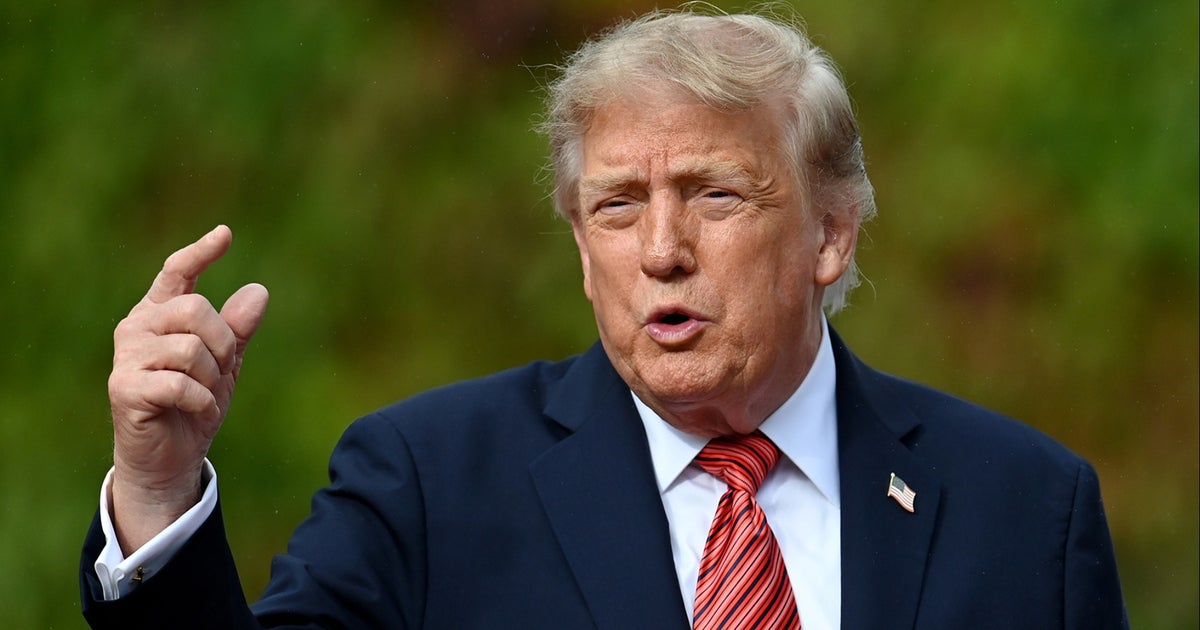
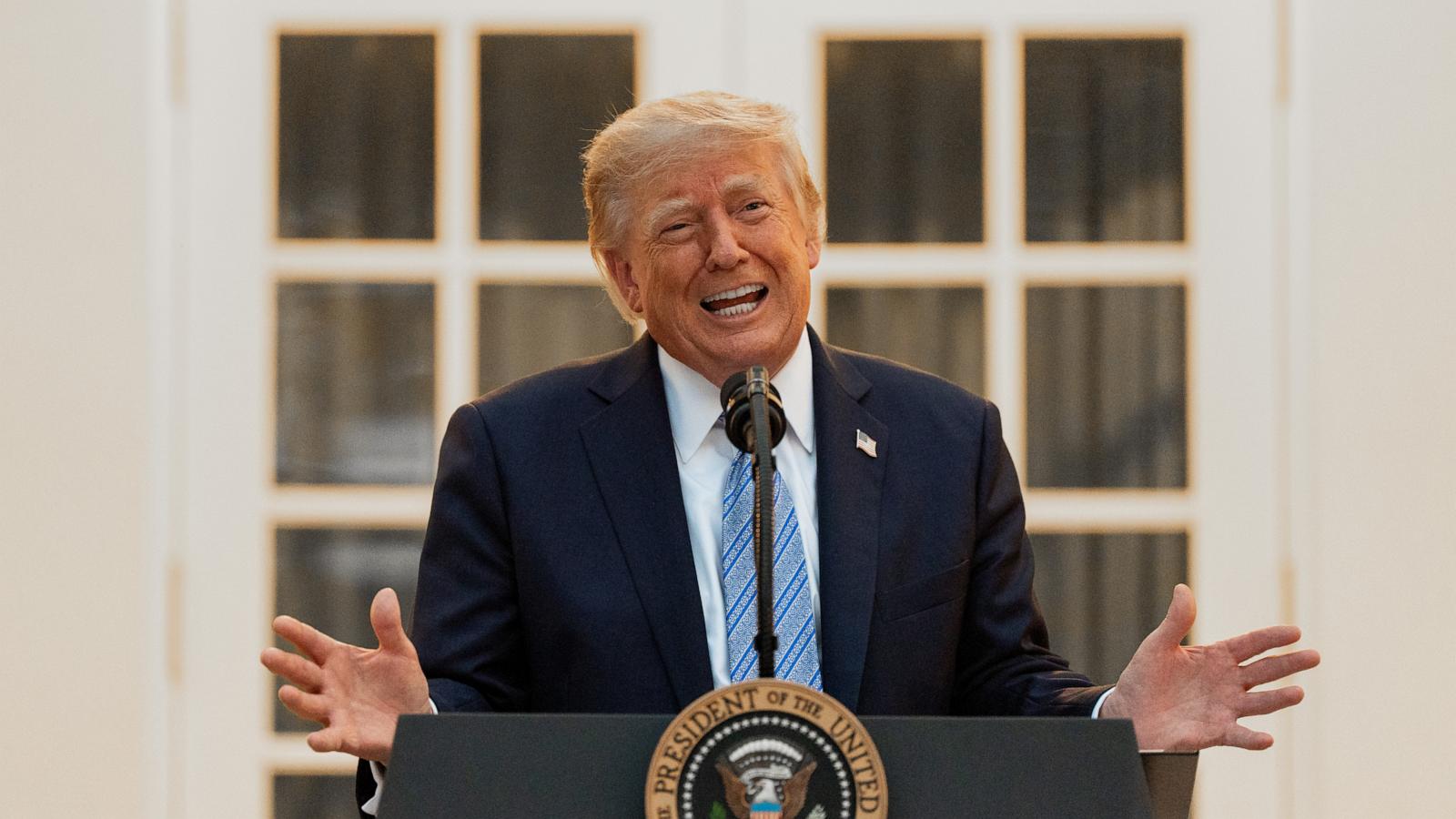
President Donald Trump said the Kennedy Center in Washington DC has been losing tens or even hundreds of millions of dollars for years. However, a federal audit for 2024 shows the center had an operating deficit but still ended with a surplus of millions of dollars.
Key Facts
President Trump claimed the Kennedy Center lost large amounts of money over several years.
He was seen looking at a poster suggesting the Kennedy Center might be demolished.
The Kennedy Center is a well-known performing arts venue in Washington DC.
A federal audit in 2024 reported an operating deficit at the Kennedy Center.
Despite the deficit, the audit showed the center had a financial surplus of millions of dollars.
The information challenges President Trump's claim about the financial losses.
The Kennedy Center's financial status is publicly reviewed through government audits.
Read the Original
Want the full story? Tap a source to open the original
article.
President Donald Trump will sign a new bill that imposes sanctions on Russia, according to a White House official. The bill was recently passed by the government.
Key Facts
President Trump plans to sign the Russia sanctions bill on Friday.
The bill includes sanctions, which are penalties or restrictions, targeting Russia.
A White House official gave this information to CBS News.
The bill was recently approved by the government before being sent to the President.
CBS News reporter Weijia Jiang provided coverage of the news from the White House.
Read the Original
Want the full story? Tap a source to open the original
article.
The U.S. military is restarting a policy to require testosterone testing for service members aged 30 and older. New guidelines were issued to standardize testing and treatment after the policy was briefly paused due to medical concerns.
Key Facts
The Pentagon is resuming mandatory testosterone testing for male service members 30 years and older.
The policy was initially announced in July by Secretary of Defense Pete Hegseth.
Testing aims to detect testosterone deficiency to help soldiers perform at their best.
Medical experts warned the program might be unnecessary and could risk health issues like infertility if mismanaged.
The Pentagon paused the policy in September to make updates and has now issued new, clearer guidelines.
Testing will happen during regular health check-ups and annual evaluations; younger soldiers can request tests.
The policy reflects Hegseth’s focus on improving military readiness and individual soldier health.
Critics say some policies under Hegseth bring political culture issues into the military.
Read the Original
Want the full story? Tap a source to open the original
article.
President Donald Trump announced that all 50 states will join a program to lower prices on certain Medicaid prescription drugs by matching the lowest prices paid in other countries. The program aims to reduce drug costs and save money for Medicaid, the health program for low-income people, though details about the deals are not fully public.
Key Facts
All 50 states will participate in a Medicaid drug pricing program called the GENEROUS model.
The program uses "most favored nation" pricing, meaning Medicaid pays prices similar to the lowest-paying countries.
The administration estimates the program could save $529 billion over 10 years.
Medicaid patients currently pay only small co-pays for prescriptions but lower prices can also help state budgets.
Details of the drug pricing deals have not been made public, making it hard to verify savings.
Some health experts want more data before Congress approves the program permanently.
Others note many Americans outside government programs still want lower drug prices.
Patients' drug prices vary depending on competition, insurance, and other factors like Medicaid or Medicare coverage.
Read the Original
Want the full story? Tap a source to open the original
article.
A recent survey shows that 43 percent of Americans think President Donald Trump is mostly or fully responsible for the current economic problems, like high prices and difficulty affording things. The poll highlights public views on who is to blame for the nation's economic condition.
Key Facts
The survey is by Politico/Public First.
43 percent of people surveyed blame President Trump for the economy's current state.
Economic issues mentioned include high inflation and affordability challenges.
The poll was released on a Thursday.
The survey reflects public opinion on economic responsibility.
Read the Original
Want the full story? Tap a source to open the original
article.
Patrick Clancy, whose three children died in January 2023, spoke on the CBS program 60 Minutes about how he talks to his deceased children often. His current wife, Dr. Rachel Danis, described him as a "selfless father" in an interview clip released by CBS.
Key Facts
Patrick Clancy is the father of three children who died in January 2023.
Lindsay Clancy, Patrick's ex-wife, is accused of killing their three children.
Lindsay Clancy's first-degree murder trial ended in a mistrial recently.
Patrick Clancy told CBS’s 60 Minutes that he speaks to his deceased children regularly.
Dr. Rachel Danis, Patrick’s current wife, called Patrick a "selfless father."
The full 60 Minutes interview with Patrick Clancy and Dr. Danis will air on Sunday.
The story is related to a high-profile criminal case in Massachusetts, USA.
Read the Original
Want the full story? Tap a source to open the original
article.
The House of Representatives is on a seven-week break until after the midterm elections. When they return, they will face important issues like a fight to impeach Defense Secretary Pete Hegseth, a push for more votes on Jeffrey Epstein-related files, and a deadline to approve government funding by December 11.
Key Facts
House Speaker Mike Johnson sent lawmakers home early until after the midterms.
Rep. Thomas Massie introduced a resolution to impeach Defense Secretary Pete Hegseth.
Massie and Rep. Ro Khanna say they have enough support to force a vote on files related to Jeffrey Epstein.
Government funding runs out on December 11, creating a deadline for lawmakers.
Republicans currently control the House and Senate, but the midterms could change that.
Speaker Johnson defends Hegseth and calls the impeachment resolution a publicity stunt.
President Trump has promised a $5,000 "Trump Dividend" payment to adults, which would need Congress to approve.
The government is facing a large national debt of about $40 trillion.
Read the Original
Want the full story? Tap a source to open the original
article.
Vice President Vance criticized Rob Sand, the Democratic candidate for Iowa governor, during a rally in Council Bluffs. Vance said Sand’s political views are too far left for Iowa, and Rand, a Republican, is leading in several polls to replace Governor Kim Reynolds in November.
Key Facts
Vice President Vance spoke at a rally in Council Bluffs, Iowa.
His main focus was criticizing Rob Sand, the Democratic candidate for governor.
Vance said Sand’s political views are too far left for the state.
Rand, a Republican candidate, is currently leading in multiple polls.
The election is to choose the next governor of Iowa in November.
The current governor, Kim Reynolds, is a Republican.
Vance’s remarks lasted about seven minutes.
Read the Original
Want the full story? Tap a source to open the original
article.
A grandmother from Tennessee is suing Fargo, North Dakota, after facial recognition technology wrongly identified her as a criminal. This mistake caused her to spend almost six months in jail for a crime she did not commit.
Key Facts
A Tennessee grandmother was falsely linked to a bank fraud crime by facial recognition software.
The error led to her being jailed in Fargo, North Dakota, for nearly six months.
She is now suing the city of Fargo over the false identification.
Facial recognition is a technology that uses software to identify people by their faces.
This case raises concerns about the reliability of facial recognition technology in law enforcement.
The wrongful arrest caused significant personal and legal hardship for the woman.
The lawsuit challenges the city's use of AI-based facial recognition tools.
Read the Original
Want the full story? Tap a source to open the original
article.
Several hundred protesters plan to form a human chain around the Kennedy Center in Washington to oppose President Trump's control of the center and his threat to demolish it. President Trump became chairman of the Kennedy Center last year after changing its leadership, and a judge has ordered the center to give 30 days’ notice before making any major changes.
Key Facts
Protesters want President Trump removed as chairman of the Kennedy Center.
Trump took control of the center last year, replacing its leadership and board members.
Trump has threatened to close and tear down the Kennedy Center if his administration’s recognition is not acknowledged.
Protesters plan to hold musical performances, speeches, and form a human chain around the building.
The activist group Hands Off the Arts organized the protest to protect the center and other cultural institutions.
A federal judge ruled the Kennedy Center must give 30 days’ notice before any major physical changes like demolition.
Photos showed President Trump looking at a placard labeled "Kennedy Center DEMOLISHED."
The protest opposes recent closures, security fencing, and political actions affecting the center.
Read the Original
Want the full story? Tap a source to open the original
article.
Virginia has started early in-person voting for the 2026 US midterm elections, allowing voters to cast ballots before Election Day on November 3. Early voting helps decide control of Congress during President Donald Trump’s term, and many states have expanded early voting options over the past 25 years.
Key Facts
Early in-person voting in Virginia began on a Friday before Election Day.
The 2026 midterms will decide who controls the US House and Senate for President Trump’s current term.
The number of states offering early voting has grown from 24 in 2000 to 47 in 2026, plus Washington D.C.
Early voting rules, times, and eligibility vary by state.
Virginia increased weekend early voting and removed the rule requiring a witness on absentee ballots.
Mail-in ballots must now be postmarked by Election Day but can arrive up to three days later in Virginia.
The Supreme Court blocked President Trump’s plan to add federal restrictions to mail voting, keeping state rules in place.
The Postal Service advises voters to mail ballots early to ensure they arrive on time.
Read the Original
Want the full story? Tap a source to open the original
article.
One juror in the trial of Lindsay Clancy said he was sure she killed her three children and wanted to convict her of murder. However, the other jurors believed Clancy had postpartum psychosis, a rare mental illness, and did not hold her fully responsible, leading to a mistrial.
Key Facts
Lindsay Clancy was on trial for killing her three children.
Eleven of twelve jurors believed Clancy was affected by postpartum psychosis when the crimes happened.
Postpartum psychosis is a rare mental health condition that can affect mothers after childbirth.
One juror, Michael Desronvil, wanted to convict Clancy of murder, saying he had no doubts about her guilt.
The other jurors disagreed and felt Clancy was not criminally responsible due to her mental condition.
The juror who wanted to convict spoke publicly for the first time through his lawyer.
The trial ended without a verdict because of this disagreement among jurors.
Read the Original
Want the full story? Tap a source to open the original
article.
President Trump will announce a new plan to help lower medicine costs through Medicaid, a health program for low-income people. This plan will allow Medicaid programs in all states to get certain drugs at the best prices given to other countries.
Key Facts
President Trump will give a speech about drug prices on Friday.
The plan focuses on lowering costs for prescription drugs.
Medicaid programs in all 50 states will be able to use “most favored nation” pricing.
“Most favored nation” pricing means Medicaid will pay prices similar to the lowest prices other countries pay for the same drugs.
Several state governors will join President Trump for the announcement in the Oval Office.
This effort is part of the Trump administration’s ongoing work to reduce drug costs.
Read the Original
Want the full story? Tap a source to open the original
article.
GOP Representative Salazar released an advertisement criticizing President Trump's immigration policies. The ad was shared six weeks before the November midterm elections in the United States.
Key Facts
Representative Salazar is a member of the GOP (Republican Party).
Salazar's ad criticizes President Trump's approach to immigration.
The ad came out roughly six weeks before the midterm elections in November.
The midterm elections determine control of Congress and other offices.
This political message is part of the ongoing election campaign.
Read the Original
Want the full story? Tap a source to open the original
article.
Six U.S. service members died and many were injured in an Iranian drone attack on a U.S. military base in Kuwait on March 1, 2026. Families of those affected are still seeking clear information from the Pentagon about the incident.
Key Facts
The attack involved a drone strike launched by Iran.
It targeted a U.S. military facility at the Port of Shuaiba in Kuwait.
The strike happened on March 1, 2026.
Six American service members lost their lives in the attack.
Dozens of other service members were wounded.
The Pentagon has been questioned about what it has shared regarding the attack.
Gold Star families, who have lost relatives in military service, want more answers.
CBS News correspondent Jonah Kaplan reported a series of stories on this event.
Read the Original
Want the full story? Tap a source to open the original
article.
The Pentagon has introduced a new rule that requires all male military members aged 30 and older to have their testosterone levels tested. This program aims to find low testosterone, which can affect health and performance, but does not yet include female service members.
Key Facts
Mandatory testosterone testing applies to male service members aged 30 and over.
Women are not currently included; guidelines for females are still being reviewed.
Testosterone naturally decreases with age and can affect sexual health, mood, and bones.
The Pentagon believes testing will help improve troop health and readiness.
Medical experts usually recommend testing only if symptoms appear, unlike the Pentagon’s universal screening.
Testosterone replacement therapy is not required even if low levels are found.
The guidelines clarify that testosterone treatment improves sexual function and bone density but does not boost energy or mental function.
Side effects of testosterone treatment can include a decrease in sperm count.
Read the Original
Want the full story? Tap a source to open the original
article.
The Trump administration has started building a border wall in the Big Bend region of west Texas, part of a larger $46 billion plan to build walls, roads, and technology along the U.S.-Mexico border. This area has seen strong opposition from local landowners and groups, but construction continues on a 47-mile stretch in Hudspeth County.
Key Facts
Construction began on a 47-mile section called Big Bend 1 in Hudspeth County, west Texas.
The overall Big Bend region covers about 500 miles along the border from Hudspeth County to Lake Amistad.
The project is part of a $46 billion plan by President Trump to build walls, barriers, roads, and technology on the southern border.
Customs and Border Protection (CBP) says it has doubled the speed of wall construction along the U.S.-Mexico border.
Activists, landowners, ranchers, and environmental groups have strongly opposed building the wall in the Big Bend region.
CBP is building steel “bollard” walls that are 30 feet tall, along with patrol roads and security technology.
The administration temporarily paused construction in nearby Big Bend National Park to engage with opponents.
CBP reports building about 12 miles of barriers each week and has completed 200 miles of new barriers since the current administration began.
Read the Original
Want the full story? Tap a source to open the original
article.
A family of three was found fatally shot in their San Diego home. Police are investigating the case, while family members say the husband, a Navy veteran, may have been struggling with post-traumatic stress disorder (PTSD).
Key Facts
The family included Amy Voight (54), David Voight (56), and their 13-year-old daughter.
All three died from gunshot wounds; a weapon was found at the scene.
David Voight served as a Navy officer in Iraq and Afghanistan.
Amy Voight worked as a digital forensic examiner for the Naval Criminal Investigative Service.
Family members believe David Voight’s PTSD symptoms worsened recently before the incident.
The family reportedly tried to get mental health help from the Department of Veterans Affairs but faced delays.
The VA denied the claims, saying same-day mental health care is available to all veterans.
The county medical examiner will perform autopsies to confirm causes of death.
PTSD affects 7 out of every 100 veterans, and rates are higher (29%) among Iraq and Afghanistan veterans.
Read the Original
Want the full story? Tap a source to open the original
article.
The US government briefly used a Chinese AI search tool from Alibaba on the Federal Register website before removing it. This happened after the FBI warned that some Chinese AI models may pose security risks by copying American technology and helping China compete in AI development.
Key Facts
The National Archives used Alibaba’s Qwen AI model on the Federal Register website for searching public comments on proposed rules.
The AI tool was only available for about one day before being taken down.
The FBI has accused Alibaba and other Chinese firms of illegally copying US AI technology.
Experts say the Qwen model used was open source, small, and did not handle sensitive government data.
Running the model locally reduced risks because no government data was sent to Alibaba.
The National Archives, FBI, and White House declined to comment on the incident.
Some US lawmakers think the government should never use Chinese AI models due to security concerns.
This event takes place amid ongoing discussions on AI safety and US-China technology competition.
Read the Original
Want the full story? Tap a source to open the original
article.
An ICE officer named Christian Castro has pleaded not guilty to federal charges. He is accused of lying to the FBI about a January shooting of a Venezuelan man during an enforcement operation in Minneapolis.
Key Facts
Christian Castro is an officer with Immigration and Customs Enforcement (ICE).
He was charged in early September by a federal grand jury.
The charges include six counts related to making false statements.
The false statements allegedly concern the events leading to a shooting in Minneapolis.
The shooting involved a Venezuelan man during an ICE enforcement action.
Castro pleaded not guilty to the charges on Friday.
The case involves a federal investigation by the FBI.
Read the Original
Want the full story? Tap a source to open the original
article.