China and Indonesia held joint naval exercises in waters east of Taiwan, an area close to the island. Taiwan is worried that China is trying to make its military presence in the region normal and take control of important sea routes.
Key Facts
China and Indonesia conducted naval drills together near Taiwan.
The exercises took place in waters east of Taiwan.
Taiwan's government expressed concern about these drills.
Taiwan fears China wants to increase its military control around the island.
Control over key shipping lanes in the area is a major concern for Taiwan.
Chinese state media shared video footage of the joint exercises.
The drills show closer military cooperation between China and Indonesia.
Read the Original
Want the full story? Tap a source to open the original
article.
A record number of UK 18-year-olds have been accepted into university in 2026, with the biggest increase at the most selective universities, such as those in the Russell Group. These universities say they remain highly selective, even if they show some flexibility in admissions, while university leaders say taking more students helps keep courses running and staff employed.
Key Facts
University acceptances for 18-year-olds in the UK reached a record high in 2026.
Higher-tariff (most selective) universities increased student acceptances by 5.5% compared to last year.
Medium-tariff universities saw a 3.8% increase in acceptances, while lower-tariff universities experienced a 1.7% drop.
Selective universities say they maintain standards and only admit students who can succeed.
Universities are admitting more students partly to keep less popular courses open and avoid job cuts.
There has been a significant drop in international postgraduate students who pay higher fees.
The University of Manchester received over 100,000 applications in 2026, a 13% increase.
Some students received university offers despite missing their original grade targets, thanks to admissions flexibility.
Read the Original
Want the full story? Tap a source to open the original
article.
Russia’s economy has lasted longer than many expected despite Western sanctions, but now it is starting to slow down. The war in Ukraine and other pressures are hurting the economy, though Russia still has large financial reserves and gained money from higher energy prices due to the conflict involving Iran. The US is trying to reduce Russia’s energy income by proposing high tariffs on buyers.
Key Facts
Russia’s economy has resisted Western sanctions for over four years during the Ukraine war.
Economic growth is expected to slow to its weakest level since 2022.
Russia’s government budget deficit is increasing.
Ukrainian military strikes are affecting more parts of Russia’s economy.
Russia has over $300 billion in accessible financial reserves.
The conflict between the US and Israel against Iran has raised energy prices, increasing Russia’s income.
The US Senate supports tariffs up to 100% on countries buying Russian energy to reduce Russia’s revenue.
These developments show growing economic pressure on Russia despite some short-term gains.
Read the Original
Want the full story? Tap a source to open the original
article.
New research shows women who go through menopause early and face social or economic problems have greater health risks. The study found that factors like unemployment and financial hardship can worsen outcomes such as heart disease and dementia.
Key Facts
Early menopause happens before age 45; premature menopause is before 40.
About 2 million women in the U.S. experience early or premature menopause each year.
The study analyzed nearly 20,000 women and their social conditions over about 11 years.
Social disadvantages like unemployment, low income, and less education link to worse health after early menopause.
Unemployment was the strongest factor linked to higher death rates and dementia diagnoses.
Social challenges increase risks for cardiovascular disease but were not tied to cancer risk in this study.
Researchers recommend doctors consider social and economic factors when treating women with early menopause.
Experts say early menopause care should include support addressing women's life circumstances, not just medical treatment.
Read the Original
Want the full story? Tap a source to open the original
article.
Two large clinical studies have found that the arthritis drug upadacitinib helps about half of people with severe alopecia areata regrow most of their scalp hair within 24 weeks. The drug works by blocking immune system signals that attack hair follicles, improving hair growth and quality of life for many patients.
Key Facts
Upadacitinib is an oral drug already approved to treat rheumatoid arthritis.
The drug was tested in nearly 1,400 people aged 12 to 64 with severe alopecia areata.
Participants took either 15 mg, 30 mg, or a placebo once daily for 24 weeks.
About 45% of those on 15 mg and 54-55% on 30 mg regained at least 80% scalp hair, versus 1-3% on placebo.
Upadacitinib is a JAK inhibitor that blocks immune pathways involved in hair loss.
The studies also showed improvements in eyebrow and eyelash hair growth.
Common side effects included respiratory infections, acne, and elevated enzyme levels.
Serious side effects were rare but occurred slightly more often in treated groups than placebo.
Doctors emphasize the need for long-term safety data and monitoring during treatment.
Read the Original
Want the full story? Tap a source to open the original
article.
An explosion happened at an ammunition factory near Rome on Thursday. No one was reported injured, and emergency workers responded to the fire that caused the blast.
Key Facts
The explosion occurred at an ammunition plant in Colleferro, near Rome.
The factory was formerly known as Simmel Difesa and is now owned by KNDS Ammo Italy.
The facility makes ammunition and other defense products.
The blast followed a fire at the plant’s powder-pressing section.
Local authorities confirmed there were no injuries.
Emergency responders, including firefighters and police, were on-site during the fire.
Residents nearby heard the explosion.
The regional president said the priority was safety and supporting emergency teams.
Read the Original
Want the full story? Tap a source to open the original
article.
Researchers in Sweden found that a blood-thinning drug called NOAC, used for irregular heartbeat, may slow memory and thinking decline in people with both atrial fibrillation and Alzheimer's disease. The study showed that patients on NOACs had slower cognitive decline and fewer risks like stroke or death compared to those on warfarin or no treatment.
Key Facts
The study was done by Karolinska Institutet in Sweden and published in the European Heart Journal.
It included 7,308 patients diagnosed with both atrial fibrillation (irregular heartbeat) and Alzheimer's disease.
Patients were divided into three groups: those taking NOACs (newer blood thinners), warfarin (older blood thinner), or no blood thinners.
Those on NOACs experienced a slower decline in cognitive ability, measured by a memory and thinking test called MMSE.
NOAC patients also had lower rates of death, stroke, blood clots, and fractures than patients without blood thinners.
Warfarin lowered some risks but caused more major bleeding compared to NOACs.
The study was observational, so it cannot prove NOACs directly cause slower decline, and other factors may have influenced results.
Researchers recommend more studies to confirm these findings.
Read the Original
Want the full story? Tap a source to open the original
article.
National weather experts say there is more than a 90% chance that this year's El Niño will become a "super" El Niño, which means it will be very strong. This weather event affects global weather patterns, including in the United States.
Key Facts
Forecasters updated their prediction on Thursday.
The chance of a "super" El Niño this year is now over 90%.
A "super" El Niño is the strongest kind of El Niño.
El Niño is a weather pattern that warms the Pacific Ocean near the equator.
It can cause unusual weather around the world, including in the US.
The last strong "super" El Niño occurred in 1950 or later.
Experts are monitoring when it will reach its peak strength.
Read the Original
Want the full story? Tap a source to open the original
article.
Singer Becky G talks about how her new album combines her music with her support for social causes, like immigration. She shares her journey from a young singer helping her family to a global music star collaborating with top artists.
Key Facts
Becky G is a multi-platinum singer from Inglewood, California.
She started singing at age 9 and became the main financial supporter of her family as a teen.
Her new album "Baraja Bendita" mixes different sides of her personality and means "a blessed deck of cards."
Becky G’s music has been streamed over 28 billion times worldwide.
She is currently touring with Latin music star Karol G.
One of her early hits, "Shower," recently reached over 1 billion streams on Spotify.
She openly discusses her past relationship challenges and believes relationships require ongoing effort.
In her song "EPA," she uses visuals to address issues like immigration raids.
Read the Original
Want the full story? Tap a source to open the original
article.
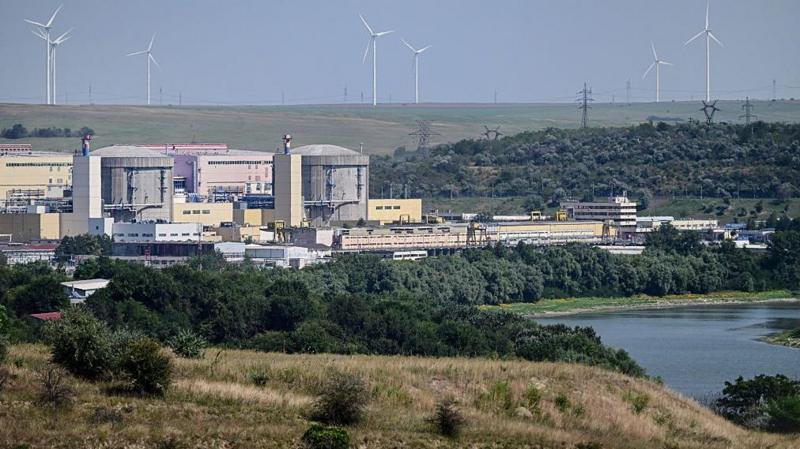
Romania has stopped using its only nuclear power plant because very low water levels in the Danube River, caused by hot weather, make it unsafe to cool the reactors. This shutdown will last at least 10 days, and the low water levels also affect hydroelectric power and river traffic in Europe.
Key Facts
Romania’s Cernavodă nuclear plant, producing about 20% of the country’s electricity, was shut down due to low Danube River levels.
The second reactor was disconnected just before midday on Thursday; the first reactor was shut down earlier in July.
The Danube’s water level is at its lowest in 30 years in some countries.
Low water prevents the plant’s cooling system from working properly because the intake can’t reach enough water.
Romania is using solar, wind, coal, gas power, and imports to cover the electricity shortfall.
Hungary’s nuclear plant on the Danube has not shut down yet but faces similar risks.
Europe’s rivers, including the Rhine, have very low water, impacting transport and power generation.
Climate change is causing hotter temperatures and more heatwaves in Europe, adding pressure on water resources and agriculture.
Read the Original
Want the full story? Tap a source to open the original
article.
The Israel Defense Forces (IDF) are working to stop a new kind of drone used by Hezbollah in Lebanon. These drones are hard to detect because they use fiber-optic cables to send real-time video, making it easier for Hezbollah to attack Israeli troops from a safe distance.
Key Facts
Hezbollah has started using fiber-optic first-person view (FPV) drones since March, which are small, cheap, and hard to detect.
These drones do not emit electronic signals, making them difficult for Israel’s usual defense systems like Iron Dome to stop.
The IDF is trying new methods to fight these drones, including remote weapons systems like the SMASH Hopper and the Arbel system.
Israeli soldiers have also been given shotguns and special fragmenting bullets to better hit these drones.
The IDF uses large amounts of netting to physically catch the drones before they can reach soldiers.
Each Israeli squad now includes a soldier tasked with watching for drone attacks from the sky.
The IDF is looking at solutions other countries have used to handle this new drone threat.
This new tactic from Hezbollah marks the first time they have a better chance against Israeli soldiers in battle.
Read the Original
Want the full story? Tap a source to open the original
article.
A passenger train derailed near Lewes in East Sussex in the afternoon, causing several rail routes to close. Emergency services responded quickly to the scene, helping passengers and advising people to avoid the area.
Key Facts
A passenger train derailed near Lewes, East Sussex just before 4 pm.
At least two train carriages tipped over, with passengers seen on top of them.
Several railway routes in the area were closed after the accident.
Emergency services, including paramedics and fire crews, arrived quickly to assist.
Travelers in the area were asked to allow up to 60 extra minutes for their journeys.
Network Rail, Southern Rail, and British Transport Police are involved in the response.
The UK Transport Secretary, Heidi Alexander, expressed concern and thanked emergency teams.
Further updates were promised as more information becomes available.
Read the Original
Want the full story? Tap a source to open the original
article.
Heavy rain caused serious flooding and traffic problems near Tokyo, Japan, leading to the death of one person. The Japan Meteorological Agency warned people about floods and landslides in several areas, and tens of thousands of homes lost power.
Key Facts
Record-breaking rain hit eastern Japan, especially near Tokyo and in Chiba prefecture.
Flooding affected roads, homes, and traffic, with some trains stopped.
One person died in Ichikawa city due to the flood.
Two people were rescued from a flooded car in nearby Kashiwa city.
The Japan Meteorological Agency warned residents in 14 areas to prepare for floods and landslides.
About 220,000 people were told to move to safer places.
Heavy rain followed a tropical storm that caused injuries and blackouts the day before.
Around 68,000 homes lost electricity because of the flooding.
Read the Original
Want the full story? Tap a source to open the original
article.
Rescuers in Colombia are urgently searching for survivors trapped under rubble after a powerful 7.4 magnitude earthquake. The death toll has reached at least 265 people, with hundreds more missing, as efforts focus on the crucial first days after the quake to find those still alive.
Key Facts
A 7.4 magnitude earthquake struck Colombia on Monday, causing severe damage.
At least 265 people have died, and hundreds are missing.
Rescue teams work mainly in cities like Cali, Pereira, Manizales, and Quibdó.
The first 48 to 72 hours after an earthquake are critical to find survivors.
Rescuers call for silence to hear possible signs of life in the rubble.
Nearly 500 people are officially reported missing; civilian reports suggest over 4,200 missing.
More than 25,800 families have been affected by the earthquake.
The government and aid groups are working to help the hardest-hit communities.
Read the Original
Want the full story? Tap a source to open the original
article.
Separatist fighters in northern Mali have released 82 soldiers, some of whom were captured during attacks in April. The Malian army confirmed the freed soldiers are safe, while separatist leaders said the release was for humanitarian reasons.
Key Facts
82 Malian soldiers were released by separatist groups in northern Mali.
Some of these soldiers had been held captive since as early as 2023.
The soldiers were captured during coordinated attacks on April 25, targeting key locations including Bamako airport and other cities.
The Malian military confirmed the freed soldiers are now safe and receiving care.
Mohamed Elmaouloud Ramadane is a spokesperson for the separatist Azawad Liberation Front who confirmed the release.
Mali has faced ongoing violence for over ten years, involving groups linked to al-Qaida and ISIS, plus Tuareg separatists.
The April attacks were carried out by an alliance of JNIM militants and Tuareg separatists.
Despite the release, 118 Malian soldiers remain captive.
Read the Original
Want the full story? Tap a source to open the original
article.
A Yemeni commercial ship was hit by three ballistic missiles fired by the Iran-backed Houthi rebels in the Bab al-Mandeb Strait, killing six people and injuring at least nine. The attack caused chaos as a second missile struck while rescue efforts were happening, highlighting rising violence in the region and threats to a key global trade route.
Key Facts
Three ballistic missiles struck the Yemeni cargo ship Tihama near the Bab al-Mandeb Strait on August 10, 2026.
Six people were killed and at least nine were injured in the attack.
The attack worsened when a second missile hit during ongoing rescue efforts.
Survivors described intense fire, panic, and severe damage on the ship.
The Bab al-Mandeb Strait connects the Red Sea to the Gulf of Aden and handles about 12% of world trade.
The Houthis have increased attacks on Yemeni government forces and Saudi oil facilities recently.
The Houthis declared a blockade on Saudi-linked ships in the strait, responding to Saudi actions against Yemen.
The attacks could destabilize the fragile ceasefire and risk expanding conflict in the Middle East.
Read the Original
Want the full story? Tap a source to open the original
article.
Lawyers for the "Birmingham Four," four men convicted of terrorism offenses in the UK, hope new information from an undercover policing inquiry will help reopen their case. The men were arrested after a covert police operation involving a fake delivery company and an undercover officer named "Vincent," who is alleged to have planted evidence.
Key Facts
The four men—Khobaib Hussain, Naweed Ali, Mohibur Rahman, and Tahir Aziz—were convicted of plotting a terrorist attack in the UK about ten years ago.
Police created a fake delivery company called Hero Couriers to catch two of the men.
An undercover officer named "Vincent" worked undercover with access to the men and the case.
Evidence such as a fake handgun, a partially assembled pipe bomb, and a meat cleaver with writing on it were found in Naweed Ali's car.
Lawyers claim the undercover officer planted this evidence, but the claim was denied by the officer and rejected in court.
A special inquiry into undercover policing uncovered cases where officers fabricated evidence, showing how such fake evidence could have been used.
The lawyers have submitted new information to the Criminal Cases Review Commission (CCRC) asking for the convictions to be reviewed.
Support groups and family members called on the CCRC to review and reopen the case, citing a lack of transparency in the investigation process.
Read the Original
Want the full story? Tap a source to open the original
article.
Zambian President Hakainde Hichilema voted in the capital city, Lusaka, as he seeks a second term in office. The election will show whether his efforts to improve the economy can address public worries about higher living costs.
Key Facts
President Hakainde Hichilema is running for a second term as Zambia’s president.
He cast his vote in Lusaka, the capital city of Zambia.
The election focuses on economic issues, especially the rising cost of living.
President Hichilema has introduced economic reforms during his first term.
Voters will decide if these changes have made a positive difference.
The outcome will shape Zambia’s political and economic future.
Read the Original
Want the full story? Tap a source to open the original
article.
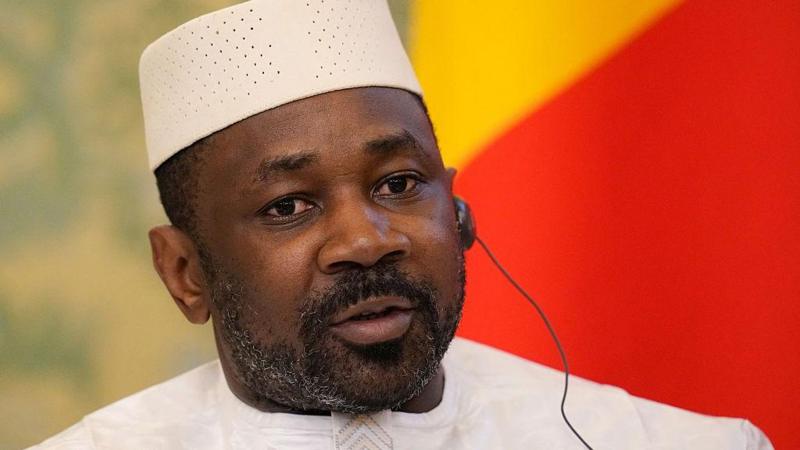
A French citizen named Yann Vezilier, who was sentenced to 20 years in prison in Mali for allegedly planning a coup, has been pardoned by Mali's President Assimi Goïta. Vezilier was accused of working for French intelligence to destabilize the Malian government, but Mali has now allowed him to leave the country.
Key Facts
Yann Vezilier was sentenced to 20 years in prison in Mali for allegedly plotting a coup.
He was accused of acting for the French intelligence service alongside some Malian army officers and soldiers.
Mali’s President Assimi Goïta granted Vezilier a presidential pardon.
The pardon does not change the court’s judgement but allows Vezilier to leave Mali immediately.
France denies that Vezilier was working as a spy in Mali.
Mali has been facing a security crisis since 2012 due to Islamist militant groups.
The Malian government broke ties with France and now works with Russian allies against militants.
The political situation in Mali remains unstable with postponed elections and dissolved political parties.
Read the Original
Want the full story? Tap a source to open the original
article.
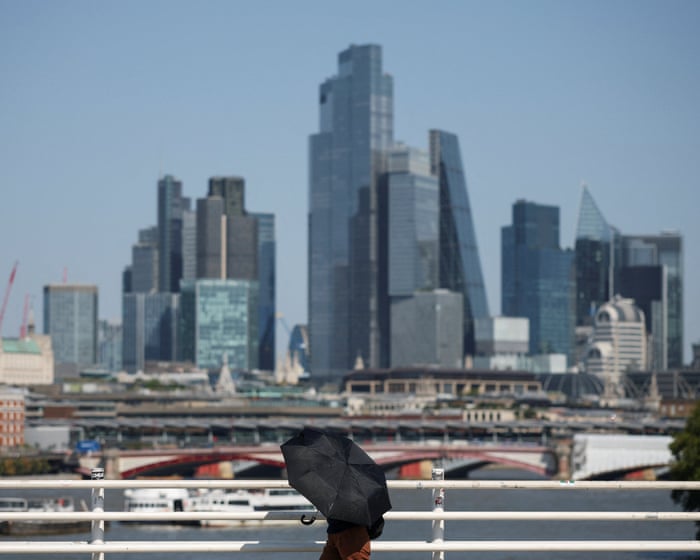
The UK experienced its hottest day of the year with temperatures reaching 38.1°C in southern England during the fifth summer heatwave. Across Europe, extreme heat caused wildfires, droughts, and disruptions to power plants, with countries like France, Spain, Hungary, and Romania facing serious impacts.
Key Facts
The UK recorded a provisional temperature of 38.1°C at Kew Gardens, the highest of the year so far.
Europe faced its fifth heatwave, with some places nearing 40-41°C, including Spain and France.
Many areas in the UK, including London and Wales, had unusually high temperatures between 35°C and 37.1°C.
An amber extreme heat warning was issued for much of England due to health risks.
Spain and France experienced severe wildfires worsened by dry conditions and high temperatures.
Nearly three-quarters of England and all of Wales are currently in drought, straining water supplies.
Low water levels on the Danube River have forced reductions in power plant operations in Hungary and Romania.
Experts link the increased heatwaves and droughts to climate change caused by burning fossil fuels.
Read the Original
Want the full story? Tap a source to open the original
article.