Kenneth Hay, a British soldier who took part in the D-Day invasion during World War Two and survived capture, has died at age 101. He was captured a month after D-Day, survived a forced march as a prisoner, and later spent years educating children about the war.
Key Facts
Kenneth Hay served in the 4th Dorset Infantry Regiment during World War Two.
He landed in Normandy shortly after D-Day on 6 June 1944.
Hay was captured by German forces in July 1944 and made a prisoner of war.
He survived a 1,000-mile forced march across Eastern Europe before being freed by American soldiers.
After the war, Hay was awarded an MBE for community service and France’s Legion d'Honneur.
He spent many years sharing his war experiences with British schoolchildren.
The British Normandy Memorial announced his death and praised his dedication to education.
Hay lived to be 101 years old.
Read the Original
Want the full story? Tap a source to open the original
article.
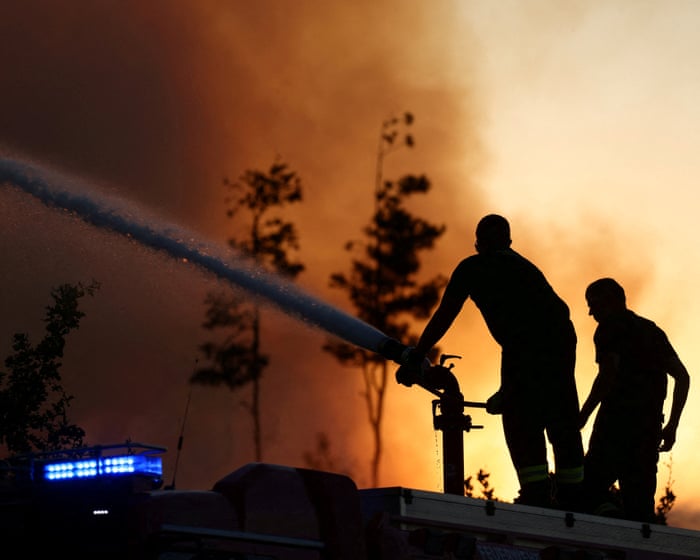
A large forest fire in central Colombia is now partly under control after firefighters and volunteers worked to stop it. The fire has affected about 200 hectares of land.
Key Facts
The wildfire is located in the center of Colombia.
Around 250 firefighters are fighting the fire.
Volunteers are also helping to control the blaze.
The fire started on Saturday before being partially contained.
About 200 hectares (roughly 494 acres) have been burned.
Colombia’s disaster risk agency is managing the response.
The situation is ongoing but improving with current efforts.
Read the Original
Want the full story? Tap a source to open the original
article.
A new study shows that babies born in Europe in 2025 will likely face almost twice as many days with extreme fire weather compared to those born in 1950, due to climate change and longer lifespans. The Mediterranean region is expected to see the biggest increase in severe fire conditions unless climate policies improve significantly.
Key Facts
Children born in Europe in 2025 may experience about three more years of extreme fire weather in their lifetime compared to those born in 1950.
Extreme fire weather means hot, dry, and windy conditions that help fires burn hotter and spread faster.
The Mediterranean region will see the most rise, with five more years of severe fire risk for the 2025 generation compared to people born after World War II.
Europe has warmed twice as fast as the global average, increasing the risk of large wildfires.
Current climate policies are expected to cause global warming of 2.6°C by the end of the century, nearly doubling extreme fire weather days.
Limiting global warming to 1.5°C could reduce the increase in fire weather exposure.
The study combined climate models and population data to predict lifetime exposure to extreme fire weather.
Fire prevention efforts sometimes lead to more intense fires by allowing flammable plants to build up over time.
Read the Original
Want the full story? Tap a source to open the original
article.
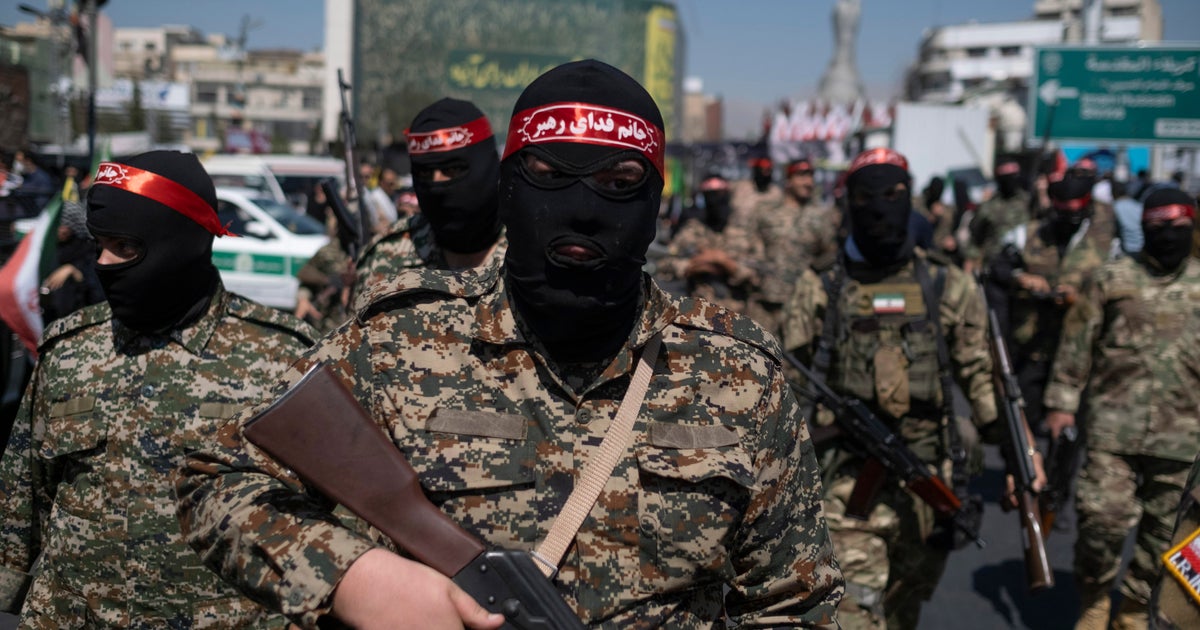
Iran's Islamic Revolutionary Guard Corps warned that if the U.S. attacks again, Iran will respond with new weapons and expand the conflict to more areas. President Trump is deciding whether to increase pressure on Iran, including possible military action, economic sanctions, or diplomacy, and may meet Iran’s president during the upcoming U.N. General Assembly.
Key Facts
Iran’s Revolutionary Guard said they will change their weapons and spread the war if the U.S. attacks again.
The conflict involving Iran has lasted nearly seven months.
President Trump told Fox News he is considering options including military strikes, economic sanctions, or negotiating a deal with Iran.
Trump said he might meet with Iran’s President Masoud Pezeshkian during the U.N. meeting in New York.
U.S. embassies in the Middle East issued travel warnings due to increased fighting between Yemen’s Iran-backed Houthis and the Saudi-backed coalition.
CIA Director John Ratcliffe met with Egypt’s President Abdel Fattah al-Sisi to discuss the conflicts in the Middle East and regional security.
The U.S. State Department advised Americans to avoid travel in the region because of rising tensions.
The situation remains tense with potential for the conflict to expand beyond current areas.
Read the Original
Want the full story? Tap a source to open the original
article.
Presley Gerber, a 27-year-old model and son of Cindy Crawford, has died at a rehab center. Before his death, he posted about using ibogaine, a substance derived from a West African plant, to help with mental health and drug addiction.
Key Facts
Presley Gerber died at age 27 while at a rehabilitation facility.
The exact cause of death has not been confirmed.
Gerber openly shared his mental health and drug abuse struggles.
In March, he posted on Instagram about taking a "flood dose" of ibogaine.
Ibogaine comes from a West African shrub called iboga.
Small amounts act as a mild stimulant; larger doses cause psychedelic effects.
Ibogaine is used to treat conditions like PTSD and substance addiction.
It is a Schedule I drug in the United States, meaning it is tightly controlled and considered to have a high potential for abuse.
Read the Original
Want the full story? Tap a source to open the original
article.
Early results from Russia’s recent parliamentary election show the Kremlin-backed United Russia party leading. The vote was tightly controlled and took place during the ongoing war, with about 111 million people eligible to vote.
Key Facts
The parliamentary election in Russia was held from Friday to Sunday.
Around 111 million people in Russia were eligible to vote.
The election occurred during wartime between Russia and Ukraine.
Moscow’s mayor said voting continued despite Ukrainian drone attacks.
The Kremlin-backed United Russia party is leading the early results.
This is Russia’s first parliamentary vote held during a war.
The election was described as tightly controlled, limiting competition.
Read the Original
Want the full story? Tap a source to open the original
article.
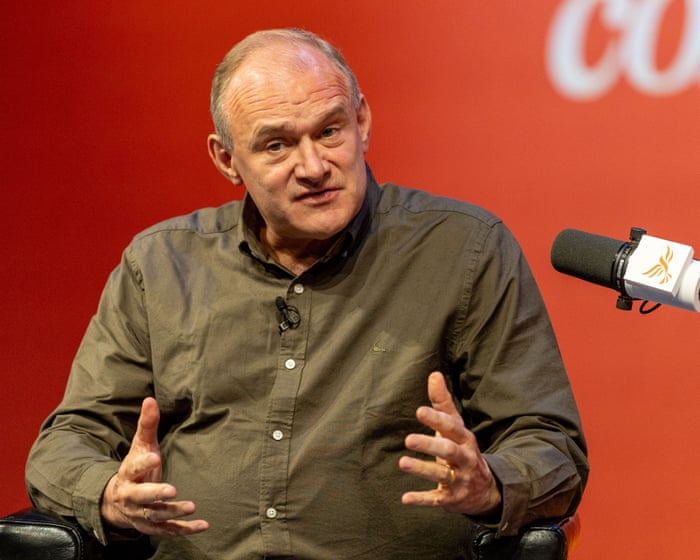
Ed Davey, leader of the UK Liberal Democrats since 2020, denied claims that his party is becoming irrelevant. He pointed to recent growth in the number of party MPs and councils they control. Davey also urged Andy Burnham to firmly address President Donald Trump during Burnham’s upcoming meeting at the UN.
Key Facts
Ed Davey has led the Liberal Democrats since 2020, making him the longest-serving national party leader in the UK.
Some Lib Dem members, including Devon council leader Julian Brazil, claim the party is losing influence.
Davey disagrees and highlights an increase in Liberal Democrat MPs and councils under his leadership.
The Liberal Democrat conference is taking place in Brighton, with several key speeches planned.
Davey encouraged Andy Burnham to confront President Donald Trump frankly during their UN meeting.
Davey criticized Trump’s policies, including his role in the conflict with Iran and rising energy prices.
Davey praised Canadian Prime Minister Mark Carney for successfully standing up to Trump.
Andy Burnham is traveling to New York to attend the UN General Assembly and meet President Trump.
Read the Original
Want the full story? Tap a source to open the original
article.
An 11-year-old boy was seriously hurt after being shot in the face and neck inside a home in Norwest, Sydney. He was treated by paramedics at the scene and then taken to the hospital, while police continue to investigate the case.
Key Facts
The shooting happened around 5 pm on Monday in a home located in Norwest, north-west Sydney.
The 11-year-old boy suffered wounds to his face and neck.
Paramedics treated the boy at the scene before taking him to the hospital.
Five other people were inside the home during the incident but were not hurt.
Police say the shots were fired from inside the house.
Authorities are not looking for any suspects outside the home.
A crime scene has been set up as investigations continue.
Read the Original
Want the full story? Tap a source to open the original
article.
Friedrich Merz, the German chancellor, said he will stay in office after his party, the CDU, lost badly in two regional elections. The CDU even failed to enter the Mecklenburg-Vorpommern state parliament for the first time in 77 years, while the far-right party AfD gained the most votes.
Key Facts
Chancellor Friedrich Merz’s party, the CDU, suffered heavy losses in two German regional elections.
In Mecklenburg-Vorpommern, the CDU got only 4.9% of the vote and did not enter the state parliament for the first time in 77 years.
This state was once led by former Chancellor Angela Merkel from the CDU.
Many former CDU voters switched to the Alternative for Germany (AfD) party.
AfD received 38% of the vote in Mecklenburg-Vorpommern, making them the largest party there.
AfD also recently won a majority in the Saxony-Anhalt state election.
Chancellor Merz described the results as a “disaster” but said he will continue with his government’s reforms.
Read the Original
Want the full story? Tap a source to open the original
article.
Early results from Russia's parliamentary elections show President Vladimir Putin’s party, United Russia, leading with about 58% of the vote. The election took place amid a controlled political environment, with many opposition candidates barred, and included voting from some Ukrainian territories annexed by Russia.
Key Facts
Russia held parliamentary elections from Friday to Sunday to elect members of the State Duma (lower house).
United Russia leads with approximately 57.86% of the vote based on about 90% of ballots counted.
Voter turnout was just under 57%.
Other parties like the Communist Party, Liberal Democratic Party, New People, and A Just Russia won lower percentages but are expected to hold some seats.
Many antiwar candidates were not allowed to run; some opposition party members faced jail sentences before the election.
About 3.6 million people voted online, including residents of Crimea and parts of Ukraine annexed by Russia in 2014 and 2022, territories not recognized internationally as Russian.
The final election results are expected by the end of the week after all ballots and legal procedures are completed.
Analysts say some votes for smaller parties might reflect silent protest due to economic hardship and the ongoing war.
Read the Original
Want the full story? Tap a source to open the original
article.
In recent regional elections in Germany, the conservative CDU party lost many votes. The far-right AfD won the most votes in Mecklenburg-Western Pomerania but is unlikely to join the government because other parties refuse to work with them. In Berlin, the Left Party had the best results and may form a coalition government with the Greens and SPD.
Key Facts
The far-right AfD won the largest vote share in Mecklenburg-Western Pomerania.
Other parties have ruled out forming a coalition with AfD, isolating them politically.
SPD’s Manuela Schwesig may still be able to form the government in Mecklenburg-Western Pomerania.
In Berlin, the Left Party led the vote and may partner with the Greens and SPD to govern.
The CDU performed badly in both regions, causing problems for Chancellor Friedrich Merz and the conservative party.
Chancellor Merz said his government will continue reforms and aims to improve Germany.
These election results reflect growing challenges for mainstream parties and the rise of right-wing groups.
Read the Original
Want the full story? Tap a source to open the original
article.
The Independent released its 2026 list of 100 top environmentalists who are making important contributions to fight climate change. The list features well-known figures like Pope Leo and Sir David Attenborough. The article also mentions animals affected by climate change seeking help and new dating trends showing people are more open to slow relationships.
Key Facts
The Independent published a list of 100 leading environmentalists for 2026.
The list highlights people making a positive impact on the climate crisis.
Notable people on the list include Erin Brockovich, Pope Leo, and Sir David Attenborough.
A study found more wild animals are entering human homes due to climate change and habitat loss.
In Florida, a pelican injured by fishing gear came to a marine lab seeking help and was saved.
New dating data from the Kinsey Institute shows people are giving second chances and staying open-minded about dating.
Nearly half of people reported falling in love with someone they did not find attractive at first.
Despite a rise in ghosting, people value good conversation, shared interests, and life goals when dating.
Read the Original
Want the full story? Tap a source to open the original
article.
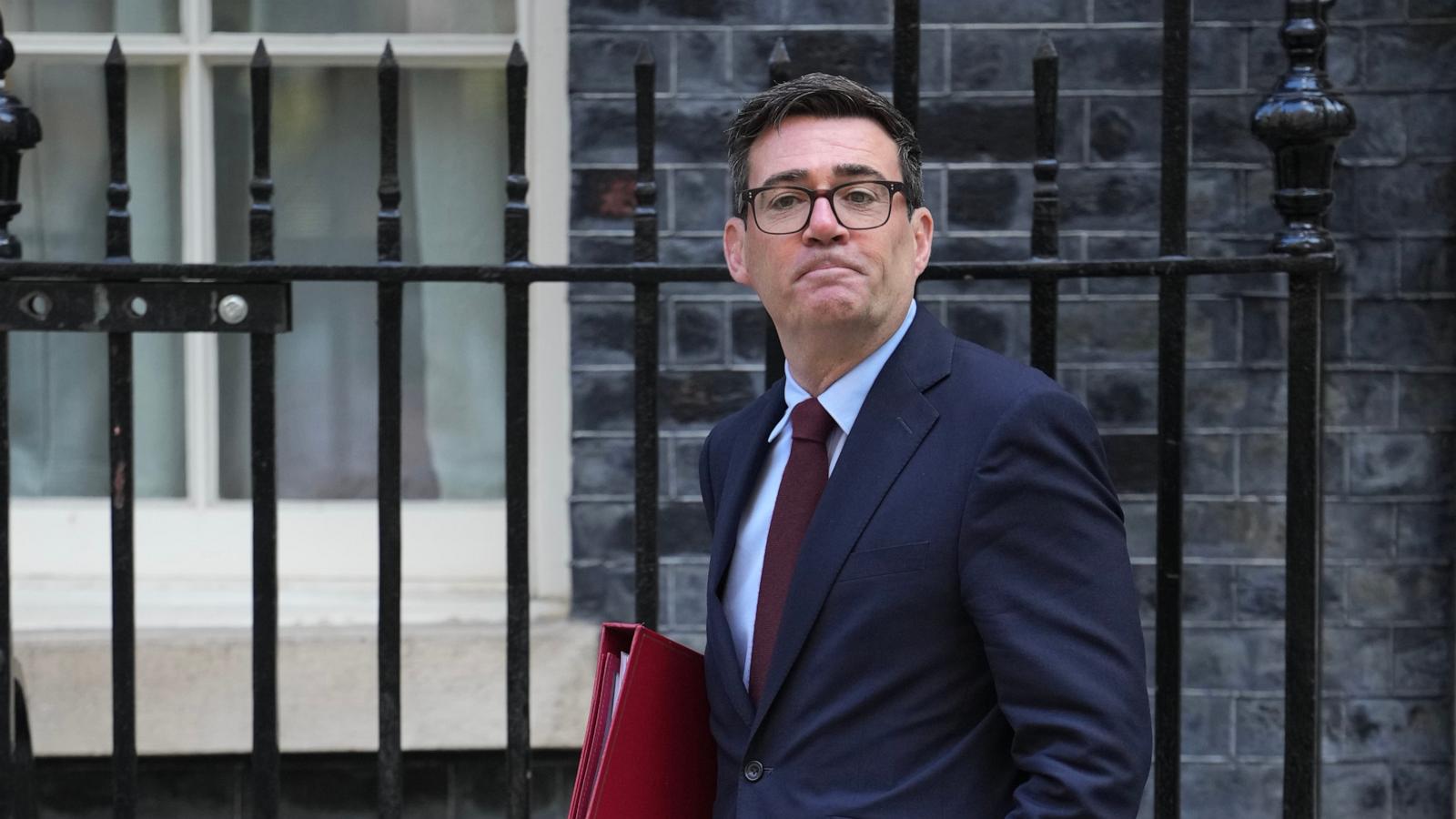
Britain’s Prime Minister Andy Burnham will meet U.S. President Donald Trump for the first time during the United Nations General Assembly in New York. Their talks will focus on the war in Ukraine, shipping routes in the Middle East, and economic issues affecting both countries.
Key Facts
Andy Burnham became Britain’s prime minister in July 2026.
This will be Burnham’s first meeting with President Donald Trump.
The meeting is planned during the United Nations General Assembly in New York.
Burnham wants to discuss sending interceptor missiles to help Ukraine defend against air attacks.
They will also talk about reopening the Strait of Hormuz, a major shipping route blocked by conflict.
The blockade of this route has caused oil prices to rise, hurting the British economy.
Burnham was previously critical of Trump but now says he looks for common ground with other leaders.
The UK may face criticism from Trump over its trade policies and regulations on American tech companies.
Read the Original
Want the full story? Tap a source to open the original
article.
Three South Korean military officers were injured in an explosion in the Demilitarized Zone (DMZ) between North and South Korea. The cause of the blast is unknown, and the wounded officers are receiving treatment in a military hospital near Seoul.
Key Facts
Three South Korean officers were wounded by an explosion in the western part of the DMZ.
Two officers were evacuated by helicopter; the third was moved by land then airlifted.
The DMZ is a heavily armed border about 248 km long and 4 km wide.
About 2 million landmines are believed to be in or near the DMZ.
Explosions and mine-related injuries are common in the DMZ area.
The DMZ was created after the Korean War ended with an armistice in 1953, not a peace treaty.
There is increased concern about North Korean military activity near the border as North Korea strengthens its defenses.
The wounded officers are being treated at a military hospital near Seoul.
Read the Original
Want the full story? Tap a source to open the original
article.
Seven rebel groups in Ethiopia have joined forces to create a new alliance called the Alliance for Survival. Their goal is to end the current government led by Prime Minister Abiy Ahmed and start a transitional government. Ethiopia has faced ongoing conflicts in several regions, and this new alliance covers half of the country’s regional states.
Key Facts
The alliance includes seven rebel groups: Fano militia (Amhara), Oromo Liberation Army (OLA), Tigray People's Liberation Front (TPLF), and four smaller groups.
They accuse the government of causing war, genocide, destruction, and poverty.
The coalition aims to remove the government in Addis Ababa and establish a transitional administration.
Ethiopia has experienced armed conflicts mainly in Oromia, Amhara, and the Tigray regions.
The Tigray war caused hundreds of thousands of deaths and millions of people displaced.
An African Union peace deal ended the Tigray war in 2022, but tensions remain high.
The Fano militia fought with federal forces during the Tigray war but later rebelled against the government after refusing to disarm.
Prime Minister Abiy Ahmed’s Prosperity Party kept power in the June 2024 general election, but opposition groups rejected the results, and Tigray was excluded from voting.
Read the Original
Want the full story? Tap a source to open the original
article.
At least three people were killed and four injured in air raids by Pakistan on northeastern Afghanistan’s Kunar province. The strikes hit homes and shops, increasing tensions between Afghanistan and Pakistan after months of relative calm.
Key Facts
Pakistani air raids struck the Nurgal district in Kunar province early Monday.
Three members of one family were killed; four others were injured.
In Paktika province, two locations were bombed, damaging a shop and an empty house with no injuries.
The Taliban government in Afghanistan denies harboring militants accused by Pakistan.
Pakistan has accused Afghanistan of allowing armed groups to attack across the border.
Tensions have risen after recent violent clashes and a deadly bombing in Pakistan blamed on fighters based in Afghanistan.
Pakistan has warned it may target fighters inside Afghanistan in response to attacks in Pakistan.
No immediate comment came from Pakistan on the recent air raids.
Read the Original
Want the full story? Tap a source to open the original
article.
The three sisters of former Pakistani Prime Minister Imran Khan have been arrested in Punjab province and sent to jail in Lahore. Imran Khan has been in jail since 2023 after receiving a 17-year sentence on corruption charges.
Key Facts
Imran Khan was prime minister of Pakistan from 2018 to 2022.
He has been jailed since 2023 after being sentenced for corruption.
His three sisters—Aleema Khan, Dr. Uzma Khan, and Noreen Khan—were arrested in Punjab.
They were sent to Kot Lakhpat Jail in Lahore for 30 days under a local law related to public order.
Khan’s party, Tehreek-e-Insaf, said the sisters and some nephews were taken into custody but the children were released.
Punjab police have not commented on the arrests.
Khan’s party called for protests on September 27, but government officials said the protests would not be allowed.
Imran Khan was removed as prime minister in 2022 after a no-confidence vote amid tensions with the military.
Read the Original
Want the full story? Tap a source to open the original
article.
A former Sydney police officer, Beaumont Lamarre-Condon, is on trial for allegedly murdering his ex-partner, TV presenter Jesse Baird, and Baird’s new boyfriend, Luke Davies, in 2024. Prosecutors say Lamarre-Condon planned the killings, disguised himself as an Uber Eats rider to enter the home, and tried to cover up the crime afterward.
Key Facts
Beaumont Lamarre-Condon, 31, is charged with two counts of domestic violence-related murder and one count of aggravated break and enter.
The victims were Jesse Baird, 26, a TV presenter, and Luke Davies, 29, a Qantas flight attendant.
The bodies were found hidden in surfboard bags 200 km from Sydney.
Lamarre-Condon allegedly stalked Baird and tampered with his car after their breakup in November 2023.
On the day of the murders, Lamarre-Condon dressed as an Uber Eats driver and waited outside Baird’s home for three hours.
He used a key he had obtained earlier to enter the house and killed Baird and Davies inside.
After the murders, Lamarre-Condon tried to hide the crime by sending messages from Baird’s phone.
He was fired by New South Wales Police after being charged and is pleading not guilty.
Read the Original
Want the full story? Tap a source to open the original
article.
The United Kingdom is expecting warmer weather over the next few days, with temperatures reaching up to around 25°C (77°F). The warmth will last mainly in England and Wales, while Scotland and Northern Ireland experience cooler temperatures and some rain, but it will not be hot enough to be called a heatwave.
Key Facts
Temperatures will rise to around 20-25°C, which is about 5 degrees warmer than usual for late September.
South-east England could see highs near 24-25°C, while many other areas will be in the low 20s Celsius.
High pressure will bring mostly dry and sunny weather, especially in England and Wales.
Rain is expected on Tuesday and Wednesday in western Scotland, Northern Ireland, Wales, and western England.
Temperatures in cooler areas will drop to around 14-18°C by midweek.
This warm spell will not qualify as a heatwave because the temperature will not stay above 26-28°C for three days.
September warmth often happens due to warm air coming from southern Europe or North Africa.
The weather might become cooler and wetter moving into October.
Read the Original
Want the full story? Tap a source to open the original
article.
Preliminary results from Russia's parliamentary elections show that the United Russia party, supported by President Vladimir Putin, is expected to keep control of the parliament. The elections happened after more than four years of war with Ukraine and economic difficulties, and the only party against the war, Yabloko, was removed from the ballot.
Key Facts
United Russia party is set to keep its majority in Russia’s parliament.
The party is backed by President Vladimir Putin.
The elections took place after over four and a half years of war against Ukraine.
The war has caused major losses for the Russian military.
Economic hardship has affected the country during this time.
Yabloko, the only anti-war party, was removed from the ballot before the election.
Some Yabloko candidates still ran in a few areas despite the removal.
The election results were expected, with no major surprises reported.
Read the Original
Want the full story? Tap a source to open the original
article.