Iran says its seven-step proposal for a ceasefire and renewed talks with the United States can now be implemented within two days, rather than a week. Tehran says the proposal depends on U.S. acceptance of its conditions, while Qatar and Pakistan continue to facilitate indirect talks amid the ongoing conflict.
Key Facts
Iran’s proposal includes reopening the Strait of Hormuz and resuming talks on Iran’s nuclear programme.
Foreign Ministry spokesman Esmaeil Baghaei said Iran had condensed the proposal so it could be implemented within two days.
Iran’s stated conditions include lifting the U.S. naval blockade of its ports, removing sanctions, ending strikes, and agreeing to a regional ceasefire.
Baghaei did not say that Iran had changed its demands or that the United States had accepted the proposal.
Iranian state news agency IRNA reported that Supreme Leader Mojtaba Khamenei gave the government authority to accelerate talks with the United States.
Qatar and Pakistan are helping facilitate indirect negotiations.
President Donald Trump said the war would end “very soon one way or the other” and that Iran would either make a deal or the United States would end it.
Read the Original
Want the full story? Tap a source to open the original
article.
IG Metall, Germany’s largest union, began strikes on Monday in a wage dispute affecting about 3.7 million workers in metal and electrical engineering. The union seeks a 5 percent pay rise and job protections, while employers have offered a delayed one-time payment and a later wage increase; strikes are expected to continue through the week.
Key Facts
The strikes have affected major manufacturers including Audi, Mercedes-Benz and Tata Steel.
IG Metall is seeking higher wages, protections for jobs and production sites, and profit-sharing in strong-performing sectors.
Employers offered a one-time payment equal to 1 percent of pay in July 2027 and a 1.3 percent wage increase from July 2028.
The employers’ offer would let companies facing financial difficulties withhold the one-time payment.
IG Metall rejected the offer, saying it would reduce workers’ pay in real terms, and called for expanded industrial action.
The union plans to publish strike participation figures on Friday.
More than 100,000 workers took part on peak days during the previous bargaining round in 2024.
Thousands rallied in Berlin and more than 30 other German cities on Saturday amid wider European protests over living costs and workplace conditions.
Read the Original
Want the full story? Tap a source to open the original
article.
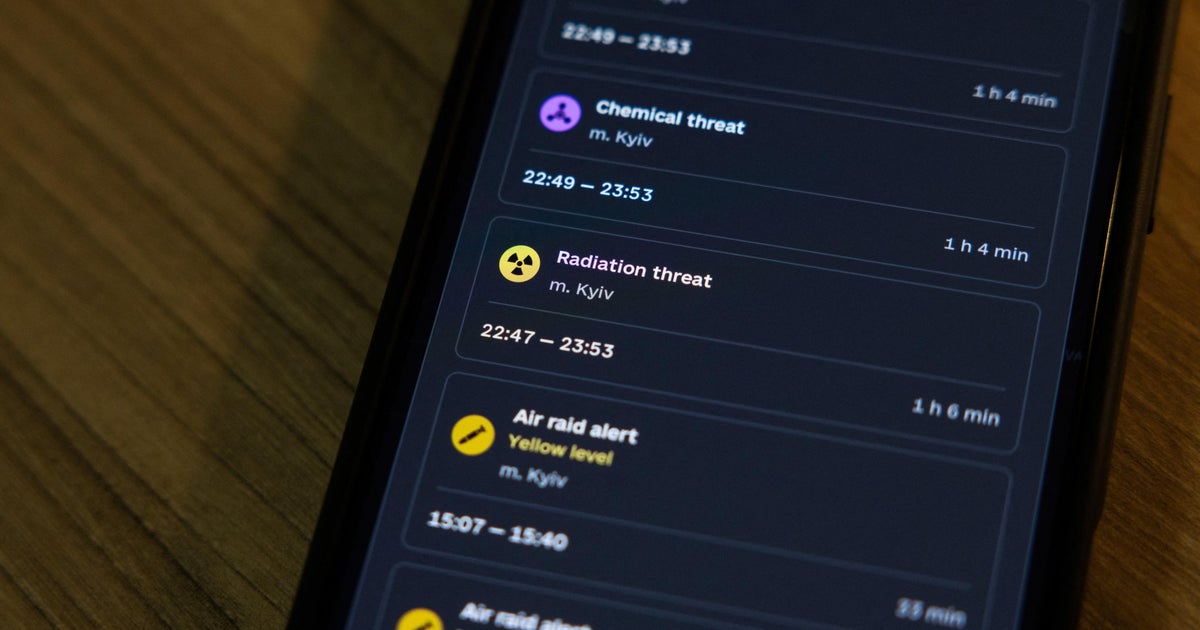
A hacked emergency alert app sent Ukrainians false warnings of nuclear strikes, chemical attacks and street fighting on Sunday night. Ukraine’s Air Force said the app had been compromised and that there was no radiation threat; the incident caused unease but many people quickly doubted the alerts and shared jokes about them.
Key Facts
The false alerts appeared on Sunday night and included warnings of nuclear strikes, chemical attacks and combat in Kyiv.
Ukraine’s Air Force said the alert app had been compromised and clarified that there was no radiation threat.
The Air Force issued its initial statement within 15 minutes, but more than an hour passed before it sent all-clear messages.
Some alerts were written in Russian, and one included a link to a Telegram channel apparently associated with a hacker group.
Cybersecurity expert Yevhen Baliutov said the incident appeared to be a Russian hack, but the article noted that the informal wording could point to hacktivists not formally directed by either government.
Baliutov said people who clicked the Telegram link could face further disinformation, phishing attempts or data breaches.
Several Ukrainian apps provide air-raid notifications using the same data as the official government-backed app.
Residents described initial fear and stress, but said many people soon questioned the warnings and discussed the incident in group chats.
Read the Original
Want the full story? Tap a source to open the original
article.
Palestinian-led parties won 15% of the vote in Israel’s election, complicating efforts to form a government. Prime Minister Benjamin Netanyahu’s bloc received the most support but had not secured enough Knesset seats to form a coalition, leaving leaders to consider partnering with non-Zionist parties or facing political gridlock.
Key Facts
Palestinian-led parties won 15% of the vote.
Netanyahu’s bloc received the most support among voters.
Netanyahu’s bloc did not have enough Knesset seats to form a coalition at the time described.
Israel’s leadership faced a choice between partnering with non-Zionist parties and accepting political gridlock.
Ofer Cassif is a member of one of the Palestinian-led parties.
Cassif said Israel’s future should involve Jewish-Palestinian partnership rather than exclusion.
Read the Original
Want the full story? Tap a source to open the original
article.
At least 24 people were killed when Russian bombs struck a humanitarian aid centre in Komyshuvakha, in Ukraine’s Zaporizhzhia region, Ukrainian officials said. Rescue crews continued searching the rubble, while officials reported that Russian drone attacks repeatedly interrupted their work.
Key Facts
At least nine aerial bombs, each weighing 3,000 kilograms, hit the village on Monday, according to regional head Mykhailo Semikin.
Ukraine’s state emergencies service said the dead included two rescuers and four police officers.
Five people were injured, and 27 were initially reported missing.
President Volodymyr Zelensky said the first strike hit a school used for humanitarian purposes and a second hit a place where people were sheltering.
Semikin said people remained under the rubble as rescue teams searched the site.
The Russian military had not publicly commented on the attack at the time of the report.
Read the Original
Want the full story? Tap a source to open the original
article.
A Russian strike destroyed a school being used as a humanitarian aid centre in Komyshuvakha, in Ukraine’s Zaporizhia region. Ukrainian President Volodymyr Zelenskyy reported 24 people killed and five injured; regional officials said 27 people were missing.
Key Facts
The aid centre was in a school in the southeastern village of Komyshuvakha.
Zelenskyy said an initial air strike was followed by nine more bombs aimed at the shelter.
Those killed included a police officer and two State Emergency Service rescuers, according to regional Governor Mykhailo Semikin.
Ukrainian emergency services released footage showing rescuers working among the smouldering rubble.
Drone strikes in the eastern Kharkiv region injured 12 people and damaged a refrigeration facility, greenhouses and homes.
Five people were reported injured in Odesa, where a warehouse was targeted and homes were damaged.
Russia’s Ministry of Defence said it shot down 212 Ukrainian drones overnight.
Read the Original
Want the full story? Tap a source to open the original
article.
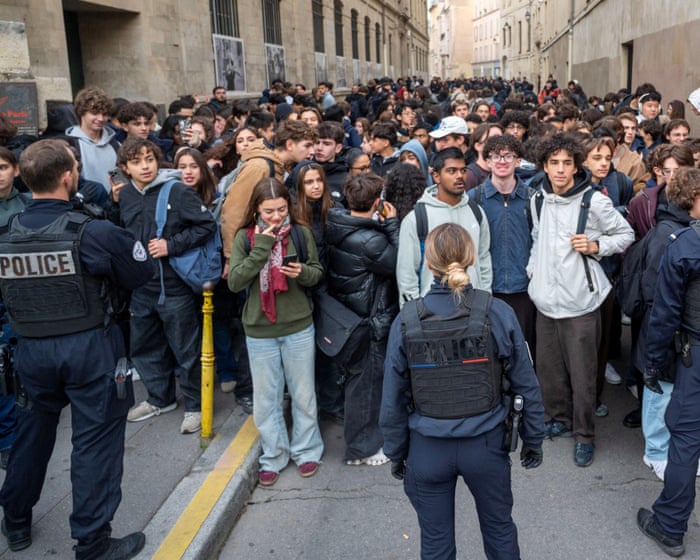
Students blockaded high schools across France on Monday to demand more teachers, school repairs and better conditions, as unions prepared further campus protests and a nationwide strike later in the week. The education minister warned that weeks of missed lessons could jeopardize coursework and final exams for some pupils.
Key Facts
The education ministry reported that 41 high schools were blocked, about 1% of the national total; student unions estimated 150.
Students used wheelie bins to barricade school entrances in Paris and suburbs, Lille, Toulouse and Marseille.
University students’ unions planned more barricades on Tuesday.
Trade unions called for a large-scale strike on Thursday, with rail workers, teachers and private-sector employees expected to join demonstrations.
Students demanded more replacement teachers, repairs to school buildings and better access to higher education.
Education Minister Édouard Geffray said some final-year pupils had missed four or five weeks of classes, counting the holiday, and warned that their school year was at risk.
The government’s proposed measures included limits on some class sizes and a review of the university applications platform.
In Montpellier, police arrested a 53-year-old school nurse at a barricade; the local prefect said she had insulted officers and resisted police.
Read the Original
Want the full story? Tap a source to open the original
article.
France 24 host Jennie Shin interviewed Éric Fassin, a sociologist and professor at Université Paris 8, about France’s student protests. Fassin said the protests reflect broader disputes over socioeconomic policy, racism, democratic participation and the government’s response to dissent; he described that response as part of what he called an “illiberal turn.”
Key Facts
The France 24 segment was issued on November 2, 2026.
Jennie Shin interviewed Éric Fassin, a sociologist and professor at Université Paris 8.
Fassin said elections matter in a democracy but do not mark its endpoint.
Fassin interpreted the student protest movement as challenging socioeconomic policy.
He linked the treatment of working-class and racialized youth to wider limits on dissent.
Fassin argued that racism and democratic participation are central to understanding the unrest.
He challenged claims that the left was responsible for the unrest and discussed the government’s response in relation to the far right.
Read the Original
Want the full story? Tap a source to open the original
article.
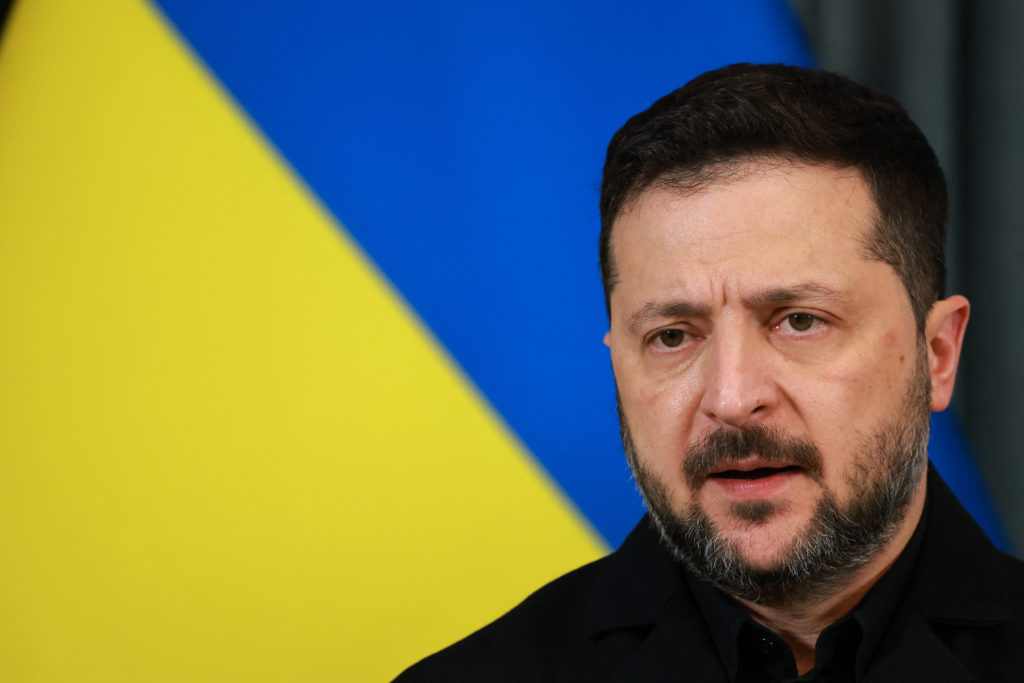
Ukrainian President Volodymyr Zelenskyy told PBS News that Ukraine hacked Russia’s emergency alert system in response to a cyberattack on Ukraine’s system. Ukrainian authorities said false nuclear-threat warnings appeared on emergency alert apps Sunday; Russia said hackers later accessed its emergency app and sent fake alerts.
Key Facts
Zelenskyy said Ukraine acted in response to Russia’s attack on Ukraine’s alert system.
Ukrainian authorities said users received false warnings of an imminent nuclear threat on Sunday.
Ukraine’s emergency alert system was suspended and later restored.
Zelenskyy described the incident as a cyberattack.
Russian authorities said hackers accessed Russia’s emergency mobile app on Monday.
Russian authorities said the hackers sent fake emergency alerts.
Read the Original
Want the full story? Tap a source to open the original
article.
Nine men are on trial in Manchester, accused of taking part in the abuse of a woman who prosecutors say her husband drugged and sexually assaulted over more than two decades. Prosecutors allege seven men visited the couple’s home and two encouraged the abuse online; the husband and several other men have pleaded guilty to offences.
Key Facts
The alleged offences involving the nine defendants took place between 2015 and the husband’s arrest in 2025.
Prosecutors say the husband drugged his wife without her knowledge and abused her while she was asleep or unconscious.
Seven defendants are accused of visiting the couple’s home in Stockport and participating in the abuse.
Two defendants are described by prosecutors as non-contact offenders accused of encouraging the abuse online.
Prosecutors say the husband began inviting other men to the home by 2023 at the latest and filmed the abuse.
The husband has pleaded guilty to a number of offences against his wife; his identity is withheld to protect her anonymity.
Four other men have admitted offences in separate hearings, including Karl Lindsay, who pleaded guilty to non-contact offences.
Read the Original
Want the full story? Tap a source to open the original
article.
UK Home Secretary Shabana Mahmood announced changes that would generally double the qualifying period for permanent settlement from five years to 10. The plans set shorter or longer timelines for certain workers, refugees and other migrants, and would also apply to people already in the UK who have not received settlement.
Key Facts
Indefinite leave to remain lets people live, work and study in the UK indefinitely; eligible holders can apply for benefits.
Under the proposed standard route, migrants would need 10 years in the UK and earnings of at least £12,571 in five of the preceding seven years.
Some groups, including qualifying public service workers and certain care workers, would be eligible after five years.
People earning over £125,141 a year and some highly skilled migrants would qualify after three years.
Migrants who claimed certain benefits or breached immigration rules could face a wait of at least 20 years.
Refugees arriving through an official government scheme would qualify after five years; other refugees would generally face 10 years if they work or study, or 20 years if they do not.
Refugees who arrived by small boat or another illegal route would face a 20-year wait if they work or study, and 30 years if they do not.
Applicants would also need to meet conditions including having no criminal record, strong English skills, no taxpayer debt and a record of National Insurance contributions; the changes would not affect people already granted settlement.
Read the Original
Want the full story? Tap a source to open the original
article.
Carla Lockhart has left the Democratic Unionist Party over its response to the Drumcree parading dispute. The Upper Bann MP will continue in the UK House of Commons as an independent unionist after the DUP leadership declined to follow her call to remove First Minister Michelle O’Neill from the Northern Ireland Executive.
Key Facts
Lockhart said she was leaving the DUP on a point of principle.
She had urged the DUP to withdraw its deputy first minister, a move she said would force O’Neill from the joint office.
The dispute followed protests on Garvaghy Road that blocked an Orange Order parade in Portadown, County Armagh.
O’Neill and other senior Sinn Féin figures have been interviewed by police investigating the demonstrations.
The DUP said it would block official engagements involving O’Neill in response to the dispute.
Lockhart said she would keep representing Upper Bann in the House of Commons as an independent unionist.
The article reports that Lockhart’s departure leaves the DUP with four MPs.
Read the Original
Want the full story? Tap a source to open the original
article.
Prosecutors told a jury at Manchester Minshull Street Crown Court that a man drugged and raped his wife over many years and invited other men to abuse her while she was unconscious. The husband and four men have pleaded guilty to offences; nine other defendants deny the charges and are on trial.
Key Facts
The woman believed she had not had sex for nine years, prosecutors told the court.
Prosecutors said the husband had shared images and videos of the abuse online since 2004.
They said he began inviting men to the couple’s home to rape his wife from at least 2023.
Police found more than a million photographs and videos on the husband’s Samsung Galaxy phone, according to the prosecution.
The nine defendants on trial include seven accused of abusing the woman at her home and two accused of encouraging or assisting the abuse without attending.
The husband and four other men have already pleaded guilty to a series of offences.
The husband cannot be named to protect his wife’s legal right to anonymity.
Read the Original
Want the full story? Tap a source to open the original
article.
Iran said it is holding intensive indirect talks with the United States through mediators Qatar and Pakistan to prevent a return to war. Tehran said it could reopen the Strait of Hormuz within two days if Washington meets its demands, which include ending the war and lifting sanctions; President Donald Trump continued to threaten Iran.
Key Facts
Iranian Foreign Minister Abbas Araghchi said consultations with the United States were intensive and that Qatar and Pakistan were mediating.
Iranian officials said the Strait of Hormuz could reopen within two days if the United States accepts Iran’s demands.
Iran’s demands include ending the war on all fronts, unfreezing Iranian assets, lifting oil sanctions and ending the U.S. counter-blockade of Iranian ports.
The Axios news outlet reported that Vice President JD Vance sent a letter to Iranian security official Mohsen Rezaei about possible talks.
China urged a return to negotiations, while Iran’s security chief discussed the conflict with Russian President Vladimir Putin.
Oil prices fell by more than six percent on Monday amid hopes for steps to end the eight-month conflict.
President Donald Trump told a campaign rally that the United States would eventually have to give Iran “the hammer.”
The diplomatic push came ahead of the U.S. midterm elections scheduled for Tuesday, November 3.
Read the Original
Want the full story? Tap a source to open the original
article.
British adventurer Karl Bushby returned to his childhood home in Hull on Monday, completing a 28-year journey of about 50,000km on foot. He began in southern Chile in 1998 and reached England through an unbroken route that included crossing the Bering Strait and swimming the Caspian Sea and English Channel.
Key Facts
Bushby, 57, was welcomed by his mother, Angela, outside her home in Hull.
He began the Goliath Expedition in Punta Arenas, Chile, in November 1998.
His goal was to reach Hull by an unbroken route without using motorised transport to advance his journey.
His route crossed the Americas, the Bering Strait, Mongolia and China before continuing toward Europe.
He crossed the Darien Gap jungle, was detained after entering Russia, and faced visa and funding problems.
The 2008 global financial crisis cost him major sponsors and contributed to delays.
Last month, he swam across the English Channel, the final major obstacle before his walk home.
A feature-length documentary about the journey is in production, and Bushby plans to give talks around England.
Read the Original
Want the full story? Tap a source to open the original
article.
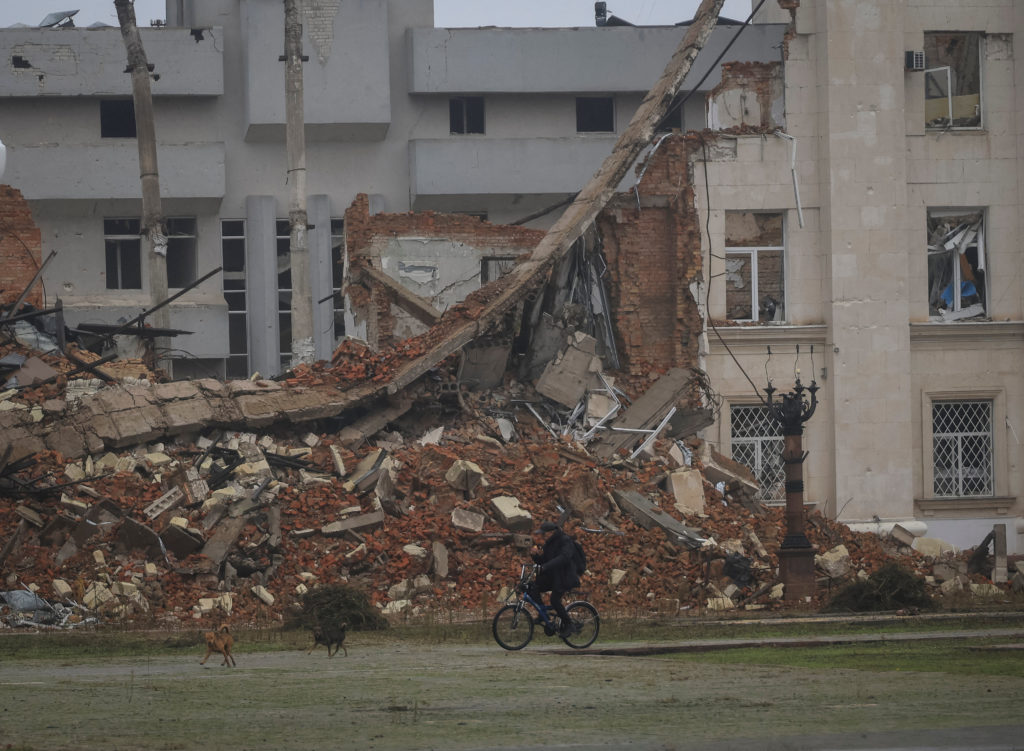
A brief ceasefire that began Oct. 27 let Ukrainian officials, aid workers and volunteers reach civilians in riverside communities near Kherson, including residents cut off for nearly two years. The ceasefire ended Sunday night, leaving those who remain exposed again to Russian drones, artillery, glide bombs and mines.
Key Facts
The village of Kozatske lies less than 2 kilometers from a Russian-controlled area in Kherson region.
Nataliia Diadiuk, 53, survives with rainwater, gathered firewood and limited food while staying in the village.
The Associated Press visited the area during a localized ceasefire tied to a humanitarian mission in Russian-occupied Oleshky.
Ukrainian officials said 180 people, including 23 children, were evacuated from riverside communities and the city of Kherson.
About 140,000 people remain in the Ukrainian-held part of Kherson region.
Nearly 70% of the region is under Russian control; the region had about 1 million residents before the war.
The riverside is designated a red zone, the highest level of military danger, and contains mines, damaged homes and unexploded weapons.
Read the Original
Want the full story? Tap a source to open the original
article.
Fighting resumed in Ukraine’s Kherson region on Monday, ending a six-day ceasefire that allowed hundreds of people to leave Russian-occupied Oleshky. Local authorities reported a strike on a medical facility and two people injured in a drone attack. The Kremlin said the truce was an isolated case and ruled out similar initiatives.
Key Facts
The six-day truce was described as the longest ceasefire since Russia’s full-scale invasion began in 2022.
Hundreds of residents from Oleshky and nearby areas were evacuated during the ceasefire.
Kherson authorities said strikes resumed Monday, including a hit on a medical facility in the city centre.
Authorities said a Russian drone attack on a car injured a 62-year-old woman and a 73-year-old man.
Ukraine’s General Staff accused Russian forces of using the pause to reinforce positions, rotate units and deliver ammunition.
Kremlin spokesman Dmitry Peskov said it was reasonable to assume Ukrainian forces also regrouped during the pause.
Russia’s and Ukraine’s human rights ombudsmen oversaw the ceasefire and called for similar initiatives to be repeated.
Peskov called the Oleshky ceasefire an isolated case and said there were no similar plans or initiatives.
Read the Original
Want the full story? Tap a source to open the original
article.
Dutch authorities are offering a record €2 million reward for information leading to the arrest of Jos Leijdekkers, a fugitive accused of major cocaine trafficking and other crimes. Prosecutors say his capture is a top priority; he is believed to be in Sierra Leone, which has not cooperated with Dutch extradition requests.
Key Facts
The reward was increased ten-fold to €2 million, according to Dutch authorities.
Dutch police describe Leijdekkers as a key figure in international cocaine trafficking.
Europol lists Leijdekkers among Europe’s most-wanted fugitives.
Dutch police said in January 2025 that he was believed to be living in Sierra Leone under the name Omar Sherrif.
A Rotterdam court sentenced Leijdekkers in absentia to 24 years in prison in 2024 for smuggling more than seven metric tons of cocaine.
He has also been sentenced to 79 years in prison in Belgium.
Dutch authorities accuse him of money laundering and involvement in extreme violence.
The EU cut some aid to Sierra Leone after it refused to cooperate with Dutch extradition requests.
Read the Original
Want the full story? Tap a source to open the original
article.
Emergency alert apps in Ukraine and Russia sent false warnings about nuclear, chemical and other attacks after hacks on Sunday night. Officials said the alerts were false, and the affected services were disabled or isolated while developers addressed the incidents.
Key Facts
Ukraine’s Air Alert app began sending false notifications at 10:47 p.m. local time on Sunday.
The false Ukrainian alerts mentioned radiation, chemical threats, a nuclear attack and street fighting in Kyiv.
The Ukrainian Air Force said the notifications were false and urged people to follow official updates.
Russia’s Emergencies Ministry app sent false alerts in 33 regions at 2:45 a.m. Moscow time.
Russian messages warned of nuclear warheads and told residents to stock up on food and shelter in basements.
Russia’s Emergencies Ministry said attackers exploited a vulnerability in the app’s administrative panel and officials isolated affected services.
Air Alert’s developers said they temporarily disabled push notifications and the app after unauthorized interference.
A temporary ceasefire near the Russian-occupied city of Oleshky expired Sunday night; Ukraine’s human rights commissioner said the sides had observed it and discussed further humanitarian measures.
Read the Original
Want the full story? Tap a source to open the original
article.
The Royal Navy monitored Russian naval vessels near the U.K. during and after NATO’s Exercise Strike Warrior. The deployments included helicopters tracking the spy ship Viktor Leonov and warships monitoring two Russian frigates in the English Channel.
Key Facts
Exercise Strike Warrior took place in the Outer Hebrides and involved eight warships, 19 aircraft and more than 2,000 personnel from six nations.
The Royal Navy deployed Wildcat and Merlin helicopters as part of Operation Iceblast to track the Viktor Leonov.
Merlin helicopters monitored the Viktor Leonov from September 29 to October 8 after deploying from Cornwall to Scotland.
HMS Tyne and HMS Dauntless monitored the Russian frigate Neustrashimy from October 1 to 14.
HMS Dauntless also monitored the Russian frigate Aleksandr Shabalin from October 11 to 14.
The article says both frigates escorted sanctioned cargo ships through the English Channel.
The U.K. has sanctioned more than 600 vessels, according to the article.
Read the Original
Want the full story? Tap a source to open the original
article.