The entertainment industry is strongly opposing the use of generative AI in creative work, treating any hint of its use as damaging to careers and deals. Creators like Hank Green and Jerry Falade have faced backlash and lost opportunities over suspicions of AI involvement, even when they deny or limit their use of the technology.
Key Facts
Using generative AI in creative work is becoming a serious problem in entertainment, often leading to public suspicion and career harm.
Hank Green, a popular YouTuber, was suspected of AI script use after he said a phrase typical of AI, though he only used AI for research.
Jerry Falade lost a $2 million book deal due to rumors about AI use, despite denying it and having his work pass multiple editors.
Concerns exist that AI-generated content might not qualify for copyright protection.
Some industry leaders and creators, such as director Kane Parsons and the show Hacks, openly oppose generative AI, believing it harms true creativity.
The Academy Awards (Oscars) updated their rules so generations AI cannot be credited for acting or writing awards.
Confusion continues about what counts as AI use, since some technologies have been around before recent AI tools emerged.
The rules and attitudes around AI in entertainment are still unclear and developing.
Read the Original
Want the full story? Tap a source to open the original
article.
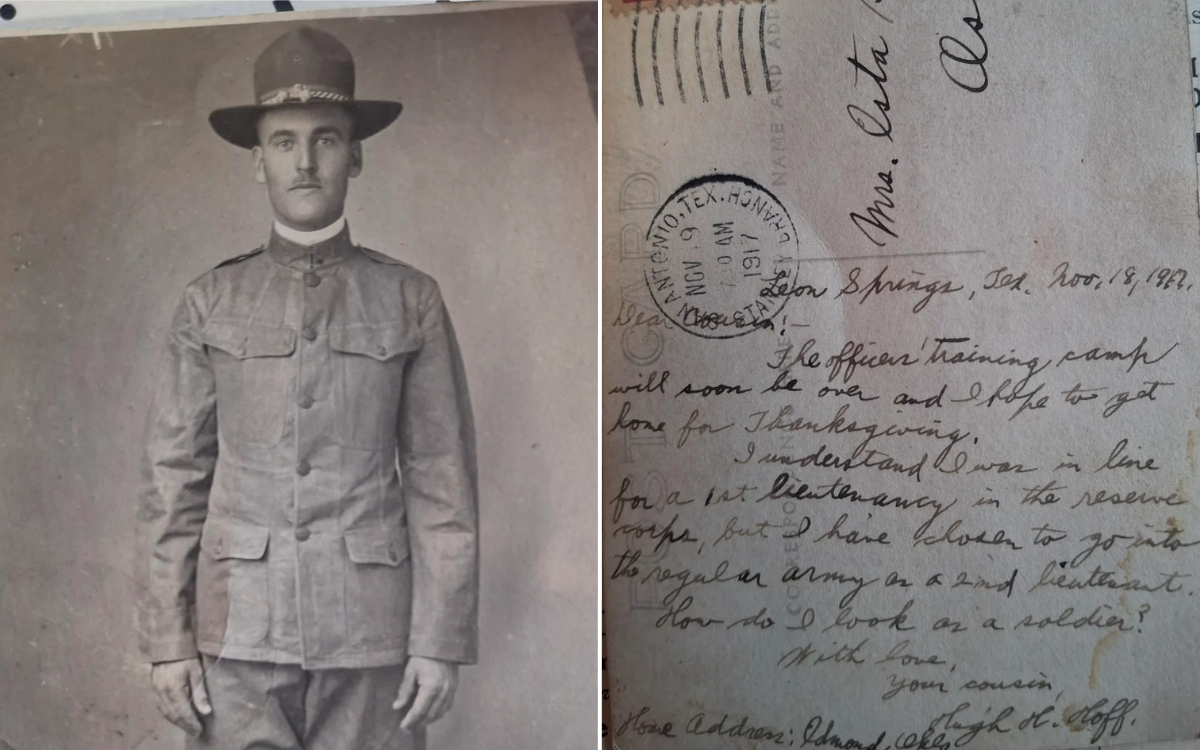
A man named Dylan Mermis found a 109-year-old postcard in an old building in Kansas. The postcard was sent by a World War I soldier, Hugh H. Hoff, and Mermis was able to find and contact Hoff’s great-granddaughter to return the postcard.
Key Facts
Dylan Mermis joined a treasure hunt in buildings set to be demolished in Russell, Kansas.
The buildings contained many antiques and old items, including magazines dating from 1887 to 1920.
Mermis found a postcard from 1917 showing soldier Hugh H. Hoff writing to his cousin during World War I.
Hoff had chosen active duty in the Army at a lower rank rather than a higher rank in the Reserves.
Mermis searched online and found Hoff’s family history and discovered he lived until 1944.
Hoff’s great-granddaughter was contacted through Facebook and received the postcard.
The postcard was saved from destruction and returned to the soldier’s family.
Mermis felt it was important to preserve the historical item rather than let it be thrown away.
Read the Original
Want the full story? Tap a source to open the original
article.
James and Ola Jordan, former professional dancers from the TV show Strictly Come Dancing, have separated after over 20 years of marriage. Their manager said they are focusing on co-parenting their daughter and asked for privacy during this time.
Key Facts
James and Ola Jordan were married in 2003.
They have been on Strictly Come Dancing, with James dancing from 2006 to 2013 and Ola until 2015.
Ola won the Open Polish Championship in 1999 at age 17.
Ola moved to England in 2000 and soon after began dancing with James.
Their manager confirmed the couple started a trial separation some time ago.
They have a daughter named Ella and want to focus on her wellbeing.
Ola danced with celebrities like Steve Backshall and Iwan Thomas on Strictly.
James danced with Gabby Logan and Alex Jones on the show.
Read the Original
Want the full story? Tap a source to open the original
article.
President Donald Trump has repeatedly threatened heavy military action against Iran but has withdrawn these threats and called off attacks several times over the past five months. Despite claims of nearing peace and victory, the conflict continues without resolution, and analysts say the president’s approach shows a lack of clear strategy.
Key Facts
President Trump has threatened “massive” attacks on Iran multiple times since February 28 but stepped back each time.
No concrete deal has been reached between Iran and Oman regarding shipping in the strategic Strait of Hormuz, which remains closed.
Trump has claimed multiple times that the US has nearly won the military conflict, with Iranian leaders eager to negotiate.
Analysts and commentators have criticized Trump’s repeated threats and reversals as unclear and ineffective.
The pattern of threat and withdrawal has happened at least seven times since the conflict started.
The war remains ongoing, with Iran still able to strike US and allied targets in the Middle East.
Political scientists say Trump does not fully understand the nature and leadership of Iran’s Islamic regime.
Experts warn that the current US approach could backfire politically and fail to achieve its goals.
Read the Original
Want the full story? Tap a source to open the original
article.
The indigenous Hmong people in northern Vietnam are facing challenges due to climate change, including higher temperatures, unpredictable rain, and landslides. Many Hmong farmers struggle to grow their traditional crops and some have moved to cities, but with help from local organizations, they are trying new ways to adapt.
Key Facts
The Hmong are an indigenous group living in mountainous northern Vietnam.
Climate change is causing hotter weather, irregular rainfall, and landslides in their area.
Traditional rice farming and important medicinal plants are being harmed.
The Hmong region’s isolation means they get little government support.
Some families have left their villages because natural resources are scarce.
Many who move to cities have difficulty keeping their cultural identity.
Vietnamese non-governmental organizations (NGOs) are helping villagers grow new crops that resist climate impacts.
The Hmong community is working to adapt and find new ways to survive despite these challenges.
Read the Original
Want the full story? Tap a source to open the original
article.
Israel's consul general in New York, Ofir Akunis, said Israel is worried about changes in American politics that could weaken the U.S.-Israel alliance. While Israel still values its relationship with the U.S., it is preparing to be more independent and build new alliances with countries like India, the UAE, and others around the world.
Key Facts
Israeli Consul General Ofir Akunis expressed concern about shifts in American politics that might end the U.S.-Israel alliance.
Akunis criticized some American politicians for favoring Iran over Israel.
Israel has strong homegrown defense systems like the Iron Dome to protect against attacks.
Israel plans to become more independent in security while maintaining its U.S. partnership.
Israel has strengthened ties with countries such as India, Greece, Cyprus, the United Arab Emirates, Bahrain, Sudan, Morocco, and some South American nations.
The Abraham Accords normalized relations between Israel and several Gulf countries starting in 2020.
Israel is wary of threats from Iran and its allies, as well as a “quartet” of Sunni Muslim powers: Saudi Arabia, Turkey, Egypt, and Pakistan.
Saudi Arabia, Turkey, Egypt, and Pakistan recently signed a mutual defense pact, raising concerns for Israel.
Read the Original
Want the full story? Tap a source to open the original
article.
Marwan Al-Shehhi, one of the 9/11 hijackers, paid for flight training in Florida using cash and a VISA card in 2001. He met co-conspirator Mohammed Atta in the United States after arriving as a tourist in 2000, and both lived relatively normal lives while preparing for the attacks.
Key Facts
Marwan Al-Shehhi, from the UAE, trained as a pilot in Florida before the 9/11 attacks.
He paid for flight lessons with cash or his VISA debit card.
Al-Shehhi arrived in the U.S. in May 2000 with a six-month tourist visa.
He met Mohammed Atta, the leader of the 9/11 hijackers, shortly after arriving.
Both men lived together in Florida, rented apartments, bought a car, and got pilot licenses by the end of 2000.
Al-Shehhi studied engineering in Germany before moving to the U.S. and was removed from the UAE armed forces for desertion.
The FBI later reconstructed detailed records of the hijackers' activities, including financial transactions and movements.
There is no confirmed evidence that Al-Shehhi and Atta engaged in criminal or immoral behavior aside from their terrorist plans.
Read the Original
Want the full story? Tap a source to open the original
article.
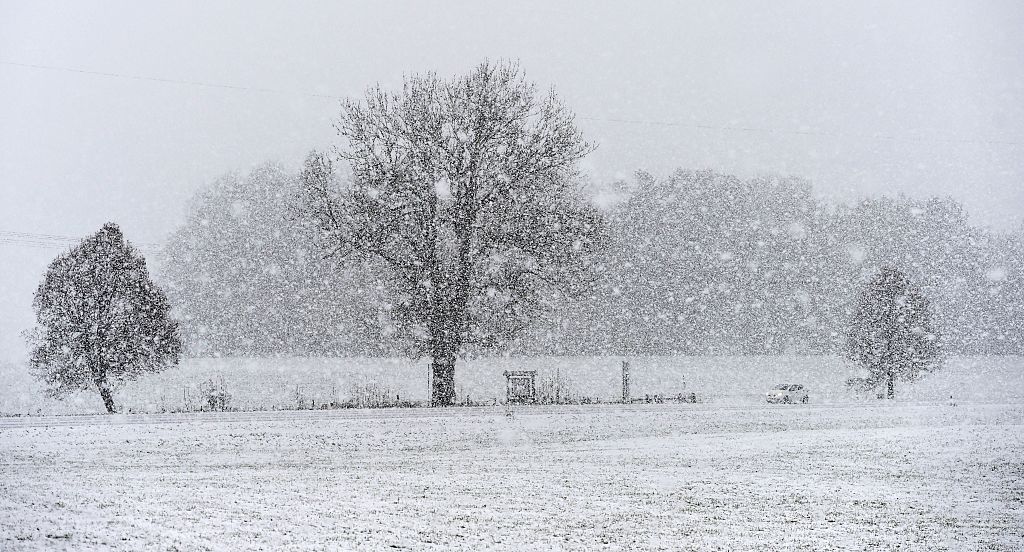
The Old Farmer’s Almanac predicts that the winter of 2026–2027 will be influenced by a strong Super El Niño, which is a warming of the Pacific Ocean that changes weather patterns. This may bring wetter weather and more storms to the southern U.S., while the northern regions might see sudden cold spells, snow, and icy conditions.
Key Facts
A Super El Niño is underway and expected to get stronger before winter 2026–2027.
El Niño warms the tropical Pacific Ocean and affects the jet stream that guides storms over North America.
The southern U.S. (from California to the Gulf Coast and Southeast) is likely to experience wetter weather and repeated storms.
Northern areas, including the West, northern Plains, Upper Midwest, and Great Lakes, could have near-normal temperatures but with quick cold snaps and bursts of bitter air.
Coastal Northeast may see rain or mixed precipitation, while inland areas might get heavy, wet snow.
A stronger El Niño can increase risks of heavy rain, flooding, and severe weather like tornadoes, especially in Florida.
These weather changes could affect transportation and energy sectors due to increased storms and winter hazards.
Meteorologists caution that exact regional forecasts are still uncertain at this early stage.
Read the Original
Want the full story? Tap a source to open the original
article.
Spain has started border checks on all air and sea travel coming from Italy. This decision came after Italy introduced similar controls because of many migrants arriving from Morocco into the Spanish city of Ceuta.
Key Facts
Spain imposed border controls on travelers from Italy by air and sea.
Italy had earlier set similar border checks due to migrant arrivals from Morocco.
The migrant issue involves many people coming into Ceuta, a Spanish city on the African coast.
The action by Spain is part of a diplomatic tension between the two countries.
The leaders mentioned include Spain's Pedro Sanchez and Italy's Giorgia Meloni.
The situation is related to broader concerns about migration in Europe.
The border checks affect all travel modes between Spain and Italy.
This news was reported by France 24 on August 8, 2026.
Read the Original
Want the full story? Tap a source to open the original
article.
Typhoon Dolphin hit Okinawa Island in Japan, injuring five people and causing power outages before moving toward eastern China. Chinese authorities have closed ports, schools, and tourist sites as they prepare for heavy rains and strong winds.
Key Facts
Typhoon Dolphin struck Okinawa and Amami Islands in Japan, injuring five elderly people with non-life-threatening injuries.
About 14,000 buildings in Okinawa lost power due to the typhoon.
The storm caused flight cancellations in Okinawa, China, and Taiwan.
Dolphin formed from a tropical depression on July 26 and became a strong typhoon by July 28.
The Japan Meteorological Agency reported winds up to 162 km/h (100 mph) and gusts of 216 km/h (134 mph) near Okinawa.
China declared a level-three emergency in eastern coastal areas and expects the typhoon to make landfall between Zhoushan and Fuding cities.
Zhejiang province raised its highest typhoon alert, closing ports, schools, and ferry routes, and suspending flights at Ningbo airport.
Taiwan canceled 63 international flights and expects heavy rain but has not issued evacuations. Taiwan criticized China’s traffic restrictions in the Taiwan Strait.
Read the Original
Want the full story? Tap a source to open the original
article.
In Turkey, emergency teams are using drones to help fight wildfires. These drones can find fires early and detect blazes that people cannot easily see, allowing faster action to control the fires.
Key Facts
Turkey is using drones to aid in fighting wildfires.
Drones help spot fires earlier than traditional methods.
They can detect fires not visible to the naked eye.
Early detection allows emergency teams to respond faster.
This technology supports rescue and firefighting efforts.
The use of drones is part of Turkey’s strategy to manage wildfire risks.
The information comes from a France 24 news report dated August 8, 2026.
Read the Original
Want the full story? Tap a source to open the original
article.
Cuba is facing a serious energy crisis, with shortages of electricity, fuel, and internet access. The situation is worsened by economic problems and increased U.S. sanctions under President Donald Trump.
Key Facts
Cuba has widespread power outages and fuel shortages.
Internet service in Cuba is also limited due to the crisis.
The energy and economic difficulties are happening at the same time.
The United States government, led by President Donald Trump, has increased sanctions on Cuba.
These U.S. sanctions are putting more pressure on the Cuban economy.
Cubans are struggling with daily life challenges because of these problems.
The crisis highlights tensions between Cuba and the United States.
The situation involves ongoing political and economic conflicts rooted in the U.S. embargo and Cuba’s governance.
Read the Original
Want the full story? Tap a source to open the original
article.
Lake Baringo in Kenya's Rift Valley has risen to its highest levels in decades due to heavy rainfall linked to climate change. This flooding has submerged communities and pushed dangerous crocodiles closer to people, leading to more crocodile attacks.
Key Facts
Lake Baringo water levels have increased significantly in recent years.
Scientists connect the rise in water levels to extreme rainfall caused by climate change.
Rising waters have flooded nearby communities around the lake.
Crocodiles have moved closer to human settlements because of the flooding.
There has been an increase in crocodile attacks on people near the lake.
The lake is located in Kenya’s Rift Valley region.
Climate change is affecting weather patterns, leading to more heavy rainfall in the area.
Read the Original
Want the full story? Tap a source to open the original
article.
A woman named Becky Lee ignored several symptoms for years before being diagnosed with multiple sclerosis (MS), a disease that affects the nervous system. She first noticed symptoms in 2015 but received a formal diagnosis after eight years.
Key Facts
Becky Lee experienced early symptoms like chest tightness, blurry vision, dizziness, and fatigue starting at age 22.
She initially thought her symptoms were caused by ordinary issues, like heartburn or an ear infection.
Doctors first diagnosed her with clinically isolated syndrome (CIS), which can be an early stage of MS.
She had recurring symptoms including muscle spasms, an "MS hug" (tight chest sensation), and weakness on her left side.
MS affects nearly 1 million people in the United States and about 2.8 million worldwide.
Lee’s diagnosis took eight years after her first symptoms appeared.
She continues to experience symptoms like chronic fatigue and blurry vision.
Lee now raises awareness about MS and its early signs.
Read the Original
Want the full story? Tap a source to open the original
article.
Saudi Arabia, Turkey, and Pakistan signed a defense agreement in Mecca. The deal says that if one country is attacked, it will be treated as an attack on all three countries. This agreement aims to strengthen their collective defense.
Key Facts
The agreement was signed in Mecca on August 7, 2026.
It is a joint defense pact among Saudi Arabia, Turkey, and Pakistan.
An armed attack on any one of the three countries will be considered an attack on all three.
The deal is meant to increase collective deterrence, meaning to prevent attacks by showing united strength.
The three countries are located in the Middle East and South Asia regions.
This agreement was announced with coverage including political and regional security implications.
The pact is likely a response to ongoing regional conflicts and tensions.
Read the Original
Want the full story? Tap a source to open the original
article.
Russian attacks killed four people in Kyiv and nearby areas, including a child, as Ukraine’s air defenses struggled to stop the attacks. Meanwhile, Ukraine struck an oil refinery in Russia, causing injuries and fires.
Key Facts
Four people died in Russian missile and drone attacks in Kyiv and its surrounding region, including a 3-year-old child.
A family home in the Brovary district northeast of Kyiv was destroyed by multiple Russian drones.
Kyiv’s air defenses intercepted most but not all of the 151 drones launched by Russia overnight.
The Russian attack involved six ballistic missiles along with other guided missiles.
Ukraine’s air force reported downing around 5,300 drones and missiles in one month, about 60% of the total launched by Russia.
Ukraine struck the Ilsky Oil Refinery in Russia’s Krasnodar region, injuring five people and causing a fire.
Ukraine is working to improve its air defense by seeking more missile ammunition, local production, or permission to use satellite systems for targeting within Russia.
President Zelenskyy has called for increased sanctions to stop the production of ballistic missiles and improve anti-missile defenses.
Read the Original
Want the full story? Tap a source to open the original
article.
A 14-year-old student killed at least seven people in a shooting at a school near Bangkok, Thailand, before taking his own life. The shooter had also killed his two grandparents earlier that day. Families collected the bodies of the victims, and many injured students remain in hospital.
Key Facts
The shooting happened at Debsirin Nonthaburi School in Nonthaburi province near Bangkok.
The 14-year-old shooter killed at least five people at the school and two grandparents at home.
The shooter died by suicide at the school after the attack.
Sixteen people were injured; seven are in critical condition, mostly aged 12 to 14.
The gun used was small, compact, and legally owned by the boy’s grandfather.
Most victims died from one fatal gunshot wound to vital areas like the chest or head.
The school will close from August 10 to August 14, with staff working from home.
Authorities and families collected all eight bodies from a forensic institute in Bangkok.
Read the Original
Want the full story? Tap a source to open the original
article.
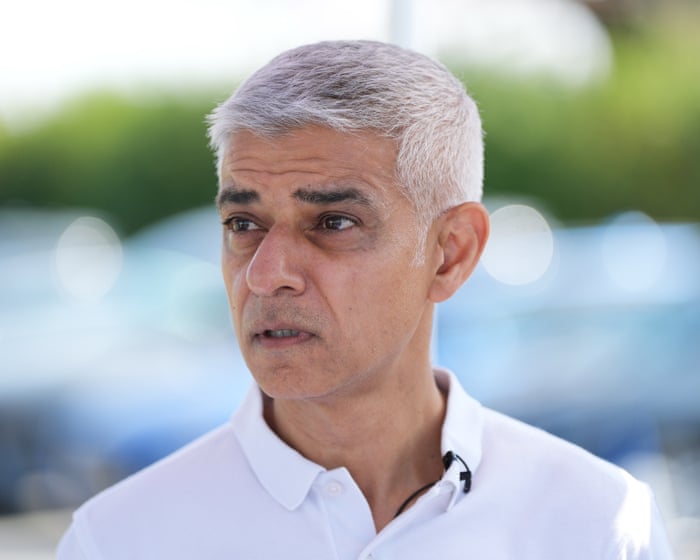
Sadiq Khan, the mayor of London, has urged the UK government and Prime Minister Andy Burnham to strengthen climate action and reduce dependence on oil and gas amid extreme weather events like heatwaves and wildfires. There is concern that the government may support new oil and gas drilling in the North Sea, despite the Labour party’s previous pledge to stop new licences.
Key Facts
Sadiq Khan called for renewed climate efforts and cutting reliance on fossil fuels during a summer of drought and heatwaves in the UK.
Andy Burnham, the new prime minister, has not clearly stated his position on new oil and gas drilling but described his approach as “pragmatic.”
The Labour party’s manifesto promises to stop new oil and gas licences, but decisions on projects like Jackdaw gasfield and Rosebank oilfield are still pending.
These projects were previously allowed under the Conservative government but halted after legal challenges from environmental groups.
Energy Secretary Miatta Fahnbulleh will decide on these drilling projects soon, following consultations on their emissions.
Some Labour MPs worry support for drilling could upset voters facing extreme weather worsened by fossil fuel use.
Tory leader Kemi Badenoch supports new North Sea drilling as a solution to the UK’s energy crisis, but some economists disagree and warn it could harm economic growth and climate goals.
Sadiq Khan described the current climate as an “era of extremes” and warned of political divisions on climate issues in the UK.
Read the Original
Want the full story? Tap a source to open the original
article.
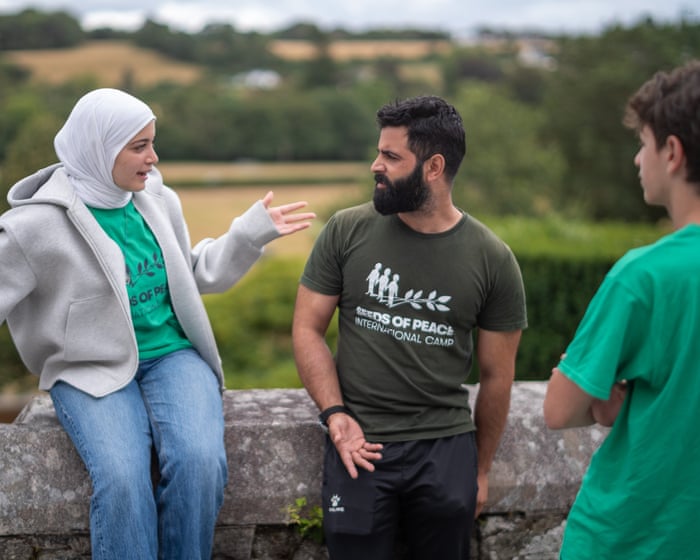
Teenagers from countries with long-standing conflicts, including Israel and Palestine, meet at a summer camp in Devon, UK, called Seeds of Peace. They spend time sharing personal stories and trying to understand each other to promote peace.
Key Facts
Seeds of Peace is a summer camp for teenagers aged 14 to 17 from eight countries, including the UK, Israel, Palestine, India, and Pakistan.
The camp usually happens in the US but was held in the UK this year for safety and visa reasons.
Participants spend about 32 hours in dialogue sessions over three weeks, focusing on personal experiences instead of textbooks or maps.
The camp has been running for 30 years and was founded in 1993 by American journalist John Wallach.
Teenagers at the camp are called “seeds” and come from different sides of historical conflicts.
Some participants found the experience challenging but meaningful, as it helped them see others as individuals rather than enemies.
The camp aims to build understanding and peace by encouraging open conversation between youth from opposing communities.
Organizers say it is difficult to find a neutral and safe location acceptable to all participants for hosting the camp.
Read the Original
Want the full story? Tap a source to open the original
article.
Iran uses large state-supported posters and murals in Tehran as part of its conflict with the United States. These visual messages, some shared internationally, show strong anti-US and anti-Israel themes and aim to communicate Iran’s official views both to its people and other countries.
Key Facts
Large murals and billboards in Tehran display anti-US and anti-Israel messages.
One notable image shows President Donald Trump with his mouth sewn shut, symbolizing silencing Washington.
The murals reference important locations like the Strait of Hormuz, a key global oil route.
Iran restricts public internet access and carefully controls what journalists can report, especially during conflict periods.
Some propaganda posters are officially released and spread by Iranian news agencies and international media.
Images include religious and political leaders, showing a link between Iran’s leadership and the ongoing war.
These visuals aim to influence both Iranian citizens and foreign audiences.
The use of murals continues a long history of visual propaganda in Iran dating back to the Islamic Revolution.
Read the Original
Want the full story? Tap a source to open the original
article.