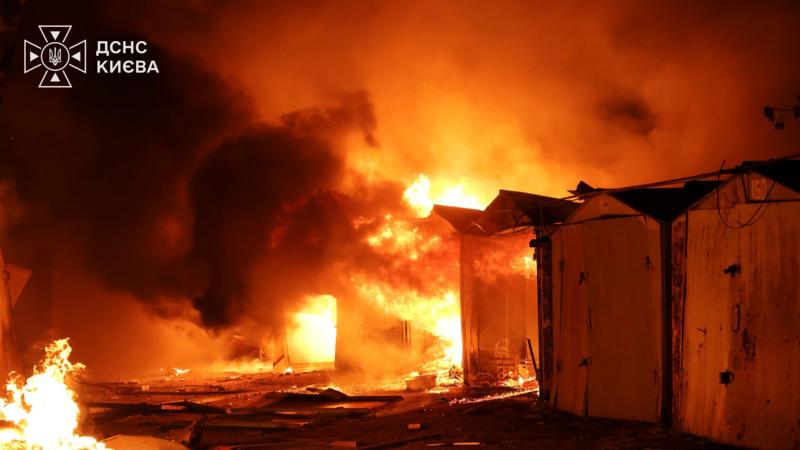
Early Saturday, Russian missile attacks near Kyiv killed at least three people, including a child, and caused fires and damage to buildings and vehicles. Ukrainian officials reported the attacks amid concerns over Ukraine’s limited missile defense supplies as President Zelensky visits Serbia.
Key Facts
Three people, including a child, died in Russian missile strikes east of Kyiv.
The attacks damaged apartment buildings, cars, and caused fires in garages and other buildings.
Three other people were injured in the missile strikes.
Emergency services worked to control fires at a building and a fuel tank in Kyiv.
President Volodymyr Zelensky traveled to Serbia during the attacks to raise support.
Zelensky said Ukraine is running low on anti-missile interceptors, which help stop incoming rockets.
Ukrainian forces recently hit Russian oil refineries and ships to reduce funding for Russia’s war.
Talks to mediate the conflict have stalled, leading to more attacks on both sides.
Read the Original
Want the full story? Tap a source to open the original
article.
South Africa marks 70 years since the 1956 Women’s March, when about 20,000 women protested laws that restricted Black women’s movements under apartheid. Even today, many women in South Africa face challenges like violence, poverty, and inequality, showing that the struggle for full freedom continues.
Key Facts
The 1956 Women’s March involved around 20,000 women of different races protesting apartheid pass laws in Pretoria.
Pass laws required Black women to carry documents limiting where they could go.
Many women risked arrest, torture, or death by opposing these racist laws.
A 2024 United Nations Women study found over one-third of South African women experienced physical or sexual violence.
Ramnie Dinat, now 84, was involved in organizing the march with her mother, an anti-apartheid activist.
The Women’s Jail in Johannesburg, once part of the apartheid prison system, is now a museum.
Women imprisoned there were separated by race and faced harsh treatment, including being denied basic hygiene items.
The museum serves as a reminder of South Africa’s struggle from apartheid to democracy.
Read the Original
Want the full story? Tap a source to open the original
article.
Iran’s leaders believe they are close to gaining control over the Strait of Hormuz, an important global shipping route for energy supplies. They expect that ongoing military pressure and time will force the United States, led by President Trump, to accept this control. However, both sides face risks, including economic problems, public opposition, and potential wider conflicts in the region.
Key Facts
Iran aims to control the Strait of Hormuz, a key waterway for global energy shipments.
Iran plans to use military pressure to force the U.S. to accept its control of the strait.
The U.S. has limited supplies of important missile defense weapons and faces growing unpopularity regarding the conflict.
The strait’s closure keeps gas and goods prices high in the U.S. ahead of elections.
Opening the strait by force could require costly American ground troops.
Iran’s allies, the Houthis in Yemen, might expand the conflict and disrupt other trade routes.
Iran is reportedly close to a deal with Oman to manage the strait, but it depends on the U.S. lifting its blockade.
President Trump has taken actions against Iran’s military, but also signals some willingness for talks.
Read the Original
Want the full story? Tap a source to open the original
article.
Russian missile strikes near Kyiv killed three people, including a child, and caused fires in parts of the city. Ukraine’s air defenses are struggling to stop the attacks as Russia increases its missile launches, while Ukraine also targets sites inside Russia. The US Senate approved new sanctions aimed at cutting Russian energy exports.
Key Facts
Russian strikes hit the Boryspil district near Kyiv, killing three people and injuring three others.
Explosions and fires were reported in Kyiv after an early morning air raid alert.
Ukraine’s air defenses, including US-supplied Patriot systems, cannot fully stop Russia’s fast ballistic missile attacks.
Ukraine received fewer air-defense missiles in early 2024 due to global supply issues linked to the US-Israel conflict with Iran.
Russia can launch about 100 ballistic missiles monthly and may increase attacks during winter.
A new survey shows that Italians and French people are more likely than Germans or Britons to reserve sunloungers by placing towels on them early. While many Europeans think sunlounger hogging is not acceptable, the practice still happens often, especially on free beaches.
Key Facts
Germans and Britons think Germans are the biggest sunlounger hoggers, but this idea is not widely shared across Europe.
Only 38% of Germans admit to reserving sunloungers with towels, compared to 45% of Italians and French.
Britons are the least likely to reserve loungers early, with 33% admitting it.
Most people across Europe (60-82%) say reserving loungers with towels is not okay.
Between 51% and 63% say they have missed out on loungers because others saved them.
14-28% have taken towels off loungers to get the spot for themselves.
In Italy, some beachgoers leave umbrellas overnight to save spots; this is known as "umbrella cheating" and is targeted by local authorities.
Fines of up to €500 are used in Italy to stop people from reserving public beach spots with personal items.
Read the Original
Want the full story? Tap a source to open the original
article.
Typhoon Dolphin is approaching eastern China with strong winds and heavy rain. Authorities have closed schools and tourist sites to reduce risks from flooding and landslides as the storm nears land.
Key Facts
Typhoon Dolphin has winds of about 162 km/h (101 mph).
It is expected to hit Zhejiang and northern Fujian provinces late Sunday.
Shanghai is also in the storm’s path.
A level III emergency response was declared by national authorities.
Tourist sites in Zhejiang are closed on Saturday and Sunday.
Water activities like ferries and cruises are suspended.
Schools in Ningbo city are closed this weekend for safety.
Read the Original
Want the full story? Tap a source to open the original
article.
Iraqi Prime Minister Ali al-Zaidi met with Saudi Arabia’s intelligence chief Khalid bin Ali Al Humaidan in Baghdad to improve relations after recent deadly cross-border attacks. Saudi Arabia invited al-Zaidi to visit Riyadh, and both leaders discussed better security cooperation, with Iraq promising not to allow attacks from its land against other countries.
Key Facts
Saudi intelligence chief Khalid bin Ali Al Humaidan met Iraqi Prime Minister Ali al-Zaidi in Baghdad.
Saudi Arabia invited al-Zaidi to visit Riyadh, after his earlier trip was canceled due to a Saudi-US operation.
The July 29 attacks killed 20 fighters from Iraqi armed groups, including five Iranians.
Iraq and Saudi Arabia want to coordinate better on security amid regional tensions.
Iraq pledged that its soil will not be used to launch attacks on other countries.
Saudi Arabia said their strikes were retaliation for drone attacks on their oil facilities, which they blamed on Iran-aligned Iraqi groups.
Iraq’s National Security Council called Saudi strikes a violation of Iraq’s sovereignty.
An Iran-aligned armed group in Iraq postponed retaliation after political pressure.
Iraqi PM al-Zaidi aims to bring armed groups under government control by September 30.
Iraq tries to balance relations between the US and Iran, often becoming a place for their rivalry.
Read the Original
Want the full story? Tap a source to open the original
article.
A village that was underwater is now visible again as water in Indonesia’s Karian Reservoir has dropped due to dry weather. Officials say the water level has gone down by 80 centimeters but is still safe.
Key Facts
The Karian Reservoir is located in Indonesia.
Water levels in the reservoir fell because of dry weather (a drought).
The water level dropped by 80 centimeters (about 2.6 feet).
A village that was once underwater can now be seen again.
Officials confirmed the reservoir is still within safe water levels.
Drone footage captured images of the re-emerged village remains.
Read the Original
Want the full story? Tap a source to open the original
article.
Freddie Woodward, a former British Olympic diver, shared how he struggled with watching a lot of online pornography from a young age and later changed his mindset to stop. Experts say that while "porn addiction" is not officially recognized as a medical condition, some people do experience a problem with controlling their porn use that can harm their lives.
Key Facts
Freddie Woodward started watching hardcore porn regularly by age 12.
He watched porn several times a day during his diving career, including while preparing for the Olympics.
Woodward stopped by changing his mindset to see himself as someone who does not watch porn anymore.
"Porn addiction" is not an official medical diagnosis, but many people seek help for problematic porn use.
Experts disagree on whether porn use can be classified as an addiction similar to drug addiction.
Problematic porn use may be treated as a type of compulsive sexual behavior, a condition recognized by the World Health Organization.
Signs of harmful use include when porn interferes with daily life, like missing work or neglecting relationships.
Feeling shame alone does not mean someone is addicted; distress must come from loss of control and life impact.
Read the Original
Want the full story? Tap a source to open the original
article.
Saudi Arabia, Turkiye, and Pakistan have signed a new defense agreement called the Mecca Joint Defence Agreement. This pact promises that if one country is attacked, the others will respond together, reflecting a shift in how some Middle Eastern countries view their security and their relationship with the United States.
Key Facts
The Mecca Joint Defence Agreement was signed in Mecca, Saudi Arabia, by Saudi Arabia, Turkiye, and Pakistan.
The pact declares that an armed attack on any of the three countries is considered an attack on all three.
It aims to improve cooperation in defense between the three nations.
The deal comes amid ongoing conflict involving the US and Israel against Iran, which has affected regional security.
Some Middle Eastern countries doubt the reliability of US security guarantees, prompting them to seek new defense partnerships.
Analysts suggest the agreement is meant to add options for security, not to replace the US role entirely.
Saudi Arabia seems interested in widening its security relationships beyond just the US, building more regional alliances.
The US government under President Trump has not yet commented formally on the pact.
Read the Original
Want the full story? Tap a source to open the original
article.
Colombia’s new president, Abelardo de la Espriella, has promised to boost the country’s oil and gas sector and strengthen the national energy company, Ecopetrol. He supports a move toward cleaner energy but says this should not weaken Colombia’s oil and gas industry or energy security.
Key Facts
Abelardo de la Espriella was sworn in as Colombia’s president in Cali on August 7, 2026.
He plans to revive Colombia’s oil and gas production and restore Ecopetrol, the state-owned energy company.
De la Espriella supports an energy transition to renewable sources like wind and solar but wants to maintain strong oil and gas production.
His approach marks a change from former President Gustavo Petro’s policy, which paused new oil and gas contracts and focused on protecting the environment.
The new president will allow fracking (a method to extract oil and gas) with strict environmental rules.
He aims to increase oil and gas exploration to rebuild reserves and attract investment.
De la Espriella described Colombia’s energy system as in a “critical situation” due to declining reserves and rising electricity demand.
Energy security, or the reliable supply of energy, is a top priority for his administration and seen as tied to national sovereignty.
Read the Original
Want the full story? Tap a source to open the original
article.
Abelardo De La Espriella, a right-wing politician, became Colombia’s new president after a close election in June. He promises to fight drug trafficking, improve security, and strengthen economic ties with the United States and President Donald Trump.
Key Facts
Abelardo De La Espriella was elected president of Colombia in a tight runoff election in June.
He is a politician from the right-wing side of politics.
De La Espriella vows to fight against drug trafficking and related violence.
Security and economic issues are among his main priorities.
He plans to bring Colombia closer to the U.S. and President Donald Trump’s policies.
His focus includes tackling what he calls “narco-terrorism,” linked to drug crime.
His government aims to strengthen ties between Colombia and the United States.
Read the Original
Want the full story? Tap a source to open the original
article.
A reporter underwent a full-body scan using AI technology to check for various health conditions, including skin cancer, at a clinic in Manchester. While the scan aims to detect diseases early, some doctors warn about the risks of over-diagnosis and unnecessary worry. One woman’s experience showed the AI missed some cancerous skin marks, which were later found by her dermatologist.
Key Facts
The full-body scan uses 70 cameras and AI to create a 3D image of the skin and detect health issues.
The scan checks for conditions like skin cancer, heart disease, diabetes, eye problems, and kidney or blood disorders.
The service offered by Neko Health costs £299, and there are 100,000 people waiting for it.
The scan industry promotes early disease detection to prevent illness before symptoms appear.
Some doctors in the NHS caution that these scans can lead to over-diagnosis and unnecessary medical tests.
Annabel Mason-Thompson had a Neko Health scan that missed four cancerous skin marks later found by a private dermatologist.
Neko Health says it prioritizes patient safety and clinical quality, with multiple dermatologists reviewing suspicious lesions.
The body scan market has grown quickly, with companies like Prenuvo, Ezra, and Neko Health receiving significant investment.
Read the Original
Want the full story? Tap a source to open the original
article.
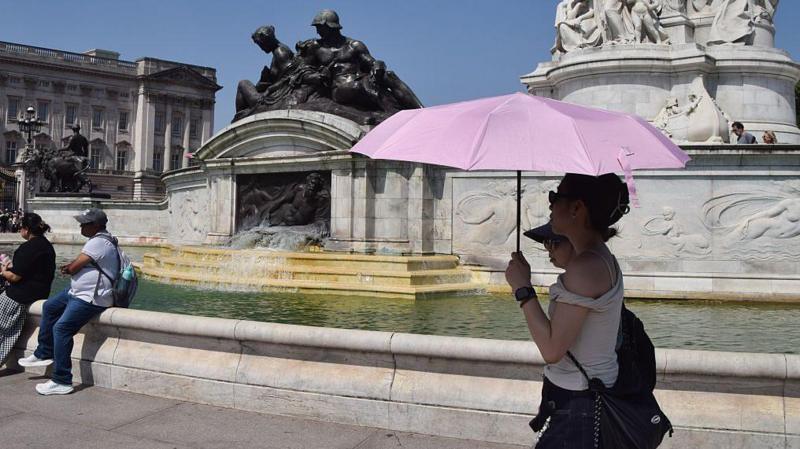
The UK is expected to experience its fifth heatwave of the year next week, with temperatures rising above 30°C and possibly reaching 35°C in some areas. Heat health alerts are in place for most of England due to the risks to vulnerable people and health services. The dry weather continues, leading to drought conditions and hosepipe bans.
Key Facts
Temperatures will rise above 30°C in southeast England from Sunday into next week.
A fifth widespread heatwave of the year is likely to be declared after three consecutive hot days.
Yellow heat health alerts are active for most of England until Tuesday, warning about health risks.
July was the sunniest and driest month on record for parts of the UK.
So far in 2024, the UK has had 33 days above 30°C; the record of 34 days (from 1995) could be broken soon.
Temperatures of 35°C have been recorded for three months in a row (May, June, July) for the first time in UK history.
Dry conditions continue with little rain forecast; parts of southern England have gone over 50 days without rain.
Hosepipe bans remain in place due to ongoing drought and no easing of dry weather is expected soon.
Read the Original
Want the full story? Tap a source to open the original
article.
Abelardo de la Espriella has become Colombia’s president after winning the election and promised to fight armed groups, cut government spending, and boost the oil and gas industry. He held his inauguration in Cali, a city affected by conflict, signaling a shift away from peace talks toward a tougher security approach.
Key Facts
Abelardo de la Espriella, a right-wing lawyer and businessman, won Colombia’s presidential run-off election.
He was sworn in as president in Cali instead of the capital, Bogota.
De la Espriella plans to reduce government spending by up to 40 percent.
He pledged to “relentlessly defeat narco-terrorism” and ended dialogue with armed groups.
His security stance contrasts with outgoing President Gustavo Petro’s peace negotiations with rebels.
De la Espriella supports closer ties with the U.S. and will join the U.S.-backed “Shield of the Americas” against drug trafficking.
He intends to restore relations with Israel and cut ties with Cuba and Nicaragua, which he called tyrannies.
Some protests occurred on inauguration day, but Petro accepted the election results after initially claiming fraud.
Read the Original
Want the full story? Tap a source to open the original
article.
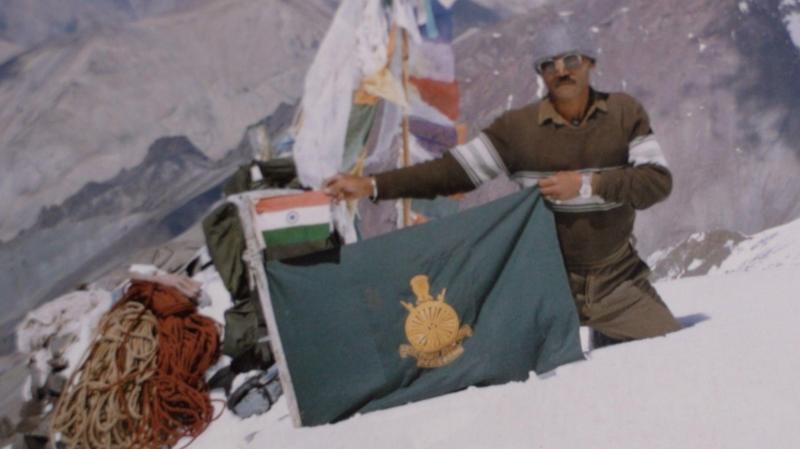
An Indian climber named Dorje Morup died on Mount Everest 30 years ago and his frozen body, wearing green boots, has been a well-known landmark near the summit. India is now planning a difficult mission to bring his remains back home to his family for DNA testing and proper farewell.
Key Facts
Dorje Morup was an Indian climber who died in 1996 on Mount Everest.
His body, known as "Green Boots," has been visible on Everest for 30 years.
Morup was part of a 1996 Indian expedition attempting to climb Everest from the Chinese side.
A blizzard killed Morup and two other climbers during their descent after reaching the summit.
For many years, the "Green Boots" body was thought to be another climber from the same expedition.
Recent evidence suggests the body is Morup’s, based on clothing and climbing gear identification.
India is seeking a special team trained for high-altitude recovery to bring his remains down.
The family hopes to confirm his identity with DNA tests and give him a proper burial.
Read the Original
Want the full story? Tap a source to open the original
article.
The United Nations reports that more than 8 million children in Sudan have missed school due to a civil war lasting over three years. The war has damaged many schools, caused attacks on educational facilities, and forced parents to keep children at home out of safety concerns, threatening the future of an entire generation.
Key Facts
Over 8 million school-age children in Sudan are out of school because of ongoing civil war.
Nearly 75% of schools in the Darfur region are damaged or unusable.
Since 2024, there have been more than 67 attacks on schools and 154 cases of schools used for military purposes.
More than half of Sudan’s teachers have not been paid, yet many still teach.
The conflict has displaced about 15 million people across Sudan.
More than half of Sudan’s 33 million people need urgent humanitarian help, with many being children.
The war affects women and children the most, especially those who cannot protect themselves.
The UN and partners have helped about 1 million children return to some form of learning this year, but this is far less than needed.
Read the Original
Want the full story? Tap a source to open the original
article.
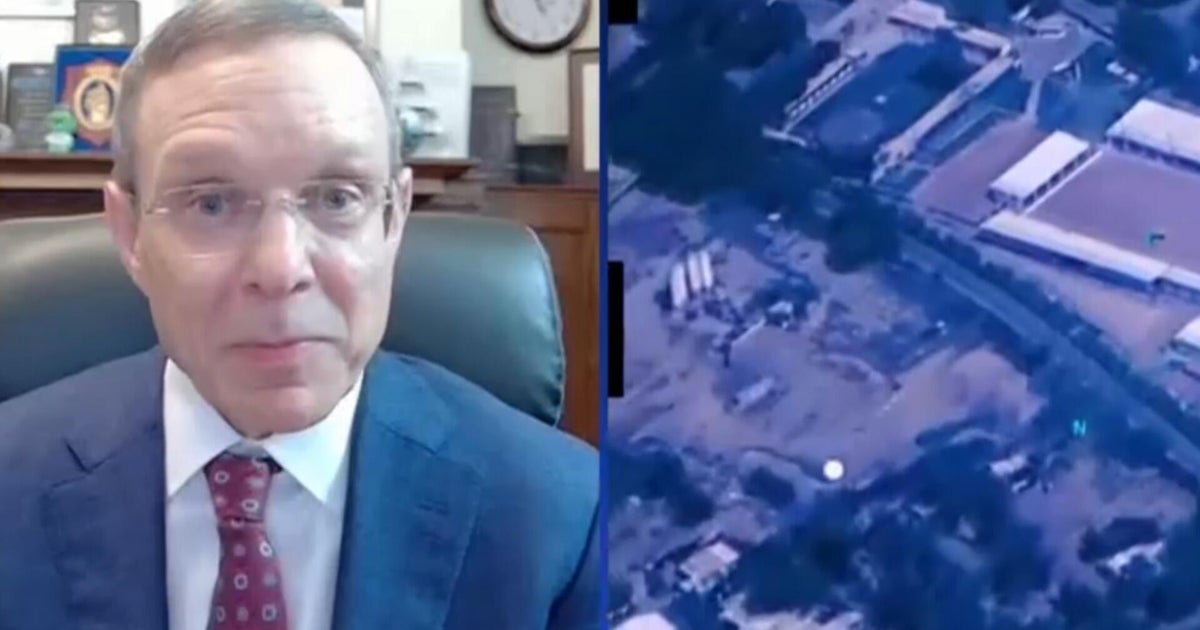
The Pentagon released its fifth set of files about unidentified flying objects (UFOs). These releases are part of a plan started by President Trump earlier this year. Astrophysicist Avi Loeb shared his analysis of the new information.
Key Facts
The Pentagon has issued five batches of UFO files so far.
The releases follow an executive order signed by President Trump in January 2024.
These files contain information about unidentified flying objects.
Astrophysicist Avi Loeb provided expert analysis on the latest release.
The information was shared through CBS News.
The reports aim to increase transparency about UFO sightings and investigations.
This is part of an ongoing government effort to study and share UFO data.
Read the Original
Want the full story? Tap a source to open the original
article.
Puerto Rico is starting 48-hour water rationing for over 180,000 homes because the drought has emptied many reservoirs. People in San Juan are using water trucks and storage tanks while the dry weather continues.
Key Facts
Puerto Rico faces a severe drought that has drained its water reservoirs.
Water rationing will last 48 hours at a time for more than 180,000 households.
Residents in San Juan rely on water tankers and storage tanks for water.
The drought conditions have made regular water supply difficult.
Authorities are managing water distribution to cope with shortages.
Read the Original
Want the full story? Tap a source to open the original
article.
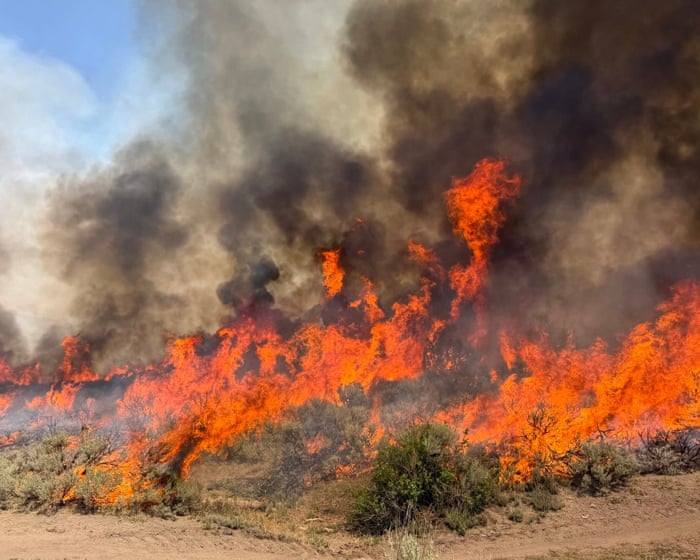
A firefighting helicopter crashed in central Utah on Friday morning with two people onboard. Rescuers have not yet reached the crash site because the helicopter started a new fire, and the cause of the crash is still unknown.
Key Facts
The helicopter was a Sikorsky S64 and had two people inside.
The crash happened near Richfield, Utah, about 160 miles south of Salt Lake City.
Emergency crews are responding but have difficulty reaching the site due to rough terrain and the new fire caused by the crash.
The helicopter was fighting the Widemouth 2 fire, which has burned 105,000 acres since July 27.
There are eight large fires burning across Utah, covering over 331,000 acres in total.
Utah Governor Spencer Cox acknowledged the dangers firefighters face and expressed sympathy for the incident.
The Federal Aviation Administration (FAA) and National Transportation Safety Board (NTSB) are investigating the crash.
Firefighters paused briefly but then resumed fighting the fires despite low morale after the crash.
Read the Original
Want the full story? Tap a source to open the original
article.