A large fire broke out early in the morning at the Grand Burstin Hotel in Folkestone, forcing around 280 people to evacuate. Police are investigating the fire as a possible deliberate act, and emergency services continue to work at the scene to ensure safety.
Key Facts
The fire started at about 1:05 a.m. at the Grand Burstin Hotel in Folkestone.
Around 280 hotel guests and staff were safely evacuated.
Police are treating the fire as suspicious and are asking for witnesses.
26 fire engines responded initially; 9 remained later to extinguish hotspots.
The fire caused serious damage, raising concerns about the building’s safety.
One person was taken to the hospital with minor injuries.
Local council opened a welfare center and asked nearby residents to stay clear and keep windows closed.
A nearby restaurant owner provided a place for evacuees to rest and for paramedics to work.
Read the Original
Want the full story? Tap a source to open the original
article.
Ukraine has developed a new drone designed to intercept and destroy fast Russian jet-powered strike drones called Shaheds. President Zelensky shared video footage of the new interceptor drone in action and highlighted its role in boosting Ukraine’s defense. Meanwhile, the U.S. approved a $2.7 billion package to provide Ukraine with advanced air defense systems and equipment.
Key Facts
Ukraine created a new drone that can intercept Russian jet-powered Shahed drones.
Shahed drones are used by Russia in the war, often targeting civilian areas.
The new interceptor drone helps protect Ukraine and supports existing air defenses.
Ukraine is testing multiple local drone models to stop fast aerial threats more cheaply than missiles.
Conventional anti-aircraft systems struggle against drones flying up to 400 miles per hour.
The U.S. approved a $2.7 billion sale of air defense weapons and radar systems to Ukraine.
The U.S. package includes missiles, radar systems, laser-guided air defense, and drone countermeasures.
The deal aims to strengthen Ukraine’s self-defense and regional security missions amid ongoing drone and missile attacks.
Read the Original
Want the full story? Tap a source to open the original
article.
Colombian singer Juanes is helping build environmentally friendly homes after a strong earthquake hit Colombia. He talked about his music career and his efforts to support his country during this difficult time.
Key Facts
Juan Esteban, known as Juanes, is a famous Colombian singer.
He has won 29 Grammy awards.
Juanes has performed in sold-out concerts worldwide.
A powerful earthquake struck Colombia, causing damage.
Juanes is involved in building sustainable, eco-friendly homes in Colombia.
He shared his work and support for Colombia in a CBS News interview.
The homes aim to help people recover safely and responsibly after the earthquake.
Read the Original
Want the full story? Tap a source to open the original
article.
George Osborne, chair of the British Museum, said he thought a private visit to see the Bayeux Tapestry by billionaire Peter Thiel would stay secret. Thiel, a supporter of President Trump and founder of tech companies including Palantir, was shown the tapestry during a private viewing hosted by the museum before it opened to the public.
Key Facts
George Osborne organized a private viewing of the Bayeux Tapestry for Peter Thiel at the British Museum.
Osborne assumed the visit would not be publicly known but it was reported soon after.
Peter Thiel is a tech billionaire who supports President Donald Trump and founded PayPal and Palantir.
Palantir works with government agencies and militaries in the US, UK, and Israel, including a large NHS contract.
The company's work with military and immigration enforcement, and its NHS data access, has caused public concern.
The museum received no money from Thiel for the visit, and any donations would be carefully reviewed for reputational risk.
Osborne said the museum must accept funding from controversial sources like BP to stay open.
The British Museum often faces protests linked to political issues like Gaza and climate change.
Read the Original
Want the full story? Tap a source to open the original
article.
Children in Gaza have started going back to school for the first official day. At the same time, there are ongoing attacks by Israeli settlers and soldiers in the West Bank.
Key Facts
Gaza’s children are returning to school after a break.
Many parents in Gaza worry about their children's safety.
Israeli settlers and soldiers are carrying out violent attacks in the West Bank.
The West Bank is a territory occupied by Israel.
The news is reported by Al Jazeera correspondent Marah Rayan.
This situation reflects ongoing tensions between Palestinians and Israelis.
Read the Original
Want the full story? Tap a source to open the original
article.
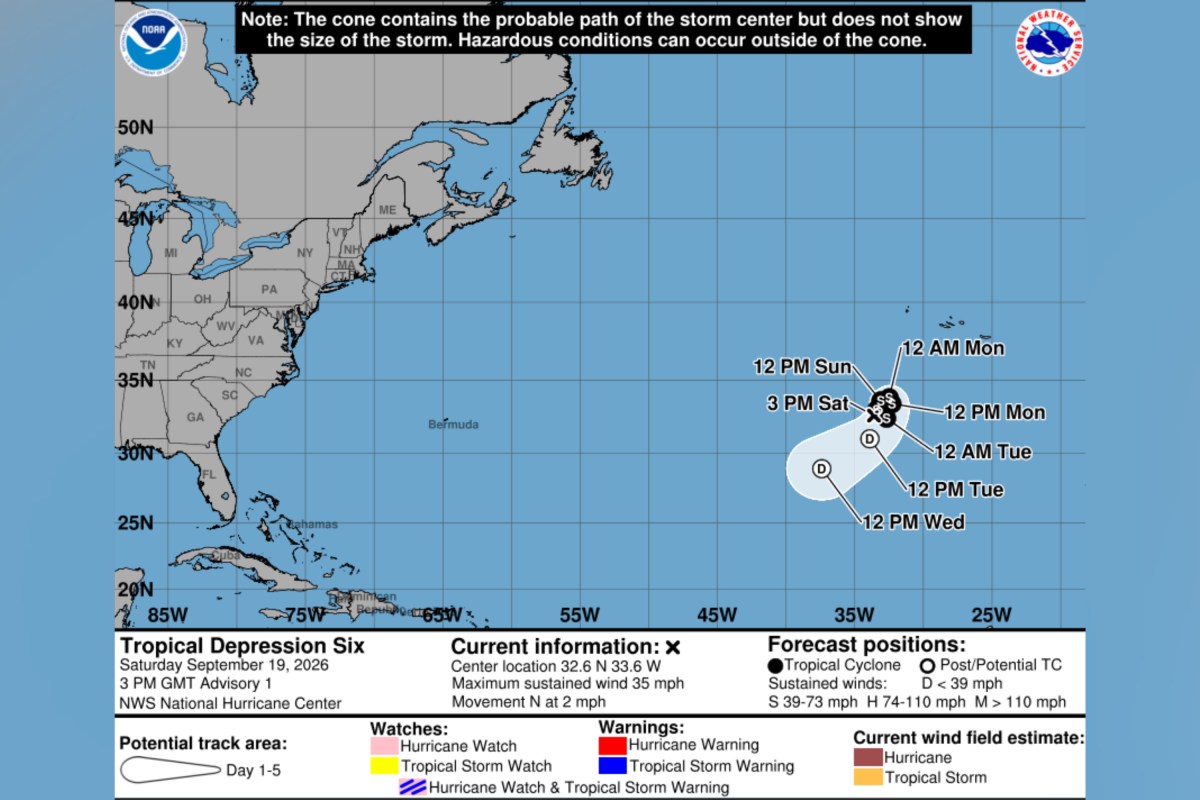
A tropical depression named Tropical Depression Six has formed in the Atlantic Ocean. It is moving slowly north and is expected to move northeast soon, with slight strengthening possible before it weakens.
Key Facts
The National Hurricane Center (NHC) identified Tropical Depression Six in the eastern subtropical Atlantic.
This formation follows a quiet Atlantic hurricane season linked to El Niño, which has so far produced no hurricanes.
The depression is about 525 miles southwest of the Azores islands.
It is moving north at about 2 miles per hour.
The NHC expects it to move northeast for 1 to 1.5 days, then turn southwest.
Maximum sustained winds are around 35 miles per hour, with stronger gusts.
No watches or warnings have been issued for coastal areas.
The depression currently does not pose a threat to land.
Read the Original
Want the full story? Tap a source to open the original
article.
Over 2,700 people from Yemen have arrived in Djibouti to escape fighting in their country. Many made risky journeys across the sea and are now seeking help and shelter in the town of Obock.
Key Facts
More than 2,700 Yemenis have fled to Djibouti recently.
Many traveled by sea, which is dangerous.
They are escaping conflict happening in Yemen.
The northern town of Obock in Djibouti is where many have arrived.
Refugees are looking for shelter and assistance after their journey.
Read the Original
Want the full story? Tap a source to open the original
article.
Germany will hold two important state elections soon, in Berlin and Mecklenburg-Western Pomerania. The far-right party AfD, known for opposing immigration, is gaining support and hopes to make big advances, which could put pressure on Chancellor Friedrich Merz’s leadership.
Key Facts
Germany is preparing for state elections in Berlin and Mecklenburg-Western Pomerania.
The far-right party AfD is increasing its popularity, especially after strong results in recent Saxony-Anhalt elections.
AfD opposes immigration and seeks to win more seats in these elections.
Chancellor Friedrich Merz faces challenges due to AfD’s growing support.
The elections are seen as important tests for Germany’s democracy and Merz’s leadership.
Berlin is the capital city, while Mecklenburg-Western Pomerania is a mostly rural area.
The results could influence the political balance in Germany’s government.
Read the Original
Want the full story? Tap a source to open the original
article.
French President Emmanuel Macron visited Saint Pierre and Miquelon, a small group of islands in the North Atlantic near Canada. This was the first visit by a French president to the islands in more than ten years. Canadian Prime Minister Mark Carney joined Macron during this three-day visit amid growing tensions with the United States.
Key Facts
Saint Pierre and Miquelon is a French territory located near Newfoundland, Canada.
The population of the islands is under 6,000 people.
President Macron's visit was the first by a French president in over a decade.
Canadian Prime Minister Mark Carney met with Macron during the visit.
The visit comes during a time of increasing tensions between France and the United States.
Saint Pierre and Miquelon is France’s only remaining possession in North America.
The visit lasted three days and was symbolic in nature.
Read the Original
Want the full story? Tap a source to open the original
article.
Russia experienced large cyberattacks on its electronic voting system during the second day of its three-day parliamentary election. Officials said the attacks have continued but have not stopped the voting process.
Key Facts
The attacks targeted Moscow’s electronic voting system overnight and continued during the day.
Ella Pamfilova, head of the Russian Central Election Commission, confirmed the attacks were intense and ongoing.
The election is for all 450 seats in Russia’s lower house, called the State Duma.
This is the first election since Russia began its full-scale war in Ukraine in February 2022.
Most candidates opposing the war were not allowed to run, including the liberal Yabloko party.
Russian President Vladimir Putin accused Ukraine of trying to disrupt the voting, but Ukraine has not replied.
Over 350 Ukrainian drone strikes targeted Moscow on the first day of voting.
Voter turnout was reported as 32.58% by early Saturday afternoon local time.
Read the Original
Want the full story? Tap a source to open the original
article.
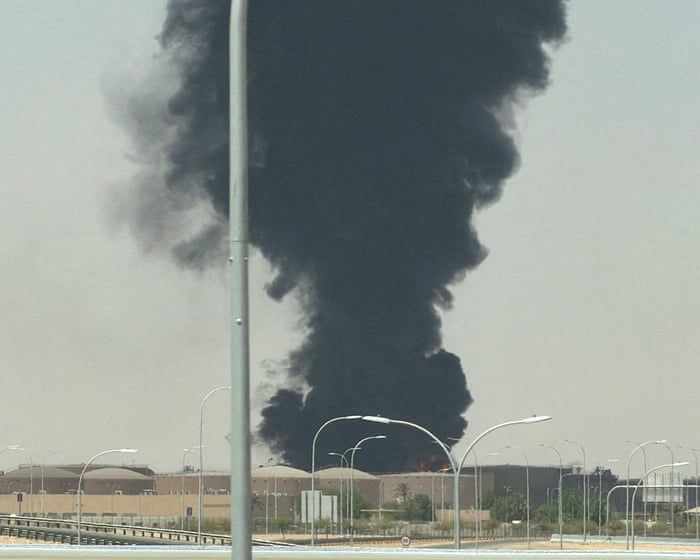
Black smoke and flames were seen near Riyadh airport in Saudi Arabia, where flights were delayed or canceled. This happened amid ongoing fighting between Saudi-backed forces and Iran-backed Houthi rebels, which has caused many deaths and increased missile and drone attacks on Saudi Arabia.
Key Facts
Fighting is happening between Saudi-backed government forces and Iran-backed Houthi rebels.
The conflict has killed 48 people in recent hours.
The Houthis launched a sudden offensive this month, taking control of parts of Yemen.
They have fired many missiles and drones toward Saudi Arabia.
Smoke and flames appeared near Riyadh airport, disrupting flights.
The situation is part of a larger conflict affecting Yemen and surrounding regions.
The Houthis claim to have shot down a Saudi F-15 jet.
The conflict involves several countries and has caused mass displacement in Yemen.
Read the Original
Want the full story? Tap a source to open the original
article.
Lithuania has created a plan to help people leave safely if there is a military threat. The plan includes routes from the capital city Vilnius, with Poland’s Podlaskie province acting as a pathway for evacuees. This plan responds to growing concerns about security in the region, especially because of tensions linked to Russia and Belarus.
Key Facts
Lithuania approved an evacuation plan in July for military or civilian threats.
The plan includes three main evacuation routes from Vilnius, with one route leading to Poland’s Podlaskie province.
Evacuation should start before any immediate danger, and during attacks, people should stay in shelters.
Polish local governments in Podlaskie are preparing emergency plans to support evacuees.
Lithuania is building stronger defenses along its borders with Belarus and Russia’s Kaliningrad region.
NATO jets recently shot down a drone that entered Lithuanian airspace from Belarus.
Lithuania’s president said Russia may be letting drones enter NATO airspace on purpose.
Latvia will receive German Eurofighter jets to help protect its airspace during upcoming elections.
Read the Original
Want the full story? Tap a source to open the original
article.
Justus Kelley made history by becoming the first married woman and mother to win the Miss USA 2026 title. She shared her experience with the pageant and discussed her charity work.
Key Facts
Justus Kelley won the Miss USA 2026 competition.
She is the first married woman to earn the Miss USA crown.
Kelley is also the first mother to hold the Miss USA title.
She spoke about her experience during the contest.
Kelley highlighted her philanthropic, or charity, efforts.
The news was reported by CBS News.
Read the Original
Want the full story? Tap a source to open the original
article.
Liberal Democrat leader Sir Ed Davey said his party aims to stop Nigel Farage’s Reform party and an alliance with Conservative leader Kemi Badenoch. He called the Lib Dems a "firewall" defending seats against these groups and said they are ready for a possible early election.
Key Facts
Sir Ed Davey leads the Liberal Democrats and spoke at their Brighton conference.
He described the Lib Dems as a defense against Nigel Farage’s Reform party and Conservatives.
Davey warned an alliance between Farage and Conservative Kemi Badenoch could harm the UK.
The Lib Dems want to build on their 2024 election success of 72 MPs by winning more seats.
Recent polls show many people are unsure about what the Lib Dems represent.
Some party members, like MP Roz Savage, called for a bolder approach than Davey’s leadership style.
Davey criticized the Labour government for lacking a growth plan and taxing small businesses heavily.
The Lib Dems want to focus on issues like the NHS and re-joining the EU single market.
Read the Original
Want the full story? Tap a source to open the original
article.
Scientists explored the Mar del Plata Submarine Canyon off Argentina using a remote-controlled robot three miles deep underwater. They found trash like plastic bags, fishing gear, and food wrappers on the seafloor, showing that even faraway ocean places are affected by human pollution.
Key Facts
Researchers used a remotely operated vehicle (ROV) to explore 4,500 meters (nearly 3 miles) under the ocean surface.
The team found various types of litter, including plastic sheets, bags, food wrappers, and fishing gear.
Most of the trash likely came from fishing boats operating offshore.
The submarine canyon is about 186 miles from Argentina’s coast but still collects human waste transported by ocean currents.
Scientists were surprised that everyday objects appear at such depths, showing deep sea areas are connected to surface human activities.
The amount of litter found was smaller than in some other submarine canyons but still concerning.
Some marine animals were found attaching to the trash, which could change natural habitats.
The study emphasizes that plastic pollution can travel far and last for decades, affecting remote ocean environments.
Read the Original
Want the full story? Tap a source to open the original
article.
An explosion at a Syrian military site in Deir Az Zor province killed 11 soldiers and injured nine others. The blast occurred at a weapons storage area, and the cause is still under investigation.
Key Facts
The explosion happened in the town of Ayyash in eastern Syria’s Deir Az Zor province.
Eleven soldiers died and nine were wounded in the blast.
The attack struck a weapons cache inside a Syrian Arab Army site.
Syria’s Ministry of Defence held a funeral procession for the soldiers.
The cause of the explosion is unknown and being investigated.
This was the second explosion at a Syrian military site in less than two weeks.
A previous blast on September 9 in Idlib province killed 14 soldiers and wounded others.
Syrian officials are trying to clear abandoned weapons from many sites after the long civil war.
Read the Original
Want the full story? Tap a source to open the original
article.
Thick black smoke was seen near Riyadh’s King Khalid airport after air-raid alerts warned residents of possible aerial attacks. Explosions happened, and a fuel tank owned by Saudi oil company Aramco caught fire. The alerts followed increased fighting between Saudi Arabia and the Iran-backed Houthi group from Yemen.
Key Facts
Saudi Arabia sent air-raid warnings to Riyadh, Jeddah, Yanbu, and other cities.
Explosions and fire were reported near Riyadh airport, disrupting flights.
A burning fuel tank with the Aramco logo was involved in the fire.
It is the first time Riyadh received such alerts since the Yemen conflict escalated in July.
The UN Security Council condemned the Houthi attacks on Saudi Arabia’s civilian and energy targets.
The Houthis seized strategic areas near the Red Sea, threatening global oil supply routes.
The Houthis blamed Saudi Arabia for attacks in Yemen and promised a response.
The UN called on countries to stop supplying arms and support to the Houthis.
Read the Original
Want the full story? Tap a source to open the original
article.
Jewish heirs of Holocaust victims have filed two lawsuits in California to reclaim paintings taken by the Nazis during World War II from museums in Los Angeles and Auschwitz. These cases follow new laws in the US and California that support claims to art stolen from Jewish families during the war.
Key Facts
Two lawsuits were filed in Los Angeles courts by Jewish heirs and representatives seeking the return of Nazi-looted paintings.
One lawsuit demands the return of two paintings, Adam and Eve by Lucas Cranach the Elder, from the Norton Simon Museum in Pasadena.
The other lawsuit seeks watercolors painted by Dina Gottliebova Babbitt, a Holocaust survivor, from the Auschwitz-Birkenau museum in Poland.
Museums argue they legally own the artworks and want to keep them on public display.
The Nazi regime stole over 600,000 artworks from Jewish families and others between 1933 and 1945.
The Jewish Federation of Greater Los Angeles is involved in the lawsuit and plans to help local Holocaust survivors with proceeds from any recovered art.
A US court previously ruled that the Norton Simon Museum legally holds the Cranach paintings, and the Supreme Court declined to review the case.
The issue is complex due to legal, ethical, and historical factors related to Nazi-era looted art still held by museums worldwide.
Read the Original
Want the full story? Tap a source to open the original
article.
Fuel prices in France are going up, leading many drivers to choose bioethanol as a cheaper fuel option. Bioethanol costs about 95 cents per liter and is cheaper to make than petrol.
Key Facts
Petrol prices are rising in France, causing concern for drivers.
More people in France are using bioethanol, an alternative fuel.
Bioethanol is less expensive to produce than regular petrol.
The current price of bioethanol is around 95 cents per liter in France.
This shift helps reduce the impact of rising fuel costs on consumers.
Bioethanol is a fuel made from plants and is considered more environmentally friendly.
Read the Original
Want the full story? Tap a source to open the original
article.
The U.S. State Department approved a possible $2.6 billion sale of air defense equipment to Ukraine amid its ongoing conflict with Russia. The sale includes advanced missile systems and counter-drone technology requested by Ukraine.
Key Facts
The U.S. State Department approved a potential $2.6 billion military sale to Ukraine.
The equipment includes S-300 Clone missiles and GAM-67 missiles.
The sale also covers Range-Extended Air Defense Laser Guided Rocket missile systems.
Counter-drone systems are part of the requested equipment.
This approval comes shortly after talks involving U.S. special envoys and other parties.
The sale notification was sent to the U.S. Congress.
The support aims to help Ukraine defend itself against Russian attacks.
Read the Original
Want the full story? Tap a source to open the original
article.