Suzy Lamplugh, a 25-year-old estate agent, disappeared in London in 1986 after meeting a client and has never been found. Police continue to investigate the case, though it will move to a less active phase next year, while her family released new photos and support a charity focused on personal safety.
Key Facts
Suzy Lamplugh went missing on 28 July 1986 after leaving work to meet a man called "Mr Kipper."
Her white car was found abandoned, but no trace of her was ever discovered.
She was declared "presumed dead" in 1993.
Police suspect she may have been stalked and lured into a false meeting.
The investigation is one of the UK’s largest missing person cases and is still partly run on 1980s paper records.
The main suspect, John Cannan, died in prison in 2024; no charges were ever brought against him for Lamplugh’s disappearance.
DNA tests and fingerprint evidence have not identified any match.
The Suzy Lamplugh Trust was created by her parents to promote personal safety and runs the National Stalking Helpline.
Read the Original
Want the full story? Tap a source to open the original
article.
Two earthquakes hit Qinghai province in northwest China on Tuesday morning, occurring 18 minutes apart. The first measured magnitude 5.7 and the second 5.8, both at a depth of 10 kilometers, with no immediate reports of injuries.
Key Facts
Two earthquakes struck Qinghai province in China on Tuesday at 11:16 a.m. and 11:34 a.m.
The magnitudes were 5.7 and 5.8, according to the United States Geological Survey (USGS).
Both quakes occurred at a depth of about 10 kilometers (6 miles) underground.
Qinghai is a sparsely populated province that often experiences earthquakes.
No casualties were reported immediately after the earthquakes.
Dust clouds were seen rising from cliffs during the shaking.
The earthquakes were also felt in Lanzhou, a large city in the neighboring Gansu province.
Videos from social media showed lamps swinging inside homes in Lanzhou.
Read the Original
Want the full story? Tap a source to open the original
article.
On July 24, Israeli settlers and soldiers attacked Palestinian homes near Tal in the occupied West Bank, leading to violence where several Palestinians, one settler, and one soldier were killed. Following the incident, Israeli forces launched wide military operations, including raids and arrests, while violence and property damage increased across multiple West Bank villages.
Key Facts
More than 20 Israeli settlers attacked Palestinian homes near Tal, southwest of Nablus.
A Palestinian man killed a settler in the conflict, then was shot dead by Israeli soldiers.
Four Palestinians from one family died in the violence; one settler and one Israeli soldier also died.
Israeli Prime Minister Netanyahu ordered a large military response, including home demolitions and permit revocations.
Israeli forces arrested 30 to 50 Palestinians and searched about 70 homes in subsequent raids.
New illegal Israeli settler outposts have been established near Tal and other West Bank villages.
Over the weekend, there were around 30 settler attacks in the West Bank, including arson on homes, farms, and villages.
Israeli forces used tear gas against Palestinians and journalists during attempts to protect settlers.
Read the Original
Want the full story? Tap a source to open the original
article.
The 1951 Refugee Convention, created after World War II to protect people fleeing war and persecution, marks its 75th anniversary. The treaty has helped millions, but some countries, including the United States under President Donald Trump, have restricted asylum seekers. Over 41 million people worldwide remain refugees, with most hosted by poorer countries, and ongoing conflicts threaten to increase this number.
Key Facts
The Refugee Convention was established in 1951 to define who is a refugee and set their rights.
Nearly 150 countries have agreed to follow the convention’s rules.
Its main rule, called “non-refoulement,” bans sending refugees back to places where they face danger.
More than 41 million people are forcibly displaced worldwide.
Almost 70% of refugees live in low- and middle-income countries.
Conflicts and violence continue globally, with over 130 active armed conflicts counted by the Red Cross.
Under President Trump, the U.S. changed its asylum policies by sending seekers to third countries.
Personal stories from refugees show the ongoing need for protection and support through the treaty.
Read the Original
Want the full story? Tap a source to open the original
article.
Israeli Prime Minister Benjamin Netanyahu met with President Donald Trump for the first time since they launched a joint war against Iran. The meeting focused on easing tensions between the two leaders, discussing the ongoing conflict with Iran, and reviewing agreements related to the Israel-Hezbollah war.
Key Facts
Netanyahu and Trump started a joint war against Iran earlier this year.
This was their first meeting since the war began.
Both leaders face pressure at home: Netanyahu is up for reelection, and Trump faces criticism over the war’s impact on the economy.
They discussed a framework agreement between the U.S., Israel, and Lebanon regarding the Israel-Hezbollah conflict.
They also talked about expanding the Abraham Accords, which are peace agreements between Israel and some Arab countries.
Their relationship has had ups and downs, but was strong when Trump returned to office last year.
Trump has faced pressure to end the conflict as Iran has retaliated with attacks on U.S. bases and shipping routes.
Netanyahu plans to share new Israeli intelligence on Iran’s nuclear program during the meeting.
Read the Original
Want the full story? Tap a source to open the original
article.
A large wildfire near Bordeaux in southwest France has been stable after a calm night, according to local authorities. However, hot temperatures and shifting winds today could cause the fire to flare up again. At the same time, Spain is also dealing with huge wildfires near Madrid and Ávila, affecting tens of thousands of hectares.
Key Facts
The wildfire near Bordeaux has burned about 42,000 hectares of forest since July 22.
Local officials say the fire was stable after a quiet night, with flare-ups controlled by firefighters.
Weather forecasts predict temperatures between 33°C and 35°C with southeast winds, which might worsen the fire.
In Spain, fires near Madrid and Ávila have burned around 75,000 hectares, the largest recent wildfires in the country.
Spanish Prime Minister Pedro Sanchez warned of difficult hours ahead due to rising temperatures and a new heat wave.
French President Emmanuel Macron visited the affected area and promised to rebuild the damaged forests.
Holiday camp activities in the Gironde region of France were canceled because of the fire risk.
Authorities in both countries continue to monitor and fight the fires closely as conditions remain challenging.
Read the Original
Want the full story? Tap a source to open the original
article.
This article explains how harmful substances like "forever chemicals" (PFAS) and cadmium get into food and why they can be dangerous to health. It focuses on advice to reduce exposure to these pollutants, especially through diet, highlighting common foods that contain cadmium and suggesting ways to limit intake.
Key Facts
Forever chemicals (PFAS) are long-lasting pollutants found in soil, water, and living things.
Cadmium is a toxic heavy metal that can build up in the liver and kidneys and raise the risk of cancer and heart disease.
Foods like seaweed, sunflower seeds, mushrooms, animal organs, shellfish, frog legs, dark chocolate, and crustaceans have high cadmium levels.
Most people's exposure mostly comes from everyday foods like cereals (pasta, bread, biscuits), potatoes, and some vegetables because they eat these often.
Avoiding high-cadmium foods entirely is difficult, but reducing consumption of certain contaminated foods can help lower risks.
Tobacco is another major source of cadmium exposure, besides food.
Public health measures and political actions are important to effectively reduce these contaminants in the environment.
Read the Original
Want the full story? Tap a source to open the original
article.
Jellyfish are commonly seen off the coast of Scotland, especially during July and August when the sea is warmer. While their stings can be painful, they are rarely dangerous. Jellyfish numbers rise due to warmer water, more food, and calm ocean currents pushing them closer to shore.
Key Facts
July and August are the months with the most jellyfish sightings in Scotland.
Jellyfish rely on ocean currents to move because they are weak swimmers.
Warmer sea temperatures help jellyfish breed faster, creating large groups called blooms.
Jellyfish blooms have disrupted activities before, such as closing a nuclear power station in 2011.
Most jellyfish have stinging cells, but sting strength varies by species.
The Lion’s Mane jellyfish is common in Scottish waters during summer and can cause sore but not deadly stings.
Jellyfish tentacles can break off and still sting even if detached from the jellyfish.
Jellyfish can be found year-round but are more common in the warmer months.
Read the Original
Want the full story? Tap a source to open the original
article.
Ecuador is facing a big rise in drug crime as cocaine enters the country from Colombia and Peru. Local gangs, connected to international criminal groups, are helping to move drugs further, which has contributed to a very high murder rate in Ecuador.
Key Facts
Ecuador is experiencing a large increase in drug-related crime.
Cocaine is being brought into Ecuador from Colombia and Peru, the two largest cocaine producers.
Local gangs in Ecuador have ties to Mexican cartels and Albanian mafia groups.
These gangs help smuggle cocaine to other countries.
Last year, Ecuador’s murder rate was very high, with over 9,200 people killed.
The information comes from Ecuador’s interior ministry and reporting by the BBC.
Ecuadorian police are actively working to confront these gang members.
The rise in violence is linked to the growing drug trade in the region.
Read the Original
Want the full story? Tap a source to open the original
article.
Police in the Ecuadoran city of Durán are battling violent gangs involved in drug trafficking, facing not only criminals but also corruption within their own ranks. The city has become a major route for cocaine from Colombia and Peru to reach global markets, with drug violence causing a high murder rate despite government crackdowns.
Key Facts
Durán, Ecuador is a city heavily affected by drug gangs and violence.
Police Captain Jean Carlos Bustamante leads a trusted team fighting against gangs armed with many weapons.
Corruption exists inside the police and government, with some officials paid by gangs.
The gangs control neighborhoods through fear, killing anyone who speaks out against them.
Approximately 70% of the cocaine reaching Europe and the US passes through Ecuador.
Cocaine supply comes mainly from Colombia and Peru, the world’s biggest producers.
Ecuador’s long coastline and weak border controls help drug gangs smuggle cocaine.
Despite arrests and crackdowns ordered by President Daniel Noboa, the murder rate remains very high and gang violence has grown worse.
Read the Original
Want the full story? Tap a source to open the original
article.
A US airman named James Loubeau was accused of raping several women, some in England and some on a US military base. Instead of British courts handling the case, Suffolk police allowed the US military to take over the investigation and trial, resulting in Loubeau’s conviction in a US military court.
Key Facts
James Loubeau is a US airman accused of raping six women in England in 2019.
Some attacks involved drugging women and breaking into homes or bedrooms.
Suffolk police initially investigated but transferred the case to the US military after 11 days.
Three victims were British women attacked while Loubeau was off duty; others were US military personnel.
Loubeau was convicted of sexual assault in a court martial held in Miami, Florida.
He was sentenced to five years in prison and will be monitored for 20 years after release.
A 1951 UK-US agreement allows US military courts to handle crimes involving their personnel on UK bases or between US service members.
Suffolk police have not explained why they gave up jurisdiction of these serious allegations.
Read the Original
Want the full story? Tap a source to open the original
article.
Jodrell Bank, a leading UK radio astronomy centre, faces closure due to planned funding cuts by the Science and Technology Facilities Council (STFC) in 2028. Other UK physics research facilities are also experiencing significant budget reductions, risking a loss of scientists and weakening the country's role in global physics research.
Key Facts
Jodrell Bank began radio astronomy research in 1945 and hosts the Lovell telescope, once the largest in the world.
The STFC plans to stop funding the UK's national radio astronomy network, e-Merlin, in March 2028.
UK participation in major international astronomy projects, such as the Rubin observatory and the Event Horizon Telescope, is being reduced.
The STFC needs to save £162 million by 2030 but forecasts a much larger budget shortfall of £684 million for 2024-2028.
Cuts also affect other physics facilities, including the Diamond synchrotron, Isis neutron source, Clara accelerator tests, and Boulby underground lab.
Funding for the Large Hadron Collider experiment LHCb is ending early, risking loss of most planned data.
Nearly 80% of early-career UK physicists are thinking about leaving the country due to funding problems.
The UK risks losing top scientific talent, which could harm its scientific progress and economic growth.
Read the Original
Want the full story? Tap a source to open the original
article.
The article describes a story set in the Australian outback in the mid-1940s, where a young orphan is taken to a distant orphanage run by two nuns. The boy struggles to fit in, and his presence causes unease among the other people there.
Key Facts
The story takes place in Australia during the 1940s.
It focuses on a young orphan boy.
The boy is brought to a remote orphanage in the outback.
Two nuns run the orphanage.
The boy has difficulty adjusting to life at the orphanage.
His presence affects those living there in a disturbing way.
The story is presented in a 1 hour 30 minute program.
The program contains some upsetting scenes and language.
Read the Original
Want the full story? Tap a source to open the original
article.
The New Boy is an Australian drama set in a remote orphanage in the outback during the 1940s. It tells the story of a young orphan who struggles to fit in and affects those around him.
Key Facts
The story takes place in the Australian outback in the mid-1940s.
The main character is a young orphan boy.
The boy is brought to a remote orphanage run by two nuns.
He has trouble fitting in with others at the orphanage.
His presence causes disturbance among the people there.
The film lasts 1 hour and 30 minutes.
It was first shown in 2023 and is available to watch for over a year.
Read the Original
Want the full story? Tap a source to open the original
article.
Shabaz Ali, a content creator and broadcaster, meets a billionaire in person to see if billionaires are really as bad as many people think. This program explores views on the super-rich by moving the conversation from online discussions to real-life encounters.
Key Facts
Shabaz Ali has been critical of very wealthy people online for years.
The show features a face-to-face meeting between Shabaz and a billionaire.
It aims to understand if billionaires deserve the negative opinions often expressed about them.
The program was first shown on July 28, 2026, and lasts 48 minutes.
It is part of a series that examines social and economic issues.
The show is available with audio description and sign language support.
The program is produced and aired by the BBC.
It invites viewers to rethink common beliefs about wealth and money holders.
Read the Original
Want the full story? Tap a source to open the original
article.
Wu Chi-wai, a former Hong Kong opposition leader and pro-democracy activist, was initially detained and threatened with deportation when he arrived in the UK. After several days, the UK Border Force allowed him and his family to stay for six months using his British National (Overseas) passport.
Key Facts
Wu Chi-wai is a 63-year-old former leader of Hong Kong’s Democratic Party and a prominent pro-democracy figure.
He was detained for nearly 10 hours at London's Heathrow Airport and initially refused entry.
Wu was later told he could stay only one week before possible deportation but was eventually granted a six-month stay.
Wu spent over five years in prison in Hong Kong on charges of subversion related to pro-democracy activities.
His wife and son had already moved to the UK in 2022 and 2023; Wu aimed to reunite with them.
Wu traveled using a British National (Overseas) passport, which allows visa-free stays in the UK for six months.
The UK government created a visa program for BNO passport holders after protests in Hong Kong and the crackdown on democracy activists.
Over 230,000 Hong Kong residents have been granted these visas, with nearly 170,000 relocating to the UK.
Read the Original
Want the full story? Tap a source to open the original
article.
Malaysian police have detained over 100 Rohingya refugees and asylum seekers who were trying to get help from the United Nations after being forced to leave their homes. There has been an increase in hateful speech and false information online, which has caused more problems for the Rohingya in Malaysia.
Key Facts
More than 100 Rohingya refugees and asylum seekers were detained by Malaysian police.
The Rohingya were seeking assistance from the United Nations.
They were evicted from their homes before being detained.
Online hate speech and misinformation against the Rohingya have increased in Malaysia.
This rise in negative online content has led to more harassment of the Rohingya group.
Read the Original
Want the full story? Tap a source to open the original
article.
Nearly 600 former Israeli military and security officials have asked President Donald Trump to urge Prime Minister Benjamin Netanyahu to take action against violent acts by Jewish settlers in the occupied West Bank. They warn that if the violence is not stopped quickly, it could cause serious security problems for Israel, the United States, and the region.
Key Facts
The letter was written by Commanders for Israel’s Security, a group of retired Israeli military and intelligence officers.
The group says settlers are responsible for increased violence, called “settler terror,” in the West Bank.
They believe certain Israeli government members protect settlers and avoid legal scrutiny.
The group warns this violence could have worse effects than the Hamas attack on Israel on October 7, 2023.
The letter asked President Trump to discuss the issue with Prime Minister Netanyahu during his visit to Washington, DC.
The protests and violence by settlers increased after a shootout in Tal town where six people died, including two Israelis and four Palestinians.
The group’s mission is to protect Israel as a strong, democratic Jewish state.
Netanyahu was visiting the US for the seventh time during Trump’s second term as president.
Read the Original
Want the full story? Tap a source to open the original
article.
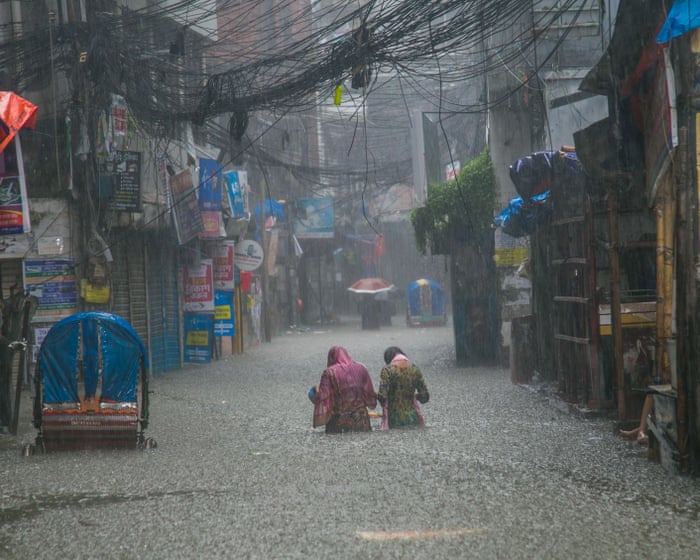
Heavy rain and floods have caused serious damage across several Asian countries, including Afghanistan, Bangladesh, India, Pakistan, China, Japan, Vietnam, and South Korea. The extreme weather has destroyed homes, crops, and roads, killed dozens of people, and displaced many residents.
Key Facts
In eastern Afghanistan, continuous rain for 10 days damaged homes made of stone and mud, killing at least 31 people and leaving hundreds missing.
Bangladesh’s Chattogram city recorded a record 412.3mm of rain in 24 hours, causing flash floods that destroyed homes and crops.
Residents like Jesmin Akter have lost their belongings and are relying on food aid while living in unsafe, wet conditions.
China has experienced a 35% increase in rivers rising above warning levels compared to the past five years, with deadly landslides and floods reported.
Typhoon Noul forced the evacuation of nearly 900,000 people in China’s Guangdong province.
The floods and storms in the region have been worsened by multiple typhoons hitting in a short time.
Governments and rescue workers are responding to floods and landslide disasters, but more rain is expected soon.
Other countries in the region like Japan, Vietnam, and South Korea have also suffered from extreme weather events like landslides and sudden heavy rain.
Read the Original
Want the full story? Tap a source to open the original
article.
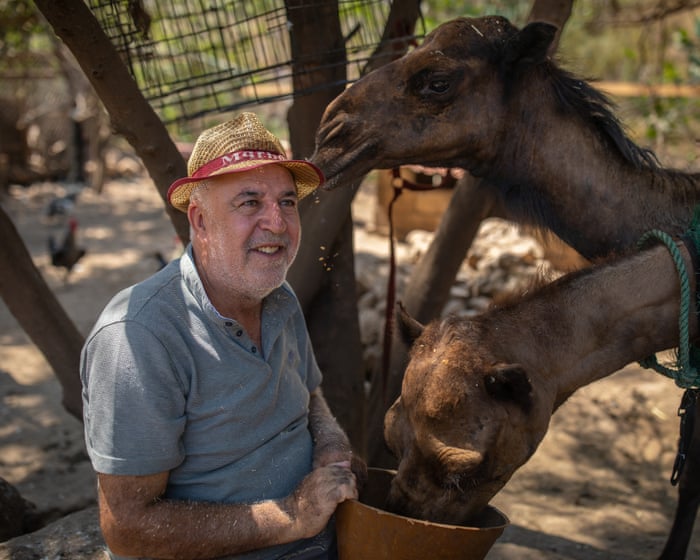
Houssein Hamze, who survived a near-death experience during Israel’s 2006 war with Hezbollah thanks to his dog, now runs an animal shelter in southern Lebanon. Despite ongoing conflicts, he stays in his village to care for abandoned and rescued animals, providing food and shelter even during dangerous times.
Key Facts
In 2006, a bomb landed near Hamze’s home; his dog’s barking warned him in time to avoid injury.
Hamze founded the Mashala shelter in Zefta, south Lebanon, to care for stray and abandoned animals.
The shelter cares for around 200 dogs, camels, horses, chickens, geese, and ravens.
Hamze stayed during the 2026 Hezbollah-Israel war to care for animals left behind by fleeing residents.
He regularly delivered food and water to animals despite the threat of Israeli drone and airstrikes.
Some animals came to the shelter on their own during the war, seeking food and help.
Hamze marked his vehicle to show he was an animal caretaker while being observed by drones.
He has rescued injured animals like Lulu, a dog who lost part of her tail in an airstrike.
Read the Original
Want the full story? Tap a source to open the original
article.