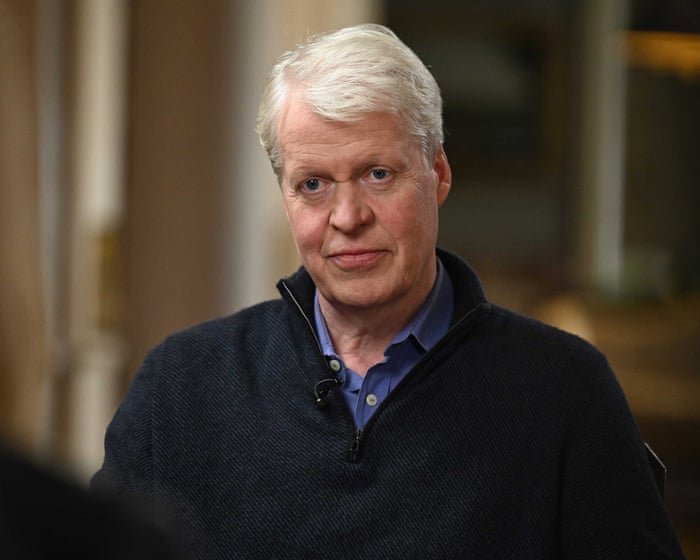
Earl Spencer, Diana’s brother, says King Charles told him shortly after Diana’s death in 1997, “we’ll forget her soon enough.” Buckingham Palace said Spencer might have misremembered, but Spencer insists his memory is correct and says the comment shocked him deeply.
Key Facts
Earl Spencer claims King Charles made a hurtful comment about forgetting Diana soon after she died.
The comment was revealed in Spencer’s memoir, Swan Song: Diana, My Sister.
Buckingham Palace responded by suggesting grief might have affected Spencer’s memory.
Spencer rejected this, saying he clearly remembers Charles’s exact words.
The alleged comment happened during a heated argument about Diana’s funeral arrangements.
Spencer says he told friends and family about the comment at the time because it was shocking.
The memoir also claims Diana was told Charles was not in love with her before they married.
Charles and Spencer reportedly argued about whether Diana’s sons should walk in her funeral procession; Charles wanted it, Spencer initially opposed it.
Read the Original
Want the full story? Tap a source to open the original
article.
Russia is holding parliamentary elections from September 18 to 20, 2023. The elections are controlled by the Kremlin, with the ruling party United Russia expected to win, and critics say the elections are not free or fair.
Key Facts
The elections are the first since Russia’s full-scale invasion of Ukraine in 2022.
United Russia, the party supported by President Vladimir Putin, is likely to remain the largest party in parliament.
All 10 parties on the ballot either support or do not openly oppose Putin’s policies and the war in Ukraine.
The only anti-war party, Yabloko, was removed from the ballot before the voting began.
Some Yabloko candidates still appear in certain areas despite the party’s removal.
The Kremlin is expected to use the election results to show public support for President Putin and the war.
The voting is held over three days, from September 18 to 20, 2023.
No unexpected changes or surprises in the election outcome are anticipated.
Read the Original
Want the full story? Tap a source to open the original
article.
National Geographic released a video called "Moment on the Earth" that shows bears in Alaska’s Katmai National Park. The park is a safe place where mother bears raise their cubs.
Key Facts
The video is part of National Geographic’s National Parks USA series.
It highlights bears living in Katmai National Park in Alaska.
Katmai National Park is known as a safe area for bear mothers and their young.
The video captures natural bear behaviors and mother-cub interactions.
Katmai National Park is a popular spot for wildlife watching and conservation.
National Geographic aims to educate people about nature and wildlife through this video.
The video was shared on September 18, 2026.
Read the Original
Want the full story? Tap a source to open the original
article.
Hundreds of thousands of Iranians marched in Tehran in a government-organized rally to show readiness to defend the country. The event introduced a new volunteer force trained to support Iran’s military groups amid ongoing tensions with the US and Israel.
Key Facts
About 313,000 people took part in the rally in Tehran, according to Iranian authorities.
The volunteer force will get limited military and emergency training to help the Islamic Revolutionary Guard Corps (IRGC) and Basij militia.
Over 600,000 people have registered to join a campaign called Janfada-ye-Iran, with over one million expected to train.
The government displayed drones, anti-aircraft weapons, and other military gear at the rally.
Senior leaders, including President Masoud Pezeshkian and Basij head Hossein Taeb, spoke at the event.
The rally was presented as a message of unity and readiness to defend Iran against external threats like the US and Israel.
Iran’s economy faces pressure from US sanctions and a naval blockade, affecting citizens and causing protests last year.
The volunteer force campaign began in April during increased US-Israeli military actions against Iran.
Read the Original
Want the full story? Tap a source to open the original
article.
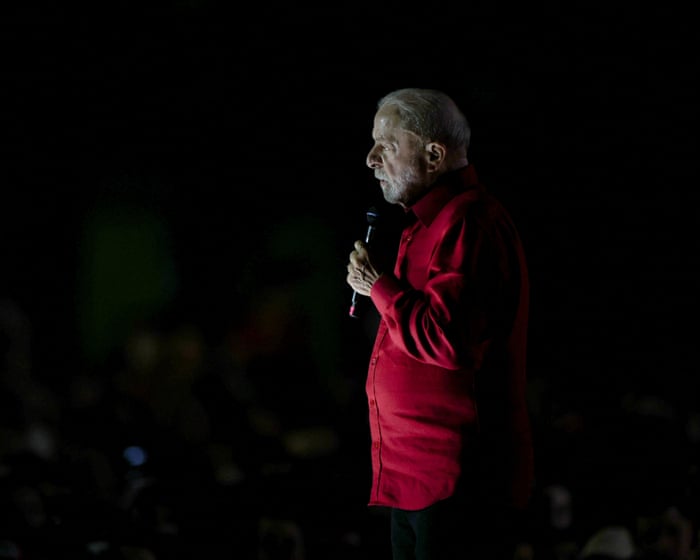
Brazil’s President Luiz Inácio Lula da Silva announced a 15% rise in the main cash payment program for poor families and free weight-loss vaccines shortly before the presidential election. His opponent, Senator Flávio Bolsonaro, criticized the timing, saying it aimed to win votes, but experts note the increase is an inflation adjustment and legally allowed.
Key Facts
Lula will increase the monthly payment from about £98 to £113 starting 19 October.
The payment program, Bolsa Família, helps poor families and covers about 50 million people.
Lula said the increase adjusts for inflation to protect vulnerable people’s buying power.
Flávio Bolsonaro, his election opponent, called it a desperate move to buy votes.
The election runoff is planned for 25 October, two weeks after the increase takes effect.
Lula also promised free weight-loss vaccines through the public health system.
Similar increases were made by Jair Bolsonaro before the 2022 election, sparking debate on intent.
Experts say such inflation adjustments are not against election laws but political motives are expected.
Read the Original
Want the full story? Tap a source to open the original
article.
Many UK police forces store highly sensitive data on Microsoft’s cloud service, Azure, which a UK security review said could be accessed by the US government or foreign actors. Despite concerns about data security and privacy since 2017, the use of Microsoft cloud services continues, with unclear protections against unauthorized access.
Key Facts
Over 40 UK police forces hold sensitive data on Microsoft Azure cloud platforms.
This data includes criminal records, victim statements, internal emails, and some files labeled secret or top secret.
A 2017 UK police security assessment warned that US government insiders could potentially access the data.
The “cloud first” policy pushed UK government departments to move data to public clouds like Microsoft Azure.
Microsoft admits data can be transferred outside the UK and cannot guarantee it stays within the country.
Microsoft denies direct, unrestricted access to customer data by any government and follows legal procedures for any data requests.
The UK government spends at least £1.9 billion annually on Microsoft software.
Some UK police officials believe the risks to sensitive data from foreign access are not fully understood or addressed.
Read the Original
Want the full story? Tap a source to open the original
article.
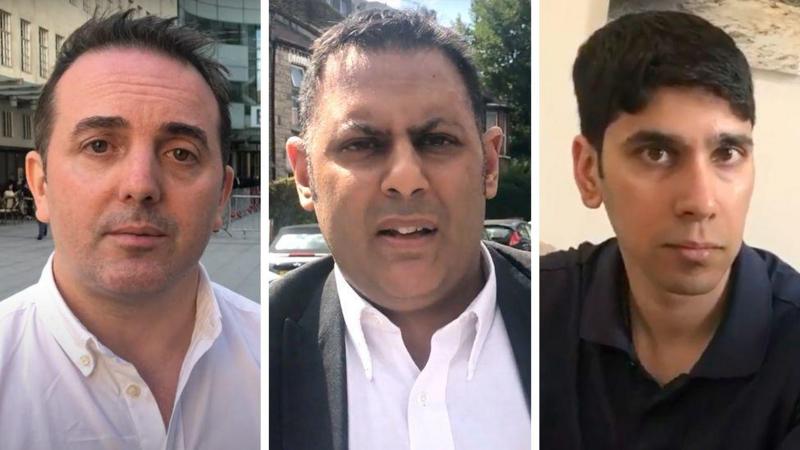
Three men lost their appeal after being convicted for harassing BBC journalist Catrin Nye. They visited her home and distributed leaflets about her following a BBC documentary she presented about a group called Lighthouse.
Key Facts
The three men are Kristofer Deichler, Jatinder Kamra, and Sukhraj Singh.
They were convicted in February 2024 and sentenced to 200 hours of community service each.
They received 10-year restraining orders banning contact with Nye and her partner.
The men were also banned from entering the London area where Nye lives for 10 years.
The harassment included visiting Nye’s home twice and handing out leaflets to her neighbors.
The leaflets linked Nye with serious accusations related to racism and concealment of abuse.
The men claimed they were citizen journalists trying to get an interview.
Nye said their actions made her fearful and she took safety measures like installing CCTV and carrying alarms.
Read the Original
Want the full story? Tap a source to open the original
article.
The members of Temple Israel in Michigan are returning to their synagogue for the first time since it was attacked in a terror incident. The community is coming back to the place where they gather to pray and worship after the attack.
Key Facts
The synagogue targeted is called Temple Israel, located in Michigan.
The attack on the synagogue was classified as a terror attack.
This is the first time the congregation is returning to the synagogue since the attack.
The attack disrupted the community's regular religious and social activities.
Local news sources like CBS News have covered this event.
The return signifies resilience and recovery for the congregation.
Authorities may be involved in ensuring security for the returning members.
The incident highlights concerns about safety in places of worship.
Read the Original
Want the full story? Tap a source to open the original
article.
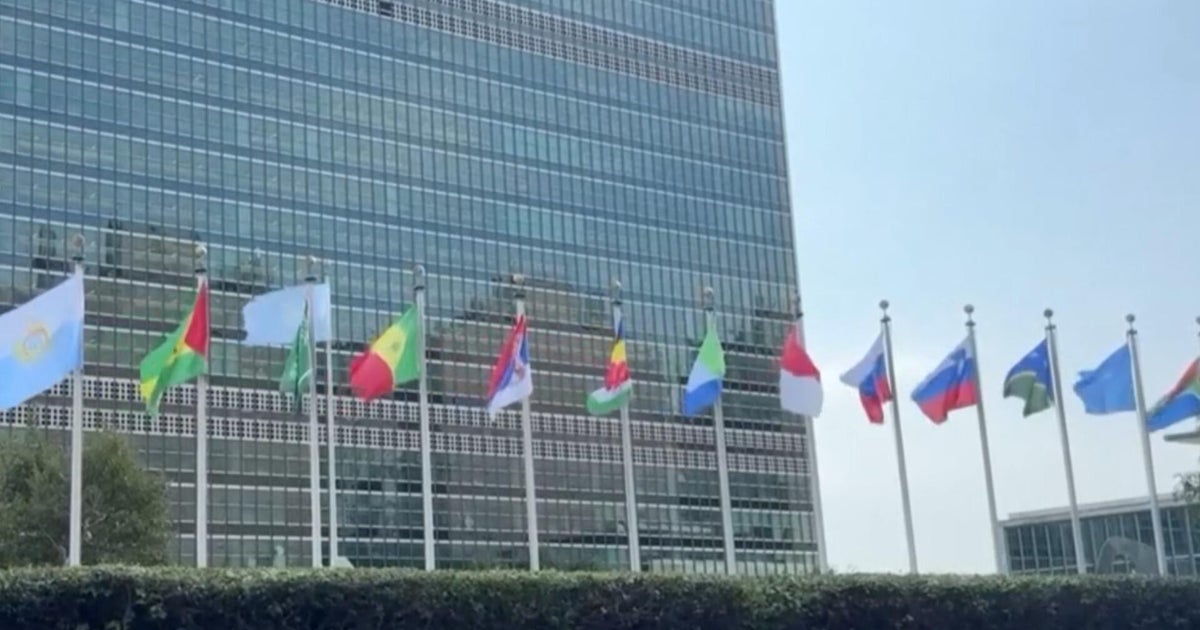
World leaders will meet next week in New York City for the United Nations General Assembly. President Donald Trump and other officials will take part in several days of important discussions on global problems.
Key Facts
The U.N. General Assembly will be held next week in New York City.
Leaders from many countries will attend the event.
President Donald Trump is expected to speak at the assembly.
The event includes several days of debates and discussions.
The debates will focus on major global issues affecting many countries.
The U.N. General Assembly is a yearly meeting where countries discuss international problems and cooperation.
Read the Original
Want the full story? Tap a source to open the original
article.
Israeli Prime Minister Benjamin Netanyahu said he plans to change the Middle East as he started his election campaign with his Likud party. At the same time, some Israelis protested against his government outside the parliament.
Key Facts
Benjamin Netanyahu is the Prime Minister of Israel.
He spoke at the start of his Likud party’s election campaign.
Netanyahu said he wants to change the Middle East.
Protests were held by some Israelis outside the parliament.
These protests show that not all Israelis agree with Netanyahu’s government.
Read the Original
Want the full story? Tap a source to open the original
article.
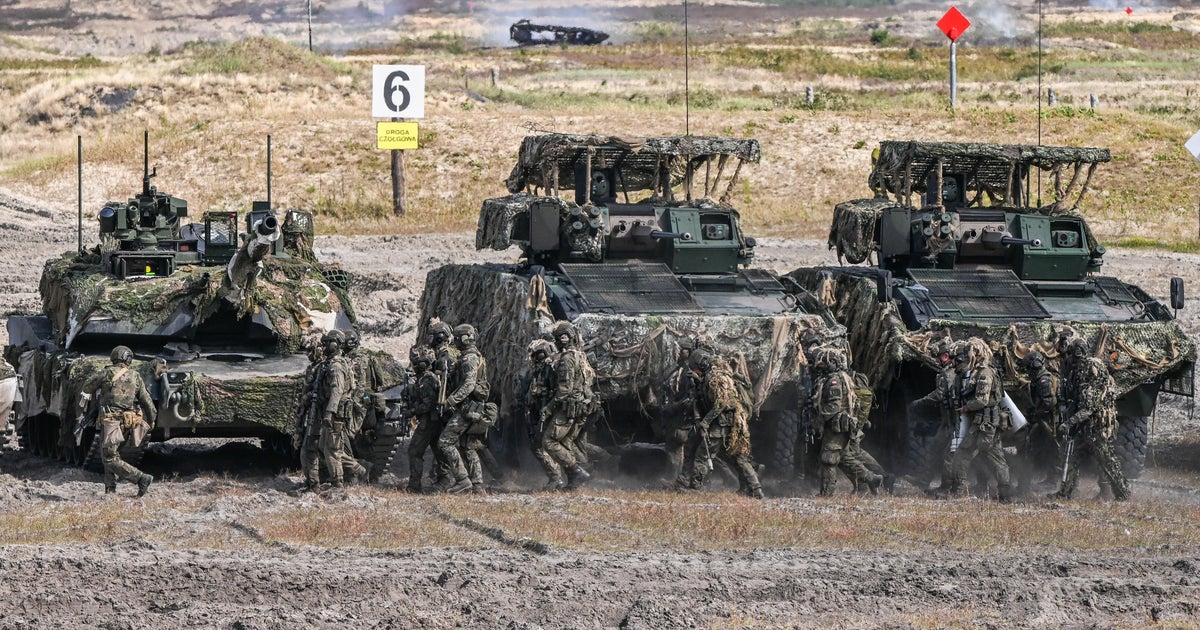
President Trump said the U.S. has made major progress in plans to build a permanent U.S. Army base in Poland, which will strengthen the U.S.-Poland alliance. Poland is increasing security on its border with Ukraine because of fears that Russia’s war in Ukraine could spill over into NATO countries.
Key Facts
President Trump announced progress on building a permanent U.S. Army base in Poland.
The exact location of the new base will be announced soon.
Poland’s Prime Minister Donald Tusk warned about the risk of Russian attacks spilling into NATO countries.
Russia is using faster, jet-powered drones to attack Ukraine, making defense harder.
A Russian drone recently hit a passenger train in Ukraine carrying foreign officials near the Polish border.
Poland has increased border security with new barriers and more soldiers at key crossing points.
The U.S. base in Poland would represent a stronger NATO presence on the eastern border.
Poland and its NATO allies see the U.S. troop presence as important for defense amid ongoing conflict.
Read the Original
Want the full story? Tap a source to open the original
article.
President Donald Trump announced that Russia and Ukraine agreed to stop attacking each other's energy facilities. However, just days later, Ukraine launched a drone strike that severely damaged a major Russian oil refinery, showing that the truce quickly failed.
Key Facts
President Trump declared that Russia and Ukraine agreed to halt attacks on energy infrastructure.
Ukraine attacked a large oil refinery near Moscow, disrupting about 40% of its processing capacity.
The refinery affected processes about 300,000 barrels of oil per day and produces 4 million tons of diesel annually.
Ukraine said it would stop attacks only if Russia did the same, but Russia set extra conditions like protecting its energy exports and easing sanctions.
Diplomats from President Trump’s team met with Putin and Zelensky but only managed a brief pause in attacks.
The U.S. Congress passed a new law giving President Trump power to impose tariffs on countries buying Russian oil and gas.
This law aims to pressure Russia by forcing major buyers like China and India to choose between cheap Russian energy or access to the U.S. market.
Russia’s finance ministry indicates these sanctions could have a strong impact on its economy.
Read the Original
Want the full story? Tap a source to open the original
article.
Two-year-old twin girls joined at the head were successfully separated during a 25-hour surgery at a children's hospital in St. Louis. The surgery was complex because their brains were partly connected, and the twins came from Ethiopia to Missouri for the procedure.
Key Facts
The twins, Hiyab and Wuhbto, were born in Ethiopia with craniopagus, a rare condition where twins are joined at the head.
Craniopagus happens in less than 6% of conjoined twins cases and about once in every 2.5 million live births.
For nearly two years, the twins could hear each other but not see each other’s faces.
A team of nearly 30 specialists planned the surgery for almost a year before operating.
The surgery, done in February, lasted 25 hours and involved carefully separating shared blood vessels and parts of the brain.
Dr. Joanna Kemp, the lead neurosurgeon, was the first woman in the U.S. to perform this type of surgery.
After the separation, the twins had follow-up skull repair surgeries called cranioplasties.
The twins are currently receiving care and rehabilitation in Missouri and may soon return to their family in Ethiopia.
Read the Original
Want the full story? Tap a source to open the original
article.
A homeowner named James found a large old key hidden under the floorboards of his 17th-century house in the English Midlands. After investigating, he discovered the key opened a pantry door in the house, though how the key ended up hidden there remains unknown.
Key Facts
The house is a 17th-century estate located somewhere in the Midlands region of England.
James has lived there for about 15 years and shares videos about the estate on TikTok.
He found the large key by exploring under the floorboards, originally thinking it might be a door handle.
Locks from that era often used iron and warded mechanisms, which required specially shaped keys.
The key fit the pantry door, which was already open, revealing its purpose.
It is unclear why or how the key was hidden under the floor.
James prefers to keep the house preserved in its original condition rather than modernize it.
The house continues to offer surprises despite its long history.
Read the Original
Want the full story? Tap a source to open the original
article.
Zack Polanski asked the Green Party to delay its annual conference to focus on a byelection for a parliamentary seat, but the party executives decided not to postpone it. The conference is scheduled just days before the byelection, which Polanski hopes to win in a seat formerly held by Labour leader Keir Starmer.
Key Facts
Zack Polanski requested the Green Party’s executive to postpone their annual conference to focus on the Holborn and St Pancras byelection.
The executive committee, including Polanski, voted against postponing the conference.
About 3,000 people are expected to attend the conference in Brighton starting on October 2.
The byelection is on October 8, four days after the conference ends.
Postponing the conference at short notice would have been costly and disrupted members’ plans.
The Holborn and St Pancras seat is traditionally safe for Labour, making the byelection challenging for the Greens.
The party conference will debate a controversial policy motion equating Zionism with racism, which could cause division.
Polanski, who is Jewish, supports amendments that soften the motion but has not publicly stated his full opinion.
Read the Original
Want the full story? Tap a source to open the original
article.
More than 112,000 people have been forced to leave their homes in Yemen due to fighting between Houthi rebels and Saudi-backed government forces. Around 3,000 Yemenis have fled by boat to the nearby country of Djibouti as the conflict continues to worsen.
Key Facts
The conflict is between Iran-allied Houthi rebels and Saudi-backed forces loyal to Yemen’s recognized government.
Most of the displaced people left their homes within the last two weeks, especially along Yemen’s west coast and in Taiz and Lahj provinces.
The Houthis have taken control of Yemen’s entire Red Sea coast, including the important Bab al-Mandeb Strait shipping route.
About 22 million Yemenis, nearly half the population, urgently need humanitarian aid.
More than 65,000 refugees and asylum seekers in Yemen, mainly from Somalia and Ethiopia, are also at risk.
Around 3,000 Yemenis have crossed the Bab al-Mandeb Strait by boat to Djibouti, a journey of just over 25 kilometers.
The recent arrivals increase pressure on Djibouti, a small country already hosting 36,000 refugees.
Many displaced people are women and children, with about 2,000 pregnant women among them.
Read the Original
Want the full story? Tap a source to open the original
article.
European leaders, including French President Emmanuel Macron, warn that Russia is increasing its hybrid attacks—using a mix of military and non-military tactics—against Europe. These attacks include sabotage, cyberattacks, use of drones, and interference with critical infrastructure, causing concern for NATO countries supporting Ukraine.
Key Facts
French President Emmanuel Macron says Russian hybrid attacks against Europe have increased and changed in nature.
Princess Diana's brother, Charles Spencer, says in a new book that Prince Charles seemed in good spirits after Diana died in a car crash in 1997. Buckingham Palace responded by saying that grief can affect how people remember events even many years later.
Key Facts
Charles Spencer is the brother of the late Princess Diana.
He wrote a book with new claims about Prince Charles’s behavior after Diana’s death.
The claim is that Prince Charles sounded upbeat shortly after Diana's fatal car accident in Paris.
Diana died in a car crash in Paris in 1997.
Buckingham Palace issued a statement about the claims in response.
The palace said grief can affect judgment and memory even years later.
The interview with Charles Spencer was featured on CBS Sunday Morning.
Read the Original
Want the full story? Tap a source to open the original
article.
Sweden’s parliament speaker has asked opposition leader Magdalena Andersson to try to form a new government after the left-wing parties won a narrow majority in the recent election. Andersson faces challenges because the four left-wing parties have disagreements, especially over whether the Left Party should have government roles.
Key Facts
Magdalena Andersson, leader of the Social Democrats, has been tasked to form Sweden’s new government.
Andersson was Sweden’s first woman prime minister from 2021 to 2022.
The left-wing bloc holds a slim majority in the 349-seat parliament after the recent election.
The four left-wing parties include the Social Democrats, the Left Party, the Centre Party, and the Greens.
The Centre Party opposes sharing government roles with the Left Party.
The Left Party wants to be part of the government for its support.
The new parliament will meet on September 28 to review Andersson’s progress and elect a new speaker.
If Andersson cannot form a government, the current prime minister, Ulf Kristersson, may try to build his own government.
Read the Original
Want the full story? Tap a source to open the original
article.