A Malian army convoy was attacked by rebels in the northern Gao region. Two groups, the jihadist JNIM and the separatist Azawad Liberation Front (FLA), said they carried out the ambush, causing many soldier deaths, captures, and equipment losses.
Key Facts
The attack happened in a remote area north of Gao, Mali.
Both the JNIM, linked to al Qaeda, and the FLA separatists claimed responsibility.
The rebels reported many soldiers were killed or captured alive.
Army vehicles, including armored cars, were destroyed or captured.
Videos showed soldiers surrendering and some being shot, but these videos could not be verified independently.
The FLA was formed in 2024 by merging Tuareg separatist groups seeking independence for Azawad.
JNIM and the FLA have worked together in attacks against Malian forces recently.
Mali is in the Sahel region, which faces ongoing extremist violence and conflicts over territory.
Read the Original
Want the full story? Tap a source to open the original
article.
Lake Mead, one of the largest reservoirs in the U.S., is expected to drop nearly 33 feet by June 2028 due to ongoing drought and low snowfall. This situation highlights growing water shortages for the region and could worsen if dry conditions continue.
Key Facts
Lake Mead is one of the largest water reservoirs in the United States.
It is expected to lose almost 33 feet of water by June 2028.
The drop is mainly caused by a continuing drought and very low snowpack levels.
Snowpack refers to the amount of snow that collects in the mountains and melts to supply water to rivers and reservoirs.
The decreasing water levels in Lake Mead mean less water is available for hundreds of thousands of people and farms.
This situation reflects a long-term trend of water shortages in the western U.S.
If drought conditions get worse, the water level could fall even more than predicted.
Water management officials are closely watching the situation to plan for future supply challenges.
Read the Original
Want the full story? Tap a source to open the original
article.
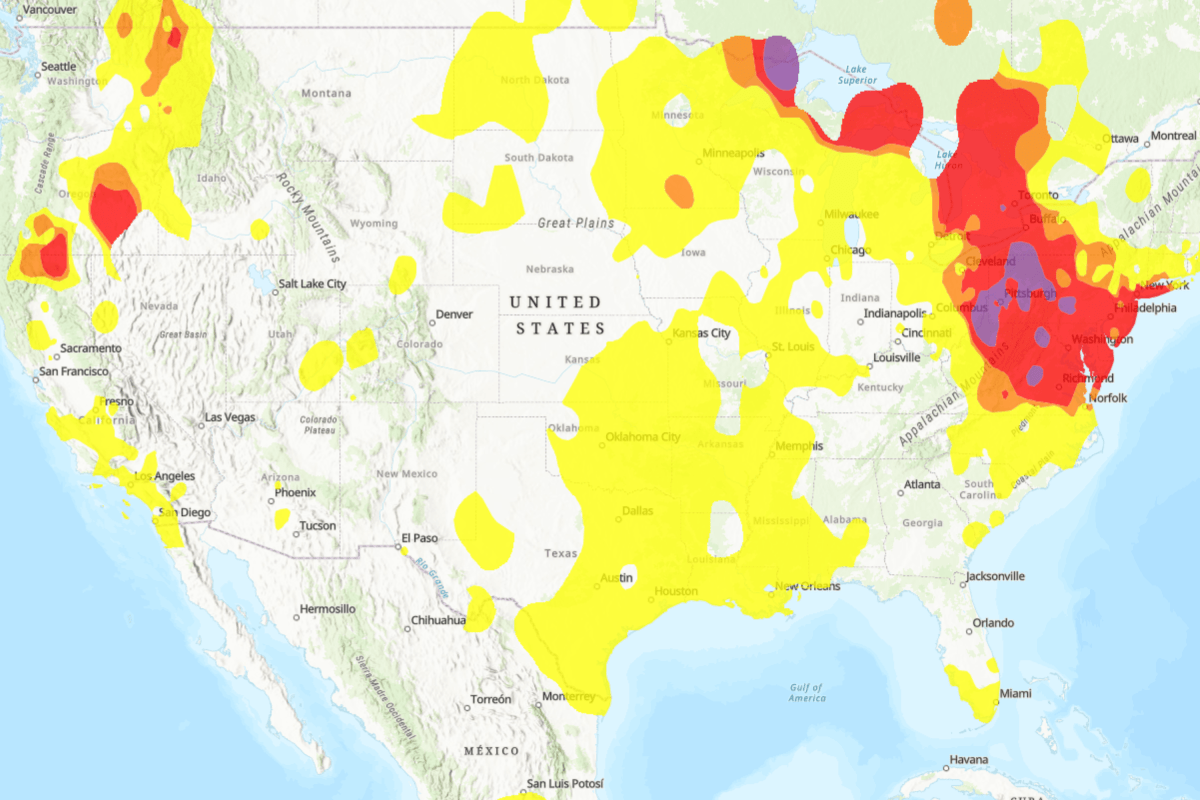
Smoke from wildfires in Canada is covering large areas of the United States, including regions around the Great Lakes and the Mid-Atlantic. Meanwhile, heavy rains have caused dangerous flooding in the Texas Hill Country.
Key Facts
Wildfires in Canada are producing smoke that is spreading across parts of the U.S.
The smoke affects areas from the Great Lakes region to the Mid-Atlantic states.
Texas Hill Country experienced heavy rain leading to serious flooding.
The flooding in Texas has resulted in deadly consequences.
Air quality in affected U.S. areas is impacted by the wildfire smoke.
Weather forecasts continue to monitor air quality and flood conditions.
The events involve both natural disasters: wildfires in Canada and floods in Texas.
Read the Original
Want the full story? Tap a source to open the original
article.
Jens Spahn, a German politician and chair of the CDU party, resigned after using surrogacy in the US to become a parent, despite his party's strict opposition and Germany’s ban on surrogacy. His decision led to criticism over hypocrisy, as he had previously opposed surrogacy and the CDU maintained the ban while his child was being carried abroad.
Key Facts
Jens Spahn used a surrogate mother in the US to have a child with his husband.
Surrogacy is illegal in Germany and can lead to prison or fines.
Spahn had previously criticized surrogacy publicly and supported the ban as a CDU politician.
The CDU party voted in February to keep the surrogacy ban.
Spahn faced criticism for acting against the rules he supported politically.
Several CDU members called for his resignation due to lost credibility and double standards.
Spahn resigned as chair of the CDU parliamentary group, stating family happiness conflicted with his political role.
CDU leader Friedrich Merz said Spahn’s resignation was necessary to maintain political credibility.
Read the Original
Want the full story? Tap a source to open the original
article.
Jens Spahn, a German politician, resigned as leader of his party’s parliamentary group after facing criticism for using a surrogate mother abroad, which conflicts with Germany’s ban on surrogacy. Although surrogacy is illegal in Germany, raising a child born through surrogacy abroad is allowed, but Spahn’s actions caused controversy because his party supports the ban.
Key Facts
Jens Spahn, 46, is a politician from Germany’s Christian Democrat party (CDU).
Surrogacy is banned in Germany and can lead to up to three years in prison or a fine.
Spahn and his husband became parents through surrogacy in the United States.
Spahn previously opposed legalizing surrogacy in Germany and supported the ban.
He said his family life conflicted with his political role, prompting his resignation.
CDU leader Chancellor Friedrich Merz approved Spahn’s resignation and will find a replacement.
Critics said Spahn acted against German law and party principles by using surrogacy abroad.
Other European countries like France, Spain, and Italy also ban surrogacy or restrict it.
Read the Original
Want the full story? Tap a source to open the original
article.
An Iranian military leader warned that Iran might expand its military actions in the Middle East if the United States continues its air strikes. He said Iran would stop responding with just similar attacks and indicated that no country's borders would be safe from future actions.
Key Facts
A senior Iranian adviser, Major-General Mohsen Rezaei, issued the warning.
He spoke after several days of heavy fighting in the Middle East.
Iran threatens to launch a broader war in response to ongoing U.S. strikes.
Iran plans to move beyond simply responding with equal force to attacks.
The adviser said no political borders in the region would be safe from Iranian operations.
The statement came amidst increased tension between Iran and the U.S. military.
This marks a shift in Iran’s military approach to potential U.S. actions.
Read the Original
Want the full story? Tap a source to open the original
article.
Smoke from large wildfires burning in Ontario, Canada, and northern Minnesota, USA, is causing poor air quality in many parts of the US. Officials warn that unhealthy air conditions will continue for several days, affecting health and daily life in affected regions.
Key Facts
Wildfires are burning in Ontario and the Boundary Waters Canoe Area Wilderness in Minnesota.
Smoke from the fires is causing dangerous air quality in parts of the US Midwest, Great Lakes, mid-Atlantic, and northeast regions.
Tens of millions of people in the US and Canada have been exposed to unhealthy air for over a week.
Some US cities like Detroit and Washington DC have had some of the worst air quality in the world recently.
Officials have distributed free K95 masks and advised people, especially vulnerable groups, to limit outdoor activities.
The fires forced evacuations of several communities and destroyed the Namaygoosisagagun First Nation community in Ontario.
Thunderstorms may improve air quality temporarily but bring risks like flash floods and strong winds.
Long-term exposure to wildfire smoke can cause serious health problems, including breathing and heart diseases, and can lead to early death.
Scientists link rising wildfire impacts partly to the human-driven climate crisis.
Read the Original
Want the full story? Tap a source to open the original
article.
Millions of people in the United States are under air quality alerts due to smoke from many wildfires burning in Canada. The smoke is affecting the Midwest, Northeast, and Mid-Atlantic regions just before the FIFA World Cup final in New Jersey, with some areas reporting unhealthy air conditions. President Donald Trump has blamed Canada for poor forest management and said the U.S. might increase tariffs on Canadian goods because of the smoke damage.
Key Facts
Hundreds of wildfires in Canada, especially in Ontario, are producing heavy smoke drifting into the U.S.
Air quality warnings cover states including Wisconsin, Michigan, New York, New Jersey, Pennsylvania, and others.
Some areas have air quality rated from "Unhealthy for Sensitive Groups" to "Very Unhealthy."
Smoke has caused low visibility and unhealthy air in cities like Chicago, Detroit, Washington, and New York.
The smoke is expected to continue through the weekend before gradually improving.
The FIFA World Cup final in East Rutherford, New Jersey, scheduled for Sunday, is not expected to be postponed.
President Donald Trump said Canada’s forest management is negligent and threatened to raise tariffs on Canadian products.
Some local disruptions occurred, such as the postponement of a baseball game and amusement park closure near Chicago.
Read the Original
Want the full story? Tap a source to open the original
article.
The UK government has taken full control of British Steel, a company previously owned by Chinese firm Jingye, citing national security reasons. China’s Foreign Ministry has expressed concern about the move and called for a fair solution, including compensation for Jingye.
Key Facts
British Steel was owned by Jingye, a large Chinese steel company, which bought it in 2020 for £70 million ($94 million).
Jingye reported losing about £700,000 ($942,000) daily by 2025 through its investment in British Steel.
The UK government nationalised British Steel to protect jobs, maintain steel supply, support infrastructure, and address national security.
British Steel is the only steelmaker in the UK producing primary (new, not recycled) steel.
British Steel employs around 2,700 people at its main plant in Scunthorpe and supports thousands more in related industries.
China’s Ministry of Foreign Affairs said the UK’s handling of the situation affects Chinese investors’ confidence and called for compensation negotiations.
Jingye had earlier stopped orders for key materials and warned about the financial unsustainability of British Steel’s furnaces.
The UK government took operational control in April 2025 before officially nationalising the company in June.
Read the Original
Want the full story? Tap a source to open the original
article.
Jens Spahn, the leader of the CDU parliamentary group in Germany, resigned after using a surrogate mother in the United States, which is banned in Germany. His decision to have a child this way caused criticism from his party and opponents, who saw it as a conflict with the party’s position against surrogacy.
Key Facts
Jens Spahn led the CDU/CSU faction in the German parliament.
Germany has a ban on surrogacy, which the CDU supports.
Spahn used a surrogate mother in the US, where surrogacy is allowed.
He and his husband recently welcomed a child through this surrogacy.
CDU Chancellor Friedrich Merz said Spahn’s resignation was necessary for political credibility.
Some party members and opposition politicians criticized Spahn for hypocrisy.
Spahn said balancing his family decision and political role was harder than expected.
Surrogacy laws in Germany remain unchanged and are opposed by the CDU.
Read the Original
Want the full story? Tap a source to open the original
article.
Andy Burnham will become the 59th prime minister on Monday. People who know him say he is kind and determined but question if he has the experience to lead during difficult times.
Key Facts
Andy Burnham is the mayor of Greater Manchester and soon to be prime minister.
He led a shadow revolt that ousted Sir Keir Starmer as Labour leader.
Burnham is known as a friendly and decent person by colleagues.
Some political friends doubt if he can handle the challenges of being prime minister.
He is willing to be tough with others to achieve his goals.
Burnham’s first major policy is to allow new oil and gas drilling in the North Sea.
He started his career as a researcher and quickly rose to cabinet positions.
Despite his popularity, some critics say he lacks substance behind his talk.
Read the Original
Want the full story? Tap a source to open the original
article.
Jens Spahn, a top leader in Germany’s conservative Christian Democrat party, resigned after having a baby through a surrogate mother, which conflicted with his party's stance. Surrogacy is banned in Germany, and his decision caused criticism within his party, leading him to step down from his influential political role.
Key Facts
Jens Spahn was the parliamentary leader of Germany’s Christian Democrat party (CDU/CSU).
He and his husband had a child through surrogacy in the United States.
Surrogacy is illegal in Germany, but raising a child born via surrogacy abroad is allowed.
Spahn’s party recently voted to keep the surrogacy ban in place.
After news broke, Spahn faced criticism from his party members and opposition politicians.
Spahn said his family life was now incompatible with his political job.
Chancellor Friedrich Merz said Spahn’s resignation was necessary and praised his contributions.
Merz said the party’s position against surrogacy would not change despite the incident.
Read the Original
Want the full story? Tap a source to open the original
article.
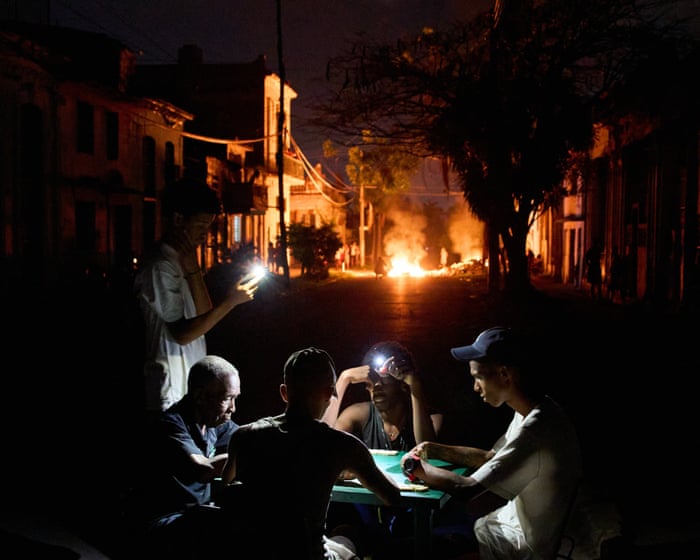
Cuba is facing frequent power outages due to its old electricity system and a six-month U.S. oil blockade. The country's infrastructure is struggling, causing daily blackouts that affect people's lives, while political tensions and shortages continue to rise.
Key Facts
Cuba’s national electricity grid collapsed three times in 10 days.
The electricity system relies on old and broken power plants.
The U.S. has imposed a six-month oil blockade on Cuba as part of efforts to pressure its communist government.
Blackouts cause problems like lack of water, inability to charge phones, spoiled food, and agitation among residents.
The Cuban government says there is no fuel and no access to parts needed to repair power plants.
U.S. sanctions have pushed foreign companies to leave Cuba, worsening the economy.
Crime rates in Cuba are increasing, and police response times have slowed down.
The number of political prisoners in Cuba is rising, with some detained after protests about blackouts and shortages.
Read the Original
Want the full story? Tap a source to open the original
article.
A bus carrying students and teachers in eastern Uganda crashed, killing 24 people including 23 children and one adult. The accident happened when the driver lost control and hit a large stone, overturning the bus. The Ugandan government has stopped all school trips nationwide to investigate and improve safety.
Key Facts
The bus was carrying pupils and teachers from King David Junior School returning from a trip to Sipi Falls.
The crash took place in Chekwatit village, Kapchorwa district, eastern Uganda.
23 children and one adult died; the adult is believed to be the school’s founder and head.
Several injured children were taken to Kapchorwa General Hospital, with 23 still hospitalized.
Police said the driver lost control, causing the bus to overturn and hit a large stone.
Uganda’s Ministry of Education and Sports ordered a halt to all school trips for safety checks.
Police will escort school buses to improve student safety during transport.
Uganda has a poor road safety record, with many crashes caused by bad roads, vehicle problems, and speeding.
Read the Original
Want the full story? Tap a source to open the original
article.
Indian police moved activist Sonam Wangchuk to a hospital in New Delhi after his health worsened during a 20-day hunger strike. Wangchuk is part of the Cockroach Janata Party movement, which demands education reforms and protests against alleged exam paper leaks.
Key Facts
Sonam Wangchuk is an environmentalist and education reformer on a hunger strike for over 20 days.
He is linked to the Cockroach Janata Party, a viral opposition group focused on education reforms.
The group demands the resignation of India's Education Minister due to exam paper leak allegations.
The protest also calls for changes to the examination system and help for families of students who died by suicide related to exam issues.
Police moved Wangchuk to a government hospital against his and his family’s wishes, citing medical advice and a court order.
The Cockroach Party denies a court order for forcible removal and claims no recent medical check occurred before he was taken.
Police increased security around the protest site at Jantar Mantar, New Delhi.
The party plans a march to India’s Parliament, aiming to continue their movement despite the hospital transfer.
Read the Original
Want the full story? Tap a source to open the original
article.
The United States has conducted multiple strikes in southern Iran, hitting a desalination plant and cutting water to 20 villages. In response, Iran launched missile and drone attacks on US-allied countries in the Gulf region, including Kuwait, Bahrain, and Jordan, intensifying the conflict.
Key Facts
US strikes destroyed a seawater pumping station and power transformer at Iran’s Bunji desalination plant, leaving 10,000 people without water.
Iran retaliated by attacking power and water plants in Kuwait and launching missile attacks on Bahrain and Jordan.
Kuwait closed its airspace after the Iranian strikes and reported injuries to firefighters.
Bahrain activated air raid sirens and advised citizens to take shelter.
Jordan intercepted 10 Iranian ballistic missiles and reported attacks on a US base.
Iran’s Revolutionary Guard claimed to have destroyed US military targets in Kuwait, Bahrain, and Jordan.
The US targeted Iranian military sites including surveillance and weapons storage facilities.
President Trump ended a recent peace agreement with Iran and reinstated a naval blockade on Iranian ports.
Read the Original
Want the full story? Tap a source to open the original
article.
Ukrainian drone strikes hit two large warehouses owned by Russia’s online retailer Wildberries in the Tambov and Moscow regions. The attacks killed nine people and injured many others. Moscow’s mayor said over 370 drones targeted the Moscow area.
Key Facts
Ukrainian forces used drones to strike warehouses in Russia.
The warehouses belong to Wildberries, a major Russian online retailer.
The attacks took place in the Tambov and Moscow regions.
Nine people died in the strikes.
Dozens more were wounded.
Moscow’s mayor reported that more than 370 drones targeted the Moscow region.
The events happened in July 2026.
Read the Original
Want the full story? Tap a source to open the original
article.
The U.S. military has increased its attacks on Iran, targeting energy sites, bridges, and a port facility. Iran responded by hitting U.S. bases and infrastructure in nearby areas, increasing tensions between the two countries.
Key Facts
The U.S. struck multiple targets in Iran, including energy infrastructure, bridges, and a port facility.
These military actions aim to pressure the Iranian government.
Iran retaliated by attacking U.S. bases in the region.
Iran also targeted power plants and desalination facilities.
The conflict is escalating and risks turning into a wider confrontation.
These events followed a speech by President Donald Trump related to the election.
Both sides have increased their military activities in the region.
The situation remains tense and unpredictable.
Read the Original
Want the full story? Tap a source to open the original
article.
Europe is facing frequent and dangerous heatwaves that challenge its health and infrastructure. African countries, which have dealt with heat and climate instability for many years, have developed effective strategies that Europe could learn from to adapt better to rising temperatures.
Key Facts
Europe experiences record-high temperatures causing strain on hospitals and transport.
African communities have long adapted to heat, drought, and water shortages with limited funding and resources.
West African architects use design techniques that cool buildings naturally without heavy air conditioning.
Sierra Leone’s “Freetown the Tree Town” program plants many trees to reduce city heat and is funded by carbon credits.
Burkina Faso runs a national heatwave alert system that helps vulnerable people manage heat risks actively.
European cities with old buildings and little green space face similar heat problems to African cities.
Adaptation efforts work best when they involve local people, create jobs, and build strong community support.
Climate adaptation should be prioritized as a key part of climate action, not just a secondary issue.
Read the Original
Want the full story? Tap a source to open the original
article.
The article honors Nelson Mandela’s leadership and legacy, emphasizing that his influence lives on in ongoing struggles for justice and dignity around the world. It highlights Mandela’s humanity, his role as South Africa’s first Black president elected democratically, and the importance of continuing his work through new leadership and global efforts.
Key Facts
The Nelson Mandela Foundation has promoted Mandela’s legacy for 27 years.
Mandela was South Africa’s first Black president elected in a democratic election.
Mandela inspired millions through his fight against oppression and his dedication to justice.
He is recognized as a symbol of hope and solidarity globally, not just a historical figure.
Mandela described himself as a “sinner who keeps on trying,” showing his humility.
The Mandela Foundation launched the Global Leadership Forum to continue his mission.
Current global challenges include corruption, rights violations, and ongoing forms of apartheid.
The article stresses the need for new leaders to follow Mandela’s example in fighting for dignity.
Read the Original
Want the full story? Tap a source to open the original
article.