Fact-first summaries of the news — stay informed, stay grounded.
Your favorite news sources, one calm feed — fact-first summaries that always link to the
original story. No outrage bait, and we tell you when you're caught up. How it works
World News
Comprehensive coverage of international news and global events
Sudan has been at war for three years, causing thousands of people to go missing. Many of these missing individuals are believed to be buried in unmarked graves around Khartoum, the capital region.
Key Facts
Fahmy al-Fateh disappeared over a year ago after leaving a military base in Khartoum.
His wife, Azaher Abdallah, has been searching for him while caring for their young son.
More than 8,000 people have gone missing during Sudan’s ongoing conflict.
The war involves fighting between Sudan’s army and the paramilitary Rapid Support Forces (RSF).
Many bodies are buried in unmarked or hurried graves at places like homes, sports fields, and roadsides.
The RSF has banned proper burials in cemeteries during the conflict.
Khartoum has two forensic doctors trying to identify bodies amid the crisis.
The fighting has displaced millions of people and destroyed much of Sudan’s infrastructure.
Read the Original
Want the full story? Tap a source to open the original
article.
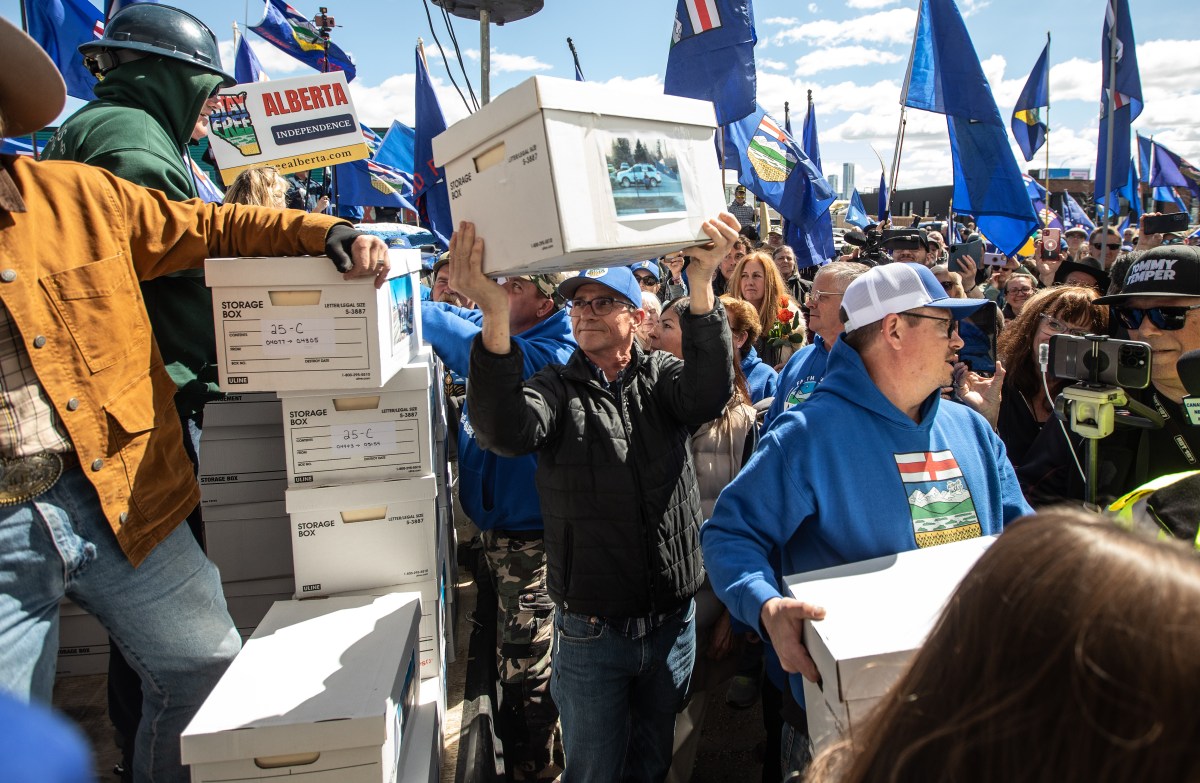
Alberta will hold a referendum on October 19, 2026, to decide if the province should stay in Canada or pursue a path toward independence. The vote will ask whether Alberta should take legal steps to hold a binding referendum on leaving Canada, not directly decide independence.
Key Facts
Alberta’s Premier Danielle Smith announced the referendum date as October 19, 2026.
The referendum is triggered by a citizen-led petition with enough signatures.
The vote will ask residents if Alberta should remain in Canada or seek a binding vote on separation.
Prediction markets estimate a 17% chance that Alberta will vote “yes” for independence, up from 9% previously.
Prediction markets use real money bets to estimate the probability of political events.
If passed, this referendum would start a legal process for Alberta to separate from Canada.
The referendum itself will not immediately change Alberta’s status but could lead to future action.
Alberta is an oil-producing province in Canada with some groups supporting independence.
Read the Original
Want the full story? Tap a source to open the original
article.
English Heritage has built a 7-meter-high reconstruction of a 4,500-year-old Neolithic hall near Stonehenge. This project helps visitors and students learn about prehistoric life and will open to the public this summer as part of a new educational initiative.
Key Facts
The hall is based on archaeological evidence found two miles from Stonehenge, at a site called Durrington 68.
The original building was first excavated in 1928 and re-examined in 2007.
The reconstructed hall was built by over 100 volunteers using replica stone tools over nine months.
The structure aligns with the winter solstice, like Stonehenge.
The hall will be part of a larger learning centre opening by the end of 2026.
English Heritage plans to increase educational visits to nearly 100,000 students each year.
The hall will offer hands-on learning activities such as making prehistoric cheese and pottery.
The project aims to help people understand the society that built Stonehenge and the surrounding area.
Read the Original
Want the full story? Tap a source to open the original
article.
The US has paused a $14 billion arms sale to Taiwan to ensure it has enough weapons for a military operation related to the Iran war. President Donald Trump has not yet approved the sale and said he would discuss it with Taiwan's leader, while Taiwan says it has received no information about the pause.
Key Facts
The US is pausing a $14 billion weapons sale to Taiwan.
The pause is to make sure the US has enough weapons for a joint military operation called Epic Fury related to the Iran war.
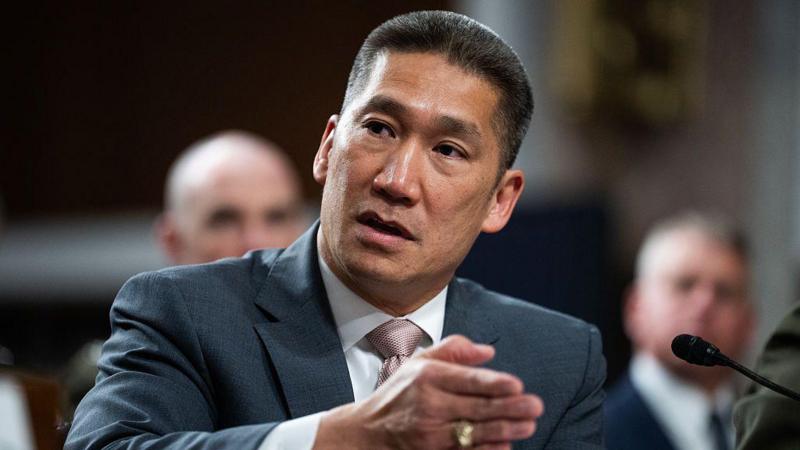
Acting US Navy Secretary Hung Cao confirmed the pause at a Senate hearing.
President Trump has not decided whether to approve the arms sale and called it a "negotiating chip" with China.
Trump plans to talk directly with Taiwan’s leader, Lai Ching-te, about the sale, which is unusual in US-Taiwan-China relations.
Taiwan has not been officially informed about the pause.
China strongly opposes US arms sales to Taiwan and sees Taiwan as part of its territory.
Taiwan has increased its defense spending due to pressure from China.
Read the Original
Want the full story? Tap a source to open the original
article.
Iran and the United States are holding talks with the help of Pakistani mediators to end their conflict. U.S. officials see some progress, but President Donald Trump warns of strong action if Iran does not reduce its uranium stockpiles.
Key Facts
Iran and the U.S. are exchanging messages and draft proposals to create an agreement framework.
Pakistani officials are actively mediating between Iran and the U.S. in Tehran.
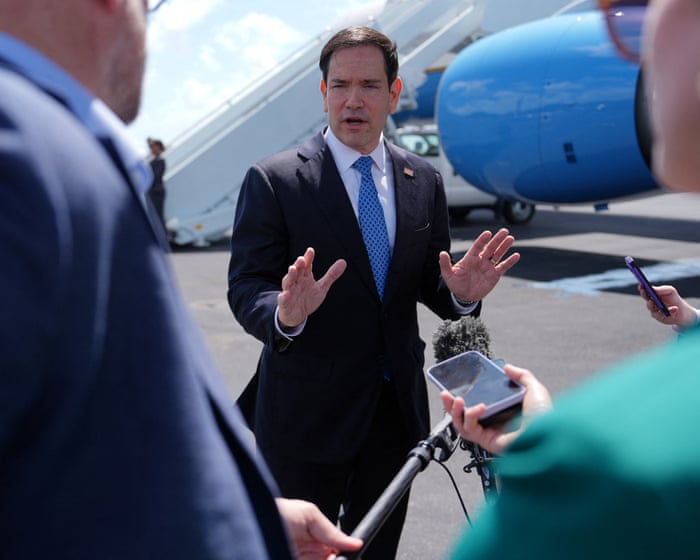
U.S. Secretary of State Marco Rubio said the talks have shown some progress but a deal is not certain yet.
President Donald Trump prefers diplomacy but warns of “very drastic” actions if Iran refuses to give up uranium stockpiles.
Iran accused the U.S. and Israel of bombing its Pasteur Institute, calling it a “war crime.”
Iranian aid workers rescued over 7,200 people trapped under rubble from attacks.
The U.S. military is keeping forces ready in the Arabian Sea while Iran has reportedly destroyed many U.S. drones.
The U.S. paused a $14 billion arms sale to Taiwan to conserve weapons for the Iran conflict.
Israel conducted an airstrike in southern Lebanon killing two people, and the U.S. sanctioned Hezbollah allies in Lebanon.
Read the Original
Want the full story? Tap a source to open the original
article.
President Donald Trump and Secretary of State Marco Rubio have renewed the threat of military intervention in Cuba, following criminal charges filed against Cuba’s former leader, Raúl Castro. While both officials say they prefer a peaceful solution, they expressed doubt that diplomacy with the current Cuban government will succeed.
Key Facts
President Trump said previous US presidents considered intervening in Cuba, and he might be the one to act.
Secretary of State Rubio called Cuba a national security threat due to its ties with US adversaries.
Rubio said the US prefers a peaceful agreement with Cuba but doubts the current government will negotiate.
The US recently charged Raúl Castro for ordering the 1996 shooting down of civilian planes.
Cuban President Miguel Díaz-Canel called the charges a political stunt aimed at justifying military aggression.
Senior US officials have met with Cuban leaders but were unimpressed, leading to new sanctions.
The US Navy deployed the USS Nimitz and other ships for exercises in the Caribbean near Cuba.
Trump’s administration has imposed an energy blockade on Cuba, causing economic hardship and blackouts.
Read the Original
Want the full story? Tap a source to open the original
article.
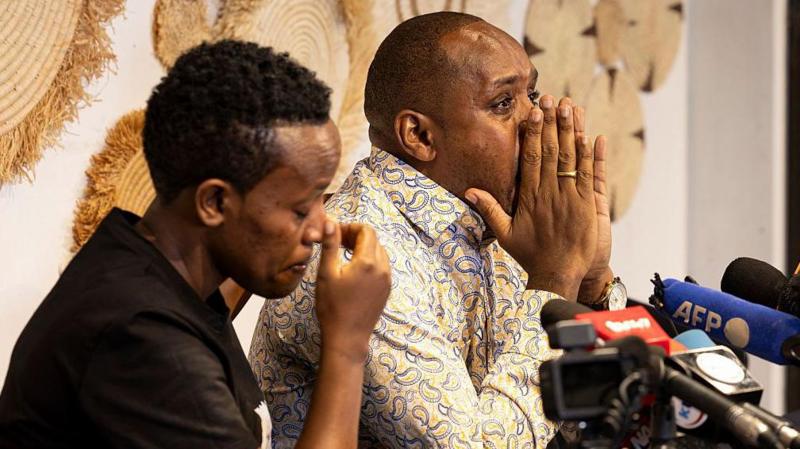
The US government has imposed sanctions on a senior Tanzanian police official, Faustine Jackson Mafwele, due to his alleged involvement in the torture and sexual assault of human rights activists Boniface Mwangi and Agather Atuhaire. The activists were detained in Tanzania while observing a political trial last year, and their case is part of broader concerns over human rights abuses and political repression in Tanzania.
Key Facts
Faustine Jackson Mafwele, a senior assistant police commissioner in Tanzania, is sanctioned by the US for alleged human rights violations.
The sanctions prevent Mafwele from entering the United States.
Activists Boniface Mwangi (Kenyan) and Agather Atuhaire (Ugandan) were detained in Tanzania in 2023 and reported torture and sexual assault while in custody.
The Tanzanian government has not officially received the US designation and denies the allegations.
The US says Tanzanian police officers detained and abused the activists during their detention.
Amnesty International and Human Rights Watch have called for investigations and raised concerns about a crackdown on opposition and activists in Tanzania.
The sanctions come after disputed elections in Tanzania that resulted in widespread protests and reported deaths, with President Samia Suluhu Hassan winning with 98% of the vote.
US lawmakers recently urged stronger actions against Tanzania over its human rights record and political repression.
Read the Original
Want the full story? Tap a source to open the original
article.
A tiger named Sandokan escaped from a private enclosure in Schkeuditz, Germany, injuring a 72-year-old tiger keeper before police shot and killed the animal to protect people nearby. Authorities are investigating the tiger’s owner, Carmen Zander, for possible safety violations, while local officials called for the enclosure’s removal.
Key Facts
The tiger escaped on a spring afternoon from the enclosure of Carmen Zander, known as Germany’s “Tiger Queen.”
The escaped tiger attacked a 72-year-old man working in the enclosure, causing serious injuries.
Police arrived, found the tiger near nearby gardens, and shot it dead about 30 minutes after escape.
Police did not have non-lethal equipment like a tranquilizer gun at the scene.
An investigation was opened into Zander for possible safety rule violations.
Zander has kept tigers in an industrial area near Schkeuditz since 2016 and has faced past scrutiny over animal conditions.
The local mayor demanded the immediate removal of the tiger enclosure to prevent future risks.
Zander is a former circus tiger tamer who now cares for tigers with donations and organizes public tiger-petting events.
Read the Original
Want the full story? Tap a source to open the original
article.
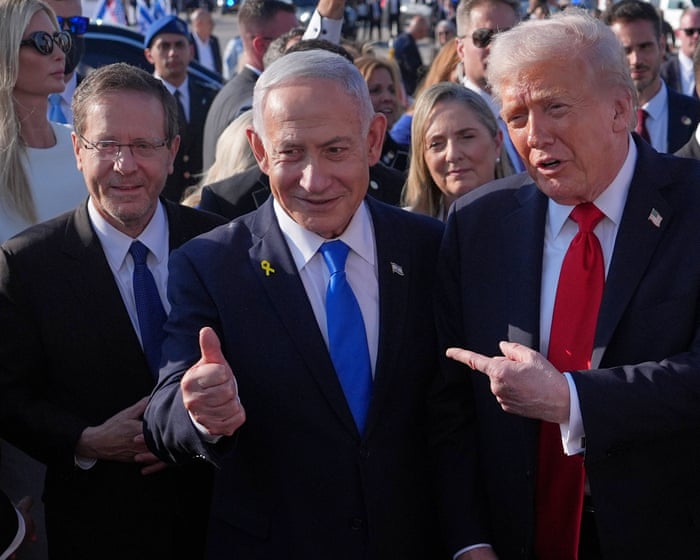
Israel’s parliament has begun the process to dissolve itself and hold new elections after the government coalition fell apart. Prime Minister Benjamin Netanyahu’s far-right coalition collapsed mainly over a dispute about military service exemptions for ultra-Orthodox Jews, and a vote to dissolve parliament was passed by 110 out of 120 lawmakers.
Key Facts
Israeli lawmakers started dissolving parliament to call for new elections.
Prime Minister Netanyahu has led Israel for 20 of the last 30 years, recently heading a far-right coalition.
The coalition included ultra-nationalist and ultra-Orthodox religious parties holding 64 seats.
A major issue causing the collapse was a law about exempting ultra-Orthodox young men from military service.
The dissolution vote had strong support, with 110 of 120 lawmakers in favor.
New elections must take place between late August and October 27, 2024, after a three-month campaign period.
Netanyahu remains the leading candidate for prime minister according to recent polls, but election victory is not guaranteed.
The current government has been criticized for policies on West Bank settlements and actions in Gaza following the October 2023 Hamas attack.
Read the Original
Want the full story? Tap a source to open the original
article.
The relationship between the United Arab Emirates (UAE) and Israel is mainly practical and based on shared security and technology interests, rather than close political or ideological ties. Iran's conflict with the UAE targets Dubai’s important financial and trade connections, showing how regional security depends heavily on geographic and economic links.
Key Facts
The UAE and Israel have a "cold, pragmatic" relationship focused on defense, technology, intelligence, and security cooperation.
Iran is targeting the UAE, especially Dubai, to disrupt its role in global finance and trade.
Dubai is highly connected internationally in terms of money, trade, people, and data, making it a key point in the global system.
Israel provides tactical support but the overall conflict destabilizes the UAE’s interests.
There are growing tensions within the UAE between Abu Dhabi and the northern emirates like Dubai, due to their economic ties with Iran.
Gulf countries’ politics are heavily influenced by geography and regional security concerns, limiting their independence.
The idea of a major strategic shift or alliance between the UAE and Israel is overstated according to experts.
Read the Original
Want the full story? Tap a source to open the original
article.
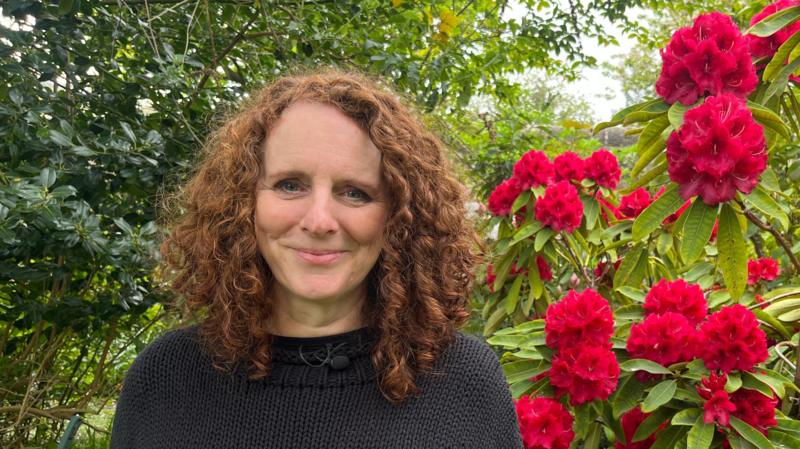
Maggie O'Farrell, author of the novel Hamnet, has released a new book called Land. The novel focuses on the story of an Irish mapmaker during the Great Famine in the mid-19th century and explores themes of colonization and family survival.
Key Facts
Maggie O'Farrell recently won a Bafta and a Golden Globe for the film adaptation of her novel Hamnet.
She wrote her new book Land inspired by her great-great-grandfather who made maps for the British army in Ireland during the famine.
The Great Famine happened in the mid-1800s, killing about a million people and forcing many to leave Ireland.
Land tells the story of a family affected by the famine, set against the background of British landowners and estates.
O'Farrell sees her novel as political, dealing with the effects of colonization and devastation in Ireland.
She kept her Bafta award in her basement as she still adjusts to the recognition.
O'Farrell chose not to use a stylist at awards events and wore meaningful accessories related to her work instead.
The novel began from a single sentence that came to her on a train and grew into a story about emigration and survival.
Read the Original
Want the full story? Tap a source to open the original
article.
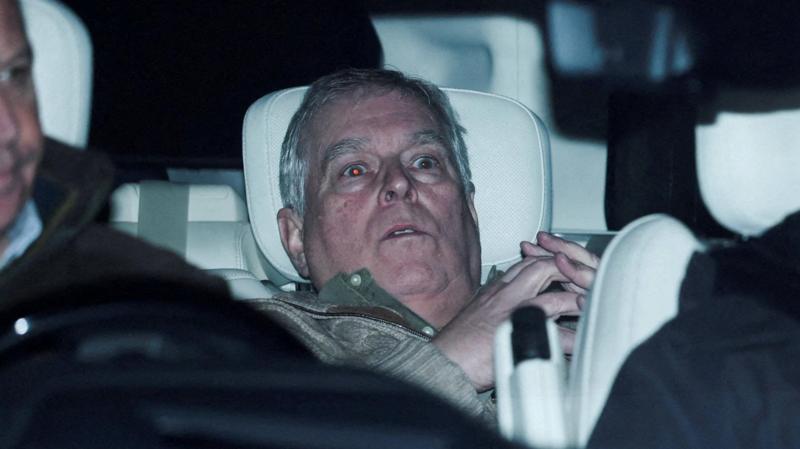
Police are investigating Andrew Mountbatten-Windsor on suspicion of misconduct in public office and are asking the public for any information. The inquiry looks at various possible wrongdoings, including sharing confidential trade information with Jeffrey Epstein, and the police are working with U.S. authorities and the UK government.
Key Facts
Andrew Mountbatten-Windsor was arrested on February 19 on suspicion of misconduct in public office and has been released under investigation.
The police investigation was triggered by information from U.S. Department of Justice files related to Jeffrey Epstein.
Misconduct in public office can include many types of wrongdoing, such as abuse of position, sexual misconduct, corruption, and sharing confidential information.
Police are concerned people might think the probe focuses only on sharing trade secrets with Epstein, but it also covers other possible offences.
Epstein was convicted of soliciting prostitution from a minor and died in prison in 2019 while awaiting trial on sex trafficking charges.
Police searched Andrew’s homes at Sandringham Estate and Royal Lodge in Windsor.
Thames Valley Police are cooperating with the U.S. Department of Justice and the UK National Crime Agency to get more information.
The police are working closely with the Crown Prosecution Service and have already spoken to several witnesses.
Read the Original
Want the full story? Tap a source to open the original
article.
Thames Valley police are investigating Andrew Mountbatten-Windsor, the king’s brother, over alleged misconduct including sexual offenses, corruption, fraud, and passing confidential information. They have asked anyone with relevant information to come forward and are examining various claims and documents related to his role as a British trade envoy.
Key Facts
Andrew Mountbatten-Windsor, 66, was arrested in February on suspicion of misconduct in public office linked to his trade envoy work.
Allegations include sharing information with Jeffrey Epstein, which Mountbatten-Windsor denies.
Police are investigating a range of possible crimes such as sexual misconduct, fraud, and negligence in public duty.
Thames Valley police urged witnesses to report any information about the case, beyond just the confidential information claims.
The investigation includes detectives with experience in handling sexual offense cases.
A claim from a US-based woman about an incident in Windsor in 2010 is being assessed but is not yet a full criminal investigation.
Police have contacted the woman’s lawyer and said they will respect her privacy and readiness to speak.
The investigation may take several years, with any trial unlikely before 2027.
Read the Original
Want the full story? Tap a source to open the original
article.
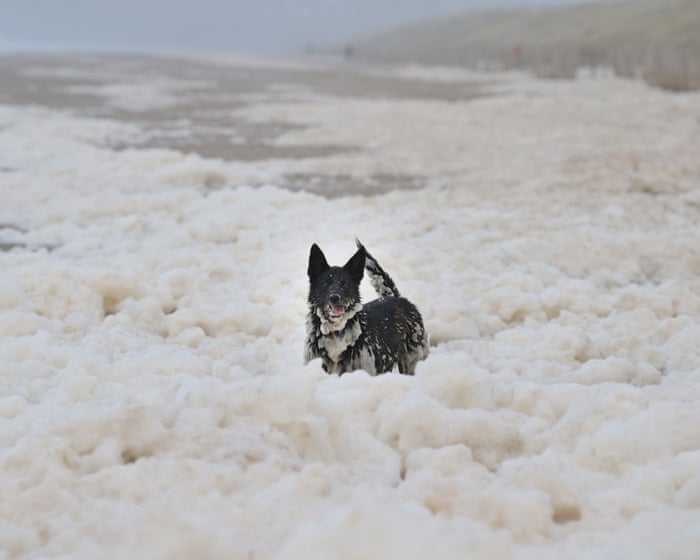
Sea foam seen along Britain’s coast is a natural, harmless substance made when algae grow and die in the ocean. The foam forms as waves and wind mix the water, creating bubbles that pile up along the shore and in lines on the sea.
Key Facts
Sea foam often appears around Britain’s coast especially during certain times of the year.
People may think the foam comes from pollution or sewage, but it is usually natural.
The foam forms from algae, mainly a type called phaeocystis, which is not toxic.
When the algae die, they leave behind materials that act like soap, helping create foam.
Waves and wind mix the surfactants in the water to produce frothy foam.
Wind creates rotating water currents called Langmuir circulation that gather foam into long lines on the sea.
Sea foam can look strange and sometimes smell bad, but it is mostly harmless.
Read the Original
Want the full story? Tap a source to open the original
article.
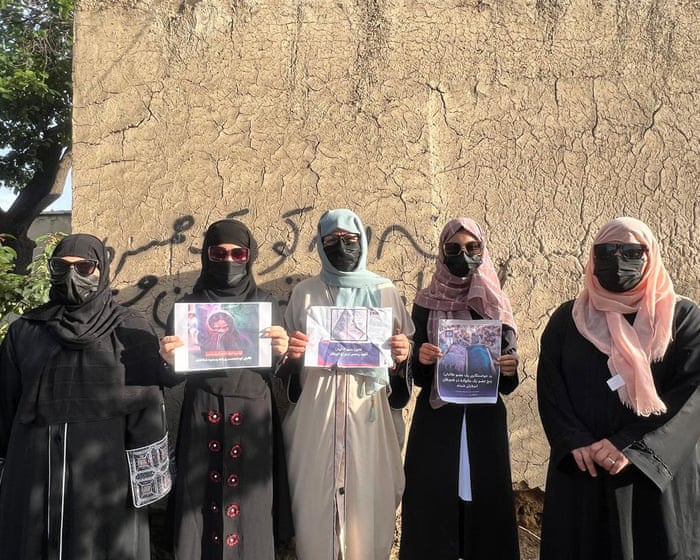
The Taliban in Afghanistan has passed a new law that appears to legally accept child marriage and makes it very hard for girls and women to get a divorce if their husbands do not agree. Activists and the UN say this law reduces women’s rights and puts girls at greater risk of early marriage and domestic violence.
Key Facts
The Taliban’s new divorce law suggests girls married against their will cannot get a divorce without their husband’s permission.
The law also limits a woman’s ability to divorce her husband for reasons like absence or lack of financial support.
There are no official numbers, but activists report a large increase in forced and underage marriages in Afghanistan.
The ban on girls’ education after age 11 is linked to higher rates of early and forced marriage.
About 70% of girls out of school are estimated to face early or forced marriage, with 66% of these girls under 18.
Women’s rights groups and the UN say the law deepens discrimination and denies women justice and freedom.
The Taliban government rejects criticism, calling it opposition to their religious system.
Research shows many child marriage victims face domestic violence and severe mental harm.
A recent case involved a 15-year-old girl dying from abuse shortly after being married.
Read the Original
Want the full story? Tap a source to open the original
article.
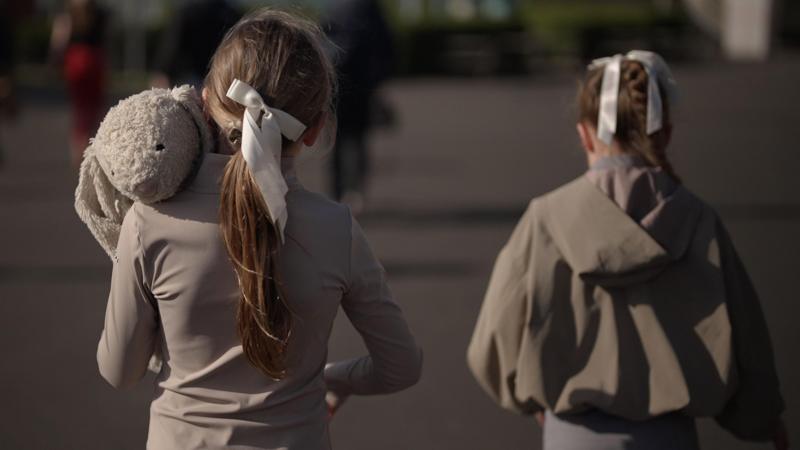
In July 2024, 23 girls survived a knife attack at a Taylor Swift-themed dance and yoga workshop in Southport, England. Their parents say court-ordered anonymity has made it hard for their daughters to get support and has made their stories less known to the public.
Key Facts
Twenty-three girls survived a mass stabbing attack in Southport; three girls were killed.
The attacker, Axel Rudakubana, pleaded guilty to murder and attempted murder charges.
The courts granted legal anonymity to the injured girls to protect their privacy as they grow up.
Parents feel this anonymity has caused officials and the public to forget about the survivors.
Some girls suffered severe injuries, including one stabbed 33 times who escaped twice before collapsing outside.
Parents report their children continue to face physical and emotional challenges, including nightmares and medication for sleep.
Parents want the world to know the girls’ bravery and survival stories despite the court order.
The names of all survivors mentioned have been changed to follow the court’s rules.
Read the Original
Want the full story? Tap a source to open the original
article.
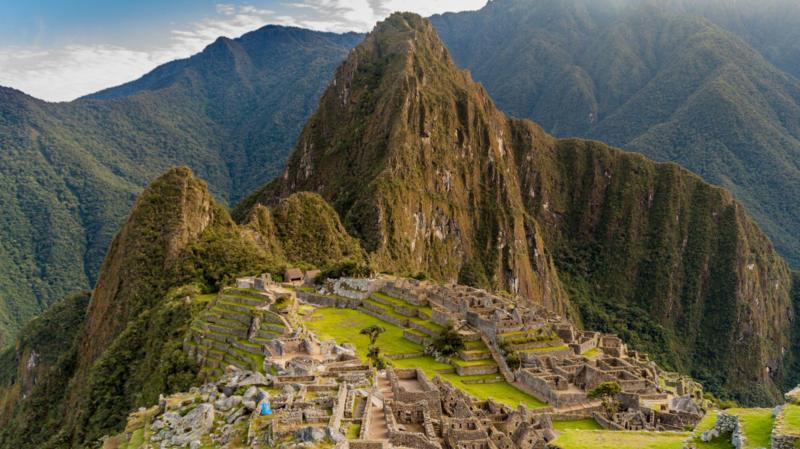
An Australian man named Matthew Cameron Paton died after falling down a ravine while hiking the Inca Trail to Machu Picchu in Peru. He fell when a wooden railing broke as he crossed a bridge, and rescue teams found his body about 300 meters below.
Key Facts
Matthew Cameron Paton, 53, was hiking the Inca Trail near Machu Picchu, Peru.
He fell down a ravine after a wooden railing broke while he crossed a bridge.
His body was found about 300 meters (984 feet) down near the "50 Gradas" section of the trail.
Paton had arrived in Cusco, Peru, with his wife about 12 days before the accident.
Local rescue teams searched for him after he was reported missing.
The police are investigating the cause of the fall.
Paton was a member of the Police Association of Victoria and worked in police training.
The Australian Department of Foreign Affairs and Trade has been contacted for comment.
Read the Original
Want the full story? Tap a source to open the original
article.
Ozgur Ozel, the leader of Turkey’s main opposition party, said he will stay at the party’s headquarters after a court removed him from his position. He told supporters in Ankara that judges and prosecutors are trying to overthrow his party.
Key Facts
Ozgur Ozel is the leader of Turkey’s main opposition party.
A court ruling removed him from his leadership role.
Ozel refused to leave the party headquarters after the ruling.
He spoke to supporters in Ankara, Turkey’s capital city.
Ozel claimed that judges and prosecutors are attempting a coup against his party.
The situation involves political and legal actions within Turkey.
Ozel’s statement suggests ongoing tension between the opposition and the judicial system.
Read the Original
Want the full story? Tap a source to open the original
article.
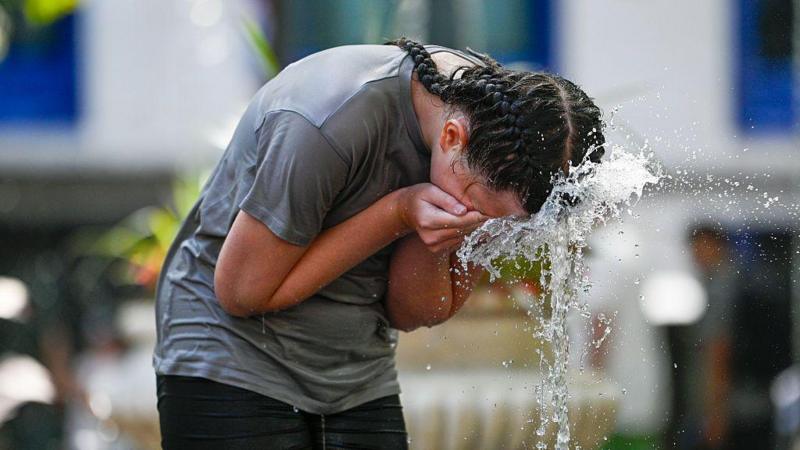
The United Kingdom is expected to experience unusually high temperatures in May, with some areas possibly reaching 33°C, which would be a record. Heat health alerts have been issued early to warn people and health services about the risks of the warm weather.
Key Facts
Heat health alerts started in parts of the UK due to rising temperatures.
Temperatures could reach up to 33°C in southeast England on bank holiday Monday.
This would break the previous May temperature record of 32.8°C set in 1944.
The UK Health Security Agency says the alert aims to protect vulnerable people and prepare health services.
People are advised to stay hydrated, avoid sun at peak times, and keep homes cool.
The official heatwave is defined by temperatures over 26-28°C for three days in a row.
UV levels will also rise to "high," meaning the sun can cause sunburn faster than usual.
Scotland and Northern Ireland will be cooler with mostly cloudy skies and lower UV levels.
Read the Original
Want the full story? Tap a source to open the original
article.
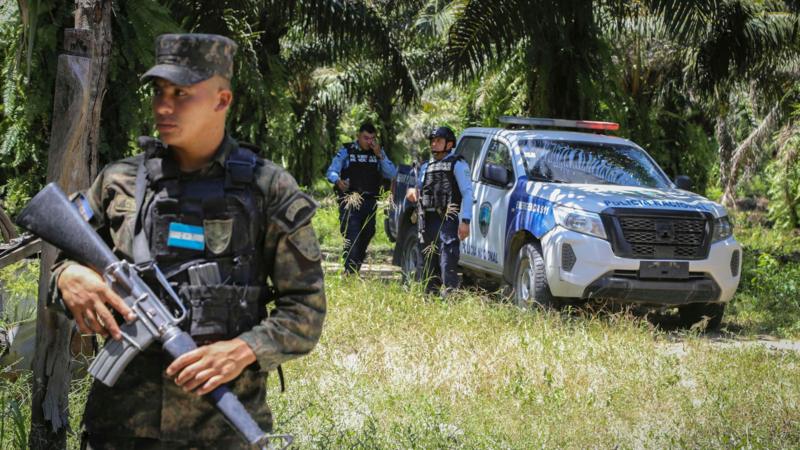
Two separate attacks in Honduras killed at least 24 people, including four police officers. One attack happened at a ranch in northern Honduras, and the other occurred in the coastal town of Omoa near the Guatemala border.
Key Facts
At least 19 workers were killed in the ranch attack in Trujillo, northern Honduras.
Four police officers and one civilian were killed in the second attack in Omoa.
The police officers were part of an anti-gang operation traveling from Tegucigalpa to Omoa.
Authorities have not identified a clear motive for the attack on the ranch workers.
Northern Honduras has experienced ongoing conflicts over land for many years.
The police announced they will take direct action in response to both attacks.
Some bodies in the Trujillo attack may have been removed before police arrived.
No suspects have been arrested so far.
Honduras has high levels of crime related to gangs and drug trafficking and has the second-highest homicide rate in the Americas.
Read the Original
Want the full story? Tap a source to open the original
article.