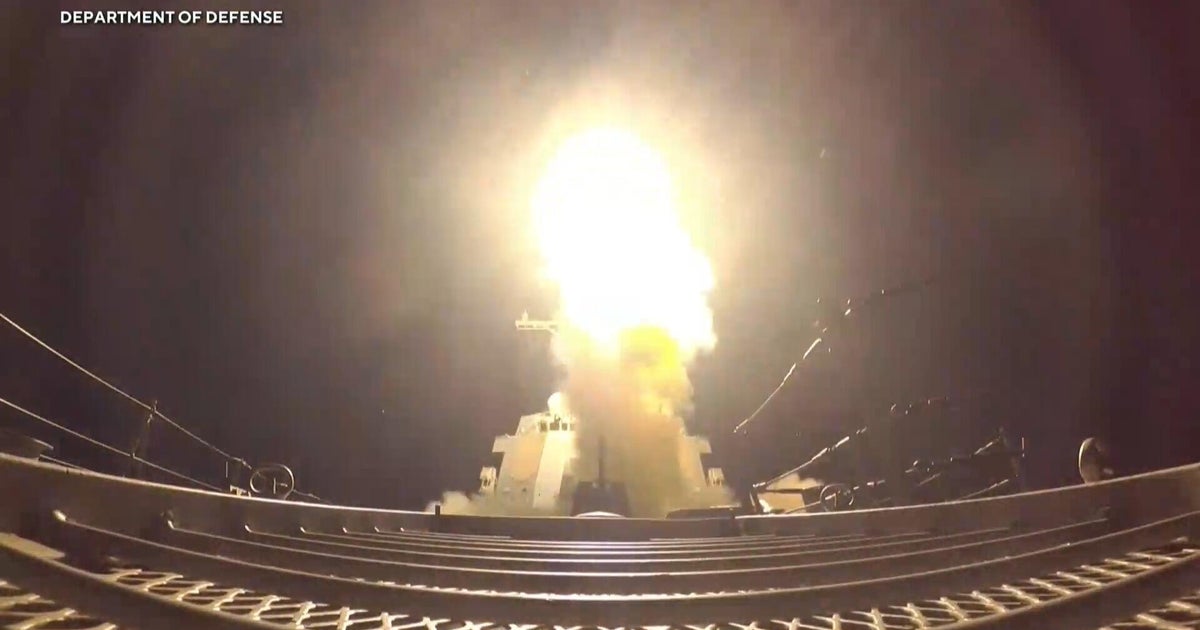
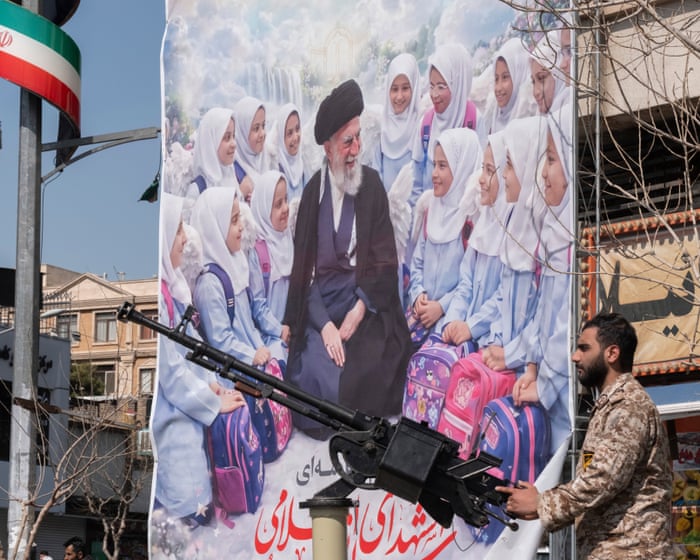
The United States and Iran are continuing to carry out military strikes against each other. The conflict is focused on control over the Strait of Hormuz, a strategic waterway.
Key Facts
The U.S. and Iran are involved in ongoing attacks against each other.
The fight is over control of the Strait of Hormuz.
The Strait of Hormuz is a key shipping route for oil.
Both countries have a military presence in the area.
The conflict has caused increased tensions between the U.S. and Iran.
The situation remains unstable with no resolution in sight.
CBS News reporter Weijia Jiang is covering the story.
Read the Original
Want the full story? Tap a source to open the original
article.
Iran launched missile and drone attacks on U.S. military targets in the Middle East in response to U.S. strikes on Iranian sites. The conflict centers on control of the Strait of Hormuz, a vital waterway for global energy shipments, with both sides threatening its access.
Key Facts
Iran retaliated with missile and drone attacks after the U.S. struck air defenses, radar, and missile sites in Iran.
The U.S. aims to reduce Iran’s ability to target civilian and commercial ships passing through the Strait of Hormuz.
Iran’s Revolutionary Guard claimed the Strait of Hormuz as Iranian territory and said it had closed it again.
The Strait is crucial, as about one-fifth of the world’s oil and gas passed through it before the conflict.
A June 17 agreement between the U.S. and Iran partially reopened the Strait, but tensions threaten that deal.
Iran insists on controlling the Strait and charging fees for passage, which goes against international maritime law.
U.S. Central Command said it hit 140 Iranian targets, while Iran claims damage to U.S. bases in Bahrain and Kuwait.
The conflict has caused a significant drop in shipping traffic through the Strait and has geopolitical implications for energy markets.
Read the Original
Want the full story? Tap a source to open the original
article.
Ships passing through the Strait of Hormuz are turning off their Automatic Identification System (AIS) to avoid being easily tracked amid ongoing conflict between the U.S. and Iran. This practice helps keep oil flowing but increases risks, leading to continued U.S. military presence in the region and potential for a prolonged conflict.
Key Facts
The Strait of Hormuz is a key shipping route where tensions between the U.S. and Iran are high.
Ships turn off AIS, a system that broadcasts their identity and position, to avoid being targeted.
Even with AIS off, ships remain visible on radar and to naval forces nearby.
Maritime guidance advises crews to rely on traditional navigation methods and constant vigilance when AIS is off.
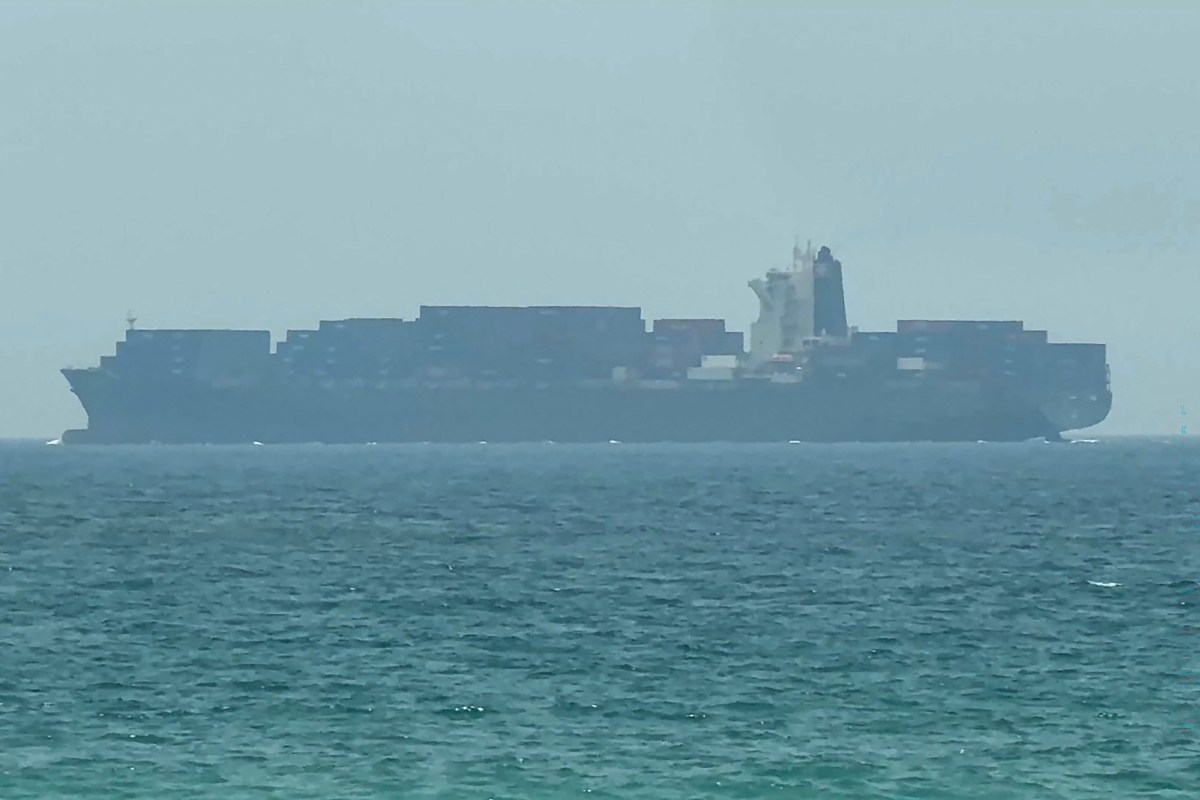
Iran recently attacked a container ship in the strait, and the U.S. responded with strikes on multiple targets.
Both the U.S. and Iran claim control over the Strait of Hormuz.
The practice of turning off AIS helps some ships pass safely but increases risks and costs, including higher insurance.
This situation may lead to a long-term U.S. military presence, contributing to a "forever war" in the region.
Read the Original
Want the full story? Tap a source to open the original
article.
The United States and Iran have escalated their conflict after a ceasefire ended in early July 2026. Iran shut down the Strait of Hormuz, a key oil shipping route, leading to missile and drone attacks by both sides around the Gulf region. Despite the fighting, both nations have not ruled out negotiations.
Key Facts
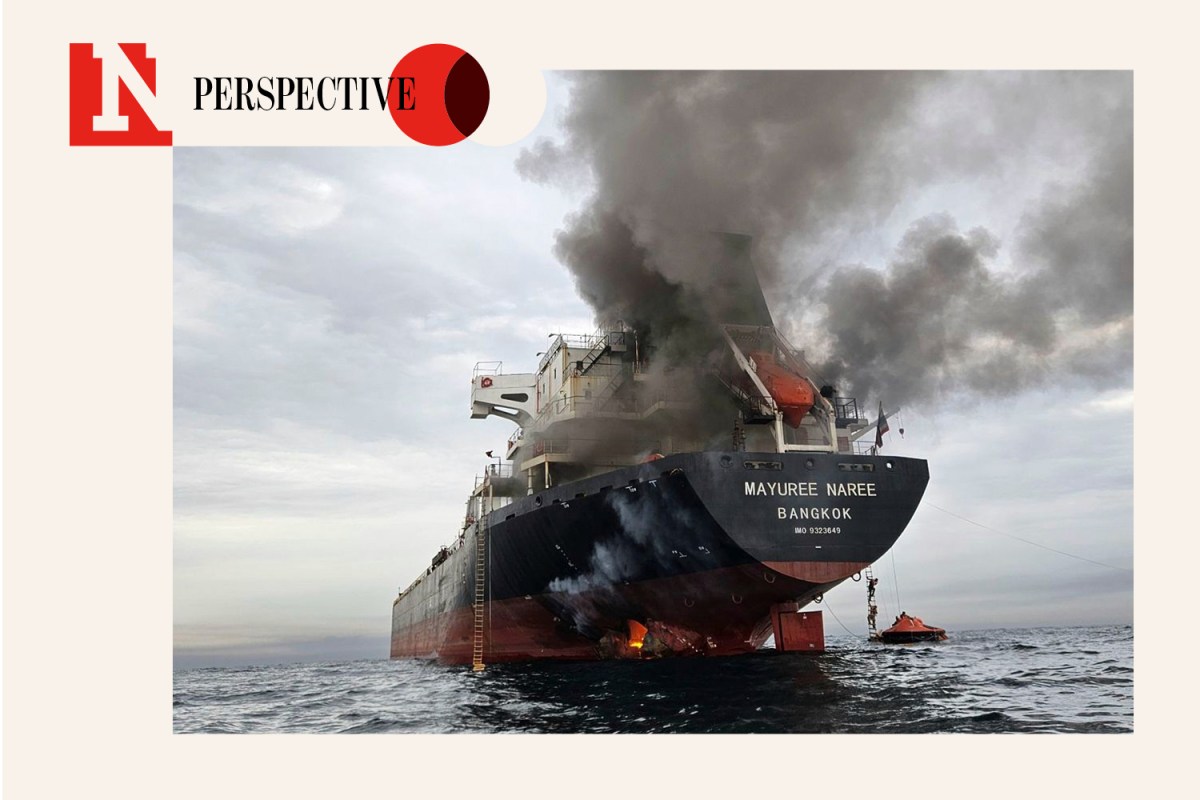
In early July 2026, Iran’s Revolutionary Guard attacked commercial ships near Oman.
The US responded with military strikes on Iranian targets, triggering Iranian missile and drone attacks on US bases in the Gulf.
Iran closed the Strait of Hormuz, a strategic passage for global oil shipments, citing US interference.
US President Donald Trump declared the ceasefire over but said talks between the two countries would continue.
Iran has attacked Gulf neighbors Bahrain, Kuwait, Oman, Jordan, and Qatar amid the conflict.
The initial 2026 conflict included widespread US and Israeli air attacks killing Iran’s Supreme Leader Ali Khamenei.
Current clashes are more focused around the Strait of Hormuz and US military bases in the Gulf.
There is uncertainty in the US about seeking congressional approval for continued military action, as required by the War Powers Act.
Read the Original
Want the full story? Tap a source to open the original
article.
Sam Neill, a New Zealand actor best known for his role as Dr. Alan Grant in Jurassic Park, has died aged 78. He had a long acting career spanning five decades, with notable performances in films like The Piano and Omen III, as well as the Jurassic Park series.
Key Facts
Sam Neill was born in 1947 in Northern Ireland and moved to New Zealand at age seven.
His birth name was Nigel, but he started calling himself Sam in school.
Neill initially studied law but switched to acting after participating in student theater plays.
He became known in New Zealand through films like Sleeping Dogs (1977) before moving to Australia.
His role in My Brilliant Career (1979) helped establish his international career.
He won an Australian Film Institute award in 1988 for his role in A Cry in the Dark.
Neill gained worldwide fame playing paleontologist Dr. Alan Grant in the 1993 film Jurassic Park.
Jurassic Park was the highest-grossing movie at the time, making Neill a global star.
Read the Original
Want the full story? Tap a source to open the original
article.
Sir Olly Robbins, a top UK civil servant, is taking legal action after being fired by Prime Minister Sir Keir Starmer over a security clearance issue involving Lord Mandelson's appointment as UK ambassador to the US. Robbins argues his dismissal was unfair and based on a misunderstanding of vetting rules.
Key Facts
Sir Olly Robbins was the top official at the UK's Foreign Office and involved in Brexit negotiations.
He was fired by Prime Minister Sir Keir Starmer in April 2025 after Lord Mandelson, appointed UK ambassador to the US, was given security clearance despite concerns.
Lord Mandelson was removed from his ambassador role seven months after his appointment due to his past links with Jeffrey Epstein.
The FDA union representing Robbins says Robbins’ dismissal lacked fair process and damaged civil service.
Robbins says he did not see written vetting documents but received an oral summary calling Mandelson a "borderline case" with possible risk management.
Robbins claims he was obligated to keep vetting details confidential and was not required to inform ministers fully.
The union argues that Starmer may not have had legal power to dismiss Robbins, who was head of the UK diplomatic service.
Robbins says he brought legal action reluctantly and would have preferred an apology and compensation from the prime minister.
Read the Original
Want the full story? Tap a source to open the original
article.
A Sudanese court sentenced Mohamed Hamdan Dagalo, leader of the paramilitary Rapid Support Forces (RSF), to death for war crimes, crimes against humanity, and genocide related to violence in West Darfur. The court also convicted 15 other RSF leaders in absentia for attacks on civilians and destruction of property during fighting in 2023.
Key Facts
Mohamed Hamdan Dagalo, known as Hemedti, leads the paramilitary RSF in Sudan.
He and 15 other RSF senior members were sentenced to death by a court in Port Sudan.
Charges include war crimes, crimes against humanity, and genocide in West Darfur.
The court found them guilty of attacks on civilians, killing the West Darfur governor, looting, and targeting schools and neighborhoods.
Dagalo’s brothers and top commanders were among those sentenced.
The court ordered the confiscation of RSF assets and requested international arrest notices.
The RSF controls large parts of western Sudan and its leaders are not in custody.
The conflict began in April 2023 with a power struggle between the Sudanese army and RSF, causing over 150,000 deaths and many displaced people.
Read the Original
Want the full story? Tap a source to open the original
article.
President Donald Trump has criticized U.S. allies for not sharing enough of the defense burden and threatened to leave NATO, but recent events show limits to his approach. The NATO summit in Turkey revealed that while Trump’s harsh rhetoric is losing impact, the alliance between the U.S. and Europe remains important for peace and security.
Key Facts
Trump has long argued that the U.S. carries too much defense responsibility compared to its allies.
During his first term, he threatened to withdraw the U.S. from NATO.
The recent NATO summit in Turkey showed that Europe is becoming stronger and less reliant on threats from Trump.
Trump’s attacks on allies over support against Iran have lost their power and seem less believable.
Leaving NATO would create major political problems for Trump and might make the U.S. look weak.
Despite the rocky relations, NATO remains crucial because the U.S. and Europe share interests in security and prosperity.
Trump’s threats have damaged trust in the U.S. and hurt Washington’s ability to form global partnerships.
Some U.S. politicians remain very supportive of military alliances, sometimes without fully considering the costs involved.
Read the Original
Want the full story? Tap a source to open the original
article.
European countries, including France, have announced sanctions against Russia for a large cyberattack campaign targeting government and infrastructure across Europe. The attacks, linked to Russia's FSB intelligence agency, aimed to spy on and disrupt multiple nations, including Poland, which experienced sabotage of its railway system.
Key Facts
France will summon Russia’s ambassador over a major cyberattack campaign across Europe.
Nine individuals and four organizations linked to these attacks are being sanctioned by the EU.
The Russian FSB intelligence service is accused of orchestrating these cyberattacks.
Targets included companies, government ministries, and crucial infrastructure like railways.
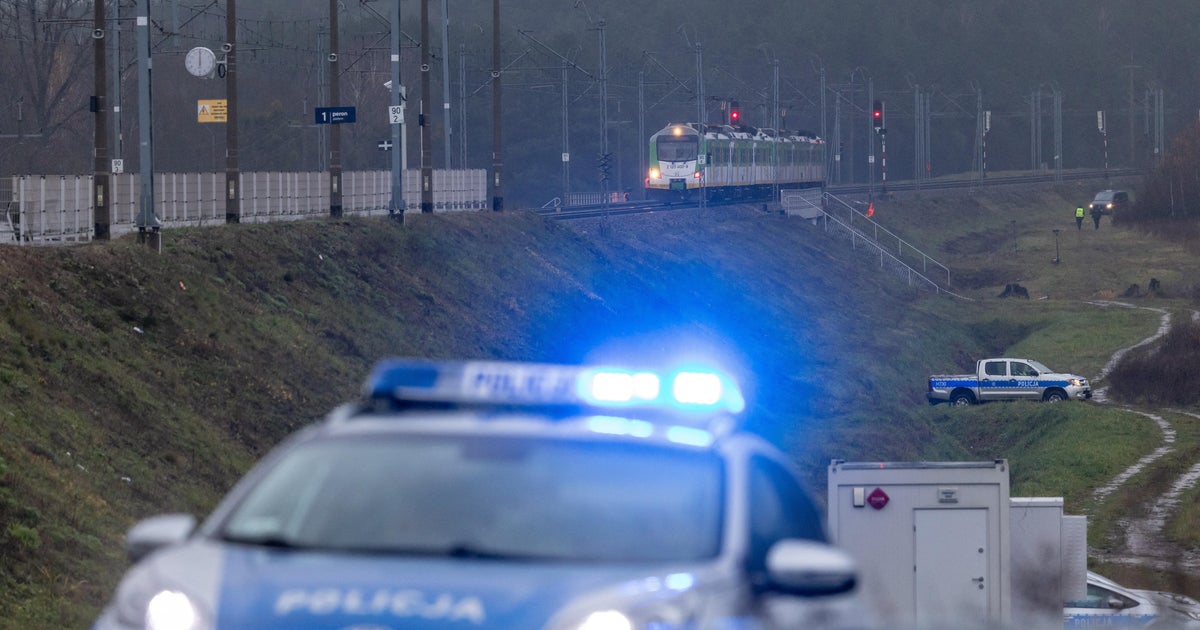
Poland experienced sabotage on its railway line in November 2025, described as an act of state terror.
The UK announced sanctions on 24 individuals and groups for cyber and hybrid operations linked to Russia.
Attacks affected at least nine European countries, causing disruptions and financial losses.
Russia denies the accusations and criticized the coalition of countries opposing it as “warmongers.”
Read the Original
Want the full story? Tap a source to open the original
article.
The UK government has officially labeled Iran's Islamic Revolutionary Guard Corps (IRGC) as a threat to national security. Supporting or showing approval for the IRGC in the UK is now illegal and can lead to up to 14 years in prison.
Key Facts
The UK Home Secretary, Shabana Mahmood, announced the ban on the IRGC on 13 July 2026.
The IRGC is linked to threats and intimidation within the UK.
Expressing support or helping the IRGC is now a criminal offense in the UK.
The maximum penalty for this offense is 14 years in prison.
Two other groups, the Islamic Movement of Companions of the Right (IMCR) and Russia’s GRU volunteer corps, are also banned.
The National Security (State Threats) Act was fast-tracked earlier in 2026 to allow this proscription.
The IRGC is a key part of Iran’s security and intelligence, reporting directly to Iran’s Supreme Leader.
The group uses intelligence, proxy forces, and other methods to promote Iran’s goals internationally.
Read the Original
Want the full story? Tap a source to open the original
article.
Sam Neill, the actor known for his role in Jurassic Park, has died suddenly at the age of 78 in Sydney, Australia. Although he had been treated for cancer in recent years and was cancer-free at the time of his death, his passing was unexpected.
Key Facts
Sam Neill was 78 years old when he died in Sydney, Australia.
He was best known for playing Dr. Alan Grant in the movie Jurassic Park.
Neill was born in Northern Ireland and grew up in New Zealand.
He had been treated for non-Hodgkin's lymphoma, a type of blood cancer, but was cancer-free when he passed away.
Neill’s death was described as sudden and unexpected by his family.
Tributes came from New Zealand and Australian leaders, and fellow actors praised his talent and character.
Neill acted in other films like The Piano, The Hunt for Red October, Dead Calm, Event Horizon, and the BBC series Peaky Blinders.
He was recognized for his contribution to New Zealand’s film industry and culture.
Read the Original
Want the full story? Tap a source to open the original
article.
The U.K. government says a group supported by Iran attacked Jewish sites in Britain with fires and vandalism. It has banned this group, called the Islamic Movement of the Companions of the Right (IMCR), and also banned Iran’s Revolutionary Guard for their role in these attacks.
Key Facts
The IMCR, a group backed by Iran, claimed responsibility for at least seven attacks on Jewish sites in the U.K.
These attacks included arson (setting fires) at synagogues, Jewish charity ambulances, and a Persian-language media group.
No injuries were reported in these attacks.
The IMCR is linked to Iran’s Islamic Revolutionary Guard Corps Quds Force, which plans attacks in Europe.
The IMCR has also attacked Jewish sites in Belgium and the Netherlands.
Iranian-backed proxy groups often recruit criminals to carry out sabotage and violence in Europe.
The European Union designated Iran’s Revolutionary Guard as a terrorist group earlier in the year.
Two Romanian men were recently jailed for stabbing a journalist from a Persian-language TV station in an attack tied to Iran.
Read the Original
Want the full story? Tap a source to open the original
article.
South Korea has started a new plan to reduce the number of young people who take their own lives. The government aims to cut the teen suicide rate by half within the next 10 years.
Key Facts
Suicide is the top cause of death among young people in South Korea.
The government launched a strategy to lower suicide rates among teenagers.
The goal is to reduce teen suicides by 50% over a decade.
The plan focuses on addressing the crisis with various measures (not detailed in the article).
This issue is considered a major public health concern in South Korea.
Read the Original
Want the full story? Tap a source to open the original
article.
Police have taken over the investigation into the death of Ann Widdecombe after finding new evidence. A man has been arrested and is also being questioned on terrorism-related charges.
Key Facts
Ann Widdecombe, a former MP and Reform party spokesperson, was found dead at her home in Devon with serious injuries.
Initially, police ruled out terrorism but later handed the case to counter-terrorism police.
A 28-year-old man from Rotherham was arrested on suspicion of murder and later on terrorism-related charges.
Counter-terrorism policing said new evidence led them to take over the case.
National counter-terrorism head Laurence Taylor said they are looking into many possible reasons for the attack.
Police encourage anyone with information to come forward to help the investigation.
Read the Original
Want the full story? Tap a source to open the original
article.
The UK government will officially label Iran’s Islamic Revolutionary Guard Corps (IRGC) as a terrorist group. This decision bans support for the IRGC and responds to threats and attacks linked to the group on UK soil.
Key Facts
The UK Home Office announced the listing of the IRGC as a terrorist organization.
The IRGC is a key part of Iran’s military.
Supporting the IRGC will become a criminal offense in the UK.
The UK is also banning two other groups: the Islamic Movement of the Companions of the Right (IMCR) and the Russian Federation Volunteer Corps.
The decision was made after evidence of threats against the UK, including a plan to kill two journalists and cyber-attacks.
This move reverses a previous UK Conservative government decision not to ban the IRGC.
The UK government said the bans are to protect the country's safety and interests.
The decision may worsen diplomatic relations between the UK and Iran and could lead to the removal of the UK ambassador from Tehran.
Read the Original
Want the full story? Tap a source to open the original
article.
The US military and Iran have exchanged attacks near the Strait of Hormuz, a key waterway for international shipping. Iran said US actions made peace efforts useless, while the US confirmed its presence to protect navigation and said an alternative route is available.
Key Facts
The US military launched new attacks against Iran amid rising tensions around the Strait of Hormuz.
Iran stated that these attacks ruined recent diplomatic efforts and caused increased instability in the region.
Iran attacked countries hosting US forces in response, with Jordan shooting down four missiles and Kuwait reacting to hostile aerial targets.
Iran declared the Strait of Hormuz was currently closed due to what it called illegal US military actions.
The US maintained its forces were there to ensure safe passage and mentioned an expanded route near Oman for ships.
Lindsey Graham, a US senator and ally of President Trump, died suddenly at age 71.
South Carolina’s governor will appoint a new senator to finish Graham’s term, with a special primary planned for August.
Sam Neill, a New Zealand actor known for Jurassic Park and The Piano, died at age 78 after surviving blood cancer.
Read the Original
Want the full story? Tap a source to open the original
article.
The United States and Iran both say they control the Strait of Hormuz after recent fighting. The U.S. military announced it carried out new attacks on Iran, while Iran also claims to have control of the area.
Key Facts
The Strait of Hormuz is an important waterway between the Persian Gulf and the Gulf of Oman.
Both the U.S. and Iran say they control the Strait after weekend attacks.
The U.S. Central Command posted on social media that it completed new offensive strikes against Iran on Sunday.
The fighting took place over the weekend and involved military actions from both countries.
Control of the Strait of Hormuz is important because it is a major route for global oil shipments.
Tensions between the U.S. and Iran have been ongoing in the region for several years.
Both countries use media and public statements to share their versions of events.
Read the Original
Want the full story? Tap a source to open the original
article.
Sheikh Hamad, the late Father Emir of Qatar, founded the Al Jazeera news network in 1996. Al Jazeera has changed journalism in the Arab world by providing a voice to groups often ignored by other media.
Key Facts
Sheikh Hamad was the Father Emir of Qatar.
He passed away recently.
He established Al Jazeera in 1996.
Al Jazeera offers independent news coverage.
The network helped give a platform to marginalized voices.
It influenced journalism across the Arab region and globally.
Sheikh Hamad’s efforts contributed to promoting free press in Qatar.
Read the Original
Want the full story? Tap a source to open the original
article.
Yemen’s government, supported by Saudi Arabia, said it attacked Sanaa airport to stop an Iranian plane from landing there. The capital, Sanaa, is controlled by the Iran-backed Houthi rebels, who said they will respond to the strike.
Key Facts
Yemen’s internationally recognized government is based in Aden and backed by Saudi Arabia and Gulf states.
The Houthi rebels control Yemen’s capital, Sanaa, and are aligned with Iran.
The government said Iranian aircraft tried to enter Yemeni airspace through Sanaa airport.
To stop this, government forces targeted the airport runway.
The Yemeni defense ministry told civilians and organizations to leave the airport area immediately.
The Houthis blamed Saudi Arabia for the attack and vowed retaliation.
A Houthi military spokesman warned the attack would have consequences.
The situation is ongoing and developing.
Read the Original
Want the full story? Tap a source to open the original
article.
A court in Germany convicted an Iraqi couple of enslaving two Yazidi girls in Iraq and being members of the Islamic State group (IS). The man was sentenced to life in prison for genocide, war crimes, crimes against humanity, and sexual abuse, while his wife received a nine-and-a-half-year juvenile sentence.
Key Facts
The case was heard at the Munich Higher Regional Court.
The couple bought two Yazidi girls as slaves in Mosul, Iraq, in 2015 and 2017.
The man, Twana H.S., was sentenced to life for genocide, war crimes, crimes against humanity, and sexual abuse of children.
His wife, Asia R.A., received a juvenile prison sentence of nine and a half years.
Both were found guilty of being members of the Islamic State group.
The Yazidi community is a minority in Iraq that was targeted by IS starting in 2014.
Germany prosecutes such cases under universal jurisdiction, allowing war crime trials for crimes committed abroad.
The couple was arrested in Bavaria, Germany, in 2024.
Read the Original
Want the full story? Tap a source to open the original
article.