Mexico plans to ask U.S. prosecutors to investigate the deaths of 17 Mexican citizens who died in U.S. Immigration and Customs Enforcement (ICE) custody or during immigration operations under President Donald Trump's administration. This request follows the recent killing of a Mexican man by an ICE agent in Houston, increasing tensions between Mexico and the United States.
Key Facts
Mexico will request criminal charges related to 17 deaths of Mexicans in ICE custody or immigration operations.
The request will be sent to state prosecutors and the U.S. Department of Justice but has no legal power to force action.
Mexico will also file civil lawsuits against companies running detention centers, aiming to stop human rights abuses.
The announcement followed the fatal shooting of Lorenzo Salgado Araujo by an ICE agent in Houston.
ICE officers were reportedly trying to detain another person and stopped Salgado Araujo’s vehicle; he was shot after allegedly ignoring commands.
The Mexican government says 14 Mexicans died in ICE custody and 3 during ICE operations.
In 2025, 31 people died in ICE detention, the highest number in 20 years.
Mexico has previously used diplomatic channels and human rights organizations to address these deaths and now wants to take stronger legal action.
Read the Original
Want the full story? Tap a source to open the original
article.
A museum in Rotterdam has recreated a peanut butter floor artwork by Dutch artist Wim T Schippers, who recently passed away. The installation spreads 800 pounds of smooth peanut butter on the gallery floor following Schippers’ precise instructions, celebrating his unique style and influence in Dutch art.
Key Facts
The installation, called Pindakaasvloer (Peanut butter floor), was originally conceived in 1962 and first shown in 1969.
Schippers left detailed instructions for applying 15.6 kg of smooth peanut butter per square meter without touching or standing on it.
Wim T Schippers died in June at the age of 83.
He was known for using absurd, playful ideas and food in art, like covering floors with peanut butter or chairs with canned noodles.
Schippers also worked in television, creating controversial and popular programs and characters in the Netherlands.
His influence is compared to that of Monty Python in the UK for combining serious and silly elements in art.
The peanut butter floor has been displayed multiple times across Dutch museums, even surviving vandalism that added chocolate sprinkles and bread.
Visitors can see the artwork at Museum Boijmans van Beuningen in Rotterdam until early September.
Read the Original
Want the full story? Tap a source to open the original
article.
A large typhoon named Bavi is moving across the Pacific Ocean towards Taiwan, Japan, and southeastern China, causing concern for heavy rain, strong winds, and flooding. In the southern Philippines, landslides caused by a recent storm have killed at least 15 people, and preparations are underway in the region to handle the potential damage.
Key Facts
Typhoon Bavi is about 1,000 km (620 miles) wide, similar to the width of France.
Bavi is expected to bring heavy rain to northern and eastern Taiwan, remote Japanese islands, and southeastern China.
At least 15 people died in the southern Philippines due to landslides from recent heavy storms.
Taiwan has prepared 29,000 soldiers for relief efforts and warned rainfall could reach 1 meter (39 inches).
Flights have been canceled and schools closed in affected regions as people stock up on supplies.
Farmers and fishermen are securing their crops and boats ahead of the storm.
China warns that the storm's impact could affect northern provinces less used to typhoons.
Japan Airlines and All Nippon Airways canceled hundreds of flights, affecting tens of thousands of passengers.
The region is still recovering from Typhoon Maysak, which killed at least 39 people in southern China earlier this week.
Read the Original
Want the full story? Tap a source to open the original
article.
Millions of people in Iran participated in six days of funeral ceremonies for the country’s former Supreme Leader, Ayatollah Ali Khamenei, who was killed in US-Israeli strikes in February. During the events, mourners chanted slogans against the US and Israel, while fresh US strikes increased tensions and Iran’s new supreme leader stayed out of public view.
Key Facts
Ayatollah Ali Khamenei, Iran's former Supreme Leader, was killed in US-Israeli strikes in late February 2026.
Iran held six days of funeral ceremonies with millions attending.
Mourners expressed strong anti-US and anti-Israel feelings during the events.
New US strikes took place as the ceremonies were concluding.
Iran’s new supreme leader did not appear publicly during the mourning period.
The situation has raised concerns about rising tensions between Iran and the US.
The article references other recent related events, such as US strikes near Iranian sites and discussions of military and political changes in Iran.
Iranian leaders suggest that neither Iran nor the US wants full-scale war but both want to maintain strength.
Read the Original
Want the full story? Tap a source to open the original
article.
A passenger’s head and shoulders were nearly pulled out of a plane window that broke during a Ryanair flight from Greece to Germany. The plane returned safely to Greece, and the injured passenger was taken to the hospital in stable condition.
Key Facts
The incident happened on a Ryanair flight from Thessaloniki, Greece, to Memmingen, Germany.
A plane window broke after debris from the plane's engine hit it.
The broken window caused depressurization inside the cabin.
One passenger’s head and shoulders were pulled outside the broken window but was pulled back inside by others.
The injured passenger had friction burns and was hospitalized in stable condition.
Passengers had to use oxygen masks that dropped after the window shattered.
The plane returned to Thessaloniki safely and later continued to Memmingen with a replacement aircraft.
Ryanair confirmed the incident and stated they arranged a new plane to minimize delays.
Read the Original
Want the full story? Tap a source to open the original
article.
A woman named Georgia found an old Yemeni dagger called a jambiya while sorting through her late father’s belongings. The dagger, which likely dates back to the 19th century, reminds her of her father’s time working in Saudi Arabia and has become a special keepsake to remember him by.
Key Facts
Georgia’s father recently passed away unexpectedly.
He had worked in Saudi Arabia in the early 1990s managing an oil and gas facility.
The dagger she found is a Yemeni jambiya, a traditional curved dagger with cultural importance.
The jambiya symbolizes Yemeni manhood, honor, and social status and is often shown at special events.
Georgia’s father received the dagger from a local who needed money and told him it was a family heirloom.
The dagger was kept hidden away in a closet for over 30 years because it was considered dangerous around children.
After her father’s death, Georgia discovered it wrapped in a towel and plans to keep it as a family heirloom.
The dagger is believed to be a few hundred years old based on comments from people online.
Read the Original
Want the full story? Tap a source to open the original
article.
Sao Paulo in Brazil has launched the largest city-run facial recognition system called Smart Sampa to help fight crime. The system is now facing criticism for allegedly targeting people based on their race, a practice known as racial profiling.
Key Facts
Sao Paulo operates the world's biggest city-managed facial recognition system.
The system is called Smart Sampa and uses artificial intelligence (AI).
Similar technologies exist in countries like India, China, Hong Kong, and the UK.
Sao Paulo's system is larger in scale than any other city’s AI surveillance program.
Accusations have emerged that the system is engaging in racial profiling.
Racial profiling means treating people differently based on their skin color or ethnicity.
The technology is officially used to help fight crime in the city.
The controversy around the system raises concerns about privacy and fairness.
Read the Original
Want the full story? Tap a source to open the original
article.
The European Union has accused Meta, the company behind Facebook and Instagram, of making these platforms addictive by using features like infinite scrolling and autoplay videos. The EU wants Meta to disable these features because they can harm users’ physical and mental health, especially children, and has started a legal process that could lead to fines.
Key Facts
The EU says Meta violated its Digital Services Act by designing addictive features on Facebook and Instagram.
Features like infinite scrolling and autoplay videos make users spend more time on the platforms.
Meta has tools to manage usage, but the EU says they are too hard to use or can be easily ignored.
Meta introduced Teen Accounts that protect teens and allow parents to limit screen time.
The EU wants changes to the design so that addictive features are off by default.
If Meta doesn’t fix the issues, it could face fines up to 6% of its global yearly revenue.
The EU emphasizes protecting users’ mental and physical health as a priority.
The investigation started in 2024 over concerns about protecting children on social media.
Read the Original
Want the full story? Tap a source to open the original
article.
The article features French rapper Kalash and singer Manon Lisa in a cultural segment in Paris. Kalash talks about his new album, while Manon Lisa performs a song about finding happiness in simple things. The story ends with a boat trip on Lake Geneva in Switzerland.
Key Facts
Kalash is a well-known French rapper who released a new album called "Ex-Voto."
He discusses his feelings, spirituality, and being a 38-year-old father as influences on his music.
Manon Lisa is a singer who performs her single "Le Petit Pêcheur."
Her song celebrates enjoying life’s simple pleasures and questions what true happiness means.
The program includes a boat ride on Lake Geneva, the largest lake in Western Europe.
The content is from the show "Paris des Arts," which highlights arts and culture.
The episode aired on July 10, 2026.
The article also mentions how to enable video playback if blocked by browser extensions.
Read the Original
Want the full story? Tap a source to open the original
article.
The United Nations reports that over the past 18 months, more than one million women and girls have lost access to critical aid due to big cuts in global funding. Many organizations that support women and girls cannot meet the growing demand because donors like the United States and several European countries have reduced their foreign aid budgets.
Key Facts
At least one million women and girls are no longer receiving life-saving aid because of funding cuts.
90% of organizations serving women and girls say they cannot meet current needs due to loss of money.
The US, once the largest aid donor, cut its foreign aid by over 50% after President Trump reduced funding and dismantled USAID.
Other donors such as Germany, France, and the UK have also reduced aid, partly due to their own budget pressures and increased defense spending.
A UN survey found 40% of women’s organizations might shut down within a year because of low funding.
60% of these organizations are helping fewer women and girls than before despite higher needs.
Many groups report turning women and girls away or placing them on waiting lists.
Services addressing conflict-related sexual violence have decreased even though such violence has doubled.
Read the Original
Want the full story? Tap a source to open the original
article.
Hamas is ending its role as the ruling authority in Gaza after almost 20 years. The group is transferring control to a new government made up of experts who will manage Gaza’s affairs.
Key Facts
Hamas has been the main governing force in Gaza for nearly two decades.
The group is now dissolving its own government.
Power will be handed over to a technocratic administration, which means a government run by specialists and experts rather than politicians.
Gaza has been under a blockade during Hamas’s time in power.
The change could affect Gaza’s future governance and daily life for its residents.
The announcement was reported by Al Jazeera journalist Marah Rayan.
This shift marks a significant change in how Gaza will be managed.
Read the Original
Want the full story? Tap a source to open the original
article.
Prime Minister Narendra Modi’s visit to Australia marked a significant step in improving India-Australia relations, including new defense cooperation and uranium exports for civilian energy. This visit, part of a larger trip to Indonesia and New Zealand, reflects India’s goal to strengthen its role in the Asia Pacific amid changing power dynamics involving China and the United States.
Key Facts
In 1998, Australia suspended defense cooperation with India after India's nuclear tests.
This week, during Modi’s visit, Australia invited an Indian military instructor to its Defence College.
Modi’s tour included Indonesia, Australia, and New Zealand, showing India’s growing interest in the Asia Pacific region.
Australia and India share values as English-speaking, federal democracies that support rule of law.
Australia has agreed to sell uranium to India for civilian nuclear energy, reversing a previous ban.
India and Australia also agreed on expanded cooperation in defense, maritime security, cyber technology, clean energy, and critical minerals.
China’s rise and America's unpredictable stance under President Trump influence India’s and other regional countries’ strategic plans.
India experienced border clashes with China in 2020, and Australia has faced economic pressure from China, motivating both to strengthen partnerships.
Read the Original
Want the full story? Tap a source to open the original
article.
During the World Cup, there has been a noticeable increase in domestic violence, which has caused concern among women's rights groups. The report also highlights challenges faced by women journalists covering the event and notes a growing number of women leading a DJ music scene in Pakistan.
Key Facts
Studies show more cases of domestic abuse during the World Cup.
Women's rights activists are raising awareness about this issue.
Women journalists covering the World Cup face specific challenges.
There is a rising DJ scene in Pakistan, with many women involved.
The report was shared by France 24 in a program called The 51 Percent.
The World Cup continues to attract millions of viewers worldwide.
The increase in domestic violence is considered a negative side effect of the event.
Read the Original
Want the full story? Tap a source to open the original
article.
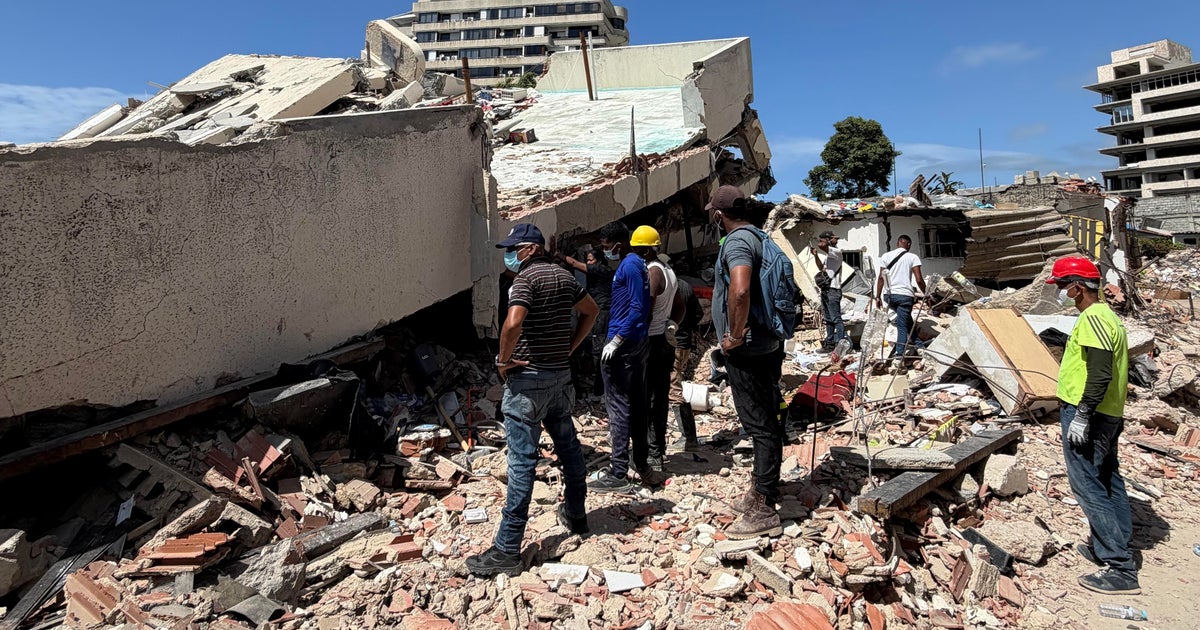
Two strong earthquakes hit Venezuela, causing heavy damage especially in the coastal city of La Guaira. Thousands of people died or were injured, and many others were displaced, leading to ongoing rescue and recovery efforts.
Key Facts
Two earthquakes struck Venezuela on June 24, hitting La Guaira hardest.
Nearly 4,000 people have been confirmed dead, with many more missing.
Buildings collapsed, trapping people under rubble and making rescue difficult.
Rescue teams came from different countries, including the United States.
The disaster displaced many families, some living in tent camps.
Basic supplies like food and water were delivered by locals and volunteers.
The main airport near Caracas was damaged, forcing alternate travel routes.
Despite the tragedy, locals showed resilience and hope, with children playing and communities helping each other.
Read the Original
Want the full story? Tap a source to open the original
article.
The United Nations reports that at least 1 million women have lost access to important aid due to funding cuts over the past 18 months. These cuts followed reduced foreign aid from the United States starting in early 2025, affecting many women’s organizations worldwide and limiting services for women and girls in crisis.
Key Facts
Over 1 million women have lost aid after budget cuts in the last 18 months.
UN Women surveyed 855 women’s organizations in 52 countries about the impact.
84% of these groups reported increased needs since January 2025.
The U.S., the largest UN donor, cut foreign aid after President Trump took office in 2025.
About 90% of the women’s groups say they can no longer meet current demands.
20% of these organizations expect to close temporarily or permanently within a year.
Conflict-related sexual violence doubled last year, increasing the need for support.
Global development aid fell nearly 25% in 2025, the biggest drop on record.
Read the Original
Want the full story? Tap a source to open the original
article.
Prince Harry took part in a pickleball game at an event promoting the Invictus Games in Birmingham, but his wife Meghan did not attend any public events in the UK this week. His visit faced difficulties, including a court case loss and confusion about accommodations and Meghan’s participation.
Key Facts
Prince Harry attended the National Exhibition Centre in Birmingham for an Invictus Games event featuring sports like wheelchair rugby and pickleball.
Meghan, Duchess of Sussex, was scheduled to appear but withdrew from all UK public events due to a security dispute.
The Invictus Games support injured military veterans and are an international event started by Prince Harry.
There was confusion over whether Prince Harry would stay at Buckingham Palace; the Palace denied his stay.
Prince Harry lost a court case against Associated Newspapers about unlawful information gathering.
Some events during his UK visit were closed to the press.
Prince Harry received a warm welcome at a children’s hospital in Birmingham later in the week.
Meghan’s representatives did not comment on private meetings, leaving open the possibility of family meetings with King Charles.
Read the Original
Want the full story? Tap a source to open the original
article.
The Bayeux Tapestry, which tells the story of the Norman conquest of England nearly 1,000 years ago, has returned to England for the first time in centuries. It arrived at the British Museum for a special exhibition that will run from September 2024 to July 2027.
Key Facts
The Bayeux Tapestry came back to England on a secret journey, arriving early Friday near the British Museum.
This is the first time the tapestry has been in England for almost 1,000 years.
The tapestry will be on display for about three years at the British Museum, from September 2024 to July 2027.
It shows the events of the Norman conquest of England in the 11th century.
The tapestry was transported carefully in a climate-controlled case to protect it.
About 100,000 tickets were sold on the first day, and the museum expects around 7.5 million visitors over the exhibition.
The artwork has been displayed in Bayeux, France, since 1983 and will return there after museum renovations.
French President Emmanuel Macron and UK officials described the loan as a symbol of friendship between the two countries.
Read the Original
Want the full story? Tap a source to open the original
article.
At a NATO summit in Ankara, Turkish President Recep Tayyip Erdogan gave unusual gifts to NATO leaders: engraved pistols with six live bullets each. Meanwhile, President Donald Trump flew back on a different plane than the one gifted by Qatar because the gifted Boeing jet lacked important safety features. Israeli intelligence also warned of an Iranian plot to assassinate President Trump.
Key Facts
President Erdogan gave NATO leaders engraved pistols with six live bullets as gifts at the Ankara summit.
Some leaders turned the guns over to authorities due to legal and safety concerns.
European Commission President Ursula von der Leyen plans to donate her gift to a museum.
Prime Minister Keir Starmer left his pistol in Ankara to be safely deactivated.
President Donald Trump did not use the Boeing 747 gifted by Qatar to return from the summit because it lacks counter-missile defenses.
Trump flew home on a different, less fancy plane for his safety.
Israeli intelligence told the U.S. about an alleged Iranian plan to assassinate President Trump.
The gift of guns from Erdogan surprised NATO leaders because of safety and legal issues.
Read the Original
Want the full story? Tap a source to open the original
article.
European Union (EU) foreign ministers are meeting to discuss issues related to Gaza, the West Bank, and Israel’s actions. Despite international law and reports of violations, some EU countries block strong actions, and relations with Israel remain a priority over enforcing legal commitments.
Key Facts
EU foreign ministers will meet in Brussels to discuss Gaza, the West Bank, and Israel-related topics on July 13.
Issues include trade from Israeli settlements, possible sanctions on Israeli officials, and enforcement of the EU-Israel Association Agreement.
Some EU countries like Germany and Italy have blocked strong measures against Israel’s actions.
Reports show Israel damaged more than 150 million euros of EU-funded projects in Palestinian territories without facing consequences.
A 2026 UN report labeled Israeli actions against Palestinian children as genocide, war crimes, and crimes against humanity.
The EU’s legal advice from 2017 suggested that it could suspend the Association Agreement with Israel but has not done so.
The International Court of Justice ruled Israel’s occupation unlawful and stated all countries must not support it.
EU member states have legal tools to act individually without needing full EU agreement.
Read the Original
Want the full story? Tap a source to open the original
article.
President Donald Trump has given Ukraine permission to produce Patriot missile interceptors, a key weapon Ukraine uses to defend itself against Russian attacks. Ukraine plans to learn how to make these complex missiles domestically, although it may take time before production starts.
Key Facts
Patriot missiles are expensive, American-made weapons that Ukraine uses to stop Russian attacks.
Frequent Russian strikes have reduced Ukraine’s supply of these missiles.
President Trump told Ukrainian President Zelenskyy that the US will share technology to help Ukraine build its own Patriots.
Trump did not specify when Ukraine could start making the missiles and said the US will keep its own supply.
Experts say Ukraine might first produce simpler missile parts and it could take less than a year to begin production.
Patriot missile systems include missiles, launchers, radar, and a control vehicle to move stealthily.
The war is evolving with more use of drones and networked technology, allowing real-time coordination on the battlefield.
Ukraine’s military is increasingly relying on modern technology amid challenges with soldier recruitment and desertion.
Read the Original
Want the full story? Tap a source to open the original
article.