Exit-poll projections suggest Israel’s Arab-led parties could win a record 17 seats in the 120-seat Knesset, while partial results show no bloc with a majority. Their support could give opposition leader Gadi Eisenkot enough seats to form a majority, but both he and Prime Minister Benjamin Netanyahu have rejected partnering with the Arab-led lists, limiting their influence.
Key Facts
The Joint List and Ra’am are projected to win a combined 17 seats, a record for Arab-led parties.
Partial results put Netanyahu’s bloc at 54 seats and the opposition alliance led by Gadi Eisenkot at 49.
A majority in the Knesset requires 61 seats.
One reported estimate says an alliance between Eisenkot’s bloc and the Arab-led parties could hold 66 seats.
Netanyahu and Eisenkot have both rejected the idea of partnering with Arab-led parties, citing a lack of shared values.
Analyst Ahmed Najar said Eisenkot’s refusal to rely on Arab parties was ideological.
Ra’am leader Mansour Abbas has indicated he may join an Eisenkot-led government if internal security matters are handled by his party.
Joint List leaders Yousef Jabareen and Ahmad Tibi said their bloc was prepared to help remove Netanyahu’s government.
Read the Original
Want the full story? Tap a source to open the original
article.
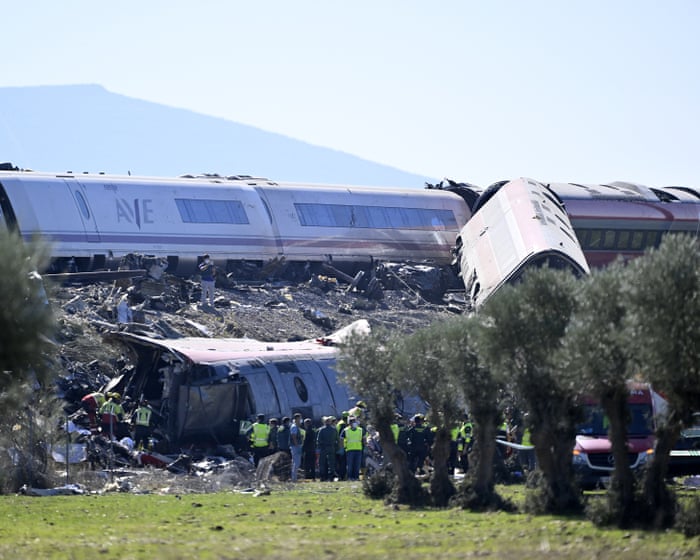
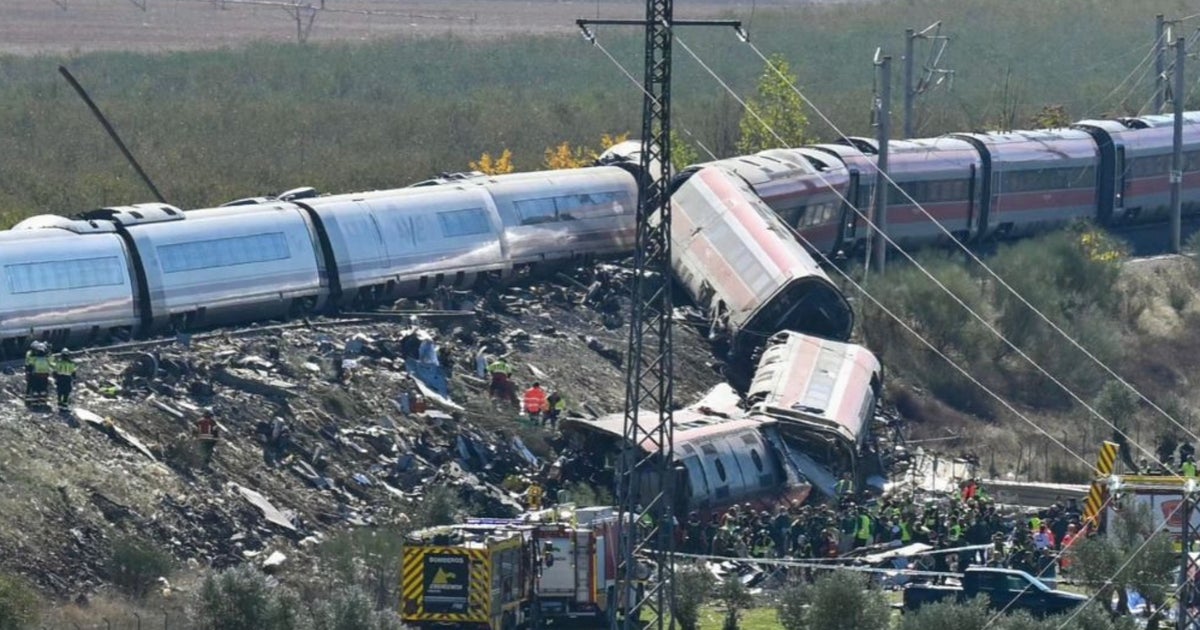
At least 64 people died when two trains collided in Spain on Wednesday, the second fatal rail crash in the country in nine months. Investigators have not confirmed the cause, while the crash has renewed questions about safety and maintenance on the high-speed network.
Key Facts
The two trains carried 544 passengers, and several carriages derailed.
A Reuters source said an Iryo train stopped near Toledo after a signaling fault and on instructions from infrastructure manager Adif; a Renfe train then struck it.
Renfe said its train had been told to continue and that the reason for the collision was unknown.
A January crash near Adamuz killed 46 people and injured dozens.
The crashes involved the same operators and occurred on the Madrid-to-Andalusia line, according to the article.
Spain’s largest train drivers union had planned a 24-hour Renfe stoppage for the day after Wednesday’s crash, citing safety concerns.
Spain’s government says it has increased railway maintenance spending by 54% since taking office in 2018.
Spain spent an average of about €1.5 billion a year on its high-speed network from 2018 to 2022, but about 16% of funding went to maintenance, renewal, and upgrades, according to the article.
Read the Original
Want the full story? Tap a source to open the original
article.
Israel’s election produced no clear winner despite turnout exceeding 77%. Benjamin Netanyahu’s Likud party is set to be the largest in the Knesset, but no party secured a majority, leaving the formation of a government uncertain.
Key Facts
Voter turnout exceeded 77%.
No clear winner emerged from the election.
Netanyahu’s Likud party is set to be the largest party in the Knesset, Israel’s parliament.
Netanyahu called for a strong right-wing government.
Gadi Eisenkot, a former army chief and Netanyahu’s main rival, said voters had chosen to end Netanyahu’s term.
No party secured a clear majority.
Read the Original
Want the full story? Tap a source to open the original
article.
Egyptian journalist Lina Attalah was released from detention after Mada Masr paid a 3 million Egyptian-pound fine. A court convicted her of managing an unlicensed website and ordered the independent outlet shut; her lawyers are challenging the ruling, with another hearing set for 11 November.
Key Facts
Attalah is the editor-in-chief of Mada Masr, which she founded in 2013.
Her lawyer said Attalah was also sentenced in absentia in 2024 to one year in prison and fined 20,000 Egyptian pounds.
Mada Masr said it applied for an operating licence three years ago and received no response from Egyptian authorities.
The outlet’s closure order came amid the arrest of the six-person team at independent fact-checking platform Matsadaash.
The Matsadaash team members were charged with belonging to the outlawed Muslim Brotherhood.
The Committee to Protect Journalists says 25 journalists are currently jailed in Egypt.
Press freedom and human rights organizations condemned the ruling and called for Attalah’s release.
Read the Original
Want the full story? Tap a source to open the original
article.
The article says Iran faces real espionage and sabotage threats after U.S.-Israeli attacks exposed weaknesses in its security agencies. Analysts also say Iranian authorities use national-security cases to target dissenters, including protesters, journalists, lawyers and minorities, blurring the distinction between espionage and political opposition.
Key Facts
The article says the latest U.S.-Israeli assault began on February 28 and killed senior Iranian figures, including Supreme Leader Ayatollah Ali Khamenei.
Former Mossad chief David Barnea said Israel had sent dozens of agents into Iran before the June 2025 war with intelligence or sabotage assignments.
Barnea said Israeli intelligence sought to increase arrests of Iranians to protect its agents, and claimed most of its assets remained unidentified.
The article reports that Iran accelerated judicial punishments for national-security cases after the 2025 war, including arrests, prosecutions, imprisonment, asset seizures and executions.
People targeted in the crackdown include alleged spies as well as protesters, journalists, lawyers and members of minority groups.
Amnesty International and Human Rights Watch have documented cases involving coerced confessions, inadequate legal defence and national-security charges against dissenters.
Analysts quoted in the article distinguish espionage—covert intelligence gathering or assistance to foreign intelligence—from criticism of the government and independent reporting.
Read the Original
Want the full story? Tap a source to open the original
article.
Water levels at Menindee Lakes in western New South Wales have fallen to their lowest point in five years, and the state has restricted some upstream water use. Experts warn that fish deaths could occur over summer if river flows do not improve, while a panel’s recommendations to protect flows have not yet been implemented.
Key Facts
Combined storage at Menindee Lakes fell below 480 gigalitres earlier in October, the first time since 2021.
Water volume in the upper lakes fell below 250 gigalitres, triggering temporary restrictions on some water use in parts of the northern Murray-Darling basin.
The restrictions limit access for some irrigators and aim to preserve water for essential human needs and the environment.
Experts link the risk of summer fish deaths to low rainfall over the past 12 months and warn that more water must flow down the Darling-Baaka River.
Menindee experienced major fish kills in 2018, 2019 and 2023, when millions of fish died along parts of the river.
A state-appointed expert panel recommended limiting upstream water extraction during dry periods, but the state government has not implemented its final recommendations.
A Menindee resident said small inflows from Queensland offered some hope, but warned that the risk of fish deaths could be high in January or February without more inflows.
Read the Original
Want the full story? Tap a source to open the original
article.
The Times reported that three of the UK’s four Vanguard-class nuclear deterrent submarines are at sea, the first such deployment in five years. The report said at least one carries ballistic missiles with nuclear warheads; the Ministry of Defence did not explain the unusual deployment, and the article gives no confirmed reason for it.
Key Facts
The Times named the submarines at sea as HMS Vanguard, HMS Vigilant and HMS Vengeance.
HMS Victorious, the fourth submarine, is undergoing maintenance, according to the report.
The UK maintains a continuous at-sea deterrent, with at least one submarine deployed at all times.
A navy source described the three-submarine deployment as unusual, The Times reported.
Navy Lookout said one missile-carrying submarine has remained at sea without interruption since 1969.
The Ministry of Defence said the nuclear deterrent protects the UK and its NATO allies.
Defence Secretary Wes Streeting said Britain should be ready to fight alongside its allies within 1,000 days.
Read the Original
Want the full story? Tap a source to open the original
article.
Iraqi Prime Minister Ali al-Zaidi met Syrian President Ahmed al-Sharaa in Damascus, in the first visit by an Iraqi prime minister since Bashar al-Assad’s fall. The leaders discussed oil exports, trade, agriculture and broader cooperation between the neighboring countries.
Key Facts
The meeting took place in Damascus.
The article describes it as the first visit by an Iraqi prime minister to Syria since Bashar al-Assad’s fall.
According to Iraq’s official news agency, the leaders discussed exporting Iraqi oil through the Baniyas line.
They also discussed increasing trade and developing cooperation in agriculture.
Iraq has recently begun sending limited amounts of oil through Syria, the article reports.
The two countries signed agreements last July to revive the Haditha–Baniyas pipeline project.
Al-Zaidi and al-Sharaa previously met in New York last September during the UN General Assembly.
Read the Original
Want the full story? Tap a source to open the original
article.
A Center for Advanced Defense Studies report examines digital surveillance projects in Tibet, Xinjiang, Inner Mongolia and Hong Kong, drawing on more than 300,000 government and company procurement records. The article says Chinese security agencies use broad surveillance systems to monitor people identified as potential threats, including ethnic and religious minorities and pro-democracy activists.
Key Facts
The report is titled “Monitoring the Frontier: Chinese Digital Surveillance Projects in Tibet, the Uyghur Region, Inner Mongolia and Hong Kong.”
C4ADS researcher Mishel Kondi analyzed more than 300,000 procurement records from government agencies and companies.
The article identifies China’s Ministry of Public Security and other security bodies as users of digital surveillance tools.
The article describes the “Five Poisons” as a Chinese Communist Party framework that labels minority groups and pro-democracy activists as threats.
Procurement records include references to monitoring monks and nuns, people who traveled abroad and did not return, and people classified as “untrustworthy.”
The article says the report documents surveillance across Tibet, Xinjiang, Inner Mongolia and Hong Kong.
The article says Beijing has not succeeded in bringing Taiwan under its control.
Read the Original
Want the full story? Tap a source to open the original
article.
Palestinian farmers in the occupied West Bank say drones used by Israeli settlers and the Israeli military make them feel constantly watched. Activists and researchers say the drones are used in part to monitor new Palestinian construction.
Key Facts
The article reports that Israeli settlers and the Israeli military use drones in the West Bank.
Palestinian farmers say the drone use makes them feel watched.
Activists and researchers say one purpose of the monitoring is to track new Palestinian construction.
The Israeli government allocated 50 million shekels in 2026 for security equipment for West Bank outposts and settlements.
The article says the allocation is worth more than 14 million euros.
The article describes the settlements as illegal.
Read the Original
Want the full story? Tap a source to open the original
article.
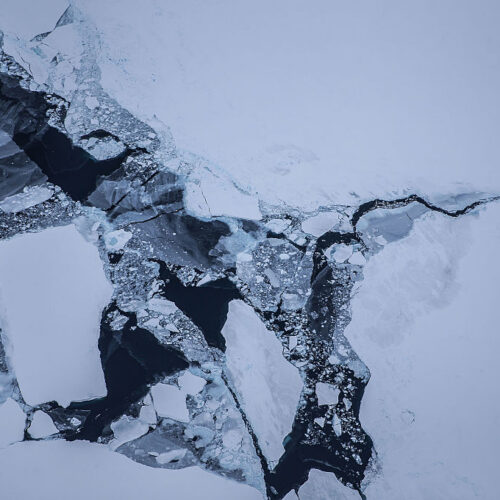
Researchers found that a deep layer of Southern Ocean water around Antarctica has become saltier since 2016, reversing decades of freshening. The layer carries heat, carbon, oxygen and nutrients toward other oceans, so the shift may affect global ocean circulation and climate, though scientists say they need more observations to determine whether it will persist.
Key Facts
The study tracked Southern Ocean changes from 2004 to 2024 using six independent datasets, including measurements from Argo floats.
The affected Antarctic Intermediate Water layer lies about 2,300 to 4,000 feet below the surface and encircles Antarctica.
Antarctic sea ice fell sharply after reaching a satellite-era high in 2014; it hit a record low in 2016 and another low in 2023.
In 2023, Antarctic sea ice measured about 1 million square miles below the 1981–2010 average.
Researchers say dwindling sea ice leaves less freshwater during the melt season, contributing to higher salinity in the water layer.
Antarctic Intermediate Water spreads into the Indian, Pacific and Atlantic oceans, carrying heat, carbon, oxygen and nutrients toward the tropics and across the equator.
Changes in the layer’s density, thickness and salinity can affect how the ocean moves and stores heat.
Scientists say the observational record is too short to know whether the shift is permanent.
Read the Original
Want the full story? Tap a source to open the original
article.
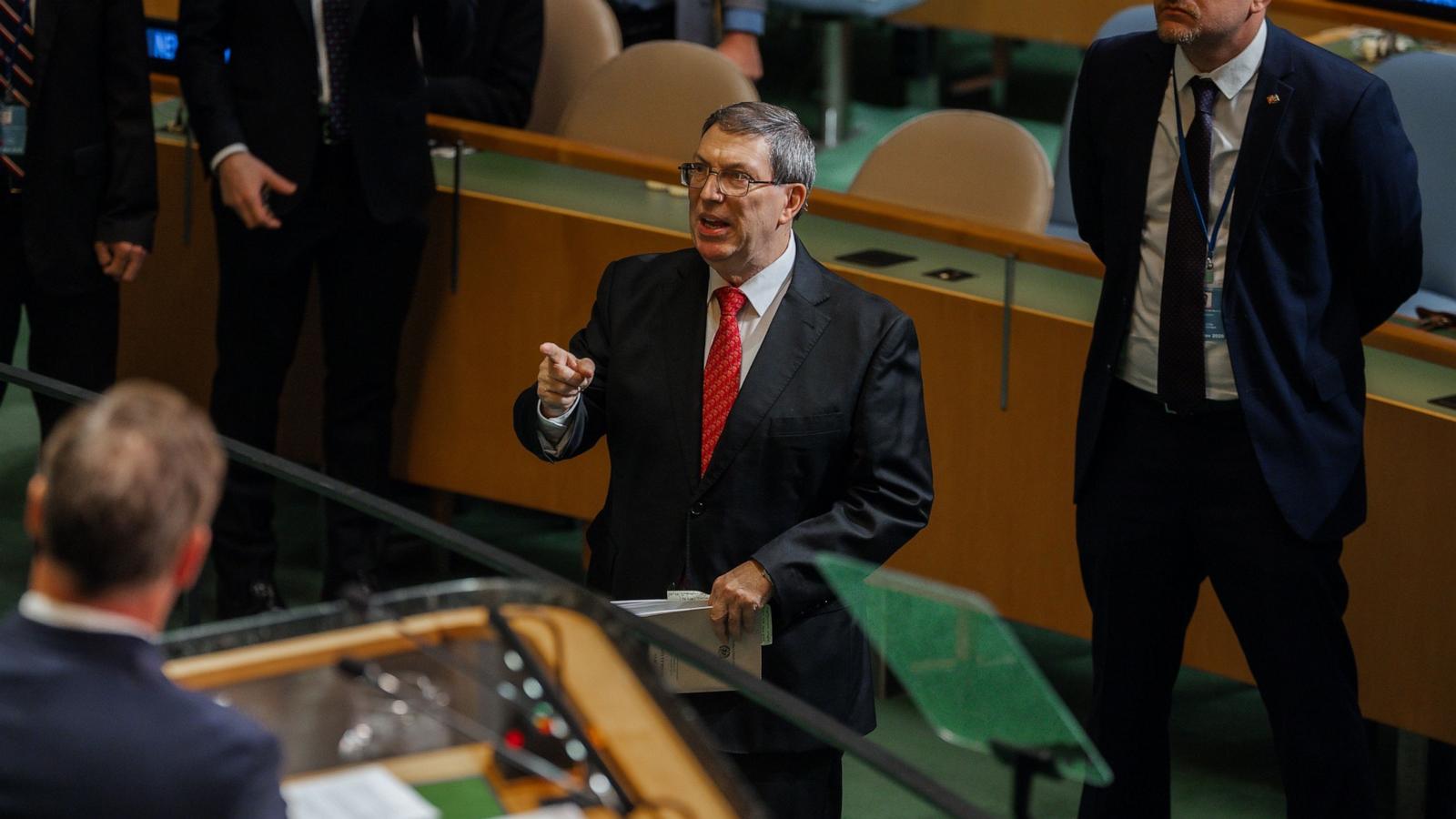
U.S. Ambassador to the United Nations Mike Waltz and Cuban Foreign Minister Bruno Rodríguez Parrilla exchanged shouts during the U.N. General Assembly’s annual debate on the U.S. embargo on Cuba. The assembly president suspended the meeting, then allowed Rodríguez Parrilla to raise a procedural objection before Waltz finished his speech and urged members to oppose a resolution scheduled for a vote Wednesday.
Key Facts
Waltz criticized Cuba’s government in his remarks to the General Assembly.
Rodríguez Parrilla and members of the Cuban delegation shouted and gestured from the audience while Waltz spoke.
Waltz told the Cuban delegation, “This is America,” and said it could not silence him or his colleagues.
Rodríguez Parrilla approached the front of the hall, prompting Waltz to ask him to step back from the podium.
The assembly president suspended the meeting and gave Rodríguez Parrilla a chance to raise a point of order, limited to procedure.
Rodríguez Parrilla accused Waltz of “grossly lying” after returning to his seat.
Waltz urged the chamber to vote against the resolution under consideration on Wednesday.
After the incident, Rodríguez Parrilla criticized Waltz in a post on X.
Read the Original
Want the full story? Tap a source to open the original
article.
President Donald Trump said Tuesday that he approves of Flávio Bolsonaro coming to the United States. Trump made the remarks after Bolsonaro lost a runoff election to incumbent Brazilian President Luiz Inácio Lula da Silva earlier in the week.
Key Facts
Trump said, “I would approve,” when asked about Flávio Bolsonaro entering the United States.
Trump called Bolsonaro and others “fine people.”
Trump spoke to reporters outside Air Force One at Joint Base Andrews.
Flávio Bolsonaro had lost a runoff election earlier that week.
Luiz Inácio Lula da Silva was the incumbent Brazilian president in the runoff.
Read the Original
Want the full story? Tap a source to open the original
article.
Votes are still being counted in Israel’s election, and no official winner has been declared. Prime Minister Benjamin Netanyahu and Gadi Eisenkot are the leading candidates, but neither is expected to win a majority, according to the report.
Key Facts
Vote counting in Israel’s election is ongoing.
Israeli authorities have not announced an official winner.
Benjamin Netanyahu is one of the leading candidates.
Gadi Eisenkot is another leading candidate.
The report says neither candidate is likely to secure a majority.
Read the Original
Want the full story? Tap a source to open the original
article.
Israel’s election vote count is still underway, and no clear winner has emerged. CBS News correspondent Dov Lieber reports on the unclear results and what may happen next.
Key Facts
The election took place in Israel.
Vote counting is still underway.
No clear winner has emerged from the results reported so far.
CBS News correspondent Dov Lieber reports on the election.
The report is presented as a video lasting 2 minutes and 47 seconds.
Read the Original
Want the full story? Tap a source to open the original
article.
The article examines Canada’s Building Canada Strong Act, Bill C-39, introduced on September 21 by Transport Minister Steven MacKinnon. It says the bill would speed up approvals for major projects, shift some review powers to federal agencies responsible for promoting those sectors, and expand government authority over labour disputes, while reducing environmental and Indigenous protections.
Key Facts
Bill C-39 is a 250-page omnibus bill introduced by Transport Minister Steven MacKinnon on September 21.
The bill would allow federal ministers to designate regions as being of national interest, extending an existing fast-track system for projects.
The bill shifts review or approval roles for energy and nuclear projects to the Canada Energy Regulator and the Canadian Nuclear Safety Commission.
Under the amended framework described in the article, most pipelines would no longer require federal cabinet approval; an exception applies to projects needing more than 300 kilometres of new right of way.
The bill would add authority to end legal strikes to the Canada Labour Code.
The article says the bill sets a one-year timeline for decisions on projects and requires Indigenous communities to assess cumulative impacts early in the process.
The article reports that oil and gas companies had lobbied for faster project reviews and that 14 company leaders publicly called for changes to climate policies in March.
Read the Original
Want the full story? Tap a source to open the original
article.
The article’s title says John Healey paid homage to his predecessor, Rachel Reeves. The page provides no further details about the remarks; it directs readers to live coverage of the Autumn Budget and says the video cannot be played.
Key Facts
The article is titled “John Healey pays homage to predecessor Rachel Reeves.”
The page lists the article under Politics.
The page says it was published one minute ago.
The page directs readers to live coverage of the Autumn Budget.
The embedded video could not be played on the page.
The page lists HM Treasury, John Healey, the UK economy, UK taxes and Rachel Reeves as related topics.
Read the Original
Want the full story? Tap a source to open the original
article.
Tens of thousands of people have crossed from Ethiopia into Kenya to escape fighting between regional forces in Moyale. Many arrivals face hunger and limited medical care, while cuts to humanitarian aid threaten relief efforts.
Key Facts
Tens of thousands of people have crossed into Kenya from Ethiopia.
The people are fleeing fighting in Moyale, Ethiopia.
The fighting involves regional forces.
Many arrivals face hunger.
Medical care is limited for people who arrive.
Cuts to humanitarian aid threaten relief efforts.
Read the Original
Want the full story? Tap a source to open the original
article.