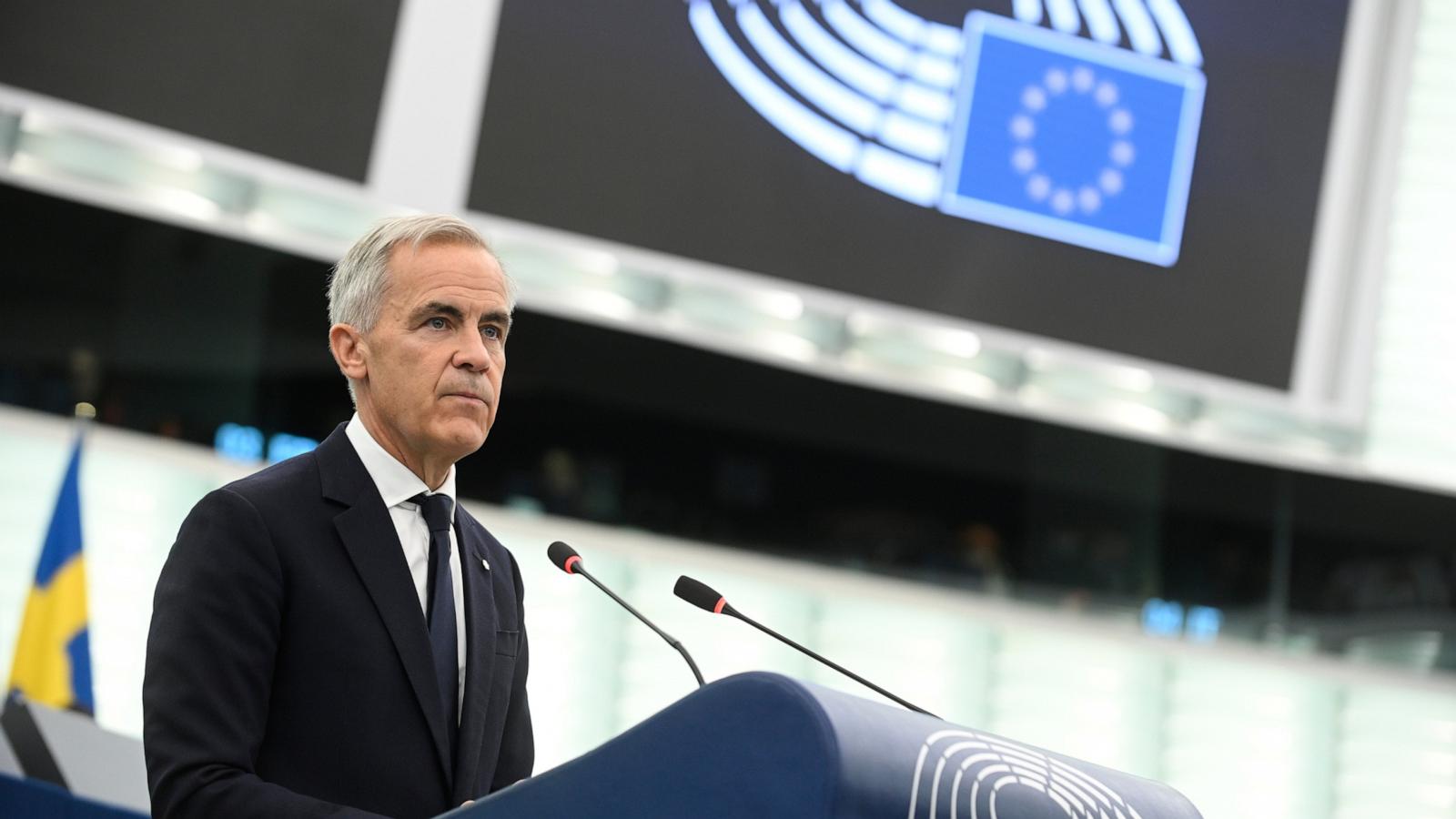
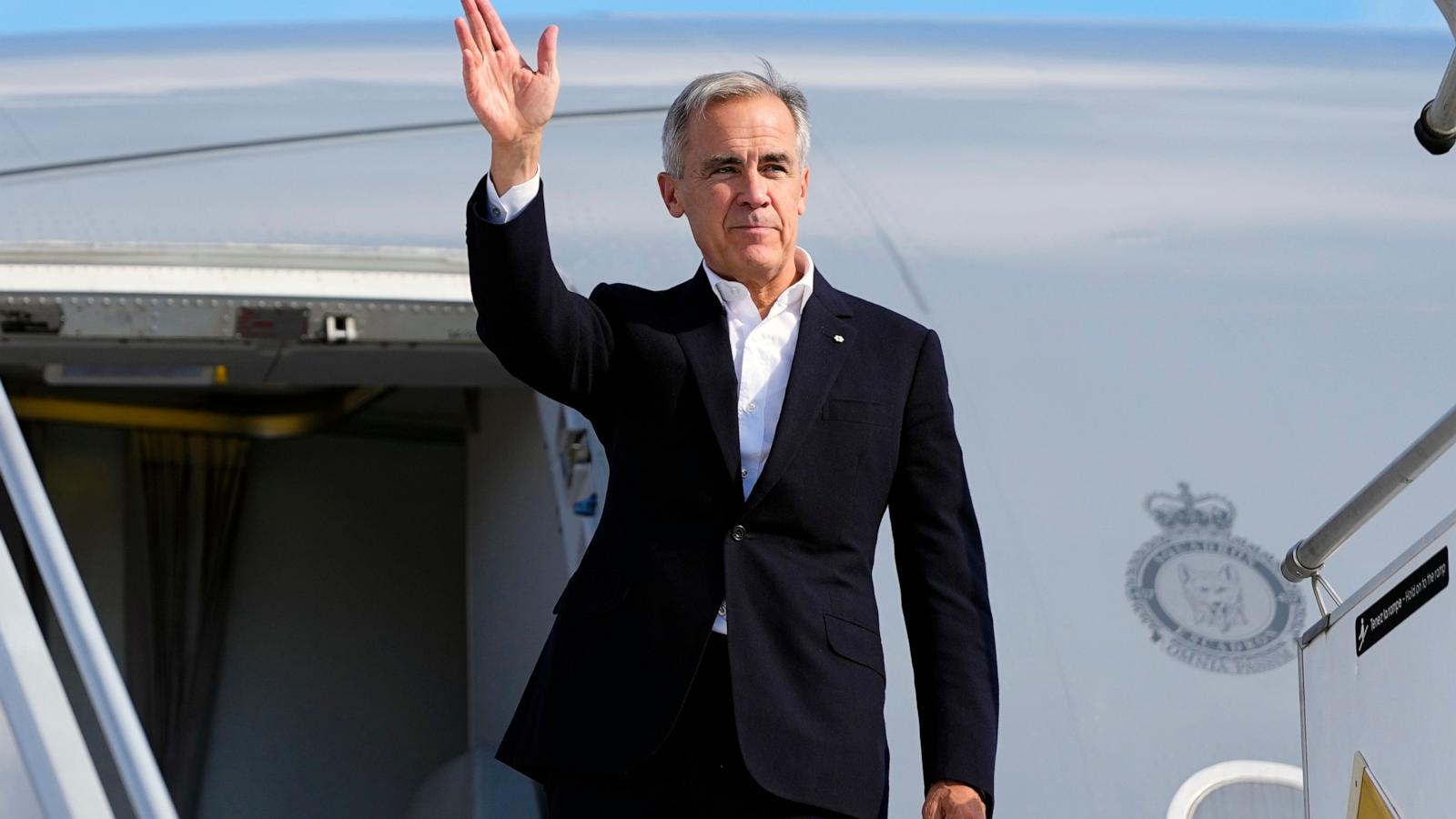
Canadian Prime Minister Mark Carney supports the European Union's plan to make Canada its first "associate member." He said that Canada and Europe are stronger when they work together.
Key Facts
The European Union proposed making Canada an "associate member" of the bloc.
Mark Carney, Canada's Prime Minister, spoke in favor of this proposal.
He addressed the EU lawmakers in Strasbourg to express his support.
Carney emphasized the strength of Canada and Europe working together.
This would be the first time the EU grants associate membership to a country.
The proposal aims to increase cooperation between Canada and the European Union.
The announcement was made on September 17, 2026.
The concept of "associate member" allows close ties without full EU membership.
Read the Original
Want the full story? Tap a source to open the original
article.
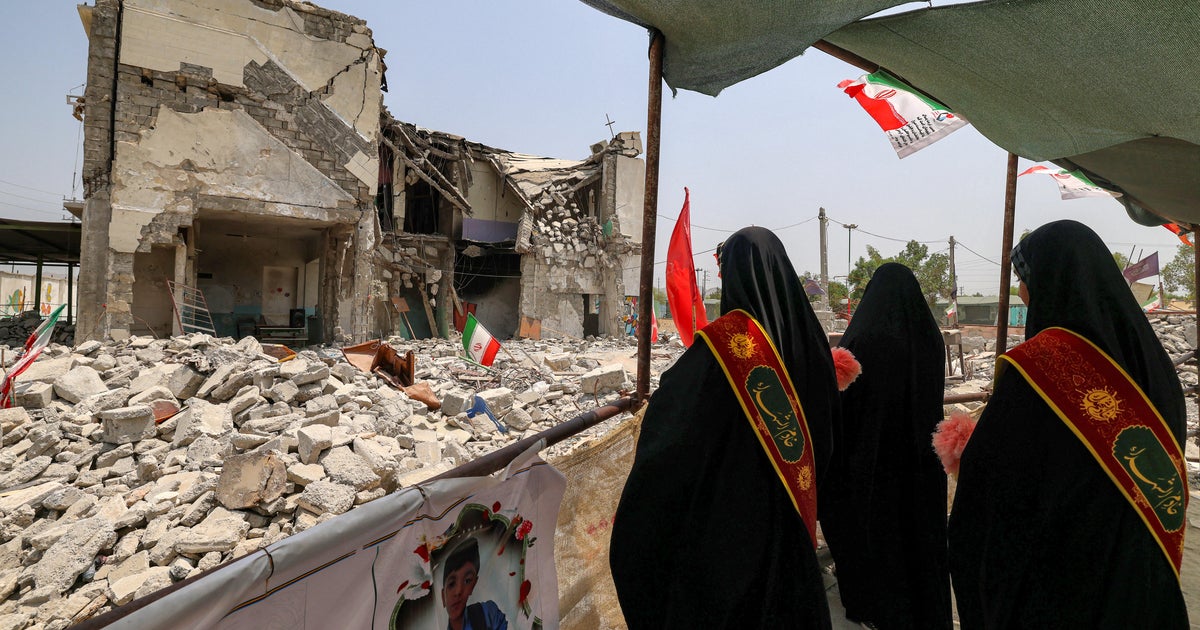
A U.N.-commissioned group of human rights experts said there is evidence that the U.S. may have committed war crimes in two airstrikes in Iran that killed at least 178 civilians. Meanwhile, President Donald Trump plans to meet with Persian Gulf leaders during the U.N. General Assembly to discuss the ongoing war with Iran.
Key Facts
U.N. experts found "reasonable grounds" to believe the U.S. committed war crimes in two airstrikes in Iran.
One strike hit a school in Minab, Iran, killing many civilians including children.
The strikes killed at least 178 civilians in total.
The U.S. did not intend to target the school and may have acted on outdated intelligence.
Iranian officials deny wanting peace talks until the U.S. meets their conditions based on a previous agreement that collapsed.
President Trump said Iran wants to make a deal and hopes the war is nearing an end.
Trump will meet with Persian Gulf leaders during the U.N. meeting to discuss post-war plans.
Oil prices fell after news that a damaged Saudi oil pipeline hit by drones will be repaired soon.
Read the Original
Want the full story? Tap a source to open the original
article.
The Asian Games in Aichi-Nagoya, Japan, are facing problems with housing for athletes and officials because no dedicated athletes' village was built. Organizers are using a cruise ship, wooden cabins, and hotels, but some teams have complained that the accommodations are uncomfortable and poorly arranged.
Key Facts
The Asian Games beginning this weekend in Japan have housing issues for athletes and officials.
Japan did not build a special athletes’ village for this event to save money.
Organizers expected 15,000 athletes, but more have arrived due to new sports being added.
Athletes are staying on an Italian cruise ship, in wooden container huts, and in hotels.
Some teams, like South Korea’s basketball team, complain the wooden huts have very small beds.
Rooms sometimes house coaches and athletes together, causing discomfort.
Japan prepared backup hotel rooms to help with problems.
The local organizer and a committee of former athletes say the accommodations are functional and improvements are ongoing.
Read the Original
Want the full story? Tap a source to open the original
article.
Canada’s Prime Minister Mark Carney spoke to the European Parliament, urging Canada and the European Union to build stronger ties. He highlighted cooperation in trade, technology, and security as a way to work together amid tensions with the United States under President Donald Trump.
Key Facts
Prime Minister Mark Carney addressed the European Parliament in Strasbourg on September 17, 2026.
Carney said Canada and Europe are stronger when working together and should deepen their partnership quickly and clearly.
He suggested cooperation in areas like critical minerals, defense, artificial intelligence, energy security, and space.
Carney called for easier digital trade of goods and services and better opportunities for young people to live and work across the Atlantic.
He emphasized that the goal is resilience and independence, not rivalry or domination.
Carney did not mention President Trump directly but his speech came during a trade and diplomatic dispute with the U.S.
The European Union offered Canada the possibility of becoming its first "associate member," a special partnership status.
EU Commission President Ursula von der Leyen expressed a strong desire to deepen ties with Canada quickly.
Read the Original
Want the full story? Tap a source to open the original
article.
French fishermen blocked several ports in southern France to protest rising fuel prices. Their actions add pressure on the government, which is trying to complete the 2027 budget amid political divisions and concerns about energy costs.
Key Facts
French fishermen blocked ports, including Nice, in protest of high fuel prices.
The protests come amid wider strikes by workers in various sectors, such as electricity and police.
The government extended emergency fuel subsidies for farmers, fishermen, and construction workers until the end of 2026.
The 2027 budget is delayed and difficult to finalize due to energy price pressures and political disagreements.
French borrowing costs have risen to the highest level since 2008 because of market worries.
Some political parties, like the Socialists, refuse to support the budget, making its approval uncertain.
The far-right National Rally party, led by Marine Le Pen, may influence the budget outcome but has criticized some spending plans.
President Macron held a meeting with party leaders to discuss the regional conflicts and their energy market impact.
Read the Original
Want the full story? Tap a source to open the original
article.
Scientists say climate change played a key role in a deadly mountain collapse in Nepal and Tibet last month, which killed over 1,400 people and left thousands missing. The disaster was caused by a mix of warming temperatures, melting glaciers, thawing frozen ground, and unstable mountain slopes.
Key Facts
A large part of rock and glacier broke off Langtang Lirung mountain on August 26, causing floods of water, ice, and debris.
The World Weather Attribution group reported that the disaster was due to long-term climate effects, not just one weather event.
July and August recorded temperatures about 5°C (9°F) higher than normal in the area.
Melting glaciers and thawing permafrost (permanently frozen ground) have weakened mountain slopes.
An earthquake in 2015 might have also weakened the mountain, but its exact impact is unclear.
Nepal has about 6,150 people still missing and over 1,400 bodies found after the disaster.
The government estimates rebuilding costs at $4.78 billion.
Nepal’s Prime Minister will speak at the United Nations about the urgent need to address climate change and disaster recovery.
Read the Original
Want the full story? Tap a source to open the original
article.
President Donald Trump warned the European Union (EU) that the U.S. might impose serious tariffs if the EU allows Canada to become an associate member. The EU wants closer ties with Canada to strengthen democracy amid global challenges, but some EU officials said the U.S. cannot control their decisions.
Key Facts
The European Commission president, Ursula von der Leyen, invited Canada to become the EU’s first associate member.
President Trump called the idea “laughable” and threatened heavy tariffs or cutting trade if the plan goes ahead.
Von der Leyen said the partnership with Canada is meant to reinforce democracy and is not aimed against any country.
France’s Europe minister, Benjamin Haddad, said the U.S. does not have the power to veto EU political decisions.
Canada’s Prime Minister Mark Carney addressed the European Parliament about the partnership plan.
The U.S.-EU trade relationship is sensitive to changes like tariffs, which are taxes on imports or exports.
This issue is part of larger global discussions about democracy and international alliances.
Read the Original
Want the full story? Tap a source to open the original
article.
Canadian Prime Minister Mark Carney spoke to the European Parliament on September 17, 2026. This event followed President Donald Trump’s statement that Canada becoming an associate member of the European Union could be seen as a hostile action.
Key Facts
Mark Carney is the Prime Minister of Canada.
He addressed the European Parliament on September 17, 2026.
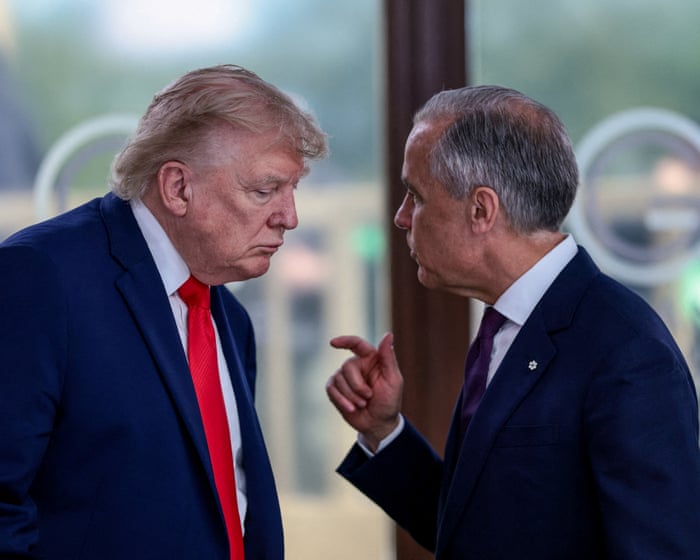
President Donald Trump commented that Canada joining the EU as an associate member might be considered a hostile act.
The European Parliament is a key decision-making body of the European Union.
Associate membership means a closer relationship with the EU but is not full membership.
The topic reflects ongoing discussions about Canada and its international partnerships with Europe.
Read the Original
Want the full story? Tap a source to open the original
article.
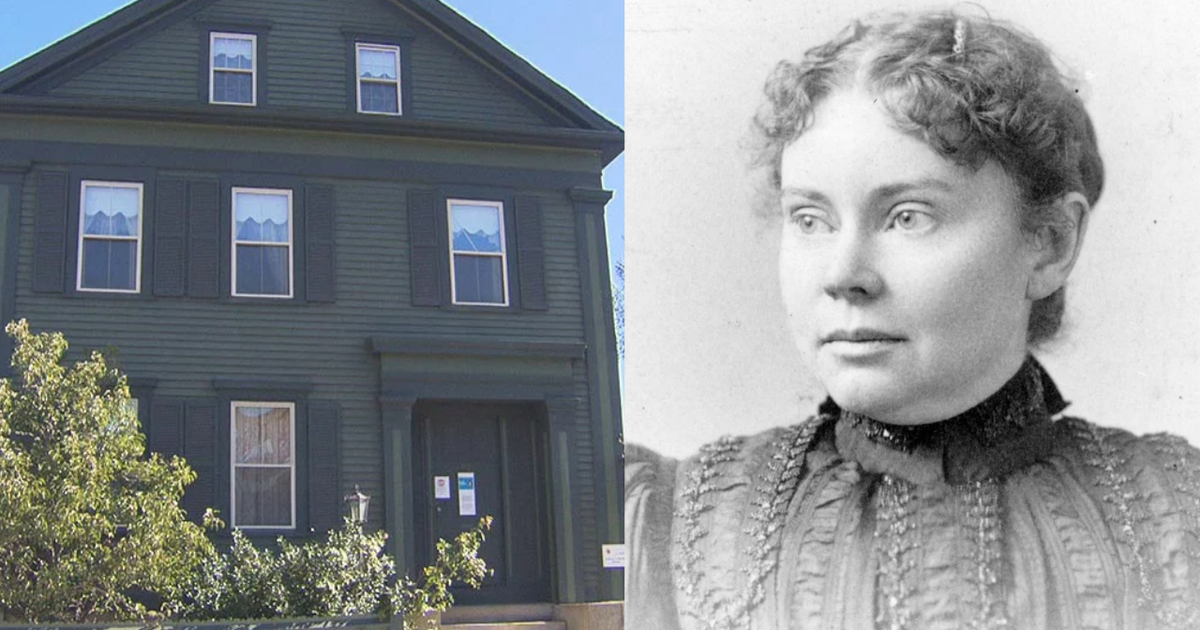
A "48 Hours" team spent a night in the Lizzie Borden House in Fall River, Massachusetts, where the 1892 murders of Andrew and Abby Borden took place. Lizzie Borden was accused but acquitted of killing her parents with a hatchet, and the case remains a famous mystery with new insights and media retellings continuing to emerge.
Key Facts
Andrew Borden and his wife Abby were killed on August 4, 1892, in their home.
Lizzie Borden, Andrew’s daughter, was the prime suspect but was found not guilty after a two-week trial.
The murders were violent; Abby was stabbed fewer than a dozen times, and the weapon was a small hatchet, not an axe as commonly believed.
The Borden house is now a museum and Bed and Breakfast where guests can stay in rooms connected to the crime.
The house is over 180 years old and has been restored with original crime scene photos on display.
Visitors and investigators note the thin walls and small size of the house make it hard to believe Lizzie didn’t hear the attack upstairs.
Questions remain about how the killer could commit the murders without leaving blood evidence or noise.
The case has inspired many books, films, a nursery rhyme, and a Netflix series called "Monster: The Lizzie Borden Story."
Read the Original
Want the full story? Tap a source to open the original
article.
Mohammed Radwan is a camera repairman in Gaza who helps journalists keep their cameras working during the war. Despite shortages of cameras, spare parts, and electricity, he repairs damaged equipment so reporters can continue documenting events.
Key Facts
Mohammed Radwan is a camera repairman based in Gaza.
He repairs damaged camera equipment for journalists.
There are severe shortages of cameras and spare parts in Gaza.
Electricity supply is limited in the area.
Journalists rely on his work to keep filming the war.
His efforts help maintain coverage of the conflict despite tough conditions.
Read the Original
Want the full story? Tap a source to open the original
article.
Various U.S. and international investors, including allies of President Donald Trump and Secretary of State Marco Rubio, are competing to control valuable Cuban assets amid tough U.S. sanctions on the island. These sanctions have pushed out many foreign companies and created new business opportunities for these insiders if the Cuban government falls.
Key Facts
The U.S. has imposed strict secondary sanctions on Cuba, causing many foreign companies to leave the country.
President Trump signed an executive order in May that forced Canada’s Sherritt International out of a mining deal with Cuba.
Two rival U.S. groups led by Trump supporters are competing to buy Sherritt’s stake in Cuban mining.
Australian company Antilles Gold was blacklisted but then allowed by the U.S. government to negotiate transferring its Cuban mining stake to an American investment fund.
Trump Organization executives have returned to Cuba recently to explore real estate deals and meet with relatives of Cuba’s former leaders.
Secretary of State Marco Rubio has held quiet talks with Raúl Guillermo Rodríguez Castro, grandson of former Cuban president Raúl Castro.
Spanish hotel chains Meliá and Iberostar have left Cuba, creating new openings for investors.
The situation is part of a broader effort by the U.S. to increase economic pressure on Cuba and limit foreign influence on the island.
Read the Original
Want the full story? Tap a source to open the original
article.
The Codex Azcatitlán, an important Aztec manuscript held in France for 186 years, is now on display in Mexico. This document shows the history of the Aztecs using pictures and is part of a cultural exchange between Mexico and France.
Key Facts
The Codex Azcatitlán was created in the 16th century shortly after the Spanish arrived in Mexico.
It tells the story of the Aztec civilization and their fight against the Spanish conquistadors using pictograms (pictures that represent words or ideas).
The manuscript has been kept in the French National Library since 1898.
France lent the Codex Azcatitlán to Mexico to celebrate 200 years of diplomatic relations between the two countries.
In exchange, Mexico will lend France the Codex Boturini, which depicts the Aztec migration to Lake Texcoco.
The exchange was agreed upon by Mexico’s President Claudia Sheinbaum and France’s President Emmanuel Macron during his visit to Mexico last year.
Mexico has been actively working to bring back historical objects taken from the country; over 2,000 items were returned last year.
The Codex Azcatitlán will be shown at the National Museum of Anthropology in Mexico City starting this Thursday.
Read the Original
Want the full story? Tap a source to open the original
article.
President Donald Trump started a conflict with Iran, a situation that has had consequences. Earlier, he had advised Ukrainian President Zelensky about winning wars, though Ukraine was defending itself and did not start its war.
Key Facts
In April, President Trump spoke to Ukrainian President Zelensky about war and winning.
Ukraine is currently defending itself in a war it did not start.
President Trump later initiated a conflict with Iran.
The advice Trump gave Zelensky was seen as inappropriate because Ukraine was not the aggressor.
The conflict with Iran has caused problems or costs for President Trump.
The article contrasts Trump’s advice on war with his own actions involving Iran.
Read the Original
Want the full story? Tap a source to open the original
article.
Canadian Prime Minister Mark Carney supports the idea of Canada becoming the European Union’s first associate member, aiming to strengthen ties in trade, defense, and technology. This move comes as a way to reduce Canada’s reliance on the United States, especially after President Trump’s trade threats, and to protect Canada’s economic independence.
Key Facts
Canada might become the EU’s first associate member, a new status that would need to be created by the EU.
Prime Minister Carney wants closer cooperation with Europe in areas like trade, defense, energy, and artificial intelligence.
President Trump called the idea a possible “hostile act” and threatened tariffs on Europe if he viewed the plan negatively.
Canada currently sends about 70% of its exports to the United States, making it vulnerable to U.S. trade policies.
The proposal aims to build Canada’s ability to resist economic control or political pressure from any country.
European Commission President Ursula von der Leyen proposed the new relationship, calling it an “Alliance for the Future.”
Canada and the EU plan a summit in Montreal on October 29-30 to discuss this partnership in more detail.
Carney emphasized that this plan is not to compete for power but to secure freedom and economic security for Canada and Europe.
Read the Original
Want the full story? Tap a source to open the original
article.
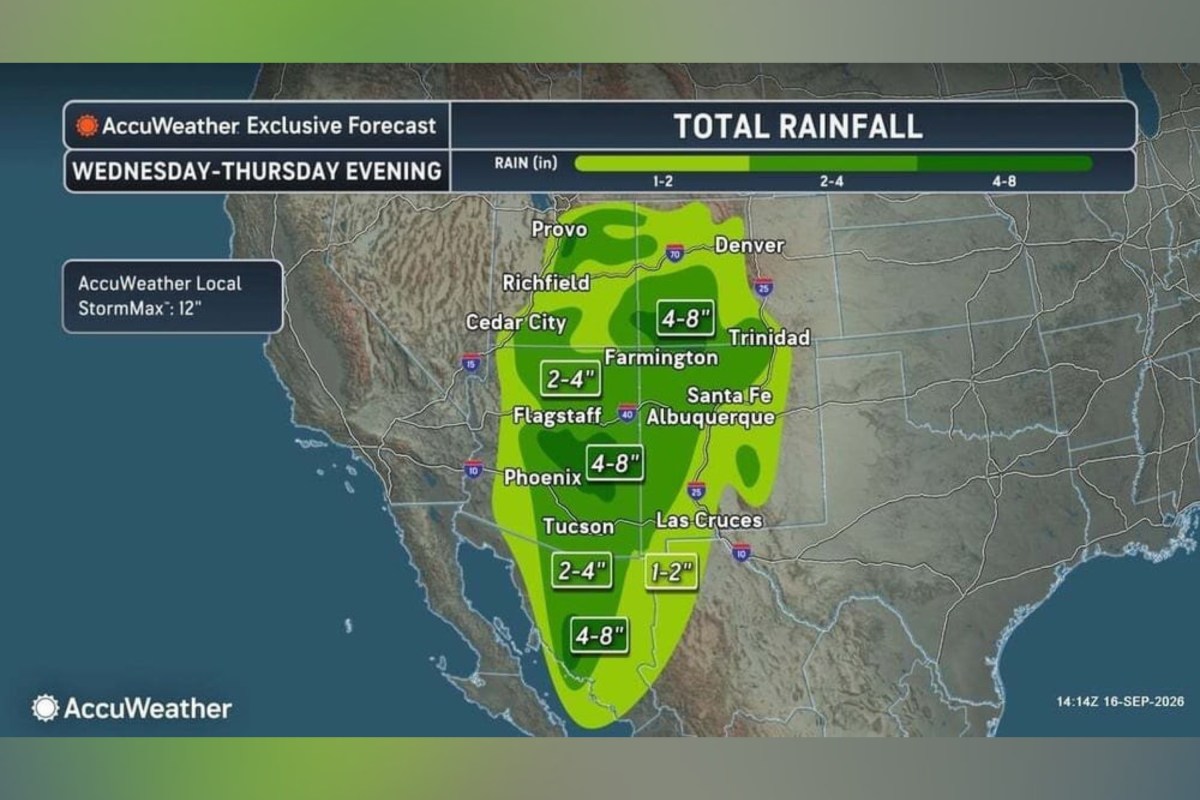
Monsoon rains are expected to bring some short-term relief to parts of the drought-hit Southwest but will not solve the ongoing water shortage in the Colorado River Basin. Experts say that a long-term supply of rain and snow over several years is needed to improve the water levels in Lake Mead and other reservoirs.
Key Facts
The Southwest will see moderate monsoon rainfall this week, mainly in New Mexico, Arizona, and Colorado.
This rainfall may reduce drought conditions locally but will not significantly refill Lake Mead or Lake Powell.
The Colorado River Basin has been in a multi-decade drought since the mid-1990s.
Lake Mead dropped to a record low level of about 1,040 feet in August 2026.
The Colorado River is around 1,400 miles long and supplies water to 40 million people across seven U.S. states and Mexico.
The river supports 5.5 million acres of farmland and produces hydropower for about 700,000 homes.
Experts say prolonged rain and snow over several years are needed to reverse the drought and reservoir declines.
The current monsoon season has been average or slightly below average in rainfall amounts.
Read the Original
Want the full story? Tap a source to open the original
article.
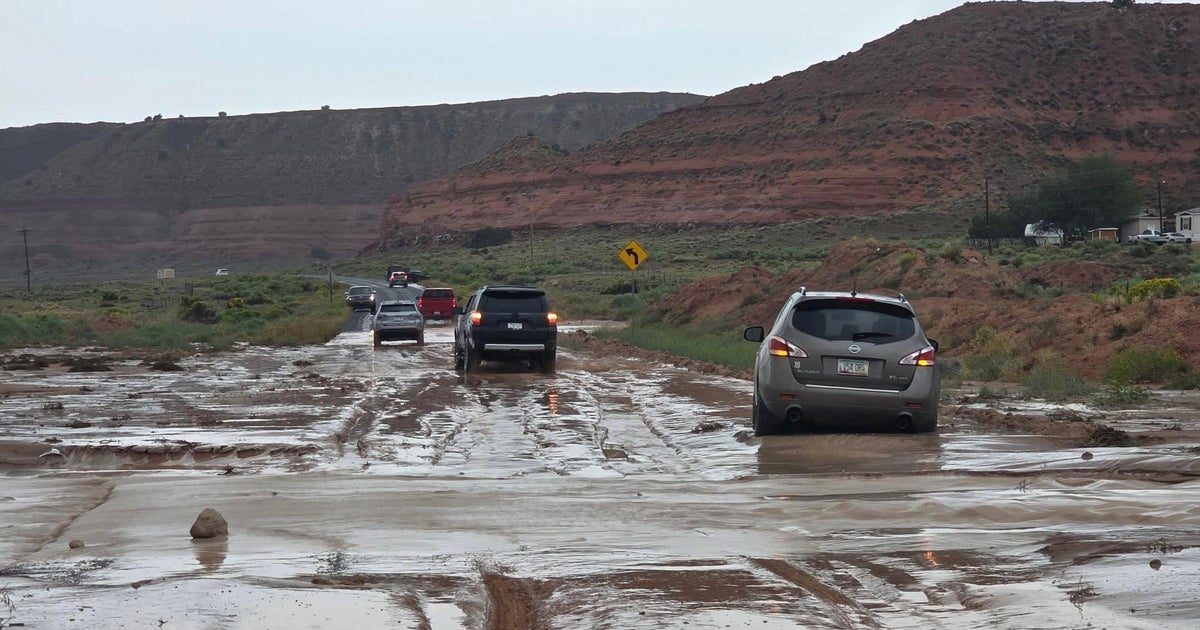
Three people—a child and two adults—died after being swept away by floodwaters early Wednesday on the Navajo Nation in New Mexico. The area had heavy rain and flooding, and authorities are investigating the drownings while warning residents to be cautious due to ongoing storms.
Key Facts
The incident occurred near the community of Newcomb on the Navajo Nation in northwestern New Mexico.
Tribal police received reports around 12:30 a.m. about people being washed away by floodwaters.
Search crews found the bodies of two adults and one child.
The National Weather Service warned of heavy thunderstorms and near-record moisture levels through mid-September.
Flooding has made some roads impassable, and people are advised not to drive through flooded areas.
The Four Corners region, including New Mexico, Arizona, Utah, and Colorado, is expecting more heavy rain and flash floods.
Navajo Nation President Buu Nygren offered condolences and urged people to be cautious during the dangerous weather.
Recent floods in the region have also caused deaths elsewhere, such as at the Grand Canyon.
Read the Original
Want the full story? Tap a source to open the original
article.
President Trump criticized the European Union’s plan to make Canada an “associate member” to strengthen cooperation in technology, defense, and energy. He called the proposal “laughable” and warned that the U.S. could impose trade tariffs or stop trade with the EU if the plan moves forward.
Key Facts
The EU plans to make Canada its first “associate member” to boost cooperation.
The cooperation involves areas like technology, defense, and energy.
President Trump responded negatively to this plan.
He described the proposal as “laughable.”
Trump threatened to impose tariffs on EU goods or end trade with the EU.
This statement was made on Wednesday, September 17, 2026.
The move signals tension in trade relations between the U.S. and the EU.
The article also mentions other global and regional news but focuses on Trump’s reaction to the EU-Canada plan.
Read the Original
Want the full story? Tap a source to open the original
article.
President Donald Trump said he has directly spoken with Iranian officials and hopes the war with Iran is nearing its end, suggesting talks might resume. However, Iran has not confirmed these direct negotiations and insists on its conditions being met before any talks, while conflict in the region continues to affect global oil supplies.
Key Facts
President Trump claims he has had direct communication with officials in Tehran.
Iran has not confirmed reopening direct talks with the United States.
A senior Iranian official said Iran will not talk unless certain conditions are met.
Iran has effectively closed the Strait of Hormuz, a key route for global oil and gas.
Fighting has spread to Yemen, involving Iran-linked Houthi forces attacking Saudi oil facilities.
Oil prices have risen above $100 per barrel due to the conflict and blockade.
Iran’s Foreign Minister held talks with Pakistan’s army chief to discuss regional issues.
China has urged both the US and Iran to show restraint and reopen the Strait of Hormuz soon.
Read the Original
Want the full story? Tap a source to open the original
article.
Military leaders from Europe and Arab countries are meeting in Paris to discuss how to support Lebanon’s army as the United Nations peacekeeping mission (UNIFIL) is set to end in January. They are also preparing for the possibility of new international missions to help Lebanon and managing tensions caused by recent Israeli attacks in southern Lebanon.
Key Facts
European and Arab military chiefs are holding talks in Paris about Lebanon’s security needs.
UNIFIL, a UN peacekeeping mission with about 7,500 troops, has operated in Lebanon for nearly 50 years and is expected to end in January.
Lebanon and France want to extend UNIFIL’s mission, but the US and Israel have not shown support for this.
Possible new missions led by France, Italy, or the European Union may focus on training and assisting the Lebanese army.
The US is participating through a senior military official involved in Middle East security.
Talks follow US-brokered agreements aimed at easing border tensions between Israel and Lebanon.
Israeli attacks recently killed civilians in southern Lebanon, worsening fears of renewed conflict.
Disarming Hezbollah is a key demand for Israel’s withdrawal, while Lebanon’s president wants to do this without conflict.
Read the Original
Want the full story? Tap a source to open the original
article.
Israel's Ministry for Diaspora Affairs sent a letter recommending that border authorities bar employees and activists from several UK-based charities and campaign groups from entering Israel. This move follows the UK banning imports from Israeli settlements in the occupied West Bank, leading to Israeli retaliation including banning some British MPs and closing a British consulate.
Key Facts
Israel's Ministry for Diaspora Affairs wrote a letter naming UK-linked groups and activists to be barred from Israel.
The letter targets groups like Oxfam, Islamic Relief, Save the Children, Medical Aid for Palestinians, and campaign groups supporting Palestine.
The letter was issued on September 8, the same day the UK banned imports from illegal Israeli settlements.
Israel has banned 11 British MPs and a lawyer from entering, ordered the closure of the British consulate in Jerusalem, and ended British training of Palestinian forces.
Accusations against these groups include supporting Hamas, advocating boycotts, or calling Israel's actions genocide.
Save the Children reports difficulty obtaining visas for staff to provide aid in Gaza and West Bank due to Israeli restrictions.
The restrictions on international aid have increased since the war in Gaza began, affecting food, medicine, doctors, and humanitarian workers.
Palestine Action, known for protests against Israeli weapons companies, is also named in the letter.
Read the Original
Want the full story? Tap a source to open the original
article.