Military leaders from Europe and Arab countries are meeting in Paris to discuss how to support Lebanon’s army as the United Nations peacekeeping mission (UNIFIL) is set to end in January. They are also preparing for the possibility of new international missions to help Lebanon and managing tensions caused by recent Israeli attacks in southern Lebanon.
Key Facts
European and Arab military chiefs are holding talks in Paris about Lebanon’s security needs.
UNIFIL, a UN peacekeeping mission with about 7,500 troops, has operated in Lebanon for nearly 50 years and is expected to end in January.
Lebanon and France want to extend UNIFIL’s mission, but the US and Israel have not shown support for this.
Possible new missions led by France, Italy, or the European Union may focus on training and assisting the Lebanese army.
The US is participating through a senior military official involved in Middle East security.
Talks follow US-brokered agreements aimed at easing border tensions between Israel and Lebanon.
Israeli attacks recently killed civilians in southern Lebanon, worsening fears of renewed conflict.
Disarming Hezbollah is a key demand for Israel’s withdrawal, while Lebanon’s president wants to do this without conflict.
Read the Original
Want the full story? Tap a source to open the original
article.
Israel's Ministry for Diaspora Affairs sent a letter recommending that border authorities bar employees and activists from several UK-based charities and campaign groups from entering Israel. This move follows the UK banning imports from Israeli settlements in the occupied West Bank, leading to Israeli retaliation including banning some British MPs and closing a British consulate.
Key Facts
Israel's Ministry for Diaspora Affairs wrote a letter naming UK-linked groups and activists to be barred from Israel.
The letter targets groups like Oxfam, Islamic Relief, Save the Children, Medical Aid for Palestinians, and campaign groups supporting Palestine.
The letter was issued on September 8, the same day the UK banned imports from illegal Israeli settlements.
Israel has banned 11 British MPs and a lawyer from entering, ordered the closure of the British consulate in Jerusalem, and ended British training of Palestinian forces.
Accusations against these groups include supporting Hamas, advocating boycotts, or calling Israel's actions genocide.
Save the Children reports difficulty obtaining visas for staff to provide aid in Gaza and West Bank due to Israeli restrictions.
The restrictions on international aid have increased since the war in Gaza began, affecting food, medicine, doctors, and humanitarian workers.
Palestine Action, known for protests against Israeli weapons companies, is also named in the letter.
Read the Original
Want the full story? Tap a source to open the original
article.
Ukrainian officials report at least 19 people injured in Russian missile and drone strikes across Kyiv and nearby regions. Ukraine’s Air Force says it destroyed or suppressed 131 Russian aerial targets, while Russia says it hit military and industrial sites in those areas. President Donald Trump recently claimed both sides agreed to pause attacks on energy facilities, but this agreement has not been confirmed and attacks continue.
Key Facts
At least 19 people were injured by Russian strikes in Kyiv, Zaporizhzhia, and Odesa regions.
Ukraine’s Air Force destroyed or suppressed 131 Russian aerial targets during the attacks.
Russian forces targeted factories, energy, transport facilities, and ships used by Ukraine’s military.
Damage was reported to homes, warehouses, schools, and vehicles in multiple districts of Kyiv and the Kyiv region.
No casualties were reported in some affected areas, despite damage to many sites.
President Donald Trump said Russia and Ukraine agreed to pause attacks on energy infrastructure, but this has not been confirmed by either side.
Russia plans to increase attacks on Ukraine’s energy grid during the winter months.
Ukraine struck an oil refinery in Russia’s Yaroslavl and damaged Russian aircraft near Rostov, according to Ukraine’s President Zelenskyy.
Read the Original
Want the full story? Tap a source to open the original
article.
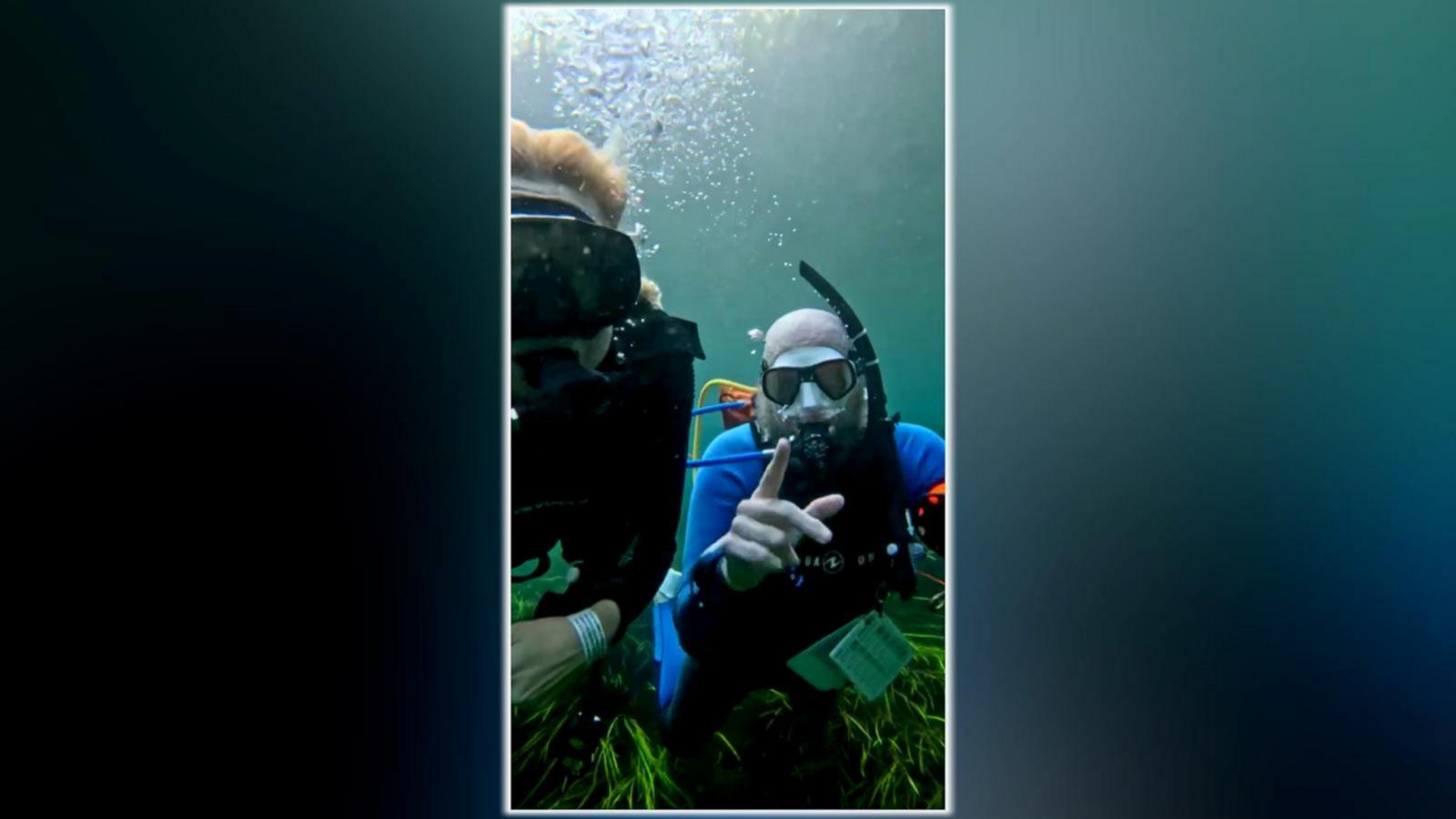
Thomas Koch has become the first deaf person to be honored in the International Scuba Diving Hall of Fame. ABC News talked to him about this achievement.
Key Facts
Thomas Koch is deaf.
He made history by entering the International Scuba Diving Hall of Fame.
This is the first time a deaf person has received this honor.
The recognition highlights his contributions and achievements in scuba diving.
ABC News reporter Danny New conducted the interview with Thomas Koch.
The event occurred before September 17, 2026.
The Hall of Fame celebrates people who have made important impacts in scuba diving.
Read the Original
Want the full story? Tap a source to open the original
article.
NHL player Alexander Ovechkin appeared in a campaign ad supporting Russian President Vladimir Putin before upcoming elections. Ovechkin has been known to support Putin, who has faced international criticism for serious human rights violations.
Key Facts
Alexander Ovechkin is a professional hockey player in the NHL.
He took part in a political ad backing Vladimir Putin during the Russian election campaign.
Putin is the current President of Russia running in the elections this weekend.
The international community has criticized Putin for alleged crimes against humanity.
Ovechkin’s public support for Putin has drawn negative reactions from many people.
This is not the first time Ovechkin has shown support for Putin publicly.
The article highlights the connection between sports figures and political events in Russia.
Read the Original
Want the full story? Tap a source to open the original
article.
On September 12, 2026, President Donald Trump said the Houthi group, which controls a key shipping area at the Bab al-Mandeb strait, contacted the US asking to avoid conflict. Despite the Houthis’ recent military gains in Yemen, Trump indicated the US would not intervene militarily, focusing instead on threats from Iran and prioritizing the nearby Strait of Hormuz.
Key Facts
The Houthis took control of Dhubab, Perim Island, and the port of Mocha near Bab al-Mandeb, a crucial global shipping route.
President Trump said the Houthis contacted the US to avoid fighting and were allowing most ships to pass.
The Houthis announced a blockade on Saudi oil supplies to Asia and Saudi commercial shipping.
The US is shifting its military focus away from Yemen’s conflict and prioritizing Iran and the Strait of Hormuz.
Trump said the US has “tight control” over the Strait of Hormuz, which is vital for oil shipments.
Trump’s reluctance to engage militarily in Yemen partly relates to domestic political concerns ahead of congressional elections.
Saudi officials denied reports that Crown Prince Mohammed bin Salman urged Trump to strike the Houthis and that Trump refused.
The US continues a “security-for-oil” relationship with Gulf states but is reducing its direct military role in Yemen.
Read the Original
Want the full story? Tap a source to open the original
article.
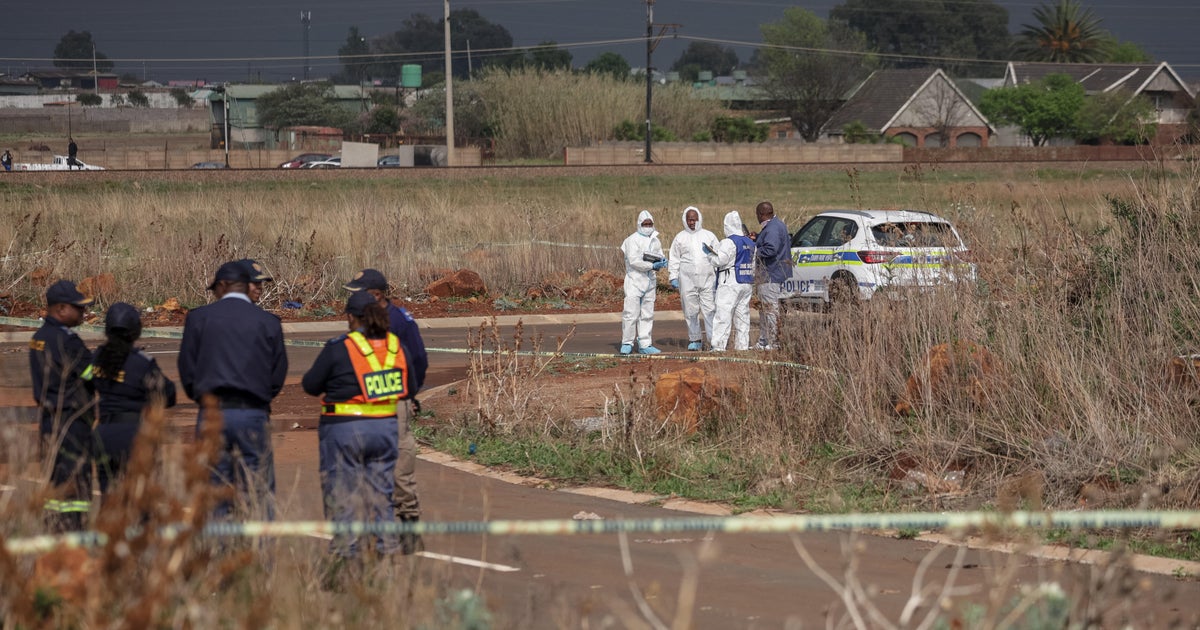
South African police have found the ninth woman's body in two months in the Ekurhuleni area east of Johannesburg. Authorities are investigating whether the deaths are connected but have not confirmed any links or the involvement of a serial killer.
Key Facts
Nine women’s bodies have been found since mid-July in locations around Ekurhuleni, including Dawn Park and Kempton Park.
The latest body was found half-naked, wrapped in a sheet, with bruises and stab wounds; the victim’s identity is not yet known.
Some earlier victims were partially clothed and showed injuries; police are uncertain if the cases are connected.
A suspect was arrested after the first body was found on 15 July but has not been linked to other deaths.
President Cyril Ramaphosa promised a full investigation, emphasizing efforts to stop the killings.
Police formed a team of detectives, forensic experts, and intelligence officers to investigate.
Authorities have offered a reward of 400,000 rand (about $24,000) for information leading to arrests.
Police warn against speculation and say they are considering the possibility of separate events or multiple people involved.
Read the Original
Want the full story? Tap a source to open the original
article.
South African police found the ninth dead woman in the Ekurhuleni area near Johannesburg, possibly connected to a series of killings. Police are investigating if the deaths are linked and have called for public help while cautioning against spreading unverified information.
Key Facts
Nine dead women have been found in the Ekurhuleni municipality over the past two months.
The cases share some similarities, prompting police to issue a public warning.
The latest body, found near a construction site, was of an unidentified woman about 30 years old with stab and throat wounds.
Police have not confirmed if the latest death is connected to the others and are still investigating.
The police have formed a team of experts to solve the cases and catch those responsible.
Bodies have been discovered in several communities within Ekurhuleni, including Kempton Park and Dawn Park.
Authorities have imposed a lockdown in Kempton Park to control the situation.
Community group Missing In Southern Africa urges families to report missing persons immediately without waiting.
Read the Original
Want the full story? Tap a source to open the original
article.
Drone attacks damaged a major Saudi oil pipeline, stopping 4-5 million barrels of oil per day from reaching global markets. Saudi Arabia is now relying more on riskier and costlier shipping routes through the Strait of Hormuz and stored reserves to export its oil.
Key Facts
Drone attacks hit Saudi Arabia’s East-West pipeline, which connects oil fields in the east to the Red Sea port of Yanbu.
The pipeline outage stopped about 4-5 million barrels of oil per day from being exported.
Saudi oil exports fell over 70%, from about 7.5 million bpd in early 2026 to around 2.1-2.3 million bpd by September 2026.
Most Saudi crude oil usually ships through the Strait of Hormuz, a narrow and strategic waterway.
Due to the pipeline halt and regional tensions, Saudi Arabia is shifting exports back through the Gulf and using ship-to-ship transfers near Oman.
Tankers sometimes turn off their tracking systems, called AIS, to reduce risks when passing through dangerous areas.
Saudi Arabia can also use stored oil at western ports and Egypt’s terminals to keep supplying Europe.
Repair time for the damaged pipeline may take 3 to 5 weeks or longer, affecting global oil supply and costs.
Read the Original
Want the full story? Tap a source to open the original
article.
The article explains how powerful countries control words and ideas to shape how the world sees them and others. It introduces the idea of a "pernicious state," a country whose main way of operating is to cause harm globally through economic, military, and political means.
Key Facts
Powerful states create and spread concepts that justify their actions and frame others negatively.
Terms like "rogue state" are often used by Western countries, especially the U.S., to label weaker states.
These labels can hide the harm caused by powerful states while focusing criticism on smaller countries.
A "pernicious state" is one that makes causing harm a central and ongoing practice, not just a rare action.
Larger, more powerful countries have a greater ability to harm other nations on a global scale.
Pernicious states use economic tools, such as unfair trade deals and loans, to weaken other countries without direct violence.
Such states also rewrite international rules to protect themselves from punishment or accountability.
International relations often involve power struggles where ideas and language are part of the global competition.
Read the Original
Want the full story? Tap a source to open the original
article.
A Syrian court has handed out its first sentences for the killings of Alawite people on the Syrian coast in 2025. A former government soldier was sentenced to 20 years in prison, while two others connected to the old Assad government received a death sentence and life in prison.
Key Facts
The court trial began in November 2025 and involved 14 people accused of involvement in the massacres.
The accused included seven members of government forces and seven supporters of former President Bashar al-Assad.
The Alawites are a minority group in Syria that was targeted in these killings.
Sentences include 20 years in prison, life imprisonment, and the death penalty.
The massacres happened on the Syrian coast in 2025.
The court’s decision is the first verdict related to these crimes.
There have been ongoing tensions and sectarian violence in Syria affecting minority groups.
Read the Original
Want the full story? Tap a source to open the original
article.
The US has denied a visa to Palestinian President Mahmoud Abbas, preventing him from attending the UN General Assembly in New York for the second year in a row. The US government extended visa sanctions against Palestinian officials, citing concerns over their actions related to the Israeli-Palestinian conflict.
Key Facts
Palestinian President Mahmoud Abbas was denied a US visa to attend the UN General Assembly in New York.
This is the second consecutive year that the US has blocked Abbas from attending in person.
The US extended visa sanctions initially imposed in August 2025 on around 80 Palestinian officials.
The US accuses the Palestinian Authority and Palestine Liberation Organization of "glorifying terrorism" and trying to internationalize the Israeli-Palestinian conflict.
Palestinians reject these accusations and say they have the right to hold Israel accountable under international law.
Under the UN Headquarters Agreement, the US should allow foreign diplomats access to the UN, but it can deny visas for security or foreign policy reasons.
Abbas addressed the UN General Assembly by video last year and may do so again this year, pending a UN vote.
The humanitarian situation in Gaza remains severe, with ongoing violence and casualties despite a ceasefire last October.
Read the Original
Want the full story? Tap a source to open the original
article.
A UN investigation found reasonable evidence that the US was responsible for two military attacks on a school and sports center in Iran in February, which likely broke international war laws. The UN also concluded that Iranian authorities committed crimes against humanity during their harsh crackdown on protests starting in December.
Key Facts
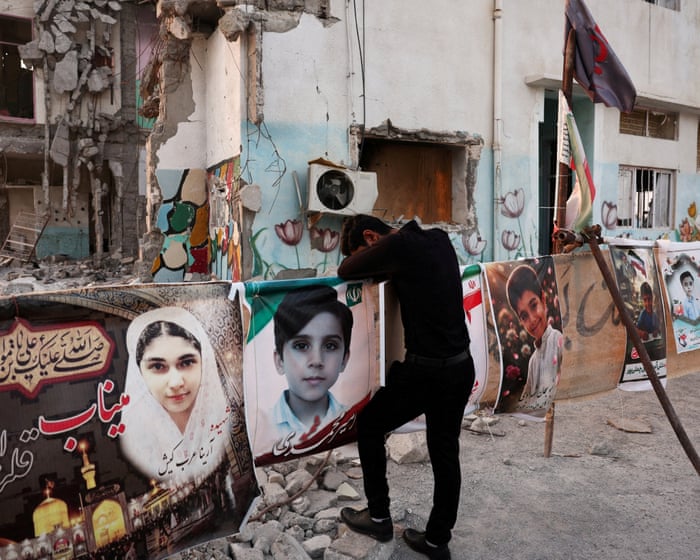
A UN fact-finding mission on Iran reports US military strikes killed over 150 people at a primary school in Minab, including about 120 children.
The UN says these attacks on clearly civilian places were war crimes under international law.
The US allegedly acted recklessly by not properly confirming the presence of military targets before striking civilian buildings.
The US military has not publicly released final results of its ongoing investigation into the strikes.
Another strike on a sports center in Lamerd killed and injured 22 civilians and damaged nearby buildings, also deemed indiscriminate and a war crime.
Iranian officials violently suppressed nationwide protests that began in December with unlawful killings, torture, and severe restrictions on freedoms.
The UN believes the actual death toll from protests is likely higher than the Iranian government’s official figures of around 3,000 deaths.
Iran blamed the protests on foreign enemies including the US and Israel, though the UN found no evidence supporting these claims.
Read the Original
Want the full story? Tap a source to open the original
article.
Big AI companies like OpenAI are moving beyond just providing AI tools and are starting to control the entire path from education to employment. OpenAI offers training, certificates, and job connections, potentially competing with universities and changing how students learn and get hired.
Key Facts
Students use AI tools like ChatGPT for studying and personal help.
OpenAI plans to connect learning, certification, and jobs in one service called the OpenAI Jobs Platform.
OpenAI hires students as campus ambassadors to reach and influence more learners.
The company invests billions and places engineers inside businesses to change how work uses AI.
OpenAI collaborates with companies like Accenture and John Deere to offer certificates linked to job opportunities.
These moves give OpenAI insight into both student learning and employer needs.
Universities risk losing their traditional role in education and job preparation if AI companies control the whole education-to-work path.
Read the Original
Want the full story? Tap a source to open the original
article.
The European Commission President Ursula von der Leyen suggested that Canada might become an associate member of the European Union, though no details were given. This idea was met with mixed reactions internationally and skepticism in Canada, while various global media see it as a sign of shifting political ties influenced by President Trump’s diplomacy.
Key Facts
Ursula von der Leyen proposed the idea of Canada becoming an associate member of the EU during her State of the Union speech.
The proposal aims to build on common strengths and is not aimed against any other country.
Previously, von der Leyen made a similar proposal for Ukraine, which received a lukewarm response from EU countries.
The New York Times links this proposal to changes in global relations caused by President Trump’s diplomatic style.
Some European media see potential for a new trans-Atlantic partnership as anti-EU and conflict sentiments increase.
In Canada, the idea faces skepticism and concern over national sovereignty from opposition leaders and media.
Canada already has a trade deal with the EU, but not all EU members have ratified it.
The proposal could involve Canada’s rich supplies of minerals and rare earth materials.
Read the Original
Want the full story? Tap a source to open the original
article.
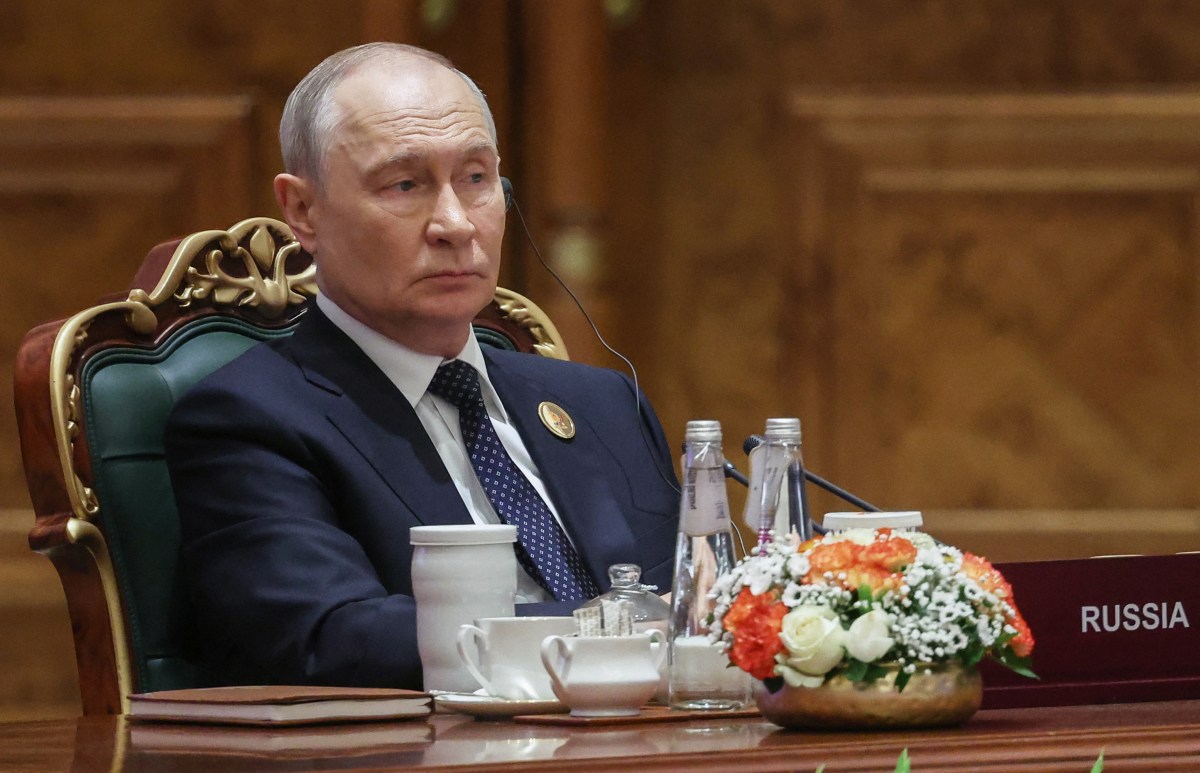
Russia will hold parliamentary elections to choose 450 members of the State Duma, the lower house of its parliament. Recent polls show that President Vladimir Putin’s approval rating has dropped compared to last year, amid economic problems and the effects of the ongoing war in Ukraine on everyday life.
Key Facts
The State Duma election will take place over three days, including in Russian-occupied Crimea.
Half of the Duma seats are chosen by party lists nationwide, and the other half by local district votes.
The ruling United Russia party is expected to keep its majority, needing at least 300 of 450 seats.
Putin’s approval rating was 76% in August 2023, down 13 points from the previous year, according to an independent poll by the Levada Center.
State-controlled polls show Putin’s approval fluctuating around 66-67%, the lowest since the start of the war.
The anti-war Yabloko party was banned from running in the party-list vote and faces strong restrictions.
Russian cities are now affected by the war, with Ukrainian drone strikes hitting military sites and businesses.
There are signs of some disagreement within Russia’s elite about continuing the war, but dissent is tightly controlled.
Read the Original
Want the full story? Tap a source to open the original
article.
Ed Sheeran said that the decision to remove rapper Macklemore from his North American tour was made by the venues and the tour promoter, not by him. Macklemore faced controversy after supporting Palestinians during recent concerts, which led to criticism and withdrawals from the tour.
Key Facts
Macklemore expressed support for Palestinians and led chants at concerts during the Israel-Gaza conflict.
Following this, pro-Israel groups pressured venues and promoters to remove Macklemore from the tour.
Ed Sheeran clarified that Macklemore’s contract was with the promoter, not with him personally.
Venues reportedly threatened to cancel shows if Macklemore remained on the tour.
The promoter involved is Louis Messina and his company, Messina Touring Group, a major concert promotion company.
Messina Touring Group has worked with top artists like Taylor Swift, Ed Sheeran, and Blake Shelton.
Macklemore accused influential people, including Robert Kraft, of pressuring venues against him.
Ed Sheeran said he respects Macklemore’s artistic choices and opposes the suffering caused by the conflict but was not involved in the decision.
Read the Original
Want the full story? Tap a source to open the original
article.
Abu Bilal, a man from Syria, hid his collection of books behind a secret wall in his home to keep them safe from the former Assad regime. After 15 years, he finally broke through the wall and recovered his books.
Key Facts
Abu Bilal built a hidden wall inside his home.
He did this to protect his books from Syria’s former Assad regime.
The wall kept the books safe for 15 years.
Abu Bilal used a hammer to break the wall open.
After breaking the wall, he found and recovered his books.
This story highlights the lengths people go to protect knowledge during conflicts.
The former Assad regime refers to the previous government under Bashar al-Assad in Syria.
Read the Original
Want the full story? Tap a source to open the original
article.
President Donald Trump and Chinese leader Xi Jinping both support rapid development of artificial intelligence (AI) to strengthen their countries' economies. While the U.S. worries about AI risks, China focuses on controlling AI to protect its government stability. Experts warn about potential dangers of AI, but both leaders want to lead the global AI race.
Key Facts
President Trump calls AI a huge opportunity and says the U.S. must lead in AI development.
China is speeding up AI research but aims to tightly control it to maintain political stability.
U.S. AI company Anthropic warns that AI development should slow to avoid serious harms.
Anthropic’s CEO, Dario Amodei, is concerned about loss of human control over AI.
Trump dismisses these warnings as a conspiracy to hurt U.S. tech companies.
Chinese media criticize U.S. tech leaders like Anthropic, OpenAI, and Elon Musk for trying to block China’s AI progress.
Anthropic revealed Chinese companies may have used its software without permission to train AI models.
Both the U.S. and China see AI as crucial to their future economic and political power.
Read the Original
Want the full story? Tap a source to open the original
article.
Israeli Prime Minister Benjamin Netanyahu has promised to introduce a law that would take away the citizenship of people who criticize Israeli soldiers, including filmmakers behind the documentary "NAZA." The film accuses Israeli forces of deliberately causing civilian deaths in Gaza, a claim Netanyahu and the military deny.
Key Facts
Netanyahu wants a law to revoke citizenship from those who defame Israeli soldiers.
The law targets people like the creators of "NAZA," a documentary about Israeli soldiers killing civilians in Gaza.
"NAZA" was directed by Israeli journalists Yuval Abraham and Rachel Szor and won a prize at the Venice Film Festival.
The documentary claims that civilian deaths are part of Israel’s military tactics, which Israeli leaders reject.
Netanyahu plans two laws: one to revoke citizenship and another to increase money fines for defamation by 20 times.
The issue is part of a heated political debate before Israel’s October 27 election.
Existing laws allow citizenship to be stripped for betraying the state, but new laws would face legal challenges.
Over 73,000 Palestinians, mostly civilians, have died in the conflict in Gaza since October 2023.
Read the Original
Want the full story? Tap a source to open the original
article.