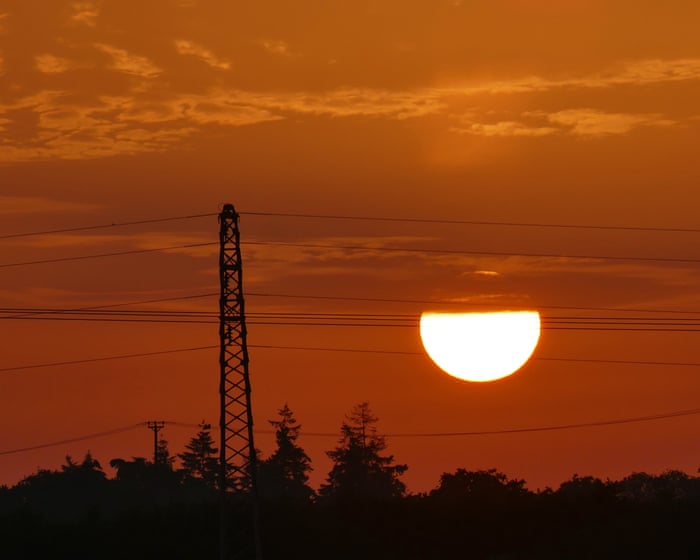
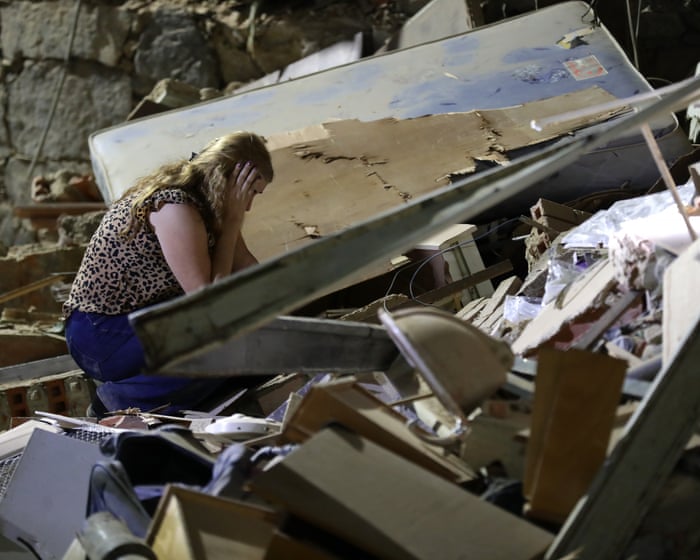
Europe is experiencing extremely high temperatures and has become the fastest-warming continent. A weather pattern called a heat dome is trapping hot air over the region. Scientists link this extreme heat to climate change and are studying why Europe is so vulnerable.
Key Facts
Europe is breaking temperature records in countries like Spain, the UK, and France.
A heat dome, a high-pressure system, is causing the trapped hot air over Europe.
This is the second time in one month that a heat dome has appeared over Europe.
Scientists say climate change is driving the extreme heat events.
Europe is warming faster than any other continent.
The article was published on June 25, 2026.
The content originally included a video discussing these heat events.
Read the Original
Want the full story? Tap a source to open the original
article.
The UK experienced its hottest June day ever, reaching 36.1°C in southern England. This broke the previous record from 1976, and it follows another recent record heat month, with scientists linking these changes to climate change increasing extreme weather.
Key Facts
The highest temperature recorded in the UK this June was 36.1°C (97°F).
This temperature exceeded the previous June record of 35.6°C set in 1976.
The record temperature was measured in southern England.
This is the second consecutive month the UK has broken historical temperature records.
Scientists say climate change is causing more frequent and stronger heatwaves.
Europe is one of the fastest-warming continents, contributing to heat extremes.
Heatwaves like this can impact health, agriculture, and water resources.
The news was released on June 25, 2026.
Read the Original
Want the full story? Tap a source to open the original
article.
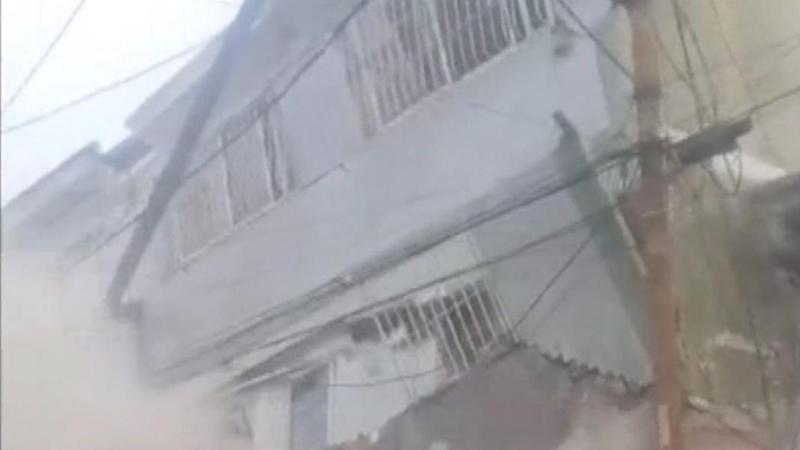
Two earthquakes have struck Venezuela, causing a building to collapse near Caracas and killing at least 160 people. The capital city and nearby areas suffered significant damage from the tremors.
Key Facts
Venezuela experienced two earthquakes in a short time.
At least 160 people have died due to the earthquakes.
The capital city, Caracas, and surrounding areas were heavily damaged.
A building collapsed in El Junquito, an area on the edge of Caracas.
The country’s acting President, Delcy Rodríguez, announced the death toll.
Videos show the destruction caused by the collapse near Caracas.
The earthquakes caused chaos and emergency responses in Venezuela.
Read the Original
Want the full story? Tap a source to open the original
article.
Keiko Fujimori is likely to win Peru’s presidential election after gaining a strong lead over her opponent Roberto Sanchez. Sanchez rejects the election results and claims that the voting process was seriously flawed.
Key Facts
Keiko Fujimori is a conservative candidate in Peru’s presidential race.
She has taken a lead that is considered very difficult to overcome.
Roberto Sanchez is her leftist opponent in this election.
Sanchez says he will not accept a government led by Fujimori.
He alleges there were serious problems with the election process.
Fujimori acknowledges the country is politically divided.
The situation shows a sharp political split among Peruvians.
The election coverage was reported on June 25, 2026.
Read the Original
Want the full story? Tap a source to open the original
article.
A vehicle drove into a crowd of people celebrating Mexico’s World Cup win in Cabo San Lucas, Mexico, injuring several individuals. Local authorities said the reasons for the incident are still under investigation.
Key Facts
The incident happened in Cabo San Lucas, a popular tourist spot in Mexico.
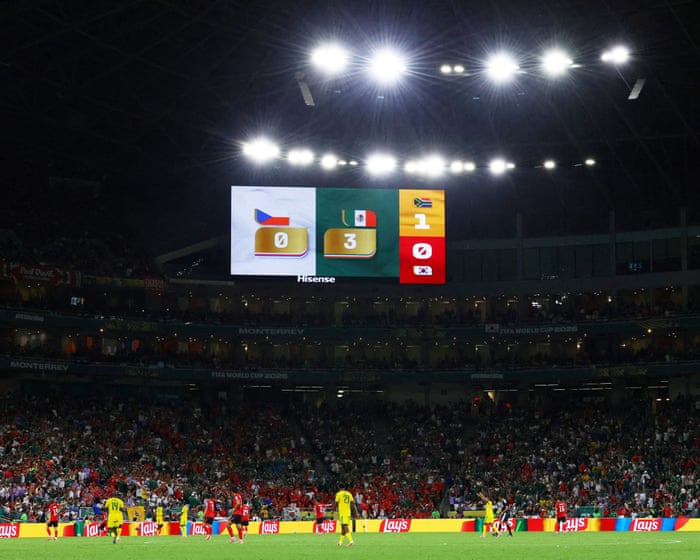
It occurred after Mexico won a World Cup match against Czechia.
A car drove through a crowd of people, causing injuries.
City officials said the vehicle was surrounded by people before it moved into the crowd.
A video showing the car hitting the crowd was shared on social media but has not been verified.
Mexico scored three goals in the second half to win the match at Mexico City Stadium.
This victory allowed Mexico to finish the group phase with full points.
Authorities are still investigating the cause of the vehicle’s actions.
Read the Original
Want the full story? Tap a source to open the original
article.
The Ethiopian independent media outlet Addis Standard won the U.S. National Endowment for Democracy award for its journalists' bravery in a difficult media environment. The award recognizes their work despite challenges like imprisonment of journalists and restrictions on reporting in Ethiopia.
Key Facts
Addis Standard is one of the few independent news sources left in Ethiopia.
The U.S. National Endowment for Democracy awarded Addis Standard for courage and resilience.
Journalists from Addis Standard will go to Washington DC in September to accept the award.
Ethiopia imprisons more journalists than any country in Sub-Saharan Africa except Eritrea.
Topics such as armed conflict and human rights issues have caused journalists to be jailed and foreign reporters to be expelled.
The media environment in Ethiopia is described as repressive, meaning it limits free reporting and press freedom.
The award highlights the difficult working conditions faced by Ethiopian journalists.
Read the Original
Want the full story? Tap a source to open the original
article.
The house in Salisbury where former Russian spy Sergei Skripal was poisoned with the nerve agent novichok is now for sale with a shared ownership option. The local council owns most of the house to prevent it from becoming a tourist spot because of its history.
Key Facts
The house is located on Christie Miller Road in Salisbury and has three bedrooms.
A 30% share of the house is for sale at £114,000; the rest is owned by Wiltshire council.
Wiltshire council bought the house to stop people from exploiting its poisoning history.
The poisoning happened in March 2018 when novichok was put on the front door handle.
Skripal and his daughter Yulia were poisoned but survived the attack.
In July 2018, Dawn Sturgess died after exposure to novichok from a discarded container.
An official inquiry blamed Russian President Vladimir Putin for the attack.
The inquiry found the poisoning was a deliberate show of Russian government power.
Read the Original
Want the full story? Tap a source to open the original
article.
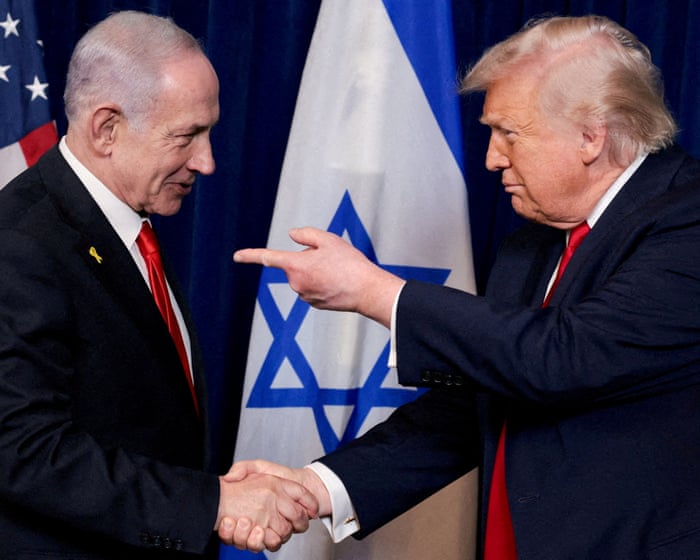
President Donald Trump has expressed frustration with Israeli Prime Minister Benjamin Netanyahu for opposing ceasefire agreements with Iran and continuing military actions in the Middle East. The U.S. is negotiating a peace deal with Iran, and Trump may need to pressure Netanyahu to respect ceasefires and not undermine these talks.
Key Facts
On June 18, Vice-President JD Vance defended the Iran deal signed by President Trump and criticized Israeli leaders for opposing it.
Vance noted that much of Israel’s defensive weapons come from U.S. manufacturing and funding.
President Trump has called Netanyahu “fucking crazy” and said Netanyahu does not have good judgment in recent comments.
Trump claims he is in charge of decisions about the Middle East, not Netanyahu.
Despite criticism, the U.S. has continued providing Israel with billions of dollars in military aid under both Biden and Trump administrations.
Israel has conducted military operations against Gaza, Iran, Lebanon, Syria, Yemen, and Qatar in recent years.
The current peace negotiations with Iran require all related conflicts, including those in Lebanon, to pause as part of a ceasefire.
Iran has warned it will end talks and close a major oil shipping route if Israel does not withdraw troops from southern Lebanon.
Read the Original
Want the full story? Tap a source to open the original
article.
China is making long-term efforts to change Tibet's culture and identity. This goes beyond controlling protests or limiting religion, aiming instead to erase Tibetan traditions permanently.
Key Facts
China controls Tibet and limits religious freedoms there.
The Chinese government wants to change Tibetan culture for good.
Actions go beyond managing protests to permanent cultural changes.
Tibetans face restrictions on their customs and language.
China's policies aim to integrate Tibet more closely with the rest of the country.
These efforts affect the daily lives of Tibetan people.
International groups have reported on these changes in Tibet.
The situation involves sensitive issues of human rights and identity.
Read the Original
Want the full story? Tap a source to open the original
article.
Brooke George, a 23-year-old TikTok influencer from the UK, has been charged with the murder of her boyfriend in Dubai. She says she acted in self-defense during an attack, but if convicted under UAE law, she could face execution.
Key Facts
Brooke George was arrested on June 22 in Dubai and charged with premeditated murder.
She is accused of stabbing her boyfriend, whom she met online.
George claims she stabbed him in self-defense after he became abusive and physically attacked her.
The advocacy group Detained in Dubai says she was held without proper legal support and experienced humiliating treatment during her detention.
George’s family and human rights groups are concerned for her safety and want her released on bail.
The UK Foreign Office is supporting Brooke George and her family.
Dubai laws carry the death penalty for murder convictions.
There are worries about the treatment of women reporting violence and about legal rights for British nationals detained abroad.
Read the Original
Want the full story? Tap a source to open the original
article.
The United States has introduced a plan to help unify Libya's divided government and encourage U.S. oil investments. While eastern Libyan groups support the plan, western factions and analysts are debating its fairness and effectiveness.
Key Facts
The U.S. plan aims to unify Libya's executive authorities and state institutions.
Massad Boulos, a U.S. presidential adviser, leads the initiative.
Eastern military leader Khalifa Haftar’s forces and eastern lawmakers back the plan.
Abdul Hakim Belhaj, a prominent western Libyan politician, also supports the plan and urges Tripoli’s government to respond.
Some lawmakers claim their support was falsely added to the plan’s list.
Critics say the plan favors certain individuals connected to powerful families.
The proposal is linked to efforts to increase American oil investments in Libya.
There are fears the plan could reinforce long-term power-sharing instead of democratic progress.
Read the Original
Want the full story? Tap a source to open the original
article.
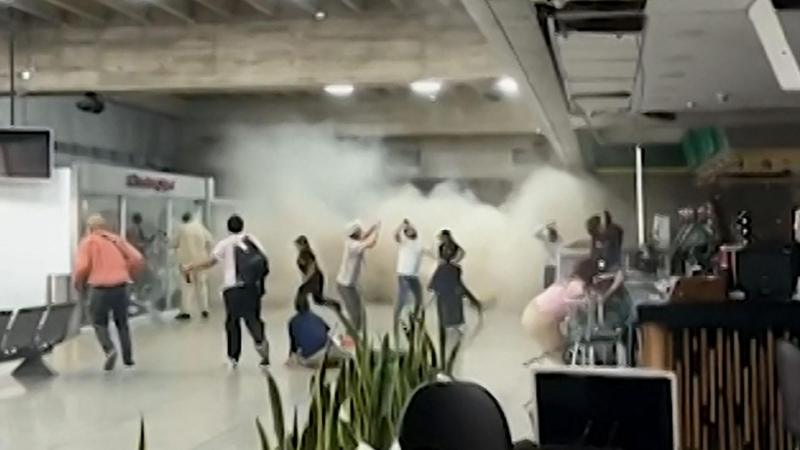
Two strong earthquakes hit Venezuela seconds apart, causing heavy damage and killing at least 164 people. The quakes damaged many buildings, including a hotel and the main international airport near Caracas, and injured hundreds more.
Key Facts
The first earthquake had a magnitude of 7.2 and struck 23 km southeast of Yumare.
The second quake, stronger at magnitude 7.5, occurred 38 seconds later in a similar area.
The second quake was shallower (10 km deep) than the first (20.3 km), increasing surface damage.
Damage occurred in Caracas, La Guaira, and other states like Trujillo, Yaracuy, Carabobo, Aragua, and Miranda.
A 10-story hotel in La Guaira collapsed completely, leaving only its entrance intact.
Caracas’s main international airport was seriously damaged and closed after the quakes.
Venezuela sits at the border of the Caribbean and South American tectonic plates, where friction caused the earthquakes.
The US Geological Survey (USGS) estimated a 44% chance that over 10,000 people could die from these quakes.
Read the Original
Want the full story? Tap a source to open the original
article.
Britain used to have prime ministers who stayed in office for many years, but recently, leaders have changed quickly. Political problems like Brexit, social media influence, and weaker support from members of Parliament (MPs) have made it harder for prime ministers to stay in power.
Key Facts
Britain is on track for its seventh prime minister in ten years.
Theresa May and Boris Johnson each served just over three years; Liz Truss lasted only 49 days.
Keir Starmer entered office with a large majority in 2024 but is leaving after less than two years.
Brexit caused deep political divisions and made governing more difficult.
Social media has increased political tensions in Britain.
Some recent leaders struggled with competence or judgment, affecting their popularity.
MPs have become more willing to rebel against their own party leaders than in the past.
Removing prime ministers between elections has become more common in recent British politics.
Read the Original
Want the full story? Tap a source to open the original
article.
President Donald Trump offered help to Venezuela after the country was hit by two large earthquakes. He stated that the earthquakes caused many deaths and said the United States is ready to assist.
Key Facts
Two major earthquakes recently struck Venezuela.
The earthquakes caused a large number of deaths.
President Trump shared his message on Truth Social, a social media platform.
He described the earthquakes as massive in scale.
The United States offered aid to Venezuela following the disaster.
The exact damage and number of victims are still being assessed.
The U.S. expressed willingness and ability to help Venezuela recover.
Read the Original
Want the full story? Tap a source to open the original
article.
Cardiff recorded the highest minimum temperature ever for June in the UK, with 23.5°C overnight, as a severe heatwave continues across England and Wales. The heatwave, worsened by climate change, is breaking temperature records and causing significant health risks and disruptions.
Key Facts
Cardiff hit 23.5°C overnight, the highest June minimum temperature in the UK.
The UK June high temperature record was likely broken again, reaching 36.1°C at Gosport.
Climate change is increasing the severity and frequency of heatwaves by raising temperatures by 2 to 4 degrees Celsius.
Over 10,000 people died in the UK from summer heatwaves between 2020 and 2024.
The UK Health Security Agency extended its highest heat alert (red alert) until Friday night.
The UK Parliament set a legally binding goal to cut carbon emissions by 87% by 2040.
London’s mayor introduced a heat plan including home improvements and more tree planting to cope with extreme heat.
Greenpeace found some surfaces in London reaching temperatures up to 60°C during the heatwave.
Read the Original
Want the full story? Tap a source to open the original
article.
Israeli forces raided a home near Salfit in the West Bank and killed a 32-year-old Palestinian man. The incident took place in an area under Israeli military control.
Key Facts
The man killed was 32 years old.
The raid happened in the West Bank, near the town of Salfit.
Israeli forces carried out the raid on the man’s home.
The West Bank is a territory currently occupied and controlled partly by Israel.
The killing happened during an Israeli military operation.
Read the Original
Want the full story? Tap a source to open the original
article.
The United States and Iran have agreed to work on reopening the Strait of Hormuz after a recent conflict. Iran must remove any naval mines within 30 days, with France, the UK, and other countries helping to clear these dangerous underwater explosives that block ships.
Key Facts
The US and Iran signed a framework agreement to end conflict and reopen the Strait of Hormuz.
Navigation and shipping have increased but are still not back to pre-conflict levels.
Iran threatened to use various types of naval mines to block the strait but did not confirm planting them.
The Strait of Hormuz is a key global energy route and was blocked, causing a global energy crisis.
Under the agreement, Iran must clear all mines within 30 days.
France and the UK are leading mine-clearing efforts, supported by Germany, Italy, Japan, and Canada.
Naval mines are underwater bombs that can damage or sink ships and come in four types: bottom, moored, drifting, and limpet mines.
Clearing mines, called mine countermeasures, uses underwater drones and special vehicles to locate and destroy or sweep mines safely.
Read the Original
Want the full story? Tap a source to open the original
article.
The article discusses the third anniversary of Yevgeny Prigozhin’s failed mutiny against Russian President Vladimir Putin. It suggests that Russia and the occupied region of Crimea might have experienced different outcomes if Prigozhin had succeeded.
Key Facts
Yevgeny Prigozhin led a mutiny against President Putin three years ago.
The mutiny failed, and Prigozhin died as a result.
Prigozhin was once called "Putin’s chef" because of his close ties to the Kremlin.
The article focuses on the situation in Russia and the region of Crimea, which is controlled by Russia.
The mutiny challenged Putin’s long rule over Russia.
Crimea has been a key area of conflict since Russia took control in 2014.
The article implies potential changes for Russia and Crimea if Putin’s leadership had been overthrown.
Read the Original
Want the full story? Tap a source to open the original
article.
U.S. Secretary of State Marco Rubio told Gulf Arab allies that any deal to end the conflict between the U.S. and Iran would protect their security interests. He emphasized that the U.S. seeks a lasting peace with Iran that does not harm the safety or wealth of its Gulf partners.
Key Facts
Marco Rubio met Gulf Arab foreign ministers in Bahrain during a three-day diplomatic trip.
The talks follow a U.S.-Iran Memorandum of Understanding to extend a ceasefire and discuss ending a war that started on February 28.
Rubio assured Gulf allies that the U.S. deal with Iran would consider their security and prosperity.
Gulf leaders are concerned that the agreement might give Iran too much power in the region and affect oil shipping routes.
Iran’s ballistic missile program is not limited by the current draft agreement.
The deal includes a proposed $300 billion fund to help rebuild Iran after the war.
Rubio said Gulf countries would not be asked to pay for reconstruction during his trip, despite implications in the MoU.
Rubio stressed that the U.S. will not allow actions that weaken the security of its longstanding Gulf allies.
Read the Original
Want the full story? Tap a source to open the original
article.
Two strong earthquakes hit Venezuela, killing at least 164 people and injuring 971 more. The quakes caused buildings to collapse and disrupted services like airports and trains, leading the government to declare a state of emergency.
Key Facts
Venezuela was struck by two earthquakes, measuring 7.2 and 7.5 in magnitude.
The earthquakes are among the strongest ever recorded in the country.
At least 164 people died and 971 were injured, with the death toll expected to rise.
The capital city, Caracas, suffered major damage, including collapsed buildings and airport closure.
The Simón Bolívar airport and the metro and train systems were severely damaged and temporarily shut down.
The U.S. Geological Survey reported that the disaster likely caused extensive damage and high casualties across Venezuela.
This is an ongoing situation with developments still coming in.
Read the Original
Want the full story? Tap a source to open the original
article.