Rachida Dati, a former French minister, is on trial in Paris for allegedly taking money from car company Renault-Nissan in exchange for political favors. She denies the claims, but prosecutors say payments for legal work were actually for lobbying.
Key Facts
Rachida Dati was justice minister under President Nicolas Sarkozy and culture minister under President Emmanuel Macron.
She received about €900,000 from Renault-Nissan between 2009 and 2013.
A 2009 contract said the money was for legal services, but prosecutors claim it was for lobbying.
Renault-Nissan’s former CEO Carlos Ghosn is also on trial and denies wrongdoing; he is not in court because he fled to Lebanon in 2019.
If found guilty, Dati could face up to 10 years in prison, a large fine, and a ban from holding public office.
Dati has been mayor of Paris’s 7th district since 2008 but lost a recent mayoral race for all of Paris amid this controversy.
Anti-corruption groups say the case shows the need for stronger rules on political lobbying in France.
Read the Original
Want the full story? Tap a source to open the original
article.
Saudi air defenses stopped a Houthi drone near Mecca, protecting the holy city from entering restricted airspace. In the US, the House of Representatives voted again to end military actions in Iran, following concerns about high costs and depleted missile supplies.
Key Facts
Saudi Arabia intercepted a Houthi drone south of Mecca, a sacred city for Muslims.
Saudi officials said protecting Mecca and pilgrims is a strict priority.
The US House voted to end conflict-related military powers involving Iran for the third time.
A report shows the Iran conflict cost at least $38 billion and reduced US missile reserves.
A US Congressman proposed impeaching Defense Secretary Pete Hegseth over war decisions and civilian deaths.
The US plans to send large bombs to Israel, but past concerns delayed this due to risks to civilians in Gaza.
Several music acts left Ed Sheeran’s tour in support of Macklemore, who was removed for statements supporting Palestinians.
Three people died in a helicopter crash covering a bus accident in Los Angeles.
Read the Original
Want the full story? Tap a source to open the original
article.
The article suggests that peace with North Korea can happen if the country is treated as a real diplomatic partner instead of only as a threat. It also says that President Donald Trump should meet North Korean leader Kim Jong Un to help end the Korean War.
Key Facts
The article talks about reaching lasting peace with North Korea.
It says North Korea needs to be seen as a legitimate partner in talks.
Seeing North Korea only as a threat could block peace efforts.
President Donald Trump is encouraged to meet Kim Jong Un.
The goal is to make a deal to officially end the Korean War.
The suggestion is about using diplomacy to solve the conflict.
Read the Original
Want the full story? Tap a source to open the original
article.
The US Department of Justice has accused five men linked to Russian intelligence of plotting to kill Ukrainian allies in the US and Europe. Three of the accused are high-ranking Russian intelligence officers, and the group allegedly tried to hire people in the US to spy on and kill targets seen as threats to Russia.
Key Facts
Five men connected to Russian intelligence are charged with trying to murder people allied with Ukraine in the US and Europe.
Three accused are high-ranking members of the Russian Intelligence Services (RIS), including a father and son.
The group tried to recruit people in the US to spy on and kill a Russian dissident living there.
Offers included payments between $1,000 and $40,000 to carry out surveillance and murder.
These men face charges including conspiracy to finance terrorism and murder for hire, carrying prison sentences of up to 20 and 10 years.
Kremlin says it will not comment without credible evidence.
Similar attempts linked to Russia were reported in Poland and Lithuania in recent years.
The alleged plots are part of Russia’s broader campaign against those seen as threats to its interests.
Read the Original
Want the full story? Tap a source to open the original
article.
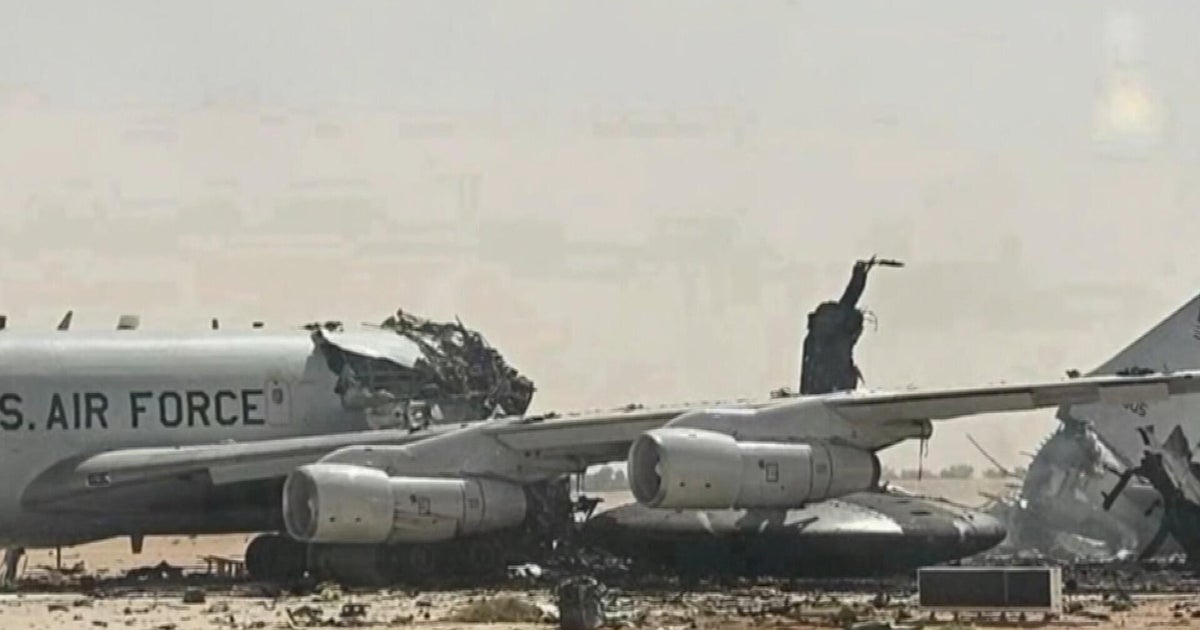
New photos from active U.S. military members show damage to U.S. bases in the Middle East caused by Iranian attacks. A recent Pentagon report estimates the conflict has cost over $33 billion so far.
Key Facts
The photos were shared by active U.S. service members.
They show damage to U.S. military bases in the Middle East.
The bases were targeted by strikes from Iran.
A Pentagon report estimates the ongoing war has cost more than $33 billion.
The images provide a rare look at the damage on the ground.
The article was reported by Jonah Kaplan for CBS News.
Read the Original
Want the full story? Tap a source to open the original
article.
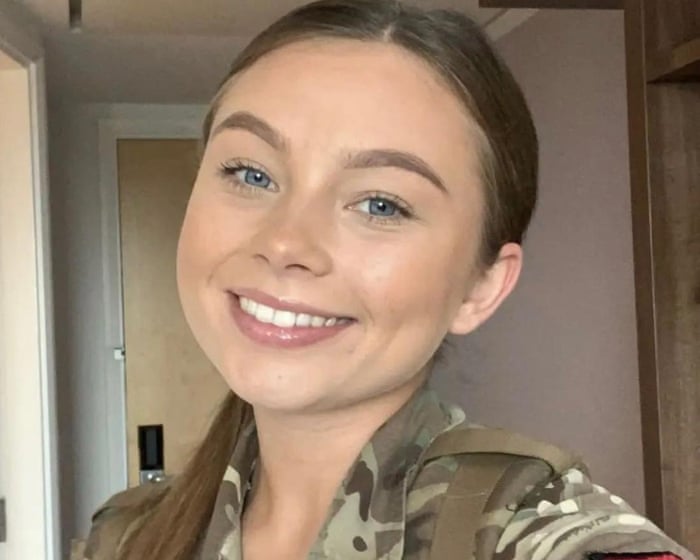
A senior army officer, Colonel Samantha Shepherd, was found not guilty by a military court of mishandling allegations made by a young soldier, Gunner Jaysley Beck, who later died by suicide. The court said there was not enough evidence to convict Shepherd, but the trial of another officer, Major James Hook, is still ongoing.
Key Facts
Colonel Samantha Shepherd faced charges over her handling of a teenage soldier’s complaint.
Gunner Jaysley Beck took her own life in December 2021 after reporting possible misconduct.
The military court found there was not enough evidence to convict Shepherd.
The case involved events during a training exercise on Thorney Island in July 2021.
Beck reported unwanted behavior by Warrant Officer Michael Webber at a social event.
Major James Hook is also on trial related to the case; his trial is still in progress.
Hook said Beck told him Webber “made a pass” at her but did not force himself on her.
The court is hearing details on whether officers took appropriate actions after Beck’s report.
Read the Original
Want the full story? Tap a source to open the original
article.
A passenger plane in Iran experienced a problem during takeoff that caused the cabin ceiling to collapse and shake violently. The plane returned safely to the airport, all passengers left without injuries, and a replacement flight was arranged.
Key Facts
The incident happened on a Sepehran Airlines flight within Iran, from Mashhad to Kermanshah.
A landing-gear tire outer layer separated during takeoff, causing the problem.
The pilot reported an engine emergency and decided to return to Mashhad airport.
Video shows ceiling panels inside the cabin falling and passengers reacting with fear.
All passengers exited the plane safely with no reported injuries.
Passengers were later sent to their destination on another flight.
The airport runway reopened after the plane landed safely.
Newsweek has not independently verified the video or received official comments from the airline.
Read the Original
Want the full story? Tap a source to open the original
article.
A convicted murderer in Northern Ireland, Gary Anderson, was granted temporary release by a court to attend his father’s funeral despite prison authorities opposing it. Anderson failed to return to prison after the funeral and remains at large, prompting calls for investigation and efforts to bring him back to custody.
Key Facts
Gary Anderson is serving a 15-year sentence for the 2018 murder of Karol Kelly.
Anderson requested compassionate temporary release (CTR) to attend his father’s funeral but was initially denied by the prison service.
The court overturned the prison decision, stating the refusal was not supported by evidence.
Anderson was released on Monday and failed to return to Maghaberry Prison, disappearing after the funeral.
His brother Sean, also convicted for the same murder, was denied release by the court.
Justice Minister Naomi Long said the prison service's decision was based on safety but respected the court’s ruling.
DUP MLA Trevor Clarke criticized the use of a chaperone instead of a proper prison guard during the release.
Police are searching for Anderson and stress he is a threat to the public and possibly at risk.
Read the Original
Want the full story? Tap a source to open the original
article.
A large European research project found microplastics in the soil of many farms across 11 countries, showing they carry pollutants and harmful bacteria like a "Trojan horse." These plastics can harm soil life, plants, and even spread antibiotic resistance, posing a threat to healthy soils worldwide.
Key Facts
Microplastics were found in all 227 tested farm fields across 11 European countries.
These tiny plastics carry pollutants, pesticides, bacteria, and antibiotic-resistant genes through soil.
Microplastics create a habitat called the "plastisphere" that helps harmful microbes and chemicals interact.
Higher microplastic levels link to more toxic chemicals and metals, especially from tire wear particles.
Microplastics can harm earthworms and other soil organisms critical for healthy soil.
Plant growth suffers with more microplastics, especially under drought conditions.
Biodegradable plastics can still break down into microplastics and cause damage.
Researchers call for better monitoring, transparency from plastic makers, and new policies to protect soil.
Read the Original
Want the full story? Tap a source to open the original
article.
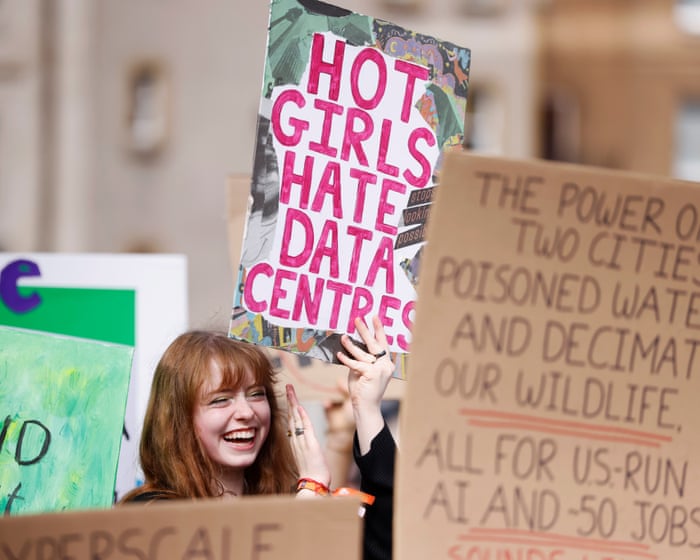
The Scottish government now requires large datacentres over 50 megawatts to carry out environmental impact assessments before approval. This decision comes as Scotland faces many new datacentre projects due to AI growth, with concerns about energy use and environmental effects leading some groups to call for a pause on new datacentres.
Key Facts
Large datacentres over 50MW in Scotland must have environmental impact assessments before approval.
There are over 20 proposed large datacentres in Scotland, including one of the world’s biggest in Fife.
Datacentres use significant energy and water and generate carbon emissions, causing public concern.
The Scottish Greens want a temporary stop on new datacentres until a full strategy and updated rules are made.
Community protests occurred demanding clearer rules and definitions of environmentally friendly datacentres.
The government says it must balance economic benefits with energy use, climate goals, and community impact.
Environmental assessments will help ensure all impacts are considered fairly from the start.
Critics say a pause is still needed to study Scotland’s energy capacity and plan the location and size of datacentres properly.
Read the Original
Want the full story? Tap a source to open the original
article.
Ed Sheeran is facing controversy after removing rapper Macklemore from his US tour because of the rapper’s public support for Palestine during performances. Sheeran said the decision was made by his promoters, and he wants to keep his music a space free from politics, but the situation has sparked debate and other support acts quitting the tour.
Key Facts
Ed Sheeran is a successful singer and songwriter with over 120 million records sold.
Macklemore made pro-Palestinian speeches and showed images of destruction in Gaza during Sheeran’s tour.
Macklemore called the Gaza death toll a genocide, a claim rejected by Israel.
Stadium owners, including Robert Kraft, pressured Sheeran to drop Macklemore from the tour.
Sheeran said promoters made the final decision to remove Macklemore, not him personally.
Sheeran tries to avoid politics in his music, aiming to keep concerts as a safe place for all fans.
Critics question Sheeran's silence on the deaths of children in Gaza.
After Macklemore was dropped, all other support acts quit the tour in protest.
Read the Original
Want the full story? Tap a source to open the original
article.
Hashim Thaci, the former president of Kosovo, was sentenced to 25 years in prison for war crimes committed during the 1990s Kosovo war. He was found guilty of crimes such as murder, illegal arrests, torture, and cruel treatment after a trial in The Hague.
Key Facts
Hashim Thaci is 58 years old and was Kosovo’s former president.
He was sentenced to 25 years in prison for war crimes during the Kosovo war against Serbia in the 1990s.
More than 10,000 people died in that war.
Thaci was a leader and co-founder of the Kosovo Liberation Army (KLA), which fought for Kosovo’s independence.
He was convicted of murder, illegal arrests, torture, and cruel treatment but not all charges against him were proven.
Thaci resigned as president in 2020 to face trial at The Hague, which is an international court in the Netherlands.
Thousands of people in Kosovo watched the verdict and showed strong emotions, with some in tears.
The KLA was accused of attacking the ethnic Serb minority during the war.
Read the Original
Want the full story? Tap a source to open the original
article.
Ed Sheeran lost over 200,000 Instagram followers after Macklemore was removed from Sheeran's U.S. tour due to pro-Palestinian comments. Several other support acts have quit the tour, gaining a total of 1.6 million followers on Instagram.
Key Facts
Macklemore was removed from Ed Sheeran’s U.S. Loop Tour after making pro-Palestinian remarks during a show.
Ed Sheeran said it was not his decision to remove Macklemore from the tour.
Sheeran expressed sadness about the Israel-Palestine conflict, calling it a human tragedy affecting both sides.
Following Macklemore’s removal, all other opening acts quit the tour.
Finneas, Aaron Rowe, Lukas Graham, and Beoga are among the artists who left the tour.
The five artists who left gained a total of 1.638 million Instagram followers.
Ed Sheeran lost more than 200,000 Instagram followers in a few days.
The story is ongoing and Newsweek has reached out for comments from all involved artists.
Read the Original
Want the full story? Tap a source to open the original
article.
A report on the Lucy Letby case found that hospital leaders at the Countess of Chester Hospital delayed alerting the police about Letby's crimes. A solicitor representing affected families said the delay was the hospital executives’ responsibility, while the hospital leaders said they are reviewing the report but cannot comment due to ongoing investigations.
Key Facts
Lucy Letby was convicted of murdering seven babies and attempting to murder seven others between 2015 and 2016.
Concerns about Letby’s actions were raised by hospital consultants but not reported to police until May 2017.
The Thirlwall Inquiry found hospital executives repeatedly failed to be honest with parents, investigators, and regulators.
The inquiry said hospital executives, including chief executive Tony Chambers, acted in ways that protected their image rather than addressed concerns.
Some consultants who raised concerns felt bullied and ignored by hospital leadership.
The solicitor representing families said the hospital bosses were clearly responsible for the delay in police reporting.
Hospital executives named in the report are reviewing the findings but cannot comment due to ongoing investigations.
Some campaigners and experts continue to question Letby’s convictions.
Read the Original
Want the full story? Tap a source to open the original
article.
At 18, the author experienced sudden paralysis in their right arm and other symptoms before being diagnosed with a rare brain tumor called a schwannoma. After surgery to remove the tumor, they recovered fully but faced ongoing health monitoring years later.
Key Facts
The author's symptoms began with muscle spasms and progressed to paralysis in the right arm by age 18.
Initial spasms affected limbs sporadically and caused fainting and loss of sensation.
A medical scan (MRI) revealed a low-grade schwannoma tumor in the brain.
Schwannomas are slow-growing, usually noncancerous tumors that can cause nerve problems.
Surgery was risky, with doctors warning it could be life-threatening, but it was successful.
Post-surgery, the author had regular MRI scans to monitor health and tumor recurrence.
Nearly 10 years later, during a follow-up scan in 2022, further health issues were discovered.
The story highlights challenges in diagnosing and treating rare neurological conditions.
Read the Original
Want the full story? Tap a source to open the original
article.
British Prime Minister Andy Burnham will meet U.S. President Donald Trump for the first time in person at the United Nations General Assembly in New York next week. Their talks are expected to focus on key issues like Ukraine, the Middle East, and other international matters.
Key Facts
Andy Burnham is attending the UN General Assembly for the first time as Prime Minister.
Burnham has spoken with President Trump by phone twice since becoming Prime Minister.
They have discussed Ukraine, including ceasefire efforts and air defense support.
Burnham wants to gain more international support for Ukraine during the assembly.
The UK recently banned trade with illegal Israeli settlements, but it is unclear if this will be raised.
Foreign Secretary Ed Miliband will join Burnham at the assembly to address issues like Gaza and Sudan’s humanitarian crisis.
The UN meetings will also focus on climate change, sea level rise, and pandemic preparation.
President Trump recently supported Irish unification, which Burnham opposes according to the Good Friday Agreement.
Read the Original
Want the full story? Tap a source to open the original
article.
Olu Jacobs, a famous Nigerian actor known for his work in theatre, TV, and film, has died at the age of 84. His wife, actress Joke Silva, announced his passing and asked for privacy as the family mourns.
Key Facts
Olu Jacobs was 84 years old when he died.
He was a well-known actor in Nigeria’s film industry, called Nollywood.
Jacobs trained at the Royal Academy of Dramatic Art in London.
His career lasted over 50 years and included work in British TV and international films.
Notable movies he starred in include My Kingdom, Covert Operation, and One Fine Day.
He won several awards, including the African Movie Academy Award for Best Actor.
In 2011, he received a national honor, Member of the Order of the Federal Republic (MFR), from Nigeria.
Jacobs and his wife, Joke Silva, founded the Lufodo Group and Lufodo Academy to support and train Nigerian actors.
Read the Original
Want the full story? Tap a source to open the original
article.
Colombia and Brazil are the deadliest countries for environmental activists, with many killed due to land conflicts. A report by Global Witness shows Latin America accounts for most killings of these activists, often linked to illegal mining and drug-related violence.
Key Facts
In 2025, at least 124 environmental activists were killed worldwide, with 39 deaths in Colombia and 26 in Brazil.
Latin America made up 85% of all documented killings of environmental activists.
Most murders involved land disputes and were often carried out by hired killers or organized crime groups.
Nearly half of the victims in Colombia were indigenous people; others were small farmers.
Indigenous guards in Colombia patrol land without weapons but face threats from illegal groups aiming to expand drug production or mining.
Jacob Guachetá Zambrano, an indigenous guard member, was recently found tortured and killed in Colombia’s Cauca region.
Killings in Brazil doubled from 2024 to 2025, mainly related to land conflicts.
Outside Latin America, the Philippines had the highest number of deaths in Asia, with 12 activists killed.
Read the Original
Want the full story? Tap a source to open the original
article.
The US government announced visa bans on some South African individuals connected to policies that allegedly discriminate against the white Afrikaner minority. The restrictions target people involved in race-based discrimination, violence, or land seizures in South Africa.
Key Facts
The US visa restrictions target foreign nationals linked to discriminatory policies or violence against white Afrikaners.
No specific individuals were named in the announcement.
Since early last year, the US cut aid to South Africa and excluded it from the 2024 G20 summit.
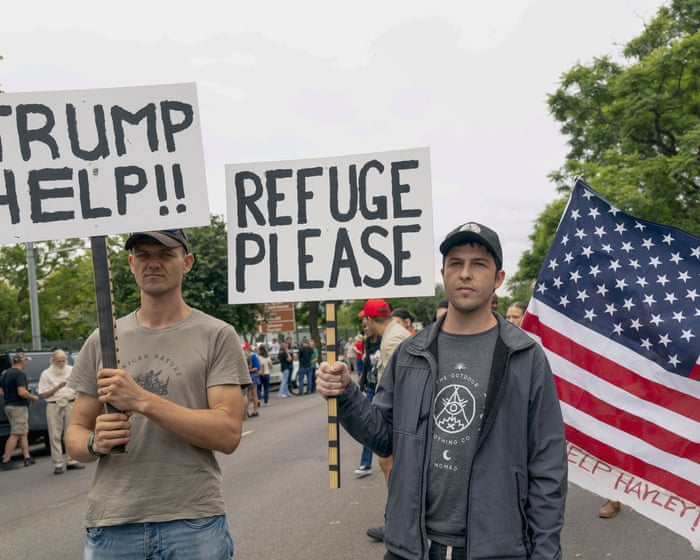
The US created a refugee program for Afrikaners and other white minorities claiming persecution.
South African government policies aim to fix racial inequalities dating back to apartheid, including land redistribution.
Some white South Africans say they face discrimination, a view promoted by some US conservatives.
The US criticizes South Africa’s law allowing land seizure without payment in certain cases.
The “Kill the Boer” chant used by some South African opposition voices is condemned by the ruling party and courts.
Read the Original
Want the full story? Tap a source to open the original
article.