The US Space Force confirmed for the first time that the United States has weapons deployed in space. These weapons are designed to protect US military satellites and can be used both to defend and to act against potential threats from countries like China and Russia.
Key Facts
The US has weapons in orbit that help control and defend space activities.
These weapons can work in offensive and defensive roles using different methods.
The US Space Force did not share details about the type of weapons.
China and Russia are also developing military space capabilities, seen as threats by the US.
The Outer Space Treaty of 1967 bans nuclear weapons in space but does not stop other types of weapons.
Satellites are important for military communications, surveillance, and navigation.
The militarization of space has been happening since the space race in the 1950s.
The US aims to maintain control and protect its interests in space from rival nations.
Read the Original
Want the full story? Tap a source to open the original
article.
Chile has become the first country in South America to eliminate rabies transmitted by dogs to humans. The World Health Organization confirmed this after Chile reported no cases since 1972 due to long-term vaccination and public health efforts.
Key Facts
Chile eliminated dog-to-human rabies, with the last case reported in 1972.
The World Health Organization officially validated Chile’s achievement.
Rabies is a deadly virus spread mainly by animal bites, especially dogs.
Chile used vaccination campaigns for dogs and public education to prevent rabies.
The country also provides vaccines to people exposed to the virus to prevent infection.
The Pan American Health Organization praised Chile for its effective rabies control methods.
Human cases of dog-transmitted rabies in the Americas have dropped by more than 98% since 1983.
Rabies still kills about 60,000 people worldwide each year, mostly due to dog bites.
Read the Original
Want the full story? Tap a source to open the original
article.
A weather disturbance east of the U.S. in the Atlantic Ocean has a 40% chance of becoming Tropical Storm Fay within seven days, according to the National Hurricane Center (NHC). The Atlantic hurricane season has been quiet this year, partly due to the El Niño climate pattern, which usually weakens storms in this region.
Key Facts
The Atlantic hurricane season runs from June 1 to November 30.
So far in 2026, no hurricanes have formed, and only five tropical storms have appeared.
El Niño is a weather pattern with warmer Pacific Ocean temperatures that can reduce Atlantic storm activity by increasing wind shear, a factor that breaks up storms.
The NHC says a disturbance near Bermuda could develop into Tropical Storm Fay as it moves west towards the U.S. East Coast.
The chance of this disturbance becoming a tropical storm within seven days is 40%.
AccuWeather also predicts a medium chance for storm development between September 17 and 21.
Wind shear is usually strong in the Atlantic but is currently lower near Bermuda, allowing potential storm formation.
Last year’s Atlantic hurricane season was quieter than normal with only 13 named storms and one hurricane.
Read the Original
Want the full story? Tap a source to open the original
article.
Bob Mackie, a famous fashion designer who created clothes for stars like Cher and Elton John, died at 87. He worked for over fifty years and also designed clothes for Barbie dolls.
Key Facts
Bob Mackie was a well-known fashion designer for celebrities.
He created iconic looks for stars like Cher and Elton John.
Mackie's career lasted more than five decades.
He designed a clothing collection for Barbie dolls.
He died at the age of 87.
His passing was announced on his official Instagram account.
Read the Original
Want the full story? Tap a source to open the original
article.
Israeli airstrikes hit a displacement camp in Gaza City, killing at least one person and injuring several others. The attacks targeted people outside tents where displaced residents were staying.
Key Facts
Israeli forces launched strikes across Gaza.
At least one person was killed in the attacks.
Several people were injured by the strikes.
The attack occurred in a displacement camp in Gaza City.
Residents at the camp were targeted outside their tents.
The camp houses people who have been forced to leave their homes.
Read the Original
Want the full story? Tap a source to open the original
article.
New research has found that enslaved Africans were marked with a branding iron that included a symbol of the British Crown. This discovery is part of a large project documenting British involvement in the transatlantic slave trade from 1563 to 1807.
Key Facts
A British Crown emblem, along with the South Sea Company logo, was branded on enslaved African people.
The South Sea Company, founded in 1711, was involved in enslaving thousands of Africans.
Letters from 1714 showed company leaders gave detailed instructions on slave branding and trade practices.
The branding was meant to identify the company’s enslaved people from others.
The British monarchy was financially linked to the slave trade, especially after the execution of King Charles I.
The research project has created a database listing 13,000 people and many institutions connected to Britain’s slave trade.
Buckingham Palace said King Charles supports better understanding and addressing the history of slavery.
The project reveals that many types of people, from politicians to ordinary workers, helped finance the slave trade and built Britain’s wealth.
Read the Original
Want the full story? Tap a source to open the original
article.
Rapper Macklemore says he was removed from Ed Sheeran's US tour because of his support for Palestine. He claims that billionaire Robert Kraft pressured Ed Sheeran to drop him. The controversy follows singer Pink criticizing Macklemore's "Free Palestine" comments.
Key Facts
Macklemore was part of Ed Sheeran’s US tour but was later removed.
Macklemore supports the Palestinian cause and expressed a pro-Palestinian stance.
He alleges that Robert Kraft, a billionaire, influenced Ed Sheeran to drop him from the tour.
Bob Mackie, a famous American costume designer known for his sparkling and bold outfits, has died at age 87. He created iconic looks for stars like Cher, Elton John, and Miley Cyrus, winning many awards during his long career.
Key Facts
Bob Mackie died at age 87.
He was called the "Sultan of Sequins" for his shiny, extravagant costumes.
Mackie designed Cher’s famous 1986 Oscars mohawk outfit, known as her "revenge" dress.
He also created costumes for Elton John, including a bejeweled Dodgers baseball uniform in 1975.
Famous singers like Pink and Miley Cyrus wore his designs.
Mackie started his career as a sketch artist and helped design Marilyn Monroe's dress for a 1962 performance.
He won a Tony Award, nine Emmy Awards, and was nominated for three Oscars.
Mackie continued designing up to recent years, with designs seen at the 2024 MTV Video Music Awards and Grammy Awards.
Read the Original
Want the full story? Tap a source to open the original
article.
The Israeli rights group B'Tselem said Israel is using several methods in the occupied West Bank to make it very hard for Palestinians to live and stay there as a community. The group described these methods in a report, calling them part of a larger plan to stop Palestinians from existing together as a people.
Key Facts
B'Tselem is an Israeli human rights group.
The group published a report called "The Elimination Project."
The report says Israel uses five tactics in the West Bank: violence, ethnic cleansing, limiting movement, hurting the economy, and destroying social and political life.
These tactics are described as connected and working together.
The West Bank is an area occupied by Israel but home to many Palestinians.
B'Tselem claims these actions aim to prevent Palestinians from existing as a people in this area.
The report was released on September 14, 2026.
The news was reported by France 24 with Selina Sykes as the correspondent.
Read the Original
Want the full story? Tap a source to open the original
article.
The United States blocked Iran’s nuclear chief, Mohammad Eslami, from attending the International Atomic Energy Agency (IAEA) conference in Vienna by having Austria revoke his visa. This action is tied to UN travel bans reinstated under a sanctions “snapback” mechanism related to Iran’s nuclear activities.
Key Facts
Iran’s nuclear chief Mohammad Eslami was not allowed to attend the IAEA conference in Vienna after Austria revoked his visa.
The UN Security Council travel ban on Eslami is part of renewed sanctions under a "snapback" mechanism linked to Iran’s nuclear and missile programs.
Austria initially approved Eslami’s visa but had to cancel it after the US objected, due to a UN rule requiring no member objections for exemptions.
The US opposed the visa, arguing Eslami would use the conference to avoid real nuclear inspection cooperation and spread propaganda.
Iran and Russia criticized the move, seeing it as a political attempt to block Iranian officials from international travel.
The “snapback” sanctions were reinstated last year by European countries after Iran’s nuclear commitments raised concerns.
The US President Donald Trump withdrew the US from the Iran nuclear deal (JCPOA) in 2018.
Iran denies pursuing nuclear weapons and claims its nuclear program is peaceful, but has restricted IAEA inspectors from some sites since attacks last year.
Read the Original
Want the full story? Tap a source to open the original
article.
Israeli officials are investigating a documentary called Naza, which claims the Israeli military deliberately targeted civilians in Gaza. Prime Minister Netanyahu and other leaders say the film spreads false accusations and accuse the filmmakers of treason and promoting anti-Jewish hatred.
Key Facts
The documentary Naza alleges that Israeli military attacks on Gaza included planned civilian deaths.
Israeli Prime Minister Netanyahu called the film “shocking” and linked it to anti-Semitic content.
The Israeli military chief ordered a legal probe to find the sources of the film’s information.
The culture minister suggested possible treason charges and asked to consider revoking the filmmakers’ citizenship.
The film won the Special Jury Prize at the Venice Film Festival and was well received there.
The directors, Israeli journalists, used hidden interviews with soldiers and intelligence officers.
Israeli officials say the film spreads “blood libels” and false accusations against the military.
Health authorities in Gaza reported over 73,700 Palestinians, mostly civilians, killed during the conflict.
Read the Original
Want the full story? Tap a source to open the original
article.
Videos claiming to show the Houthi rebels attacking Saudi-backed forces in Yemen are actually from unrelated events. One video is footage from a 2024 Houthi military drill, not a real attack, and others show fires in oil refineries in Texas and Russia, not Yemen.
Key Facts
A viral video said to show Houthi rebels ambushing Saudi-backed mercenaries is from a 2024 Houthi military exercise.
The original footage shows vehicles with flags of Israel, the UK, and the US, not Saudi Arabia.
The viral version added football commentary and blurred the flags to make it seem like a real attack.
Other viral videos linked to Houthi attacks on a Saudi oil refinery actually show unrelated refinery fires in Texas and Russia.
The Texas fire video dates from March 2026 at the Valero refinery.
The Russian refinery fire video shows an April 2026 fire after Ukrainian drone strikes on the Tuapse refinery.
A Saudi oil pipeline run by Aramco was genuinely damaged in a Houthi attack and will be out of service for weeks.
The misleading videos circulating online are not connected to that real pipeline attack.
Read the Original
Want the full story? Tap a source to open the original
article.
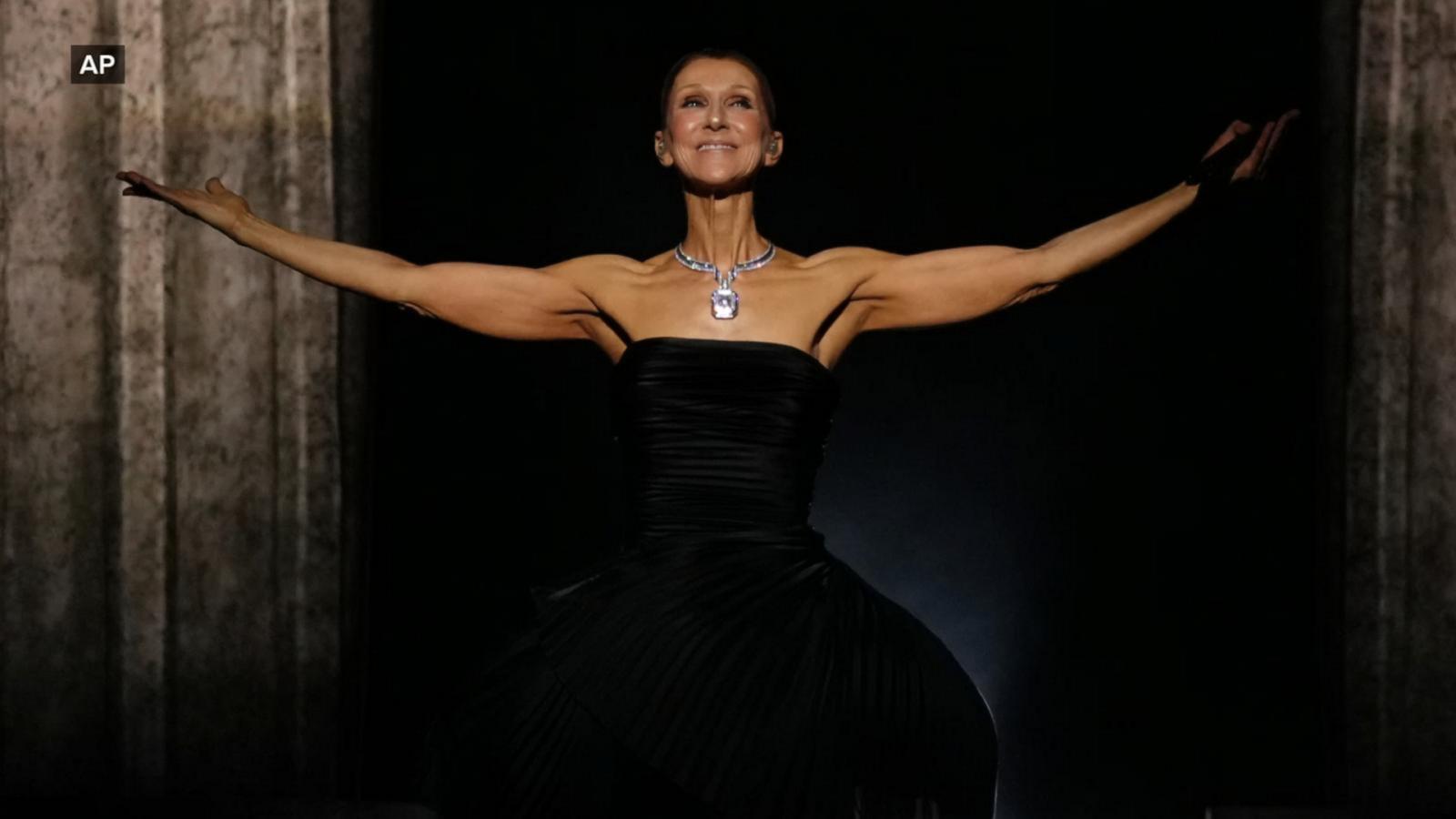
Celine Dion performed her first full concert in six years, marking a major return to the stage. Meanwhile, Bob Mackie, a famous fashion designer known for his work with Hollywood stars, has died at age 87.
Key Facts
Celine Dion held her first full concert in six years.
Bob Mackie, a well-known fashion designer for celebrities, passed away at 87.
The news highlights current cultural events in music and fashion.
Usher and Chris Brown were also mentioned as part of trending pop culture news.
The article is part of a broader coverage including various news topics like politics and world events.
The focus is on entertainment and the impact on popular culture.
Bob Mackie was recognized for his influence on Hollywood's style and appearance.
Celine Dion’s concert took place in Paris as part of her comeback.
Read the Original
Want the full story? Tap a source to open the original
article.
Turkish police carried out raids on gay bars and the homes of LGBTQ activists, arresting at least 60 people. The government said the raids aimed to support traditional family values, while activists say LGBTQ people are often targeted and treated as unacceptable by authorities in Turkey.
Key Facts
Police raided gay bars and LGBTQ activists' homes in Turkey on Sunday.
At least 60 people were arrested during these raids.
Turkish authorities said the actions were to promote traditional family values.
President Recep Tayyip Erdogan has called LGBTQ people a "deviant movement" and linked them to falling birth rates.
Activists report ongoing government targeting and discrimination against the LGBTQ community in Turkey.
Protesters supporting LGBTQ rights were dispersed with tear gas in Turkey recently.
This crackdown is part of a larger pattern of repression against LGBTQ people in Turkey.
Read the Original
Want the full story? Tap a source to open the original
article.
Yemen is facing renewed fighting as the Houthi group strengthens its control over key areas, including islands along an important global shipping route in the Red Sea. This has broken a fragile ceasefire that lasted since 2022 and adds tension to a region already affected by conflict around the Strait of Hormuz.
Key Facts
Yemen has been in conflict and under a blockade for over ten years.
The Houthi group recently took control of islands in the Red Sea.
These islands are near a major shipping route used worldwide.
A ceasefire that mostly held since 2022 has now broken down.
Fighting is focused on important government areas like Marib and Taiz.
The conflict overlaps with unrest around the Strait of Hormuz, a key maritime passage.
Experts from security and intelligence fields have discussed the situation’s risks.
Read the Original
Want the full story? Tap a source to open the original
article.
Yemen’s Houthis have made military advances along the Red Sea coast. Despite gaining more land, their economic situation has not improved much because international sanctions still limit their business activities. The group already controls a large part of northwestern Yemen and collects revenue through taxes, customs, and fees, creating a war-focused economy worth about $2.5 billion a year.
Key Facts
The Houthis recently expanded their control along Yemen’s Red Sea coast, including the port city of Hodeidah.
Their new military gains do not lift international sanctions that restrict trade and economic growth.
Since 2014, the Houthis have controlled northwestern Yemen, the country’s most populated region.
They run a centralized system to collect taxes, customs duties, religious payments (zakat), and other fees.
A recent report estimated this “parallel economy” generates about $2.5 billion annually in revenues and costs.
The Houthis revoked thousands of licenses of foreign company representatives, possibly to replace them with businesses linked to the group.
Analysts say the group aims to secure financial power even if there is a future political settlement.
The Houthis claim their economic changes support local production and small businesses, not just control.
Read the Original
Want the full story? Tap a source to open the original
article.
Austria refused entry to an Iranian official, Mohammed Eslami, after the UN Security Council rejected a request to lift his travel ban. Iran said Austria first allowed the Iranian delegation but then changed its decision due to outside pressure.
Key Facts
Austria denied entry to Mohammed Eslami, an Iranian official.
The UN Security Council did not approve removing Eslami's travel ban.
Iran claims Austria initially approved the Iranian delegation’s visit.
Iran says Austria changed its decision after external influences.
The issue is linked to Iran's participation in the International Atomic Energy Agency (IAEA) meetings.
Read the Original
Want the full story? Tap a source to open the original
article.
Rapper Macklemore was removed from Ed Sheeran’s tour after expressing support for Palestine during his concerts. The owner of Gillette Stadium, Robert Kraft, said Macklemore was barred due to a history of what Kraft called antisemitic actions, and some U.S. venues refused to host shows with Macklemore on the lineup.
Key Facts
Macklemore spoke publicly in support of Palestine during recent concerts.
Robert Kraft, who owns Gillette Stadium, barred Macklemore from performing there on September 25 and 26.
Kraft cited Macklemore’s "broader history of antisemitic rhetoric and imagery" as the reason for the ban.
Macklemore claimed Kraft pressured other stadiums to prevent him from performing, but Kraft did not confirm this.
Ed Sheeran and his team decided to remove Macklemore from the tour after venues refused to host shows with him.
The tour promoter, Messina Touring Group, confirmed Macklemore’s removal to avoid concert cancellations.
Macklemore and Ed Sheeran have been friends for many years, but Sheeran took a neutral public stance on the Israel-Gaza conflict.
Macklemore’s protest song “Hind’s Hall” was inspired by the pro-Palestinian student movement and performed at a recent concert.
Read the Original
Want the full story? Tap a source to open the original
article.
Rapper Macklemore said he was removed from Ed Sheeran’s tour because of his public support for Palestine. He claimed stadium owners, including Robert Kraft, influenced the decision to exclude him from the tour.
Key Facts
Macklemore spoke about his removal from Ed Sheeran’s “The Loop” tour.
He said the removal happened after he publicly supported the idea of “free Palestine.”
Macklemore mentioned stadium owners were behind the decision.
Robert Kraft, owner of the New England Patriots, was named as one of those stadium owners.
Ed Sheeran and his team decided to remove Macklemore from the tour.
The situation highlights how political views can affect entertainment industry decisions.
Read the Original
Want the full story? Tap a source to open the original
article.