Celine Dion performed her first full concert in six years, marking a major return to the stage. Meanwhile, Bob Mackie, a famous fashion designer known for his work with Hollywood stars, has died at age 87.
Key Facts
Celine Dion held her first full concert in six years.
Bob Mackie, a well-known fashion designer for celebrities, passed away at 87.
The news highlights current cultural events in music and fashion.
Usher and Chris Brown were also mentioned as part of trending pop culture news.
The article is part of a broader coverage including various news topics like politics and world events.
The focus is on entertainment and the impact on popular culture.
Bob Mackie was recognized for his influence on Hollywood's style and appearance.
Celine Dion’s concert took place in Paris as part of her comeback.
Read the Original
Want the full story? Tap a source to open the original
article.
Turkish police carried out raids on gay bars and the homes of LGBTQ activists, arresting at least 60 people. The government said the raids aimed to support traditional family values, while activists say LGBTQ people are often targeted and treated as unacceptable by authorities in Turkey.
Key Facts
Police raided gay bars and LGBTQ activists' homes in Turkey on Sunday.
At least 60 people were arrested during these raids.
Turkish authorities said the actions were to promote traditional family values.
President Recep Tayyip Erdogan has called LGBTQ people a "deviant movement" and linked them to falling birth rates.
Activists report ongoing government targeting and discrimination against the LGBTQ community in Turkey.
Protesters supporting LGBTQ rights were dispersed with tear gas in Turkey recently.
This crackdown is part of a larger pattern of repression against LGBTQ people in Turkey.
Read the Original
Want the full story? Tap a source to open the original
article.
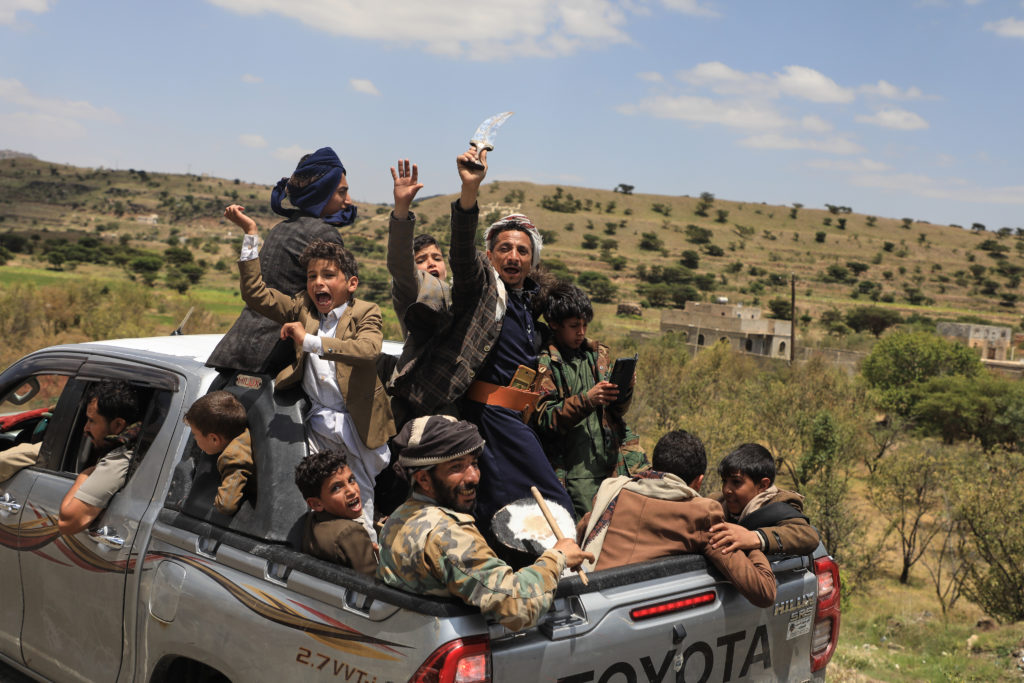
Yemen is facing renewed fighting as the Houthi group strengthens its control over key areas, including islands along an important global shipping route in the Red Sea. This has broken a fragile ceasefire that lasted since 2022 and adds tension to a region already affected by conflict around the Strait of Hormuz.
Key Facts
Yemen has been in conflict and under a blockade for over ten years.
The Houthi group recently took control of islands in the Red Sea.
These islands are near a major shipping route used worldwide.
A ceasefire that mostly held since 2022 has now broken down.
Fighting is focused on important government areas like Marib and Taiz.
The conflict overlaps with unrest around the Strait of Hormuz, a key maritime passage.
Experts from security and intelligence fields have discussed the situation’s risks.
Read the Original
Want the full story? Tap a source to open the original
article.
Yemen’s Houthis have made military advances along the Red Sea coast. Despite gaining more land, their economic situation has not improved much because international sanctions still limit their business activities. The group already controls a large part of northwestern Yemen and collects revenue through taxes, customs, and fees, creating a war-focused economy worth about $2.5 billion a year.
Key Facts
The Houthis recently expanded their control along Yemen’s Red Sea coast, including the port city of Hodeidah.
Their new military gains do not lift international sanctions that restrict trade and economic growth.
Since 2014, the Houthis have controlled northwestern Yemen, the country’s most populated region.
They run a centralized system to collect taxes, customs duties, religious payments (zakat), and other fees.
A recent report estimated this “parallel economy” generates about $2.5 billion annually in revenues and costs.
The Houthis revoked thousands of licenses of foreign company representatives, possibly to replace them with businesses linked to the group.
Analysts say the group aims to secure financial power even if there is a future political settlement.
The Houthis claim their economic changes support local production and small businesses, not just control.
Read the Original
Want the full story? Tap a source to open the original
article.
Austria refused entry to an Iranian official, Mohammed Eslami, after the UN Security Council rejected a request to lift his travel ban. Iran said Austria first allowed the Iranian delegation but then changed its decision due to outside pressure.
Key Facts
Austria denied entry to Mohammed Eslami, an Iranian official.
The UN Security Council did not approve removing Eslami's travel ban.
Iran claims Austria initially approved the Iranian delegation’s visit.
Iran says Austria changed its decision after external influences.
The issue is linked to Iran's participation in the International Atomic Energy Agency (IAEA) meetings.
Read the Original
Want the full story? Tap a source to open the original
article.
Rapper Macklemore was removed from Ed Sheeran’s tour after expressing support for Palestine during his concerts. The owner of Gillette Stadium, Robert Kraft, said Macklemore was barred due to a history of what Kraft called antisemitic actions, and some U.S. venues refused to host shows with Macklemore on the lineup.
Key Facts
Macklemore spoke publicly in support of Palestine during recent concerts.
Robert Kraft, who owns Gillette Stadium, barred Macklemore from performing there on September 25 and 26.
Kraft cited Macklemore’s "broader history of antisemitic rhetoric and imagery" as the reason for the ban.
Macklemore claimed Kraft pressured other stadiums to prevent him from performing, but Kraft did not confirm this.
Ed Sheeran and his team decided to remove Macklemore from the tour after venues refused to host shows with him.
The tour promoter, Messina Touring Group, confirmed Macklemore’s removal to avoid concert cancellations.
Macklemore and Ed Sheeran have been friends for many years, but Sheeran took a neutral public stance on the Israel-Gaza conflict.
Macklemore’s protest song “Hind’s Hall” was inspired by the pro-Palestinian student movement and performed at a recent concert.
Read the Original
Want the full story? Tap a source to open the original
article.
Rapper Macklemore said he was removed from Ed Sheeran’s tour because of his public support for Palestine. He claimed stadium owners, including Robert Kraft, influenced the decision to exclude him from the tour.
Key Facts
Macklemore spoke about his removal from Ed Sheeran’s “The Loop” tour.
He said the removal happened after he publicly supported the idea of “free Palestine.”
Macklemore mentioned stadium owners were behind the decision.
Robert Kraft, owner of the New England Patriots, was named as one of those stadium owners.
Ed Sheeran and his team decided to remove Macklemore from the tour.
The situation highlights how political views can affect entertainment industry decisions.
Read the Original
Want the full story? Tap a source to open the original
article.
A strong heat dome is causing very high temperatures in the south-central United States, including Texas, Oklahoma, and Arkansas, pushing many cities close to or above 100 degrees Fahrenheit as September begins. The heat is linked to warm ocean waters and weather patterns in the Pacific, and August 2026 tied for the hottest month on record worldwide.
Key Facts
A heat dome is a high-pressure weather system trapping hot air, causing extended heat waves.
Cities like Dallas, Austin, and Oklahoma City have seen many days above 100°F, sometimes double or triple their usual counts.
Warm ocean temperatures off the West Coast and in the Gulf of Mexico help maintain this heat dome.
August 2026 matched July 2023 as the hottest month ever recorded globally.
Sea-surface temperatures outside polar regions reached record highs in August 2026.
The heat dome covers large parts of Texas, Oklahoma, Arkansas, Louisiana, and nearby southeast states.
Hot weather continues despite the weakening sun as the autumn equinox approaches.
The heat can worsen air quality and increase risks for storms on the dome’s edges.
Read the Original
Want the full story? Tap a source to open the original
article.
Pope Leo XIV celebrated his 71st birthday by ending salary cuts for Vatican employees that Pope Francis had put in place during the COVID-19 pandemic to save money. Leo also stopped plans to move the Vatican’s secret archives out of the city and instead ordered a new building to be made on Vatican grounds to store them.
Key Facts
Pope Leo XIV turned 71 years old.
The Vatican reversed salary cuts made in 2021 by Pope Francis for many employees.
Salary cuts had affected cardinals, priests, nuns, and some lay employees.
Cuts were introduced due to financial problems caused by the pandemic and other issues.
Pope Leo is skilled in financial matters and has reversed some of Francis’ financial decisions.
Leo canceled plans to move the Vatican’s archives outside the city.
A new building will be built on Vatican grounds to store important manuscripts and archives.
Leo visited the Vatican Library and opened a new art exhibition during his birthday.
Read the Original
Want the full story? Tap a source to open the original
article.
Oil prices rose by more than 4 percent after Yemeni militants called Houthis attacked Saudi Arabia’s infrastructure and ships. One important oil pipeline was damaged and will be out of service for several weeks, causing concern in global oil markets.
Key Facts
The Houthi group launched strikes on Saudi Arabia’s oil infrastructure and ships.
These attacks caused a key pipeline in Saudi Arabia to stop working for weeks.
Brent crude oil price, a global standard, reached $105.66 per barrel on Monday.
West Texas Intermediate (WTI), the U.S. oil price benchmark, also increased after the attacks.
The attacks affected the supply of oil, leading to a rise in prices worldwide.
Saudi Arabia is a major oil producer, so damage to its infrastructure impacts global markets.
The situation is related to ongoing conflict in Yemen, where the Houthis operate.
Read the Original
Want the full story? Tap a source to open the original
article.
A crash involving two minibus taxis and a SUV on a major South African highway killed 21 people. This accident happened on the N1 highway in Western Cape and is one of two deadly road crashes in the country within two days.
Key Facts
The crash involved two Toyota minibus taxis and a Suzuki sport utility vehicle.
It occurred early Monday on the N1 highway between Prince Albert and Leeu-Gamka in Western Cape.
18 people died at the scene, and 3 more died later in the hospital.
Four others were seriously injured in the crash.
Another deadly accident nearby killed 8 people the day before.
South Africa had nearly 11,500 road deaths in 2025 according to the Transport Ministry.
Road accidents are a frequent serious problem in South Africa.
A similar deadly crash in 2023 killed 20 people and injured many others in Limpopo province.
Read the Original
Want the full story? Tap a source to open the original
article.
Finland has joined France’s Forward Deterrence Initiative, which extends France’s nuclear protection to 11 European countries. This partnership aims to strengthen European security amid concerns about Russia’s threat and uncertainty about U.S. support.
Key Facts
Finland officially agreed to join France’s nuclear deterrence initiative along with nine other European countries.
The agreement was announced by the foreign ministers of Finland and France in Helsinki.
The initiative adds to NATO’s nuclear deterrence and was coordinated with the United States and NATO allies.
A nuclear steering group will be formed soon to implement this cooperation.
France’s president alone decides on the use of nuclear weapons under this initiative, unlike NATO’s shared decision system.
Finland will not allow nuclear weapons to be stationed on its land during peacetime.
The move reflects growing concerns about Russia’s military actions and the reliability of U.S. protection in Europe.
Finland recently seized a ship suspected of cutting undersea communication cables, an act linked to possible Russian sabotage.
Read the Original
Want the full story? Tap a source to open the original
article.
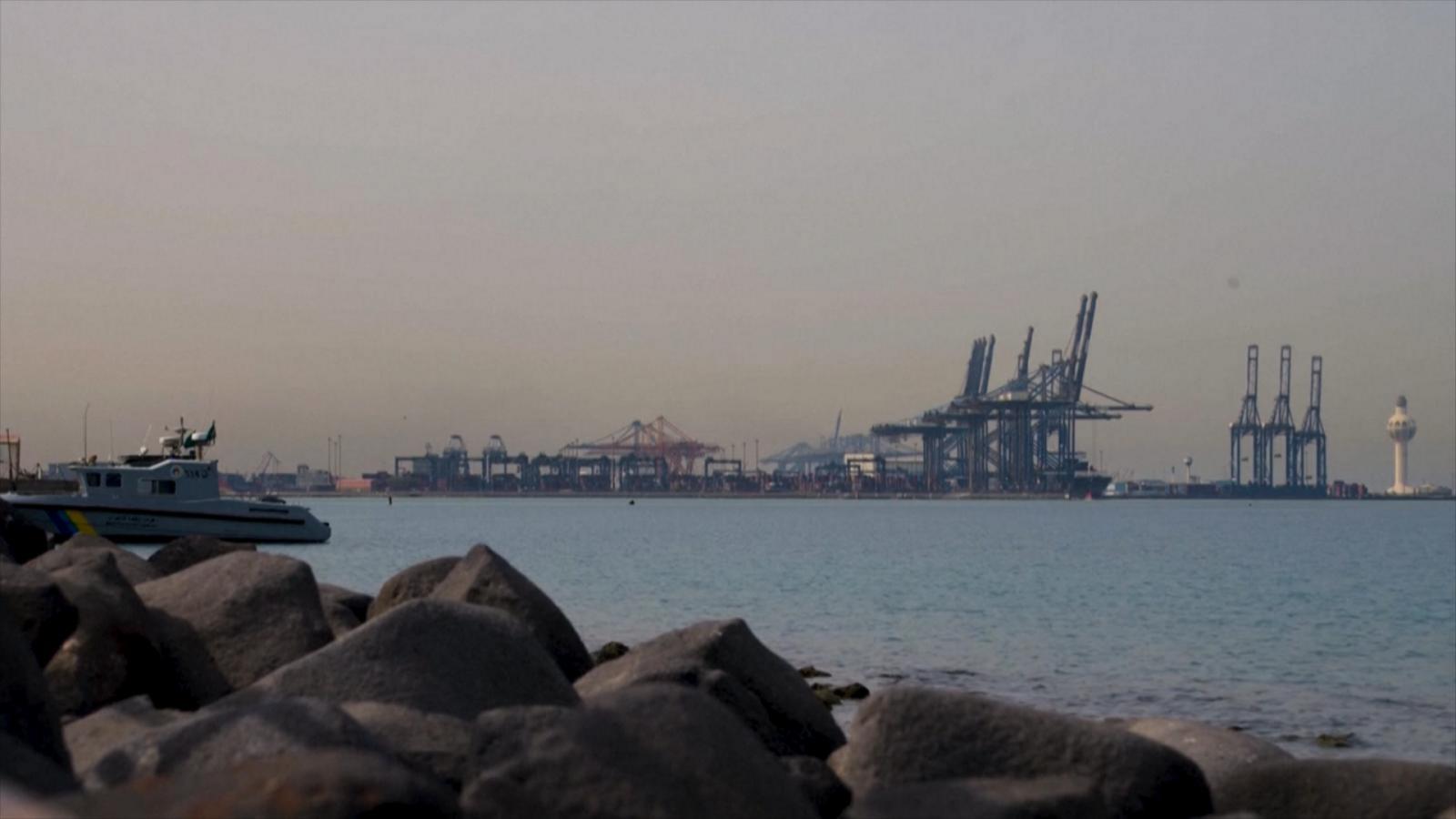
Yemen's Houthi rebels have taken control of two important islands in the southern Red Sea, which helps them control a key shipping route. Meanwhile, repairs to a Saudi oil pipeline damaged by a recent attack could take up to five weeks, affecting Saudi oil exports and global oil prices.
Key Facts
The Houthis seized Greater and Lesser Hanish islands near the Bab el-Mandeb Strait, a critical maritime passage used as an alternative to the Strait of Hormuz.
Iran-backed Houthis have also captured the Red Sea port of Mokha and another strategic island recently.
The Bab el-Mandeb Strait is important for Saudi Arabia's oil exports because Iran has effectively closed the nearby Strait of Hormuz.
An attack on Saudi Arabia's East-West Pipeline on September 10 has caused serious damage, with repairs expected to take three to five weeks.
The pipeline helps move crude oil from Gulf ports to the Red Sea for export by ship.
China called the Houthi attacks on Saudi energy infrastructure "unacceptable" and expressed concern over escalating violence.
Iran claimed Saudi Arabia demanded the cancellation of a regional meeting meant to discuss security of the Strait of Hormuz.
Austria refused visas to Iranian nuclear officials for a U.N. conference, leading to diplomatic complaints from Iran.
Read the Original
Want the full story? Tap a source to open the original
article.
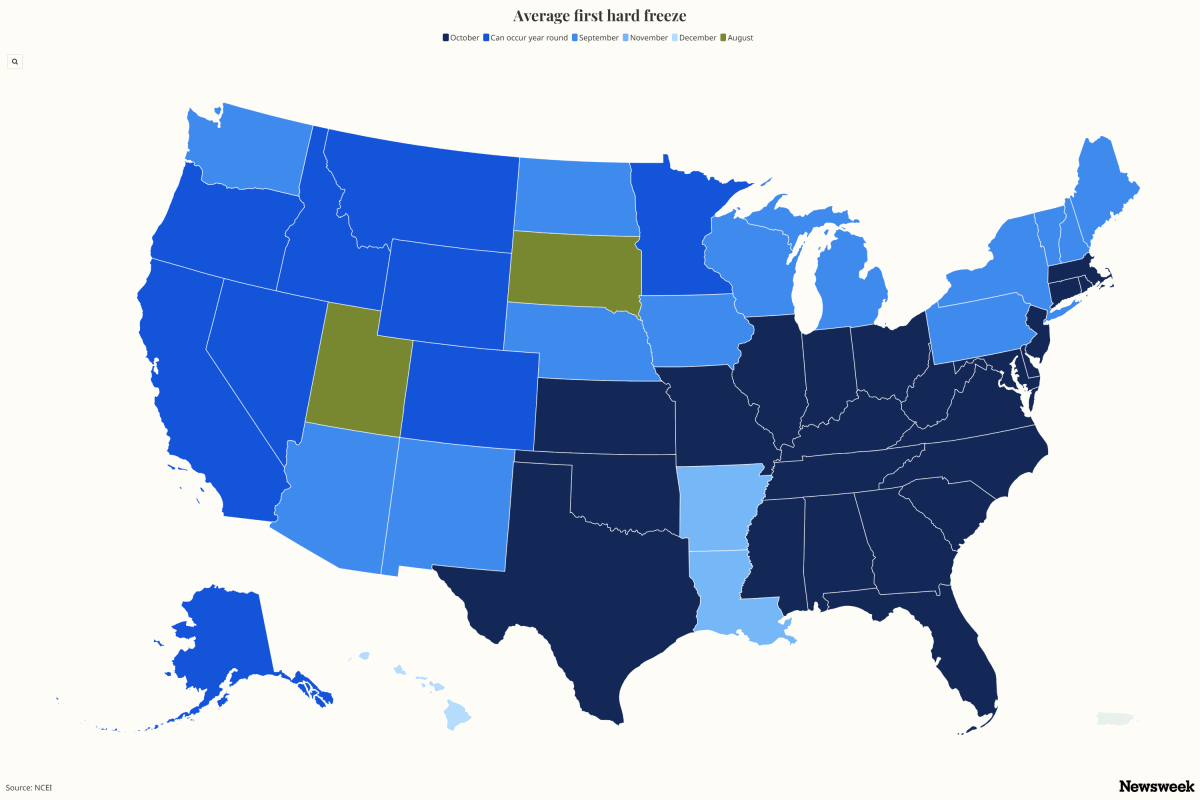
Parts of the United States are facing very different weather conditions at the same time, with heat warnings in many southern states and frost advisories in some northern states. The first hard freeze of the season is expected soon in some areas, especially northern states and high-elevation regions.
Key Facts
Heat advisories were issued for parts of Texas, Oklahoma, Kansas, Louisiana, Arkansas, Missouri, Illinois, Indiana, Kentucky, Tennessee, Alabama, and Mississippi.
Frost advisories were issued for parts of Idaho, Maine, New Hampshire, Vermont, and New York.
Frost advisories warn of temperatures between 33 and 36 degrees Fahrenheit, where frost can form and harm plants and outdoor animals.
Freeze warnings are more severe and issued when widespread freezing temperatures are expected.
Northern states and high-elevation areas of southern states see their first freeze earlier in the year.
Frost can occur even when air temperatures are above freezing because the ground can be cooler due to a process called radiational cooling.
The timing of the first freeze is consistent with historical climate data.
Frost advisories for Maine and New Hampshire were set to start early Tuesday morning, lasting until around 8 a.m.
Read the Original
Want the full story? Tap a source to open the original
article.
Oil prices increased after attacks targeted important shipping routes in the Middle East, including the Strait of Hormuz. These attacks raised concerns about the security of global energy supplies and caused higher fuel prices, especially for diesel in the United States.
Key Facts
Recent attacks occurred on key Middle Eastern shipping routes used for transporting oil.
The Strait of Hormuz, a vital channel for global oil shipments, was affected.
These attacks caused oil prices to rise worldwide.
Diesel prices in the U.S. reached record highs following these attacks.
The incidents have heightened worries about energy supply stability.
Iran and related groups have been linked to threats against these shipping routes.
President Donald Trump stated that some threats in the region are contained.
Industry and government officials are monitoring the situation closely.
Read the Original
Want the full story? Tap a source to open the original
article.
The Bangsamoro Autonomous Region in Muslim Mindanao in the southern Philippines held its first parliamentary election. This election is a key step toward self-rule after decades of conflict and was part of a peace deal made in 2014 with Muslim rebel groups.
Key Facts
The Bangsamoro region held its first parliamentary election on Monday.
The region was formed in 2014 after a peace deal ended the fight for a separate Muslim state.
About 2.4 million voters in five provinces, three cities, and 63 villages participated.
Election day saw some violence, including four deaths and clashes between political supporters.
The Commission on Elections delayed voting in one town due to ballot problems and will print new ballots.
Over 20,000 soldiers and police helped secure the election.
The regional parliament will have 80 seats, and the chief minister will be chosen by the parliament.
The election aims to bring peace and development after decades of fighting and militant attacks in Mindanao.
Read the Original
Want the full story? Tap a source to open the original
article.
Prince Harry and Meghan, the Duke and Duchess of Sussex, are having their police security reviewed after moving back to the UK with their two children. The review will look at possible risks and decide what level of protection the family needs as full-time UK residents.
Key Facts
The security review is done by a committee called Ravec, which oversees protection for royals and VIPs.
The review will focus on the family’s daily activities, like travel routes and school runs.
The Sussex children, Archie (7) and Lilibet (5), recently changed schools due to security concerns.
Prince Harry had a security risk review earlier in the year before returning permanently to the UK.
Meghan’s security is being reviewed for the first time since they stopped being working royals in 2020.
No final decisions have been made yet about the family’s police protection level.
Ravec includes members from the Home Office, police, and the Royal Household.
Prince Harry was also informed that Uganda will participate in next year’s Invictus Games, despite some earlier uncertainty.
Read the Original
Want the full story? Tap a source to open the original
article.
Rapper Macklemore was removed from Ed Sheeran’s US tour after making pro-Palestinian comments and showing images of Gaza during concerts. Macklemore confirmed he was dropped following disagreements with Sheeran and backlash from Jewish groups.
Key Facts
Macklemore, whose real name is Benjamin Haggerty, was the opening act on Ed Sheeran's Loop tour in the US.
Macklemore said "Free Palestine" and showed footage of Gaza during concerts, leading to criticism from Jewish groups.
The Israeli-American Council petitioned to have Macklemore removed from the tour, calling his messages biased.
Macklemore said he was dropped after a week of talks with Sheeran ended in "fundamental disagreement."
Tour promoters said some venues threatened to cancel the tour if Macklemore continued performing.
Macklemore said criticism of Israel is not antisemitic and sees no neutral position between oppressor and oppressed.
Israel says its military actions are self-defense following a Hamas attack in October 2023.
Over 73,000 people have died in Gaza during the conflict, according to Gaza's Hamas-run health ministry.
Read the Original
Want the full story? Tap a source to open the original
article.
Turkish police used tear gas to break up a protest in Izmir where people showed support for LGBTQ rights. This happened after the government arrested dozens of LGBTQ activists across Turkey in a crackdown said to protect traditional family values.
Key Facts
Police fired tear gas at about 200 protesters in Izmir supporting LGBTQ activists.
The protests followed nationwide arrests of dozens of LGBTQ activists over the weekend.
The Turkish government described the arrests as part of a campaign to protect family and social order.
President Recep Tayyip Erdogan called LGBTQ groups a "deviant movement."
Protesters rejected the government’s explanation and criticized the raids and arrests.
The European Union expressed concern about the arrests and called for respect of human rights.
Turkish authorities blocked social media accounts of LGBTQ groups, human rights organizations, and some media after the raids.
The government’s Justice Minister said the actions are under the “Decade of the Family” initiative.
Read the Original
Want the full story? Tap a source to open the original
article.
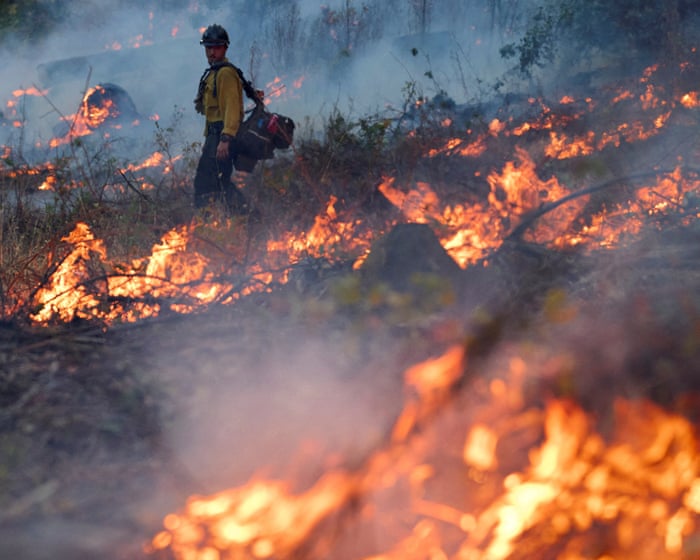
Firefighters have made progress in containing the Lucas fire in northern California, which has burned over 4,120 acres in Lake and Mendocino counties. The fire is about 30% contained, and no deaths or missing persons have been reported so far.
Key Facts
The Lucas fire began on Thursday and has burned more than 4,120 acres.
It is currently 30% contained as of Monday morning.
Nearly 900 people were evacuated due to the fire.
No deaths or missing persons have been reported.
A man was arrested for trying to cross a roadblock near the fire area.
Firefighters are focusing on holding the fire on Elk Mountain, where flames spread recently.
Cal Fire and Lake County sheriff’s office have deployed 163 engines, 72 crews, water trucks, and eight helicopters.
Parts of Mendocino National Forest have been closed because of the fire.
Read the Original
Want the full story? Tap a source to open the original
article.