An Israeli air strike in Gaza killed three family members, including a six-month-old baby. This happened despite a ceasefire agreed on last year, and fighting and attacks have continued in the area.
Key Facts
The air raid hit a home in the Nuseirat refugee camp in Gaza.
The victims were Mohammad Abu Mallouh, his wife Alaa Zaqlan, and their six-month-old child Osama.
About 10 other people were injured in the attack.
Since a ceasefire began in October, Israel has carried out nearly daily attacks in Gaza, killing around 900 people according to Gaza health officials.
Thousands of Palestinians have died since the conflict started in October 2023.
Israeli forces are continuing to destroy homes and buildings in parts of Gaza.
Talks to make the ceasefire permanent have stopped because both sides accuse each other of breaking the truce.
Human Rights Watch says Gaza’s humanitarian services are still at risk more than six months after the ceasefire started.
Read the Original
Want the full story? Tap a source to open the original
article.
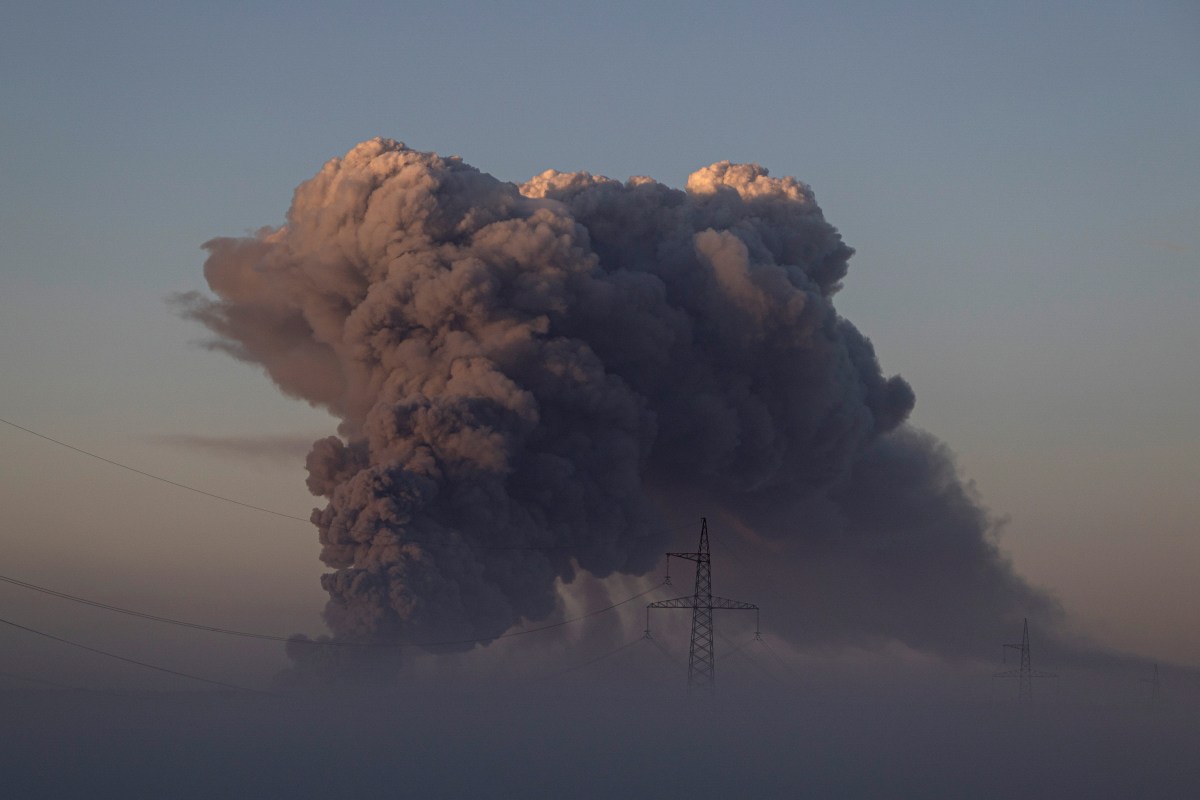
Russia launched a large missile attack on Kyiv, Ukraine. The strike included the use of Oreshnik ballistic missiles and caused casualties, including the death of one person at a school.
Key Facts
Russia carried out a major missile strike on Kyiv, Ukraine.
The attack involved Oreshnik ballistic missiles.
One person was killed when a school was hit in the strike.
Russia claimed 16 people died in a strike on a student dormitory, blaming Ukraine for it.
European leaders, including French President Macron and EU Commission President Kallas, condemned the Russian attack.
The events took place amid ongoing conflict in Ukraine.
The strike increased tensions in the region and drew international criticism.
Read the Original
Want the full story? Tap a source to open the original
article.
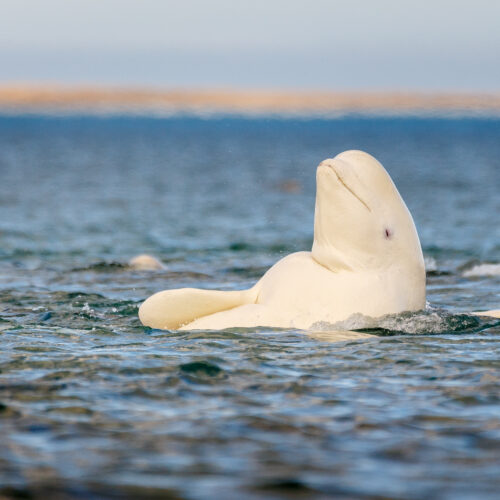
Researchers studied hours of old video of two beluga whales named Natasha and Maris at a New York aquarium. They found the whales showed behaviors that suggest they recognize themselves in a mirror, a sign of self-awareness seen in only a few animal species.
Key Facts
The study analyzed over 20 years old video footage of beluga whales interacting with a two-way mirror.
Natasha and Maris, two beluga whales, showed behaviors like looking at and touching marks on their bodies only visible in the mirror.
The mirror self-recognition test involves placing a mark on an animal’s body where it can only be seen in a reflection. If the animal touches or inspects the mark, it indicates self-awareness.
This test has been passed by humans (from age 2), some great apes, elephants, dolphins, magpies, orcas, and a species of fish called cleaner wrasse.
Many animals once thought to be self-aware, like dogs and cats, have failed the test.
The original experiment marked the whales with waterproof lipstick while they were awake and included control sessions without marks, confirming the response was to seeing the mark in the mirror.
Only Natasha and Maris showed clear interest and advanced in the experiment out of four belugas tested.
This finding adds belugas to the short list of species believed to have the cognitive ability of mirror self-recognition.
Read the Original
Want the full story? Tap a source to open the original
article.
The Gulf Cooperation Council (GCC) countries are facing economic challenges due to the conflict involving the US, Israel, and Iran, which has disrupted oil exports through the Strait of Hormuz. Some GCC countries have found ways to reroute oil shipments, but others remain cut off, and experts suggest the GCC needs to work together more to reduce future risks and protect their collective interests.
Key Facts
The US-Israel war on Iran has disrupted oil exports through the Strait of Hormuz.
Oman’s ports continue to operate normally with little impact.
Saudi Arabia and the United Arab Emirates (UAE) have rerouted some oil exports through other ports (Yanbu and Fujairah).
Kuwait, Bahrain, and Qatar are largely cut off from the global market and face economic challenges.
The GCC faces risks of losing clients and economic harm due to ongoing disruptions.
The UAE recently left OPEC, reportedly to gain a larger oil market share amid the crisis.
Experts recommend the GCC use cooperation mechanisms like swap deals to help members deliver oil without physically shipping it through dangerous areas.
Swap deals can help countries exchange oil or compensate each other to keep supplies stable without immediate physical transfer.
Read the Original
Want the full story? Tap a source to open the original
article.
In a 2004 interview with 60 Minutes, singer-songwriter Bob Dylan talked about what New York City has meant in his life. He described his move from Minnesota to New York and how the city influenced his music and career.
Key Facts
Bob Dylan was interviewed by Ed Bradley on 60 Minutes in 2004.
Dylan discussed the importance of New York City in his life.
He shared his experience moving from Minnesota to New York.
The clip is from expanded interview outtakes.
Bob Dylan is a famous singer-songwriter.
The interview reflects on his early career and inspirations.
Bob Dylan turned 85 years old recently.
Read the Original
Want the full story? Tap a source to open the original
article.
A woman shares her experience of being diagnosed with lung cancer, highlighting that many people can get this disease regardless of lifestyle. Her husband’s unexpected comment helped her accept her situation and focus on the reality of the illness rather than feeling uniquely targeted.
Key Facts
Lung cancer is the second most common cancer in the U.S., with over 200,000 new cases each year.
Many lung cancers are found when the cancer has already spread, making survival chances lower.
Early detection of lung cancer can lead to possibilities of survival and even cures.
The woman was diagnosed after a routine checkup that included a chest X-ray and follow-up scans.
About 20% of women diagnosed with lung cancer in the U.S. have never smoked.
The diagnosis process involved multiple tests: chest X-ray, CT scan, PET scan, and biopsy.
The woman experienced shock and fear but found some comfort in her husband’s blunt comment.
Lung cancer can affect anyone with lungs, emphasizing it is not always linked to personal fault or smoking.
Read the Original
Want the full story? Tap a source to open the original
article.
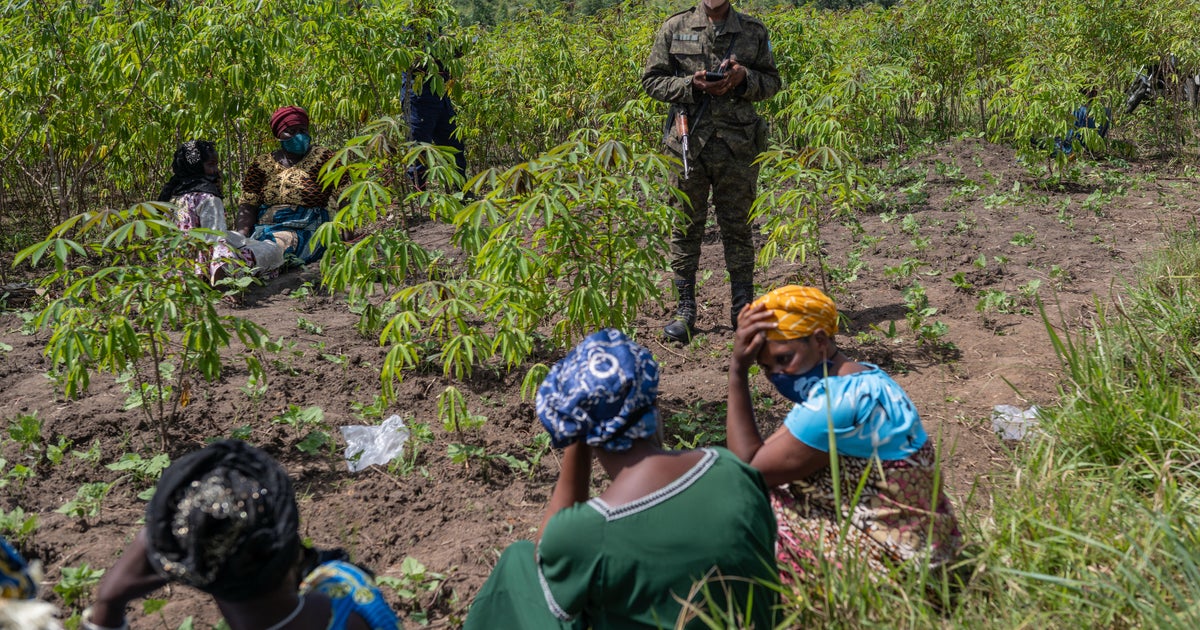
In eastern Congo, residents angry about an Ebola outbreak have burned tents at two treatment centers, causing patients to flee and making it harder to control the virus. Authorities are trying to contain the disease but face resistance from local communities, while the World Health Organization says the outbreak is very serious for Congo but not a global threat yet.
Key Facts
Residents in Mongbwalu, eastern Congo, set fire to a tent treating Ebola patients, causing 18 suspected patients to escape.
This was the second attack in a week; another Ebola treatment center was burned in Rwampara.
Families protested against bans on funeral gatherings and body retrievals to prevent Ebola spread.
Ebola victims’ bodies are highly contagious, so officials manage burials with protective gear and security.
The World Health Organization rates the outbreak risk as "very high" for Congo but low for global spread.
82 Ebola cases and 7 confirmed deaths reported, with many more suspected cases and deaths possible.
The virus involved is a rare Ebola type called Bundibugyo, with no available vaccine.
Some health workers, including volunteers and an American doctor, have been infected during the outbreak.
Read the Original
Want the full story? Tap a source to open the original
article.
The Old Farmer’s Almanac predicts that the summer of 2026 in the United States will be hotter and drier than usual, with many regions experiencing below-normal rainfall. This weather pattern will create challenges for gardeners, such as dry soil and stressed plants, requiring adjustments in watering and garden care.
Key Facts
The summer of 2026 is expected to be hotter and drier across much of the U.S.
Rainfall will be uneven and mostly below normal in many areas, causing dry conditions.
The West and Southwest, including states like Colorado and Kansas, will see especially dry weather.
A large northern area, including parts of Idaho, Montana, and Michigan, faces longer dry spells.
Dry conditions are also likely along the Northeast coast, Ohio Valley, Southeast, and Florida.
Drier soil means plants could grow slower, wilt, or produce less.
Gardeners are advised to water deeply but less often, use mulch, improve soil with compost, and consider watering systems like drip irrigation.
Watering early in the morning helps reduce water loss from heat and evaporation.
Read the Original
Want the full story? Tap a source to open the original
article.
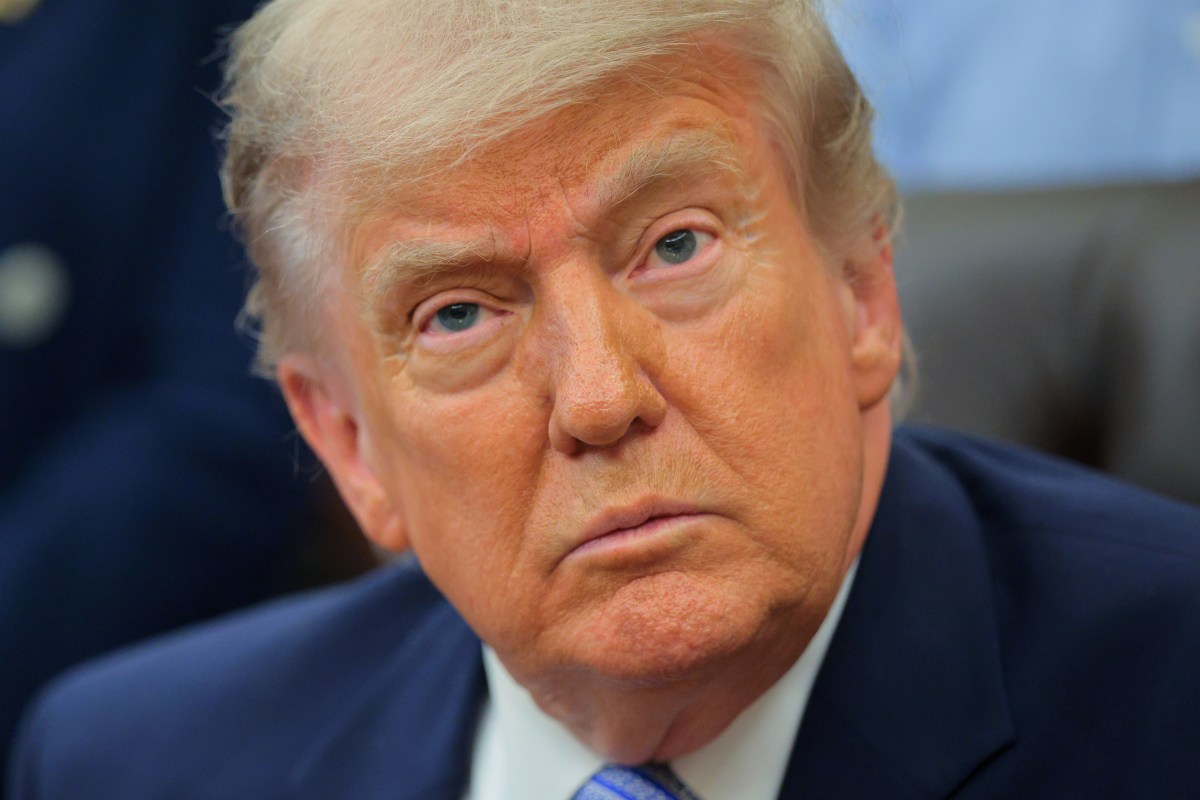
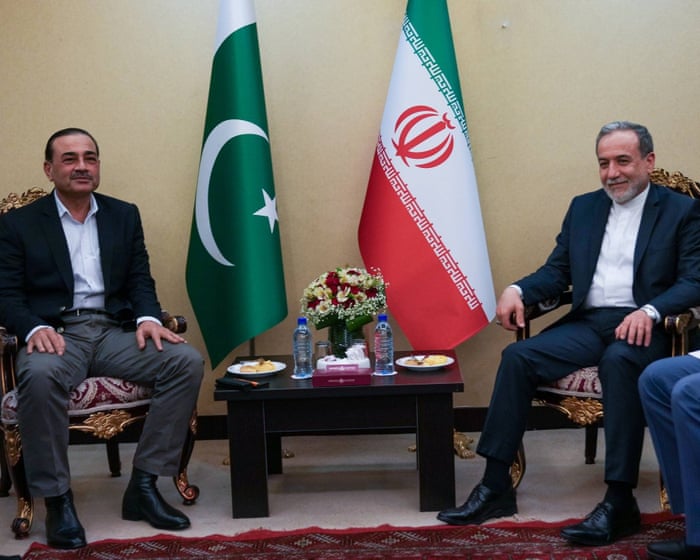
President Donald Trump said a deal to end the conflict between the U.S. and Iran is almost finished, including reopening the Strait of Hormuz for oil shipments. But Iranian media says the deal is not real and Iran will keep control of the waterway, a key issue in the talks.
Key Facts
President Trump announced that an agreement with Iran is nearly negotiated and details will be announced soon.
The deal aims to reopen the Strait of Hormuz, a vital oil shipping route blocked during the conflict.
Iranian media, linked to the Revolutionary Guard, denies the deal and says the strait remains under Iran's control.
The strait is critical because about 20% of the world’s oil passes through it.
Iran has threatened and attacked ships, causing a 90% drop in shipping traffic there.
Talks have been mediated by Pakistan, whose prime minister praised Trump’s peace efforts.
U.S. officials say progress has been made but still some work is needed to finalize the deal.
Iran insists on lifting U.S. sanctions and maintaining its nuclear program for civilian energy.
Read the Original
Want the full story? Tap a source to open the original
article.
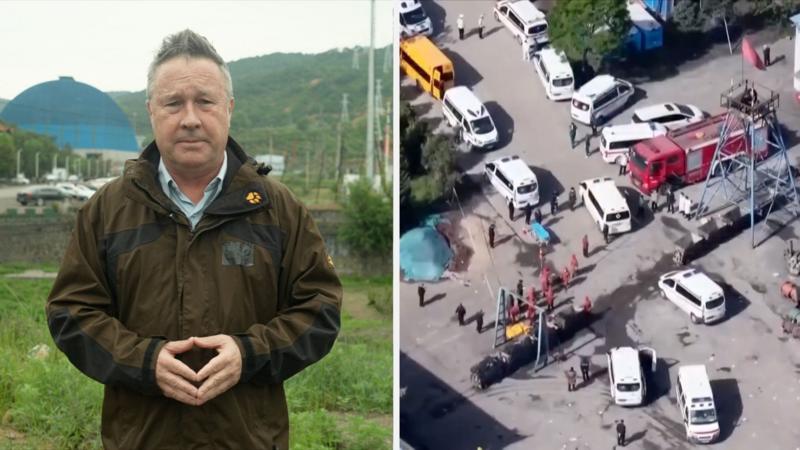
A gas explosion at the Liushenyu Coal Mine in northern China killed at least 82 people and left two missing. It is the deadliest mining accident in China since 2009, and President Xi Jinping has called for full efforts in rescue operations.
Key Facts
The explosion happened at the Liushenyu Coal Mine in Shanxi province, northern China.
At least 82 people died, and two are still missing after the blast.
This is China’s worst mining disaster in more than ten years.
President Xi Jinping urged rescuers to do everything possible to save lives.
Rescue teams used robots with gas sensors and infrared cameras to inspect underground.
The BBC correspondent Stephen McDonell reported from the disaster site.
The accident occurred early Sunday morning.
State media provided updates on the rescue efforts.
Read the Original
Want the full story? Tap a source to open the original
article.
A bomb exploded on a train in Pakistan, killing at least 24 people and injuring others who are in serious condition. The attack is currently under investigation.
Key Facts
The bombing took place on a train in Pakistan.
At least 24 people died as a result of the explosion.
Several passengers were critically injured.
Emergency services responded to the scene.
Authorities are investigating the cause and details of the bombing.
No group has yet claimed responsibility.
The incident happened on May 24, 2026.
This event has caused concern for security on public transportation in the region.
Read the Original
Want the full story? Tap a source to open the original
article.
Seven activists from the Global Sumud Flotilla, who were stopped by Israeli forces while trying to bring aid to Gaza, have returned to the UK after being deported by Israel. The activists claim they were mistreated and abused while detained, but Israeli authorities deny these claims and say all detainees were treated according to the law.
Key Facts
The Global Sumud Flotilla included more than 422 people on over 50 boats aiming to break Israel’s blockade of Gaza.
Israeli commandos intercepted the flotilla west of Cyprus and detained the activists after reaching the Israeli port of Ashdod.
The activists report being tortured, abused, and subjected to sexual assault during detention on Israeli vessels and in prison.
Israel rejects these claims and says its forces follow strict rules to treat detainees respectfully.
The flotilla carried a small amount of food and medical aid, but Israel calls the mission a public relations stunt supporting Hamas.
Some activists said they suffered injuries, including one who believes he may have a broken spine and was denied medical care.
Israeli military stated that any complaints about treatment would be carefully investigated.
The activists hope their mission raises awareness about the situation in Gaza and pressures authorities to allow humanitarian aid.
Read the Original
Want the full story? Tap a source to open the original
article.
Each summary links back to the original reporting, so you can check the work. Support that, and get the daily digest every morning. Most choose $3.99/month.
President Donald Trump announced that a draft agreement with Iran, called a memorandum of understanding, has been mostly negotiated and could reopen the Strait of Hormuz. Talks are ongoing with hopes for a final deal soon, but Iran has expressed caution and some disagreement about the terms.
Key Facts
President Trump said the agreement would reopen the Strait of Hormuz, a key shipping route for oil.
Pakistan’s Prime Minister Shehbaz Sharif is helping mediate the talks and says negotiations will continue soon.
US Secretary of State Marco Rubio confirmed progress but criticized Iran for supporting terrorism and warned against Iran gaining nuclear weapons.
Iran’s government spokesman said talks are moving forward but warned a final deal is not guaranteed yet.
The draft agreement reportedly requires Iran to lift its naval blockade within 30 days and allows partial release of frozen Iranian funds early on.
Iranian President Masoud Pezeshkian said the Supreme Leader must approve any deal with the US.
Israeli Prime Minister Benjamin Netanyahu is expected to discuss the deal in a security meeting.
There remains mistrust on both sides, and it is unclear if the agreement will hold or lead to further conflict.
Read the Original
Want the full story? Tap a source to open the original
article.
The United States and Iran are close to agreeing on a deal to extend a ceasefire for 60 days during a conflict involving the US, Israel, and Iran. The agreement would reopen the Strait of Hormuz, allow Iran to sell oil freely, and include talks on Iran’s nuclear program, while the US would lift its blockade on Iranian ports.
Key Facts
The deal is described as a “memorandum of understanding” and is mostly negotiated but not finalized.
The ceasefire extension would last 60 days and include reopening the Strait of Hormuz for shipping.
Iran would clear mines in the Strait of Hormuz and not charge tolls on ships, while the US would end its blockade on Iranian ports.
Talks would take place on limiting Iran’s nuclear program, but Iran has not agreed to give up its stockpile of highly enriched uranium.
Some frozen Iranian assets held abroad would be unfrozen as part of the deal.
Fighting would stop across all involved areas, including Israel and Lebanon.
Iran’s control of the Strait of Hormuz would continue despite the open passage for ships.
The deal does not currently include limits on Iran’s ballistic missile program or its support for regional groups like Hezbollah or the Houthis.
Read the Original
Want the full story? Tap a source to open the original
article.
Senegalese football fans who were jailed in Morocco after violent events during the Africa Cup of Nations final in January have returned home following a royal pardon from King Mohammed VI. The pardon was granted on humanitarian grounds during the Muslim holiday Eid al-Adha, easing tensions between Senegal and Morocco.
Key Facts
The fans were jailed after violence and chaos at the AFCON final between Senegal and Morocco in January.
King Mohammed VI of Morocco pardoned 15 Senegalese supporters still in prison.
The pardon was given on humanitarian grounds and coincided with the Muslim holiday Eid al-Adha.
Senegalese President Bassirou Diomaye Faye welcomed the fans back home in Dakar.
The final match result is disputed: Senegal initially won, but on appeal, the title was awarded to Morocco. Senegal has appealed this decision to the Court of Arbitration for Sport.
Moroccan courts sentenced the fans to prison terms of three months to one year for hooliganism.
The violence caused over 370,000 euros ($430,000) in damage at Rabat’s stadium.
Senegal and Morocco have a history of friendly relations and cooperation in sectors like tourism, energy, and share strong religious ties.
Read the Original
Want the full story? Tap a source to open the original
article.
A suicide bomber attacked a passenger train in Quetta, southwestern Pakistan, killing at least 23 people and injuring over 70. The Baloch Liberation Army, a militant group seeking independence for the Balochistan region, claimed responsibility for the attack.
Key Facts
The bombing happened as a passenger train passed near a railway track in Quetta.
At least 23 people died and more than 70 were hurt, with some in critical condition.
The explosion overturned two train cars, which also caught fire.
The attack damaged nearby buildings and several vehicles parked along the road.
The outlawed Baloch Liberation Army (BLA) said it targeted the train carrying security personnel.
Quetta is the capital of Balochistan, a region with ongoing insurgency and frequent attacks.
Pakistani officials condemned the attack and launched a medical emergency and an investigation.
Pakistani leaders blamed the militants and their alleged backers for trying to destabilize the country.
Read the Original
Want the full story? Tap a source to open the original
article.
Russia launched a large attack on Kyiv using about 600 drones and 90 missiles, including a rare nuclear-capable missile called the Oreshnik. The attack killed at least four people, injured many, and damaged around 40 locations in and near the city.
Key Facts
The attack happened overnight on Sunday and struck Kyiv and its region.
Russia used the Oreshnik missile, which can carry nuclear or regular warheads and flies faster than 10 times the speed of sound.
This is the third time Russia has used the Oreshnik missile during the war, with prior strikes in November 2024 and January.
Air defenses stopped most missiles and drones, but damage occurred to government offices, homes, schools, markets, and warehouses.
The attack caused fires and forced some residents to leave Kyiv because of the destruction.
The Oreshnik missile is a new weapon believed to be based on Russia’s RS-26 missile and designed to avoid defenses.
Ukraine has recently increased attacks deep inside Russia, including near Moscow, targeting military and energy sites.
Officials confirmed at least four deaths and many injuries from this missile and drone strike.
Read the Original
Want the full story? Tap a source to open the original
article.
President Donald Trump said that a peace deal with Iran is mostly agreed upon. He added that the deal could lead to reopening the Strait of Hormuz, an important waterway for global oil shipping.
Key Facts
The deal with Iran is described as “largely negotiated.”
The agreement aims to bring peace and end ongoing conflict.
Reopening the Strait of Hormuz is part of the plan in the deal.
The Strait of Hormuz is a critical route for oil transport worldwide.
The statement was made by President Trump on May 24, 2026.
Talks between the U.S. and Iran have shown recent progress.
The war mentioned has lasted about three months before this update.
The news is part of broader Middle East conflict developments.
Read the Original
Want the full story? Tap a source to open the original
article.
Staying informed here is free for everyone. If it's worth something to you, pay what you want. Supporters also get the daily digest by email every morning.
Tens of thousands of people protested against Serbia’s President Aleksandar Vucic in the capital city, Belgrade. After the large rally, clashes broke out between some protesters and riot police.
Key Facts
The protest took place in Belgrade, the capital of Serbia.
It was an anti-government rally with tens of thousands of participants.
Protesters opposed President Aleksandar Vucic, described as autocratic.
After the rally, violence occurred involving protesters and riot police.
The event happened on a Saturday.
The conflict reflects political tensions in Serbia.
Read the Original
Want the full story? Tap a source to open the original
article.
The Africa Centres for Disease Control and Prevention (Africa CDC) has warned that ten African countries face a risk from the Ebola virus. This warning comes amid ongoing Ebola cases in the Democratic Republic of Congo (DR Congo) and Uganda.
Key Facts
Ten African countries are at risk of Ebola, according to Africa CDC.
Ebola cases continue to appear in DR Congo and Uganda.
The World Health Organization (WHO) has raised the health risk level to "very high" in DR Congo.
Weak infrastructure in DR Congo is making it hard to control the Ebola outbreak.
Uganda has confirmed new Ebola cases linked to DR Congo.
The warning highlights the need for increased measures to contain the virus spread.
The Ebola situation is part of a larger health concern affecting multiple African nations.
Other African countries are closely monitoring the situation to prevent infections.
Read the Original
Want the full story? Tap a source to open the original
article.