United States Secretary of State Marco Rubio said important progress has been made in talks to end the conflict involving the US, Israel, and Iran. The deal may reopen the Strait of Hormuz for oil shipments and aims to stop Iran’s nuclear weapon development.
Key Facts
Marco Rubio confirmed significant, though not final, progress in peace talks during his visit to India.
The deal aims to restore the number of ships passing through the Strait of Hormuz to pre-war levels within 30 days.
Iran’s frozen funds would be partially released in the first phase of the agreement.
The US naval blockade on Iranian ports would be lifted within 30 days.
The war is planned to end on all fronts, including Lebanon.
Nuclear negotiations would continue for up to 60 days after the initial agreement.
Iran and Oman would jointly manage the Strait of Hormuz as part of the deal.
President Trump said the deal is “largely negotiated” and expects it to reduce global energy prices by reopening the Strait.
Read the Original
Want the full story? Tap a source to open the original
article.
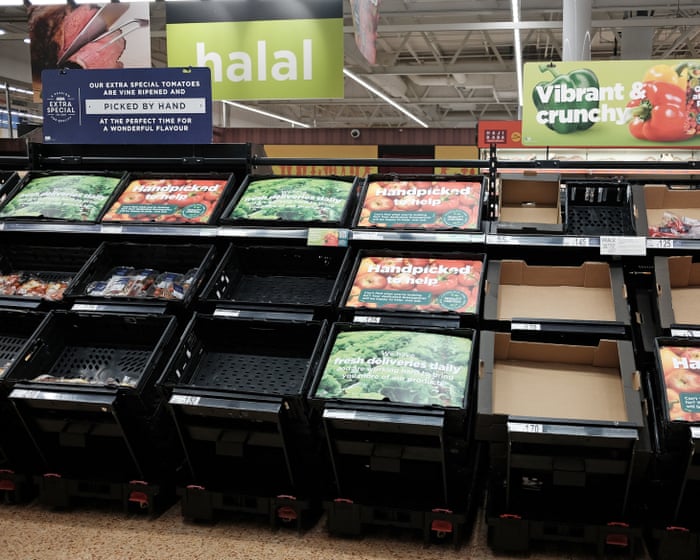
A new report warns that the UK’s supply chains are not ready for major crises like war with Russia. It highlights the need for better planning and stockpiling of essential goods such as medicines and food, noting that the UK currently lags behind other European countries in these areas.
Key Facts
The report was produced by the National Preparedness Commission (NPC), which advises on crisis planning for the UK.
The UK has no strategic stockpile of critical medicines or food, unlike many European countries that keep buffer stocks.
Medicine suppliers in the UK must keep eight weeks of stock for hospitals, but there is no strict rule for pharmacies.
European countries such as Norway and Sweden maintain emergency food reserves, while the UK is one of the least self-sufficient in Europe.
The report warns that global events like the war in the Middle East and tensions with Russia and China could disrupt UK supply chains.
It notes that the US under President Trump has shifted to an "America First" approach, making it a less reliable trade partner.
The UK government currently does not plan to create a specific list of critical medicines or increase stockpiles beyond military needs.
The report calls for the UK government to move from debating stockpiling to actively planning how and where to store essential supplies.
Read the Original
Want the full story? Tap a source to open the original
article.
France banned Israel’s national security minister Itamar Ben-Gvir from entering the country because of his behavior toward activists on a Gaza-bound flotilla. The French government called his actions unacceptable, especially related to the treatment of detained activists.
Key Facts
France banned Itamar Ben-Gvir, Israel’s far-right national security minister, on May 24, 2026.
The ban relates to his "unspeakable" behavior toward activists on a flotilla traveling to Gaza.
These activists were detained by police forces under Ben-Gvir’s authority.
The French government described Ben-Gvir’s conduct as unacceptable.
The issue arose after a video showed Ben-Gvir taunting the Gaza flotilla activists, causing public outrage.
Some activists accused Israeli forces of abuse, including sexual assault, which Israeli officials deny.
The ban highlights ongoing tensions surrounding the Gaza conflict and international responses.
Read the Original
Want the full story? Tap a source to open the original
article.
President Donald Trump said that a deal with Iran is mostly agreed upon. The news report mentions talks about ending conflict in the Middle East involving the U.S. and Iran.
Key Facts
President Trump stated that the Iran deal is "largely negotiated."
The deal aims to reduce tensions and possibly end conflict in the Middle East.
News coverage is related to the USA, Iran, and the Strait of Hormuz area.
The report comes from France 24 with a video by Fraser Jackson.
Other recent news mentioned includes U.S., Cuba, Israel, Bolivia, and Turkey events.
The details of the deal or what it includes are not provided in the article excerpt.
The news is dated May 24, 2026.
Read the Original
Want the full story? Tap a source to open the original
article.
Senegal’s President Bassirou Diomaye Faye dismissed Prime Minister Ousmane Sonko and dissolved the Parliament on May 24, 2026. This move follows months of political tension and adds to the challenges in the country’s economic situation.
Key Facts
President Bassirou Diomaye Faye fired Prime Minister Ousmane Sonko.
The Senegalese Parliament was dissolved by the president.
The decision came after months of political tensions.
Senegal is facing a deepening crisis related to national debt.
These actions occurred on May 24, 2026.
The government dissolution signals increased instability in Senegal’s politics.
The article was reported by France 24.
Read the Original
Want the full story? Tap a source to open the original
article.
President Donald Trump is applying pressure on Cuba, but experts say Cuba might not follow the same path as Venezuela. Despite U.S. efforts, Cuba’s political and economic situation could develop differently.
Key Facts
President Trump is increasing pressure on the Cuban government.
There are concerns about whether Cuba will face the same crisis as Venezuela.
Cuba’s political and economic systems differ from Venezuela’s.
The U.S. has made offers of aid to Cuba.
Charges were announced by the U.S. against former Cuban leader Raúl Castro over a 1996 aircraft incident.
Protests and rallies related to Cuba and its government continue in the region.
The article references ongoing U.S.-Cuba relations and regional political tensions.
No clear prediction exists on how Cuba’s future will unfold under current pressures.
Read the Original
Want the full story? Tap a source to open the original
article.
The Norwegian drama film "Fjord," directed by Cristian Mungiu, won the Palme d’Or award at the Cannes Film Festival. This is the second time Mungiu has received this top prize at Cannes.
Key Facts
"Fjord" is a drama set in Norway.
The film explores the theme of political polarization, which means strong divisions in political opinions.
Cristian Mungiu, the director, previously won the Palme d’Or for another film called "4 Months, 3 Weeks and 2 Days."
The Palme d’Or is the highest prize given at the Cannes Film Festival.
Cannes is a famous international film festival held in France each year.
The announcement took place on May 24, 2026.
Read the Original
Want the full story? Tap a source to open the original
article.
Gerry “the monk” Hutch, known for his gangland connections, ran as an independent candidate in a Dublin byelection but came fourth. The election was won by Daniel Ennis of the Social Democrats, focusing on issues like the cost of living and immigration.
Key Facts
Gerry Hutch is a known Irish gangland figure and was jailed for robbery in his youth.
Hutch ran as an independent in the Dublin Central byelection and opposed illegal immigration, specifically targeting people from Somalia.
Hutch received 11.3% of first preference votes, ending fourth behind Daniel Ennis, Janice Boylan, and Janet Horner.
The byelection filled the seat left vacant by Paschal Donohoe, who left to work for the World Bank.
Daniel Ennis of the Social Democrats won the seat with 12,050 final votes.
Hutch increased his share of votes compared to the 2024 general election but did not win.
The election campaign included concerns about the cost of living, immigration, and housing shortages.
Bertie Ahern, former Irish prime minister, made controversial remarks about immigrants, which the current government distanced itself from.
Read the Original
Want the full story? Tap a source to open the original
article.
President Donald Trump said a deal to end the war between the US and Iran is almost finished and involves other countries in the region. The agreement aims to reopen the Strait of Hormuz, stop fighting, and address Iran’s nuclear program, but Iranian officials say some big disagreements remain.
Key Facts
President Trump announced on his social media platform that a peace agreement with Iran and several Middle Eastern countries is largely negotiated.
The deal would reopen the Strait of Hormuz, a key oil shipping route closed since the US-Israel conflict with Iran began in February.
Countries involved include Saudi Arabia, the UAE, Qatar, Pakistan, Turkey, Egypt, Jordan, and Bahrain.
The agreement plans to formally end the war, resolve issues around the Strait of Hormuz, and allow further peace talks.
Reports say Iran would be able to sell oil freely, and the US would lift sanctions on Iranian oil and ports.
The draft deal includes Iran’s commitment not to develop nuclear weapons and to give up its highly enriched uranium stockpile.
Iranian officials confirm talks are ongoing but disagree on details like control over the Strait of Hormuz and nuclear program actions.
Iran says it would control the Strait of Hormuz and disputes some of President Trump’s statements about the waterway.
Read the Original
Want the full story? Tap a source to open the original
article.
Russia attacked Ukraine’s capital overnight using drones and different types of missiles, including a high-speed hypersonic missile. The attacks killed at least four people and damaged homes in the city.
Key Facts
The attack happened overnight on a Saturday.
Russia used drones and ballistic missiles to strike.
Among the weapons was a hypersonic missile called Oreshnik, which travels very fast.
At least four people died because of the attacks.
Residential buildings were damaged during the strikes.
Videos show people hiding in underground shelters during the attack.
Firefighters worked to control fires and damage afterward.
Read the Original
Want the full story? Tap a source to open the original
article.
A 39-year-old spearfisher was fatally attacked by a shark on the Great Barrier Reef in Australia. This was the second deadly shark attack in the country in just over a week, adding to a total of three shark-related deaths so far in 2026.
Key Facts
The spearfisher was diving with three friends near Kennedy Shoal off Queensland’s coast.
He died from severe head injuries caused by the shark attack.
Emergency responders were unable to save him after he was brought to Hull Heads.
The area is known for recreational fishing and diving, including the Lady Bowen shipwreck.
Bull sharks had been seen in the area before the attack.
Another fatal shark attack occurred on May 16 at a coral reef near Rottnest Island in Western Australia.
Australia averages more than three fatal shark attacks each year.
So far in 2026, three shark-related deaths have been reported in Australia.
Read the Original
Want the full story? Tap a source to open the original
article.
Staying informed here is free for everyone. If it's worth something to you, pay what you want. Supporters also get the daily digest by email every morning.
President Donald Trump said the United States and Iran have mostly agreed on a peace deal. He mentioned a Memorandum of Understanding has been 'largely negotiated' and details will be shared soon. This follows a pause in planned attacks after Gulf nations asked for restraint.
Key Facts
President Trump announced progress on a peace deal with Iran.
The deal is in the form of a Memorandum of Understanding, which is an agreement outlining terms before a final contract.
Trump said the deal is "largely negotiated," meaning most details are settled.
Details of the agreement will be revealed soon.
Recent threats of attacks by the US against Iran were paused.
Gulf nations requested the US to hold off on military actions.
This development aims to end conflict or reduce tensions between the US and Iran.
Read the Original
Want the full story? Tap a source to open the original
article.
An explosion targeted a train carrying military personnel and their families in Quetta, Pakistan, killing at least 20 people and injuring 70. The Balochistan Liberation Army (BLA), a separatist group, claimed responsibility for the attack, which caused several train coaches to derail.
Key Facts
The blast happened at Chaman Phatak station in Quetta, Balochistan, on Sunday morning.
At least 20 people died, and 70 others were injured in the explosion.
Three train coaches and the engine were derailed, and two coaches overturned.
The train was carrying military personnel and their families returning home for the Eid holiday.
The Balochistan Liberation Army (BLA) said it was a suicide bombing; Pakistani officials have not confirmed this.
Prime Minister Shehbaz Sharif condemned the attack and expressed solidarity with Balochistan.
Balochistan is Pakistan’s largest province by area but has a small population and shares borders with Iran and Afghanistan.
The BLA has targeted trains in Balochistan multiple times before, accusing the government of exploiting the region’s resources without benefiting locals.
Read the Original
Want the full story? Tap a source to open the original
article.
Twenty years ago, Al Gore’s movie *An Inconvenient Truth* brought a lot of attention to climate change, warning about worsening natural disasters caused by global warming. Recent data shows that some of the predicted disasters like hurricanes and wildfires have not increased as expected, and fossil fuel use continues to grow despite efforts to reduce emissions.
Key Facts
Gore’s film helped make climate change a global concern 20 years ago.
Deaths from climate-related disasters have decreased by over 97% since the 1920s, even as the population grew.
The number and strength of hurricanes have slightly declined since reliable satellite data began in 1980.
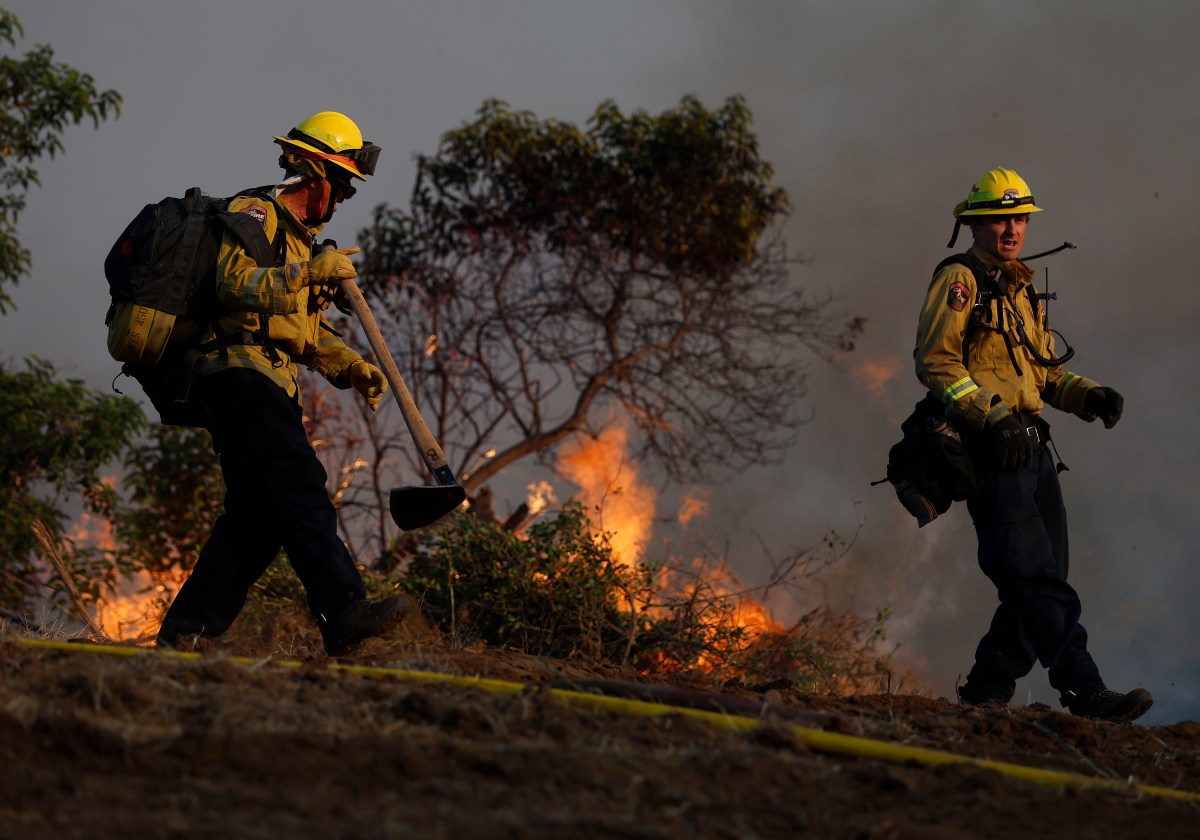
Worldwide, the area burned by wildfires has dropped by more than 25% in the last 25 years.
Polar bear populations have doubled since the 1960s, contrary to predictions of decline.
Fossil fuels still provide over 81% of the world’s energy as of 2023, only a small decrease from 2006.
Renewable energy sources like solar and wind are cheaper but unreliable because they depend on weather and need backup power systems.
Progress toward fully replacing fossil fuels with clean energy is very slow and costly.
Read the Original
Want the full story? Tap a source to open the original
article.
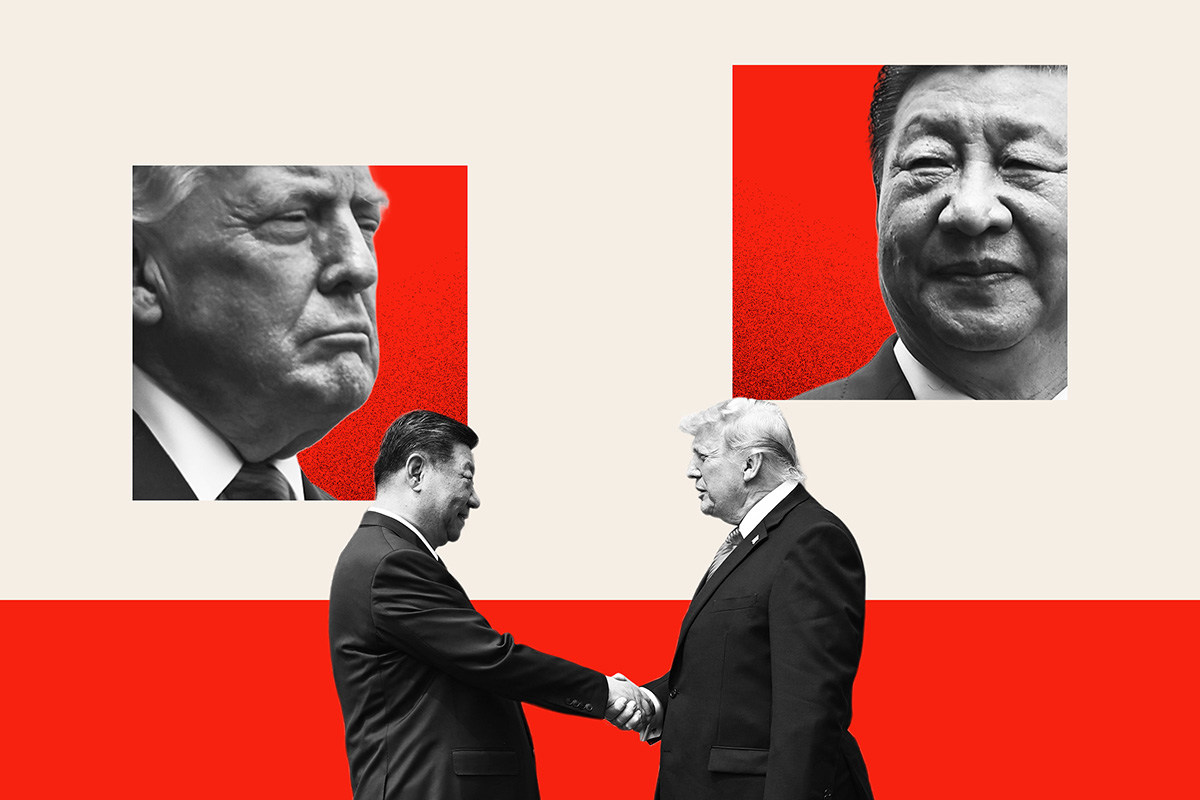
President Donald Trump recently visited Beijing, showing a friendlier tone toward China while keeping strong U.S. officials close by. The visit followed last year’s reduction in trade tariffs and included business leaders, signaling both cooperation and warning to China.
Key Facts
President Trump’s visit to Beijing was planned over a year and followed a reduction in trade tariffs between the U.S. and China.
Trump praised China’s leader Xi Jinping, calling him a “great leader” and strengthening mutual trust.
Key U.S. officials critical of China, like Marco Rubio and Pete Hegseth, were present during the visit.
A large group of U.S. business executives accompanied Trump to promote better trade ties.
Last year, the U.S. made concessions on Taiwan and AI chip exports to ease tensions with China.
China’s Xi Jinping agreed to a future U.S. state visit, the first since 2015.
Despite the positive tone, U.S. officials see the two countries as engaged in a “new Cold War,” focusing on peace through strength.
Recent U.S. federal charges against a California official show ongoing efforts to counter Chinese political influence in America.
Read the Original
Want the full story? Tap a source to open the original
article.
US Secretary of State Marco Rubio said that important progress has been made in talks with Iran. The goal of the talks is to prevent Iran from getting nuclear weapons and to keep the Strait of Hormuz open for shipping. He believes that good news may come soon.
Key Facts
Marco Rubio is the US Secretary of State.
He spoke about progress in negotiations with Iran.
The discussions focus on stopping Iran from obtaining nuclear weapons.
Another goal is to keep the Strait of Hormuz open for safe passage.
The Strait of Hormuz is a key waterway for global shipping.
Rubio made these comments while in New Delhi.
He said the world might hear positive results soon.
Read the Original
Want the full story? Tap a source to open the original
article.
The war in Yemen, which began in 2014, has caused severe food shortages and poor living conditions for millions of displaced people. Many displaced families live in camps with little aid, struggling with hunger, health problems, and harsh weather.
Key Facts
Yemen’s war started in September 2014 and has displaced 4.8 million people inside the country.
Food and shelter were better at the start but have worsened due to ongoing conflict and economic collapse.
The Yemeni rial’s collapse has caused high inflation and the worst food crisis since 2022.
Camps like Maryamah in Seiyun hold thousands of displaced families but have received much less humanitarian aid in recent years.
Many families rely on casual work but often cannot earn enough, leading to hunger and health problems.
Power cuts and extreme heat make living conditions inside shelters very harsh.
Medical care is difficult to afford, and many children are pulled out of school due to lack of money.
The conflict has caused about 377,000 deaths directly or indirectly, involving Iran-backed Houthis and the internationally recognized government.
Read the Original
Want the full story? Tap a source to open the original
article.
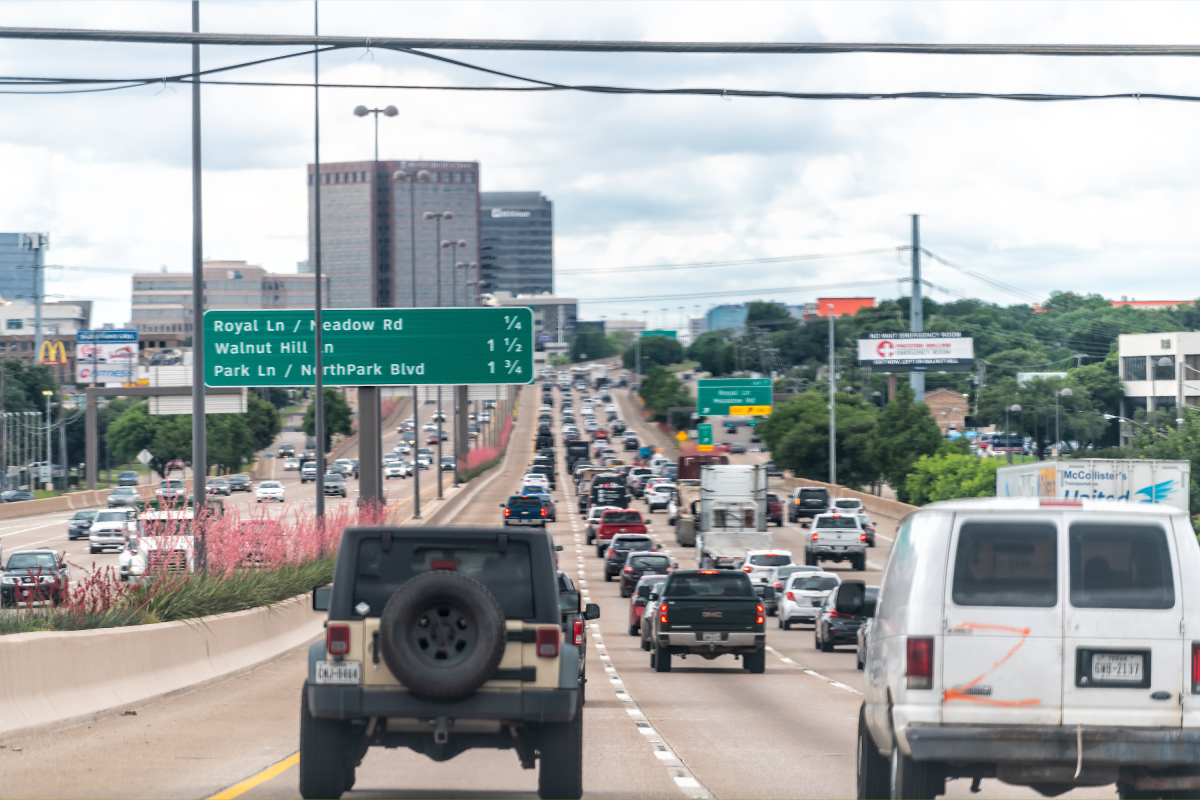
Millions of people in Texas, especially in the Dallas-Fort Worth area, are being urged to reduce driving and avoid idling in drive-thru lanes because of poor air quality caused by high levels of ground-level ozone. This pollution is formed when certain chemicals from cars and industry react in the sunlight, which can harm people's lungs and damage plants.
Key Facts
The Texas Commission on Environmental Quality (TCEQ) declared an Ozone Action Day on May 24 for Dallas-Fort Worth.
Ground-level ozone forms when nitrogen oxides (NOx) and volatile organic compounds (VOCs) react in sunlight.
These chemicals come from cars, power plants, refineries, and industrial facilities.
Hot, sunny, and still weather makes ozone pollution worse by speeding up chemical reactions and trapping pollution near the ground.
Ozone pollution can cause coughing, throat irritation, asthma attacks, and reduce lung function, especially in children, older adults, and people with lung problems.
Ozone also harms plants, crops, and forests by weakening them.
Texas often has conditions that increase ozone pollution, including heat waves, heavy traffic, industrial emissions, and growing urban areas.
Officials advise people to limit outdoor activities during peak pollution times, avoid keeping engines running in drive-thru lanes, and use less electricity to reduce pollution.
Read the Original
Want the full story? Tap a source to open the original
article.
Toxic gases and dangerous conditions are slowing rescue efforts at a coal mine in China after an explosion. High levels of methane gas, deep mine shafts, and rising water are making it hard for rescuers to reach trapped workers.
Key Facts
A coal mine in China exploded on Friday.
Toxic gases, especially methane, are present inside the mine.
Methane is a flammable and dangerous gas that can cause explosions.
The mine’s deep shafts make it difficult for rescue teams to go deeper.
Rising water levels inside the mine add to the rescue challenges.
Officials say these conditions are slowing down recovery efforts.
Rescue teams are working to reach any trapped miners inside the mine.
Read the Original
Want the full story? Tap a source to open the original
article.