Turkish police arrested dozens of people during raids on LGBTQ bars and the homes of LGBTQ activists. The police said these actions were part of a campaign called the "Decade of the Family," launched by President Recep Tayyip Erdogan to protect children, families, and social order.
Key Facts
Police raids targeted gay bars and homes of LGBTQ activists in Turkey.
Dozens of people were arrested during these raids.
The raids took place in connection with the "Decade of the Family" initiative.
This campaign was announced by Turkish President Recep Tayyip Erdogan.
The goal of the campaign is to protect children, the family institution, and social order.
The event occurred on Sunday, September 14, 2026.
The article does not provide detailed reasons behind the raids beyond the campaign's objectives.
There is no information about the response from LGBTQ groups or international reactions in the article.
Read the Original
Want the full story? Tap a source to open the original
article.
Iran and Oman postponed a planned meeting about the Strait of Hormuz due to recent events in Yemen. Iran said Saudi Arabia asked for the delay, and tensions have risen because of fighting and blockades involving Yemen's Houthi forces.
Key Facts
Iran and Oman decided to postpone talks on managing the Strait of Hormuz.
The meeting was delayed because of ongoing events in Yemen.
Saudi Arabia requested the postponement.
The Strait of Hormuz lies between Iran and Oman and is a key waterway for oil ships.
Iran has blocked the strait amid conflict involving the US and Israel.
Yemen’s Houthi forces increased conflict, including declaring a naval blockade and capturing the port of Mocha.
Iran’s military said it shot down an advanced drone over the strait using a new defense system.
An Iranian commercial vessel was attacked recently, resulting in one death and two injuries among its Pakistani crew members.
Read the Original
Want the full story? Tap a source to open the original
article.
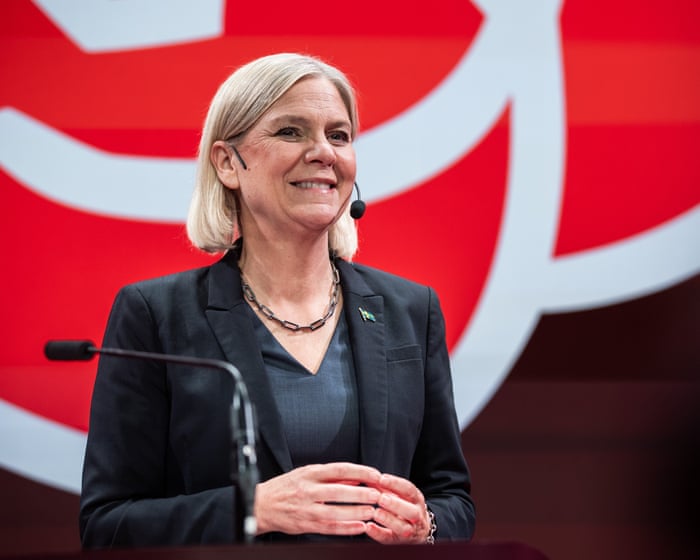
Sweden's recent election results show the left-wing opposition with a small lead, but both left and right blocs face challenges forming a government. The far-right Sweden Democrats lost some support for the first time since joining parliament 16 years ago, making negotiations complex and potentially lengthy.
Key Facts
The left-wing opposition, led by Magdalena Andersson, holds a narrow lead over the right-wing bloc.
Outgoing Prime Minister Ulf Kristersson and Andersson both plan to explore coalition talks to form a government.
The Swedish parliament has 349 seats; the left bloc currently has a slim three-seat majority with 95% of votes counted.
It could take weeks to finalize a coalition, with the earliest vote on a new prime minister set for September 29.
The center party is unwilling to support a government that includes the far-right Sweden Democrats or the left bloc.
The Sweden Democrats decreased from over 20% to 17.6% of the vote share, falling to third place.
Political experts predict a difficult negotiation process with a risk of a new election if no agreement is reached.
Sweden has a culture of negotiation, and most parties prefer to avoid a snap election, as they did after previous elections.
Read the Original
Want the full story? Tap a source to open the original
article.
A former CIA officer said the US might have to take military action in the Red Sea. The White House has not approved direct strikes yet, but the situation is tense because Houthi forces control Yemen’s Red Sea coast.
Key Facts
Scott Uehlinger, a former CIA officer, warned the US may need to intervene in the Red Sea.
The White House has so far declined requests for direct military strikes.
Houthi forces have taken control of Yemen’s coast along the Red Sea.
Control of this area affects regional security and shipping routes.
The US is facing growing pressure to respond to the situation.
There is no official US military action announced at this time.
Tensions in Yemen have implications for international trade through the Red Sea.
Read the Original
Want the full story? Tap a source to open the original
article.
Sweden’s general election is very close, with about 90% of the votes counted. The centre-left parties, led by Magdalena Andersson, have a small one-seat lead over the right-wing group headed by Prime Minister Ulf Kristersson. Both sides said they are ready to form the government.
Key Facts
The election results are almost complete, with nearly 90% of votes counted.
The centre-left bloc is led by Social Democrat Magdalena Andersson.
The right-wing bloc is led by Prime Minister Ulf Kristersson and includes the Sweden Democrats.
The centre-left holds a one-seat advantage in parliament.
Both blocs claim they have the right to govern.
The election is very close and hard to predict a clear winner.
The vote shows a divided political landscape in Sweden.
Parliamentary seats and coalition building will determine who forms the government.
Read the Original
Want the full story? Tap a source to open the original
article.
At least 11 people were hurt in an ammonia gas leak at an industrial area in Aqaba, Jordan. The nearby port was evacuated as a safety measure while the gas leak was being controlled.
Key Facts
The gas leak occurred in Aqaba, a southern port city in Jordan.
Eleven individuals were injured due to the ammonia leak.
The leak happened during maintenance work at the industrial complex.
Authorities evacuated the port area to protect people from the gas.
Officials confirmed the leak was contained within the industrial complex.
The incident was reported by Jordan’s state news channel, Al Mamlaka.
The situation is still developing and considered breaking news.
Read the Original
Want the full story? Tap a source to open the original
article.
Since July, over 86,000 people have fled their homes in Yemen due to fighting between the Iran-supported Houthi rebels and government forces. Many displaced people have moved to refugee camps in the government-controlled city of Aden, while others have left Yemen for nearby Djibouti.
Key Facts
More than 86,000 people have been displaced in Yemen since July 2026.
The conflict involves Iran-backed Houthi rebels fighting against Yemen’s government forces.
Many displaced people have sought shelter in refugee camps in Aden, a city controlled by the Yemeni government.
Some displaced people have crossed into Djibouti, a neighboring country.
The United Nations provided the data on displacement.
The fighting continues to intensify in Yemen, causing more people to leave their homes.
The conflict has regional implications involving Iran’s support for the Houthis.
Refugee camps and neighboring countries face increased pressure from the rising number of displaced people.
Read the Original
Want the full story? Tap a source to open the original
article.
Yemen’s government forces have increased attacks against the Houthi rebels along the Red Sea. The Houthis fired rockets into Saudi Arabia, which supports Yemen’s government, after capturing the port city of Mokha and an island near a key shipping route.
Key Facts
Yemen’s government forces are fighting Houthi rebels who are backed by Iran.
The conflict is happening mainly along the Red Sea coast.
The Houthis attacked Saudi Arabia with rocket fire.
Saudi Arabia supports Yemen’s government in the conflict.
The Houthis recently captured the port city of Mokha.
They also took control of an island near the Bab el-Mandeb Strait, an important shipping route alternative.
Yemen’s government plans to send more troops to the Red Sea coast.
A government official described losing Mokha and the island as a “painful” defeat.
Read the Original
Want the full story? Tap a source to open the original
article.
A mostly Muslim area in the southern Philippines held its first parliamentary elections. This event is important because it marks a key step toward self-rule after many years of conflict and violence in the region.
Key Facts
The elections took place on Monday in a predominantly Muslim part of the southern Philippines.
It was the first time this region held parliamentary elections.
The vote is seen as a major milestone in the region's long struggle for greater autonomy.
The region has experienced decades of armed conflict and violence.
The elections were marked by noticeable tension among people involved.
This vote is part of efforts to bring peace and political stability to the area.
The event was covered by the news outlet France 24, with a reporter on site.
Read the Original
Want the full story? Tap a source to open the original
article.
A new study found that alcohol, even in low or moderate amounts, causes changes in certain proteins linked to chronic diseases in young, healthy adults. These changes affect the body's blood flow, immune system, and metabolism, and are more pronounced in heavy drinkers.
Key Facts
The study involved 32 healthy adults with an average age of 25.
Blood samples were tested before and after consuming low, moderate, or no alcohol.
Drinking alcohol changed biomarkers that influence insulin, inflammation, and blood vessels.
Heavy drinkers showed higher levels of five specific proteins connected to diabetes, dementia, heart disease, and cancer.
One protein, sRAGE, increased after moderate drinking but decreased after low drinking.
The study did not include people who never drink alcohol for ethical reasons.
Experts say the small group size means more research is needed to confirm long-term effects.
Researchers suggest further studies with more participants and longer tracking to understand alcohol's impact better.
Read the Original
Want the full story? Tap a source to open the original
article.
Israel’s culture minister, Miki Zohar, said he would try to take away the citizenship of two Israeli filmmakers after their documentary "NAZA" won an award at the Venice Film Festival. The film features interviews with Israeli whistleblowers who claim AI systems were used to deliberately kill Palestinian civilians in Gaza, a claim denied by the Israeli military.
Key Facts
The documentary "NAZA" won the Special Jury Prize at the Venice International Film Festival.
It was directed by Israeli filmmakers Yuval Abraham and Rachel Szor.
The film includes interviews with 24 people identified as Israeli military and intelligence whistleblowers.
The whistleblowers say AI targeting systems were used to kill Palestinian civilians on purpose.
Israeli Culture Minister Miki Zohar called the filmmakers' actions a "betrayal" and announced plans to revoke their Israeli citizenship.
Revoking citizenship requires approval from the interior minister, justice minister, and judges under Israeli law.
Israel’s military said the whistleblowers’ identities could not be confirmed and denied deliberate targeting of civilians.
Other Israeli officials criticized the filmmakers, with some calling for harsh responses.
Read the Original
Want the full story? Tap a source to open the original
article.
A retrial started in Paris for three people connected to a 2018 terrorist attack in a supermarket in southern France. The attack killed four people, and one of the defendants is the former partner of the attacker who was killed by the police.
Key Facts
The trial is a retrial, meaning the case is being heard again.
The attack took place in 2018 at a supermarket in southern France.
Four people died in the attack.
Three defendants are on trial for their connection to the attack.
One defendant is the former partner of the attacker.
The attacker was killed by authorities during the original incident.
The retrial is happening in Paris.
The case is related to terrorism charges.
Read the Original
Want the full story? Tap a source to open the original
article.
The Route to Cappyness is a documentary by Midlands-based filmmaker Sharon Walia about capybaras, large rodents from Latin America that are popular on social media. The film explores the animals’ friendly nature and how they attract visitors at various places worldwide, including Brazil, Japan, the US, and the UK.
Key Facts
Capybaras are large, semi-aquatic rodents native to Latin America.
They have become very popular online through memes and videos.
Filmmaker Sharon Walia previously made a documentary about guinea pigs.
The film visits locations featuring capybaras, such as Brazil and Japan.
People featured range from casual cafe owners in Japan to more formal promoters in the US.
Some British capybara owners appear a bit defensive, including those linked to a case where a capybara named Cinnamon escaped.
The film uses simple filming equipment and has a homemade style, similar to social media videos.
The documentary highlights capybaras’ calm and friendly behavior toward other animals.
Read the Original
Want the full story? Tap a source to open the original
article.
The head of U.S. AI company Anthropic warned that China leading in artificial intelligence (AI) could be dangerous and called for limiting AI technology sales to China. China’s government responded by rejecting these calls, saying cooperation is better than competition, and both countries plan to discuss AI rules in upcoming talks between President Trump and Chinese leader Xi Jinping.
Key Facts
Anthropic CEO Dario Amodei warned that China’s lead in AI could threaten the U.S. and global safety.
He suggested restricting sales of advanced AI chips and equipment to China to keep a U.S. advantage.
China’s Ministry of Foreign Affairs said fear and rivalry disrupt global AI governance efforts.
President Trump emphasized that the U.S. leads China in AI and that AI dominance is crucial.
Amodei predicted AI “agents” might control the internet in 6 to 12 months unless development slows down globally.
China’s Xi Jinping promotes global AI governance and openness, especially among developing countries.
U.S. intelligence agencies accused Chinese AI developers of illegally copying advanced U.S. AI technologies.
China’s Commerce Ministry called these U.S. claims baseless and said the U.S. seeks to monopolize the AI industry.
Read the Original
Want the full story? Tap a source to open the original
article.
A boat carrying migrants sank near the Greek island of Gavdos, resulting in one death, 25 people missing, and 51 rescued. Rescue operations are ongoing amid strong winds, and the survivors will face procedures under Greek law, including possible detention and deportation.
Key Facts
The boat sank off Gavdos, a Greek island near Crete.
77 people were on board when the boat went down.
51 migrants were rescued by nearby boats.
One person died, and 25 are still missing.
Search efforts involve ships, planes, and a coastguard helicopter.
Migrants rescued will be taken to Crete for legal processing.
Greece has strict rules including detention and fast deportation for undocumented migrants.
Greece suspended asylum claims from sea arrivals from North Africa for three months in 2024.
Crete and Gavdos are main entry points for migrants from Libya toward Europe.
Greece is negotiating with other EU countries to create migrant processing centers outside the European Union.
Read the Original
Want the full story? Tap a source to open the original
article.
After counting 95% of votes in Sweden's parliamentary election, the centre-left opposition led by Magdalena Andersson’s Social Democrats holds a narrow lead of three seats over the current centre-right government and their far-right allies. Final results are still pending with 6% of votes left to count, and formal government formation talks will begin after parliament meets on September 28.
Key Facts
The centre-left bloc currently leads with 176 seats versus 173 seats for the centre-right coalition and far-right Sweden Democrats.
Only about 28,600 votes separate the two main political blocs, with 6% of votes still to be counted.
Approximately 200,000 votes are expected to be counted on Wednesday.
Swedish public broadcaster SVT is 90% confident the opposition will win when all votes are counted.
The new parliament will meet on September 28 to elect a speaker before any prime minister votes take place.
The government formation process could take weeks or months, leaving Sweden in political uncertainty.
Current Prime Minister Ulf Kristersson is waiting for final results and is exploring options for forming a government.
Opposition leader Magdalena Andersson and Social Democrat leaders are holding talks to plan their next steps.
Read the Original
Want the full story? Tap a source to open the original
article.
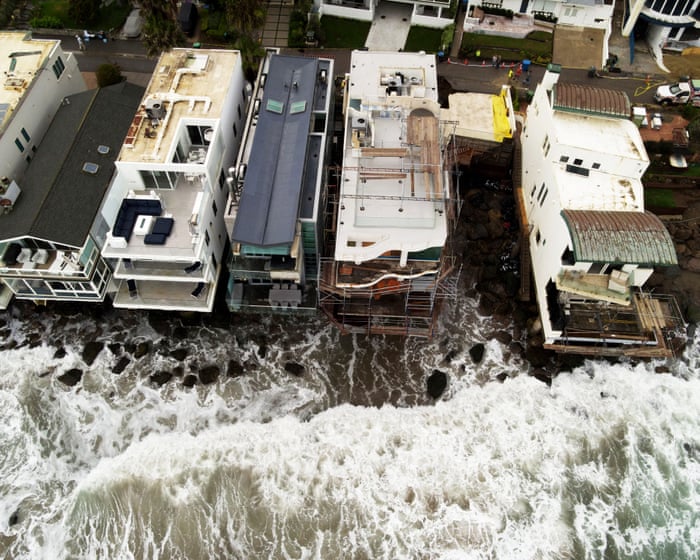
Heavy flooding in eastern India from the Ganges River caused deaths and damaged villages, with rescue boats helping evacuate people. In California, waves from Hurricane Marie caused severe beach erosion and flooding, damaging homes and vehicles.
Key Facts
Flooding in Malda, West Bengal, India, caused three deaths and affected many villages.
The Ganges River rose 75 cm above the extreme danger level due to heavy rain.
A collapsed embankment in East Basudevpur greatly narrowed a river channel, risking more flooding.
Over 100 boats were sent to help evacuate people in the flooded areas.
In Orange County, California, waves from Hurricane Marie caused significant beach erosion and flooding.
Erosion exposed old infrastructure like asphalt, pipes, and pier pieces on the beach.
Floodwaters damaged homes, vehicles, and streets, leaving behind sand layers.
The US is experiencing a heatwave with temperatures reaching up to 40°C in central states, raising wildfire risks.
Read the Original
Want the full story? Tap a source to open the original
article.
Sweden’s recent general election results are very close, but the center-left opposition may form a new government after four years led by a right-wing coalition. The country faces a challenge balancing its well-known welfare system with increased defense spending due to joining NATO after Russia’s war on Ukraine.
Key Facts
Sweden held a general election with very close results.
The center-left opposition is likely to lead the next government.
The previous government was a right-wing coalition lasting four years.
Domestic economic issues, especially welfare, were key topics during the election.
Sweden joined NATO recently, increasing its defense budget.
Higher defense spending limits the government’s ability to expand welfare.
The decision to join NATO was influenced by Russia’s war in Ukraine.
The situation creates tension between funding national security and maintaining social programs.
Read the Original
Want the full story? Tap a source to open the original
article.
Sweden's recent election results show a very close race between the left-wing opposition and the right-wing alliance. Both sides are now starting talks to try to form a government, but the process looks likely to be complicated and could take weeks.
Key Facts
The left-wing opposition, led by Magdalena Andersson, holds a slim lead with some votes still being counted.
The far-right Sweden Democrats lost seats for the first time since joining parliament 16 years ago.
No party has a clear majority, so coalition negotiations are required to form a government.
Both Andersson’s Social Democrats and outgoing Prime Minister Ulf Kristersson's Moderates are trying to find partners to reach a majority.
The left-wing bloc includes several parties with differing views, making agreement difficult.
The Centre Party, formerly part of the right-wing bloc, could be a key player in forming the next government.
Parliamentary votes to approve a new prime minister can start as early as September 29.
Previous government formations in 2018 and 2022 took 134 and 37 days, respectively.
Read the Original
Want the full story? Tap a source to open the original
article.
Yemen’s government forces, supported by Saudi Arabia, have pushed back Houthi fighters and are making advances in Taiz province. The Houthis responded by launching missile and drone attacks on Saudi military sites as fighting continues to escalate in Yemen and nearby regions.
Key Facts
Yemen’s government forces regained control of areas in western Taiz after stopping a Houthi attack.
Saudi Arabia supports Yemen’s government with air strikes targeting Houthi positions, especially along the west coast.
The Houthis said they attacked Saudi military bases with dozens of missiles and drones.
Saudi Arabia reported brief alerts due to possible attacks near Abha and Khamis Mushait but lifted them quickly.
Fighting escalated since July, breaking a UN-brokered truce from 2022.
Houthis control parts of Yemen’s Red Sea coast, including islands near the Bab al-Mandeb strait, a vital global trade route.
Nearly 86,000 people have been displaced by recent clashes, with over 2,000 fleeing to Djibouti.
The conflict threatens key shipping lanes important for global oil and gas transport.
Read the Original
Want the full story? Tap a source to open the original
article.