Houthi rebels in Yemen have quickly taken control of areas along the country's western coast. They also captured the Bab al-Mandab Strait, an important water passage at the southern end of the Red Sea, which affects shipping routes including those used for Saudi oil exports.
Key Facts
The Houthis are a rebel group based in Yemen.
They recently restarted fighting against Yemen’s government, which is supported by Saudi Arabia.
The Houthis gained territory along Yemen’s western coastline.
They took control of the Bab al-Mandab Strait, a key chokepoint in the Red Sea.
The Bab al-Mandab Strait is important for global shipping, especially for oil exports from Saudi Arabia.
Control of this strait can impact international trade and energy supply routes.
The conflict in Yemen involves regional powers including Saudi Arabia.
Read the Original
Want the full story? Tap a source to open the original
article.
The Iranian-backed Houthi rebels have taken control of a port city in Yemen, increasing tensions between Iran and the U.S. Saudi Arabia, supporting Yemen’s government, is asking President Trump to attack the Houthis, and the U.S. has sent over 100 military advisors to help Saudi Arabia.
Key Facts
The Houthi rebels in Yemen are backed by Iran.
The Houthis reportedly captured a key port city in Yemen.
Saudi Arabia supports Yemen’s government in fighting the Houthis.
Saudi Arabia has asked President Donald Trump to launch strikes against the Houthis.
The U.S. has sent more than 100 military advisors to assist Saudi Arabia.
The takeover raises the chance of widening conflict between the U.S. and Iran.
Read the Original
Want the full story? Tap a source to open the original
article.
The Trump administration is helping Saudi Arabia by sharing intelligence and targeting information but is not planning direct attacks on the Houthi group in Yemen right now. The situation could change if threats to shipping routes in the Red Sea become more serious.
Key Facts
The U.S. is providing intelligence and targeting help to Saudi Arabia concerning the conflict with the Houthis in Yemen.
There are no current plans from the Trump administration to launch direct military strikes against the Houthis.
U.S. Central Command Commander Adm. Brad Cooper recently met with Saudi officials to discuss the situation.
Saudi Crown Prince Mohammad bin Salman spoke twice with President Donald Trump, requesting U.S. military intervention, but did not say it was urgent.
The Trump administration’s main focus is protecting national security interests, like keeping the Red Sea open for shipping.
Saudi Arabia is considering a major military operation against the Houthis and may act without U.S. help but has not decided yet.
The Houthis have taken control over parts of Yemen’s west coast but face ongoing resistance from Yemeni government forces.
The Houthis have warned they will keep the Red Sea shipping lanes open, but attacks on Saudi-linked ships have increased risks.
Read the Original
Want the full story? Tap a source to open the original
article.
The USS George Washington, a U.S. aircraft carrier, is currently operating in the Middle East. A CBS News reporter is aboard the ship to provide coverage of its activities in the region.
Key Facts
The USS George Washington is a large U.S. Navy aircraft carrier.
It is currently active in the Middle East.
CBS News has a reporter, Tom Hanson, on board the ship.
The report shows the carrier’s operations in the region.
Aircraft carriers are vessels that carry military airplanes and support naval missions.
The Middle East is a key area for U.S. military presence.
CBS News offers coverage of this deployment on its app and website.
Read the Original
Want the full story? Tap a source to open the original
article.
Afghanistan was the main focus of the U.S. response after the 9/11 attacks because the Taliban allowed the attackers to stay there. The war lasted over 20 years and caused many deaths, mostly among civilians. Three men who fought in this war shared their experiences in interviews.
Key Facts
Afghanistan was targeted by the U.S. after 9/11 because the Taliban protected the attackers.
The conflict lasted more than 20 years and is called "The American War" in Afghanistan.
Hundreds of thousands of people died during this time, most of them civilians.
The article includes interviews with three Afghan men who fought in the war.
Afghanistan’s situation has returned to a state similar to before 9/11, after years of war.
The U.S. involvement significantly changed Afghanistan but did not bring lasting peace.
The Taliban were the main group opposing U.S. forces during the conflict.
Read the Original
Want the full story? Tap a source to open the original
article.
The CIA released many secret presidential briefings about Osama bin Laden and al-Qaida before the September 11 attacks. These papers show what U.S. intelligence knew about Bin Laden’s plans and networks before the 2001 hijackings that killed nearly 3,000 people.
Key Facts
The CIA released dozens of presidential daily briefs on the 25th anniversary of 9/11.
The documents cover intelligence from 1998 to just after the attacks in 2001.
Briefings showed Bin Laden’s movements, financing, and threats to the U.S.
In 1998, intelligence warned about terrorists seeking weapons of mass destruction, including chemical and biological attacks.
Officials noted possible hijackings and attempts to fly planes into U.S. cities.
The Taliban was described as unwilling to control Bin Laden because he helped them fight the Soviets.
Before 9/11, the U.S. was conducting about 70 investigations related to Bin Laden’s network.
Most documents had parts blacked out to protect sources, and they did not reveal major new information.
Read the Original
Want the full story? Tap a source to open the original
article.
One person has died and four others have been sickened in a new outbreak of legionnaires’ disease in the South Bronx, New York City. Health officials are investigating the source and testing cooling towers, which can spread the bacteria cause of the disease.
Key Facts
Five cases of legionnaires’ disease have been confirmed in Melrose and Morrisania areas of the South Bronx.
One person died from the infection.
Cooling towers in the area were tested because they can spread Legionella bacteria through mist.
Building owners with positive tests must clean and disinfect their cooling towers.
Symptoms include fever, chills, muscle aches, and cough; the disease is treatable with antibiotics if caught early.
Legionnaires’ disease spreads by breathing in mist with the bacteria, but it does not spread from person to person.
Officials advise people with flu-like symptoms who visited or live in the affected areas since late August to see a doctor.
A previous outbreak ended recently on Manhattan’s Upper East Side; multiple outbreaks have happened in NYC before.
Read the Original
Want the full story? Tap a source to open the original
article.
The CIA declassified 71 daily presidential briefing documents from February 1998 to September 12, 2001. These briefs include information given to U.S. presidents about national security before and immediately after the 9/11 terrorist attacks.
Key Facts
The CIA released 71 presidential daily briefs (PDBs) on September 15, 2023.
The documents cover the period from February 1998 to the day after the 9/11 attacks, September 12, 2001.
Presidential daily briefs are reports given daily to the president with important security information.
The briefs show what intelligence leaders told presidents about international threats before 9/11.
The release aims to provide more public understanding of the intelligence before the attacks.
The documents include information that was classified, or kept secret, until now.
President Donald Trump is the sitting president as of the document’s release in 2023.
CBS News analyzed the documents with national security experts.
Read the Original
Want the full story? Tap a source to open the original
article.
The 9/11 Memorial & Museum in New York City honors the 25th anniversary of the September 11, 2001 terrorist attacks. People gathered at the memorial site to remember the victims and reflect on the impact of the attacks.
Key Facts
The 25th anniversary of the 9/11 attacks took place in 2026.
The 9/11 Memorial & Museum is dedicated to remembering those who lost their lives.
Ceremonies were held in New York City to mark the anniversary.
President Donald Trump visited the Pentagon as part of the anniversary events.
Families of 9/11 victims called for accountability from Saudi Arabia during the ceremonies.
Various media and news outlets covered different stories related to 9/11 and its legacy.
Security was increased in New York City ahead of the anniversary.
The reflecting pool at Ground Zero is a central part of the memorial experience.
Read the Original
Want the full story? Tap a source to open the original
article.
The glutinous snail, a tiny and rare snail once common in the UK, is now only found in one lake in Wales. Conservationists and several British zoos are working to protect and breed this snail to prevent it from disappearing completely.
Key Facts
The glutinous snail has a gooey covering on its small, delicate shell and large antennae.
It used to live widely in the UK but is now extinct in England due to pollution and habitat loss.
The last known home of the snail is Llyn Tegid, the largest natural lake in Wales.
Conservationist Ian Hughes has bred about 2,000 snails in homemade tanks and created shelters for them in the lake.
The snails eat algae and indicate healthy lakes and rivers.
The Hughes family is involved in protecting the snail, including breeding it in captivity.
British zoos, supported by a UK government scheme, plan to relocate some snails to wildlife parks to help restore their numbers in the wild.
This effort is part of a £60 million program to protect rare species in the UK.
Read the Original
Want the full story? Tap a source to open the original
article.
A passenger train derailed in northern France near Cléon, injuring at least 44 people. Emergency teams responded quickly, and one seriously injured passenger was airlifted to the hospital.
Key Facts
The derailment happened on a train traveling between Rouen and Caen in Normandy.
About 180 passengers were on board the train.
At least 44 people were injured, including one 18-year-old woman in critical condition.
Emergency services, including 140 firefighters, were sent to the crash site.
Three train carriages overturned during the accident.
The cause of the derailment is not yet known.
French authorities started a mass-casualty response plan soon after the crash.
The national railway company SNCF reported major disruptions and provided replacement buses.
Read the Original
Want the full story? Tap a source to open the original
article.
The population of blue crabs in Chesapeake Bay has grown by 46% this year, reaching 349 million crabs. This is the highest number since 2019 after several years of low populations, but scientists are unsure why the numbers have increased.
Key Facts
The blue crab population in Chesapeake Bay increased by 46% from last year.
Current estimates put the population at 349 million crabs.
This is the highest crab population in the bay since 2019.
The Maryland Department of Natural Resources and Virginia Institute of Marine Science conducted the survey.
Juvenile crabs and adult males increased in number, but female crabs decreased.
Over one-third of the U.S. blue crab catch comes from Chesapeake Bay.
The crab industry brought in at least $74 million at the docks in 2024.
Scientists and fishery groups use this data to manage and conserve crab populations.
Read the Original
Want the full story? Tap a source to open the original
article.
A community event in Ireland in fall 2025, featuring bouncy castles, led to an outbreak of MRSA infections affecting 48 children. The infections were caused by a rare, drug-resistant strain of the bacteria that spread quickly due to close contact and suitable conditions at the event.
Key Facts
About 120 people attended a community event with three bouncy castles; half were children and teens.
Forty-eight children developed skin and soft tissue infections after playing, with 4 hospitalized.
The bacteria identified was a rare, multidrug-resistant MRSA strain producing a toxin called PVL that damages immune cells.
Symptoms appeared quickly, often within hours or days, including blisters, abscesses, and fever.
The MRSA strain resisted at least four antibiotics but was treatable with others like clindamycin and tetracycline.
The outbreak was the largest MRSA outbreak recorded in Ireland and the first linked to bouncy castle use.
Most infected children had spent multiple hours playing in crowded, humid, and rainy conditions inside the bouncy castles.
One infected child who did not play in the castles had close contact with others who did, confirming transmission through close interaction.
Read the Original
Want the full story? Tap a source to open the original
article.
Two children and one woman were hurt on a fairground ride at Maltby Crags Fair in South Yorkshire. They were taken to hospital, and the fairground closed early after the accident.
Key Facts
The injured people are aged 11, 13, and 21.
Emergency services responded to the accident around 6:50 pm on Friday.
Two children were taken to Sheffield Children's Hospital.
South Yorkshire Police closed a nearby road to help people leave the area safely.
The fairground was shut for the evening following the incident.
Multiple ambulances and rapid response vehicles attended the scene.
The exact severity of the injuries is not yet known.
The road near the fairground has since reopened.
Read the Original
Want the full story? Tap a source to open the original
article.
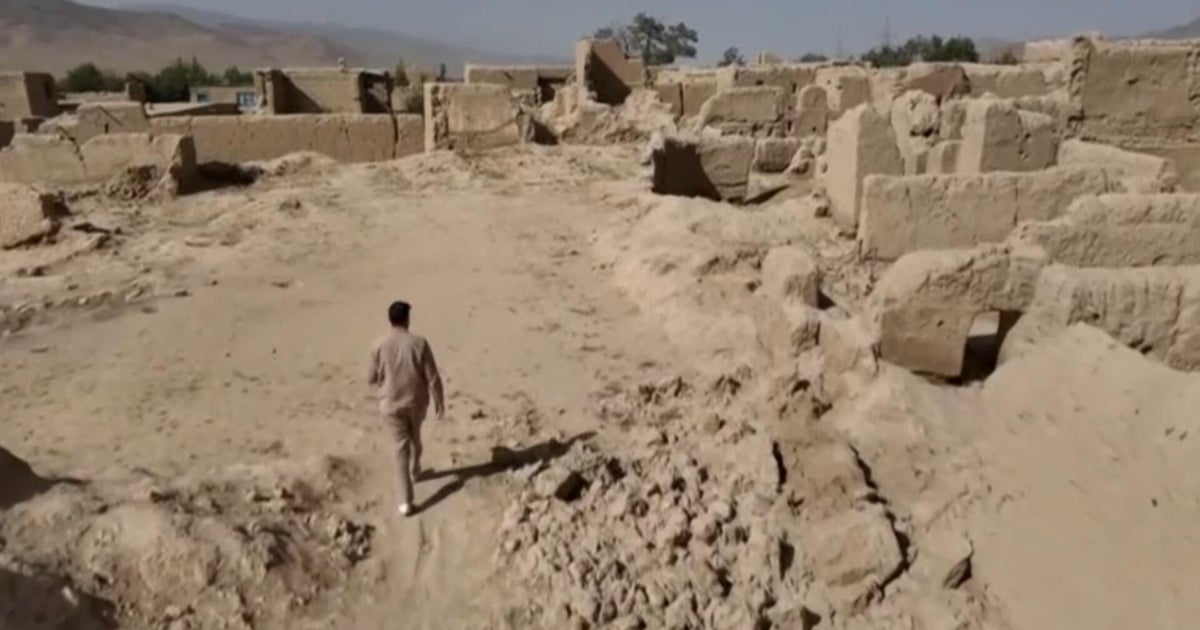
CBS News correspondent Imtiaz Tyab visited rural parts of Afghanistan where much of the conflict between the U.S. and the Taliban happened over nearly 20 years after the 9/11 attacks. The report shows what daily life looks like now in these areas.
Key Facts
The U.S. and the Taliban fought a war in Afghanistan for nearly 20 years following the 9/11 attacks.
Most of the fighting took place in rural provinces of Afghanistan.
CBS News sent a senior foreign correspondent, Imtiaz Tyab, to visit these rural provinces.
The report explores how people are living there today, 25 years after 9/11.
The story focuses on everyday life rather than military or political events.
Read the Original
Want the full story? Tap a source to open the original
article.
The city of Los Angeles will honor a famous mountain lion called P-22 with a bronze statue in Griffith Park, where the animal once lived. The sculpture, created by artist Adam Matano, will be placed at the park’s visitor center and was funded by private donors.
Key Facts
P-22 was a mountain lion known for living in Griffith Park, Los Angeles.
He became well-known after a photographer took a famous photo of him near the Hollywood sign.
The bronze sculpture shows P-22 stepping down from a platform decorated with local plants and animals.
The sculpture aims to represent nature living within the city of Los Angeles.
P-22 had to cross busy freeways to reach Griffith Park, highlighting the need for wildlife crossings.
The Wallis Annenberg wildlife crossing, the world’s largest, is opening soon to help animals move safely.
P-22 was euthanized in December 2022 due to health problems after attacking a dog and possibly being hit by a vehicle.
He was likely born in the Santa Monica Mountains and lived about 12 years.
Read the Original
Want the full story? Tap a source to open the original
article.
The CIA has made public 71 secret intelligence reports that were given to former Presidents George W. Bush and Bill Clinton before the September 11, 2001 attacks. These reports warned about Al Qaeda’s plans to carry out terrorist attacks within the United States.
Key Facts
The CIA released 71 previously secret daily intelligence reports.
These reports were shared with Presidents George W. Bush and Bill Clinton before 9/11.
The documents warned about planned attacks by the terrorist group Al Qaeda.
The release is the first time these specific warnings have been made public.
The intelligence briefings aimed to inform the presidents about threats to U.S. soil.
The release was announced by the CIA on a Friday.
These documents come from daily intelligence products, known as President’s Daily Briefs.
Read the Original
Want the full story? Tap a source to open the original
article.
Denise Cosco, who testified against her father involved in a mafia murder of her mother, died after attempting to take her own life in Rome. Her mother, Lea Garofalo, was killed by the 'Ndrangheta mafia in 2009 and became a symbol against mafia violence in Italy.
Key Facts
Denise Cosco spoke out in court against her father, Carlo Cosco, who was involved in the murder of her mother.
Lea Garofalo was strangled, dismembered, and burned in a mafia killing linked to the 'Ndrangheta clan.
Denise lived under state protection with a new identity but struggled with mental health and addiction.
Her father and accomplices are serving life in prison for the murder.
Denise testified as a "proud witness for justice" to seek inner freedom.
Officials are investigating whether her death was influenced or encouraged by others.
Denise reconnected with her father in prison despite her painful family history.
Anti-mafia advocates say people who leave organized crime need long-term support.
Read the Original
Want the full story? Tap a source to open the original
article.
The Yemeni group Ansar Allah (Houthis), allied with Iran, has taken control of Yemen's Red Sea coast, including the Bab el-Mandeb strait. This move threatens about 10 percent of the world's oil trade by sea and could disrupt global shipping routes, especially since the Strait of Hormuz is also under pressure from Iran.
Key Facts
Ansar Allah, a Yemeni group supported by Iran, now controls the Bab el-Mandeb strait.
Bab el-Mandeb is a narrow waterway between Yemen and Djibouti, linking the Gulf of Aden to the Red Sea.
About 8.1 million barrels per day of oil and petroleum products pass through this strait, roughly 10% of global maritime oil trade.
The Bab el-Mandeb is an important alternative route because Iran has restricted shipping through the Strait of Hormuz.
Even making the area dangerous could raise shipping costs and cause longer delivery times by forcing ships to reroute around Africa.
The Red Sea route also handles 30% of the world's container shipping before the current conflicts.
Conflict has damaged Saudi Arabia’s east-west oil pipeline, which connects its east and west coasts.
Traffic through the Suez Canal, a critical shipping route, has dropped due to this conflict and risks further disruption.
Read the Original
Want the full story? Tap a source to open the original
article.
Singer Pink responded to criticism after sharing a repost that opposed Macklemore’s pro-Palestinian remarks during Ed Sheeran’s concerts. She clarified her views, condemning Hamas, supporting Palestinian human rights, and explaining that her original repost was misunderstood.
Key Facts
Pink reposted criticism of Macklemore’s support for Palestinians, leading to backlash and boycott calls online.
She admitted the repost included words she did not write and said using memes in response was a mistake.
Pink stated she was born Jewish and felt people assumed beliefs without knowing her full views.
She confirmed her stance that Hamas is a terrorist group.
Pink supports Palestinian human rights and believes innocent lives should be protected on all sides.
She referred to her experience as a UNICEF ambassador, showing care for people affected on both sides of the conflict.
Pink said complex issues like the Israel-Gaza war cannot be fully explained in short social media posts.
The controversy arose nearly three years after the start of the recent Israel-Gaza conflict, following violent events in October 2021.
Read the Original
Want the full story? Tap a source to open the original
article.