A 44-year-old woman in Los Angeles was arrested for allegedly helping Iran send weapons to Sudan's military during Sudan’s ongoing civil war. She faces charges for arranging sales of drones, bombs, and ammunition through a company in Oman.
Key Facts
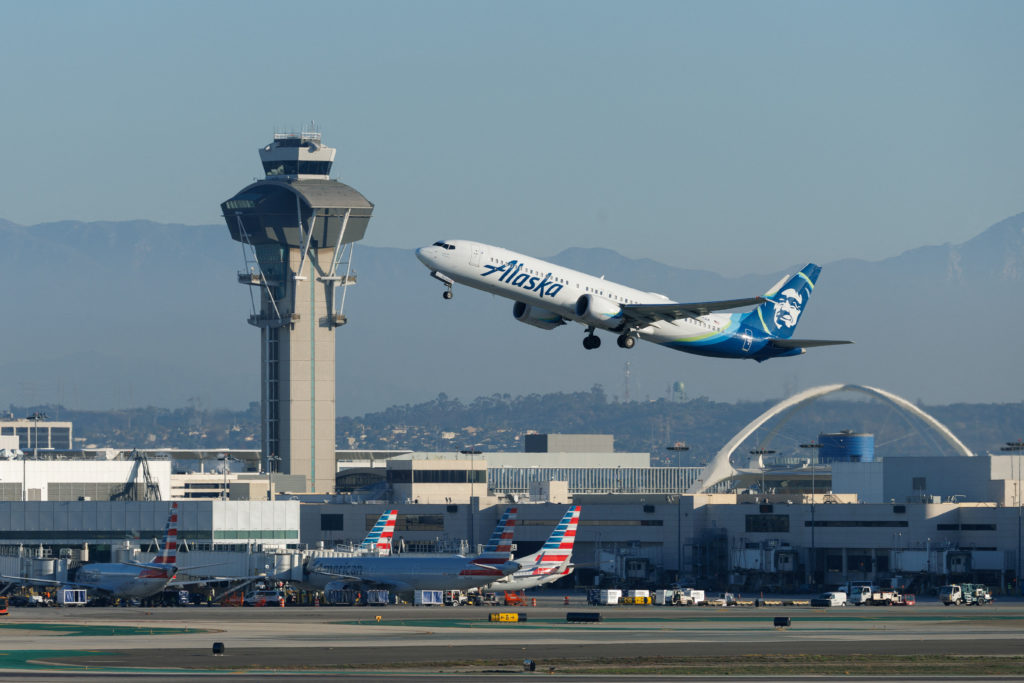
The woman, Shamim Mafi, was arrested at Los Angeles International Airport.
She is accused of brokering weapons sales between Iran and Sudan’s Armed Forces.
The weapons included drones, bombs, bomb fuses, and millions of rounds of ammunition.
Mafi is an Iranian national and has been a lawful U.S. resident since 2016.
She and a partner ran a company in Oman named Atlas International Business to traffic weapons.
The company received over $7 million in payments in 2025 for these transactions.
Mafi submitted a letter to Iran’s Islamic Revolutionary Guard Corps to buy bomb fuses for Sudan.
She could face up to 20 years in prison if convicted.
Read the Original
Want the full story? Tap a source to open the original
article.
Gao Zhen, a Chinese sculptor known for creating critical artworks about China's political history, was arrested in Beijing in 2024 during a visit from the United States. He faced a secret trial for "insulting revolutionary heroes and martyrs," a charge that can lead to up to three years in prison. His case highlights increasing censorship and strict control over artistic expression in China.
Key Facts
Gao Zhen and his brother Gao Qiang gained fame for sculptures criticizing China's authoritarian past and leaders like Mao Zedong.
Gao Zhen was arrested in mid-2024 at his Beijing studio while visiting from the U.S., where he emigrated in 2022.
Authorities seized his artworks and prevented his wife and young son from leaving China.
He was secretly tried on charges of insulting revolutionary heroes, punishable by up to three years in prison.
Chinese media described him as an artist catering to Western political agendas.
Observers say the Chinese government is increasing control over all forms of dissent, including art, film, and literature.
The United Nations and other human rights groups have called for Gao’s immediate release, citing concerns about punishing artistic expression retroactively.
Gao has serious health conditions, including spinal disease and skin problems, and has shown signs of malnutrition in detention.
Read the Original
Want the full story? Tap a source to open the original
article.
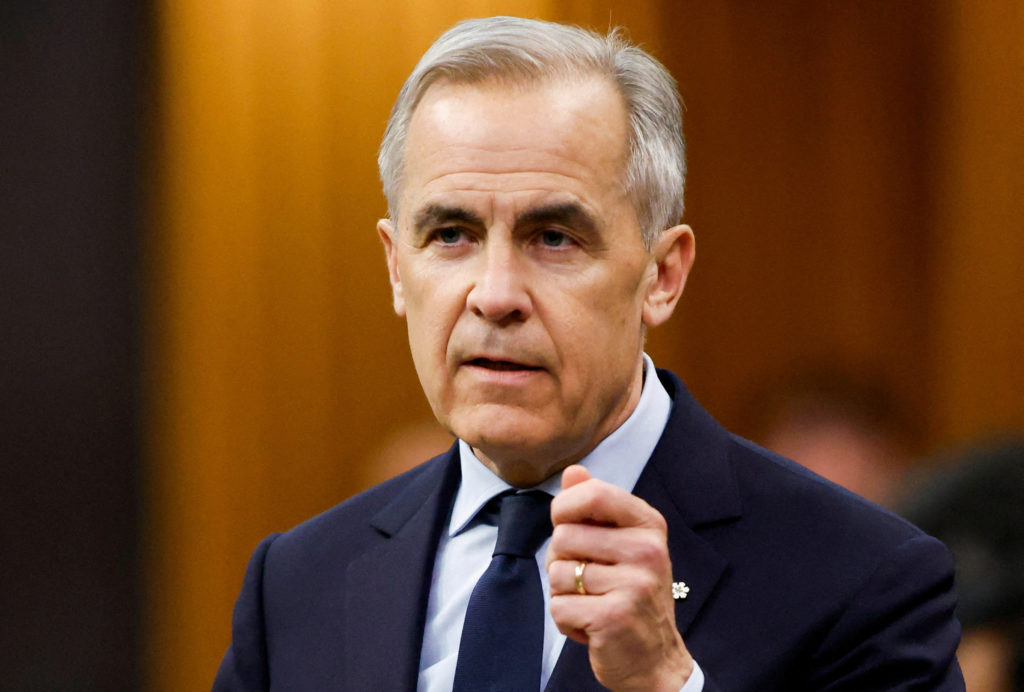
Canadian Prime Minister Mark Carney said Canada’s close economic ties to the United States used to be a benefit but are now a problem that needs fixing. He talked about efforts to attract new investments, make trade deals with other countries, and reduce dependence on the U.S. due to changes in U.S. trade policies under President Donald Trump.
Key Facts
Canada’s strong economic link to the U.S. is now seen as a weakness.
U.S. tariffs under President Trump have hurt Canadian industries like autos and steel.
Businesses in Canada are holding back investments because of uncertainty in trade relations.
Carney plans to update Canadians regularly about efforts to diversify the economy away from the U.S.
The U.S., Canada, and Mexico are scheduled to review their trade agreement in July.
Canada aims to double clean energy capacity, improve defense spending, lower taxes, and make housing more affordable.
Carney said Canada cannot rely on the U.S. and must take control of its own security and economy.
Carney has previously criticized economic pressure by powerful countries on smaller nations.
Read the Original
Want the full story? Tap a source to open the original
article.
Bulgaria's former president, Rumen Radev, who supports closer ties with Russia, is leading in the country's latest parliamentary election based on exit polls. The vote took place amid low voter turnout and ongoing political instability, marking the eighth election in five years.
Key Facts
Rumen Radev is Bulgaria’s ex-president and leads a pro-Russian Progressive Bulgaria coalition.
Exit polls show Radev's coalition is ahead but might not win enough seats to govern alone.
Bulgaria has held eight elections in five years due to political instability.
Voter turnout in this election was low.
Radev warned that holding another election would be very harmful for the country.
Bulgaria is dealing with problems like corruption and political splits.
The country faces challenges balancing relations between the European Union and Russia.
Read the Original
Want the full story? Tap a source to open the original
article.
Rumen Radev’s Progressive Bulgaria party is set to win Bulgaria’s parliamentary election with about 37% of the vote. Radev, a former air force commander and current president, plans to build a coalition government and has expressed a cautious approach to supporting Ukraine in its war with Russia.
Key Facts
Bulgaria held its eighth parliamentary election in five years.
Exit polls show Progressive Bulgaria winning 37%, the runner-up party GERB has 16%.
Radev is seen as pragmatic and somewhat pro-Russian, opposing military support to Ukraine.
The election followed protests against a controversial budget proposed by the previous government.
Radev promised to fight corruption and create a stable government.
Bulgaria supplies ammunition to Ukraine via other countries but Radev opposes selling Bulgarian weapons stockpiles to Ukraine.
Radev supports Bulgaria’s role in European defense production, including a joint arms venture with German company Rheinmetall.
Progressive Bulgaria will need coalition partners to govern as it lacks a strong majority.
Read the Original
Want the full story? Tap a source to open the original
article.
US forces attacked and took control of an Iranian cargo ship called Touska near the Strait of Hormuz. The USS Spruance fired on the ship’s engine room because it was breaking a US blockade, then marines boarded the ship.
Key Facts
The incident happened near the Strait of Hormuz, a key waterway for global oil shipments.
The US guided-missile destroyer USS Spruance fired several rounds at the Iranian-flagged cargo ship Touska.
The shots targeted the ship’s engine room to stop it from moving.
US marines boarded the Touska after it was disabled.
US Central Command released a video showing the destroyer firing at the ship.
The US said the attack was because the Touska violated a US blockade.
The situation involved military action between US forces and an Iranian ship.
Read the Original
Want the full story? Tap a source to open the original
article.
About 25 protesters were arrested after around 1,000 animal welfare activists tried to enter a beagle breeding and research facility in Wisconsin. Police used pepper spray and rubber bullets to stop the demonstrators, who have been trying for several months to remove dogs from the facility.
Key Facts
The protest took place at Ridglan Farms in Blue Mounds, Wisconsin, about 25 miles southwest of Madison.
This protest was the second recent attempt by activists to take beagles from the facility.
Police used pepper spray and rubber bullets to prevent protesters from entering.
Around 25 people were arrested, including Wayne Hsiung, the leader of the Coalition to Save the Ridglan Dogs.
Most arrested protesters were quickly released, but Hsiung faces a felony charge of conspiracy to commit burglary.
Barricades around the farm included a manure-filled trench, hay bales, and barbed-wire fencing.
About 2,000 beagles are kept at the facility.
Authorities described the situation as calmer and more peaceful the following day, with activists dispersing after two hours.
Read the Original
Want the full story? Tap a source to open the original
article.
A woman from Los Angeles, Shamim Mafi, was arrested at the airport for allegedly helping Iran sell weapons to Sudan's military. She is accused of arranging deals for drones, bombs, and ammunition amid Sudan’s ongoing civil war.
Key Facts
Shamim Mafi is 44 years old and lives in Los Angeles.
She was arrested at Los Angeles International Airport.
Prosecutors say she helped Iran traffic drones, bombs, bomb fuses, and millions of rounds of ammunition to Sudan.
Mafi is an Iranian national and has had legal permanent residency in the U.S. since 2016.
She and a partner operated a company in Oman called Atlas International Business.
The company received over $7 million in payments in 2025 related to these arms sales.
She allegedly brokered a sale of 55,000 bomb fuses to Sudan’s Ministry of Defense.
Mafi faces up to 20 years in prison if convicted.
Sudan is in its fourth year of civil war, causing a severe humanitarian crisis.
Read the Original
Want the full story? Tap a source to open the original
article.
The US Navy intercepted and seized an Iranian-flagged cargo ship named Touska in the Gulf after it ignored warnings to stop, according to President Donald Trump. The US is maintaining a naval blockade on Iran until both countries agree on a peace deal, while talks between the US and Iran are ongoing but face difficulties.
Key Facts
The cargo ship Touska, flagged by Iran and nearly 900 feet long, was stopped by the US Navy after ignoring warnings.
President Trump announced the seizure and said the ship was damaged by a shot to its engine room.
The Touska is under US Treasury sanctions due to past illegal activities.
US Vice-President JD Vance is leading a new US delegation to talks in Pakistan aimed at ending the conflict with Iran.
Iran has not confirmed attending the talks and said it will not participate while the US blockade remains.
The US and Israel started a conflict by striking inside Iran on 28 February, leading to attacks across the Middle East and a temporary ceasefire.
The Strait of Hormuz, a crucial oil shipping route, remains closed by Iran in response to the US naval blockade.
About 20% of the world's oil and gas usually pass through the Strait of Hormuz, and its closure has raised global energy prices.
Read the Original
Want the full story? Tap a source to open the original
article.
Ukrainian writer Andrey Kurkov, known for his novels and public commentary, has stayed in Kyiv during the ongoing war with Russia. He has written three books about his experiences during the conflict and talks about what it is like to be a writer living in a war zone.
Key Facts
Andrey Kurkov is a well-known Ukrainian novelist and public intellectual.
He has stayed in Kyiv since Russia’s invasion began in 2022.
Kurkov has published three books documenting his war experiences: Diary of an Invasion, The Year of the Locust, and Three Years on Fire.
He spoke to the news outlet France 24 about his life and work during the war.
The articles emphasize his dedication to Ukrainian culture amid the conflict.
His perspective offers insight into daily life in a city under attack.
The conflict began with Russia’s full-scale military invasion of Ukraine in 2022.
Read the Original
Want the full story? Tap a source to open the original
article.
Argentina’s President Javier Milei visited Jerusalem and showed support for the United States and Israel in their conflict with Iran. During the visit, he met with Israeli Prime Minister Benjamin Netanyahu and they agreed to deepen their cooperation.
Key Facts
Argentina’s President Javier Milei visited Jerusalem.
He expressed support for the US and Israel in their war against Iran.
Milei met with Israeli Prime Minister Benjamin Netanyahu.
New agreements were made to strengthen ties between Argentina and Israel.
The visit highlighted Argentina’s alignment with US and Israeli policies.
The focus was on closer cooperation in political and possibly security matters.
The visit took place amid ongoing tensions involving Iran, the US, and Israel.
Read the Original
Want the full story? Tap a source to open the original
article.
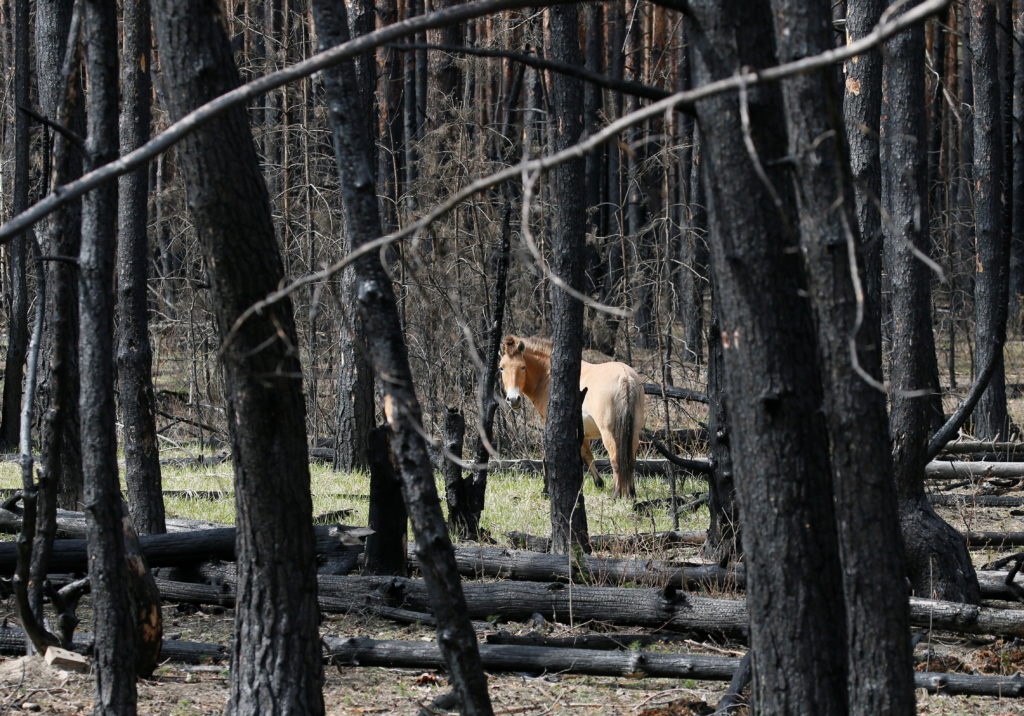
The Chernobyl exclusion zone in Ukraine, abandoned after the 1986 nuclear disaster, has become a refuge for wildlife. Animals like wild horses, wolves, bears, and deer have returned to live freely in the radioactive area where humans cannot safely live.
Key Facts
The Chernobyl nuclear accident happened on April 26, 1986, causing dangerous radiation spread across Europe.
A 30-kilometer radius around the plant remains unsafe for people but is now a wildlife reserve.
Przewalski's horses, native to Mongolia and once endangered, were introduced in 1998 and now roam freely.
Other animals such as wolves, brown bears, lynx, moose, and red deer have also come back.
The area’s nature is recovering quickly, with forests overtaking abandoned buildings and roads.
Some wildlife show effects of radiation, like frogs with darker skin and birds developing cataracts.
Military actions during Russia’s 2022 invasion caused fires and damage, creating new challenges for the ecosystem.
Firefighters in the zone face risks like fires started by downed drones, which can spread radioactive particles.
Read the Original
Want the full story? Tap a source to open the original
article.
There are no ads, so there is no reason to bait you. Readers who chip in keep it that way. Most choose $3.99/month, and get the daily digest every morning.
A senior Iranian politician said Iran will never give up control of the Strait of Hormuz, a key waterway for global oil shipments. Iran plans to make this control part of its law and considers the strait a strategic asset to deter enemies. Some Gulf countries strongly oppose Iran's move, fearing it sets a dangerous example for other international waters.
Key Facts
Iran controls the Strait of Hormuz, a vital route for oil and gas tankers.
Ebrahim Azizi, a senior Iranian lawmaker and former IRGC commander, says Iran’s control is an “inalienable right.”
Iran plans to pass a law to formalize its control over passage through the strait.
Iran sees the strait as a strategic tool for long-term leverage after the war.
Some neighboring Gulf states, like the UAE, call Iran’s control “hostile piracy.”
The US President Donald Trump thanked Iran’s Foreign Minister after he said the strait was open, but Iran’s military-linked media criticized that statement.
Oman, a close ally of Iran, controls the southern coast of the strait and is involved in talks to keep shipping safe.
Iran’s parliament is dominated by hardliners and the Islamic Revolutionary Guard Corps (IRGC), which have increased influence after recent conflicts and assassinations.
Read the Original
Want the full story? Tap a source to open the original
article.
The US military captured an Iranian-flagged cargo ship named Touska after it tried to pass an American naval blockade near the Strait of Hormuz. President Donald Trump said the US Navy disabled the ship’s engine and that marines now control the vessel.
Key Facts
The cargo ship is called Touska and flies the Iranian flag.
It tried to bypass a US naval blockade near the Strait of Hormuz, a key waterway in the Gulf of Oman.
A US Navy guided missile destroyer warned the ship to stop but the ship ignored the warning.
The Navy disabled the ship by damaging its engine room.
US marines took control of the Touska after it was stopped.
The ship is under US Treasury sanctions due to previous illegal activities.
Touska was stopped near Iran’s border with Pakistan and is more than 900 feet long.
The Iranian government has not made any public comment on the incident.
Read the Original
Want the full story? Tap a source to open the original
article.
Hundreds of people protested in Berlin despite heavy rain. They demonstrated against actions by the United States and Israel toward Iran, Gaza, and Lebanon.
Key Facts
The protest took place in Berlin during heavy rain.
Hundreds of people joined the protest.
Protesters opposed military actions involving the United States and Israel.
The focus was on US and Israeli actions toward Iran.
Protesters also spoke out against Israeli attacks on Gaza.
The protest included opposition to Israel’s involvement in Lebanon.
The event called for an end to these global conflicts.
Read the Original
Want the full story? Tap a source to open the original
article.
Two political meetings took place in Europe with very different views. In Barcelona, left-wing leaders met to discuss how to protect democracy from far-right movements. In Milan, far-right groups gathered, asking for less European Union regulation but stronger security measures.
Key Facts
The Barcelona meeting focused on uniting progressive leaders against far-right threats to democracy.
The Milan gathering brought together far-right figures who want fewer rules from the EU and more security control.
The two events show a clear political divide in Europe between left-wing and far-right perspectives.
Experts from universities and think-tanks discussed how this split might influence global politics.
The far right describes the current state of Europe as a “tragedy” needing change.
The left aims to build a single alliance of progressive forces to counter right-wing authoritarianism.
The discussions highlight increasing polarization in European and global politics.
Read the Original
Want the full story? Tap a source to open the original
article.
A British professor has discovered the exact location and layout of a house in London that William Shakespeare bought in 1613 for 140 pounds. This new finding provides more details about Shakespeare’s life in London during his later years.
Key Facts
Shakespeare bought a house in London’s Blackfriars area in 1613.
The purchase price of the house was 140 pounds, a significant sum at the time.
Before this discovery, the exact location of Shakespeare’s London house was unknown.
Shakespeare may have spent his final years in Stratford but still owned property and was writing plays in London in 1613.
The new evidence about the house was uncovered by Professor Lucy Munro of King’s College London.
This discovery adds to the limited information about Shakespeare’s life.
The location helps better understand Shakespeare’s living situation before his death in 1616.
The finding was announced around the anniversary of Shakespeare’s birth.
Read the Original
Want the full story? Tap a source to open the original
article.
An exit poll shows that former President Rumen Radev’s centre-left Progressive Bulgaria party is likely to win Bulgaria’s recent parliamentary election. The poll indicates that the conservative GERB party, led by former Prime Minister Boyko Borissov, came in second, while a reformist coalition finished third.
Key Facts
Bulgarians voted in their eighth election in five years, following protests that removed the previous government.
Exit poll by Alpha Research showed Progressive Bulgaria winning 38.1% of the vote.
The conservative GERB party received 15.9%, placing second.
Reformist coalition We Continue the Change-Democratic Bulgaria came third with 14.1%.
Rumen Radev, who left the presidency to run for prime minister, supported anti-corruption protests last year.
Radev is open to working with other parties or forming a minority government.
He has expressed a desire to renew relations with Russia and opposes sending weapons to Ukraine.
Bulgaria joined the European Union in 2007 and adopted the euro in January 2026.
Read the Original
Want the full story? Tap a source to open the original
article.
Iran has said it will not join the next round of peace talks with the United States, which plans to send a negotiation team to Pakistan on Monday. President Trump announced the US had seized an Iranian cargo ship and warned that the US might strike Iran unless it agrees to his terms.
Key Facts
Iran refuses to attend the upcoming US-Iran peace talks scheduled in Islamabad, Pakistan.
Iran cited US demands as too harsh and unpredictable, and condemned a naval blockade by the US as a ceasefire breach.
President Trump announced the US military has taken control of an Iranian-flagged cargo ship by damaging its engine room.
The US maintains a blockade on Iranian ports; Iran has partly lifted and then restored a blockade on the Strait of Hormuz, a key route for global oil.
The US delegation to Islamabad is said to be led by Vice President JD Vance, with envoys Steve Witkoff and Jared Kushner included.
The current conflict has severely disrupted global oil supplies and caused oil prices to rise sharply.
Thousands have died in US-Israeli strikes on Iran and a parallel Israeli invasion of Lebanon since the war began in late February.
Pakistan acts as the main mediator and its Prime Minister has spoken with Iran’s President to support peace efforts.
Read the Original
Want the full story? Tap a source to open the original
article.
Canadian Prime Minister Mark Carney said Canada’s close economic relationship with the United States has become a problem that needs fixing. He emphasized that Canada must reduce its dependence on the US and look for new trading partners because global trade is becoming more difficult and divided.
Key Facts
Carney said decades of economic partnership with the US are now a "weakness" for Canada.
He mentioned that US trade policies have changed, with tariffs rising to levels not seen since the Great Depression.
Carney pointed out that Canada’s strengths from close US ties have turned into vulnerabilities.
President Donald Trump’s threats of higher tariffs have disrupted trade with many countries, including Canada.
Trump’s suggestion that Canada should become a US state caused concern among Canadians.
Carney referenced historical resilience by showing a toy of General Isaac Brock, who resisted US invasion in 1812.
Carney’s Liberal Party recently won a majority in Canada, giving him more control over economic and trade decisions.
Canada plans to review the US-Canada-Mexico free trade agreement in July.
Carney is pushing Canada to build closer economic ties with other countries, like China, to avoid relying too much on the US.
Read the Original
Want the full story? Tap a source to open the original
article.