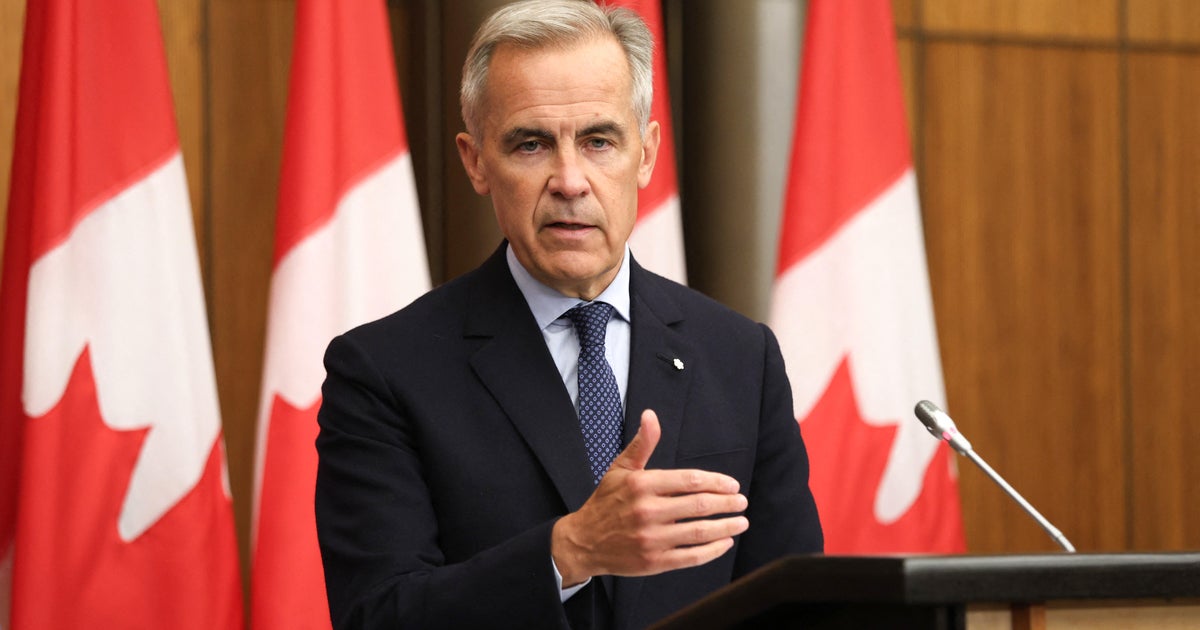
Canadian Prime Minister Mark Carney said Canada’s strong economic ties to the United States, once a strength, are now a weakness that needs fixing. He highlighted changes in U.S. trade policy under President Donald Trump and said Canada must diversify its economy and reduce reliance on the U.S.
Key Facts
Carney stated U.S. tariffs under President Trump hurt Canadian industries like auto and steel.
Canada plans to attract new investments and sign trade deals with other countries.
Carney criticized the uncertainty caused by current U.S. trade policies.
He said Canada cannot rely on the U.S. and must build a stronger, more independent economy.
Carney promised to give regular updates on efforts to diversify away from U.S. dependence.
He emphasized the need for increased defense spending, tax reductions, and more affordable housing.
Carney recalled Canada’s history of supporting the U.S. in wars but said the U.S. has changed.
The North American Free Trade Agreement (NAFTA) review is planned for July.
Read the Original
Want the full story? Tap a source to open the original
article.
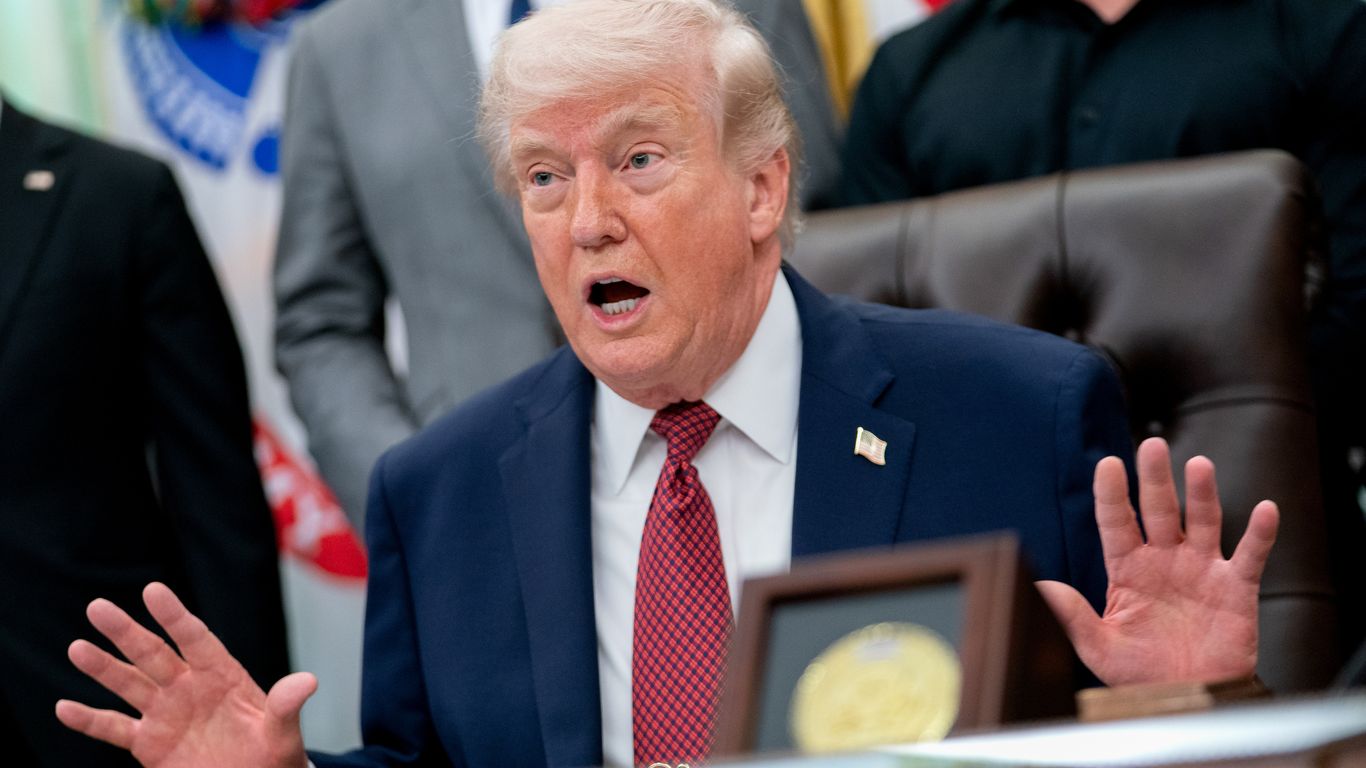
President Donald Trump reported that U.S. naval forces seized an Iranian cargo ship named TOUSKA after it tried to break a U.S. naval blockade in the Gulf of Oman. The ship was disabled by the U.S. Navy and is now under U.S. control while being inspected.
Key Facts
The Iranian ship TOUSKA ignored warnings from the U.S. Navy as it tried to pass through a naval blockade.
The U.S. Navy disabled the ship’s engine room to stop it.
U.S. Marines boarded the ship and took custody.
TOUSKA was under U.S. Treasury sanctions due to past illegal activities.
The vessel is currently being inspected by U.S. forces to determine its cargo.
The Iranian government has not commented on this incident.
This event happened in the Gulf of Oman, near key shipping routes affected by tensions with Iran.
Shipping and energy markets have been disrupted due to ongoing conflicts and blockades in the Middle East.
Read the Original
Want the full story? Tap a source to open the original
article.
David Lammy said President Donald Trump's insults toward UK Prime Minister Keir Starmer are "small and petty" and meant to pressure the UK to change its stance on Iran. Lammy emphasized that the UK will not join the conflict and highlighted ongoing diplomatic efforts to resolve tensions and reopen a vital shipping route, the Strait of Hormuz.
Key Facts
President Trump criticized Prime Minister Starmer for not sending British troops or equipment to the war.
Lammy said the UK will not get involved in the conflict in Iran.
Lammy described Trump's insults as petty and aimed at changing UK policy.
The Strait of Hormuz, a key shipping lane for oil and goods, remains blocked.
Lammy recently met US officials to discuss reopening the strait and the global economic impact.
Trump announced US negotiators will visit Pakistan to restart peace talks but warned of military action if Iran refuses a deal.
The UK Chancellor called the conflict a "mistake" that harms the world economy.
King Charles and Queen Camilla will visit the US soon amid tensions in UK-US relations.
Read the Original
Want the full story? Tap a source to open the original
article.
President Donald Trump said that the U.S. Navy used a missile destroyer to stop an Iranian cargo ship trying to go through the Strait of Hormuz without permission. The Navy warned the ship to stop before taking action.
Key Facts
The U.S. Navy used the guided missile destroyer USS Spruance to intercept an Iranian-flagged cargo ship named Touska.
The incident happened in the Gulf of Oman near the Strait of Hormuz.
The Navy gave a warning to the cargo ship before stopping it.
President Trump provided this information publicly on Sunday.
The Strait of Hormuz is a key waterway for international shipping and oil transport.
The U.S. has a naval blockade in the Strait of Hormuz to enforce restrictions.
Read the Original
Want the full story? Tap a source to open the original
article.
President Donald Trump said U.S. forces captured an Iranian cargo ship named Touska near the Strait of Hormuz after it tried to bypass a U.S. naval blockade. The U.S. Navy disabled the ship’s engine, and U.S. Marines now control the vessel. Iran has not commented on this incident.
Key Facts
The cargo ship Touska is flagged under Iran and tried to pass the U.S. naval blockade in the Strait of Hormuz.
A U.S. Navy guided missile destroyer warned the ship to stop, but the crew did not comply.
The U.S. Navy damaged the ship’s engine room, stopping it.
U.S. Marines are now in custody of the ship and checking its contents.
The Strait of Hormuz is a key route for about 20% of the world’s oil supply.
Iran stated that no ships would pass while the U.S. blockade remains active.
The blockade started on April 13 and is intended to pressure Iran to reach a deal with the U.S.
President Trump announced U.S. negotiators will visit Islamabad to explore talks with Iran, but Iran said it has not agreed to more negotiations.
Read the Original
Want the full story? Tap a source to open the original
article.
American forces stopped an Iranian cargo ship named Touska in the Gulf of Oman after it tried to bypass a U.S. naval blockade. President Trump said U.S. Marines took control of the ship by damaging its engine room, and officials from both countries are preparing for talks in Pakistan.
Key Facts
The ship, called Touska, was flying an Iranian flag.
It tried to pass a U.S. naval blockade in the Gulf of Oman.
The U.S. Navy ship USS Spruance warned the vessel to stop.
When the Iranian crew did not stop, the U.S. Navy disabled the ship by blowing a hole in its engine room.
U.S. Marines took the ship into custody.
Iran and the U.S. are planning talks in Pakistan soon.
President Trump warned that if Iran rejects a deal, the U.S. may target Iran’s power plants and bridges.
This is an ongoing situation with updates expected.
Read the Original
Want the full story? Tap a source to open the original
article.
U.S. Ambassador to the United Nations Mike Waltz said the United States is considering all possible actions to reduce Iran’s control over the Strait of Hormuz, a key waterway for global shipping. He did not confirm whether U.S. troops would board ships heading to China.
Key Facts
Mike Waltz is the U.S. Ambassador to the United Nations.
The Strait of Hormuz is an important shipping channel that Iran currently influences.
The U.S. wants to limit Iran’s control and the economic benefits Iran gains from the strait.
Waltz said “all options are on the table” regarding actions in the area.
He did not directly answer whether U.S. troops would board vessels bound for China.
The situation involves concerns over global trade and security in an important maritime route.
Read the Original
Want the full story? Tap a source to open the original
article.
UK Prime Minister Keir Starmer will explain to Parliament how Peter Mandelson became ambassador despite failing a security check. The scandal has led to the firing of top Foreign Office official Olly Robbins and increased pressure on Starmer’s leadership.
Key Facts
Peter Mandelson was appointed UK ambassador to Washington after failing security vetting.
The Foreign Office did not inform Prime Minister Starmer about the vetting failure.
Olly Robbins, the top civil servant in the Foreign Office, was fired over the scandal.
Robbins is set to answer questions from a parliamentary committee on Tuesday.
Starmer says he was not told about the vetting failure before or after appointing Mandelson.
Starmer promises to reveal all facts on Mandelson’s vetting to Parliament for transparency.
Some government ministers worry the scandal could threaten Starmer’s position as prime minister.
Opposition leaders have called for Starmer to resign over the issue.
Read the Original
Want the full story? Tap a source to open the original
article.
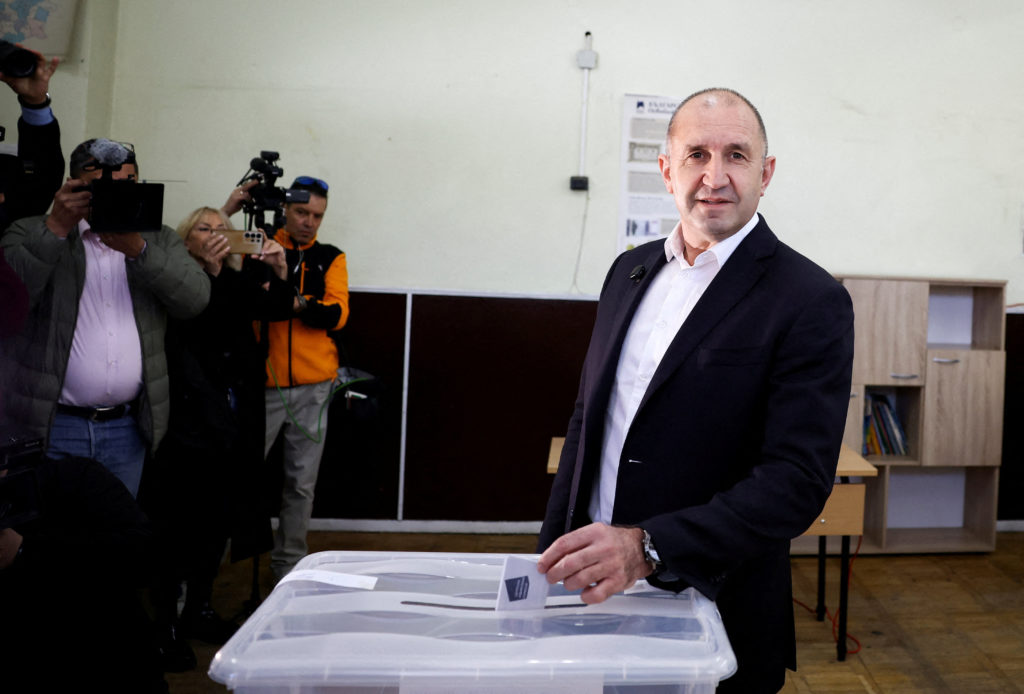
Bulgaria’s former president Rumen Radev, known for his pro-Russian stance, has won the latest parliamentary election with about 39 percent of the vote. His center-left coalition leads by a wide margin but may need to form a coalition government, as no party appears to have an outright majority.
Key Facts
Rumen Radev’s Progressive Bulgaria coalition won approximately 39.2% of the vote in Bulgaria’s recent parliamentary election.
The outgoing center-right GERB party, led by Boyko Borissov, received about 15.1%.
The election result does not guarantee a single-party government, suggesting a coalition will be needed.
Voter turnout was low, at 43.4%.
Radev opposes sending military aid to Ukraine and supports restarting talks with Russia.
Bulgaria has faced years of political deadlock and recent protests demanding action on corruption and judicial reform.
Bulgaria joined the eurozone and the Schengen area recently, marking deeper integration with Europe.
The pro-Russian Revival party may pose a coalition option, but Radev seems hesitant to join them formally.
Read the Original
Want the full story? Tap a source to open the original
article.
Ontario Premier Doug Ford will sell a private jet worth about $21 million after facing criticism for buying it with public money. The jet was intended for official travel, but Ford agreed it was not the right time to spend on a government plane.
Key Facts
Premier Doug Ford bought a used Bombardier Challenger 650 jet for C$28.9 million (about $21 million).
The jet was planned for official travel, including trips to the U.S. to discuss tariffs with the Trump administration.
After public and political criticism, Ford decided to sell the jet quickly.
The plane was built in Canada in 2016.
Critics said the purchase was unnecessary and called Ford out for using taxpayer money.
Political opponents accused Ford of being out of touch with ordinary families by buying the jet.
Ford promised to continue working on trade and jobs without using the private jet.
Ford’s approval rating is around 31%, one of the lowest for a premier in Canada despite winning a third majority government.
Read the Original
Want the full story? Tap a source to open the original
article.
Israeli ministers officially reopened the Sa-Nur settlement in the West Bank nearly 21 years after it was evacuated in 2005 as part of a policy to disengage from some areas. The Israeli government has approved new housing and settled families there, despite international laws that consider such settlements illegal.
Key Facts
Sa-Nur settlement was evacuated in 2005 during Israel’s disengagement policy.
On April 19, 2026, Israeli ministers Bezalel Smotrich and Israel Katz attended the reopening ceremony.
Authorities approved 126 new housing units in Sa-Nur, with 16 families moving in.
The Israeli government recently recognized Sa-Nur and three other former settlements in the West Bank.
The Knesset passed a law in 2023 banning settlers from staying in these former settlements, but this has been reversed in practice.
Since 2022, settlement expansion has increased under Prime Minister Benjamin Netanyahu’s right-wing government.
Around 700,000 Israeli settlers live in the West Bank and East Jerusalem.
Reports show a rise in settler violence against Palestinians, with March 2026 recorded as one of the deadliest months.
Read the Original
Want the full story? Tap a source to open the original
article.
Military strategist Bryan Clark says that the US has changed its goals in the conflict with Iran many times. He believes the US increased its military actions too quickly and may have made Iran stronger by giving it a new way to threaten global oil shipping in the Strait of Hormuz.
Key Facts
The US war aims toward Iran shifted from wanting regime change to just claiming some success.
Bryan Clark calls this rapid increase in military actions an “escalation trap.”
The US may have misjudged Iran's power and response in the conflict.
Iran now holds a strong position by threatening to disrupt the Strait of Hormuz, a key route for global oil shipments.
The discussion took place on the program Talk to Al Jazeera.
The video featuring Clark’s analysis lasts 28 minutes and 35 seconds.
The pause in fighting is referred to as between the US and Israel against Iran.
This situation presents new military and strategic challenges for the US and its allies.
Read the Original
Want the full story? Tap a source to open the original
article.
There are no ads, so there is no reason to bait you. Readers who chip in keep it that way. Most choose $3.99/month, and get the daily digest every morning.
Tensions are rising over control of the Strait of Hormuz, a key waterway for global oil shipments, after Iran closed the strait to ships and fired at vessels trying to pass. President Donald Trump has threatened severe actions against Iran unless a deal is reached, while U.S. and international officials continue diplomatic talks to ease the conflict.
Key Facts
The Strait of Hormuz is a critical waterway that handles about 20% of the world’s oil and energy supplies.
Iran recently closed the strait to ships and fired at vessels attempting to pass through.
The situation worsened after President Trump announced continued U.S. blockades on Iranian ports.
Iran’s Revolutionary Guard reportedly shot at an oil tanker and a cargo ship in the strait.
The Iranian blockade has caused a loss of about $50 billion worth of oil from the global market.
President Trump threatened to destroy Iran’s power plants and bridges if Iran does not agree to a deal.
Diplomatic talks are planned in Islamabad with U.S. officials including Vice President Vance and Jared Kushner leading the delegation.
Despite tensions, a cease-fire in Lebanon supported by Tehran is currently holding.
Read the Original
Want the full story? Tap a source to open the original
article.
U.K. police are investigating several arson attacks on Jewish sites in London, including synagogues and a Persian-language media company. The attacks may be linked to Iranian proxies, and authorities have increased security and made arrests while no injuries have been reported.
Key Facts
Fires occurred at synagogues, Jewish charity ambulances, and a Persian-language media group in London.
A group called Harakat Ashab al-Yamin al-Islamia claimed responsibility for the attacks.
Police and security experts are investigating possible connections to Iran.
No one was injured in the blazes, but there was minor property damage.
The chief rabbi warned of growing violence and intimidation against British Jews.
Prime Minister Keir Starmer condemned the attacks and promised to find those responsible.
Police increased patrols and arrested several suspects aged from teens to 40s.
A threat against Israel’s London embassy was investigated, but no harm was found.
Read the Original
Want the full story? Tap a source to open the original
article.
UK Prime Minister Keir Starmer faces criticism after it was revealed that senior government officials did not inform him about Peter Mandelson failing a security vetting process before his appointment as UK ambassador to Washington. This has raised questions about Starmer’s control over his government and his political judgment ahead of a parliamentary showdown.
Key Facts
Peter Mandelson was appointed UK ambassador to Washington despite failing a security vetting check.
Keir Starmer was reportedly not informed about Mandelson’s vetting failure until officials told him late in the week.
Mandelson has a controversial past, including previous cabinet dismissals, links to convicted sex offender Jeffrey Epstein, and business ties with China.
The vetting failure has caused surprise and confusion among government ministers and MPs.
Starmer has been criticized for not asking questions about the vetting process earlier.
The incident puts Starmer’s leadership and ability to maintain government order under scrutiny.
The story has wider importance, reflecting public concerns about government transparency and stability.
This controversy comes at a time when Labour expects poor results in upcoming elections and faces challenges like economic issues and international tensions.
Read the Original
Want the full story? Tap a source to open the original
article.
Israel and the United States have been in conflict with Iran since February 28th. This fighting has caused losses on all sides. However, Iran and Israel used to have a different, more peaceful relationship.
Key Facts
Israel and the US began a conflict with Iran on February 28th.
The conflict has led to casualties for all the parties involved.
Iran and Israel were once on friendlier terms.
The article explains the change from friendship to conflict between Iran and Israel.
The situation between these countries has become part of a larger, global impact.
The information comes from a report by Al Jazeera’s Ruby Zaman.
Read the Original
Want the full story? Tap a source to open the original
article.
A hot air balloon carrying 13 people had to land unexpectedly in the backyard of a family in Southern California. Everyone on board was safe after the emergency landing.
Key Facts
The hot air balloon had 13 passengers.
It made an emergency landing in a family's backyard in Southern California.
All people on the balloon were safe after landing.
The event took place on April 19, 2026.
The emergency landing was unplanned and due to unknown reasons.
Read the Original
Want the full story? Tap a source to open the original
article.
An exit poll suggests that Rumen Radev’s center-left Progressive Bulgaria coalition is likely to win Bulgaria’s recent parliamentary election with about 39% of the vote. However, Radev will probably need to form a coalition with other parties to govern since his support is not a majority.
Key Facts
Rumen Radev leads the center-left Progressive Bulgaria coalition.
The exit poll shows Radev’s coalition with 39.2% support.
The main opponent, the center-right GERB party, is predicted to get 15.1%.
Voter turnout was about 43.4%.
Six parties are expected to pass the 4% vote threshold to enter parliament.
This election is Bulgaria’s eighth in five years, reflecting ongoing political difficulties.
The election followed protests against corruption and calls for judicial reform in December.
Radev resigned as president early in 2024 to run for prime minister.
Read the Original
Want the full story? Tap a source to open the original
article.
That's the point of this site, and readers keep it that way. Support for any amount and the daily digest lands in your inbox every morning at 7am Eastern.
President Donald Trump sent U.S. officials to Pakistan to hold talks with Iran amid ongoing tensions over the strategic Strait of Hormuz, which Iran recently closed again. Iran has set conditions for talks, including a ceasefire in Lebanon, lifting of the U.S. blockade on Iranian ports, and progress on asset releases, but mistrust and mixed messages have complicated the peace efforts.
Key Facts
President Trump decided to send U.S. officials to Islamabad for talks with Iran shortly after Iran closed the Strait of Hormuz again.
The Strait of Hormuz is a key waterway that Iran uses as leverage in negotiations.
Iran wants a ceasefire in Lebanon, an end to the U.S. blockade on its ports, and progress on Iranian asset releases before entering new talks.
A previous arrangement involved a two-week ceasefire in Lebanon and partial reopening of the Strait of Hormuz.
Trump claimed Iran had lifted restrictions on tanker traffic and agreed to hand over enriched uranium, which Iran denied.
Iran’s foreign ministry clarified the situation and accused Trump of spreading falsehoods but kept the door open for diplomacy.
The renewed closure of the Strait of Hormuz occurred after Trump did not lift the U.S. blockade as expected.
Confusion inside the U.S. government and mixed signals have made it difficult to advance talks.
Read the Original
Want the full story? Tap a source to open the original
article.
U.S. officials, led by Vice President JD Vance, are set to continue talks with Iran in Islamabad aiming for a verifiable and enforceable deal on Iran’s nuclear program. President Trump emphasized a tough stance, warning that if Iran rejects the deal, the U.S. will target Iranian infrastructure, including power plants and bridges.
Key Facts
U.S. officials, including Vice President JD Vance, Middle East envoy Steve Witkoff, and Jared Kushner, will hold a second round of talks with Iran in Islamabad.
The first round of talks last weekend did not result in an agreement, with Iran rejecting U.S. terms.
U.N. Ambassador Mike Waltz stated the U.S. will not trust Iran and demands any deal be strictly verifiable and enforceable.
President Trump warned that if Iran rejects the deal, the U.S. will attack Iranian power plants and bridges.
Iran recently reimposed restrictions on the Strait of Hormuz, a key shipping route, after talks about reopening it to commercial vessels.
Iran’s economy is described as devastated, and it faces diplomatic isolation.
The International Atomic Energy Agency is expected to play a key role in monitoring Iran’s compliance with any agreement.
Analysts note Iran now has greater leverage due to its control over the Strait of Hormuz.
Read the Original
Want the full story? Tap a source to open the original
article.