This article presents a weekly quiz about recent global events. It mentions a ceasefire between the US and Iran, President Donald Trump's statement about blockading the Strait of Hormuz, and visits by the Duke and Duchess of Sussex to Australia.
Key Facts
A ceasefire agreement between the United States and Iran was maintained this week.
President Donald Trump announced plans to block the Strait of Hormuz, a key waterway for oil shipments.
Prince Harry and Meghan, the Duke and Duchess of Sussex, visited Australia.
A trainer from the store Primark helped capture a group of burglars.
The article aims to test readers' knowledge of world events from the past week.
The quiz was created by Ben Fell.
Read the Original
Want the full story? Tap a source to open the original
article.
Israel and Lebanon have agreed to a 10-day ceasefire starting April 16, as announced by President Donald Trump on social media. This agreement aims to pause conflict between the two countries during this period.
Key Facts
Israel and Lebanon agreed to a ceasefire lasting 10 days.
The ceasefire began on April 16, 2026.
President Donald Trump announced the ceasefire on social media.
The ceasefire intends to stop fighting between Israel and Lebanon temporarily.
The agreement comes amid ongoing tensions in the region.
Read the Original
Want the full story? Tap a source to open the original
article.
President Donald Trump said that Pope Leo XIV has the right to disagree with him about whether Iran has a nuclear weapon. This comment came during a discussion about tensions and negotiations related to Iran’s nuclear program.
Key Facts
President Trump stated the pope can have a different opinion about Iran having a nuclear weapon.
The pope was mentioned in connection to preaching the Gospel during a disagreement with President Trump.
The statement was made amid ongoing talks and a ceasefire situation involving Iran.
There are concerns about Iran’s nuclear program influencing global security.
President Trump mentioned that the United States is close to a deal with Iran.
The situation involves international diplomacy and conflict in the Middle East.
The article included references to other global news like Israel-Lebanon ceasefire and natural disasters.
Read the Original
Want the full story? Tap a source to open the original
article.
Rachel Goldberg-Polin’s son Hersh was kidnapped and killed by Hamas on October 7. The report shares her story as she tries to cope with this loss, and it will be featured on the CBS program "60 Minutes."
Key Facts
Hersh Goldberg-Polin was abducted on October 7.
Hamas, a militant group, was responsible for the abduction and killing.
Rachel Goldberg-Polin is Hersh’s mother.
The story focuses on her experience and grief after losing her son.
The report will air on CBS News’ show "60 Minutes."
Anderson Cooper is the reporter covering the story.
The content is available on the CBS News app and other platforms.
Read the Original
Want the full story? Tap a source to open the original
article.
Israeli Prime Minister Benjamin Netanyahu announced that he has agreed to a 10-day ceasefire in Lebanon. He hopes this pause in fighting will help promote peace talks between Israel and Lebanon.
Key Facts
Benjamin Netanyahu is the Prime Minister of Israel.
He announced a 10-day ceasefire with Lebanon on April 16, 2026.
The ceasefire is intended to support efforts for peace between Israel and Lebanon.
The announcement was made in a video statement.
The conflict involves groups like Hezbollah and affects the region's stability.
Previous airstrikes have hit Beirut, the capital of Lebanon.
There are ongoing international concerns about tensions in the Middle East.
Peace talks will depend on measures that build trust between the two sides.
Read the Original
Want the full story? Tap a source to open the original
article.
Rescuers in Germany are using air cushions to try to save a humpback whale stranded near the island of Poel in the Baltic Sea. The whale, nicknamed Timmy, is injured and weak, and officials say its survival chances are low but the rescue attempt will continue.
Key Facts
The humpback whale has been stuck in shallow waters near Germany’s northern coast for weeks.
The whale was first seen in the Baltic Sea, which is not its normal habitat.
Rescuers plan to lift the whale using air cushions and drag it to deeper waters.
The whale is injured with skin damage and possible internal injuries from lying on the sea floor.
It may have been hurt by a ship’s propeller and entangled in fishing nets.
Authorities set up a protected zone around the whale to keep people away.
Some experts say the whale’s health is very poor, and survival chances are slim.
The whale’s situation has gained international attention and caused concern among the public.
Read the Original
Want the full story? Tap a source to open the original
article.
NASA's Artemis II mission successfully sent astronauts around the far side of the moon, breaking a distance record for humans in space. The astronauts have returned safely to Earth, and NASA is now preparing for its next mission, Artemis III.
Key Facts
Artemis II astronauts traveled around the far side of the moon.
The mission created new views of the moon's far side that were never seen before.
During the mission, a total solar eclipse was visible from the lunar surface.
Artemis II set a new distance record for humans traveling in space.
The astronauts returned safely to Houston and reunited with their families.
NASA Administrator Jared Isaacman introduced the Artemis II crew at a homecoming event.
NASA plans to launch Artemis III as the next step in the lunar program.
The Artemis missions are part of NASA's effort to return humans to the moon after more than 50 years.
Read the Original
Want the full story? Tap a source to open the original
article.
Israeli Prime Minister Benjamin Netanyahu confirmed a 10-day ceasefire with Lebanon starting April 16, 2026. The ceasefire, announced by President Donald Trump, includes Hezbollah and involves Israeli troops remaining in a security zone in southern Lebanon.
Key Facts
The ceasefire between Israel and Lebanon began at 5 PM EST on April 16, 2026.
Israeli troops will stay in a 10-kilometre security zone inside southern Lebanon during the ceasefire.
Lebanon has agreed to stop Hezbollah attacks as part of the ceasefire deal.
Hezbollah said any ceasefire must not allow Israeli freedom of movement in Lebanon.
Lebanese army warned citizens not to return to southern areas before the ceasefire starts and to avoid dangers like unexploded bombs.
President Trump expects both Israeli Prime Minister Netanyahu and Lebanese President Joseph Aoun to visit the White House soon.
The ceasefire aims to advance peace efforts between Israel and Lebanon.
The United States considers the ceasefire to include Iran-backed Hezbollah forces.
Read the Original
Want the full story? Tap a source to open the original
article.
London police are investigating three separate arson attacks targeting an Iranian dissident’s news office and Jewish sites. Several people have been arrested, and counter-terrorism officers are leading the investigation amid concerns that a foreign state, possibly Iran, may be involved.
Key Facts
Three arson attacks occurred in London targeting Iranian and Jewish locations.
The latest attack involved a thrown ignited container outside the Iran International news office in Wembley.
Four people have been arrested so far, including a 16-year-old boy and two men after the latest attack, and others linked to earlier attacks.
The Finchley Reform Synagogue experienced an attempted firebomb attack, and four ambulances run by a Jewish charity were set on fire last month.
All incidents are being investigated by London’s counter-terrorism police unit.
Police suspect some attackers may have criminal backgrounds and may have been hired by foreign powers.
Officials have not yet labeled the incidents as terrorism, but investigations are ongoing with expert involvement.
Authorities warned people against committing crimes on behalf of foreign states, citing past convictions related to state-ordered attacks.
Read the Original
Want the full story? Tap a source to open the original
article.
Pope Leo spoke out against people who use religion to serve their own interests instead of promoting peace. He emphasized the importance of true faith and encouraged efforts toward global harmony.
Key Facts
Pope Leo warned about individuals who manipulate religion for selfish purposes.
His comments were made in the context of promoting peace worldwide.
The pope's message was shared during a recent public address.
Discussions about peace and religious manipulation are ongoing topics in international discourse.
The remarks received attention alongside other current global news, such as ceasefires and diplomatic talks.
Read the Original
Want the full story? Tap a source to open the original
article.
President Donald Trump announced a 10-day ceasefire between Israel and Hezbollah, aiming to reduce violence in the region. Hezbollah supports the ceasefire but stresses that both sides must fully follow it, while talks between Israeli and Lebanese leaders remain uncertain.
Key Facts
President Trump declared a 10-day ceasefire between Israel and Hezbollah on social media.
Hezbollah says the ceasefire must be respected by both sides, noting Israel previously broke it.
The Israel Defense Forces continued strikes after a November 2024 ceasefire before Hezbollah resumed attacks last month.
Trump plans to invite Israeli Prime Minister Benjamin Netanyahu and Lebanese President Joseph Aoun to the White House for peace talks.
Lebanese officials deny that President Aoun currently plans to meet Netanyahu.
Hezbollah wants to regroup and manages pressure to disarm from the U.S. and Israel.
Lebanon’s leaders have called for Hezbollah to give up its weapons but also criticize Israeli military actions on Lebanese land.
The success of the ceasefire could affect Hezbollah’s political support and Lebanon’s internal stability.
Read the Original
Want the full story? Tap a source to open the original
article.
Pope Leo XIV spoke out against people who use religion for political, military, or economic purposes during a speech in Cameroon. His comments came amid a disagreement with President Donald Trump.
Key Facts
Pope Leo XIV criticized those who misuse religion for personal or political gain.
He mentioned that using the name of God for military, economic, or political reasons harms what is sacred.
The pope made these remarks while visiting Cameroon.
The statements were linked to a conflict with President Donald Trump.
The pope’s message focused on protecting the sanctity of religion from being exploited.
This event highlights tensions between the Vatican and the U.S. president.
The pope’s visit brought attention to the issue of religion’s role in politics worldwide.
Read the Original
Want the full story? Tap a source to open the original
article.
That's the point of this site, and readers keep it that way. Support for any amount and the daily digest lands in your inbox every morning at 7am Eastern.
Pope Leo, the first U.S.-born pope, visited Cameroon’s English-speaking northwest and spoke out strongly against people who misuse religion for power and profit. His visit included calls for peace amid a separatist conflict, and his words were seen as a message to Cameroon’s longtime president, Paul Biya, as well as a wider audience dealing with global issues.
Key Facts
Pope Leo is the first U.S.-born pope.
He visited Cameroon’s English-speaking northwest region during a four-nation African tour.
During his visit, separatist rebels in the area declared a four-day ceasefire.
Pope Leo criticized those who exploit religion for military, economic, or political gain.
He addressed Cameroon’s president, Paul Biya, who has been in power since 1960.
Half of Cameroon’s population is under 18 years old.
The pope’s visit highlighted challenges facing the Church amid wars, inequality, and competition from evangelical churches.
This visit is part of Pope Leo’s early actions less than a year after succeeding Pope Francis.
Read the Original
Want the full story? Tap a source to open the original
article.
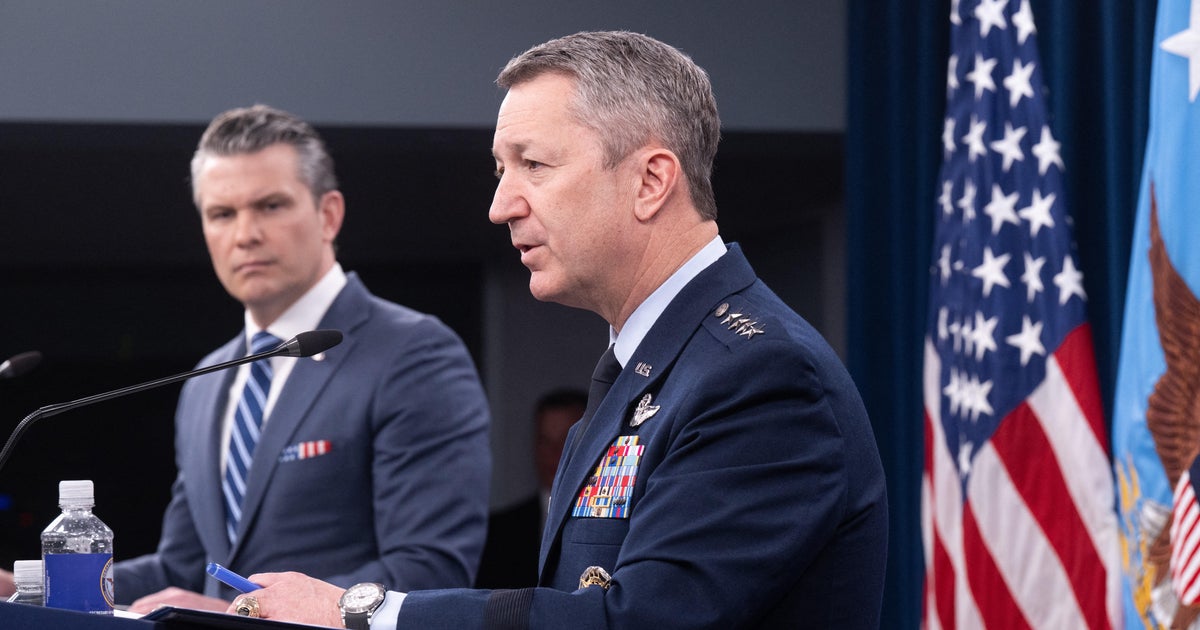
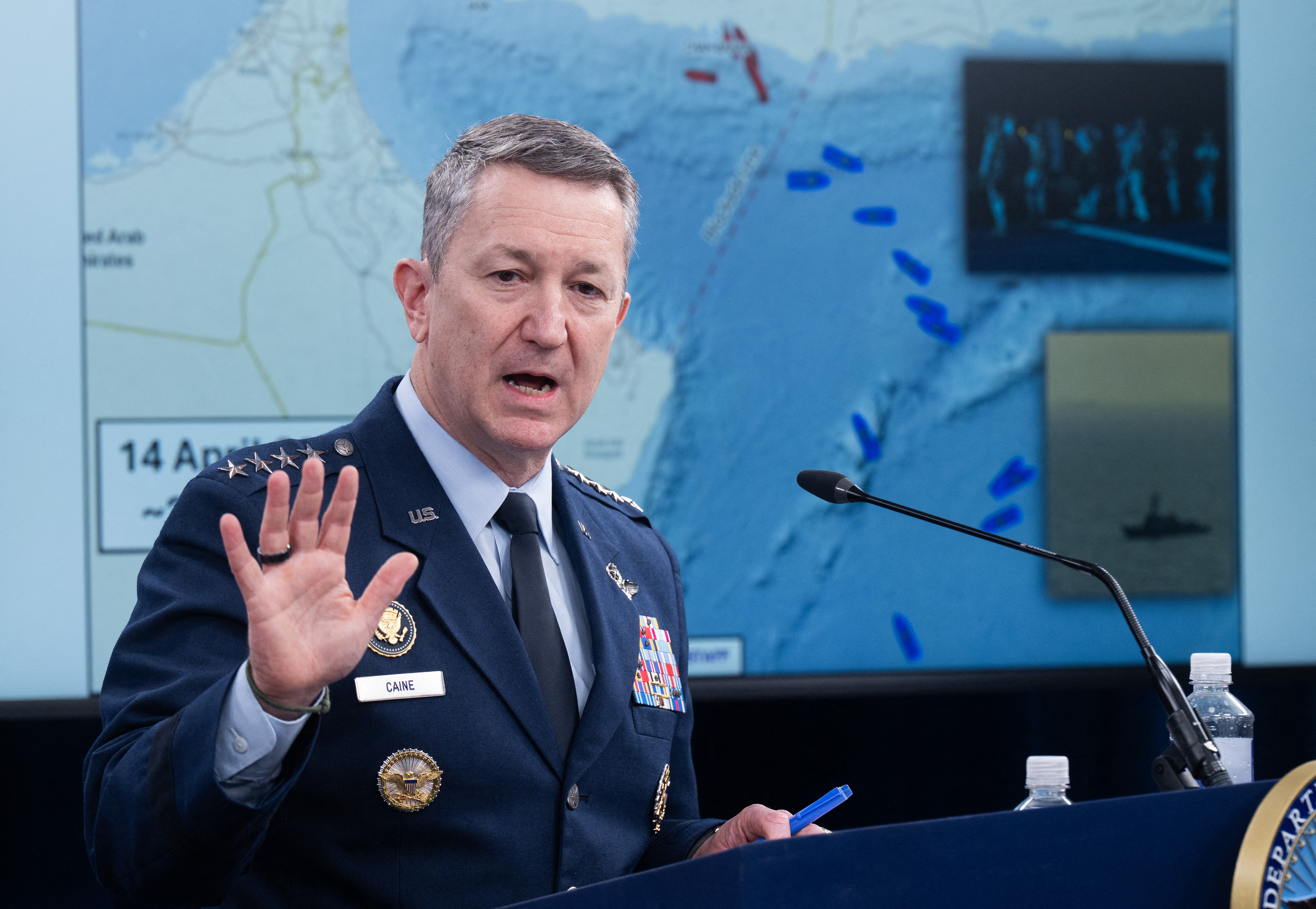
U.S. military leaders said the United States is enforcing a naval blockade in the Strait of Hormuz and will use force if ships do not follow the rules. The blockade is part of efforts to pressure Iran during a ceasefire in ongoing tensions, with the U.S. ready to return to major combat if needed. Discussions between the U.S. and Iran are ongoing, but no final deal has been reached.
Key Facts
The U.S. is enforcing a naval blockade on ships entering or leaving Iranian ports in the Strait of Hormuz.
U.S. military officials warned they will use force if ships do not comply with the blockade.
So far, 14 ships have turned around to avoid the blockade; none have been boarded by U.S. forces.
The blockade is intended to stop Iran from threatening oil transit in this key waterway carrying 20% of the world’s oil.
Iranian officials have threatened to retaliate by targeting American ships and closing the Red Sea.
A ceasefire between the U.S. and Iran is currently in place but no peace agreement has been reached yet.
President Donald Trump said the U.S. prefers a peaceful deal but will prevent Iran from getting nuclear weapons by force if necessary.
Talks between Israel and Lebanon have restarted amidst ongoing regional conflicts involving Hezbollah.
Read the Original
Want the full story? Tap a source to open the original
article.
Armed robbers held 25 people hostage in a Naples bank for about two hours before escaping through a hole in the floor leading to the sewers. Police freed all hostages without serious injuries, but it is unclear if the robbers took any valuables.
Key Facts
Three armed robbers entered a Crédit Agricole bank in Naples around 11:30 a.m. on Thursday.
They took 25 staff and customers hostage and locked them in a room.
Police and emergency teams arrived and freed the hostages shortly after 1:30 p.m. with no serious injuries reported.
The robbers escaped through a hole in the bank’s floor into the sewer system before police entered.
It is not confirmed if the robbers stole any money; they were believed to target safe deposit boxes.
Authorities, including a local water company, are inspecting the sewers after the escape.
A similar bank robbery involving sewers happened in Milan in 2020, where robbers also escaped using drain tunnels.
Naples prosecutor Nicola Gratteri was present at the crime scene.
Read the Original
Want the full story? Tap a source to open the original
article.
Over 260 Palestinian journalists have died in Gaza since the war began. A new group of young and mostly untrained journalists is now working to report on human stories from the area.
Key Facts
More than 260 Palestinian journalists have been killed in Gaza since the war started.
A new generation of journalists is emerging to continue reporting.
These new journalists are mostly young and lack formal training.
They focus on telling human stories from the conflict zone.
The reports come through Al Jazeera’s correspondent Hani Mahmoud.
The new journalists show strong determination despite challenges.
Read the Original
Want the full story? Tap a source to open the original
article.
U.S. military officials explained how American forces enforce a naval blockade of Iranian ports by warning ships to turn around or face being boarded and seized. This blockade affects global oil and gas shipments through the Strait of Hormuz and has disrupted shipping in the region.
Key Facts
U.S. warships are actively enforcing a naval blockade targeting Iranian ports.
Ships approaching these ports receive radio warnings telling them to turn around or face boarding and seizure.
Since the blockade began, 13 vessels have been warned and chose to reverse course.
The Strait of Hormuz is crucial, carrying about 20% of the world’s oil and liquefied natural gas.
The blockade is focused on traffic related to Iranian ports, not closing the entire Strait of Hormuz.
Many ships and crews remain stranded in the Persian Gulf because of the conflict.
Iran might allow safe passage for ships on the Omani side of the strait if a diplomatic deal with the U.S. is reached.
It is unclear if underwater mines or ships connected to Israel would be allowed safe passage under any agreement.
Read the Original
Want the full story? Tap a source to open the original
article.
China has expressed strong concern over Japan’s plan to deploy medium-range air-defense missiles on Yonaguni Island near Taiwan by 2030. Japan says the move is to strengthen defense amid rising tensions with China, while China sees it as a threat to regional peace.
Key Facts
Japan plans to place Type 03 Chu-SAM surface-to-air missiles and troops on Yonaguni Island by fiscal year 2030.
Yonaguni Island is about 70 miles from Taiwan's east coast and administered by Okinawa Prefecture.
The missile system can track up to 100 flying targets and attack about a dozen at once, with a range of about 30 miles.
Japan’s Defense Minister Shinjiro Koizumi supports stronger defenses on southwestern islands due to tensions with China, especially over Taiwan.
China views Japan’s move as an offensive military step that threatens stability and accuses Japan’s government of shifting towards expansionism.
Yonaguni’s mayor supports the missile deployment but warns against adding more forces on the island.
Japan has doubled its defense spending and seeks to relax weapons export limits to boost its defense industry and cooperation with allies.
Relations between Japan and China have worsened since Japan’s Prime Minister said that a Chinese blockade of Taiwan might require Japan and the U.S. to intervene.
Read the Original
Want the full story? Tap a source to open the original
article.
The latest episode of "Survivor 50" featured an unexpected twist during the elimination round. This twist resulted in a special ceremony called a trial council, which was the first of its kind in the show's history.
Key Facts
The news comes from a CBS Mornings segment.
The twist happened during the elimination on the Wednesday episode.
The event led to a trial council ceremony, which is new to the show.
"Survivor 50" is the 50th season of the reality TV series "Survivor."
The trial council ceremony was historic because it never happened before.
The report included a spoiler warning for viewers.
The information was available on CBS News and the CBS News app.
Read the Original
Want the full story? Tap a source to open the original
article.
Two school shootings happened in Turkiye within two days, killing at least ten people, mostly students, and injuring several others. The government held a meeting to improve school security, and many people were arrested for threatening similar attacks on social media.
Key Facts
The second shooting took place in Kahramanmaras, killing eight students and a teacher, with a tenth victim dying later in hospital.
The attacker, a 14-year-old student, used guns believed to belong to his father, a former police officer, and was found dead after the attack.
The first shooting happened two days earlier in Sanliurfa province, injuring 16 people, carried out by a former student.
Funerals for the victims were held in Kahramanmaras, attended by many mourners.
Officials reported six wounded people are in critical condition from the second shooting.
Authorities detained 20 people connected to the first shooting and arrested dozens of students for social media posts hinting at more attacks.
A joint security meeting was held in Ankara with government leaders and education officials from across Turkiye to discuss school safety.
School shootings were very rare in Turkiye before this week’s events.
Read the Original
Want the full story? Tap a source to open the original
article.