China has expressed strong concern over Japan’s plan to deploy medium-range air-defense missiles on Yonaguni Island near Taiwan by 2030. Japan says the move is to strengthen defense amid rising tensions with China, while China sees it as a threat to regional peace.
Key Facts
Japan plans to place Type 03 Chu-SAM surface-to-air missiles and troops on Yonaguni Island by fiscal year 2030.
Yonaguni Island is about 70 miles from Taiwan's east coast and administered by Okinawa Prefecture.
The missile system can track up to 100 flying targets and attack about a dozen at once, with a range of about 30 miles.
Japan’s Defense Minister Shinjiro Koizumi supports stronger defenses on southwestern islands due to tensions with China, especially over Taiwan.
China views Japan’s move as an offensive military step that threatens stability and accuses Japan’s government of shifting towards expansionism.
Yonaguni’s mayor supports the missile deployment but warns against adding more forces on the island.
Japan has doubled its defense spending and seeks to relax weapons export limits to boost its defense industry and cooperation with allies.
Relations between Japan and China have worsened since Japan’s Prime Minister said that a Chinese blockade of Taiwan might require Japan and the U.S. to intervene.
Read the Original
Want the full story? Tap a source to open the original
article.
The latest episode of "Survivor 50" featured an unexpected twist during the elimination round. This twist resulted in a special ceremony called a trial council, which was the first of its kind in the show's history.
Key Facts
The news comes from a CBS Mornings segment.
The twist happened during the elimination on the Wednesday episode.
The event led to a trial council ceremony, which is new to the show.
"Survivor 50" is the 50th season of the reality TV series "Survivor."
The trial council ceremony was historic because it never happened before.
The report included a spoiler warning for viewers.
The information was available on CBS News and the CBS News app.
Read the Original
Want the full story? Tap a source to open the original
article.
Two school shootings happened in Turkiye within two days, killing at least ten people, mostly students, and injuring several others. The government held a meeting to improve school security, and many people were arrested for threatening similar attacks on social media.
Key Facts
The second shooting took place in Kahramanmaras, killing eight students and a teacher, with a tenth victim dying later in hospital.
The attacker, a 14-year-old student, used guns believed to belong to his father, a former police officer, and was found dead after the attack.
The first shooting happened two days earlier in Sanliurfa province, injuring 16 people, carried out by a former student.
Funerals for the victims were held in Kahramanmaras, attended by many mourners.
Officials reported six wounded people are in critical condition from the second shooting.
Authorities detained 20 people connected to the first shooting and arrested dozens of students for social media posts hinting at more attacks.
A joint security meeting was held in Ankara with government leaders and education officials from across Turkiye to discuss school safety.
School shootings were very rare in Turkiye before this week’s events.
Read the Original
Want the full story? Tap a source to open the original
article.
President Donald Trump announced on social media that Israel and Lebanon have agreed to a 10-day ceasefire. The ceasefire is scheduled to start at 5 p.m. Eastern Time.
Key Facts
The ceasefire involves Israel and Lebanon.
It will last for 10 days.
The ceasefire will begin at 5 p.m. Eastern Time.
President Trump shared the announcement on social media.
The announcement was reported by CBS News journalists Natalie Brand, Eleanor Watson, and Taurean Small.
The news focuses on recent developments in the Middle East conflict.
Read the Original
Want the full story? Tap a source to open the original
article.
Hungary’s Prime Minister Viktor Orbán lost power after 16 years, threatening financial support for right-wing groups in Britain and Europe. New Hungarian leaders plan to stop government funding for these groups, affecting think tanks and media outlets closely linked to Orbán’s government.
Key Facts
Viktor Orbán and his Fidesz party ruled Hungary for 16 years, supporting right-wing groups in Britain and Europe.
Orbán’s government funded think tanks, media, and individuals that promoted hard-right, anti-immigration views.
The Mathias Corvinus Collegium (MCC), funded by Orbán’s government, backed British organizations like the Roger Scruton Legacy Foundation.
British figures such as Michael Gove and advisers linked to Nigel Farage received support from Hungarian sources.
MCC’s funding partly comes from the Hungarian energy company MOL, which buys most of its oil from Russia.
Hungarian think tanks like the Danube Institute also provided money for media appearances by British political figures such as Lord Frost.
Péter Magyar, Hungary’s prime minister-elect, said state funding for political groups should stop immediately.
Many groups relying on Orbán’s support will have to find new backers following his defeat.
Read the Original
Want the full story? Tap a source to open the original
article.
Mohammed Lubbad’s home in Gaza was destroyed by an Israeli strike, killing several family members and leaving him unsure if his newborn son survived. Due to confusion and poor hospital records during the war, a baby matching his son’s description was registered under another family’s name, leading to a dispute over the child’s identity.
Key Facts
Mohammed Lubbad’s home in Beit Lahiya, Gaza was hit on October 13, 2023.
His wife Amal, eight months pregnant, was taken to Kamal Adwan Hospital for a C-section and gave birth to a baby boy.
Amal later died on October 22 from injuries sustained during the strike.
There is uncertainty about the survival and location of Mohammed’s newborn son.
A baby who fits the description of Mohammed’s son was recorded under a different family’s name at al-Shifa Hospital.
The war and power outages caused by the Israeli siege made hospital record-keeping difficult and increased risks for premature infants.
Gaza’s police investigations confirmed a dispute between two families over the identity of two premature babies born under similar circumstances.
Several premature infants died amid the crisis, complicating the search for Mohammed’s son.
Read the Original
Want the full story? Tap a source to open the original
article.
President Trump announced that Israel and Lebanon have agreed to a 10-day ceasefire after talks in Washington, D.C. The announcement came alongside Pentagon briefings about the ongoing conflict involving Iran and U.S. actions in the Strait of Hormuz.
Key Facts
Israel and Lebanon will pause fighting for 10 days as part of a ceasefire deal.
The ceasefire was announced by President Donald Trump.
The talks that led to this agreement took place in Washington, D.C.
Pentagon officials gave updates on the war involving Iran.
The U.S. is maintaining a blockade at Iranian ports in the Strait of Hormuz.
The Strait of Hormuz is an important waterway for global oil transport.
This ceasefire aims to reduce violence between Israel and Lebanon.
Read the Original
Want the full story? Tap a source to open the original
article.
Four astronauts, including three from NASA and one from the Canadian Space Agency, talked about their experience living inside the Orion spacecraft. They shared the physical and mental challenges they faced while traveling farther from Earth than any humans have before.
Key Facts
The crew members are Reid Wiseman, Victor Glover, Christina Koch, and Jeremy Hansen.
They traveled aboard NASA’s Orion capsule.
This mission took them further from Earth than any previous human spaceflight.
The astronauts described what it was like to live in the spacecraft.
They discussed the physical effects of space travel on their bodies.
They also talked about the mental challenges of being far from Earth.
The event was a news conference after their historic moon flyby.
Read the Original
Want the full story? Tap a source to open the original
article.
The UK government is preparing for possible food shortages this summer if the war involving Iran continues. A key concern is the potential closure of the Strait of Hormuz, which could disrupt supplies of carbon dioxide used in the food and drink industry, affecting supermarket stocks.
Key Facts
The UK has created plans in case the war with Iran causes food shortages.
The Strait of Hormuz is a vital shipping route that might be closed due to the conflict.
Closing the strait could disrupt global supply chains, including carbon dioxide supplies.
Carbon dioxide is important in preserving and producing food and beverages.
The UK government says these plans are for preparation, not predictions.
The situation could lead to empty supermarket shelves or food scarcity.
The planning is meant to help manage risks in the event of prolonged conflict.
The article includes explanations from the UK Department for Environment, Food & Rural Affairs.
Read the Original
Want the full story? Tap a source to open the original
article.
Israel and Lebanon have agreed to stop fighting for 10 days starting at 21:00 GMT on Thursday. US President Donald Trump announced the ceasefire after talking with Israeli Prime Minister Benjamin Netanyahu and Lebanese President Joseph Aoun.
Key Facts
The ceasefire between Israel and Lebanon will last for 10 days.
It starts at 21:00 GMT on Thursday.
President Donald Trump announced the agreement.
President Trump spoke with Israeli Prime Minister Benjamin Netanyahu.
President Trump also spoke with Lebanese President Joseph Aoun.
The situation in the region remains tense, according to a reporter in Tyre.
The ceasefire aims to reduce conflict between Israel and Lebanon during this period.
Read the Original
Want the full story? Tap a source to open the original
article.
A Chinese research ship tested a new device that can cut underwater data cables deep in the ocean. This raises concerns about sabotage of vital undersea cables that connect global communications and power systems.
Key Facts
The device was tested at a depth of about 11,483 feet (3,500 meters) in a deep-sea expedition by the Chinese ship Haiyang Dizhi 2.
The ship has advanced equipment like a 150-ton crane and can deploy underwater robots.
The cable cutter uses a diamond-coated grinding wheel powered by an electric motor and a hydraulic pump to slice through armored cables.
The technology can cut cables down to depths of 13,123 feet (4,000 meters).
This technology is described as “dual-use,” meaning it can be used for both civilian and military purposes.
China has a history of developing tools for cutting or retrieving undersea cables and has many ships involved in accidental or suspicious damage to such cables worldwide.
Other countries, including the US and Russia, also have capabilities to access or interfere with undersea cables.
Undersea cables carry most of the world’s internet data and power connections, so damaging them could disrupt global communications.
Read the Original
Want the full story? Tap a source to open the original
article.
French lawmakers from President Emmanuel Macron’s Renaissance party postponed the debate on the "Yadan bill," a proposed law aiming to ban new forms of anti-Semitism. The bill faced controversy and was removed from the agenda of the French National Assembly.
Key Facts
The "Yadan bill" seeks to combat new types of anti-Semitism in France.
French lawmakers in Macron’s party withdrew the bill from the National Assembly’s agenda on April 16, 2026.
The bill had sparked debate and backlash in recent weeks.
Existing laws in France already make anti-Semitism and apologizing for terrorism illegal.
Some people questioned whether the new law was necessary given current regulations.
The decision to postpone shows ongoing disagreement about how to address anti-Semitism legally.
The bill’s pause provides more time for discussions before any decision is made.
Read the Original
Want the full story? Tap a source to open the original
article.
Widows of soldiers in eastern Democratic Republic of Congo are living in a makeshift camp in Beni after fleeing their homes in Goma when rebels took control in early 2025. They are struggling with poor living conditions and are asking for access to their late husbands’ pensions for financial support.
Key Facts
The widows fled Goma, the capital of North Kivu province, after it was captured by M23 rebels on January 27, 2025.
About 250 households, including soldier families and wounded veterans, live in a camp around the Mulekera youth centre in Beni.
The camp consists of tents made from plastic sheeting with mattresses laid on the ground.
The widows fear repression by rebels because of their connection to government soldiers.
They have official documentation proving their status as dependents of deceased soldiers.
The presence of the camp disrupts activities at the youth centre, including broken restroom facilities and limited office access.
Many widows hoped to receive financial help but have not yet gotten any assistance.
The ongoing conflict between M23 rebels and the Congolese army has displaced millions in eastern DR Congo.
Read the Original
Want the full story? Tap a source to open the original
article.
A group of armed robbers took 25 people hostage during a bank robbery in Naples, Italy. After holding them for about two hours, the robbers escaped through a tunnel, possibly into the sewer system, and no serious injuries were reported.
Key Facts
The robbery happened at a Crédit Agricole bank in Naples around midday local time.
The robbers held 25 people hostage but did not use violence.
Police and special armed forces surrounded the bank and negotiated with the robbers.
Hostages were locked in a room and later freed without serious injuries.
Firefighters helped some hostages escape by breaking a window with battering rams.
The robbers escaped through a tunnel, possibly leading to the sewer system.
Authorities used stun grenades and broke into the bank several hours after the robbery started.
The value of the stolen items is unknown because robbers took safety deposit boxes instead of cash.
Read the Original
Want the full story? Tap a source to open the original
article.
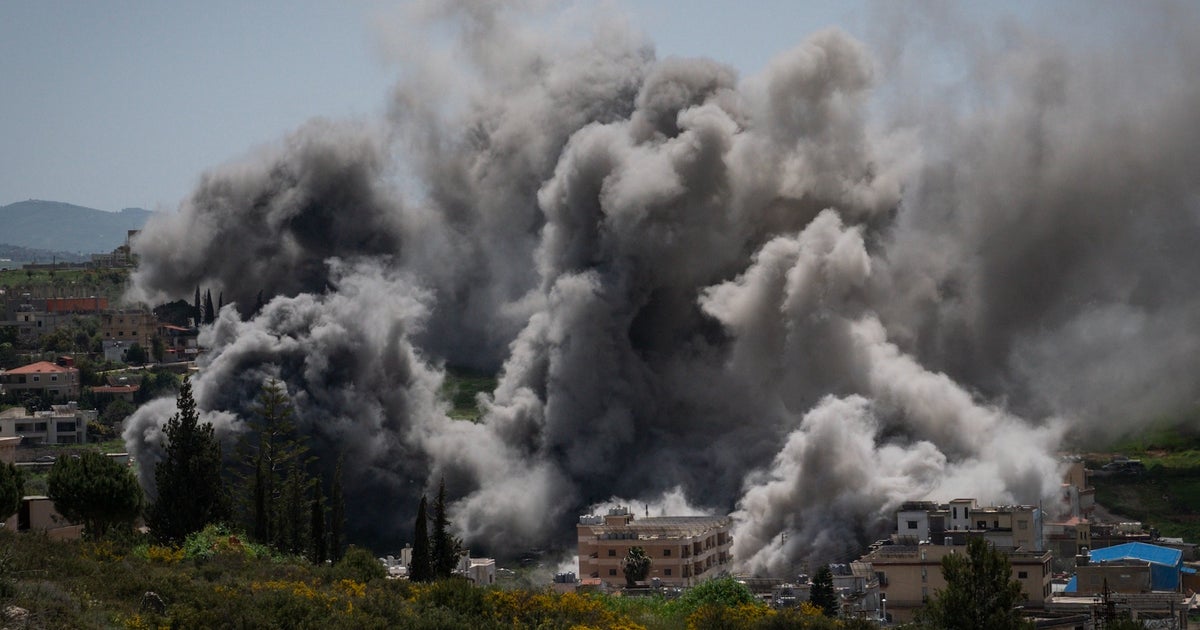
Israel destroyed the last bridge connecting southern Lebanon to the rest of the country as part of ongoing strikes against Lebanon’s infrastructure. This happened just before President Donald Trump announced a 10-day ceasefire agreement between Israel and Lebanon.
Key Facts
Israel bombed the Qasmiyeh Bridge over the Litani River, the last bridge linking southern Lebanon to other parts of the country.
The bridge connects the Lebanese cities of Tyre and Sidon, about 20 miles from the Israel-Lebanon border.
Israel says it targets infrastructure to stop Hezbollah from moving weapons, but the bridge is also used by civilians.
Lebanese officials say the bridge is destroyed beyond repair.
Since the war began on March 2, more than 2,167 people have died in Lebanon, including at least 91 medical workers.
Over 7,000 people in Lebanon are injured, and more than 1 million have been displaced.
Israeli forces reported striking over 200 Hezbollah targets in the past 24 hours, while Hezbollah launched rocket attacks on northern Israel.
President Donald Trump announced a 10-day ceasefire beginning April 21 after talks with Lebanese and Israeli leaders, marking the first direct negotiations in over 30 years.
Read the Original
Want the full story? Tap a source to open the original
article.
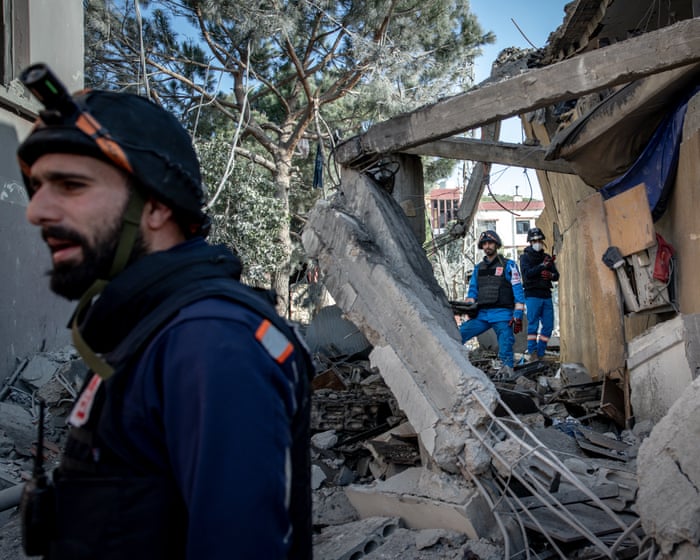
Israeli airstrikes in southern Lebanon hit ambulances and medics responding to emergencies, killing four paramedics and injuring six more. This attack, described as a "quadruple tap," involved multiple consecutive strikes on rescue workers, increasing concerns about the safety of medical personnel in conflict zones.
Key Facts
Israeli forces carried out multiple airstrikes in Mayfadoun, southern Lebanon, targeting ambulances and paramedics.
Four medics were killed, including Fadel Sarhan, a 43-year-old health worker, and six others were injured.
The attacks involved a "quadruple tap," meaning a first strike was followed by three additional strikes targeting rescuers and their vehicles.
The paramedics came from different groups, including the Hezbollah-affiliated Islamic Health Association and others associated with Amal and Nabatieh emergency services.
International law protects medical workers as non-combatants, regardless of their political affiliations.
Since the conflict started on March 2, Israel has killed 91 healthcare workers and injured 214 in Lebanon.
Israel claims that Hezbollah uses medical vehicles to transport fighters and weapons but has not provided evidence.
The Lebanese health ministry accuses Israel of intentionally targeting ambulance crews.
Read the Original
Want the full story? Tap a source to open the original
article.
The head of the International Monetary Fund (IMF), Kristalina Georgieva, said the global economy faces a major shock due to disruptions in oil and gas supplies caused by the conflict in the Middle East. She warned that this energy crisis will affect all countries, especially poorer ones, and urged caution against overly generous government support schemes. Meanwhile, the UK economy grew faster than expected before the conflict, but Europe faces a jet fuel shortage in the coming weeks.
Key Facts
About 20% of oil and gas supplies are stuck in the Strait of Hormuz due to the Middle East conflict.
This disruption is impacting Asia, Europe, and other parts of the world by limiting access to crucial energy resources.
Low-income countries, like Pacific Island nations, are the most vulnerable to the energy shock.
IMF chief warned governments not to worsen the crisis with large, unsustainable financial aid.
The UK’s economy grew by 0.5% in February, showing stronger momentum before the war’s impact.
Europe has roughly six weeks of jet fuel left, risking flight cancellations if Middle East oil supplies do not return soon.
The International Energy Agency’s head, Fatih Birol, warned of imminent flight disruptions due to fuel shortages.
The Middle East conflict adds a new challenge to global economic recovery after recent shocks.
Read the Original
Want the full story? Tap a source to open the original
article.
Andrew Mountbatten-Windsor has been asked by London's city leaders to give up his Freedom of the City of London honor, which he inherited from his father in 2012. The city government said there is no clear legal way to remove this honor, so they are waiting to see if he chooses to give it up.
Key Facts
Andrew Mountbatten-Windsor inherited the Freedom of the City of London because his father, Prince Philip, held it.
The Freedom of the City is an old honor that historically allowed holders to perform special rights, like walking sheep over London Bridge without charges.
The City of London Corporation (CLC) cannot legally take away the Freedom of the City given by inheritance.
The CLC has invited Andrew to voluntarily relinquish this honor.
Andrew was stripped of his royal titles last year by King Charles after details about his relationship with Jeffrey Epstein came out.
In February, Andrew was arrested and questioned on suspicion of misconduct but was released and he denies any wrongdoing.
Other famous people like Sir Lenny Henry and Cate Blanchett have also received the Freedom of the City honor.
The CLC will decide on further actions based on Andrew’s response to their invitation.
Read the Original
Want the full story? Tap a source to open the original
article.
Staying informed here is free for everyone. If it's worth something to you, pay what you want. Supporters also get the daily digest by email every morning.
Pakistan is helping the United States and Iran hold talks to end their nearly seven-week war. While no date is set for the next meeting, Pakistan is actively working to keep the peace process going through diplomatic efforts in the region.
Key Facts
The U.S. and Iran are in talks facilitated by Pakistan to hold a second negotiation aimed at ending their conflict.
A fragile ceasefire announced on April 8 is about to expire soon.
No date has been fixed for the next round of talks.
Pakistan’s Foreign Ministry is keeping details of the talks confidential, acting as a mediator.
Nuclear issues remain a key topic in the negotiations.
Pakistan’s Prime Minister Shehbaz Sharif is visiting countries like Saudi Arabia, Qatar, and Turkey to gain regional support.
Pakistan’s military chief, Asim Munir, visited Tehran to engage directly with Iranian officials.
Iran insists talks must take place in Pakistan because it trusts the country as a mediator.
Read the Original
Want the full story? Tap a source to open the original
article.
US General Dan Caine clarified that the US military is blockading only Iranian ports and not the entire Strait of Hormuz, correcting an earlier statement by President Donald Trump. The Strait of Hormuz remains open for passage.
Key Facts
US General Dan Caine made the clarification about the blockade.
The US military is blockading certain Iranian ports.
The blockade does not include the entire Strait of Hormuz.
President Donald Trump had previously said the entire Strait of Hormuz was blocked.
The Strait of Hormuz is an important waterway for international shipping.
The US is involved in military actions related to Iran.
Read the Original
Want the full story? Tap a source to open the original
article.