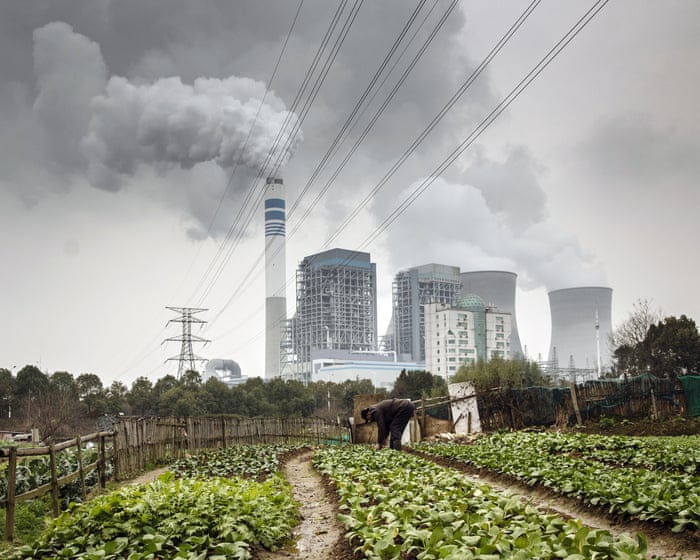
China has ruled out hosting the 2028 UN climate summit, COP33, leaving other Asian countries to host under UN rules. The summit is scheduled for November 6–17, 2028, and will include a review of countries’ progress under the Paris climate agreement.
Key Facts
China decided against hosting COP33 after months of deliberation.
UN climate convention rules call for an Asian country to host the 2028 summit.
The US presidential election is scheduled for November 7, 2028, during the summit period.
China’s renewable energy generation capacity has surpassed its coal capacity.
Electric vehicles made up nearly two-thirds of China’s vehicle market in the previous month.
China’s greenhouse gas emissions appear to have declined slightly this year.
COP33 will include the Paris agreement’s global stocktake, which reviews progress on emissions cuts and the goal of limiting warming to 1.5°C.
Read the Original
Want the full story? Tap a source to open the original
article.
Saudi-led coalition forces said they intercepted suspected Houthi drones over the Riyadh region and Eastern Province. Houthi officials claimed attacks on Saudi oil and military sites, while the UN Security Council unanimously extended Yemen-related sanctions for one year and condemned Houthi cross-border and maritime attacks. The UN said more than 333,000 people have been displaced in Yemen since early August.
Key Facts
The Saudi-led coalition said it intercepted suspected Houthi drones over the Riyadh region and Eastern Province.
Houthi spokesperson Yahya Saree claimed the group targeted oil infrastructure and military assets in Saudi Arabia, including sites at Yanbu and on the East-West Pipeline.
Saree also claimed Houthi forces targeted a military cargo plane near Yemen’s border and a Saudi airbase with drones and a ballistic missile.
The UN Security Council unanimously extended Yemen-related sanctions for one year, including asset freezes and travel bans.
The Security Council extended the mandate of the UN Panel of Experts on Yemen and called for an end to escalatory actions and attacks on Saudi Arabia.
The sanctions resolution exempts humanitarian assistance and supplies for civilians’ basic needs.
The UN Office for the Coordination of Humanitarian Affairs said more than 333,000 people have been displaced in Yemen since the beginning of August, including more than 24,000 in the past week.
Read the Original
Want the full story? Tap a source to open the original
article.
A court in Russia’s Kaliningrad region sentenced 66-year-old rights lawyer Maria Bontsler to 12 years in prison for treason. Prosecutors accused her of giving Ukraine information about security officers and criminal cases in the region.
Key Facts
The court issued Bontsler’s sentence on Thursday.
Prosecutors had sought a 15-year prison term.
The court also imposed an additional year of restrictions on her activities.
The FSB detained Bontsler over allegations that she had passed information to Ukraine beginning in 2024.
The trial was held behind closed doors, according to rights group Slovo Zashchite.
Slovo Zashchite said Bontsler and her lawyers could not attend the trial, though she was allowed to make a closing statement.
Her lawyers argued that the information cited by prosecutors was not secret and said she was in poor health in detention.
Read the Original
Want the full story? Tap a source to open the original
article.
French President Emmanuel Macron said Ukraine no longer has U.S. support and that European countries are needed to support it. He made the remarks while attending the European Political Community Summit in Ireland.
Key Facts
Emmanuel Macron is the president of France.
Macron voiced support for Ukraine in its war against Russia.
Macron said there is no more U.S. support for Ukraine.
He said Ukraine has no support without European countries.
Macron spoke at the European Political Community Summit in Ireland.
Read the Original
Want the full story? Tap a source to open the original
article.
A report says more than 1,400 Africans have been recruited to fight for Russia in Ukraine since 2023. The program also covers backlash in Cape Town over South Africa’s push to become a digital gateway and a festival in Abéché, Chad, that drew young spectators.
Key Facts
A report says more than 1,400 Africans have been recruited to fight for Russia in Ukraine since 2023.
The program focuses on Tunisians recruited into Russia’s war against Ukraine.
South Africa is seeking to become a digital gateway for Africa.
A growing backlash is emerging in Cape Town over that effort.
An arts festival in Abéché, Chad, featured music, dance and theatre.
The festival drew crowds of young spectators.
Read the Original
Want the full story? Tap a source to open the original
article.
The government granted planning permission to prepare the former MoD Bicester site near Piddington, Oxfordshire, to accommodate up to 1,256 male asylum seekers. The Home Office said it has not made a final decision to proceed, and the approval can be challenged in the High Court within six weeks on legal grounds.
Key Facts
The Home Office sought permission through a fast-tracked Urgent Crown Development application.
The approved plans allow existing buildings to be demolished and modular accommodation and health and welfare facilities to be built.
Housing Secretary Angela Rayner approved the plans, citing high national demand for asylum accommodation.
The government recorded 3,177 objections and one letter in support.
Piddington residents and local campaigners opposed the proposed site, and a legal challenge has been lodged.
A High Court challenge to the planning decision must be filed within six weeks and must argue that the decision is legally flawed.
The Home Office said the government plans to move away from asylum hotels and use alternative accommodation, including former military sites.
Read the Original
Want the full story? Tap a source to open the original
article.
Danish lawmakers debated a security agreement that allows the United States to expand its military presence in Greenland while reaffirming Danish sovereignty and Greenlanders’ right to self-determination. Lawmaker Mads Fuglede questioned whether President Donald Trump fully understood the agreement and warned that commitments from his administration could be unreliable, while several lawmakers supported the deal as important to European security.
Key Facts
The agreement was signed on September 22 in New York by Donald Trump, Danish Prime Minister Mette Frederiksen and Greenlandic Prime Minister Jens-Frederik Nielsen.
The agreement builds on a 1951 defense treaty and allows expanded U.S. operations at Pituffik Space Base.
It provides for additional U.S. defense areas at Narsarsuaq and Mestersvig, subject to further arrangements.
The agreement includes provisions on NATO cooperation in the Arctic, Greenlandic businesses, environmental protections and sensitive foreign investments.
Mads Fuglede said Denmark had negotiated with a powerful but unpredictable U.S. administration.
Sjúrður Skaale described the agreement as a diplomatic achievement but warned that Trump’s commitments might not last.
Lawmakers from across the Danish political spectrum expressed support for the agreement during the debate.
Read the Original
Want the full story? Tap a source to open the original
article.
The weekly quiz covers events from the past seven days. Topics include a Nvidia executive’s resignation, a former British civil servant’s fraud conviction and a cruise ship pianist’s rescue in the Pacific Ocean.
Key Facts
The quiz covers events from the past seven days.
A Nvidia executive quit amid allegations involving two extra-marital affairs.
A former British civil servant was found guilty of fraud after holding five full-time jobs at once.
A cruise ship pianist was rescued after spending nine hours in the Pacific Ocean.
Ben Fell collated the quiz.
Read the Original
Want the full story? Tap a source to open the original
article.
Finnish officials confirmed that a Russian warship was attacked in the Gulf of Finland on Wednesday. Ukraine’s SBU said it targeted the Naro-Fominsk during a drone operation against Russia’s Ust-Luga oil export terminal; the ship reportedly headed toward St Petersburg, and the extent of damage remains unclear.
Key Facts
Estonia’s defence minister said smoke was seen coming from the ship after it was hit at about 05:30 local time.
Ukraine’s SBU identified the ship as the Naro-Fominsk, a Buyan-M class corvette equipped to carry Kalibr and Oniks cruise missiles.
Ukraine’s SBU said the ship was targeted during a wider drone operation against the Ust-Luga terminal on Russia’s Baltic coast.
Fires at the Ust-Luga port were visible from Estonia, and several storage tanks were believed to have been hit.
Estonia’s defence minister said Ukrainian drones attacked the Ust-Luga region from midnight until about 06:00, mostly staying in Russian airspace.
One drone briefly entered Estonian airspace from Latvia before heading toward Russia, according to Estonia’s defence minister.
Finland’s foreign minister said the Baltic Sea remained stable and safe, with no threat to marine traffic.
The number of casualties and the extent of damage to the Russian ship remain unclear.
Read the Original
Want the full story? Tap a source to open the original
article.
Turkey is promoting faster electrification as a response to global warming and rising energy costs at the COP31 climate summit in Antalya. The discussion examines whether electrification can reduce emissions and what India could learn from China’s energy transition.
Key Facts
Turkey is hosting the COP31 UN climate summit in Antalya.
The summit’s hosts are promoting faster electrification worldwide.
The discussion links climate concerns with higher fuel and consumer prices caused by war in the Gulf.
The program considers how electrification could affect India as its economy and population grow.
The discussion compares Delhi’s air pollution with China’s in the early 2000s.
China remains a major global manufacturing center.
Guests include climate, energy, finance, and environmental policy academics and experts.
Read the Original
Want the full story? Tap a source to open the original
article.
The U.S. State Department released a report on more than $12.26 billion in revenue from Venezuelan oil and mineral transactions that flowed through U.S.-controlled accounts from January 3 to September 30, 2026. The report says more than $12 billion was distributed to Venezuelan banks, mostly for foreign-exchange interventions, while about $169 million remained in the account.
Key Facts
About 99 percent of the funds received came from oil purchases, according to the report.
The revenue also included money from transactions involving gold, other minerals, and fertilisers.
The funds came from about 20 depositors, whose identities were redacted.
The U.S. first held the revenue in an account at Qatar National Bank, then set up a separate account controlled by the U.S. Treasury.
The State Department hired KPMG to examine the transactions.
The report does not identify the final recipients of the distributed funds.
Foreign-exchange interventions involve banks selling dollars to reduce the amount of local currency in circulation and support its value.
Read the Original
Want the full story? Tap a source to open the original
article.
Argentina is pursuing legal action to stop a joint British-Israeli venture from drilling for oil off the disputed Falkland Islands. Argentina says drilling should wait until sovereignty is resolved, while the United Kingdom asserts sovereignty over the area.
Key Facts
A legal dispute between Argentina and the United Kingdom concerns an oil project near the Falkland Islands.
The project is being developed by a joint British-Israeli venture.
Argentina wants drilling to stop until the sovereignty dispute is resolved.
The United Kingdom rejects Argentina’s position and asserts full sovereignty over the area.
Argentina and the United Kingdom fought a war in the early 1980s after Argentina invaded the islands.
Read the Original
Want the full story? Tap a source to open the original
article.
A study of 61 healthy adults found that frequent coffee drinkers had more diverse gut microorganisms, lower acidity readings in the small intestine, and an association with more frequent colon contractions. The researchers said the study cannot show that coffee caused these differences, and the effects of the lower pH remain unclear.
Key Facts
Researchers at the University of Copenhagen studied 61 healthy adults over nine consecutive days.
Participants recorded their food and drink intake for eight days, and researchers assessed coffee intake using those records and caffeine-related substances in urine.
The researchers classified participants as frequent drinkers if they consumed one to five cups on more than three of the eight recorded days.
Fifty participants swallowed a wireless capsule that measured digestive transit time, temperature, acidity, pressure, and intestinal contractions.
Frequent coffee drinkers had greater gut microorganism diversity than occasional drinkers.
Frequent coffee drinking was associated with lower pH in the small intestine and more frequent colon contractions.
Researchers said they could not establish whether the lower small-intestine pH was beneficial or harmful.
The study found associations and did not prove that coffee directly caused the observed differences.
Read the Original
Want the full story? Tap a source to open the original
article.
Renewed efforts to negotiate an end to Russia’s war in Ukraine face a major obstacle over control of Donbas. Russia expert Mark Galeotti says Moscow may use uncompromising public statements as a negotiating tactic, while U.S. President Donald Trump’s approach begins with public declarations and leaves others to pursue them.
Key Facts
Russian President Vladimir Putin seeks control over all of Donbas.
Ukraine refuses to give up the territory it still holds in Donbas.
Mark Galeotti describes the dispute over Donbas as difficult to resolve.
Galeotti says Moscow often makes strong public demands and may offer concessions late in negotiations.
The content identifies differences over European security as another obstacle to a settlement.
U.S. President Donald Trump makes public declarations before others try to turn them into agreements.
Read the Original
Want the full story? Tap a source to open the original
article.
Duran Duran drummer Roger Taylor said he is leaving the band because his tinnitus has steadily worsened. The 66-year-old, who joined the group in 1978, said he is prioritizing his health after consulting doctors.
Key Facts
Roger Taylor has been Duran Duran’s drummer since the band formed in Birmingham in 1978.
Taylor said his tinnitus has been getting steadily worse.
Taylor said his decision to leave followed medical advice and consideration of his health.
Taylor left Duran Duran in 1985 and returned in 2001.
The band said Taylor performed on 10 of its hit albums.
Duran Duran said it supports Taylor’s decision and described him as part of the band’s family.
Taylor said the group had recently completed a UK and European tour and returned to the studio with Nile Rodgers.
Read the Original
Want the full story? Tap a source to open the original
article.
North Korea published an amended constitution that defines South Korea as a separate country and removes references to reunification and national unity. The changes also strengthen Kim Jong Un’s authority over lawmakers and the country’s nuclear forces.
Key Facts
The revised constitution was published online on Wednesday after being unavailable for about two and a half years.
North Korea amended the constitution at the first session of its 15th Supreme People’s Assembly on March 23.
The constitution defines North Korean territory as bordering China and Russia to the north and South Korea to the south, including associated airspace and waters.
The revised text identifies South Korea as a separate country but does not set clear land or maritime borders.
The constitution removes references to peaceful reunification and national unity.
The changes give Kim Jong Un authority to veto parliamentary decisions and remove lawmakers who lose the confidence of the people.
The changes strengthen Kim Jong Un’s authority over North Korea’s nuclear forces.
Read the Original
Want the full story? Tap a source to open the original
article.
John Gizzi, 55, was sentenced to four years and 11 months in prison after pleading guilty to coercive and controlling behaviour toward Natasha Farah and intentionally strangling her sister. The court heard that he repeatedly assaulted Farah and sent her abusive messages between March 2025 and April 2026; a judge called the case one of the worst examples of coercive control the court had seen.
Key Facts
Gizzi is from St Asaph, Denbighshire.
He pleaded guilty to coercive and controlling behaviour toward Farah and intentional strangulation of her sister, Samantha.
The abuse described in court took place between March 2025 and April 2026.
Gizzi assaulted Farah repeatedly, including hitting her in the face with keys at a gym and attacking her in her car.
The court heard that Gizzi used misogynistic language and sent Farah numerous abusive messages.
Farah was found after a suspected suicide attempt that left her with severe brain damage; prosecutors said Gizzi was not alleged to have caused the attempt.
The judge said Farah had often been seen with bruises and had been assaulted in front of other people, including her child.
Farah’s mother said she planned to campaign for longer sentences for coercive and controlling behaviour.
Read the Original
Want the full story? Tap a source to open the original
article.
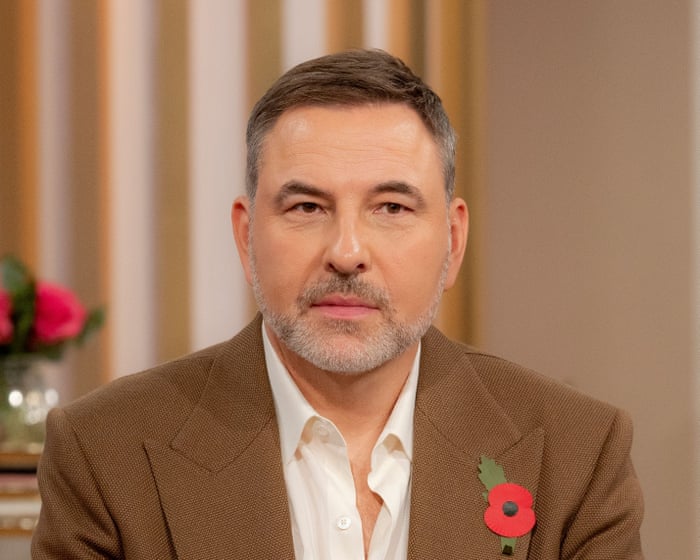
UK ministers are considering faster changes to rules on non-disclosure agreements (NDAs), which can restrict what people share, after reports that an NDA silenced a woman connected to David Walliams. Possible changes include extending protections beyond employees and allowing people to discuss crimes more widely; Walliams denies wrongdoing.
Key Facts
The Employment Rights Act bars NDAs from preventing employees from disclosing possible harassment or discrimination.
Ministers are considering extending those protections to freelancers, volunteers and other people who are not employees.
Culture Secretary Lisa Nandy plans to meet representatives from television, film, publishing and sport next week to discuss protections.
A government official said ministers are exploring changes that could be made quickly, including options that may not require legislation.
Existing law prevents NDAs from blocking victims or witnesses from giving information about crimes to certain bodies, including police and regulators.
One proposal would allow people to discuss crimes with anyone, including the media.
Nandy told MPs that NDAs were central to the problem of enforced silence and said she had discussed the issue with the Ministry of Justice.
Read the Original
Want the full story? Tap a source to open the original
article.
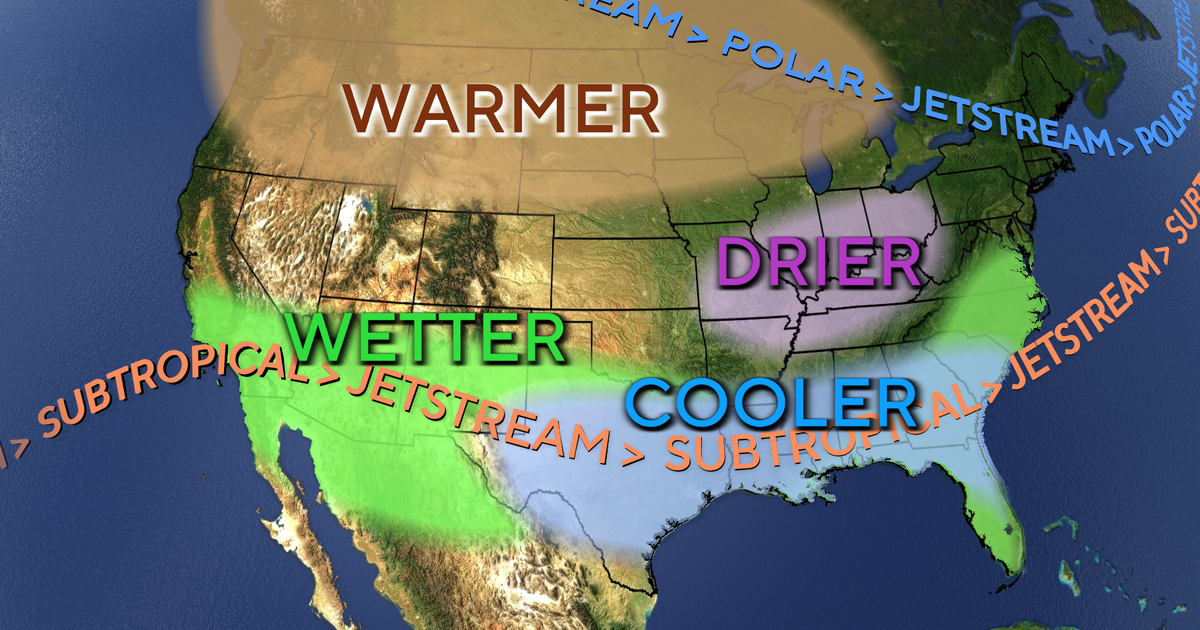
NOAA classifies the developing El Niño as very strong, with sea-surface temperatures in part of the tropical Pacific more than 4°C above average as of Nov. 12, 2026. El Niño can shift temperatures and rainfall patterns around the world, raising risks of drought in some areas and flooding in others.
Key Facts
El Niño is a climate pattern marked by unusually warm water in a region of the tropical Pacific near the equator.
El Niño events occur every two to seven years and usually last nine to 12 months.
“Super El Niño” is not an official classification; NOAA and the World Meteorological Organization describe this event as very strong.
NOAA identifies an El Niño event when tropical Pacific conditions meet its thresholds across five consecutive three-month periods.
NOAA said sea-surface temperature anomalies in part of the tropical Pacific exceeded 4°C as of Nov. 12, 2026.
El Niño often brings wetter winter conditions to southern North America and milder, drier conditions to the north.
Drier conditions are typical in Australia, southern Asia, northern South America and central Africa during El Niño.
El Niño can increase rainfall in eastern Asia and southern South America, potentially easing drought while raising flood risks.
Read the Original
Want the full story? Tap a source to open the original
article.
Leaders from more than 40 European countries met in Dublin on November 12 for a European Political Community summit focused on regional security and hybrid attacks. They also discussed European representation in U.S.-brokered talks on the war in Ukraine.
Key Facts
The European Political Community was established in 2022 after Russia’s full-scale invasion of Ukraine.
Recent hoaxes and cyberattacks have targeted European supermarkets, blood banks, airlines, schools and media outlets.
More than 3,700 Italian schools received hoax bomb warnings on Thursday, following similar alerts at 6,300 schools the previous day.
Irish Prime Minister Micheál Martin said the attacks aim to create confusion, deepen divisions and weaken public trust in democratic systems.
U.S. envoy Steve Witkoff said Russian President Vladimir Putin agreed to let European representatives join the next round of Ukraine discussions.
British Prime Minister Andy Burnham pledged support for Ukrainian President Volodymyr Zelenskyy and called for European representation in the U.S.-brokered talks.
Two people were arrested during a Dublin protest over Israel’s war in Gaza while the summit was under way.
Read the Original
Want the full story? Tap a source to open the original
article.