Homes in Bo-Kaap, a historic neighborhood in Cape Town, South Africa, are increasingly being sold to wealthy foreign buyers. This shift is raising concerns among local residents about rising property prices and the loss of cultural heritage as many houses are converted into short-term rentals.
Key Facts
Bo-Kaap is a historic, predominantly Muslim neighborhood in Cape Town, located near Table Mountain.
Rising property prices and investor demand are leading to more homes being sold to wealthy foreign buyers.
Foreign buyers accounted for about 2.8 billion rand in property sales in Cape Town's prime areas recently.
Some homes in Bo-Kaap are being turned into short-term rentals, like Airbnb.
Long-time residents face challenges in affording to stay or buy homes in the neighborhood.
Cape Town saw about 3.3 million international travelers in 2025, boosting tourism.
Bo-Kaap’s unique cultural and architectural appeal makes it attractive real estate.
Read the Original
Want the full story? Tap a source to open the original
article.
Angela Rayner, a senior figure in the UK's Labour Party, gave a speech that criticized the current party leadership and hinted at potential leadership ambitions. Her speech emphasized the need for the party to be bold and addressed concerns about immigration policy. This has led to increased speculation about her political intentions.
Key Facts
Angela Rayner is a senior figure in the Labour Party and former deputy prime minister.
Her speech criticized Labour leader Sir Keir Starmer, though she did not mention him by name.
Rayner suggested that the Labour Party needs to act quickly and be bold to survive.
She expressed concerns about the government representing the establishment instead of working people.
Rayner criticized Home Secretary Shabana Mahmood's migration policy.
The speech took place at an event within the Labour Party called the Mainstream group.
The Mainstream group is associated with Greater Manchester Mayor Andy Burnham.
There is speculation that Rayner may challenge Starmer for the leadership of the Labour Party.
Read the Original
Want the full story? Tap a source to open the original
article.
The article discusses the significance of Beirut's southern suburb, Dahiyeh, in Lebanon's history and politics. Dahiyeh is known for being linked to Hezbollah and has a history of migration and displacement. It has transformed into a politically significant area within Lebanon.
Key Facts
Dahiyeh means "the suburb" in Arabic and refers specifically to a dense area in southern Beirut.
The area has grown significantly over the past 50 years due to migration and displacement.
Many people moved to Dahiyeh seeking work and housing, while others were pushed there by wars and political unrest.
The Lebanese civil war and subsequent Israeli attacks increased the population in Dahiyeh.
Dahiyeh is now seen as a politically influential area, often associated with Hezbollah.
The political system in Lebanon historically favored established elites, leaving areas like southern Lebanon underdeveloped.
Social and economic neglect has affected Lebanon’s Shia community, contributing to Dahiyeh's growth.
Read the Original
Want the full story? Tap a source to open the original
article.
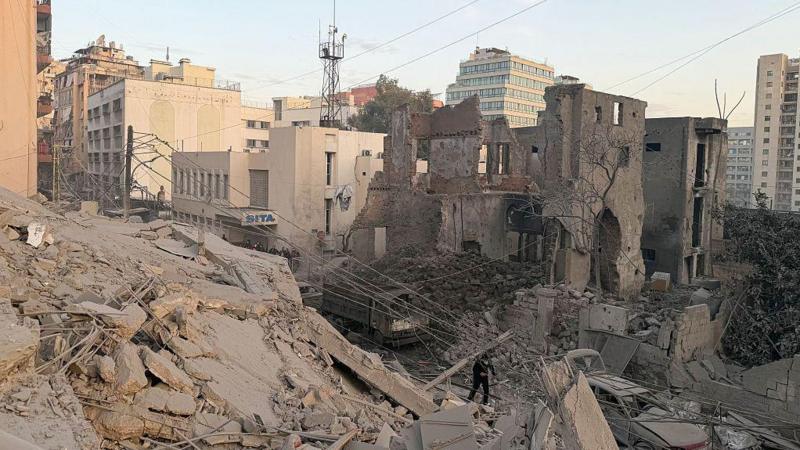
Israel launched an airstrike that destroyed a building in central Beirut, which was linked to Hezbollah, a Lebanese group backed by Iran. The strike is part of a wider conflict that began on March 2, after Hezbollah launched missiles at Israel. More than a million people in Lebanon have been displaced, and many have been killed since the conflict began.
Key Facts
Israel demolished a building in Beirut linked to Hezbollah.
The strike happened around 05:00 local time, after a warning at 04:00.
The conflict started on March 2 when Hezbollah fired missiles at Israel.
912 people have been killed in Lebanon since the conflict began, according to the Lebanese health ministry.
Over a million people have been displaced, mostly from areas with a strong Hezbollah presence.
The strike marked a shift in Israeli attacks spreading from southern Beirut to central areas.
Emergency workers responded quickly, and warnings helped minimize casualties.
Israel targets Hezbollah-related sites, claiming they finance military operations.
Read the Original
Want the full story? Tap a source to open the original
article.
The National Weather Service (NWS) has issued warnings for heavy snow and strong winds affecting parts of Alaska, Pennsylvania, and New York. Snowfall is expected to reach up to 16 inches in Alaska, up to 7 inches in New York, and 1 inch in Pennsylvania. The NWS advises extreme caution for travelers due to potentially difficult road conditions.
Key Facts
Alaska may see up to 16 inches of snow in some areas with heavy snowfall continuing through mid-week.
Winds in Alaska might reach 45 mph, causing low visibility.
Pennsylvania could experience up to 1 inch of snow, making some roads slippery.
New York areas can expect between 4 and 9 inches of snow, particularly affecting morning travel.
Strong winds and snow in these states may make travel hazardous.
The warnings are in effect from Wednesday to Friday for these regions.
Read the Original
Want the full story? Tap a source to open the original
article.
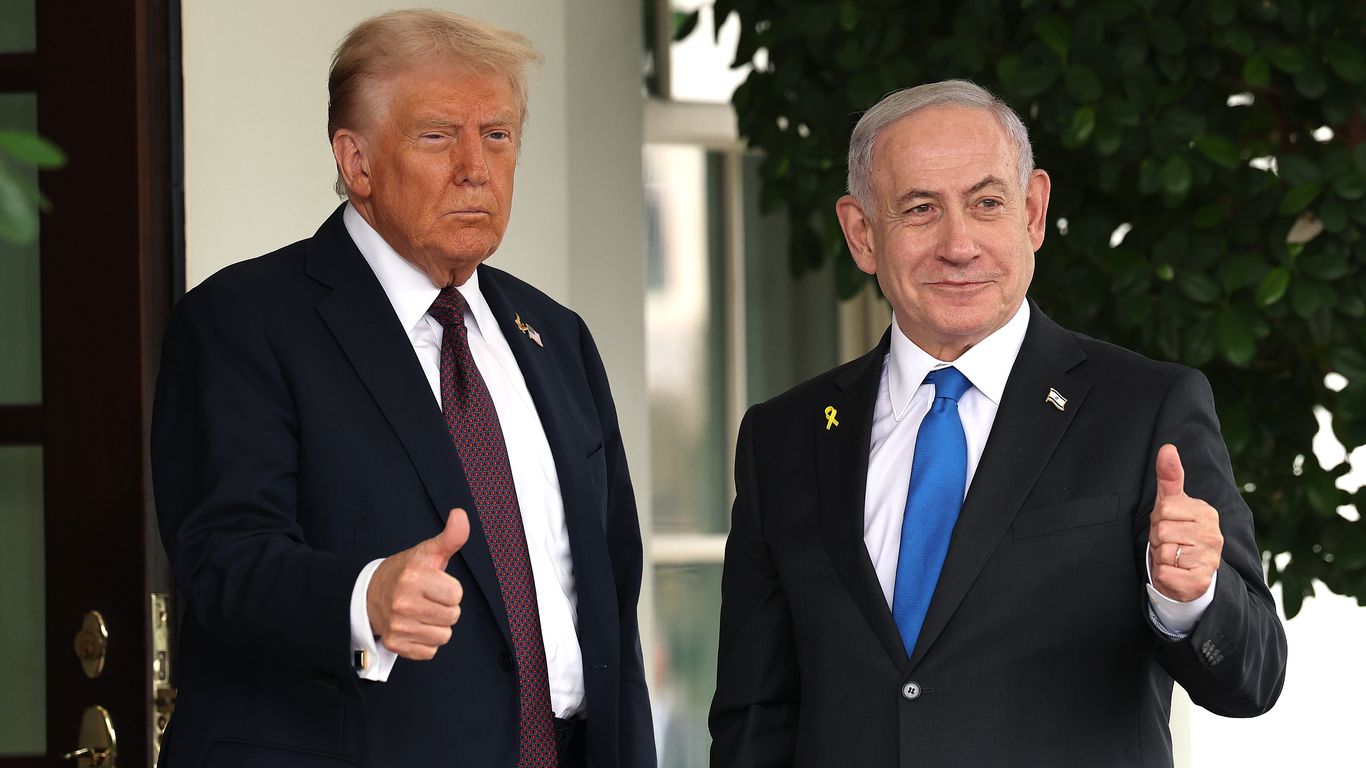
President Trump and Israeli Prime Minister Benjamin Netanyahu have been coordinating closely since the beginning of a war involving Iran. While both leaders are working together, there is concern that their goals may differ, particularly as Israel focuses on leadership assassinations and the U.S. targets Iran's military capabilities. Some U.S. officials feel the U.S. is more interested in stability, while Israel is focused on regime change in Iran.
Key Facts
President Trump and Netanyahu talk almost every day about the ongoing war with Iran.
U.S. officials notice that the end goals of the U.S. and Israel might differ in the ongoing conflict.
President Trump favors aggressive actions against Iran but aligns more with Netanyahu than some of his aides do.
The U.S. focuses on military targets, while Israel targets leadership and encourages regime change.
The U.S. prefers stability in the global oil market, contrasting with Israel's strategy.
There was a disagreement when Israel attacked Iranian oil storage tanks, as the U.S. wants clear communication.
Trump has worked to strengthen ties with Netanyahu and aims to support him politically and legally.
Differences in aims became apparent with Joe Kent's resignation, raising concerns about the U.S. appearing to follow Israel's lead.
Read the Original
Want the full story? Tap a source to open the original
article.
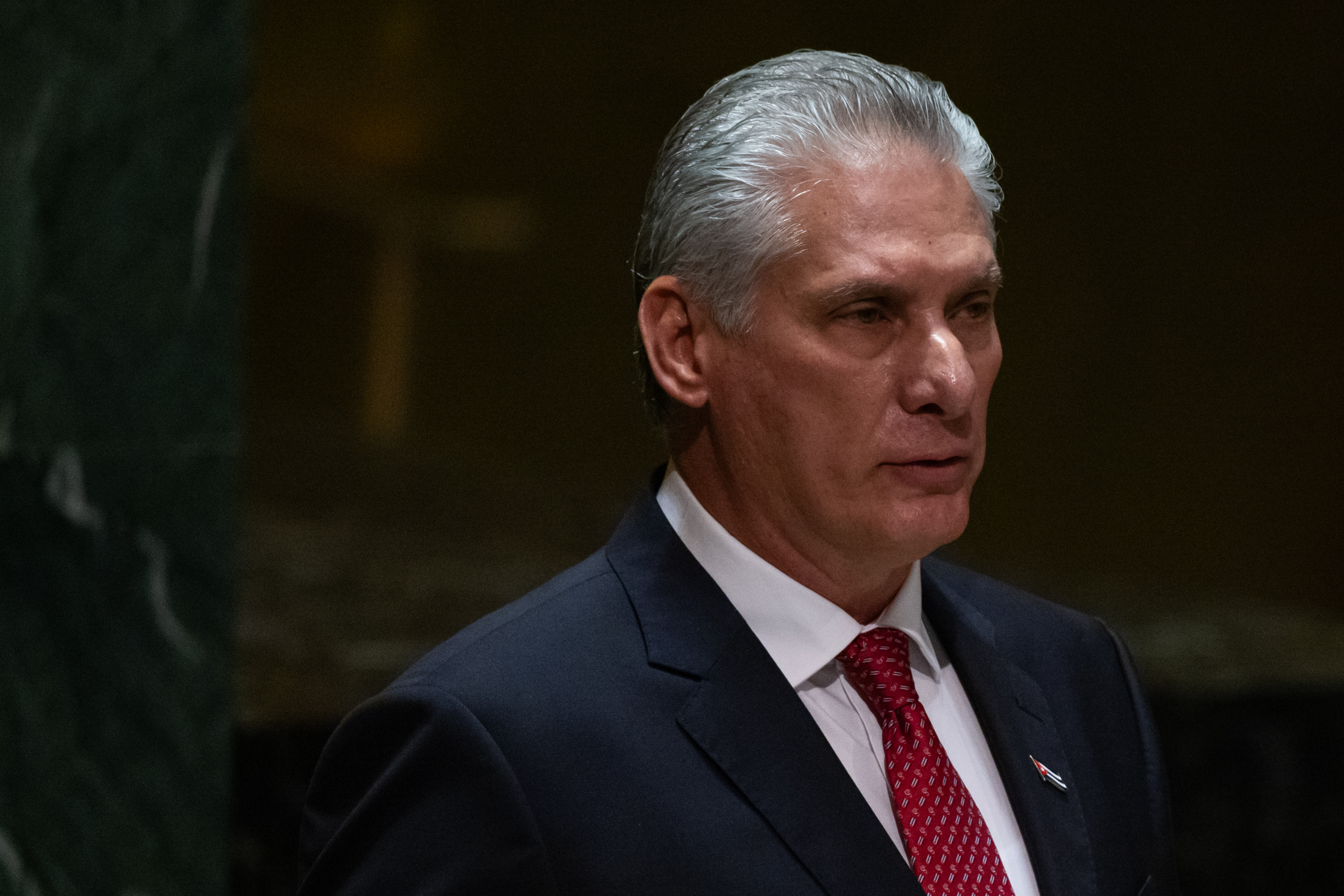
Cuban President Miguel Díaz-Canel Bermúdez responded to President Donald Trump’s statements about taking action against Cuba. Trump mentioned plans to increase pressure on Cuba, which has been facing restrictions on its oil supply. Díaz-Canel communicated through social media that any external aggression towards Cuba would meet strong resistance.
Key Facts
Cuban President Miguel Díaz-Canel Bermúdez responded to statements by President Donald Trump.
President Trump announced plans to take action against Cuba.
The U.S. has applied pressure on Cuba, which included limiting its oil supply.
Díaz-Canel posted on social media that Cuba would strongly resist any external aggression.
The Cuban president mentioned the long-term U.S. attempts to isolate Cuba's economy.
The situation is ongoing, suggesting more developments could follow.
Read the Original
Want the full story? Tap a source to open the original
article.
The Cesar Chavez Foundation expressed shock over allegations that Cesar Chavez engaged in inappropriate behavior with young women and minors during his time leading the United Farm Workers of America. As a result, the foundation and the union are reconsidering how they commemorate Chavez, opting for activities focused on justice and service instead of traditional celebrations.
Key Facts
The Cesar Chavez Foundation released a statement addressing allegations against Chavez.
Chavez is accused of inappropriate sexual behavior with young women and minors.
The United Farm Workers of America will not participate in traditional celebrations of Chavez.
Several events to honor Chavez have been canceled in places like San Francisco, Texas, and Arizona.
The union has not received direct reports or firsthand knowledge of the allegations.
Chavez was known for his work improving conditions for farmworkers, including strikes and boycotts.
March 31 was established as Cesar Chavez Day in California and nationally by President Obama in 2014.
Read the Original
Want the full story? Tap a source to open the original
article.
Around 90 ships have passed through the Strait of Hormuz since the conflict with Iran began. Despite sanctions, Iran continues to export millions of barrels of oil, with China as one of its main buyers. President Donald Trump has urged allies to help reopen the important global oil route.
Key Facts
Approximately 90 ships, including oil tankers, have crossed the Strait of Hormuz since the conflict started.
Iran has exported over 16 million barrels of oil since March, despite sanctions.
The U.S. President Donald Trump asked allies to send warships to help reopen the Strait.
The Strait of Hormuz is crucial for global oil transport, supplying about 20% of the world's crude oil.
About 20 vessels have been attacked in the area since the war started.
China is the largest buyer of Iranian oil due to ongoing sanctions.
Ships with links to India and Pakistan have also successfully navigated the strait.
Oil prices have risen above $100 a barrel since the conflict began.
Read the Original
Want the full story? Tap a source to open the original
article.
Cuba is experiencing power issues after its electrical grid collapsed, but power is gradually being restored. The energy problems are happening while the United States continues to restrict oil to the country.
Key Facts
Cuba experienced a nationwide power outage due to a grid collapse.
The grid failure occurred on Monday.
Power is starting to come back in different parts of Cuba.
The United States has ongoing restrictions on oil that affect Cuba.
These oil restrictions are happening at the same time as the power issues.
Read the Original
Want the full story? Tap a source to open the original
article.
A dog owner used a DNA test to uncover her dog's actual breed, finding no Great Pyrenees heritage. Instead, her dog, Jackie Bear, is primarily part golden retriever and Chow Chow. This discovery highlights changes in how people view dog breeds, with many now focusing more on personality than specific breeds.
Key Facts
A pet owner thought her dog, Jackie Bear, was part Great Pyrenees, but DNA results showed otherwise.
Jackie Bear is 51.9% golden retriever and 32.9% Chow Chow, with no Great Pyrenees.
The dog's purple tongue is a trait associated with Chow Chows.
The DNA test results classify the remaining 15.9% of Jackie Bear as a mix of several other breeds.
The American Kennel Club notes that the reason for a Chow Chow's blue-black tongue is unknown.
Changing attitudes toward dog ownership show a focus on personality over breed.
A survey found 58% of pet owners prioritize size, and 51% prioritize temperament when choosing a dog.
Read the Original
Want the full story? Tap a source to open the original
article.
The article discusses the United States' and Israel's military actions against Iran, highlighting that safeguarding the oil supply is a key objective. The recent US strike on Iran's Kharg Island shows that military targets are prioritized, but oil infrastructure is left unscathed to maintain global oil flow. President Trump indicated that while military action is taken, protecting the global oil economy remains critical.
Key Facts
The US and Israel have increased military activities against Iran, citing nuclear and security concerns.
The Kharg Island strike targeted military facilities while avoiding damage to the oil infrastructure.
Kharg Island is crucial for Iran's oil exports, and it lies near the Strait of Hormuz, a significant oil passageway.
President Trump stated that oil facilities were spared to keep the global oil market stable.
The US has consistently prioritized energy security in the Gulf since the Carter Doctrine of 1980.
The Strait of Hormuz is a vital route for global oil supply, and disruptions could impact global markets.
The article suggests US actions are also influenced by potential control over oil resources, as seen in Venezuela and Russia.
Read the Original
Want the full story? Tap a source to open the original
article.
Recent drone attacks by the Taliban in three Pakistani cities have raised concerns about Pakistan's security systems. The attacks, which injured civilians, highlight the ongoing tensions between Pakistan and Taliban forces in Afghanistan.
Key Facts
Drones hit three locations in Pakistan on March 13, injuring civilians, including two children in Quetta.
The attacks occurred in Quetta, Kohat, and Rawalpindi, where Pakistan's military headquarters is located.
Pakistan's military said they intercepted the drones, which they described as simple and locally made.
Pakistan's President Asif Ali Zardari accused Afghanistan of attempting to target civilians.
In response, Pakistan has implemented a nationwide ban on drone flights and restricted airspace over the capital temporarily.
The Taliban in Afghanistan claimed responsibility for targeting military sites in Rawalpindi and Islamabad.
Pakistan has been in an "open war" with Afghanistan, experiencing increased attacks from armed groups, including the Pakistan Taliban.
Islamabad has pressed Afghanistan to act against the Pakistan Taliban, which it sees as a threat.
Read the Original
Want the full story? Tap a source to open the original
article.
Iranian missile strikes hit areas near Tel Aviv using cluster warheads, causing widespread damage. The attack resulted in two deaths and was reportedly in retaliation for the killing of Iranian official Ali Larijani.
Key Facts
Iranian missiles struck areas near Tel Aviv.
The attack used cluster warheads.
Two people were killed in the strikes.
Iran said the attack was a response to the killing of Ali Larijani, a senior Iranian official.
The strikes caused widespread damage in the affected areas.
Read the Original
Want the full story? Tap a source to open the original
article.
The U.S. used 5,000-pound bombs on Iran's coast near the Strait of Hormuz because of threats to ships in the area. Iran promised a strong response after an Israeli attack killed a top Iranian official. There is rising tension in the region, with missile attacks and air defense alerts reported in several Gulf countries.
Key Facts
The U.S. dropped heavy bombs on Iranian sites near the Strait of Hormuz.
These sites had missiles that posed a risk to ships passing through a key global oil route.
Tension increased after Israel killed Iranian security official Ali Larijani.
Iran vowed a "decisive" response and launched missile strikes on Israel.
Israel carried out attacks in Beirut and ordered evacuations in parts of southern Lebanon.
Several Gulf countries, including Saudi Arabia and the UAE, reported intercepting missile and drone attacks.
An Iranian projectile hit near an Australian military base in the UAE, causing some damage but no injuries.
Read the Original
Want the full story? Tap a source to open the original
article.
The TV show "The Comeback" returns for a third season after being canceled years ago. This season explores how the show's character, Valerie Cherish, lands a lead role in a sitcom written by artificial intelligence. The creators focus on depicting changes in the TV industry and not making a statement for or against AI.
Key Facts
"The Comeback" originally aired in 2005, was canceled, and then revived in 2014.
The third season starts on March 22, marking the show's final season.
The main character, Valerie Cherish, is played by Lisa Kudrow.
This season's story involves a sitcom script written by artificial intelligence.
The show's creators highlight changes in the TV industry, like fewer writers needed over time.
The show addresses the reality of working with AI without making a judgment.
The character Mickey, played by Robert Michael Morris, is honored in the new season after Morris's passing in 2017.
Read the Original
Want the full story? Tap a source to open the original
article.
A mother was surprised to learn her daughter had meningitis after she collapsed and was taken to the hospital. The daughter, who is 21 years old, received antibiotics and is improving. The mother thanked the daughter's flatmate for their quick action in taking her to the hospital.
Key Facts
A 21-year-old woman named Keeleigh collapsed in her Canterbury flat.
Keeleigh was taken to the hospital and diagnosed with meningitis.
She received antibiotics, which are medicines that fight bacteria.
Keeleigh is now starting to feel better.
Keeleigh's mother was surprised by the diagnosis, as she did not expect meningitis.
The mother thanked Keeleigh's flatmate for helping get her to the hospital quickly.
Read the Original
Want the full story? Tap a source to open the original
article.
Each summary links back to the original reporting, so you can check the work. Support that, and get the daily digest every morning. Most choose $3.99/month.
A study from the University of Birmingham suggests that banning phones in schools does not entirely solve the issue of children's screen time. While phone bans help students focus during school hours, they often use their phones more at home, indicating that these bans are not a complete solution.
Key Facts
Most UK secondary schools have some kind of phone policy, like pouches or complete bans.
The University of Birmingham study found phone bans alone are not enough to reduce screen time outside of school.
The Department for Education supports phone-free classrooms, offering guidance to schools.
Brownhills Ormiston Academy uses signal-blocking pouches for students' phones during school.
A study indicates 90% of UK secondary schools have policies to limit phone use.
Researchers found that phone bans can improve focus and social interaction in schools.
The study is part of the ongoing SMART Schools project, assessing phone policy impacts.
Read the Original
Want the full story? Tap a source to open the original
article.
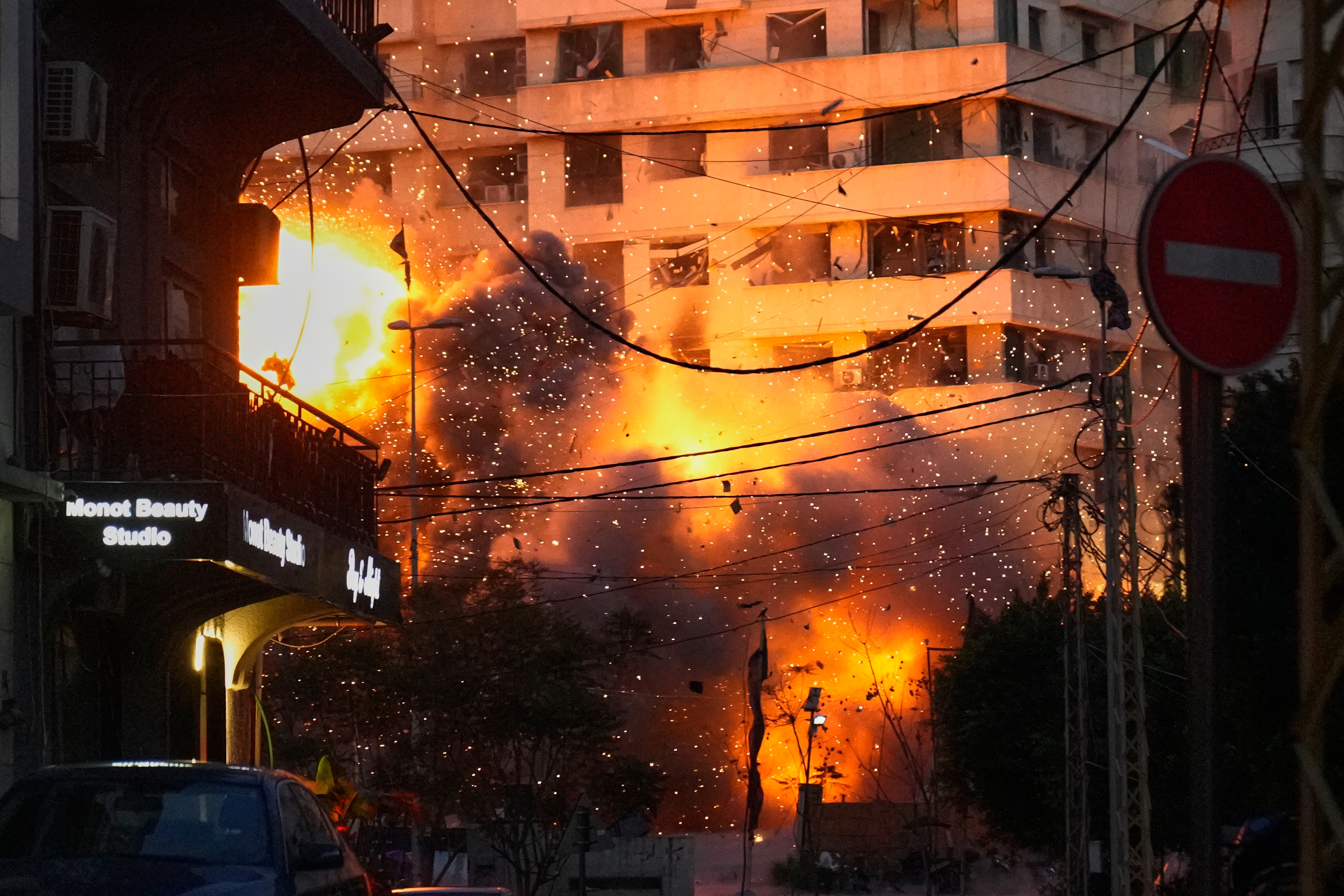
Israel conducted airstrikes in Lebanon, including Beirut, leading to over 20 deaths and numerous injuries. The attacks are part of a broader conflict involving Israel, the United States, and Iran, which began after the assassination of Iran's supreme leader. The UN considers the targeting of civilian areas by Israel as potential war crimes.
Key Facts
Israel bombed a building in central Beirut, resulting in six deaths.
A total of at least 20 people died and 24 were injured due to Israeli strikes across Lebanon.
The conflict started after US and Israeli forces assassinated Iran's supreme leader.
Israel's assault has led to over 912 deaths in Lebanon, including over 100 children.
The UN warned that attacks on civilian areas by Israel might be war crimes.
Over one million people have been displaced due to the conflict.
Hezbollah demands include Israeli withdrawal and the return of displaced people.
The conflict involves Israeli limited ground operations in southern Lebanon.
Read the Original
Want the full story? Tap a source to open the original
article.