Indonesia and Australia are planning to work more closely with Japan and Papua New Guinea on security issues. This cooperation includes developing joint military training sites and sharing intelligence. The effort aims to enhance security in the Indo-Pacific region.
Key Facts
Indonesia and Australia want to expand security cooperation with Japan and Papua New Guinea.
Indonesian Defence Minister Sjafrie Sjamsoeddin and Australian Defence Minister Richard Marles had a meeting to discuss this cooperation.
They are developing trilateral security arrangements involving combinations of Indonesia, Australia, Japan, and Papua New Guinea.
These nations will share intelligence as part of their cooperation.
Last month, Indonesia and Australia signed a "Treaty on Common Security" to increase military training and cooperation.
Australia and Papua New Guinea signed a mutual defence pact in October last year.
There are plans to develop a military training facility on Morotai Island in Indonesia.
The facility could be used by military personnel from several countries, including the Philippines, Singapore, and Australia.
Read the Original
Want the full story? Tap a source to open the original
article.
France is trying to navigate its position in the ongoing conflict involving the U.S. and Israel against Iran. While French President Emmanuel Macron condemns the strikes on Iran and calls them illegal, he also holds Iran responsible for the conflict. France is sending warships to the region and advocates for non-military solutions.
Key Facts
France is cautious about its stance in the U.S. and Israel's conflict with Iran.
French President Macron has called the military strikes illegal but blames Iran for the conflict.
France plans to send 10 warships to the eastern Mediterranean, the Red Sea, and the Strait of Hormuz.
Around 400,000 French citizens live in the Middle East, which affects France’s actions.
France is not supporting regime change in Iran and questions military interventions.
France calls for an international coalition to secure global commercial shipping paths.
Read the Original
Want the full story? Tap a source to open the original
article.
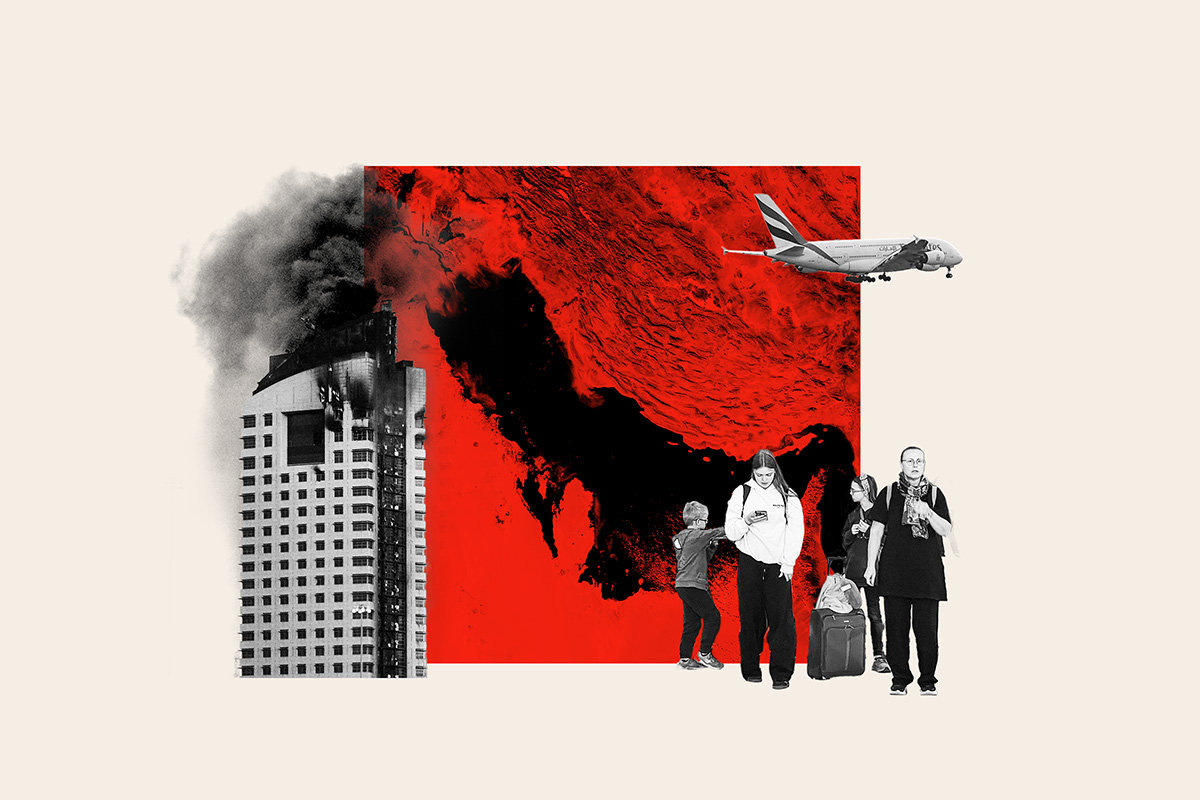
The article discusses the current challenges in the Middle East due to ongoing conflicts and their impact on regional stability, particularly in city hubs like Dubai, Doha, and Manama. These conflicts have created economic risks, disrupted air travel, and raised questions about the effectiveness of U.S. military bases in the region. The article also examines the change in Iran's regional influence after key events, including the killing of Qassem Soleimani and the recent conflict in Gaza.
Key Facts
Gulf cities like Dubai and Doha face economic risks due to regional conflicts.
Airlines are rerouting or grounding flights because of airspace restrictions.
Foreign investors are worried about the safety of investments in the region.
U.S. military bases in the Gulf are questioned for their role in current conflicts.
The killing of Iranian commander Qassem Soleimani in 2020 marked a conflict turning point.
Iran increased its military power and missile arsenal post-Soleimani.
The war in Ukraine served as a testing ground for Iranian drones.
Iran's regional influence declined, particularly after the fall of Bashar al-Assad’s regime in Syria.
Read the Original
Want the full story? Tap a source to open the original
article.
Three ships were hit near the Strait of Hormuz, a key waterway for oil transport. Two tankers near Iraq were struck by an unknown object, resulting in fires and one fatality. Another attack targeted a container ship near UAE, causing a small fire.
Key Facts
The incidents occurred in the Strait of Hormuz, important for moving oil.
Two tankers were hit near Iraq by an unknown projectile.
One person died, and both tankers caught fire.
A separate attack hit a container ship near Jebel Ali port in UAE.
The container ship's attack resulted in a small fire.
Iran’s military previously said it would stop oil leaving the region.
Read the Original
Want the full story? Tap a source to open the original
article.
The Pussycat Dolls, a popular music group, are reuniting for a world tour and new music release. Nicole Scherzinger, Ashley Roberts, and Kimberly Wyatt will form the lineup for this event, which follows a previous postponed reunion due to the COVID-19 pandemic and legal issues. The world tour will start in North America and later move to Europe.
Key Facts
The Pussycat Dolls will reunite as a trio for a new single and tour.
Nicole Scherzinger, Ashley Roberts, and Kimberly Wyatt are the members involved.
A planned reunion in the past was postponed due to COVID-19 and legal disputes.
The new music track released is titled "Club Song."
Their world tour, named "PCD Forever," begins in North America and continues in Europe.
The group initially gained fame with hits like "Buttons" and "Don't Cha."
Jessica Sutta, Carmit Bachar, and Melody Thornton are not part of the current lineup.
Another past reunion attempt was halted due to a legal dispute settled last year.
Read the Original
Want the full story? Tap a source to open the original
article.
New polling data shows that Americans' favorable views of Canada and Great Britain have decreased, hitting their lowest levels since the 1980s. The decrease follows tense relations between these nations and the U.S., largely due to actions by President Trump.
Key Facts
Americans' positive views of Canada and Britain are at their lowest since the 1980s, according to a Gallup poll.
President Trump's actions have strained U.S. relationships with these countries, such as a global trade war and security alliance tensions.
Americans' favorability ratings dropped by eight points for Britain and nine points for Canada over the past year.
The most significant drops in favorability towards these countries were among Republican respondents.
Canada remains highly popular with Democrats, maintaining a 95% positive view from this group.
Americans still rate Japan and Italy more favorably than Canada and Britain.
The Gallup poll used telephone interviews with 1,001 American adults and has a margin of error of ±4 percentage points.
Tensions exist on both sides; a poll shows many Canadians and Britons doubt the U.S. as a reliable ally.
Read the Original
Want the full story? Tap a source to open the original
article.
President Donald Trump and Israel are involved in a military campaign against Iran. The Gulf Cooperation Council (GCC) states, which include countries like Saudi Arabia and the UAE, have been heavily impacted by Iranian attacks. These Arab states are concerned about the effects on their security and economies as well as the unclear plans from the U.S.
Key Facts
President Trump is leading a military campaign with Israel against Iran.
Iran has launched hundreds of missile and drone attacks on GCC states.
The attacks have damaged military bases, oil sites, and civilian areas in the GCC.
The new Iranian leader, Mojtaba Khamenei, is increasing hostile language.
GCC countries are worried about their safety and financial loss.
Energy prices have fluctuated due to the conflict.
The GCC's reputation for stability is at risk, affecting tourism and aviation.
Over 19,000 flights have been canceled in the region since the conflict began.
Read the Original
Want the full story? Tap a source to open the original
article.
A detective, Det Con Lianne Gilbert, shared that Police Scotland gave private information from her phone to a colleague she accused of rape. This led to a substantial fine of £66,000 for Police Scotland by the UK's data watchdog for not protecting her personal data. The detective has spoken about the traumatic impact of the data breach.
Key Facts
Det Con Lianne Gilbert accused a colleague of rape in 2020.
Police Scotland shared her phone's private contents, including images and medical records, with the accused and his lawyer.
The Information Commissioner's Office (ICO) fined Police Scotland £66,000 for failing to protect sensitive information.
Gilbert felt traumatized and violated by the sharing of her data.
Police Scotland apologized for the breach and acknowledged the mistake.
The ICO stated that Police Scotland did not report the data breach within the required time frame.
The sharing included sensitive personal information that was irrelevant to the investigation.
No charges have been filed against the officer Gilbert accused, and the investigation is ongoing.
Read the Original
Want the full story? Tap a source to open the original
article.
The National Weather Service has issued tornado watch alerts for Alabama, Florida, and Georgia. This follows a series of extreme weather events, including 17 tornadoes recently affecting several states such as Illinois, Texas, and Indiana, resulting in fatalities.
Key Facts
The National Weather Service issued tornado watch alerts for Alabama, Florida, and Georgia.
These alerts were issued on Thursday morning due to ongoing severe weather.
Recently, 17 tornadoes have been reported in states like Illinois, Texas, Alabama, and Indiana.
In Indiana, tornadoes destroyed homes, and an elderly couple died as a result.
The situation is still developing and may change as more information becomes available.
Read the Original
Want the full story? Tap a source to open the original
article.
President Donald Trump's officials reported that the United States spent at least $11.3 billion in the first six days of the war on Iran. They shared this information in a briefing with senators, but the total cost of the war remains unclear. The conflict has resulted in about 2,000 deaths, mostly affecting Iranians and Lebanese, and has led to significant displacement and a humanitarian crisis.
Key Facts
The estimated cost for the first six days of the conflict with Iran is $11.3 billion.
The estimate was shared in a closed briefing with U.S. senators.
Officials indicate the full cost and duration of the war are still unknown.
The conflict has killed about 2,000 people, mostly in Iran and Lebanon.
Approximately 800,000 people in Lebanon have been displaced due to the conflict.
UNICEF reports that the conflict has severely impacted children, injuring or killing 1,100 and affecting millions more.
The use of munitions in the first two days of fighting cost $5.6 billion.
Lawmakers are concerned about the impact of the conflict on U.S. military resources and stock levels.
Read the Original
Want the full story? Tap a source to open the original
article.
Israeli airstrikes in Lebanon killed at least 21 people, including eight in a "double-tap strike" at a seafront area in Beirut. These events are part of a broader conflict involving Israel, Lebanon, and other regional players like Iran and Hezbollah.
Key Facts
Israeli airstrikes in Beirut killed eight people and wounded 31, targeting areas with displaced families.
The Lebanese Ministry of Public Health reported a total of over a dozen deaths in recent attacks on Beirut and southern Lebanon.
A "double-tap strike" is when a second attack follows the first, hitting the same area.
Lebanese officials say the death toll from Israeli attacks since February 28 is 634.
Hezbollah, a group based in Lebanon, fired 100 rockets into northern Israel, causing Israelis to seek shelter.
The conflict involves coordinated attacks by Iran and Hezbollah on Israel.
Additional strikes in Lebanon killed people in Aramoun, Deir Antar, and other regions.
Read the Original
Want the full story? Tap a source to open the original
article.
A video captured a failed gunshot attempt on Farooq Abdullah, a former chief minister of Indian-administered Kashmir, during a wedding event. The attacker, identified as Kamal Singh Jamwal, was arrested by police, and an investigation is ongoing. Abdullah's son expressed concern over security breaches despite high-level security measures for his father.
Key Facts
Farooq Abdullah, a former chief minister, was targeted in a gun attack in Jammu city.
The attack happened at a wedding in Indian-administered Kashmir.
Abdullah was not harmed in the incident.
The police have arrested Kamal Singh Jamwal, the suspect.
Farooq Abdullah is the president of a major regional political party, Jammu & Kashmir National Conference.
Abdullah's son, Omar Abdullah, is the current chief minister of the region.
Omar Abdullah questioned the security lapse, as his father has Z+ security, a high-level security protocol in India.
Read the Original
Want the full story? Tap a source to open the original
article.
Iran has launched missile and drone attacks on Gulf countries during a conflict involving the United States, Israel, and Iran. These attacks have targeted areas in Bahrain, Saudi Arabia, Kuwait, and the UAE, impacting oil operations and causing casualties and damage. The conflict has disrupted global oil supplies and markets, leading to an increase in oil prices.
Key Facts
Iran attacked Gulf countries with missiles and drones during the US-Israel war on Tehran.
Bahrain reported strikes on fuel tanks and advised residents to stay indoors.
Saudi Arabia intercepted drones aimed at an oilfield and a district with embassies.
Kuwait reported injuries and damage from a drone hitting a residential building.
The UAE responded to a missile threat, and a container ship was attacked near Jebel Ali.
The conflict has raised Brent crude oil prices by more than 38%.
Iraq suspended oil port operations due to attacks on crude oil tankers.
The Strait of Hormuz's traffic is halted, affecting global oil and gas supply.
Read the Original
Want the full story? Tap a source to open the original
article.
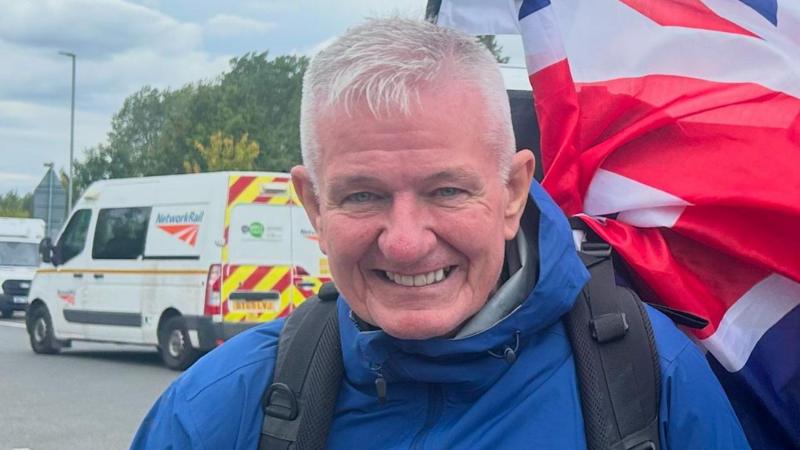
A man named Thomas Judge, known for walking long distances with a fridge on his back to raise money for mental health support, is under scrutiny. Despite raising funds for his charity, First Contact UK Mental Health, former volunteers claim they haven't seen the money being used for its intended purposes. The Charity Commission is investigating the matter.
Key Facts
Thomas Judge became known for charity walks carrying a fridge to symbolize mental health struggles.
Over several years, he reported raising at least £38,000 for First Contact UK Mental Health.
Former volunteers say they haven't seen evidence of the funds being used for charity.
Judge says the funds were meant for long-term projects and to cover the costs of the walks.
The Charity Commission is looking into the concerns raised about the charity's use of funds.
Judge denies wrongdoing and attributes any financial management issues to others.
Stacey Baldam claims Judge used her son’s foundation’s name inappropriately for promotion.
Judge initially raised money through various methods, including a Just Giving page and collection tins.
Read the Original
Want the full story? Tap a source to open the original
article.
Ruth Jones and Richard E Grant star in a new BBC comedy series called "The Other Bennet Sister," inspired by Jane Austen's "Pride and Prejudice." The show focuses on Mary Bennet, the middle daughter of the Bennet family, as she searches for her identity. The series will premiere on BBC One and iPlayer on March 15, 2026.
Key Facts
Ruth Jones plays Mrs Bennet, and Richard E Grant plays Mr Bennet in the series.
The show is based on Janice Hadlow's novel "The Other Bennet Sister."
The series explores Mary's character, showing a new side of the Bennet family.
Filming took place in Wales, including locations like St Fagans Folk Museum.
Ruth Jones described the role as "one of the happiest jobs" she's ever done.
Jones aims to portray Mrs Bennet differently from how she's traditionally seen.
The series is a mix of comedy and drama, with references to "Pride and Prejudice."
The series will be released on March 15, 2026, on BBC One and iPlayer.
Read the Original
Want the full story? Tap a source to open the original
article.
In Gaza, families face a serious shortage of cooking gas, forcing many to cook using firewood and other unsafe materials. This situation has worsened since the conflict with Israel intensified in October 2023, affecting people's health and daily life.
Key Facts
Gaza families struggle to find cooking gas due to a prolonged shortage.
Since the conflict began in October 2023, cooking fuel remains in short supply.
Many people, like Islam Dardouna, suffer health problems from using wood fires.
Dardouna has asthma and struggles with smoke from cooking on open fires.
Before being displaced, Dardouna lived in northern Gaza; now, she lives in a camp.
UN reports say gas supply meets less than 3% of the actual need in Gaza.
Around 54.5% of households in Gaza use firewood for cooking.
Hazardous cooking methods are common, affecting health and the environment.
Read the Original
Want the full story? Tap a source to open the original
article.
A drone attack by the Rapid Support Forces (RSF) in Sudan's White Nile State killed at least 17 people, including female students and health workers. This attack is part of ongoing violence in Sudan, where conflicts between the RSF and the Sudanese Armed Forces have resulted in mass displacement and severe food shortages.
Key Facts
A drone attack in Sudan's White Nile State killed 17 people, including students and health workers.
The attack happened at a secondary school and a health center in the village of Shukeiri.
The Rapid Support Forces (RSF) carried out the attack.
Ten people were injured and taken to al-Duwaim Hospital nearby.
The RSF is involved in a conflict with the Sudanese Armed Forces (SAF).
The International Criminal Court (ICC) is investigating potential war crimes in Sudan.
The conflict in Sudan has led to significant displacement and food shortages.
According to the World Food Programme, 41% of Sudan's population faces acute food shortages.
Read the Original
Want the full story? Tap a source to open the original
article.
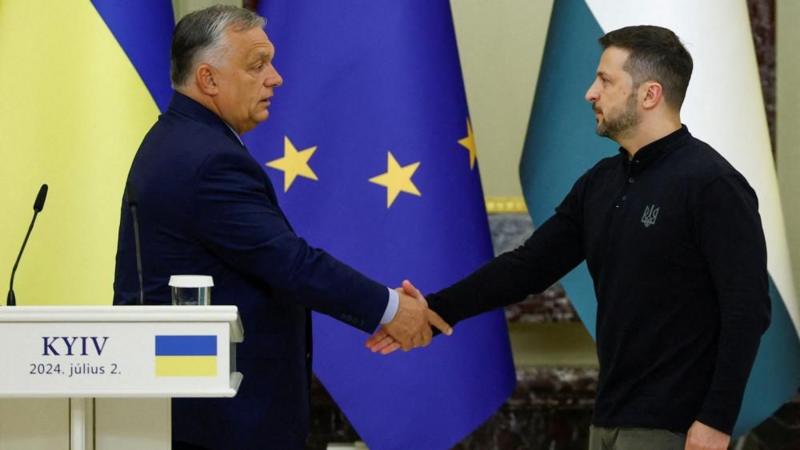
Tensions between Hungary and Ukraine are influencing the upcoming Hungarian elections. The Hungarian government claims Ukraine is trying to interfere to stop Prime Minister Viktor Orbán from winning, while Ukraine accuses Hungary of creating fear against it. Russia is also involved, with reports of a disinformation campaign to support Orbán.
Key Facts
Hungary alleges Ukraine is trying to prevent Prime Minister Orbán from winning through violence and sabotage.
Ukraine accuses Hungary of spreading negative propaganda to ensure Fidesz stays in power.
A Russian-linked firm is reportedly preparing a disinformation campaign to support Orbán.
The upcoming Hungarian election is set for April 12.
Current polls show Orbán's Fidesz party is trailing the opposition Tisza Party.
Oil supply issues in Hungary are linked to damage from a Russian drone strike in Ukraine.
The Hungarian government claims Ukraine is delaying pipeline repairs to hurt Orbán's chances.
Hungary has posted anti-Ukraine billboards and videos to sway public opinion before the election.
Read the Original
Want the full story? Tap a source to open the original
article.
Each summary links back to the original reporting, so you can check the work. Support that, and get the daily digest every morning. Most choose $3.99/month.
The radio episode discusses how the feeling of having control, or "agency," affects voter behavior. People who feel more in control tend to vote for traditional political parties, while those feeling powerless may choose populist candidates. The episode explores how enhancing agency could address some political issues.
Key Facts
James Kanagasooriam is a pollster who talks about the impact of "agency" on politics.
Feeling in control of one's life is linked to voting for traditional parties.
People who feel powerless often vote for populist candidates.
The episode suggests that increasing agency might solve political problems in Britain.
Topics include the loss of civic institutions and cultural pessimism.
The show considers the effects of the COVID-19 pandemic.
The episode is part of "Radical with Amol Rajan" on BBC Radio 4.
Amol Rajan is the presenter of this series, which explores new political ideas.
Read the Original
Want the full story? Tap a source to open the original
article.
Cambridgeshire County Council has decided to extend a scheme that provides supermarket vouchers to families receiving free school meals during holidays until September. The decision comes after the end of the government's Household Support Fund, with the council allocating £2.7 million to fund these vouchers. The vouchers, now worth £10 per child per week, have been reduced from the previous value of £15.
Key Facts
Cambridgeshire County Council will provide supermarket vouchers to families receiving free school meals during school holidays until September.
The council allocated £2.7 million for this program.
Each voucher is now worth £10 per child per week, down from £15.
The extension follows the end of the government's Household Support Fund.
£350,000 in additional funding is available for Easter holiday vouchers.
An extra £1 million is set aside in the council's 2026-27 budget for similar initiatives.
Another £1.3 million has been identified from the council's anti-poverty reserve.
Local leaders expressed concerns about the impact of the reduced voucher amount on struggling families.
Read the Original
Want the full story? Tap a source to open the original
article.