The Glastonbury Festival will return in 2027 after taking a break in 2026. Tickets will go on sale in October at £408 each, which is the highest price so far. The festival organizers have not announced headline performers yet but denied Madonna will be one of them.
Key Facts
Glastonbury Festival will be off in 2026 and return in 2027.
Tickets cost £408, including a £5 booking fee, up £29.50 from last year.
Tickets with coach travel go on sale at 6 PM BST on October 1, general admission tickets on October 4 at 9 AM BST.
Buyers must register beforehand and use a valid registration number to buy tickets, helping to reduce ticket reselling by scalpers.
The festival usually sells out in less than an hour due to high demand.
The last festival in 2025 featured Olivia Rodrigo, The 1975, and Neil Young as headliners.
Festival organizer Emily Eavis confirmed Madonna will not headline in 2027 and hinted there will be three other main acts.
Rumors suggest potential performers like Harry Styles, Taylor Swift, Fontaines D.C., and Stevie Wonder, but nothing is confirmed.
Read the Original
Want the full story? Tap a source to open the original
article.
Glastonbury Festival tickets for 2027 will go on sale starting October 4, with prices reaching £408 for the first time. The festival will take place from June 23 to 27, 2027, after not happening in 2026, and early sales for tickets combined with coach travel start on October 1.
Key Facts
Ticket price for 2027 is £408, including a £5 booking fee, up from £378.50 in 2025.
Tickets go on sale at 9am on Sunday, October 4, 2026.
Tickets bundled with coach travel, promoting greener transport, go on sale earlier at 6pm on Thursday, October 1.
Festival runs from June 23 to 27, 2027.
Fans must register by 5pm BST on Friday, September 25, 2026, to buy tickets.
Tickets can be paid in full or with a £100 deposit, with the balance due in early April 2027.
Under-13s attend the festival for free.
Rumors suggest Harry Styles may headline, with other possible acts including Taylor Swift and Fontaines DC; Madonna has been confirmed not to perform.
Read the Original
Want the full story? Tap a source to open the original
article.
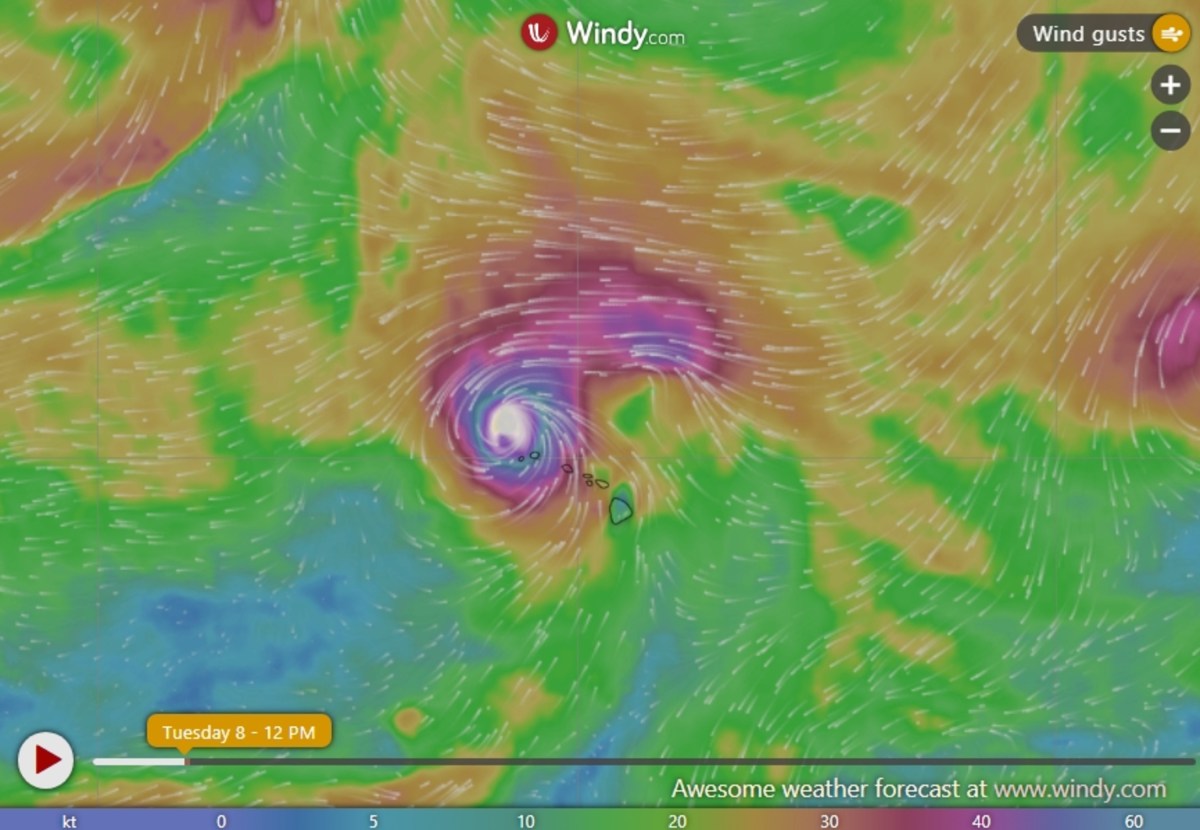
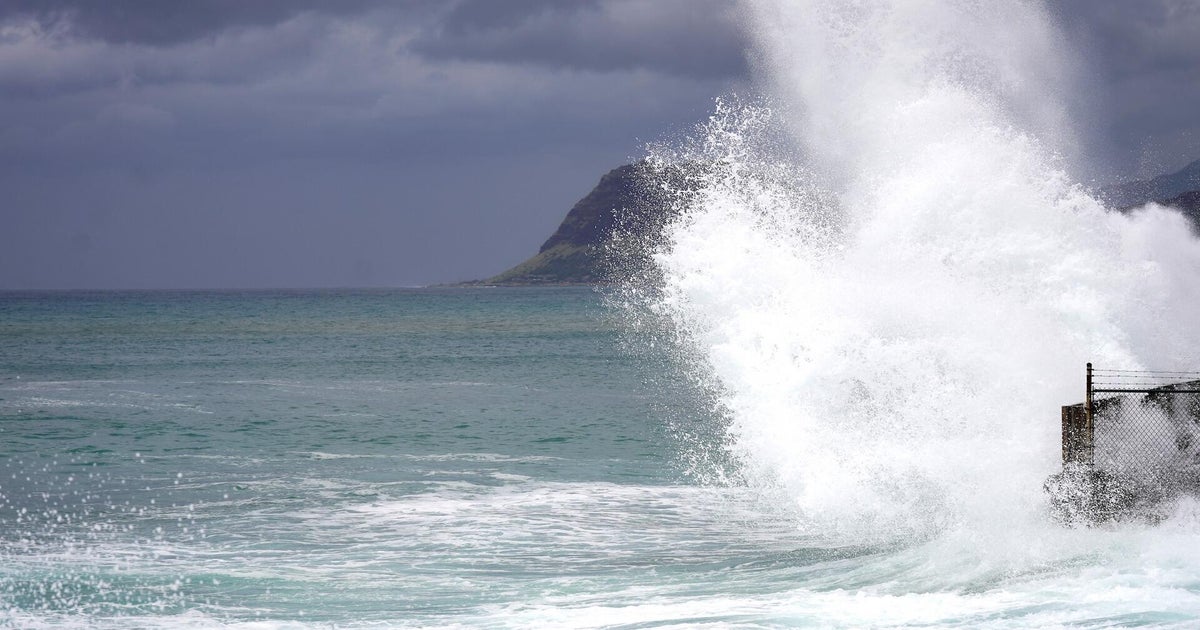
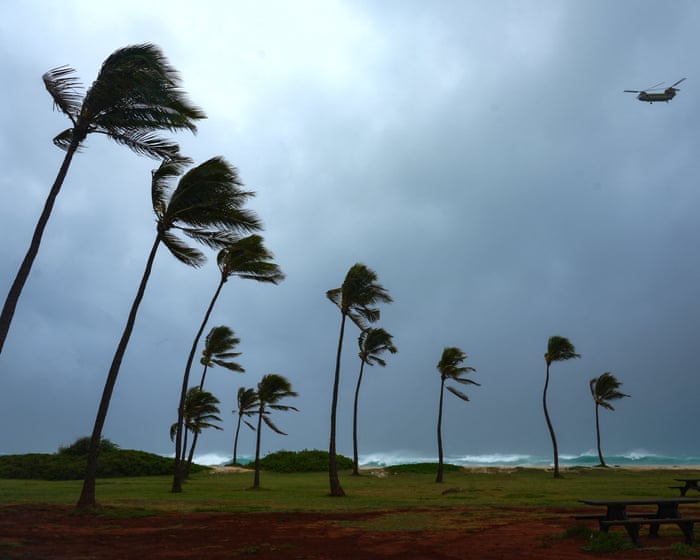
Hurricane Lowell is a Category 1 hurricane near Hawaii, moving away and expected to weaken into a tropical storm soon. Despite weakening, it continues to bring strong winds, heavy rain, and large waves, leading to multiple weather warnings across the Hawaiian Islands.
Key Facts
Hurricane Lowell is about 145 miles northwest of Lihue, Kauai, moving north at 18 mph.
It has sustained winds of 90 mph, with gusts over 115 mph in some areas.
The storm is expected to weaken to a tropical storm later Tuesday and remain so through Sunday.
Hawaii has several active warnings including Hurricane Warning for Kauai and Niihau.
Tropical Storm Warnings cover most of Oahu, predicting winds of 15-35 mph, with gusts up to 55 mph.
A High Surf Warning is in place for south-facing shores and the Big Island, with waves up to 35 feet near the storm.
Flood Advisories are active in some areas due to heavy rain, with up to 3 inches expected in 24 hours.
Officials warn of risks like power outages, fallen tree limbs, flooding, hazardous driving, and dangerous ocean conditions.
Read the Original
Want the full story? Tap a source to open the original
article.
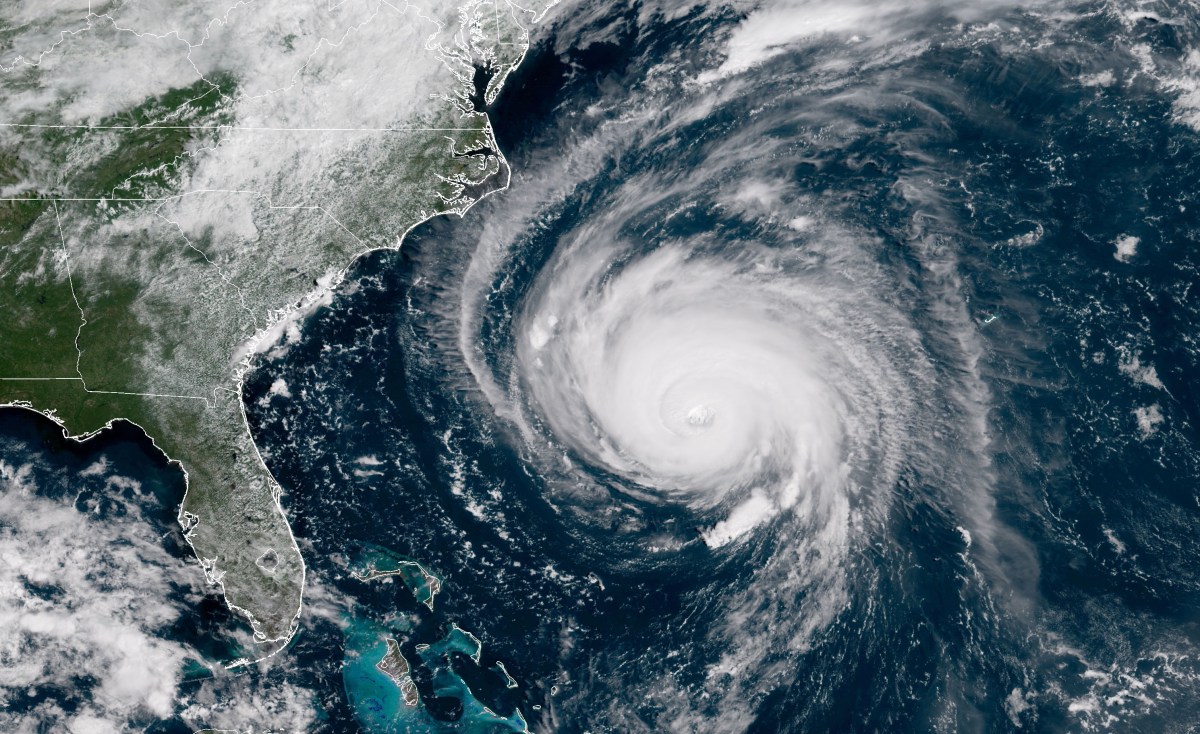
The 2026 Atlantic hurricane season is close to setting a record for the latest start of its first hurricane, with no hurricanes formed yet as it nears the usual peak time. Experts say the season has fewer storms and weaker conditions partly because of wind patterns and dry air, which are linked to the ongoing El Niño weather pattern.
Key Facts
No hurricanes have formed yet in the 2026 Atlantic hurricane season, approaching the latest start date on record (September 11).
Five named tropical storms have occurred, but none strengthened into hurricanes.
The season has fewer named storms, hurricanes, and major hurricanes compared to the average from 1991 to 2020.
Wind shear (strong winds at different heights) and dry air from Saharan dust have made hurricane formation harder.
El Niño, a natural climate pattern with warmer Pacific waters, tends to reduce hurricanes in the Atlantic by increasing wind shear.
The last seasons with no hurricanes before satellite records were in 1907 and 1914, over 100 years ago.
Forecasters are watching an area near the southeastern U.S. with low chances of developing storms soon.
The National Hurricane Center does not expect any new tropical cyclones in the next seven days.
Read the Original
Want the full story? Tap a source to open the original
article.
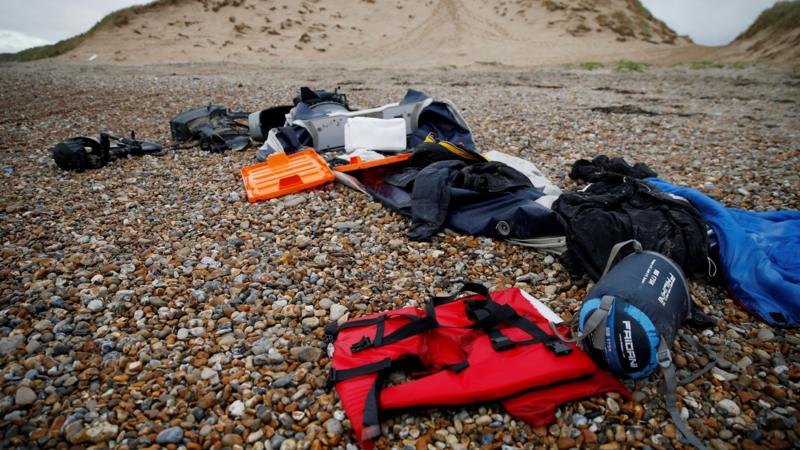
Fourteen suspected people smugglers are on trial in Paris for their part in a 2021 disaster where at least 30 migrants drowned when their small boat sank in the English Channel. The defendants face charges including manslaughter and helping illegal immigration, while two leaders remain missing and are being tried in absentia.
Key Facts
The disaster happened in November 2021 when a motorized dinghy deflated and sank between France and the UK.
At least 30 people, including men, women, and children, died; only two men survived.
The boat was overloaded, of poor quality, and had inadequate life jackets.
Many victims were Iraqi Kurds; others came from Somalia, Ethiopia, Egypt, and Afghanistan.
The 14 defendants are mostly Afghan nationals accused of organizing the journey and managing payments.
Two of the accused, considered leaders, have not been caught and are being tried in absentia (without being present).
French military personnel are under investigation for possibly failing to help the people in danger.
A UK inquiry found that the coastguard had limited staff and underestimated the emergency due to disbelief about migrants’ distress calls.
Read the Original
Want the full story? Tap a source to open the original
article.
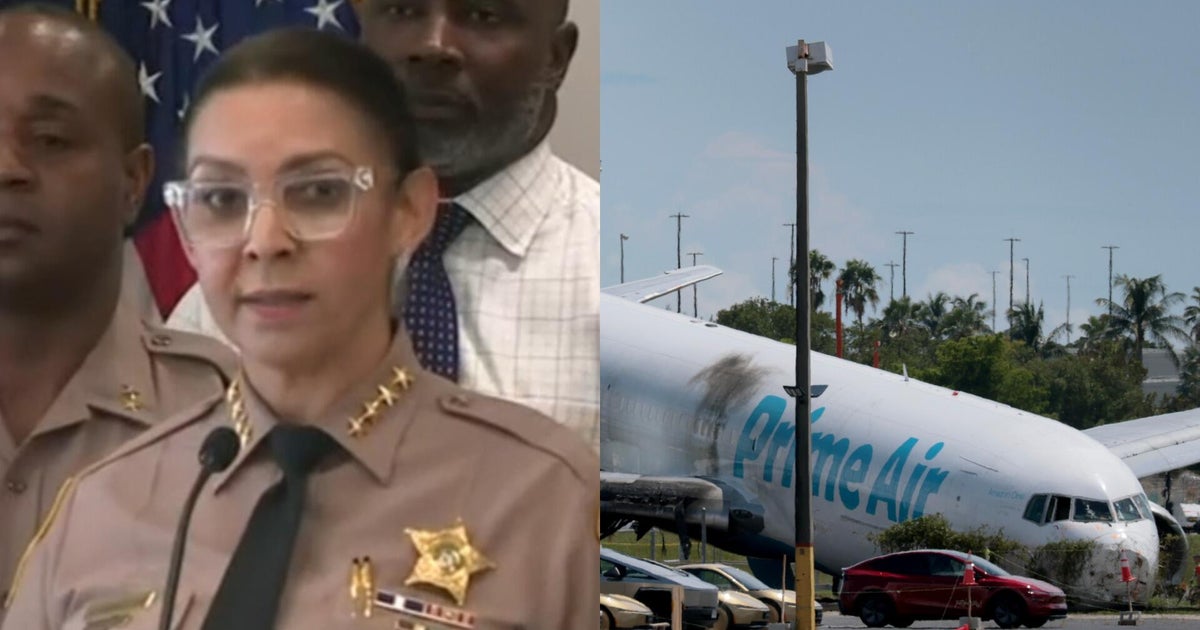
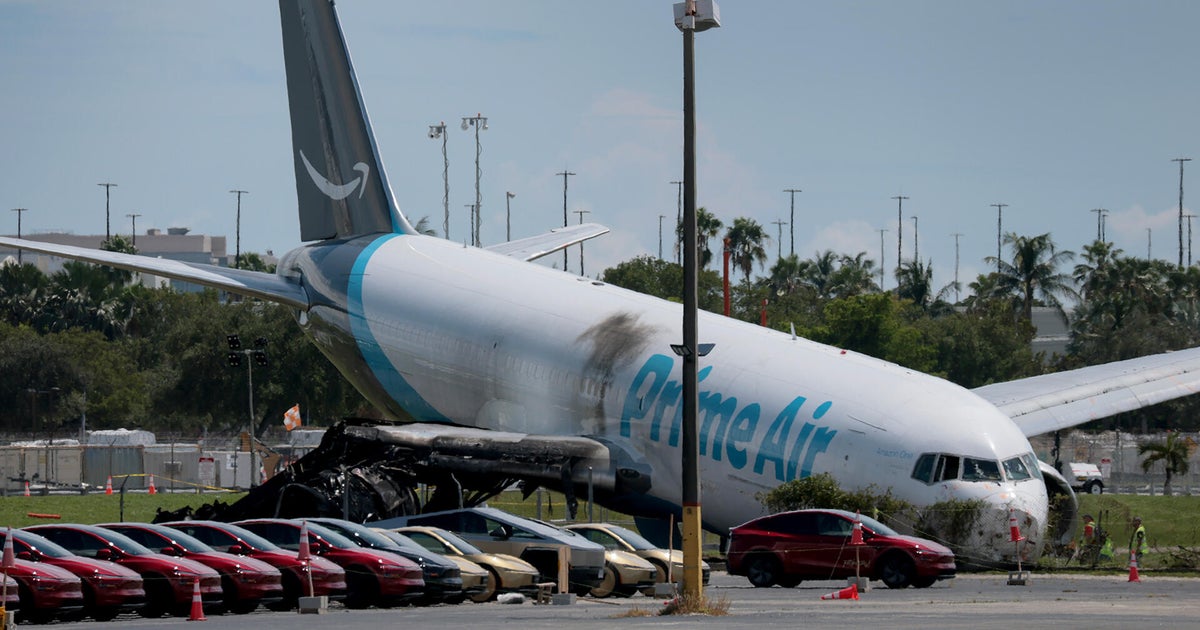
Five people on the ground died and two others were seriously injured when an Amazon cargo plane crashed at Miami International Airport. The two pilots on the plane survived and were released from the hospital. Investigators are examining the crash site and the plane’s data to find out what caused the accident.
Key Facts
The crash happened on Saturday at Miami International Airport as the Amazon Prime Air Boeing 767 was landing from San Juan, Puerto Rico.
The plane went off the end of the runway, crashed through fencing, and hit a van carrying five people, all of whom died.
The victims on the ground worked for a company that cleans aircraft and were riding in a Ford Econoline van.
Two people in the van, aged 79 and 32, were seriously injured and remain in critical condition.
Both pilots were the only people on the plane and have been released from the hospital.
Investigators from the National Transportation Safety Board (NTSB) are studying the crash scene and recovered the plane’s “black box” flight data recorder.
Factors being studied include the plane’s speed, weather conditions, pilot decisions, and the mechanical state of the 32-year-old aircraft.
The crash caused major damage and airport delays for three days, but normal operations have resumed.
Read the Original
Want the full story? Tap a source to open the original
article.
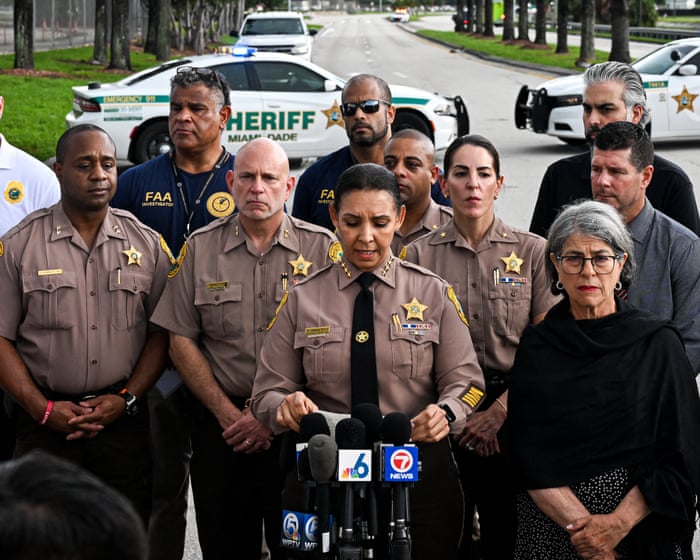
Five people died in a crash of an Amazon cargo plane at Miami International Airport. Miami-Dade County Sheriff Rosie Cordero-Stutz announced the victims' names. The National Transportation Safety Board (NTSB) has started investigating the accident.
Key Facts
The crash involved an Amazon cargo plane.
It happened at Miami International Airport.
Five people died in the crash.
Miami-Dade County Sheriff Rosie Cordero-Stutz released the victims' identities.
The National Transportation Safety Board (NTSB) is leading the investigation.
The crash occurred on Sunday.
CBS News reporter Skyler Henry provided updates on the event.
Read the Original
Want the full story? Tap a source to open the original
article.
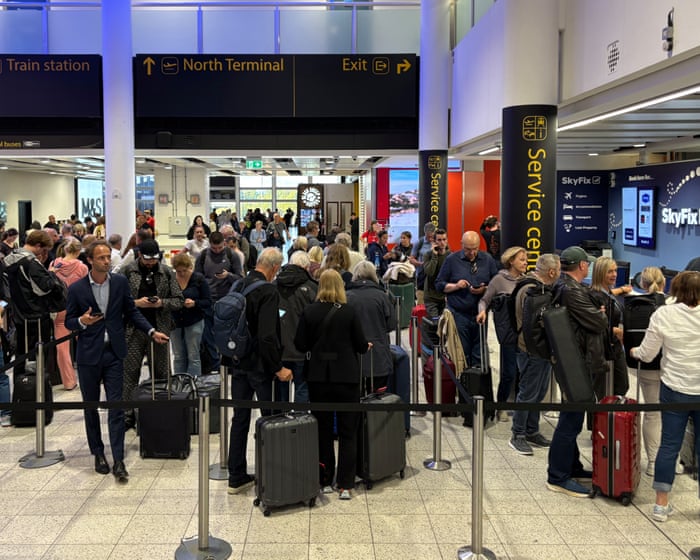
A technical problem with air traffic control caused delays and cancellations at major UK airports like Manchester, Birmingham, and London on Tuesday. The issue lasted about three hours and led to ongoing disruptions. The Civil Aviation Authority explains passengers’ rights to care, rebooking, refunds, and compensation during such events.
Key Facts
The air traffic control problem started just before 2pm and was fixed around 5pm.
Hundreds of flights were cancelled, affecting travel in the UK and abroad.
Passengers delayed long enough are entitled to food, drinks, phone calls, emails, and sometimes hotel stays from their airline.
Airlines must offer a refund or a new flight if your plane is cancelled under UK law.
Delays over five hours allow passengers to cancel their journey and get a refund.
Passengers should keep receipts if they pay for their own care while waiting.
Airlines usually do not pay compensation if the delay or cancellation is due to events beyond their control, like this technical problem.
Travel insurance may help cover costs not paid by the airline, depending on the policy.
Read the Original
Want the full story? Tap a source to open the original
article.
Hurricane Lowell passed near the western side of Hawaii early Tuesday, causing flooding on the islands. The storm brought heavy rain and strong winds, leading to rising water and emergency situations.
Key Facts
Hurricane Lowell moved close to the western part of Hawaii.
The storm caused significant flooding after it passed.
Heavy rain and strong winds occurred during the hurricane.
The flooding created emergency situations for residents.
Authorities were monitoring the situation and providing updates.
The storm affected travel and daily activities on the islands.
Weather officials warned people to stay alert for changing conditions.
Read the Original
Want the full story? Tap a source to open the original
article.
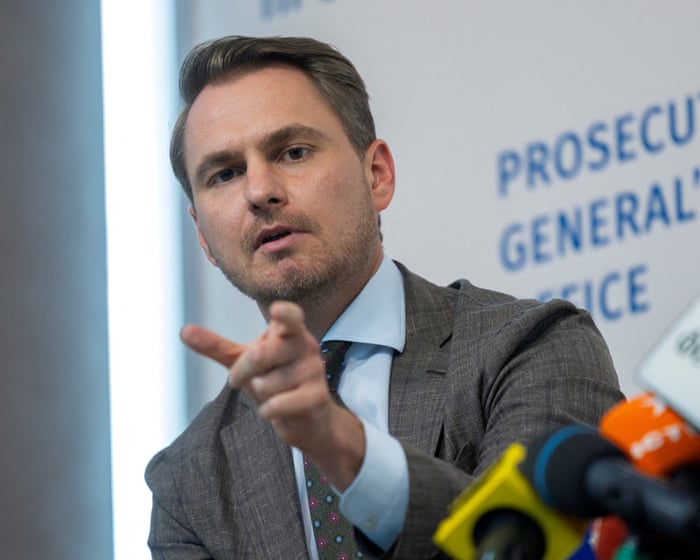
Ukraine’s prosecutor general, Ruslan Kravchenko, resigned after anti-corruption agents raided his office linked to a large corruption case involving fake call centres. These centres trick people into sending money and paid officials for protection, leading to a major scandal threatening President Zelenskyy’s government.
Key Facts
Ruslan Kravchenko resigned amid allegations that officials in his office protected illegal phone scam call centres.
These call centres pretended to be banks or officials to steal money from people in Ukraine, Russia, and the EU.
The call centres paid about $7,000 a month each in bribes, totaling millions of dollars.
Anti-corruption agencies had to use ladders to raid Kravchenko’s office after staff refused entry.
A suspect was arrested in Lviv, with evidence showing he managed bribe money and home repairs for Kravchenko.
Police found a safe with large amounts of cash, which was spent on luxury items and real estate.
President Zelenskyy initially tried to weaken the anti-corruption agencies but reversed his decision after protests.
The scandal emerged during ongoing attacks on Kyiv and after visits from envoys of President Donald Trump aiming to promote peace talks.
Read the Original
Want the full story? Tap a source to open the original
article.
Israel has decided to close the British consulate in East Jerusalem after the UK imposed sanctions on goods from Israeli settlements that are considered illegal under international law. The Israeli government also banned entry for several UK politicians and ended cooperation on Palestinian security training and a Gaza coordination mission.
Key Facts
Israel will close the British consulate located in the Sheikh Jarrah area of East Jerusalem.
The UK imposed sanctions on trade with Israeli settlements in the occupied West Bank.
Israel banned entry to several mostly left-wing UK MPs, including Jeremy Corbyn and Diane Abbott.
British involvement in training Palestinian security forces on the West Bank will end.
The UK will be excluded from the US-led Gaza coordination mission based in Israel.
Israel views Jerusalem as its undivided capital, while most countries consider East Jerusalem occupied territory since 1967.
Israeli Foreign Minister Gideon Sa’ar coordinated the response with Prime Minister Benjamin Netanyahu ahead of Israel’s October election.
Israel criticized the UK’s sanctions as interference in its democratic process, while Israel’s president called for dialogue instead of sanctions.
Read the Original
Want the full story? Tap a source to open the original
article.
An Amazon cargo plane overshot a runway while landing at Miami International Airport, causing a crash that killed five people in vehicles near the airport. Both pilots survived, were injured, and have been released from the hospital. Investigators are examining the cause of the crash and whether runway safety features could prevent similar accidents.
Key Facts
The crash happened when Prime Air Flight 7598 overran the runway on September 6, 2026.
Five people died in the two vehicles hit by the plane after it went off the runway.
The pilots, Joseph Carroll (55) and Jaime Felipe Silva Molina (37), were injured but are now out of the hospital.
A witness saw one pilot shaking and upset, saying, "My career is over."
The plane hit airport navigation equipment, a cleaning crew van, a Toyota SUV, and fences before stopping near parked Tesla robotaxis.
Investigators from the National Transportation Safety Board (NTSB) are looking into the crash and have recovered the plane’s black boxes for analysis.
Officials are considering whether to require Engineered Materials Arresting Systems (EMAS), a safety bed made of crushable material to stop planes, at more airports.
Miami International Airport’s runway has a 1,000-foot safety area, which typically reduces the need for EMAS.
Read the Original
Want the full story? Tap a source to open the original
article.
The UK government announced sanctions against Israeli settlements in the West Bank to stop their expansion, focusing on the planned E1 settlement. In response, Israel said it would close the British consulate in Jerusalem and called the UK’s actions hostile.
Key Facts
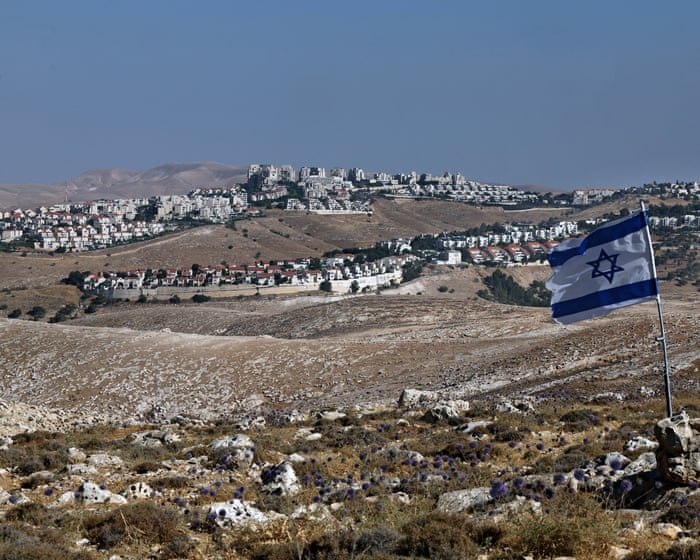
The UK announced sanctions to prevent construction in the E1 area, part of the West Bank where Israel plans to build around 1,200 new homes.
UK Foreign Secretary Ed Miliband said the UK will ban imports from Israeli settlements in the West Bank.
Miliband accused some settlers of ethnic cleansing and said the Israeli government ignores these actions.
Israel’s Foreign Minister Gideon Saar criticized the UK and said Israel will close the British consulate in Jerusalem.
Ma'ale Adumim is an existing Israeli settlement near the proposed E1 site.
The West Bank is a disputed territory where Israeli settlement expansion is a subject of international concern.
The UK’s actions aim to pressure Israel to stop settlement building, which the UK considers illegal under international law.
Read the Original
Want the full story? Tap a source to open the original
article.
The U.S. Coast Guard is helping search for a plane that disappeared near the Bahamas. The plane had four family members on board and was flying back to Florida when it went missing.
Key Facts
A plane with four family members went missing near the Bahamas.
The flight was returning to Florida.
The Royal Bahamian Defense Force asked the U.S. Coast Guard for help.
The Coast Guard is actively searching for the missing airplane.
The missing plane's location and condition are not yet known.
Search efforts involve cooperation between Bahamian and U.S. authorities.
Read the Original
Want the full story? Tap a source to open the original
article.
An X account named 2001 Live plans to post about 410 live updates on September 11, 2026, retracing the events of 9/11 minute by minute on its 25th anniversary. The updates will be based on detailed research and eyewitness reports, avoiding graphic content to respect victims, with posts increasing frequency during the key moments of the attacks.
Key Facts
2001 Live (@25YearsAgoLive) is an X account that shares past events as if they are happening live, focusing on historical accuracy.
On the 25th anniversary of 9/11, the account will post every 3 minutes on average, and more frequently between 8:46 a.m. and 10:30 a.m. ET, the critical period of the attacks.
The account curator, Manny Marotta, reviewed 240 hours of footage, news reports, and eyewitness accounts to build the timeline.
Graphic images and videos will not be shown to avoid disrespecting victims.
The timeline aims to follow the most supported version of events and will block users promoting conspiracy theories.
2001 Live began in 2022 and has since covered various years in history, attracting over 500,000 followers.
The US will mark the 25th anniversary of 9/11 with memorial events including readings of victims' names and moments of silence.
The project will not seek profit from the 9/11 coverage, pledging to donate any funds raised.
Read the Original
Want the full story? Tap a source to open the original
article.
Prince George, who is 13 years old and second in line to be king of the United Kingdom, has started his first term at Eton College, a well-known all-boys boarding school. His parents, the Prince and Princess of Wales, took him to school, continuing a family tradition since his father also attended the same school.
Key Facts
Prince George is the son of the Prince and Princess of Wales.
He is 13 years old and second in line to the British throne.
George began his first term at Eton College, a prestigious boarding school for boys.
Eton College has educated 20 British prime ministers in the past.
The school charges about £65,000 per year in fees.
Prince George’s father, Prince William, also went to Eton College.
The school is known for its elite status and high academic standards.
Read the Original
Want the full story? Tap a source to open the original
article.
A 78-year-old British woman named Joyce Thomas faces deportation from Sweden after living there for 22 years. She missed a required application to stay in the country after Brexit, and despite many appeals, the Swedish government has set a deadline for her to leave.
Key Facts
Joyce Thomas, a retired nurse, moved to Sweden 22 years ago with her husband, who died three years ago.
British citizens lost automatic residence rights in Sweden after the UK left the EU on January 31, 2020.
There was a deadline of December 31, 2021, for British nationals to apply for residence under the Brexit withdrawal deal.
Thomas and her husband were unaware they needed to apply until she tried to re-enter Sweden in 2023.
The Swedish migration agency rejected many of her applications and appeals, with a voluntary departure deadline of September 8.
Swedish officials said they are reviewing whether they can ease the process for British citizens affected by Brexit.
Between 2021 and 2025, about 2,490 UK nationals were ordered to leave Sweden.
The UK government supports Sweden looking for solutions to help British citizens facing deportation.
Read the Original
Want the full story? Tap a source to open the original
article.
Hurricane Lowell brought strong winds and heavy rain to Hawaii’s western islands, causing risks of floods, mudslides, and tornadoes. Kauai and Ni’ihau were under hurricane warnings, while Oahu had a tropical storm warning as the storm moved away from the islands.
Key Facts
Kauai and Ni’ihau were under a hurricane warning; Oahu was under a tropical storm warning.
The storm’s center passed west of the islands but had tropical storm-force winds spreading nearly 200 miles.
Wind gusts reached up to 80 mph on Kauai, with sustained winds around 50 mph.
Hawaii’s governor closed schools and government offices on Kauai, Ni’ihau, and Oahu during the storm.
Rainfall on Kauai could reach up to 24 inches, increasing flood and mudslide risks.
Damaging winds, flooding, and dangerous surf were expected through Tuesday.
Last month, Tropical Storm Lala caused landslides and power outages in Hawaii.
Read the Original
Want the full story? Tap a source to open the original
article.
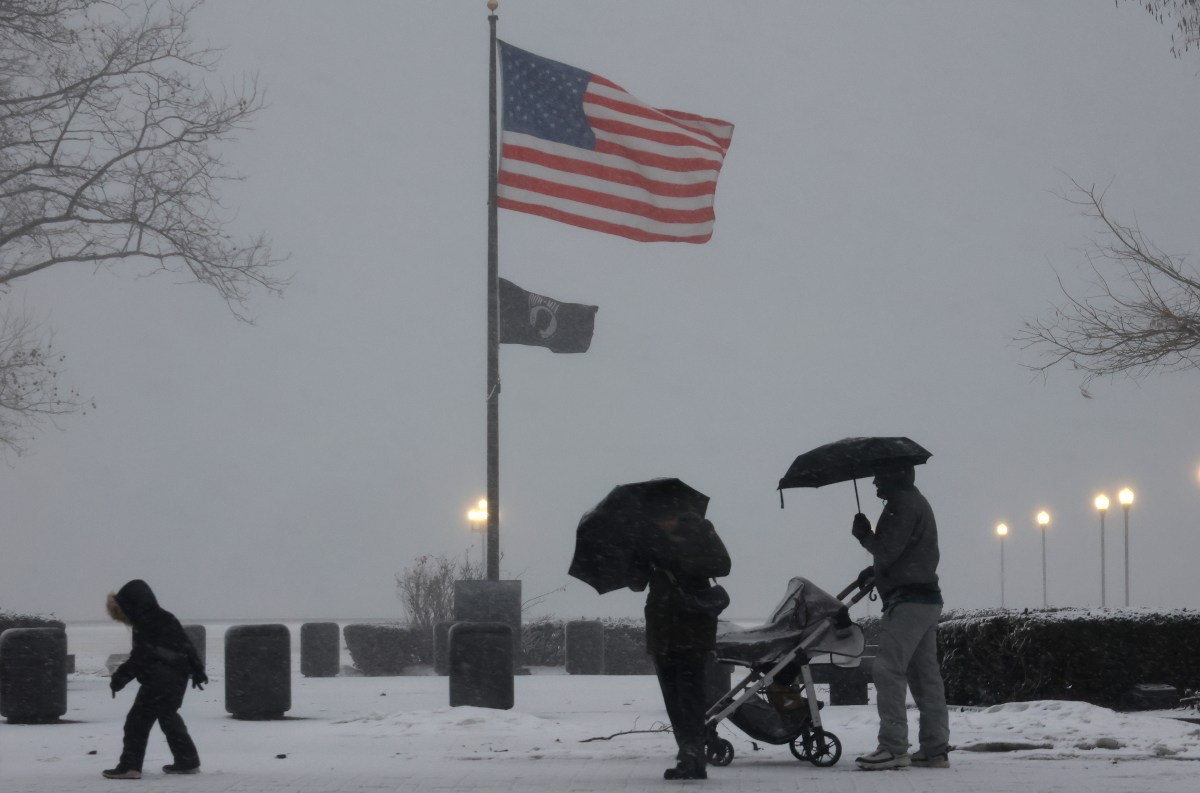
A strong El Niño climate pattern is expected to continue through the 2026-2027 winter, likely causing milder weather across much of the United States and increased rain and snow in parts of the West and South. Both the Old Farmer’s Almanac and NOAA forecast above-normal temperatures in northern U.S. regions and wetter conditions along the West Coast during this period.
Key Facts
El Niño is a warming of Pacific Ocean waters that influences weather patterns globally.
NOAA says there is over a 90% chance of a very strong El Niño this fall and winter.
The Old Farmer’s Almanac predicts a mostly mild winter with wetter conditions in the West, South, Midwest, and Florida.
Some areas from central New England to the Ohio Valley may experience colder-than-normal temperatures.
Both NOAA and the Almanac agree on above-normal temperatures across northern states and wetter weather on the West Coast.
Past strong El Niño winters have brought heavy rain and flooding to parts of California and wetter weather to the Southeast.
"Super El Niño" is a term used to describe very strong events but is not an official NOAA classification.
Forecasts use different methods: the Almanac uses solar cycles and historical patterns, while NOAA uses climate models and scientific data.
Read the Original
Want the full story? Tap a source to open the original
article.
A public inquiry has examined the 2023 Nottingham attacks where Barnaby Webber and two others were fatally stabbed by Valdo Calocane, who suffers from paranoid schizophrenia. The inquiry found that Webber’s death might have been prevented with faster medical treatment, and also revealed new evidence about Calocane’s past behavior and planning that was not previously shared.
Key Facts
The attacks happened on June 13, 2023, killing Barnaby Webber, Grace O’Malley-Kumar (both 19), and Ian Coates (65).
Valdo Calocane, diagnosed with paranoid schizophrenia, admitted manslaughter and attempted murder charges and was given an indefinite hospital order in 2024.
Medical experts told the inquiry that quicker blood transfusions might have increased Webber’s chance of survival, though his chance was initially below 50%.
The deaths of O’Malley-Kumar and Coates were judged not preventable with quicker treatment.
New evidence emerged after the initial hearings, including hidden notebooks where Calocane wrote about being “God,” mind-reading software, and explosives.
Police had not shared some information, including violent incidents by Calocane and notes on explosives, with the inquiry or other officials earlier.
Calocane had a history of violent behavior and had been admitted to hospital under mental health laws multiple times before the attack.
At the time of the attacks, there was an outstanding warrant for Calocane’s arrest for failing to appear in court.
Read the Original
Want the full story? Tap a source to open the original
article.