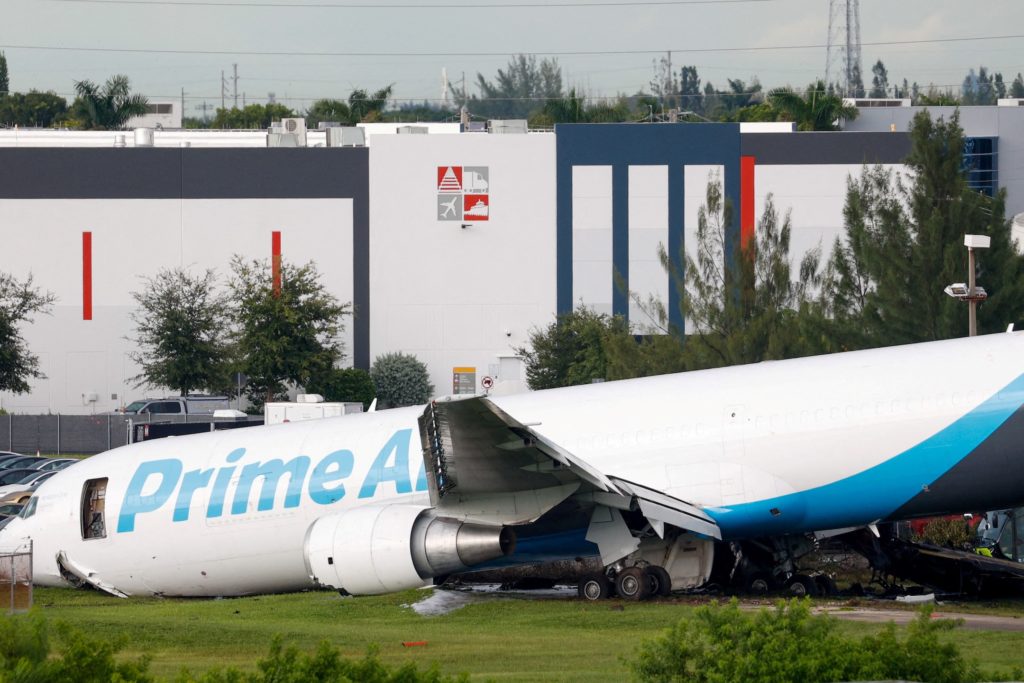
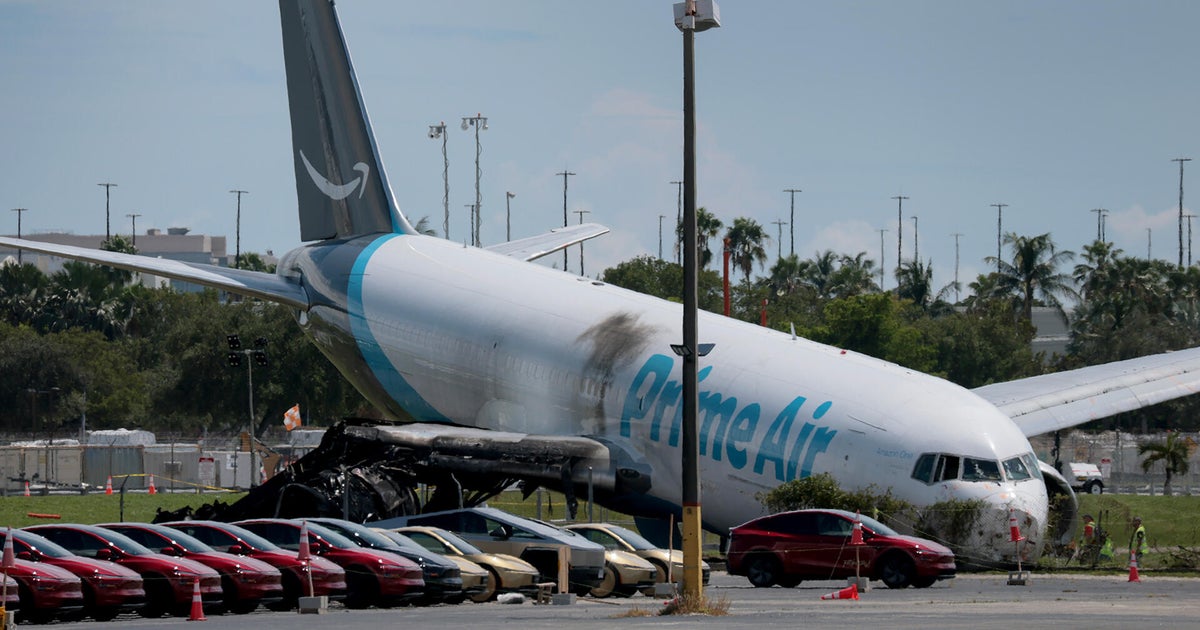
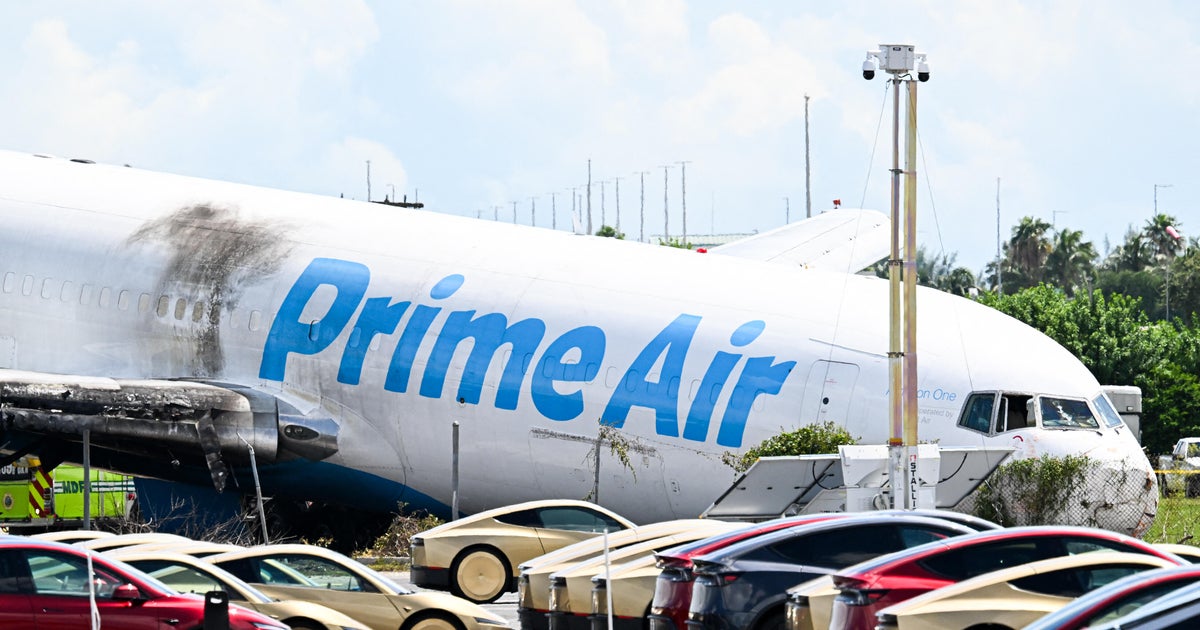
Federal officials are investigating a crash involving an Amazon cargo jet at Miami International Airport. The Boeing 767 went off the runway, hit two vehicles, and caused five deaths.
Key Facts
The accident involved an Amazon cargo Boeing 767 jet.
The plane overran the runway at Miami International Airport.
Two vehicles were struck during the incident.
Five people died as a result of the crash.
Video showed the jet was still flying far down the runway before touching down.
Federal officials are conducting an investigation to find out the cause.
Aviation correspondent Miles O’Brien discussed details about the accident.
Read the Original
Want the full story? Tap a source to open the original
article.
Germany’s far-right party AfD won an important election in Saxony-Anhalt, an eastern state. This result shows a growing split in German politics and worries many in Europe.
Key Facts
The AfD (Alternative for Germany) party won a major parliamentary election in Saxony-Anhalt.
Saxony-Anhalt is a state in eastern Germany.
The AfD is known for its anti-immigration policies.
German intelligence agencies consider the AfD xenophobic and extremist.
The election result reflects growing political division in Germany.
Experts worry this shift could affect stability in Europe.
Liana Fix, an author on German politics, discussed the election outcome in the news piece.
Read the Original
Want the full story? Tap a source to open the original
article.
Tropical Storm Marie is causing high waves along the California coast. Meanwhile, the Kremlin is open to more talks involving Ukraine, Russia, and the United States after U.S. negotiators visited Moscow. Iran warned that new U.S. attacks could lead to more responses, including targeting U.S. energy facilities in the Gulf.
Key Facts
Tropical Storm Marie is creating dangerous surf in California.
The Kremlin has not ruled out future negotiations between Ukraine, Russia, and the U.S.
U.S. negotiators recently visited Moscow for discussions.
Iran warned the U.S. that further strikes might cause retaliation.
Iran’s warning included possible attacks on U.S. energy interests in the Gulf.
These developments highlight ongoing tensions involving these countries.
Read the Original
Want the full story? Tap a source to open the original
article.
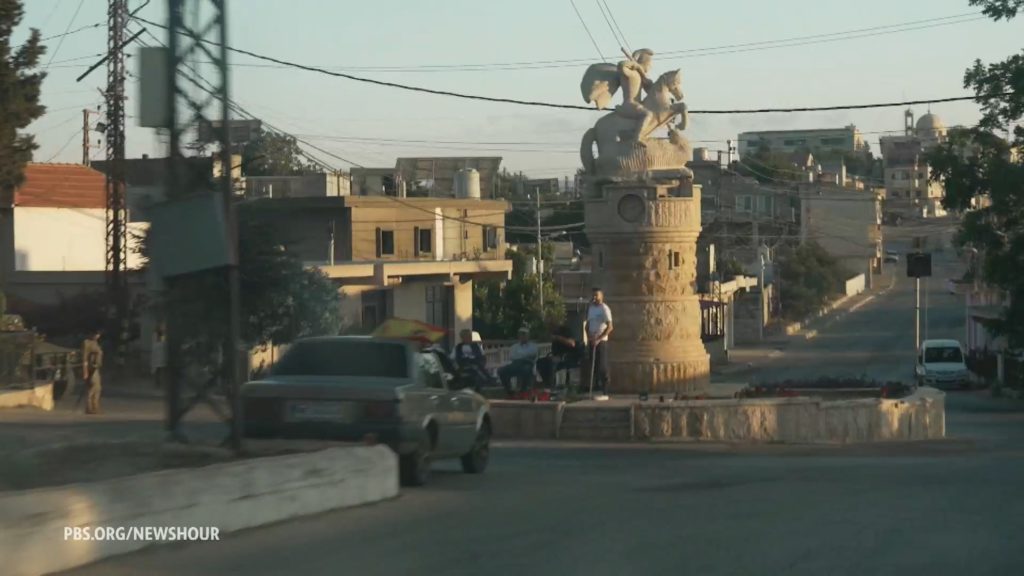
The Israel Defense Forces have occupied parts of southern Lebanon and destroyed many villages, especially those with Shia Muslim residents. Journalists visited some Christian and Sunni villages near the border area controlled by Israel to report on how the occupation affects daily life.
Key Facts
The Israel Defense Forces (IDF) occupy parts of southern Lebanon.
Many villages in this area have been destroyed by the IDF.
Most of the destroyed villages are home to Shia Muslims.
The journalists visited two Christian villages and one Sunni village near the border zone.
The border area is marked by a line called the "yellow line."
The occupation has changed the daily lives of people living in these villages.
Read the Original
Want the full story? Tap a source to open the original
article.
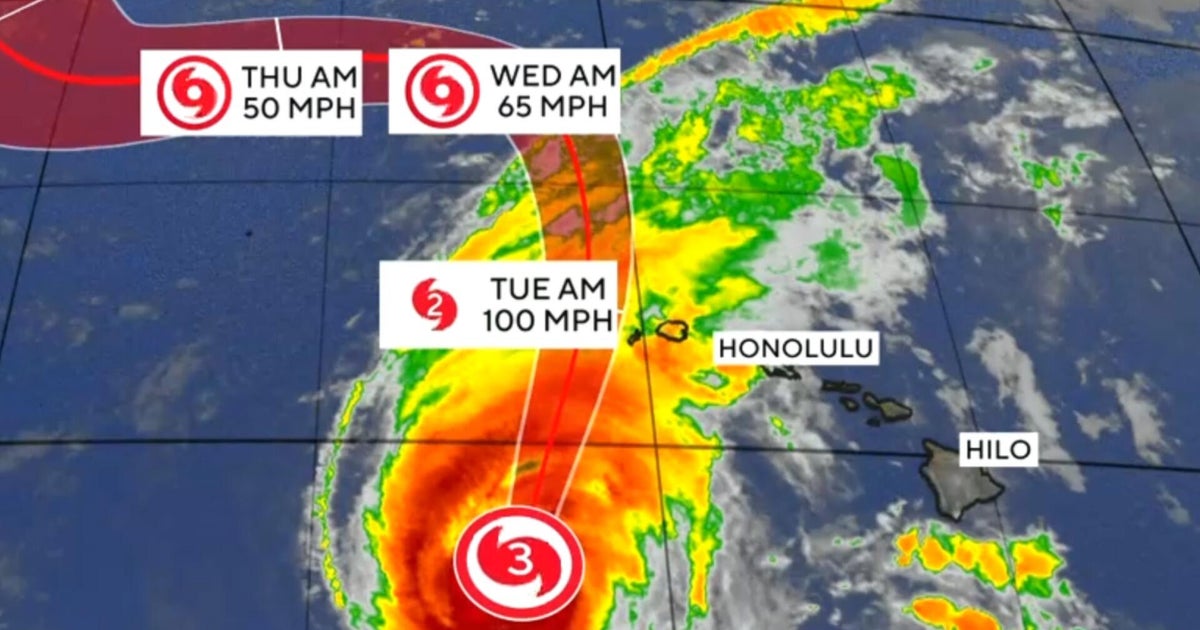
Officials are investigating why an Amazon cargo plane crashed in Miami, causing deaths. Meanwhile, Hawaii is preparing for Hurricane Lowell by declaring a state of emergency.
Key Facts
An Amazon cargo plane crashed in Miami.
The crash caused deaths, but exact numbers are not given.
Authorities are looking into the cause of the crash.
Hurricane Lowell is approaching Hawaii.
Hawaii has declared a state of emergency because of the hurricane.
The news comes from CBS Evening News on September 7.
The CBS News app and website provide ongoing updates.
Read the Original
Want the full story? Tap a source to open the original
article.
Investigators have recovered the flight recorders from a cargo plane operated by 21 Air that crashed at Miami International Airport, killing five people and seriously injuring five others. The National Transportation Safety Board (NTSB) said the investigation is ongoing, and the priority is recovering victims before focusing on finding the cause of the crash.
Key Facts
The Boeing 767-300 cargo plane overshot the runway at Miami International Airport.
The crash happened shortly before 2 pm local time on Sunday.
The plane hit two vehicles: a van with seven people and a Toyota with three passengers.
Five people died and five others were seriously injured in the accident.
The plane was arriving from San Juan, Puerto Rico, on its third flight of the day.
Investigators have recovered the flight data recorder and cockpit voice recorder for analysis.
The NTSB is examining weather, runway safety features, pilot experience, and aircraft systems.
Two of the airport’s four runways remained closed after the crash, causing travel disruptions.
Read the Original
Want the full story? Tap a source to open the original
article.
A New South Wales Greens MP has urged federal politicians not to support a motion by the National Party to block a carbon credit plan that would help create a large koala national park. The plan allows the NSW government to earn carbon credits by protecting native forests, but it has caused a split among environmental groups and politicians.
Key Facts
The NSW Greens MP Sue Higginson opposes a Senate vote that could stop a carbon credit method linked to creating a koala national park.
The carbon credit method lets state governments earn credits for protecting public native forests, which can be sold or used to reduce pollution.
The National Party wants to cancel this method through a disallowance motion in the Senate.
Some environmental groups oppose the method, saying it does not lead to real emissions cuts and may encourage states to protect the environment only for carbon credit money.
Other groups, including WWF, Greenpeace, and Indigenous groups, support the method because it can protect 176,000 hectares of forest and many threatened species.
Sue Higginson initially opposed the carbon credit method but changed her view after it was improved to require big logging cuts in NSW forests.
Experts warn that carbon credits should not replace direct cuts in pollution to fight climate change.
The Greens federal party is deciding whether to support the motion, as they face pressure from both sides.
Read the Original
Want the full story? Tap a source to open the original
article.
Iran announced it tested a new ballistic missile called Qassem Basir, which it says can strike threats before they happen. The missile has more range and accuracy, and Iran said this shows a change in its defense approach amid ongoing tensions near the Strait of Hormuz, a key shipping route.
Key Facts
Iran revealed a missile called Qassem Basir with improved range, accuracy, and a half-ton warhead.
Iranian officials claim the missile was tested against a U.S. warship, but this is unclear.
The U.S. reported Iranian ballistic missile launches targeting U.S. warships and responded by striking three Iranian oil tankers.
The Strait of Hormuz remains a hotspot, with Iran threatening an “exclusion zone” for vessels passing through, but the U.S. says the waterway is open and under U.S. control.
The U.S. Navy has cleared mines from the strait and redirected or disabled several commercial ships to protect naval operations.
Recent attacks in the region have raised concerns about the safety of commercial shipping and caused a drop in passage through the strait.
Regional leaders, including the UAE, express frustration and insist no single country should control the Strait of Hormuz.
The conflict involves broader tensions between Iran, the U.S., and allies over oil shipments and military activity.
Read the Original
Want the full story? Tap a source to open the original
article.
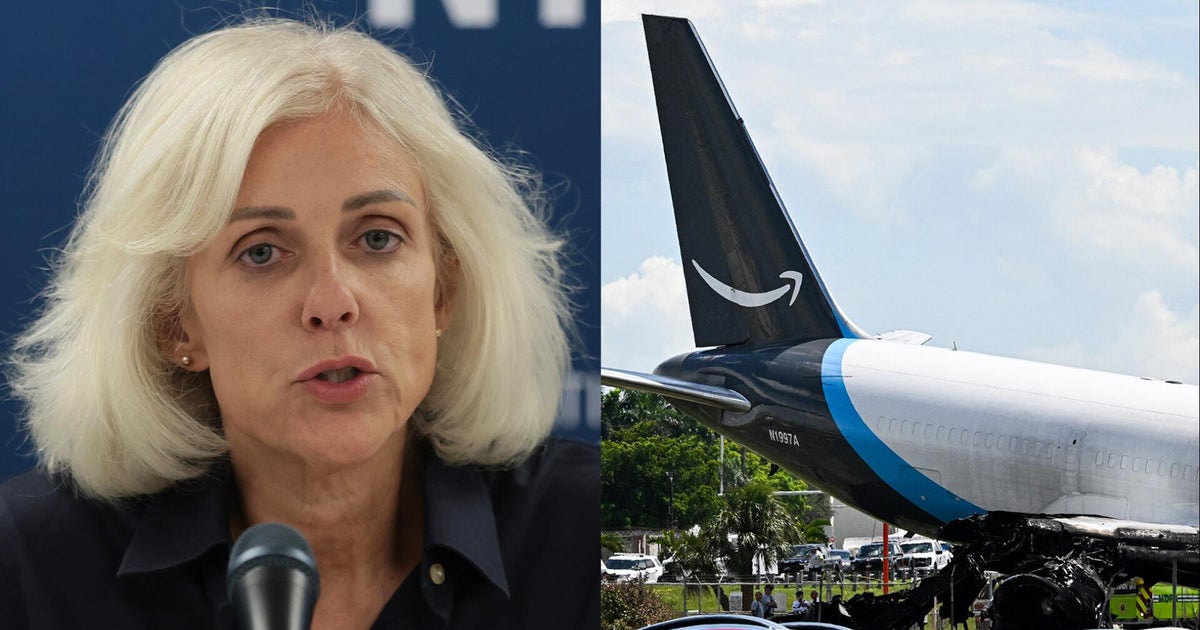
An Amazon cargo plane crashed after overshooting a runway at Miami International Airport, hitting two vehicles and causing five deaths and injuries to at least five others. The National Transportation Safety Board (NTSB) recovered the plane’s flight recorders and is investigating the crash to find out what caused it.
Key Facts
The plane was a Boeing 767 operated by 21 Air LLC for Amazon Air Flight 7598.
It arrived from San Juan, Puerto Rico, and was on its third flight of the day.
The plane overran runway 30, hit airport navigation equipment, a van inside the airport, and a car outside the airport.
Five people died, all of them inside the two vehicles struck by the plane.
At least five others were injured in the crash.
The NTSB recovered the flight data recorder and cockpit voice recorder for analysis.
Investigators are examining factors like human performance, aircraft systems, weather, and airport safety features.
They are also looking into whether a safety system called EMAS, which helps stop planes that overrun runways, could have prevented the crash.
Read the Original
Want the full story? Tap a source to open the original
article.
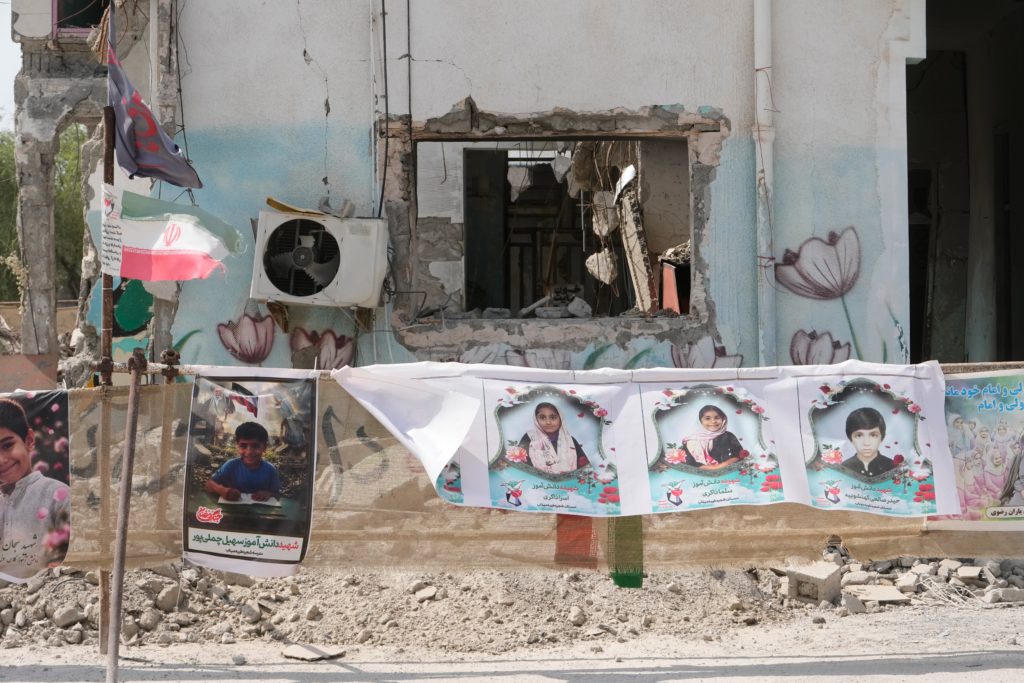
A school in Minab, Iran, damaged in an early attack during the war between Iran and the United States and Israel on February 28, 2024, is being turned into a memorial for the children who died there. Iran says over 100 students were killed, and investigations suggest a U.S. missile caused the strike, though the U.S. government has not officially admitted responsibility.
Key Facts
The Shajareh Tayyebeh school in Minab was hit early in the conflict on February 28, 2024.
More than 100 students died in the strike, according to Iranian officials.
The U.S. government has not accepted responsibility or shared Pentagon findings about the attack.
An Associated Press investigation found evidence that at least one U.S. missile hit the school.
The damaged school building is being preserved as a war museum and memorial.
A part of Minab's cemetery is dedicated to the children who were killed.
Recent U.S. strikes near Minab caused more injuries, bringing attention back to the area.
Three bodies of the schoolchildren have not yet been found.
Read the Original
Want the full story? Tap a source to open the original
article.
The fall television season is about to start around Labor Day weekend. This period marks the time when new TV shows and new seasons of existing shows are released.
Key Facts
Labor Day weekend marks the traditional start of the fall TV season.
New shows and returning shows typically launch around this time.
The fall TV season is an important period for networks and viewers.
Alex Weprin, senior editor at The Hollywood Reporter, discussed the upcoming season on CBS News.
CBS News provided coverage and details through their app and broadcasts.
Read the Original
Want the full story? Tap a source to open the original
article.
The European Union promised Greenland a stronger partnership and 200 million euros in support to help with climate change, internet, energy, fisheries, and education. This offer came after U.S. President Donald Trump threatened to take control of the island.
Key Facts
The EU wants to strengthen its relationship with Greenland.
European Commission President Ursula von der Leyen visited Nuuk, the capital of Greenland.
The EU offered 200 million euros (about $232 million) over two years.
The money will help Greenland fight climate change and improve internet access.
Funds will also support hydropower plants, fisheries, and education.
President Donald Trump had previously threatened to take control of Greenland.
The EU aims to calm concerns caused by these U.S. threats.
Read the Original
Want the full story? Tap a source to open the original
article.
Iran has raised the price of gasoline for people who use more than 110 liters per month, doubling the cost for heavy users. This increase aims to manage high gasoline use and help families by reallocating the extra money, but it may also add to inflation during difficult economic times.
Key Facts
Iran increased the gasoline price for the heaviest users starting Tuesday.
People using more than 110 liters (29 gallons) per month now pay 100,000 rials (about 7 cents) per liter, twice the price set in December.
The price change affects about 15% of gasoline consumers.
Iran’s daily gasoline consumption reached 145 million liters, while local production is 122 million liters, so the country imports the rest.
Gasoline prices in Iran remain low compared to the world despite the increase.
The country faces yearly inflation of about 67%, and the price hike could increase inflation further.
Cheap gasoline has been a long-standing cultural expectation in Iran, with past price hikes causing protests and violence.
The government plans to give the additional money made from higher prices to households.
Read the Original
Want the full story? Tap a source to open the original
article.
Iran has warned it will respond after U.S. airstrikes sank three Iranian tankers in the Gulf. The situation has raised tensions between the two countries.
Key Facts
The U.S. carried out airstrikes that sank three Iranian oil tankers in the Gulf.
Iran has threatened to take retaliatory action following the strikes.
The Gulf region is a key area for global oil transportation.
These events increase tensions between the U.S. and Iran.
The source of this information is CBS News and their homeland security correspondent Nicole Sganga.
Read the Original
Want the full story? Tap a source to open the original
article.
Hurricane Lowell is moving north and is expected to come near Hawaii overnight from Monday to Tuesday. It will bring strong hurricane winds and heavy rain to the islands.
Key Facts
Hurricane Lowell is changing direction toward the north.
It is expected to pass close to Hawaii overnight Monday into Tuesday.
The storm will bring hurricane-force winds, which are very strong winds typical of hurricanes.
Heavy rainfall is also expected with the storm.
CBS News correspondent Carter Evans is reporting from Kauai, one of the Hawaiian islands.
Read the Original
Want the full story? Tap a source to open the original
article.
Palestinian parents and teachers in the West Bank village of al-Mughayyir worry about children's safety at school due to increasing attacks by Israeli settlers. Several students have been killed this year, leading to new security measures such as barbed wire fences, reinforced gates, and parents standing guard.
Key Facts
Six people, including three students, have died in al-Mughayyir this year amid settler violence.
A 14-year-old boy, Aws al-Naasan, was shot outside the school by a settler in April.
Israeli military said a reservist soldier fired after stones were thrown at a vehicle; an investigation was launched and the soldier suspended.
Over the summer, two more students and a 19-year-old former student were shot dead during settler attacks and military incursions.
The school is surrounded by settler outposts and often blocked by Israeli forces at checkpoints.
The head-teacher installed barbed wire fencing and reinforced gates to improve safety.
Ambulance crews are stationed outside the school, and parents volunteer to watch over students all day.
Despite fear, parents are determined not to stop sending their children to school.
Read the Original
Want the full story? Tap a source to open the original
article.
The National Transportation Safety Board (NTSB) held a news conference about a plane crash involving an Amazon cargo plane at Miami International Airport. The plane went off the runway, and officials have recovered important data recorders, but they do not yet know what caused the crash.
Key Facts
The crash happened at Miami International Airport.
The plane involved was an Amazon cargo plane.
The plane overran the runway before crashing.
The NTSB held a news conference to update the public.
Flight data recorders and cockpit voice recorders were recovered.
The cause of the crash is still unknown.
The NTSB is leading the investigation into the crash.
Read the Original
Want the full story? Tap a source to open the original
article.
Rapper Macklemore spoke out in favor of Palestine during Ed Sheeran’s concerts in New Jersey, performing a protest song with images related to Gaza shown on stadium screens. His statements led to criticism from pro-Israel groups and some fans, while supporters say he is raising awareness for human rights.
Key Facts
Macklemore said "Free Palestine" onstage and performed a protest song called "Hind’s Hall" at MetLife Stadium during Ed Sheeran’s tour.
Images related to Gaza were displayed on the stadium screens during his performance.
The Israeli-American Council (IAC) launched a petition against Macklemore’s performance, calling it one-sided political messaging.
IAC wants Ed Sheeran’s team to clarify if they approved the political content and to limit such messages on the tour.
P!nk shared criticism from an advocacy group called StopAntisemitism, which accused Macklemore of spreading anti-Israel propaganda.
Macklemore said his message is for peace, dignity, and equality for all people, and distinguishes criticism of Israel from criticism of Jewish people.
Some fans support Macklemore’s right to speak out on human rights issues and highlight his history of activism.
There is growing debate about the role of artists speaking on political conflicts during concerts.
Read the Original
Want the full story? Tap a source to open the original
article.
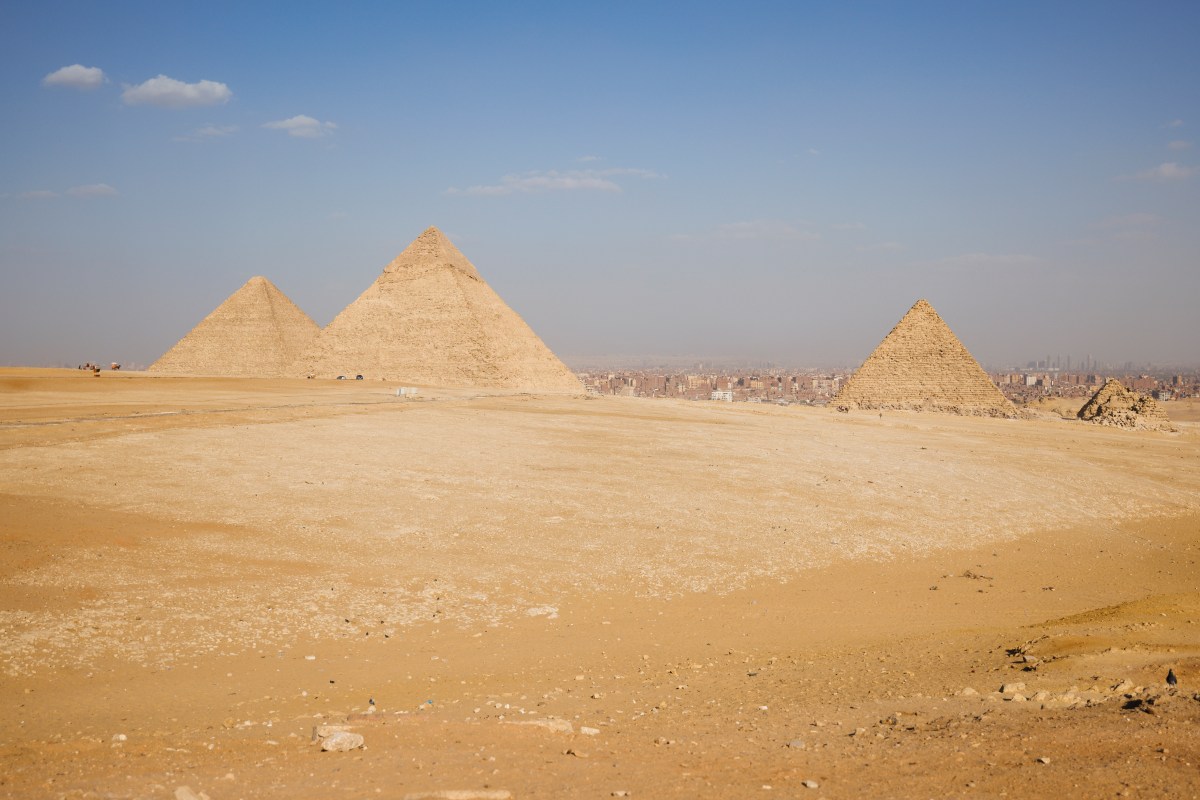
A scientific journal retracted a 2022 study that said satellite radar could find hidden rooms inside the Great Pyramid of Giza. The journal found serious errors in how the study was done, which made the study's claims unreliable.
Key Facts
The study used satellite radar technology called synthetic aperture radar Doppler tomography to look inside the Great Pyramid.
The researchers claimed to find 20 hidden features like corridors, rooms, and ramps without entering the pyramid.
The study also claimed to detect the “Big Void,” a large cavity previously found by other techniques.
The journal Remote Sensing retracted the paper in August 2025 after finding methodological and statistical errors.
The retraction followed concerns raised by readers about the study’s methods.
The researchers also made claims about hidden structures beneath the nearby Pyramid of Khafre, including tunnels and shafts.
These claims attracted wide attention online and from groups like YouTuber MrBeast, who offered to help explore the pyramids.
Archaeologists criticized the study’s findings, and no physical investigations have confirmed the hidden features.
Read the Original
Want the full story? Tap a source to open the original
article.
A fatal hit-and-run crash happened on the A8 road near Edinburgh Airport, killing a 58-year-old driver. Police are searching for three people who ran away from the crash scene, and four others injured were treated and released.
Key Facts
The crash involved four cars: a grey Mercedes A250, a black Renault Captur, a grey Skoda Karoq, and a grey Hyundai i30.
The incident happened between the Newbridge and Gogar roundabouts at about 09:25 on Monday.
The driver of the Hyundai i30, aged 58, died at the scene.
Police used a helicopter and dog unit to search for two women and one man who fled on foot.
Four other people were taken to the hospital but were later released.
Police closed the road for hours to investigate and reopened it at 19:05.
The Scottish Ambulance Service sent multiple emergency units, including special response teams and a critical care paramedic.
Police asked anyone with information to contact them.
Read the Original
Want the full story? Tap a source to open the original
article.