Neutral summaries of your favorite news sources — just the facts.
Your favorite news sources, one neutral feed — we distill their reporting into fact-first
summaries and always link to the original story. How it works
World News
Comprehensive coverage of international news and global events
Hundreds of United Nations staff members have asked the UN's human rights chief, Volker Turk, to call the ongoing conflict in Gaza a "genocide." The staff believes that not using the term weakens the UN's role in protecting human rights globally. Many world leaders have also referred to the situation as genocide, but the UN has not officially used this term.
Key Facts
Over 500 UN staff members sent a letter to Volker Turk urging him to describe the Gaza conflict as "genocide."
The staff worked at the Geneva-based Office of the High Commissioner for Human Rights (OHCHR).
They believe that the legal threshold for genocide has been met based on reports and experts.
The letter expresses frustration with the reported violations affecting civilians, especially women and children.
Comparisons are made to the UN's lack of response during the 1994 Rwandan genocide.
At least 62,966 Palestinians have been reported killed in the conflict, with many more wounded.
Several world leaders and rights groups have labeled Israel's actions as genocide, but the UN has deferred to international courts for official classification.
Israel has denied the genocide accusations, pointing to its self-defense rights.
Read the Original
Want the full story? Tap a source to open the original
article.
The original article content about events in Kyiv after a recent attack by Russia is no longer available due to a website error. The page cannot be found, and users are suggested to check the URL or contact support for help.
Key Facts
The title indicates the article was about Kyiv experiencing a severe attack by Russia.
The website shows an error message (404), meaning the page is not available.
The article mentioned that this was the heaviest bombardment Kyiv faced in weeks.
Users are advised to check the URL for mistakes if they reach the error page.
The BBC website suggests contacting support for further assistance with the missing page.
Read the Original
Want the full story? Tap a source to open the original
article.
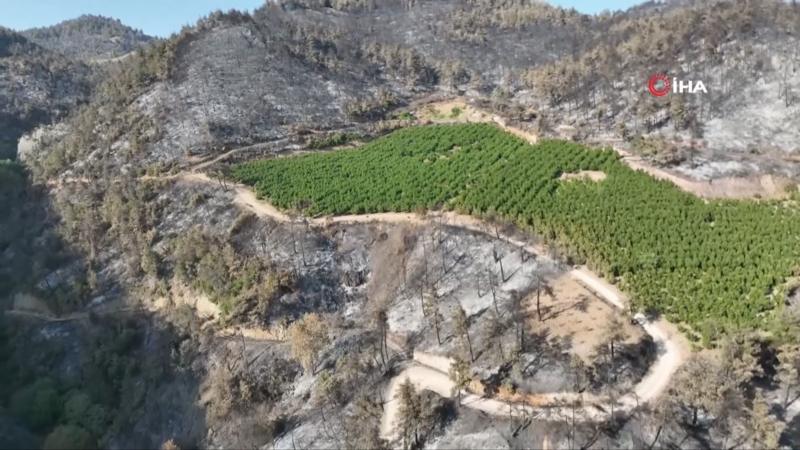
This summer, many wildfires occurred across Turkey, leading to evacuations. However, an orchard in Bursa remained undamaged. Experts think there may be reasons beyond luck for its survival.
Key Facts
Hundreds of wildfires happened in Turkey during the summer.
These fires forced tens of thousands of people to leave their homes.
The specific orchard is located in the north-western province of Bursa.
The orchard was not affected by the wildfires.
Some experts suggest there are reasons other than luck for the orchard's survival.
The article was reported by Dilay Yalcin and produced by BBC Monitoring.
Read the Original
Want the full story? Tap a source to open the original
article.
The article describes how Shujayea, a neighborhood in east Gaza, has been destroyed, resulting in the loss of homes and community life. The author recounts the impact on their family and neighborhood, highlighting the deep loss of personal and cultural connections. The destruction is part of a larger pattern affecting many families in Gaza.
Key Facts
Shujayea, in east Gaza, has experienced extensive destruction, leaving the neighborhood in ruins.
The author's family home, along with several relatives' homes, has been destroyed or severely damaged.
The destruction affects not only physical structures but also personal memories and community ties.
Important places like bakeries, shops, and mosques that were central to daily life in Shujayea have been lost.
Many families in Gaza face similar losses, with entire neighborhoods flattened by conflict.
The damage extends beyond material loss, affecting cultural identity and relationships.
The situation in Gaza continues to uproot families and disrupt traditional ways of life.
Read the Original
Want the full story? Tap a source to open the original
article.
The Van Gogh Museum in Amsterdam may have to shut down if the Dutch government does not help pay for necessary repairs to its aging building. The museum needs 104 million euros ($121 million) to address problems with air conditioning, elevators, and other essential systems. If the government does not assist with the funds, museum director Emilie Gordenker says they may need to close.
Key Facts
The Van Gogh Museum houses a large collection of Vincent van Gogh's artwork, attracting millions of visitors since it opened in 1973.
Museum director Emilie Gordenker states the building is in poor condition and requires urgent repairs.
The total estimated cost for the repairs is 104 million euros ($121 million).
Discussions with the Dutch government about funding the repairs have been ongoing for two years without resolution.
During renovations, the museum would remain partially closed, affecting its income from ticket sales.
The Ministry of Education, Culture and Science claims the museum receives enough annual funding for necessary maintenance.
The museum has appealed the government's subsidy decision, with a court hearing expected in February.
Read the Original
Want the full story? Tap a source to open the original
article.
The "No Sex for Fish" group in Kenya, formed by women to resist coerced sex for fish deals from male fishermen, now faces challenges from natural disasters and reduced foreign aid. After floods destroyed most of their boats and disrupted their village, members, including some who are HIV positive, struggle to maintain their livelihoods.
Key Facts
"No Sex for Fish" is a group of women from Nduru Beach, Kenya, who sell fish caught by men.
The group started to avoid coercive trading practices, where women were pressured into sex for fish.
They received their first boats through a grant from PEPFAR to gain independence.
Floods in 2020 severely damaged their village and destroyed nearly all their boats.
Despite displacement, the women remain united, but struggle due to decreased foreign aid.
Eleven members are HIV positive, relying on U.S. aid for anti-retroviral drugs.
Aid cutbacks from the Trump Administration have caused concerns about drug supply.
Only two of their boats remain in operation after the floods.
Read the Original
Want the full story? Tap a source to open the original
article.
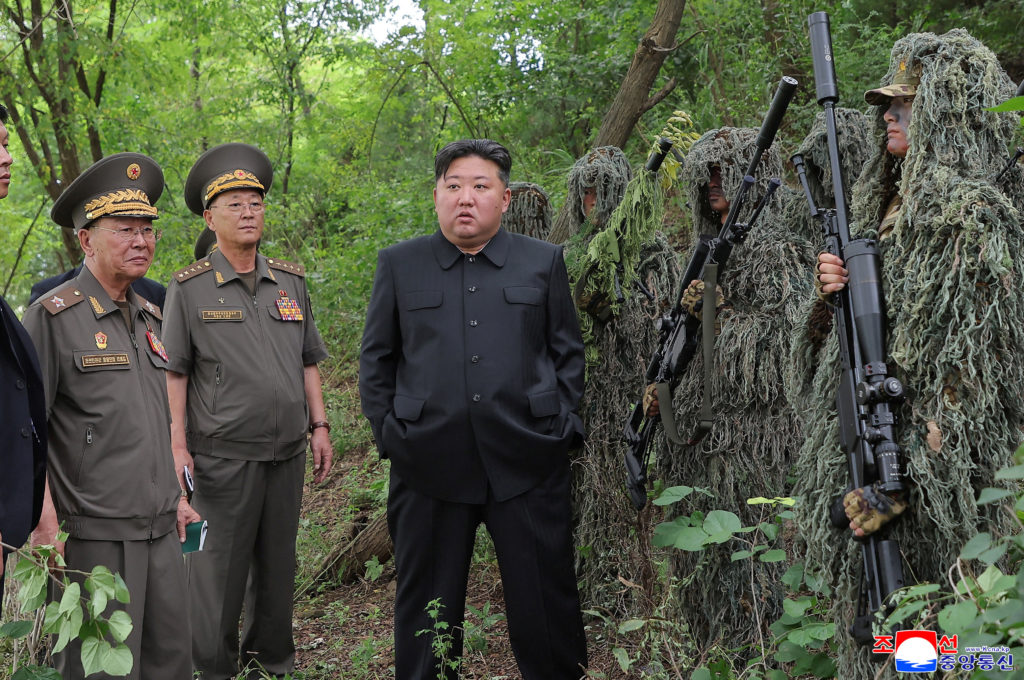
North Korean leader Kim Jong Un will visit China to attend a military parade, where he will meet with Russian President Vladimir Putin and Chinese President Xi Jinping. This marks Kim's first participation in a large multinational event since becoming North Korea's leader. The parade highlights the relationship between China, Russia, and North Korea.
Key Facts
Kim Jong Un will visit China next week for the first time in six years to attend a military parade.
The event will bring Kim together with numerous world leaders, including Vladimir Putin and Xi Jinping.
The parade commemorates the 80th anniversary of the end of World War II and China’s wartime resistance against Japan.
About 26 foreign leaders are expected to attend; no leaders from major Western countries are likely to be present.
The military parade will showcase some of China’s newest weapons.
North Korea's cooperation with Russia includes supplying troops and ammunition for Russia’s war against Ukraine.
China is North Korea’s largest trading partner and main aid provider.
Read the Original
Want the full story? Tap a source to open the original
article.
An Italian website displaying photos of women without their consent shut down after public complaints. The site posted unauthorized images of women, including well-known figures, leading to outrage over privacy violations and promoting violence against women. Italian authorities and activists are addressing broader issues of online abuse and gender-based violence.
Key Facts
An Italian website posted unauthorized photos of thousands of women, including public figures, without their consent.
Prominent women like Premier Giorgia Meloni and European Parliament member Alessandra Moretti were featured on the site.
Moretti filed a formal complaint, leading to increased awareness and action against the website.
The site attracted about 200,000 users and made use of images taken from TV and social media.
Following public outcry and complaints, the website's administrators shut it down.
Italy is tackling gender-based violence, with ongoing discussions about how to handle this systemic issue.
A Facebook page called "Mia Moglie," containing unauthorized spouse photos, was also shut down for similar reasons.
Italy has introduced a draft law defining femicide, aiming to address the criminal aspect of gender violence.
Read the Original
Want the full story? Tap a source to open the original
article.
A police officer in Cardiff may face a misconduct hearing over reports about an e-bike crash that killed two teenagers, Kyrees Sullivan and Harvey Evans, in May 2023. The investigation found differences in the officer's accounts and concerns about his driving. The crash led to unrest in the area and brought police conduct under scrutiny.
Key Facts
Two teenagers, Kyrees Sullivan and Harvey Evans, died in an e-bike crash in Cardiff in May 2023.
A police officer driving a van behind them is facing potential misconduct charges.
The Independent Office for Police Conduct (IOPC) found the officer's account might have inconsistencies.
The IOPC says there were no indications of the police vehicle making contact with the bike.
The officer may have driven outside his level of training and authority.
The Crown Prosecution Service decided there was not enough evidence for a criminal case.
The incident led to riots, with 31 police officers injured and over 40 people charged due to the unrest.
South Wales Police fully cooperated with the IOPC's investigation, which included reviewing CCTV footage.
Read the Original
Want the full story? Tap a source to open the original
article.
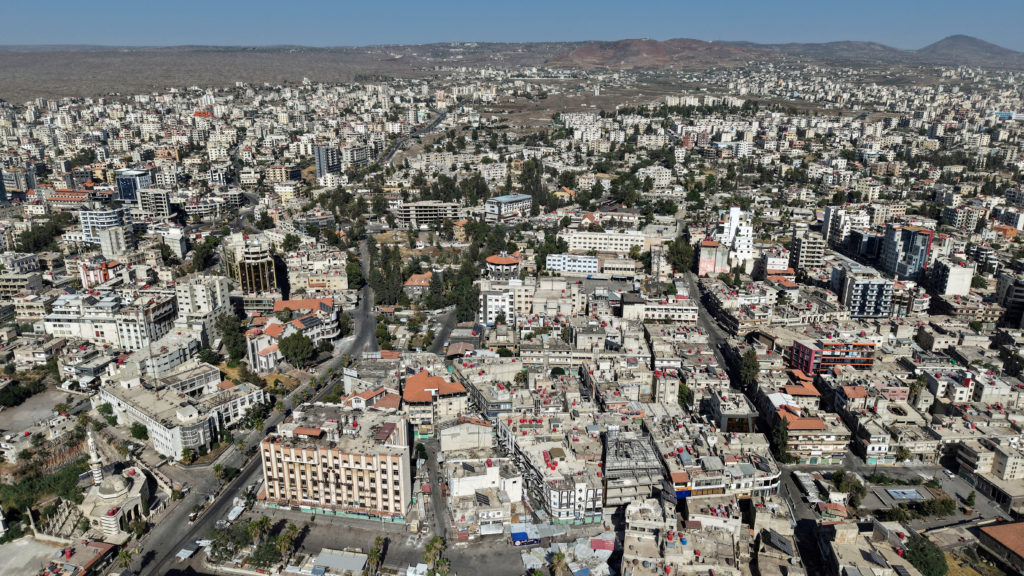
The main highway from Damascus to Sweida in southern Syria has reopened for the first time since recent sectarian clashes. This allowed an aid convoy to reach Sweida, a city affected by fighting between government forces and local groups.
Key Facts
The highway from Damascus to Sweida reopened after being closed due to sectarian violence.
Clashes involved government forces and local Bedouin tribesmen against the Druze community.
Hundreds died, and tens of thousands were displaced due to the conflict.
Allegations have been made that government forces executed Druze civilians and caused destruction.
Despite the highway reopening, the Druze claim the city is under siege with limited aid.
An aid convoy entered Sweida carrying supplies like food, cleaning items, and solar lamps.
The aid convoy had to use a longer route via Daraa province while the highway was closed.
The U.N. reported a strained health system and lack of essential medications in Sweida.
Read the Original
Want the full story? Tap a source to open the original
article.
Germany, France, and the UK have started a process to bring back sanctions on Iran. This move comes after discussions failed regarding Iran's nuclear program. The countries, known as the E3, say Iran broke terms of a 2015 deal meant to limit its nuclear activities.
Key Facts
Germany, France, and the UK, called the E3, are working to bring back sanctions on Iran.
These actions follow failed attempts to agree on Iran's nuclear program.
The snapback mechanism in the 2015 nuclear agreement allows reimposed sanctions if terms are broken.
Iran is accused of going against the 2015 nuclear deal, the Joint Comprehensive Plan of Action (JCPOA).
The E3 claims Iran has a large stockpile of enriched uranium without clear civilian use.
Sanctions could be reimposed, affecting arms sales, missile development, and financial assets.
Iran says it continues to engage in talks and calls for more time for diplomacy.
The initial move to reimpose sanctions doesn't mean they start immediately, leaving room for more discussions.
Read the Original
Want the full story? Tap a source to open the original
article.
The UK, France, and Germany are working to bring back UN sanctions on Iran because of concerns about its nuclear program. They are using a method that could reinstate these sanctions in 30 days if no diplomatic solution is reached. Talks between Iran and the US have stalled, increasing tensions.
Key Facts
The UK, France, and Germany plan to restore UN sanctions on Iran.
These sanctions were originally lifted in 2015 as part of a nuclear deal.
The countries are using a "snapback mechanism," which can reimpose sanctions if no agreement is found in 30 days.
The decision follows stalled talks between Iran and the US about Iran's nuclear activities.
The original deal involved multiple nations and aimed to limit Iran's nuclear program in exchange for lifting sanctions.
The US withdrew from the deal in 2018 under President Trump and reinstated sanctions, leading to increased Iranian nuclear activity.
Western powers and the International Atomic Energy Agency (IAEA) doubt the purely peaceful nature of Iran's nuclear program.
Iran claims its nuclear program is for civilian purposes and denies seeking nuclear weapons.
Read the Original
Want the full story? Tap a source to open the original
article.
A U.S. diplomat, Tom Barrack, apologized for using the word "animalistic" to describe Lebanese reporters during a press conference in Beirut. Barrack was in Lebanon discussing the disarmament of the Hezbollah group and related ceasefire efforts between Lebanon and Israel. His comments led to criticism and calls for an apology from Lebanese media groups.
Key Facts
Tom Barrack is the U.S. ambassador to Turkey and an envoy to Syria.
Barrack made the remarks during a press conference in Lebanon, which sparked an outcry.
He apologized, stating he did not intend to use the term in a harmful way.
Lebanese press groups demanded an apology and threatened to boycott his visits.
Barrack was in Lebanon to discuss Hezbollah disarmament and a ceasefire with Israel.
The Lebanese Presidential Palace issued a statement regretting Barrack’s comments.
Israeli military actions in southern Lebanon coincided with these discussions.
Read the Original
Want the full story? Tap a source to open the original
article.
The Trump administration is sending deportees to African countries like Rwanda, South Sudan, and Eswatini, where the deportees have no prior ties. Rwanda recently took in seven deportees, while South Sudan and Eswatini have also received individuals. These agreements are part of a broader effort to deport migrants from the United States.
Key Facts
Rwanda accepted seven deportees from the U.S., with plans to take up to 250 people.
Rwanda did not provide details about the deportees’ nationalities or criminal backgrounds.
The U.S. described deportees sent to South Sudan and Eswatini as violent criminals.
Uganda agreed to accept deportees without criminal records or unaccompanied minors.
South Sudan received eight deportees who had been convicted of violent crimes.
Eswatini received five deportees, who are currently held in solitary confinement.
African nations might gain benefits for accepting deportees, potentially improving U.S. relations.
Read the Original
Want the full story? Tap a source to open the original
article.
Melting glaciers and deforestation are causing serious flooding in parts of Pakistan, particularly affecting regions like Gilgit-Baltistan. The rapid melting of glacial ice is contributing to floods and landslides, endangering communities and infrastructure. These environmental challenges are compounded by heavy rains and construction near rivers, resulting in significant casualties and damage.
Key Facts
Muntazer Mehdi and his family fled their home in Chogogrung village due to a glacial lake outburst.
Pakistan is experiencing extensive flooding, particularly in Gilgit-Baltistan and Ghizer district.
Melting glaciers and shrinking forests increase vulnerability to floods and landslides.
Since June 26, more than 804 people have died due to monsoon rains in Pakistan.
Pakistan has 13,032 glaciers, the largest volume of glacial ice outside polar regions.
Glaciers in the Hindu Kush and Himalaya mountains have melted 65% faster from 2011-2020 compared to the previous decade.
Rising temperatures are accelerating glacier melting faster than snowfall can replenish them.
Construction near flood plains and river banks has amplified flood damage in recent decades.
Read the Original
Want the full story? Tap a source to open the original
article.
A volunteer officer from the Metropolitan Police, named James Bubb but now identifying as Gwyn Samuels, has been found guilty of raping and sexually assaulting a child. The news is still being updated, with further details expected soon.
Key Facts
James Bubb, now called Gwyn Samuels, was a volunteer officer for the Metropolitan Police.
Bubb/Samuels was charged with serious crimes against a child.
The charges include rape and sexual assault.
A court found Bubb/Samuels guilty of these charges.
The news is considered breaking and more updates are expected.
People can get more updates through the BBC News App or BBC Breaking on social media.
Read the Original
Want the full story? Tap a source to open the original
article.
Japanese officials used AI to create simulations of Mount Fuji erupting to help people prepare for potential disasters. The videos show possible effects on Tokyo, but officials say there are no current signs of an eruption happening soon. The purpose is to give residents important information on how to be ready for emergencies.
Key Facts
Mount Fuji has not erupted since 1707.
Japanese officials released AI-generated videos of a potential eruption.
The videos are for Volcanic Disaster Preparedness Day.
Tokyo is about 100 kilometers (60 miles) from Mount Fuji.
The videos demonstrate possible effects like ash falling and transport disruption.
Officials say there are no signs that Mount Fuji will erupt soon.
Japan is known for its detailed disaster planning.
Japan has 111 active volcanoes and is part of the Pacific "Ring of Fire."
Read the Original
Want the full story? Tap a source to open the original
article.
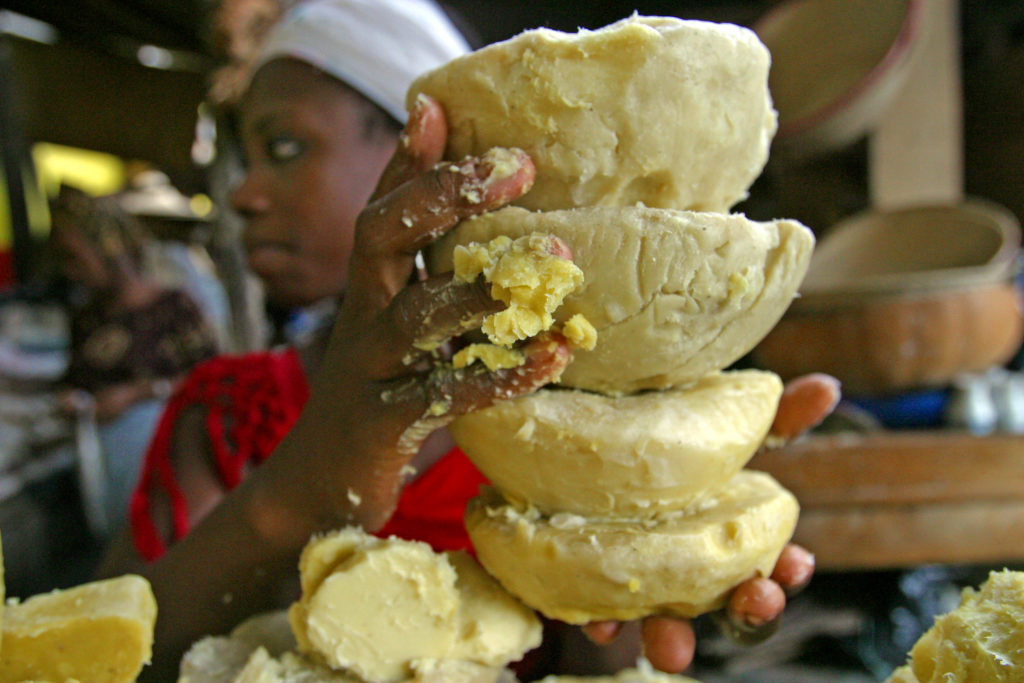
Nigeria has stopped the export of raw shea nuts for six months. The aim is to increase the production of refined shea butter and other skincare products domestically. This move aligns Nigeria with other West African countries that have similarly restricted shea nut exports.
Key Facts
Nigeria has banned the export of raw shea nuts for six months.
The goal is to become a global supplier of refined shea butter.
The decision is meant to add value to local industries and create jobs.
Shea butter is widely used in skincare products like lotions and shampoos.
Nigeria produces 40% of the world's raw shea nuts but only 1% of the global market share in shea products.
A shea butter processing plant recently opened in Nigeria's Niger state.
The ban is expected to increase revenue by $300 million soon and $3 billion by 2027.
The move contrasts with Nigeria's usual free-market policies under President Bola Tinubu.
Read the Original
Want the full story? Tap a source to open the original
article.
A World Health Organization report shows that about one in four people globally do not have safe drinking water at home. Additionally, 3.4 billion people lack reliable sanitation systems. Many in low-income regions, like parts of Nigeria and Colombia, experience these challenges, highlighting significant disparities between wealthier and poorer countries.
Key Facts
The World Health Organization reports that over 2 billion people cannot easily access safe drinking water.
About 3.4 billion people do not have reliable access to safe sanitation systems, such as toilets with plumbing.
Approximately 354 million people have no access to toilets at all and must defecate in the open.
People in low-income countries are over twice as likely to lack basic water and sanitation services compared to those in wealthier countries.
Amaka Godfrey, from Nigeria, shared personal experiences of growing up without easy access to clean water or adequate sanitation.
Some children in Nigeria had to bring water to school in cans because the school did not provide any.
In Colombia, water supply in certain neighborhoods can be inconsistent or unavailable.
The lack of water and sanitation services poses significant health risks and underscores global inequality.
Read the Original
Want the full story? Tap a source to open the original
article.
Julian Wachner, a conductor, is charged in Indiana with possessing child sexual abuse materials and cocaine. He faces 11 felony charges, including 10 for materials involving children under 12 and one for cocaine possession. Wachner pleaded not guilty and his trial is set for October 20.
Key Facts
Julian Wachner is a conductor and composer who was formerly employed by prestigious institutions in New York.
Prosecutors in Marion County, Indiana, charged him with 11 felonies: 10 for possessing child sexual abuse materials and one for cocaine possession.
Wachner allegedly used about $840 in cryptocurrency to buy child abuse material online.
The materials allegedly involved children as young as 1 to as old as 16, with a stated preference for ages 6 to 13.
Wachner was a fourth-grade math teacher at Invent Learning Hub before his arrest.
Wachner had previously been dismissed from his position at Trinity Wall Street in 2022 following misconduct allegations.
His work included directing music and recording albums and he was twice nominated for Grammy Awards.
His trial is scheduled to start on October 20, and his lawyer has not made any public statements in response to the charges.
Read the Original
Want the full story? Tap a source to open the original
article.