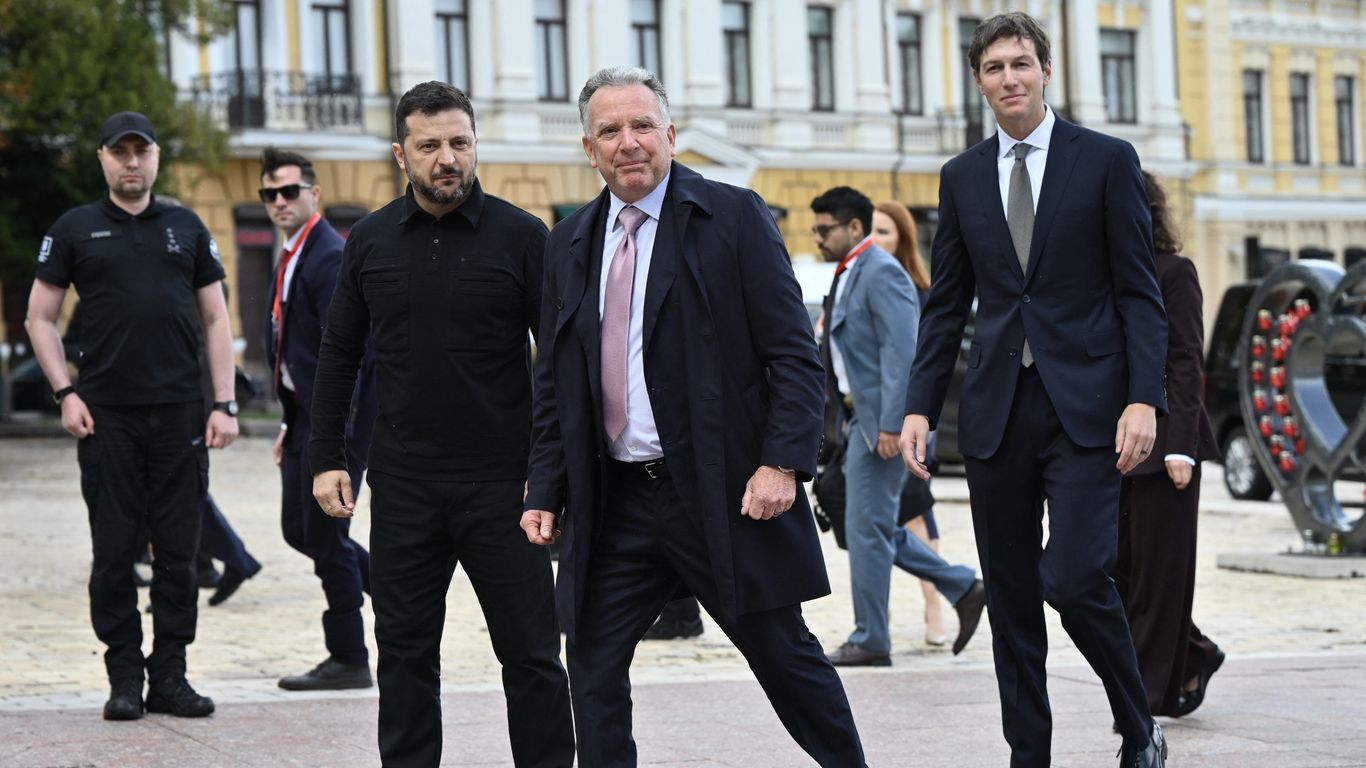
US special envoys Jared Kushner and Steve Witkoff visited Kyiv for the first time since Russia’s full invasion of Ukraine in 2022. They held talks with Ukrainian President Volodymyr Zelenskyy and other officials to discuss ways to end the war and establish long-term peace.
Key Facts
The US envoys visited Kyiv after meeting Russian President Vladimir Putin in Moscow.
President Zelenskyy thanked President Trump for allowing the envoys to come despite ongoing war.
The discussion between the US team and Ukrainian officials was described as “substantive” and “important.”
Kushner said President Trump aims not only to end the current war but also to create lasting peace conditions.
European national security advisers will join some of the talks with the US envoys.
The envoys traveled to Kyiv by train from Poland.
Russia’s invasion of Ukraine started in 2014 and intensified in February 2022, causing heavy casualties and displacement.
Previous US efforts at peace talks have made little progress, though the current talks may introduce new proposals.
Read the Original
Want the full story? Tap a source to open the original
article.
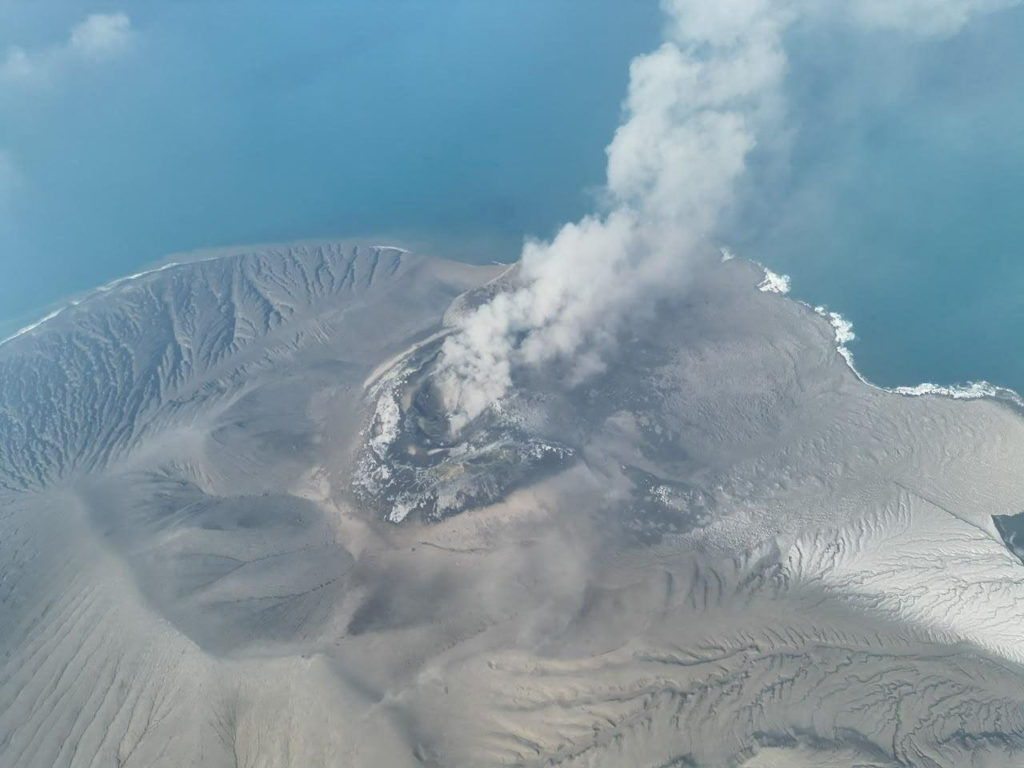
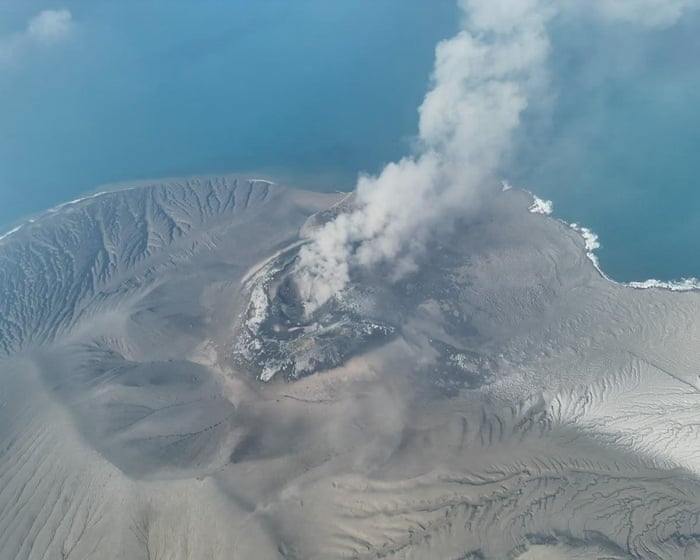
A volcano called Anak Krakatau in Indonesia erupted early Sunday, causing many flights to be canceled at Jakarta’s main airport and others nearby. Volcanic ash spread across several areas, affecting air travel and thousands of passengers, but no injuries or evacuation orders were reported.
Key Facts
Anak Krakatau volcano erupted twice early Sunday, with lava flares visible by camera.
All flights at Soekarno-Hatta International Airport in Jakarta were canceled, along with flights at seven other airports.
Around 1,558 flights were canceled, disrupting travel for about 170,000 passengers.
Volcanic ash spread over Jakarta, Banten, Lampung, West Java, Bengkulu, and surrounding waters.
Airports affected included Soekarno-Hatta and Halim Perdanakusuma in Jakarta, Radin Inten II in Lampung, and Bali’s I Gusti Ngurah Rai International Airport.
The eruption plume reached up to 50,000 feet high, drifting over several provinces and nearby ocean areas.
No casualties or evacuation orders were issued since the nearest community is over 10 miles away from the volcano.
Indonesian officials continue to monitor the volcano, noting intensified activity but unable to predict a larger eruption.
Read the Original
Want the full story? Tap a source to open the original
article.
President Trump’s envoys, Steve Witkoff and Jared Kushner, visited Kyiv to hold peace talks aimed at restarting talks between Russia and Ukraine. This trip followed their meeting with Russian President Vladimir Putin and was the highest-level U.S. visit to Ukraine since President Trump began his second term.
Key Facts
Witkoff and Kushner met with Russian President Vladimir Putin in Moscow before traveling to Kyiv.
This was their first visit to Ukraine despite months of talks and multiple visits to Russia.
The U.S. envoys held three meetings in Kyiv, including two with Ukrainian President Volodymyr Zelensky.
National security advisers from the UK, France, and Germany also attended one meeting.
Russian officials said progress was made during the talks with Putin.
The envoys are aiming for a breakthrough in negotiations before winter.
Witkoff and Kushner traveled from Moscow to Poland by plane, then to Kyiv by land.
The discussions included Ukraine’s plans for continuing the war effort through winter.
Read the Original
Want the full story? Tap a source to open the original
article.
Jamaica's culture minister, Olivia Grange, will present a petition to King Charles asking legal questions about the slavery of Africans in Jamaica. The petition seeks to clarify if slavery was legal under English and international law and whether Britain has a legal duty to provide reparations.
Key Facts
Jamaica will give a petition to King Charles regarding slavery reparations.
The petition asks if slavery in Jamaica was legal under English law and international law.
It also questions if Britain must provide legal redress for slavery.
The petition is not a direct demand for payment but seeks legal answers to decide next steps.
King Charles has expressed support for addressing historical issues related to slavery.
When slavery ended in the British empire in 1833, slave owners were paid £20 million as compensation.
Jamaica's minister will also talk to the British Museum about returning artefacts taken during colonial times.
In 2015, then-UK Prime Minister David Cameron rejected reparations but acknowledged slavery’s cruelty.
Read the Original
Want the full story? Tap a source to open the original
article.
FIFA President Gianni Infantino has confirmed he will run for re-election in 2027 despite criticism and legal challenges. He faces growing opposition due to controversial plans to privatize World Cup rights and his close connections to President Donald Trump.
Key Facts
Gianni Infantino, FIFA President since 2016, plans to seek a fourth term in office.
FIFA presidents usually have a limit of three four-year terms, but Infantino argued his first partial term shouldn’t count.
Infantino has faced criticism for wanting to sell private investors a share in World Cup profits.
He awarded the FIFA Peace Prize to U.S. President Donald Trump in 2023, causing controversy.
Investor Joshua Kushner, related to Trump’s family, led the private group involved in the World Cup deal.
UEFA is seeking legal documents and testimony in a U.S. court related to a complaint against Infantino in Switzerland.
Infantino has lost support from many regional and national football organizations.
Despite questions about his future, Infantino said he is focused on growing football worldwide.
Read the Original
Want the full story? Tap a source to open the original
article.
US envoys Steve Witkoff and Jared Kushner met with Russian President Vladimir Putin in Moscow to discuss possible ways to end the war between Russia and Ukraine. They also planned to visit Kyiv, while both Russia and Ukraine announced a short ceasefire during the talks.
Key Facts
US envoys Steve Witkoff and Jared Kushner hold talks with President Putin about ending the Russia-Ukraine war.
President Donald Trump said the envoys brought a peace proposal to stop the conflict.
The meeting lasted more than three hours and was described as frank and constructive by a Kremlin aide.
Moscow demands that Ukraine not join NATO and wants four Ukrainian regions to be handed over to Russia.
Russia's annexation of four Ukrainian regions in 2022 is not recognized internationally.
Ukraine refuses to give up any territory to Russia.
The envoys planned a trip to Kyiv after Moscow to continue diplomacy efforts.
US officials, including those overseeing sanctions on Russia, accompanied the envoys, suggesting sanctions were discussed.
Read the Original
Want the full story? Tap a source to open the original
article.
A former Israel Defense Forces (IDF) officer responsible for a deadly strike on an aid convoy delivering food to Gaza said he would repeat the attack, claiming the victims were not innocent. Australia’s Greens party criticized the government for not taking stronger actions like stopping military exports and imposing sanctions, while leaders from aid groups and Australia’s foreign minister condemned the statements.
Key Facts
The aid convoy, run by World Central Kitchen (WCK), was attacked in Gaza in April 2024, killing Australian aid worker Zomi Frankcom and six others.
Nochi Mendel, former IDF reserve colonel, ordered the strike and said he would do it again.
Mendel claimed the aid workers were not innocent because they were linked to Hamas, a militant group.
An Israeli military investigation found the attack was a serious mistake and removed Mendel from his job.
Israel’s advocate general decided not to press criminal charges related to the strike.
Australia’s foreign affairs minister Penny Wong called Mendel’s remarks disgraceful.
The Greens’ spokesperson David Shoebridge criticized the Australian government for not acting with sanctions or stopping military sales to Israel.
José Andrés, WCK founder, said the organization is neutral and humanitarian, opposing Mendel’s claim otherwise.
Read the Original
Want the full story? Tap a source to open the original
article.
The article explains how many people today feel that the usual ways of running society are failing. It lists many problems like terrorism, war, climate change, financial crises, political upheavals, and the Covid-19 pandemic, which have created deep worries and distrust around the world.
Key Facts
People see different sources of fear or "monsters" depending on their politics, such as tech billionaires, social media, migration, far-right groups, and conflicts in places like the Middle East.
Many believe the traditional system that promises a good life is broken and cannot be fixed by small changes.
Treasurer Jim Chalmers said economic shocks have hit ordinary people for 20 years, making recovery feel impossible.
Major events listed include 9/11 and the war on terror, London bombings, wars in Afghanistan and Iraq, and the rise of Islamic State, which have increased security fears.
Climate change threatens entire industries and communities, adding to global concerns.
The global financial crisis caused major economic damage worldwide, undermining trust in the economy.
Brexit and President Trump’s election challenged political expectations in many countries.
The Covid-19 pandemic greatly affected health, economies, social life, and trust in government and science, increasing social divisions and the use of social media.
Read the Original
Want the full story? Tap a source to open the original
article.
An osteopath explained five everyday habits that may harm bone health over time. These include drinking too much coffee, sitting for long periods, relying only on calcium, drinking excessive alcohol, and not moving enough.
Key Facts
About 53.6 million Americans aged 50 or older have osteoporosis or low bone mass.
Drinking more than five cups of coffee a day may lower bone density.
Sitting for many hours daily can weaken bones because they need movement to stay strong.
Bones need more than just calcium to stay healthy; vitamin D, protein, and overall balanced diet are also important.
Drinking three or more alcoholic drinks daily is linked to a higher chance of hip fractures.
Weight-bearing exercises like walking, climbing stairs, dancing, yoga, and strength training support bone health.
Maintaining muscle strength and balance helps prevent falls and fractures, especially in older adults.
Read the Original
Want the full story? Tap a source to open the original
article.
Energy Secretary Chris Wright said there might not be a nuclear deal with Iran after months of conflict. The U.S. is working to stop Iran from making nuclear weapons by damaging their ability to do so, and tensions between the two countries remain high.
Key Facts
Energy Secretary Chris Wright said a nuclear deal with Iran may not happen and might wait for a future Iranian government.
The U.S. has damaged Iran’s capability to develop nuclear weapons through bombing campaigns.
President Donald Trump said last month that Iran cannot have a nuclear weapon and that the U.S. has slowed Iran’s progress.
Trump also said he "could not care less" if Iran made a deal with the U.S. despite his administration seeking an agreement initially.
The U.S. recently attacked three Iranian oil tankers after Iran targeted two U.S. Navy ships.
Iran claimed it retaliated by attacking U.S.-linked vessels and oil tankers afterward.
Wright stated the U.S. blockade of Iranian ports aims to force a change in Iran’s government or its policies.
Oil flow through the Strait of Hormuz is at record levels despite the conflict, with a recent seven-day average of over nine million barrels per day.
Read the Original
Want the full story? Tap a source to open the original
article.
President Donald Trump sent envoys Steve Wiktoff and Jared Kushner to Kyiv to try to help end the war between Russia and Ukraine, which has been ongoing for over five years. The program also discussed the current status of the upcoming U.S. midterm elections, which are less than two months away.
Key Facts
President Donald Trump appointed Steve Wiktoff and Jared Kushner as envoys.
The envoys arrived in Kyiv to work toward ending the war between Russia and Ukraine.
The war between Russia and Ukraine has lasted more than five and a half years.
The news program "Face the Nation with Margaret Brennan" aired this coverage on September 6, 2026.
The show also reviewed the progress and standings in the U.S. midterm elections.
The midterm elections are scheduled to occur in less than two months.
Read the Original
Want the full story? Tap a source to open the original
article.
An eruption of the Anak Krakatau volcano in Indonesia caused ash clouds that disrupted flights at eight airports, including the main Soekarno-Hatta airport near Jakarta. Hundreds of flights were canceled, school activities were interrupted, and fishing trips were halted due to the volcanic ash and safety concerns.
Key Facts
Anak Krakatau volcano erupted on Saturday, producing lava and loud sounds heard up to 700 km away.
Ash clouds were detected around Soekarno-Hatta international airport, leading to a shutdown of flight operations until late Sunday.
More than 22,000 passengers and 209 flights were affected, with cancellations at international and domestic airports.
Airlines such as Singapore Airlines and Qantas canceled flights to and from Jakarta.
Volcanic ash can damage airplane engines and obstruct pilots’ views, which is why flights were suspended.
Ash rose up to 6,000 meters on the Java side and 15,000 meters on the Sumatra side of the volcano.
Schools canceled activities due to eye irritation caused by ash, and fishing trips were stopped for safety.
Authorities considered cloud-seeding to cause rain and wash away ash quickly.
The volcano is located between Java and Sumatra in the area formed after the major 1883 Krakatau eruption.
Ships were banned from coming within two miles of the volcano for safety reasons.
Read the Original
Want the full story? Tap a source to open the original
article.
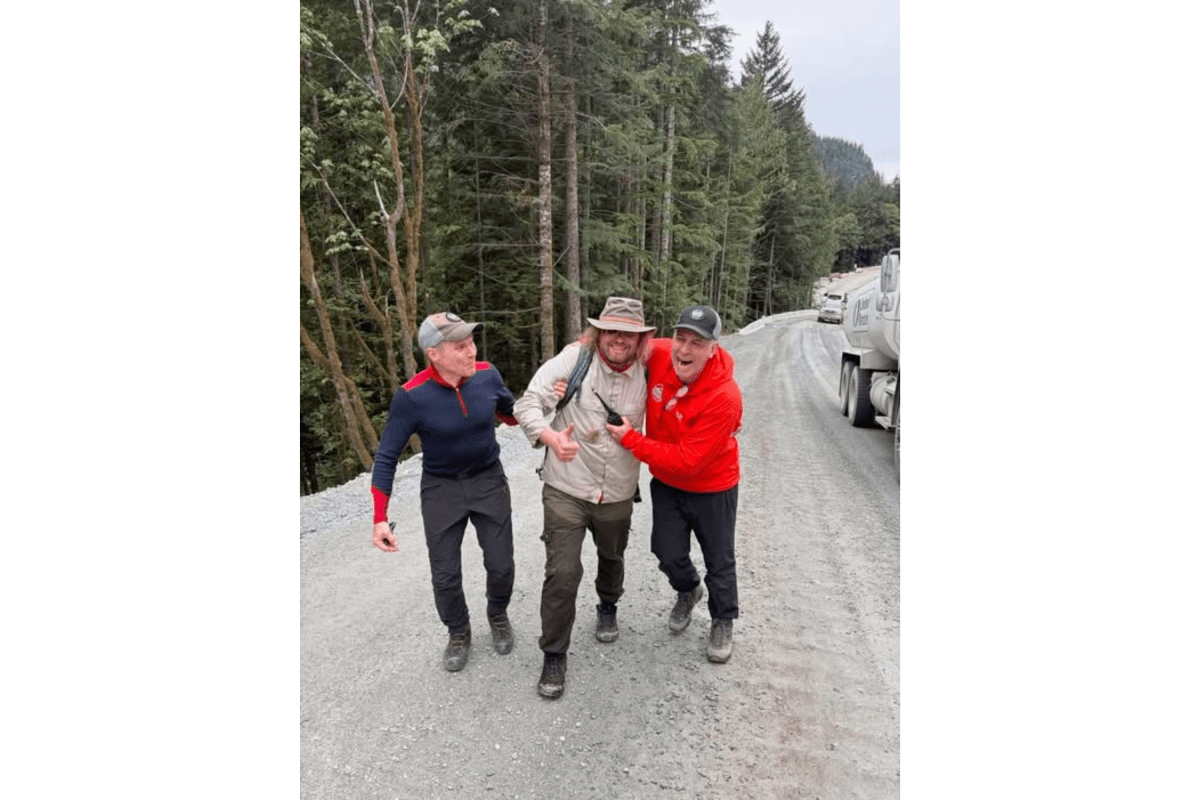
A Canadian hiker named Stanislav Volo got lost in the mountains near Squamish, British Columbia. He survived five nights by sheltering in a cave, eating gummy bears and wildflowers, before walking to safety and being found by rescue teams.
Key Facts
Stanislav Volo, 43, went missing on August 30 after hiking Mount Habrich Loop.
His phone died, leaving him without navigation help.
He got injured after slipping, hurting his heel and wrist.
Volo stayed in a small cave near a waterfall for several days during bad weather.
He ate gummy bears he brought and wildflowers he found nearby.
Search teams used helicopters, dogs, drones, and on-foot searches to find him.
Volo walked out on September 4 and met a construction worker who helped call rescuers.
He was taken to the hospital with minor injuries and later reunited with his family.
Read the Original
Want the full story? Tap a source to open the original
article.
Voting took place in Saxony-Anhalt, an eastern state in Germany, where the far-right party AfD is leading in polls with just over 40%. If AfD wins, they plan to make significant changes to the education system.
Key Facts
The election is happening in Saxony-Anhalt, a state in eastern Germany.
Recent surveys show the AfD party leading with a bit more than 40% support.
The Christian Democrats (CDU), led by Merz, are in second place with about 23%.
AfD wants to "reset" or change the education system if they win.
The election is closely watched because of the possible impact on regional policies.
The AfD is a far-right political party in Germany.
Changes proposed by AfD may affect local governance and public services.
This election reflects wider political trends in eastern Germany.
Read the Original
Want the full story? Tap a source to open the original
article.
The Israeli Chamber of Commerce opened a new office in Banja Luka, the capital of Republika Srpska, a political region in Bosnia and Herzegovina. This move aims to strengthen business and political ties between Israel and Republika Srpska, even as other parts of Bosnia criticize Israel’s actions in the Gaza war.
Key Facts
The Israeli Chamber of Commerce opened an office in Banja Luka to boost ties with Republika Srpska.
Republika Srpska has shown strong support for Israel during the Gaza conflict since October 2023.
Milorad Dodik, former Republika Srpska leader, supports Israel and opposes recognizing Palestine as a state.
The office opening was hosted in a building provided by Dodik amid pro-Palestine protests in other parts of Bosnia.
Israel’s ambassador said the office will promote business and investment cooperation.
Republika Srpska plans to support Israeli technology and potentially attract Israeli investments.
Amir Gross Kabiri, an Israeli businessman involved in major investments in Bosnia, leads the new office.
Analysts say Republika Srpska faces financial problems and sees ties with Israel as a way to improve its economy.
Read the Original
Want the full story? Tap a source to open the original
article.
The article discusses the search for the most popular song of the summer in 2026. It reviews music that made the season enjoyable and suggests potential candidates for the top summer song.
Key Facts
The article looks back at music from the summer of 2026.
It explores which songs were popular and contributed to the fun of the season.
ABC News reporter Will Ganss shares picks for the "song of the summer."
The piece is part of broader ABC News coverage, which includes various current events.
The article mentions other news topics like weather, politics, and international affairs in brief segments.
It does not focus deeply on one particular artist or song but highlights music as a cultural element of summer 2026.
The overall purpose is to reflect on the soundtrack of the recent summer period.
Read the Original
Want the full story? Tap a source to open the original
article.
Rescue teams in Nepal are looking for survivors trapped in tunnels at the Chilime hydropower plant. This search is happening more than a week after heavy floods hit the area.
Key Facts
The rescue is focused on the Chilime hydropower plant in northern Nepal.
Floods caused significant damage in the region over a week ago.
People may be trapped inside the plant’s tunnels.
Teams are actively conducting search and rescue operations.
The local area was severely affected by the floods.
The situation remains urgent as rescuers continue their efforts.
Read the Original
Want the full story? Tap a source to open the original
article.
A five-story building in New Delhi collapsed, killing at least one person and trapping 30 to 40 others. Rescue teams are working to find survivors, and some trapped individuals have been able to make phone calls for help.
Key Facts
The building was a boys’ hostel located in Satya Niketan, near Delhi University.
About 30 to 40 people remain trapped under the rubble.
Police, firefighters, and disaster response teams are conducting rescue operations.
Some trapped people are in contact with rescuers via phone calls.
At least two people were hospitalized in serious condition.
The cause of the collapse is not yet known.
Building collapses often occur in India during the monsoon season because heavy rain can weaken old buildings.
Earthmovers are clearing debris to help reach the trapped people.
Read the Original
Want the full story? Tap a source to open the original
article.
Greece wants to strengthen its defense partnership with Israel while also improving ties with other Middle Eastern countries. Prime Minister Kyriakos Mitsotakis emphasized Greece’s defense spending and plans to work closely with Saudi Arabia and Egypt amid regional security concerns.
Key Facts
Greece and Israel have close defense and energy cooperation, especially due to worries about Turkey.
They recently signed a deal for Israel to build an air defense system in Greece worth 3 billion euros ($3.5 billion).
Greece spends at least 3.5% of its GDP on defense, partly because of ongoing tensions with Turkey over sea borders.
Greece will receive its first 20 F-35 fighter jets in 2028 and may buy 20 more.
Greece opposes selling F-35 jets to Turkey due to legal issues connected with Turkey’s purchase of Russian missile systems.
The Greek prime minister plans to visit Saudi Arabia and Egypt to discuss cooperation.
Greece has had an air defense battery in Saudi Arabia since 2021 and helped intercept missiles targeting Saudi oil facilities.
The new defense deal between Pakistan, Saudi Arabia, and Turkey does not change Greece’s relationship with Saudi Arabia.
Read the Original
Want the full story? Tap a source to open the original
article.