Thousands of people attended a funeral in Gaza City for 100 Palestinians, including 70 children, who died and were found under rubble. Officials say many more people are still trapped beneath destroyed buildings after ongoing fighting in Gaza.
Key Facts
Around 100 bodies of Palestinians, including 70 children, were recovered from rubble in Gaza City.
A mass funeral was held for these victims.
Thousands of people attended the funeral to mourn.
Many more Palestinians remain buried under the ruins of damaged buildings.
The deaths occurred amid ongoing fighting and destruction in Gaza.
Authorities describe the conflict as causing widespread devastation.
Read the Original
Want the full story? Tap a source to open the original
article.
Jamaican officials traveled to the UK to deliver a petition to King Charles asking for legal advice on whether Britain should provide reparations for slavery. The petition seeks recognition of slavery as a crime and aims to address its ongoing negative effects in Jamaica and other Caribbean countries.
Key Facts
Jamaica’s culture minister, Olivia Grange, arrived in London with a petition on slavery reparations to give to King Charles.
The petition requests the monarch ask the Privy Council if slavery was lawful, if it was a crime against humanity, and if Britain owes restitution.
Over 12.5 million Africans were enslaved and brought to the Americas between the 15th and 19th centuries.
Jamaica created a national reparations mechanism in 2009 to address slavery’s long-term impacts.
Caribbean leaders argue the legacy of slavery causes economic disadvantages and social issues today.
The Caribbean Community Reparations Commission organizes regional efforts to seek reparations.
The petition delivery is part of wider upcoming events, including a Caribbean reparations conference and advocacy at UN and Commonwealth meetings.
In March 2024, a UN resolution described chattel slavery as a grave crime against humanity, and many countries are pushing for reparatory justice.
Read the Original
Want the full story? Tap a source to open the original
article.
A woman who was nearly three years old on September 11, 2001, shares her experience of being evacuated from the Pentagon daycare during the attack. The traumatic event influenced her decision to join the military, and her family has continued to honor those affected by 9/11.
Key Facts
The author was nearly three years old and inside the Pentagon daycare when American Airlines Flight 77 hit the building at 9:37 a.m. on 9/11.
After the attack, military service members helped evacuate children to a safe area near Boundary Channel.
The author’s younger sister, an infant at the time, was carried in cribs to the safe zone.
The author experienced trauma symptoms such as sleeping for more than 24 hours the night after the attacks.
The author’s mother worked at Bolling Air Force Base and continued serving in the Air Force for 30 years.
The author was inspired by the events and the heroism on 9/11 to become a captain and helicopter instructor pilot in the U.S. Air Force.
The family views themselves as fortunate and honors those who lost their lives or were affected by the tragedy.
2026 will mark 25 years since the 9/11 attacks.
Read the Original
Want the full story? Tap a source to open the original
article.
A 10-year-old boy named Ayoub fell into a deep well in western Algeria and died after a four-day rescue effort. Rescue teams dug a parallel tunnel to reach him because the well was too narrow and deep to enter directly.
Key Facts
Ayoub fell into a well about 80 meters (262 feet) deep and 40 cm (16 inches) wide.
The accident happened on Wednesday in the village of Errokn, municipality of Ghassoul in el-Bayadh province.
The wooden board covering the well’s opening broke under Ayoub’s feet, causing him to fall in.
Rescue teams could not go down the well, so they dug a parallel shaft to reach him through a horizontal tunnel.
The rescue was difficult because of loose soil and hard rock in the area.
Local authorities formed a crisis unit including civil protection, security, and military personnel to handle the rescue.
Large crowds gathered to watch the rescue and support the family during the operation.
Ayoub’s death has raised concerns about the safety and regulation of open wells in rural Algeria.
Similar cases in Algeria and Morocco have drawn attention to the dangers of unsecured wells in rural areas.
Read the Original
Want the full story? Tap a source to open the original
article.
An eruption of Mount Anak Krakatau in Indonesia caused six airports to stop flight operations on Sunday. This disruption affected hundreds of flights at Jakarta's main airport, and some schools and fishing activities were also paused.
Key Facts
Mount Anak Krakatau in Indonesia erupted on Sunday.
Six airports stopped flights because of the eruption.
Hundreds of flights at Jakarta's main airport were affected.
Some schools temporarily stopped activities.
Fishing activities were also halted due to the eruption.
The eruption caused safety concerns leading to these disruptions.
Anak Krakatau is a volcano known for previous eruptions affecting the region.
Read the Original
Want the full story? Tap a source to open the original
article.
A memorial event took place in Belgrade to honor Ratko Mladic, who was convicted as a war criminal. The ceremony happened two days before his burial and was attended by former military members, family, and officials.
Key Facts
Ratko Mladic was a Bosnian Serb military leader convicted of war crimes.
A commemoration for him was held in Belgrade, Serbia.
The event occurred on a Saturday, two days before his burial.
Dozens of former soldiers, family members, and officials attended the commemoration.
Mladic is known internationally for his role in the Bosnian War.
The article provides no details on the burial location or further reactions.
Read the Original
Want the full story? Tap a source to open the original
article.
Thousands of people protested in Dhaka, the capital of Bangladesh, because of rising living costs. They called on the government led by Prime Minister Tarique Rahman to fix shortages of gas, electricity, and fertilizer.
Key Facts
Protests occurred in Dhaka, Bangladesh’s capital city.
Thousands of people took part in the protests.
The protests are the first major demonstrations under Prime Minister Tarique Rahman’s government.
Protesters are upset about the rising cost of living.
They are demanding government action to address shortages.
The shortages involve gas, electricity, and fertilizer.
The protesters want these basic needs to be made more available and affordable.
Read the Original
Want the full story? Tap a source to open the original
article.
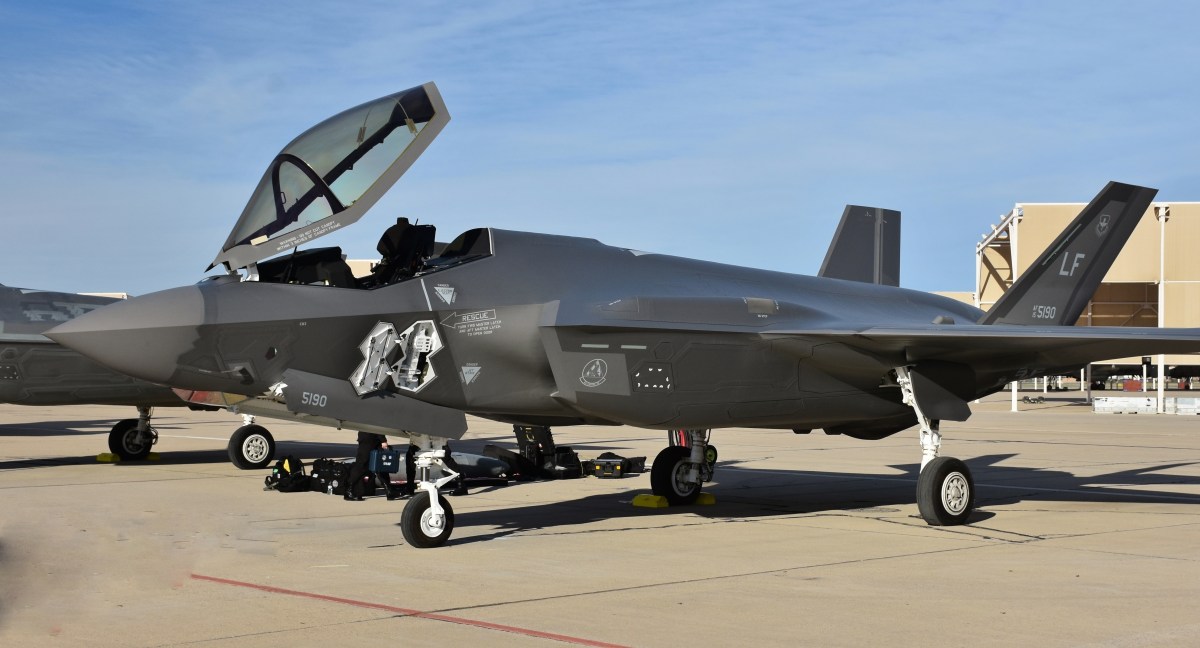
Finland has started assembling its first F-35 fighter jet engine as part of its military buildup after joining NATO in 2023. The country aims to strengthen its defenses along its long border with Russia by producing parts of the F-35 jets domestically and preparing its civilian population for potential crises.
Key Facts
Finland completed assembly of its first F135 engine for the F-35 fighter jet on September 3.
Finnish company Patria will assemble more F135 engines and provide maintenance through 2030.
Finland has ordered 64 F-35A fighter jets from Lockheed Martin, with the first jets arriving later in 2024.
The F-35 is a modern stealth fighter with advanced sensors and networked capabilities.
Finland joined NATO in 2023, responding to security concerns after Russia’s invasion of Ukraine.
Finland shares an 800-mile border with Russia, making its military buildup important for NATO’s northern defense.
Finland recently held a large civil defense exercise simulating cyberattacks, infrastructure disruption, and missile threats.
Diplomatic talks between Russia, Ukraine, and U.S. envoys are ongoing but have so far made little progress in ending the conflict.
Read the Original
Want the full story? Tap a source to open the original
article.
The musical "Come From Away" tells the true story of how people in the small town of Gander, Newfoundland, helped thousands of stranded airline passengers after the U.S. stopped all flights on September 11, 2001. Created by Irene Sankoff and David Hein, the show uses interviews and folk music to show the kindness and support offered during this crisis.
Key Facts
After the 9/11 attacks, U.S. airspace was closed, forcing 38 international flights to land in Gander, Newfoundland.
The town’s residents helped about 7,000 passengers and crew by providing shelter, food, and comfort.
The musical "Come From Away" was written by Irene Sankoff and David Hein, who researched the story during the 10th anniversary of 9/11.
The show premiered in New York City in 2017 and won several awards, including Drama Desk and a Tony Award.
It combines interviews, stories, and Newfoundland folk music to tell the story of kindness during a difficult time.
The musical has played worldwide and is available as a live performance on Apple TV+.
Both creators were living in New York during 9/11 and experienced local community support firsthand.
The musical highlights how communities come together to support each other during emergencies.
Read the Original
Want the full story? Tap a source to open the original
article.
Iran’s Islamic Revolutionary Guard Corps (IRGC) said it attacked a U.S. military ship in the Strait of Hormuz. The vessel was remotely operated, and the report was shared by Iranian state media.
Key Facts
Iran’s IRGC claimed responsibility for attacking a U.S. military ship.
The ship was a remotely operated military vessel, not a manned ship.
The attack happened in the Strait of Hormuz, a key waterway for global shipping.
The information was reported by Iran’s Press TV, a state-run media outlet.
The IRGC is a branch of Iran’s military responsible for protecting the country’s Islamic system.
The Strait of Hormuz is strategically important because a large share of the world’s oil passes through it.
No details about damage or casualties were included in the initial reports.
This event adds to ongoing tensions between Iran and the United States in the region.
Read the Original
Want the full story? Tap a source to open the original
article.
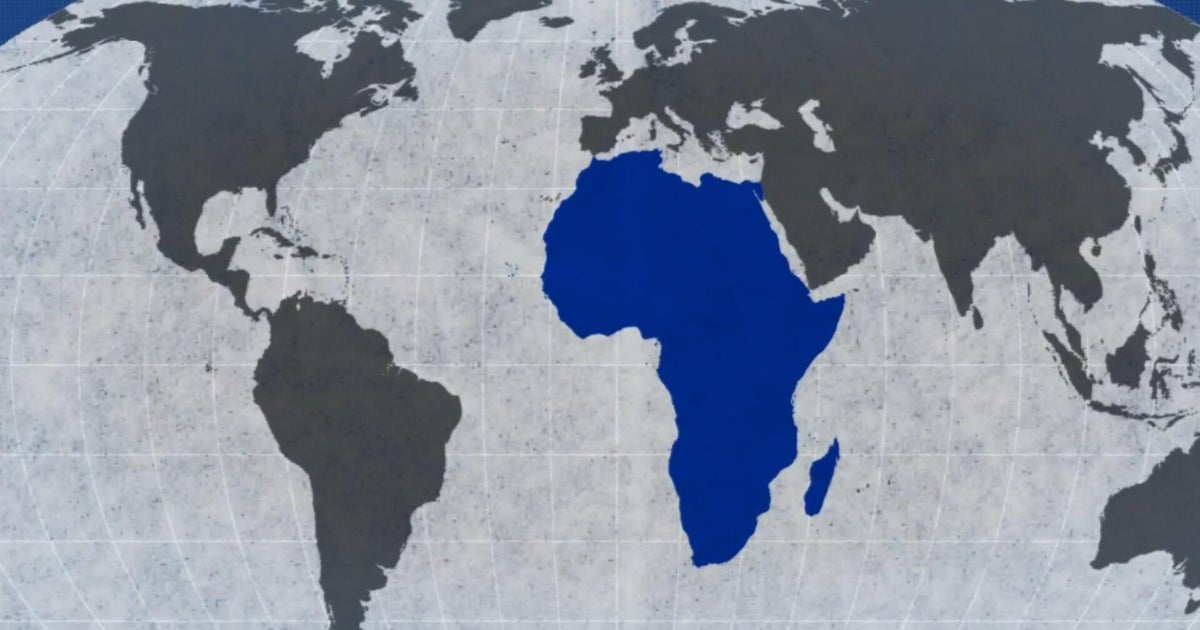
The United Nations General Assembly approved a new world map that shows Africa’s size more accurately. The United States was the only country to vote against the change, and six other countries chose not to vote.
Key Facts
The U.N. General Assembly voted to adopt a new world map.
The new map shows Africa’s true size more accurately than previous maps.
The United States was the only country to vote against the new map.
Six countries decided to abstain, meaning they did not vote yes or no.
The goal of the new map is to give a better view of Africa’s size compared to other continents.
Current world maps often show Africa smaller than it really is.
The decision was made during a U.N. meeting where all member countries could vote.
Read the Original
Want the full story? Tap a source to open the original
article.
President Donald Trump's special envoys Steve Witkoff and Jared Kushner met with Russian President Vladimir Putin in Moscow to discuss possible steps toward peace in the Ukraine war. After the meeting, they went to Kyiv, where they met Ukrainian President Volodymyr Zelenskyy to continue talks about ending the conflict, which has lasted for five years.
Key Facts
Witkoff and Kushner are President Trump's special envoys for peace talks on the Ukraine war.
They met with Russian President Vladimir Putin in Moscow on September 5, 2026, for over three hours.
The Kremlin and White House called the meeting "substantive," meaning they discussed important issues.
Putin said Russia wants to remove the "root causes" of the conflict, implying demands for Ukrainian neutrality and military limits.
Putin highlighted recent Russian military successes and showed confidence in reaching Russian goals.
Witkoff and Kushner then traveled to Kyiv and were welcomed by Ukrainian President Zelenskyy on September 6, 2026.
Zelenskyy said Ukraine is ready for serious talks and is interested in peace with security guarantees.
The conflict continues with Russia increasing attacks on Kyiv, including drone strikes.
Read the Original
Want the full story? Tap a source to open the original
article.
Canadian athlete Kalie McCrystal went missing while training to set a speed record on the Matterhorn mountain in the Alps. A search effort, including a helicopter, found no trace of her after she was last seen descending the Italian side of the mountain.
Key Facts
Kalie McCrystal is a 38-year-old skyrunner from Squamish, British Columbia.
She was training to break a record for ascending and descending the 14,692 ft (4,478 m) Matterhorn.
McCrystal was last seen on Tuesday near a shelter at about 12,500 ft altitude on the Italian side of the mountain.
Skyrunning is a sport that involves running on high mountain terrain above 6,600 ft.
The helicopter search for her was stopped on Friday with no results.
McCrystal has previous experience climbing the Matterhorn and other tough mountain terrain.
Friends say she was skilled and did not take unnecessary risks during her training.
She holds skyrunning records in Canada and Europe and works as a lawyer and university staff member.
Read the Original
Want the full story? Tap a source to open the original
article.
The article recounts the 2011 military operation when U.S. Navy SEALs raided Osama bin Laden's compound in Abbottabad, Pakistan. It features an interview with a former SEAL Team 6 member who shares details about the mission.
Key Facts
The raid took place in 2011 in Abbottabad, Pakistan.
U.S. Navy SEALs from SEAL Team 6 carried out the operation.
The goal was to capture or kill Osama bin Laden, the leader of al-Qaeda.
The mission was successful, and Osama bin Laden was killed.
This event was a major moment in the U.S. fight against terrorism.
The article includes firsthand accounts from someone directly involved in the raid.
The raid was kept secret until it was publicly announced afterward.
Read the Original
Want the full story? Tap a source to open the original
article.
After two strong earthquakes hit Venezuela on June 24, 2026, many people, including 18-year-old Andrés Molina, have been missing. Andrés’ family continues searching for him in the ruins of La Guaira, hoping he survived despite reports that his mother and brother died in the disaster.
Key Facts
Two powerful earthquakes struck Venezuela on June 24, 2026, causing heavy damage in La Guaira, near Caracas.
Andrés Molina, 18 years old, is missing after the earthquakes; his mother and brother died in the building collapse.
Neighbors say they have seen Andrés collecting scrap metal around the damaged area.
The Venezuelan government reports about 6,500 deaths and 1,500 missing, but many people believe the number missing is much higher.
Andrés’ family is searching for him without government help or support.
The family places flyers with Andrés’ photo around La Guaira, encouraging people to call if they see him.
Despite contacting local shelters, hospitals, and morgues, the family has not found Andrés or information about him.
The search continues 10 weeks after the earthquakes as the family holds onto hope.
Read the Original
Want the full story? Tap a source to open the original
article.
Ethan Hawke received the Deauville Talent Award for his nearly 40-year acting career. He played the lead in the film *The Weight*, which premiered at the 52nd Deauville American Film Festival and will be released in theaters on September 16.
Key Facts
Ethan Hawke is known for movies like *Dead Poets Society*, the *Before* trilogy, and *Boyhood*.
The Deauville Talent Award honors his long career in acting.
*The Weight* is a film starring Ethan Hawke as the lead actor.
*The Weight* was shown at the opening ceremony of the 52nd Deauville American Film Festival.
The film is scheduled for theater release on September 16.
The event took place in Deauville, France, which hosts an annual American film festival.
Read the Original
Want the full story? Tap a source to open the original
article.
US negotiators Jared Kushner and Steve Witkoff visited Kyiv to continue talks on ending the war in Ukraine, meeting with President Volodymyr Zelenskyy after discussions in Moscow with President Vladimir Putin. The peace talks focus on a 20-point plan but face challenges, including disagreements over control of territory in eastern Ukraine.
Key Facts
Kushner and Witkoff arrived in Kyiv for talks following meetings in Moscow with President Putin.
President Zelenskyy welcomed the US envoys in Sophia Square, near a recent Russian drone attack site.
The war in Ukraine has lasted for over four years, with ongoing drone and missile strikes.
Talks involve a 20-point peace plan proposed by Washington and Kyiv, but key issues remain unresolved.
Moscow and Kyiv agreed on a temporary ceasefire to allow safe travel for negotiators.
British, French, and German security advisers were also in Kyiv before the US envoys’ arrival.
Ukraine faces challenges intercepting fast Russian drones and is concerned about winter impacts.
Ukrainian casualties continue, with recent attacks causing deaths and injuries across the country.
Read the Original
Want the full story? Tap a source to open the original
article.
Prime Minister Andy Burnham has spoken about the problems he sees in the country’s direction over the past 40 years. Ahead of a key speech by his new Chancellor John Healey on economic growth plans, the article compares the approaches of Burnham’s Labour government and the Conservative opposition, focusing on how different they really are.
Key Facts
Prime Minister Andy Burnham has criticized the country’s direction over the last 40 years.
John Healey, the new Chancellor, is preparing a speech about plans for economic growth.
The article questions whether Burnham’s government is truly different from past governments.
Conservative shadow Chancellor Andrew Griffith also wants to show a break from the political past.
The article compares the approaches of Labour and Conservative parties on government and economy.
Reform UK and Nigel Farage face tough questions about money issues.
The article discusses the challenges Reform UK faces and how they might recover.
The news program “Newscast” covers these topics in daily political analysis.
Read the Original
Want the full story? Tap a source to open the original
article.
At least 25 people, mostly teenagers, died in a bus crash on Fogo Island in Cape Verde. The accident happened on a mountain road and some people were also injured. Officials are investigating the cause, and the president of Cape Verde has called it a major tragedy.
Key Facts
The crash occurred on Saturday on the Campanas de Cima route on Fogo Island.
At least 25 people died, most of them teenagers.
Several others were injured in the accident.
Seven bodies were buried immediately because of their condition.
The cause of the crash is not yet known and is under investigation.
Cape Verde’s president, José Maria Pereira Neves, described the event as a great catastrophe.
The president and other officials planned to visit the island following the crash.
The accident involved a passenger bus traveling in a mountainous area.
Read the Original
Want the full story? Tap a source to open the original
article.
Iran said it hit an unmanned U.S. military boat in the Strait of Hormuz, increasing hostilities between the two countries. At the same time, Israeli airstrikes in southern Lebanon killed four people and destroyed a hospital, near areas of ongoing conflict involving Hezbollah.
Key Facts
Iran claims it struck a U.S. unmanned military boat near the Strait of Hormuz in a restricted area, but the U.S. military did not confirm this.
The incident follows U.S. strikes on Iranian oil tankers, which were in retaliation for Iran firing ballistic missiles at U.S. Navy ships.
Fighting between the U.S., Israel, and Iran has continued despite a ceasefire announced in June.
Israeli airstrikes in southern Lebanon killed four people and destroyed an empty hospital.
The strikes targeted areas near Hezbollah, an Iran-backed militant group, following a drone attack by Hezbollah on Israeli forces.
At least 20 people were wounded in the Israeli strikes, including children and women.
Fighting has lessened overall in Lebanon since the ceasefire but low-level conflicts persist.
The region remains unstable with ongoing military and economic tensions.
Read the Original
Want the full story? Tap a source to open the original
article.