Neutral summaries of your favorite news sources — just the facts.
Your favorite news sources, one neutral feed — we distill their reporting into fact-first
summaries and always link to the original story. How it works
World News
Comprehensive coverage of international news and global events
Ghislaine Maxwell has been moved from a federal prison in Florida to a minimum-security prison camp in Texas. Maxwell, convicted in 2021 for assisting Jeffrey Epstein in abusing underage girls, is now held at a facility designed for inmates considered low security risks. The move comes amid renewed public interest in her case and related investigations.
Key Facts
Ghislaine Maxwell was transferred from a Florida prison to a Texas minimum-security prison camp.
She was convicted in 2021 for helping Jeffrey Epstein sexually abuse underage girls.
The Bureau of Prisons provided no explanation for her transfer.
Minimum-security camps have fewer security measures and are intended for inmates considered low-risk.
High-profile inmates like Elizabeth Holmes and Jen Shah are held in similar facilities.
Public attention on Maxwell's case increased after the Justice Department said it would not release more documents from the Epstein investigation.
Maxwell met with Deputy Attorney General Todd Blanche at a Florida courthouse for interviews.
The House Oversight Committee has shown interest in speaking with Maxwell, contingent on granting her immunity.
Read the Original
Want the full story? Tap a source to open the original
article.
Scientists from Oxford University discovered that some European songbirds separate from their partners between breeding seasons. This study showed that these birds sometimes change partners after raising their young.
Key Facts
Researchers conducted the study at Oxford University.
The study focused on a common European songbird species.
These songbirds sometimes leave their partners after breeding.
The separation happens between breeding seasons.
This behavior is referred to as "divorce" in the study.
Read the Original
Want the full story? Tap a source to open the original
article.
A wildfire that destroyed the Grand Canyon Lodge a month ago continues to grow. Firefighters are struggling to control the fire, which now threatens a nearby sensitive forest.
Key Facts
The wildfire destroyed the historic Grand Canyon Lodge.
This fire has been ongoing for a month.
The fire is still growing.
Firefighters are working to control the fire but face significant challenges.
The fire now threatens a remote forest ecosystem.
Read the Original
Want the full story? Tap a source to open the original
article.
The article discusses the potential outcomes if France, the U.K., and Canada decide to officially recognize a Palestinian state. It involves an interview with Michael Lynk, a former U.N. expert on human rights in Palestinian areas.
Key Facts
France, the U.K., and Canada are considering recognizing a Palestinian state.
Recognition of a Palestinian state by these countries would be an international move.
Michael Lynk, a former U.N. Special Rapporteur, provided insights on the topic.
Recognition could change diplomatic relations in the region.
The potential decision is part of broader international discussions regarding Palestine.
Read the Original
Want the full story? Tap a source to open the original
article.
The economist who created the acronym BRICS discusses how his idea has changed over time. BRICS is an economic group with countries like Brazil, Russia, India, China, and South Africa.
Key Facts
BRICS is an acronym for a group of major developing countries.
The countries in BRICS are Brazil, Russia, India, China, and South Africa.
This group focuses on economic cooperation and development.
The concept of BRICS was created by an economist whose vision has evolved over time.
President Trump has expressed negative feelings about the BRICS alliance.
The article includes a discussion about the initial vision of BRICS and how it has developed.
Read the Original
Want the full story? Tap a source to open the original
article.
Switzerland plans to negotiate with the United States after the U.S. decided to set a 39% tariff on Swiss goods. This tariff is higher than the 15% rate applied to many European Union products. The Swiss government expressed disappointment and aims to find a solution through talks before the tariffs take effect on August 7.
Key Facts
The U.S. announced a 39% tariff on goods from Switzerland.
Switzerland was surprised and disappointed by the tariff decision.
The tariffs will begin on August 7 if no agreement is reached.
Swiss industries like manufacturing and watchmaking could be affected.
The Swiss government is in talks with the U.S. to reduce or avoid the tariffs.
Nearly 70 countries face new U.S. import duties starting in August.
The U.S. aims to improve trade balances with these tariffs.
Other countries also received new tariffs, with varying rates.
Read the Original
Want the full story? Tap a source to open the original
article.
Switzerland is facing new tariffs from the United States, which are the highest in Europe at 39%. The decision follows failed negotiations between Switzerland and U.S. President Trump, who imposed the tariffs due to a trade deficit. The Swiss government is looking for solutions before the tariffs take effect on August 7th.
Key Facts
Switzerland faces a new U.S. tariff of 39%, the highest in Europe.
The tariffs make Switzerland fourth globally for high tariffs, after Syria, Laos, and Myanmar.
Switzerland tried to negotiate a lower tariff but was unsuccessful.
The Swiss trade deficit with the U.S. is $47.4 billion, reducing to $22 billion when services are included.
Switzerland's government is reducing tariffs on U.S. goods and encouraging investments in the U.S.
Switzerland's population size and product preference limit its ability to reduce the trade deficit further.
The Swiss government has until August 7th to try to find a solution before the tariffs are enforced.
Read the Original
Want the full story? Tap a source to open the original
article.
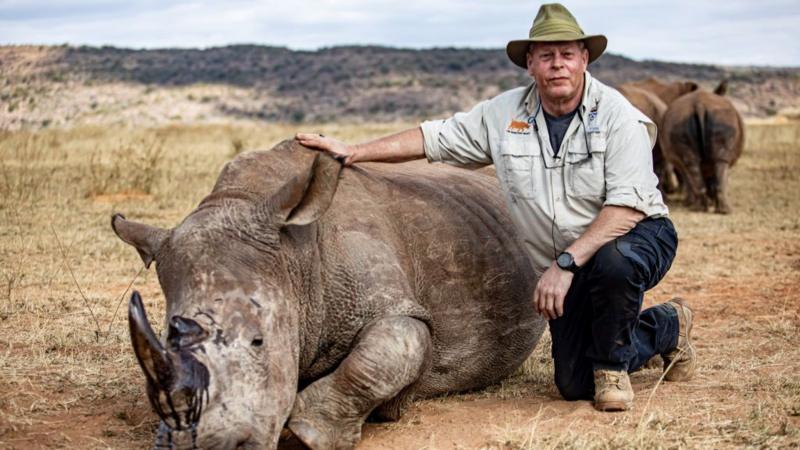
Scientists in South Africa have started a project to inject rhino horns with a radioactive material to help customs officers detect smuggled horns and combat poaching. The Rhisotope Project, backed by the University of the Witwatersrand, has been tested on 20 rhinos and is said to be safe for the animals, while costing about £220,000. South Africa, home to the largest rhino population, faces significant poaching issues, with more than 400 rhinos poached each year since 2021.
Key Facts
The Rhisotope Project involves injecting rhino horns with radioactive material to fight poaching.
The process helps customs detect smuggled rhino horns and is claimed to be safe for the animals.
Over 400 rhinos have been poached in South Africa each year since 2021.
The project took six years of research and testing and cost around £220,000 ($290,000).
Detection technology can find the radioactive horns even in large shipping containers.
The initiative collaborates with the International Atomic Energy Agency.
The project aims to protect rhinos, a species facing heavy poaching for their horns used in medicine and as status symbols.
White rhinos are threatened, and black rhinos are critically endangered.
Read the Original
Want the full story? Tap a source to open the original
article.
Fighting broke out between the armies of Uganda and South Sudan over a disputed border area, resulting in the deaths of at least four soldiers. Thousands of civilians fled from the area due to the conflict. Both countries blame each other for starting the fight.
Key Facts
The conflict began on Monday in a disputed border region between Uganda and South Sudan.
At least four soldiers were killed in the fighting, with varying reports about the exact number and identities.
The clash led to thousands of civilians leaving their homes to find safety.
Uganda and South Sudan dispute over which territory the fighting occurred on, with each side claiming it happened on their land.
The Ugandan military claims South Sudanese troops crossed into Uganda’s territory, prompting their response.
South Sudanese officials accuse Uganda of launching a surprise attack on their side of the border.
The fighting stirred panic among border villagers, causing disarray and displacement.
Both countries have had past conflicts over border demarcations, though heavy fighting is rare.
Read the Original
Want the full story? Tap a source to open the original
article.
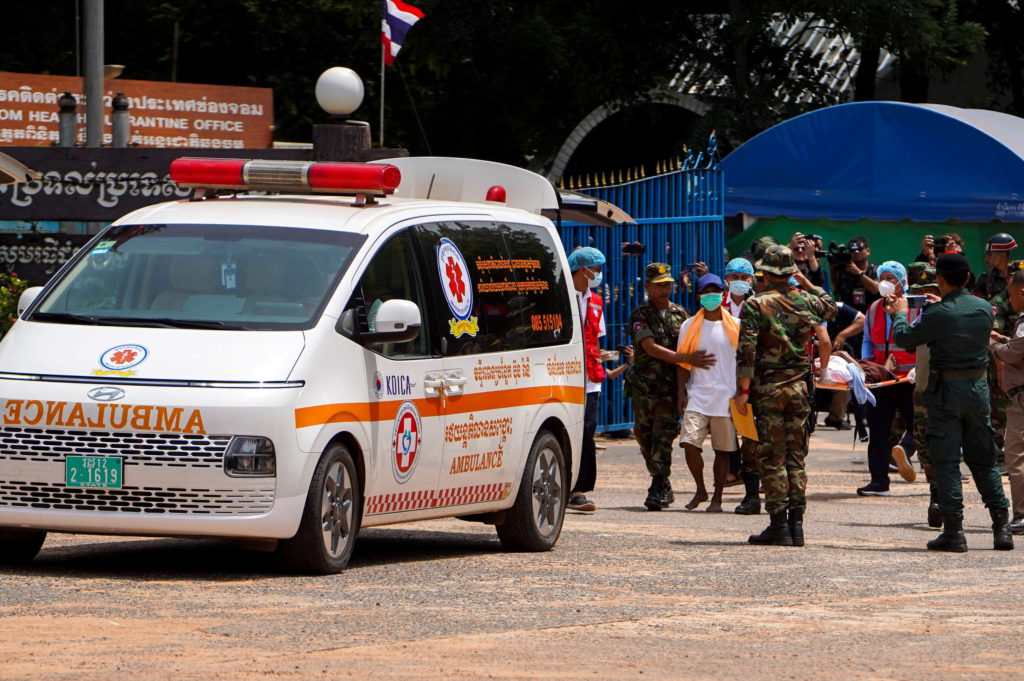
Thailand returned two wounded Cambodian soldiers after a ceasefire was agreed upon to end five days of fighting over disputed land. Eighteen other Cambodian soldiers remain in Thai custody. The two countries are giving different reasons for the soldiers' capture, and questions remain about treatment during captivity.
Key Facts
Thailand returned two wounded Cambodian soldiers after both countries agreed to a ceasefire.
Eighteen Cambodian soldiers are still held by Thailand.
Cambodia and Thailand give different stories about why the soldiers were captured.
Cambodia claims the soldiers intended friendly contact, while Thailand claims they crossed into Thai territory.
The captured soldiers were not available for interviews by independent parties.
Cambodia accused Thailand of mistreating the soldiers, a claim Thailand disputes.
A ceasefire is in place, but the larger territorial dispute remains unsolved.
More than 260,000 people were displaced due to the recent fighting.
Read the Original
Want the full story? Tap a source to open the original
article.
Ghislaine Maxwell, convicted of helping Jeffrey Epstein abuse underage girls, has been moved from a low-security prison in Florida to a prison camp in Texas. The federal Bureau of Prisons and her attorney confirmed the transfer but did not provide reasons for it. The move comes amid ongoing public attention and legal proceedings related to Epstein's case.
Key Facts
Ghislaine Maxwell was Jeffrey Epstein's former girlfriend.
She was convicted in 2021 for aiding Epstein in the sexual abuse of underage girls.
Maxwell received a 20-year prison sentence.
She was originally held in a low-security prison in Tallahassee, Florida.
Maxwell has now been moved to a federal prison camp in Bryan, Texas.
Prison camps have low security and sometimes lack fences.
Maxwell's case remains under public scrutiny, with a focus on transparency and potential interviews with investigators.
Read the Original
Want the full story? Tap a source to open the original
article.
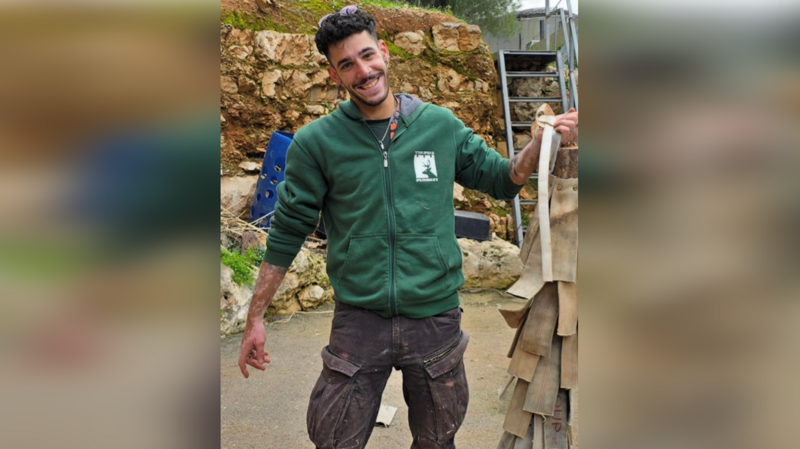
A zoo worker at the Jerusalem Biblical Zoo was killed by a tiger that escaped from its enclosure. The zoo is investigating how the escape happened and has closed the site to visitors. The worker, Uriel Nuri, was the head of the carnivores team and died from serious injuries after being taken to the hospital.
Key Facts
A tiger attacked and killed a zoo worker in Jerusalem.
The worker was named Uriel Nuri and he led the team responsible for carnivores.
The tiger escaped during an activity meant to entertain visitors.
Uriel Nuri received severe injuries and died despite efforts to save him at the hospital.
The zoo is working with the police to find out how the tiger escaped.
Visitors were not in danger as they were separated by a glass barrier.
The zoo was closed following the incident.
The zoo focuses on biblical and endangered species, housing numerous animal species.
Read the Original
Want the full story? Tap a source to open the original
article.
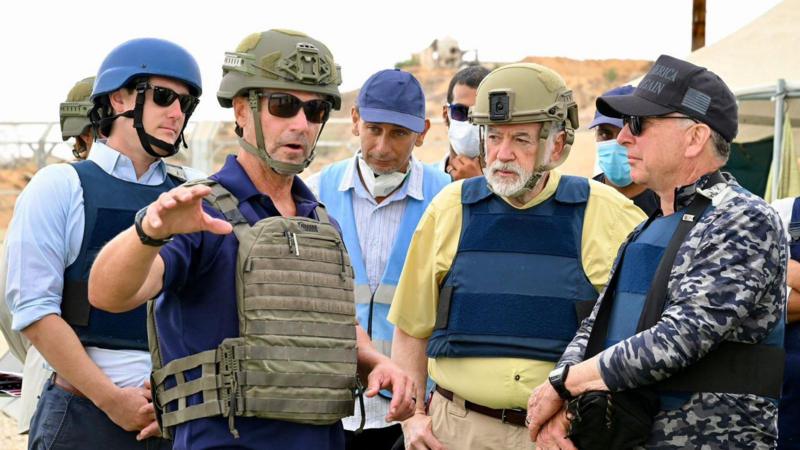
A U.S. envoy, Steve Witkoff, visited a disputed aid distribution site in Gaza. Reports reveal conflicts at the site, including alleged shootings and fatalities, with differing accounts from involved parties. Independent verification is challenging as journalists face restrictions in Gaza.
Key Facts
Steve Witkoff, a U.S. Middle East envoy, visited a Gaza aid site with U.S. ambassador Mike Huckabee.
These sites, backed by Israel and the U.S., replaced past UN aid distribution in the area.
Reports claim ongoing violence near these sites, with at least 859 Palestinian deaths reported by the UN.
Israel asserts its military only uses warning shots without aiming to harm civilians.
Aid organization GHF claims it distributes over a million meals daily, though UN says this is inadequate.
Access to independent reporting in Gaza is restricted by Israeli policies.
Some critics say the visit was more for publicity and did not address deeper humanitarian issues.
There are allegations of unnecessary force used by the Israeli military at these aid sites.
Read the Original
Want the full story? Tap a source to open the original
article.
The European Union's top court ruled against Italy's plan to send migrants to detention centers in Albania, citing legal concerns over the designation of "safe" countries for asylum seekers. The Italian government disagreed with the decision, which impacts its efforts to manage migration. The plan involved a migration deal between Italy and Albania that has faced legal challenges and stalled execution.
Key Facts
The European Court of Justice (ECJ) ruled against Italy's list of "safe countries" used in a plan to deport migrants to Albania.
The court stated that designating a country as "safe" requires strict legal standards and the ability for applicants to challenge this designation.
Italian Prime Minister Giorgia Meloni had a plan to process migrants in Albania, which has been paused due to legal issues.
In November 2023, Italy and Albania signed a deal related to migrant processing, but the centers remain unused.
The construction cost of the Albanian detention centers was much higher compared to similar facilities in Italy.
The ruling followed a case involving Bangladeshi nationals whose asylum claims were rejected in Albania due to Italy's "safe" country classification.
Italy has experienced a decrease in undocumented sea migration compared to previous years, despite the legal hurdles with the Albanian plan.
Read the Original
Want the full story? Tap a source to open the original
article.
A Bosnia appeals court confirmed a one-year prison sentence and a six-year political ban for Bosnian Serb leader Milorad Dodik for his separatist actions. Despite the ruling, Dodik stated he will continue as president with the Bosnian Serb parliament's support and will seek support from Russia and the United States.
Key Facts
An appeals court in Bosnia upheld a one-year prison sentence for Milorad Dodik.
Dodik is banned from holding political office for six years.
The court convicted Dodik for not complying with international peace accord rulings.
Dodik rejected the court decision and stated he would continue his role as president.
He plans to seek help from Russia and write to the U.S. government.
The European Union emphasized that the court decision should be respected.
The situation in Bosnia has led to significant political tensions.
Dodik has been involved in calls to separate and join Serbia, leading to U.S. sanctions.
Read the Original
Want the full story? Tap a source to open the original
article.
People in the Gaza Strip are struggling to get food due to severe shortages and violence at aid distribution sites. The GHF, backed by the U.S. and Israel, manages these sites but faces accusations of serious violations, including people being shot while trying to get aid. Many Palestinians risk their lives daily at these sites to obtain basic food supplies.
Key Facts
The Gaza Strip is experiencing widespread starvation.
The GHF took control of aid distribution in Gaza in May, after Israel partially lifted its blockade.
Over 1,300 Palestinians have reportedly been killed while trying to get food at these sites.
Israeli soldiers and U.S. security contractors have allegedly shot people trying to reach the aid.
Palestinians continue to visit these dangerous sites daily to get food like flour, milk, and rice.
People report chaotic and violent scenes at these distribution points.
A child explained that without this food, his siblings could die from hunger.
One mother said her five-month-old daughter is malnourished due to a lack of food during her pregnancy.
Read the Original
Want the full story? Tap a source to open the original
article.
Climate change is affecting the yak herding culture in Ladakh, India. Herders are seeing less grass for their yaks due to unpredictable weather, leading to a decline in yak populations. Rising temperatures and irregular rainfall are making it difficult for yaks to thrive.
Key Facts
Tsering Dolma, a herder in Ladakh, reports less rain and warmer winters impacting yak grazing lands.
Ladakh, located near Tibet, traditionally relies on manual yak herding led by women.
Kunzias Dolma describes her daily routine focused on yak-related activities and product creation from yak resources.
Climate change is causing higher temperatures and unpredictable rain patterns in Ladakh.
Since 2012, Ladakh's yak population has decreased from nearly 34,000 to under 20,000 by 2019.
Scientists point out the Himalayan ecosystem's vulnerability to global warming as a growing concern.
Read the Original
Want the full story? Tap a source to open the original
article.
Former President Trump said he is working on a plan to bring food to people in Gaza. He mentioned concerns over starvation and criticized Hamas for issues with aid distribution. A U.S. envoy recently visited Gaza to assess the situation and will report back to Trump before the aid plan is finalized.
Key Facts
Trump is working on a plan to send food to Gaza.
He expressed concern about starvation in the region.
Trump criticized Hamas for misusing incoming aid.
U.S. envoy Steve Witkoff visited aid centers in Gaza.
Witkoff's visit was to gather information for a new U.S. aid strategy.
Trump has not yet been briefed on the details of the visit.
The U.S. and Israel-backed Gaza Humanitarian Foundation (GHF) runs aid centers.
International pressure has been put on Israel over aid restrictions in Gaza.
Read the Original
Want the full story? Tap a source to open the original
article.
A South African university started a project to inject rhino horns with harmless radioactive material to stop poaching. This method aims to help customs agents detect illegal rhino horn trade using radiation detectors. The project involves experts and has shown positive results in initial tests.
Key Facts
A South African university is leading a new anti-poaching project called the Rhisotope Project.
Rhino horns are being injected with radioactive isotopes, which are safe for the animals.
These isotopes can help customs officials detect horns at airports and borders using radiation detectors.
Five rhinos have been injected so far, with plans to expand the project.
The tests showed that even low levels of radioactivity can alert detectors.
South Africa hosts about 16,000 rhinos but faces high poaching rates, with 500 rhinos killed annually.
The global rhino population has dwindled to about 27,000 from 500,000 in the early 1900s.
The project encourages wildlife parks and conservation groups to participate.
Read the Original
Want the full story? Tap a source to open the original
article.
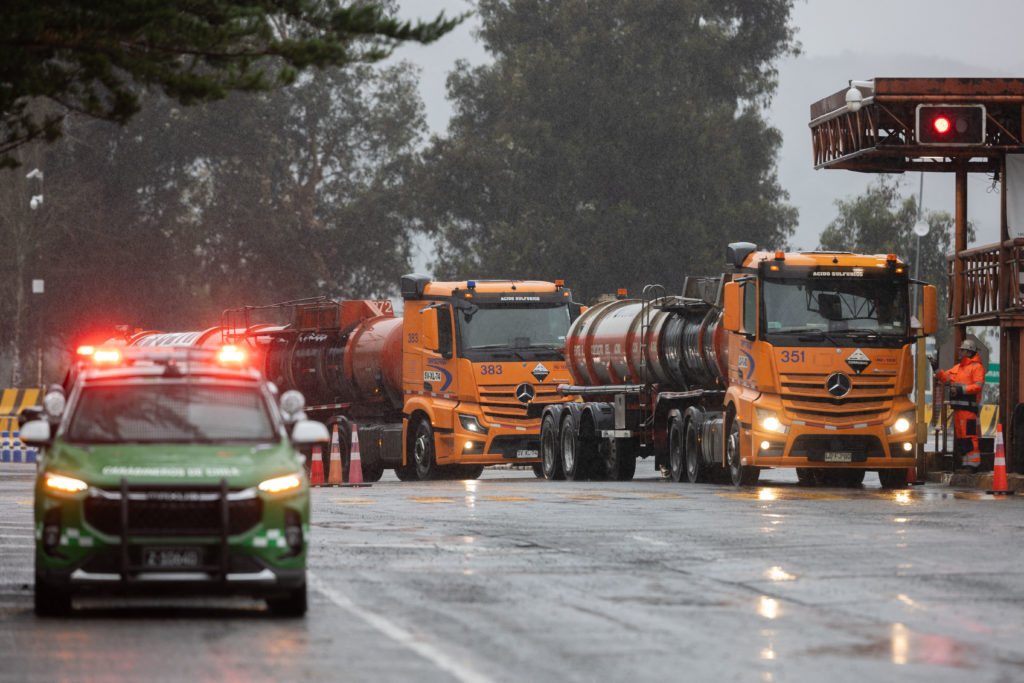
A collapse at a major copper mine in Chile resulted in one worker's death and trapped five others underground. The event occurred after a reported magnitude 5 earthquake in central Chile, prompting the suspension of mining operations. Authorities are working to rescue the trapped workers, with no contact established yet.
Key Facts
One worker died, and five are trapped underground in a Chilean copper mine.
Chile's state mining company, Codelco, manages the El Teniente mine where the incident happened.
The collapse followed a magnitude 5 earthquake in central Chile, but it's unclear if the quake was natural or mining-induced.
The earthquake occurred at 5:34 p.m. local time in the O’Higgins region, near Santiago.
The deceased worker was identified as Paulo Marín Tapia, working on the Andesita project.
Rescue teams are struggling to locate the exact collapse site to reach the trapped workers.
Operations were halted, and 3,000 people were evacuated from the site for safety.
Chile is the largest copper producer and is located on the seismically active "Ring of Fire."
Read the Original
Want the full story? Tap a source to open the original
article.