The United States launched its first military strike against Iran in a month, targeting an island in the Strait of Hormuz to stop Iran from placing sea mines in the area. Iran responded by attacking two U.S. military bases in Jordan, increasing tensions between the two countries in this strategic region.
Key Facts
The U.S. struck the shipping island of Larak in the Strait of Hormuz.
The strike’s goal was to prevent Iran from placing sea mines in the shipping lane.
This is the first U.S. attack on Iran in one month.
The U.S. had recently declared it cleared explosives from the Strait of Hormuz.
Iran responded by attacking two U.S. military bases located in Jordan.
The Strait of Hormuz is an important route for international shipping.
The conflict between the U.S. and Iran continues to worsen in the Middle East.
Read the Original
Want the full story? Tap a source to open the original
article.
An analyst discussed recent warnings given to Pete Hegseth about the possibility of a war involving Iran. The conversation happened after the U.S. launched airstrikes on Iran for the first time in a month, leading to responses from Tehran.
Key Facts
The U.S. conducted airstrikes against Iran after a period of no attacks for a month.
Tehran responded to the U.S. strikes with its own attacks.
Analyst Mick Mulroy appeared on ABC News to discuss the significance of warnings to Pete Hegseth about war in Iran.
The situation is tense, with concerns about escalating conflict between the U.S. and Iran.
The discussion is part of ongoing news coverage about international relations and military actions involving Iran.
Read the Original
Want the full story? Tap a source to open the original
article.
The United States carried out airstrikes on rocket launchers located on Iran's Larak Island in the Strait of Hormuz. In response, Iran reported attacking American military bases in Jordan and the United Arab Emirates.
Key Facts
The U.S. struck rocket launchers on Iran’s Larak Island.
Larak Island is in the Strait of Hormuz, a key waterway for oil transport.
These were the first U.S. strikes on Iran in several weeks.
Iran said it responded by attacking U.S. bases in Jordan and the UAE.
The situation reflects ongoing tensions between the U.S. and Iran.
The U.S. and Iran have a history of military and political conflict.
The region is strategically important for global energy supplies.
Read the Original
Want the full story? Tap a source to open the original
article.
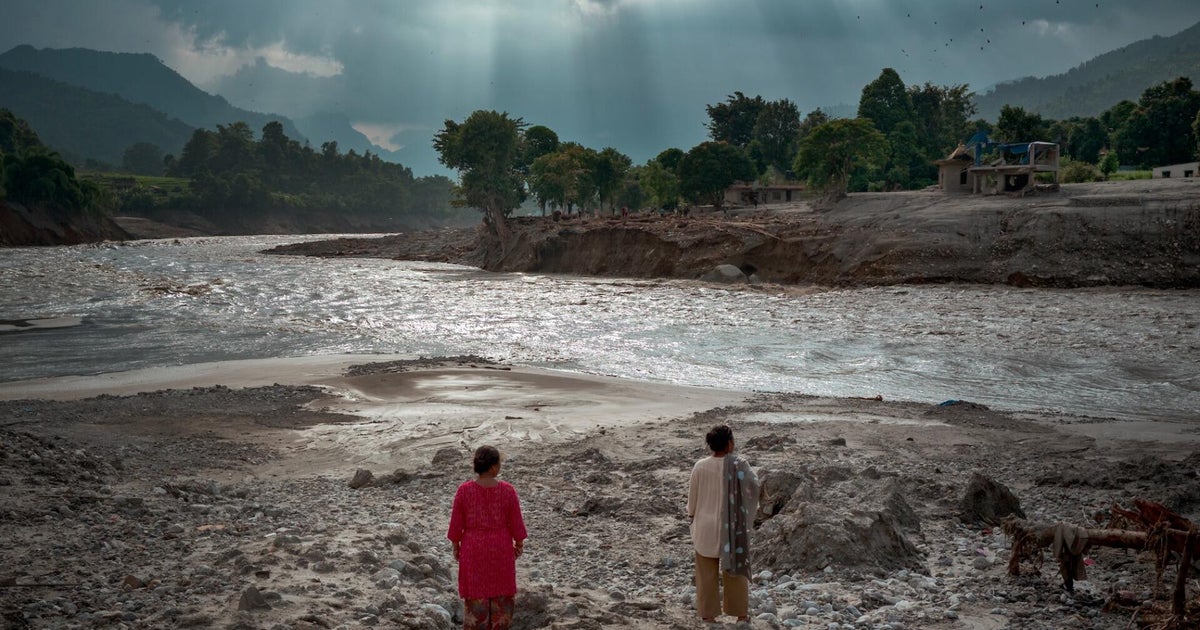
Nepal is trying to find over 4,000 people missing after heavy floods hit the northern part of the country on August 26. Rescue teams are working hard, including efforts to save hundreds trapped inside a blocked hydropower project, while authorities have begun burying unidentified bodies.
Key Facts
Flash floods struck northern Nepal on August 26, causing widespread damage.
More than 4,000 people are currently missing after the floods.
Rescue workers are focusing on an area around a hydropower project where many people may be trapped.
The flood-affected region is hard to reach, slowing down rescue efforts.
Authorities have started burying bodies that have not been claimed by families.
Helicopters from the Nepali army have been used to help rescue survivors.
The situation remains dangerous with risks such as river banks potentially breaking.
The flood has caused major disruptions and loss across the affected communities.
Read the Original
Want the full story? Tap a source to open the original
article.
The Zabaleen area in Cairo, Egypt, is experiencing higher demand for recycled materials because of disruptions in imports caused by the war involving Iran. However, the people who traditionally collect and sort the waste are not earning more, due to rising costs and new competitors entering the market.
Key Facts
Zabaleen is the part of Cairo where waste is collected and sorted for recycling.
A war involving Iran has disrupted the import of some materials.
This disruption has increased demand for recycled materials from Cairo.
Costs for collecting and sorting waste have gone up.
New competitors have entered the recycling market in Cairo.
Traditional recyclers are not seeing higher incomes despite the increased demand.
The situation shows the challenges faced by informal workers in the recycling industry.
Read the Original
Want the full story? Tap a source to open the original
article.
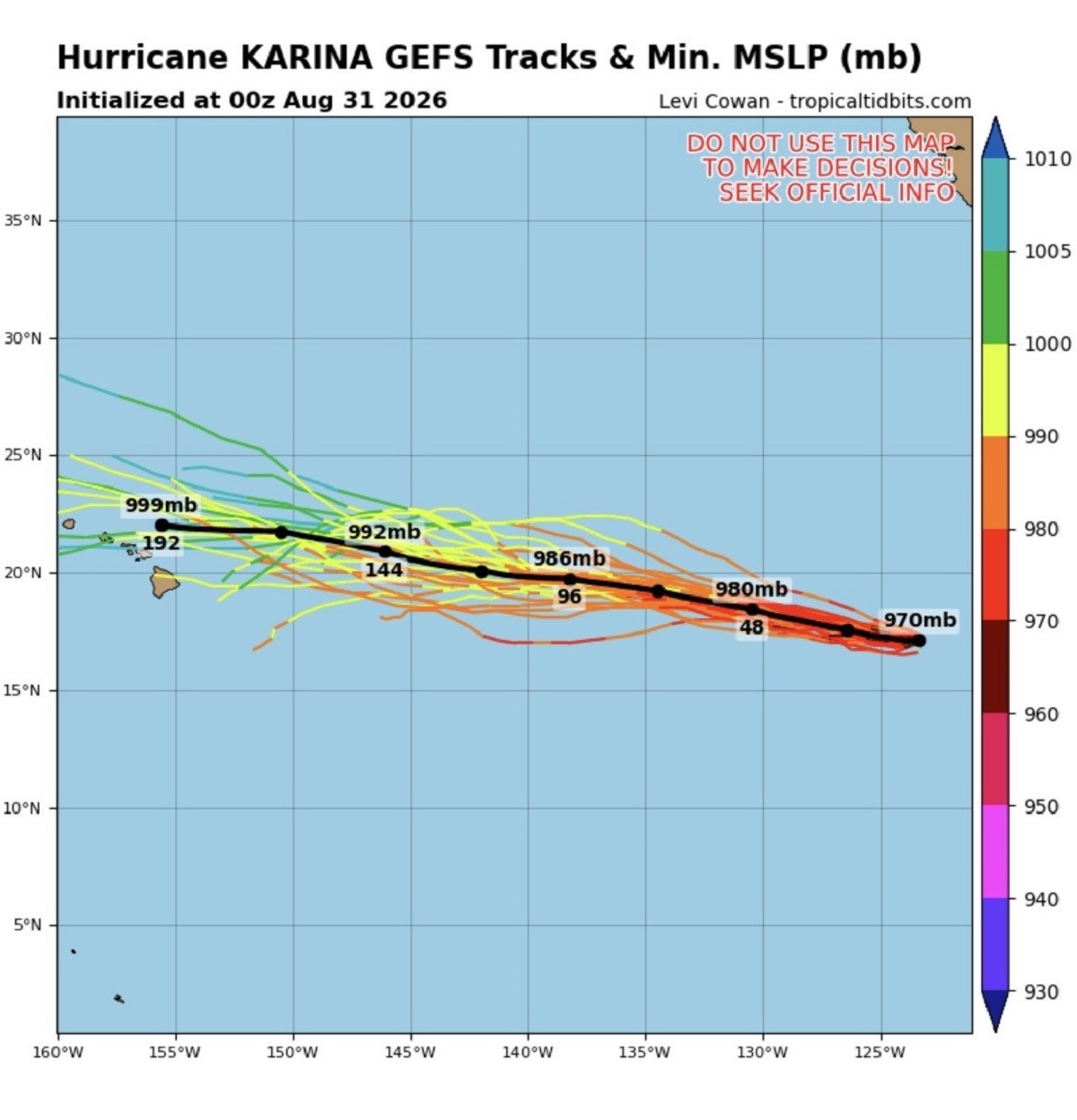
Hurricane Karina has become a strong Category 4 storm in the eastern Pacific Ocean. Although it is moving away from land, the large waves it creates are expected to reach Southern California, causing dangerous surf and strong rip currents.
Key Facts
Hurricane Karina is a Category 4 storm with winds up to 145 mph.
The hurricane is moving west, away from the coast of Mexico and California.
Large waves, called swells, generated by Karina will affect southwest Mexico, Baja California, and Southern California.
These swells may cause life-threatening surf and strong rip currents along the Southern California coast.
There are no current hurricane warnings or watches for California or Mexico due to Karina’s position.
The National Hurricane Center (NHC) expects Karina to stay over the open Pacific Ocean.
People planning to go to Southern California beaches are advised to check local weather updates for surf and safety information.
Meteorologists use spaghetti models to predict Karina’s path, showing it will stay offshore.
Read the Original
Want the full story? Tap a source to open the original
article.
Nepal is facing a serious risk of more flooding as water levels in the Bhotekoshi River continue to rise. The country is already dealing with deaths and damage caused by recent floods and mudslides.
Key Facts
Nepal experienced flooding and mudslides that caused deaths and destruction.
Authorities warned residents about possible new flooding.
Water levels in the Bhotekoshi River are rising.
The situation remains dangerous for affected communities.
Emergency teams are monitoring the area closely to respond quickly.
Read the Original
Want the full story? Tap a source to open the original
article.
Oil prices rose sharply after the U.S. attacked Iran’s Larak Island and Iran responded with a military action. This triggered the first known fighting between the two nations following weeks without conflict.
Key Facts
The U.S. launched a military attack on Iran’s Larak Island.
Iran carried out a retaliatory military action in response.
These events ended several weeks of no direct military conflict between the U.S. and Iran.
Brent crude oil prices, a key global oil benchmark, increased by 3.4 percent.
After the attack, Brent crude traded at about $91.09 per barrel.
The rise in oil prices came after a recent sharp fall.
The oil price increase reflects concerns about supply disruptions due to the conflict.
Read the Original
Want the full story? Tap a source to open the original
article.
Reform UK, a right-wing political party led by Nigel Farage, is struggling to regain momentum after a quiet summer in 2026. Despite holding press events and announcing new policies, internal conflicts and election choices have limited their impact.
Key Facts
Reform UK hoped to gain attention during the summer recess but faced a less successful period compared to the previous year.
Nigel Farage called for a by-election in Clacton to address controversies over a large, undeclared payment to the party.
Farage won the Clacton seat easily but was confined to one area for six weeks, reducing his media presence elsewhere.
Internal disagreements emerged over comments by spokesperson Zia Yusuf and the suspension of activist Tim Montgomerie.
Other parties largely ignored the Clacton by-election, and a parliamentary investigation into the payment resumed.
Polls show Reform UK's support has stalled, and the party has struggled to deal a major blow to the Conservative Party.
Critics note that Farage’s centralized leadership style causes both strengths and weaknesses for the party.
The party’s hoped-for “people versus establishment” confrontation did not happen as expected.
Read the Original
Want the full story? Tap a source to open the original
article.
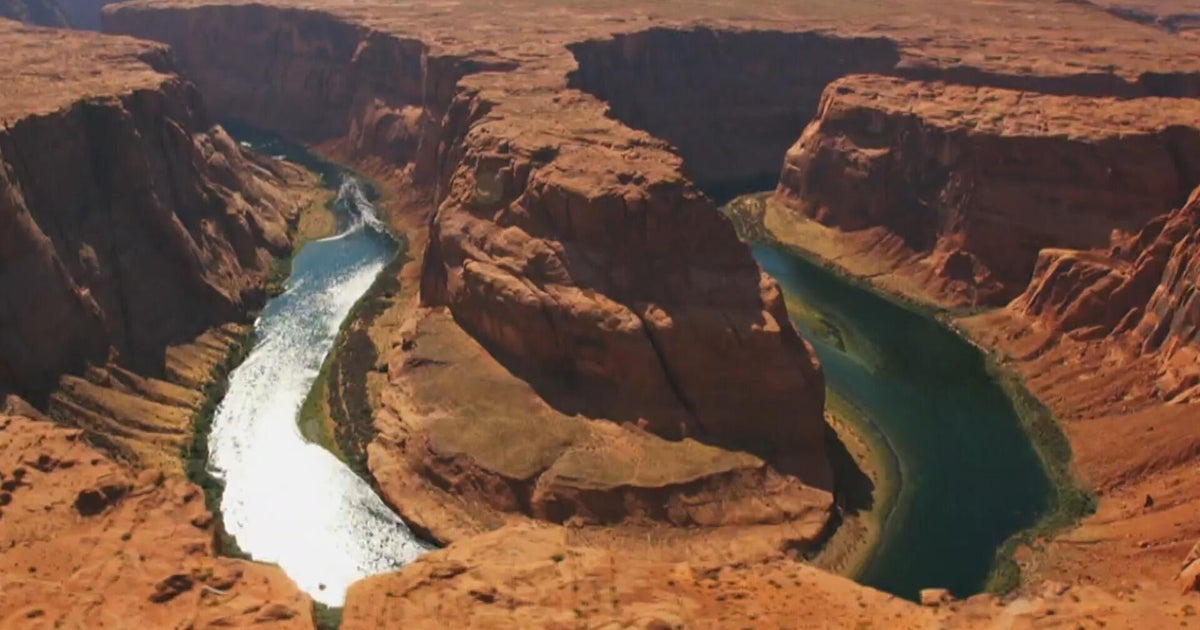
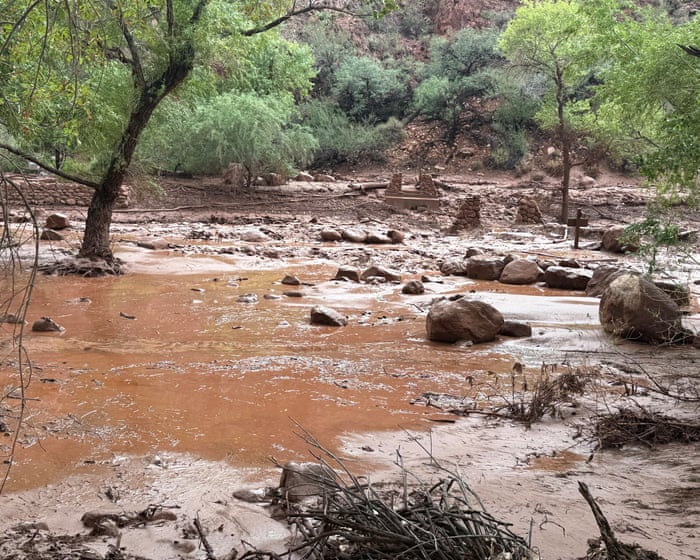
Flash floods swept through Grand Canyon National Park over the weekend, causing severe damage and forcing evacuations. One person’s body was found, and more than a dozen people are still missing, according to the National Park Service.
Key Facts
Flash floods occurred at Grand Canyon National Park during the weekend.
Authorities recovered one body on Sunday night.
More than a dozen people are still reported missing.
The National Park Service is involved in the search and rescue efforts.
Visitors were evacuated from dangerous areas because of the flooding.
The situation caused surprise and fear among evacuees, as one person said they didn’t know what would happen next.
The flood impact disrupted normal park activities and safety.
Read the Original
Want the full story? Tap a source to open the original
article.
A flash flood occurred in the Grand Canyon, causing people to go missing and leading to evacuation orders. Rescue teams are actively searching for those who have not been accounted for.
Key Facts
A flash flood hit the Grand Canyon.
The sudden flood forced evacuations in the area.
Some people are currently missing due to the flood.
Search-and-rescue teams have been deployed.
Efforts are ongoing to find all missing individuals.
The situation is being covered by CBS News.
Read the Original
Want the full story? Tap a source to open the original
article.
The US will hold midterm elections in two months, which will be an important test for President Donald Trump. In France, presidential elections will take place in a little over six months, with parties that have clear candidates currently leading in opinion polls.
Key Facts
The US midterm elections are scheduled in about two months from now.
These elections will test President Donald Trump’s political strength.
France will hold presidential elections in just over six months.
In France, parties with confirmed presidential candidates are leading in polls.
A geopolitical analyst, Hind Ziane, provided insights on the political climate in both countries.
The article is related to the political future in France and the US during 2026.
The main focus is on upcoming elections and their significance.
The discussion highlights the importance of these events for both countries’ political landscape.
Read the Original
Want the full story? Tap a source to open the original
article.
The Grand Canyon experienced a flash flood that killed one person and left about 15 others missing or unaccounted for. The flood damaged the main water pipeline, causing emergency water restrictions and evacuation of visitors while more storms were expected.
Key Facts
A flash flood on Saturday at Bright Angel Creek caused one man’s death and 15 people to go missing or unaccounted for.
Over 60 people were airlifted from the canyon due to flooding.
The flood destroyed the main water pipeline serving tourists and residents, leading to water restrictions and halting overnight stays.
The National Weather Service warned of continued storm and flood risks because of the monsoon season.
The National Park Service asked the public to report any information on missing hikers and campers.
Efforts to upgrade the water pipeline started in 2023 with an expected finish in 2025; the flood caused damage that may delay this work.
The Grand Canyon serves about 6 million visitors annually and has around 1,600 year-round residents.
Unrelated flooding in San Antonio, Texas, also caused two deaths from swift water last weekend.
Read the Original
Want the full story? Tap a source to open the original
article.
Iran responded to a U.S. attack by hitting American military bases in the United Arab Emirates and Jordan. This came after U.S. forces attacked two Iranian rocket launchers during the previous weekend.
Key Facts
Iran attacked U.S. military assets in the UAE and Jordan using drones and missiles.
The strikes targeted bases including King Hussein and Al Azraq.
These attacks were retaliation for U.S. forces firing on two Iranian rocket launchers.
The U.S. attacks on the Iranian launchers happened over the weekend before Iran’s retaliation.
Iran’s Islamic Revolutionary Guard Corps (IRGC) carried out the counterattacks.
The incident reflects ongoing tensions between Iran and the U.S. in the region.
The affected military bases are used by American forces in the Middle East.
Read the Original
Want the full story? Tap a source to open the original
article.
The war launched by the United States and Israel against Iran has caused major changes in the global economy six months after it started. Some industries, like oil and defense companies, have made large profits, while others, including US taxpayers, face high costs.
Key Facts
The war has disrupted world energy markets, raising oil prices significantly.
Major oil companies such as ExxonMobil and Chevron reported their highest profits in years during the second quarter.
European energy companies like TotalEnergies, Shell, and BP also showed large increases in profits.
Saudi Aramco’s profit grew by one-third compared to the previous year’s quarter.
Abu Dhabi National Oil Company (ADNOC) saw a 52% drop in profit because of the closure of the Strait of Hormuz but still exceeded profit expectations.
The US Defense Secretary estimated the war’s cost at $37.5 billion, but experts believe the true cost could reach $1 trillion when considering long-term expenses.
The US Pentagon signed a $22.9 billion contract with RTX Corporation to increase production of Tomahawk cruise missiles.
There are reports suggesting the US may be running low on certain missile interceptors, although the administration denies this.
Read the Original
Want the full story? Tap a source to open the original
article.
Swiss police arrested a 43-year-old man suspected of shooting at a rave in Aargau, Switzerland, killing a 22-year-old Italian woman and injuring five others. The shooting happened early Sunday morning at a horse racing track used for the event, and investigators believe only one person was involved.
Key Facts
The incident took place in Aargau, Switzerland, during a rave party at a covered horse racing track.
A 22-year-old Italian woman died instantly from the shooting.
Five other people were injured, including four Swiss men and one German woman, aged 24 to 31.
Police arrested a 43-year-old Swiss man on suspicion of being the shooter.
Investigations are ongoing to understand the background and motive.
Cartridge evidence suggests two types of weapons were used: possibly a pistol and an assault rifle.
Public shootings are very rare in Switzerland despite many people legally owning guns.
Authorities plan to hold a news conference with more information on Wednesday.
Read the Original
Want the full story? Tap a source to open the original
article.
The article argues that while machines can have intelligence, humans are the only ones with wisdom, morality, and intuition. It states that humans should always be involved in decisions about nuclear weapons and not let AI control them.
Key Facts
Machines can be programmed to have intelligence.
Wisdom, morality, and intuition belong to humans.
These human qualities are important for decision-making.
AI should not be allowed to control nuclear weapons.
Humans must remain part of the command process for military decisions.
Read the Original
Want the full story? Tap a source to open the original
article.
A ferry capsized off the coast of Northern Cyprus, killing eight people and leaving 18 missing. Rescue efforts continue to find those unaccounted for, and authorities have arrested the ferry captain and others as they begin an investigation.
Key Facts
The ferry capsized near the northern port of Girne (Kyrenia) while heading to Tasucu in Turkiye.
There were 267 people on board; 241 were rescued, eight died, and 18 are missing.
The ferry sank to a depth of more than 500 meters (1,640 feet).
Survivors reported the boat took on water and some heard an explosion before it capsized.
Some passengers lacked life jackets or lifebuoys during the accident.
Rescue teams from Northern Cyprus and Turkiye are involved in the search and recovery.
The ferry’s black box data recorder will be recovered to help determine the cause.
The captain and eight others were arrested and placed in formal detention as mourning began in Northern Cyprus.
Read the Original
Want the full story? Tap a source to open the original
article.
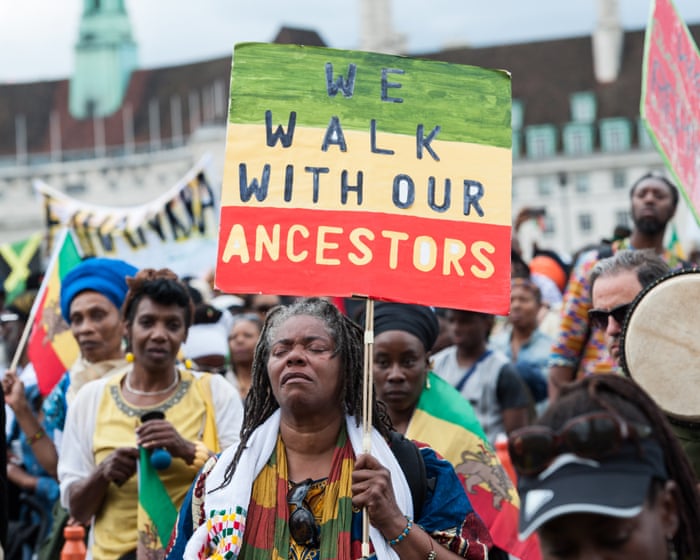
A United Nations committee says countries have a legal duty to consider reparations for the transatlantic slave trade and address ongoing racial discrimination. This duty comes from a 1965 treaty against racial discrimination, not from laws at the time of the slave trade.
Key Facts
The UN committee on the elimination of racial discrimination (CERD) released guidance stating countries must act on reparations.
The obligation is based on the 1965 international convention against racial discrimination.
At least 12.5 million Africans were forcibly taken and sold between the 15th and 19th centuries.
The committee calls for comprehensive reparations, including financial compensation and broader measures like revising memorials and truth commissions.
Some countries argue they are not responsible because the slave trade was not illegal at the time, but the UN rejects this view.
The European Union and Britain did not support a recent UN resolution on slavery reparations.
Reparations should go beyond apologies and include concrete policy changes to fix structural inequalities.
A UN expert from Liberia said countries should take meaningful action to honor the dignity of affected people.
Read the Original
Want the full story? Tap a source to open the original
article.
Severe floods in Nepal have damaged multiple hydropower projects, cutting off electricity for over 20,000 people and leaving hundreds of workers missing, many trapped in tunnels. Experts say Nepal must rethink where and how it rebuilds damaged infrastructure to reduce future risks from climate change.
Key Facts
Floods in Nepal recently destroyed hydropower plants supplying electricity to more than 20,000 people.
About 900 workers are missing in Nepal’s hydropower projects, many believed trapped in tunnels.
These floods, combined with events in China, have caused over 900 deaths and left 4,700 people missing.
Around 700 megawatts of hydropower capacity, about 10% of Nepal’s total, went offline because of the floods.
Roads, bridges, schools, and hospitals were also severely damaged in the affected districts.
Experts recommend rebuilding infrastructure in safer locations and creating backup systems to maintain essential services.
A geoscientist explained that hydropower tunnels, large enough for trucks, were used as shelters but became dangerous during floods.
Nepal faces $124 billion worth of infrastructure risk from climate-driven disasters, increasing the need for stronger disaster planning.
Read the Original
Want the full story? Tap a source to open the original
article.