Russian forces have continued intense drone and air attacks on Kyiv and nearby cities for five days, damaging warehouses and causing some supermarket shortages. Ukraine is working to stop fast jet-powered drones Russia uses, while civilians face disruptions and risks from ongoing strikes.
Key Facts
Russia has launched nearly 1,500 drones at Ukraine in a few days, around 800 of which are fast jet-powered drones.
These attacks have hit Kyiv and surrounding areas, damaging warehouses and food distribution centers.
Some Kyiv supermarkets have empty shelves due to disrupted supply chains.
Four companies in Ukraine are developing interceptor drones to counter the jet-powered drones.
Schools in Ukraine have air raid shelters and can switch to online classes amid the attacks.
Ukrainian President Zelenskyy said Russia’s goal is to wear down Ukraine’s people.
Ukraine has also targeted Russian online retailers and oil facilities to impact Russian civilians.
Casualties from recent attacks include dozens of civilians killed and wounded.
Read the Original
Want the full story? Tap a source to open the original
article.
A U.S. missile called the Precision Strike Missile (PrSM) was used in southern Iran on February 28, 2026, killing at least 21 civilians, including children, in the city of Lamerd. An independent group named Airwars analyzed the strike and found that the missile’s blast affected a large area, causing damage far from the explosion site.
Key Facts
The PrSM is a new U.S. ballistic missile designed to explode in midair and spread metal pellets in all directions.
The missile was used for the first time in combat during the early stages of the Iran war.
Three missiles hit Lamerd, targeting areas near a sports complex and residential neighborhoods.
At least 21 civilians were killed, including seven children, according to Iranian officials.
Airwars reviewed photos, videos, and satellite images and concluded the strike’s damage pattern matches the PrSM.
U.S. military confirmed firing PrSMs into Iran but denied responsibility for the Lamerd attack.
Military experts advise against using this missile near populated areas because its blast covers a wide area.
It is unknown who the exact target was in Lamerd, and no damage was seen to a nearby military compound.
Read the Original
Want the full story? Tap a source to open the original
article.
Hurricane Karina has grown into a strong Category 4 hurricane in the Pacific Ocean but is far from land and not expected to cause direct harm. Another storm, Tropical Storm Lowell, is also developing east of Hawaii and may strengthen into a hurricane later this week without posing an immediate threat.
Key Facts
Hurricane Karina reached Category 4 strength with winds of 145 mph (233 kph).
Karina is about 1,020 miles west-southwest of the southern tip of Baja California, Mexico.
The storm is moving west and is fueled by warm ocean waters far offshore.
No coastal warnings or watches are in effect for Karina.
Waves from Karina may affect Mexico and possibly Southern California.
Tropical Storm Lowell is about 855 miles east-southeast of Hilo, Hawaii, with winds of 60 mph (97 kph).
Lowell could become a hurricane by Monday night or Tuesday.
Lowell currently does not threaten land but may approach the Hawaiian Islands later this week.
Read the Original
Want the full story? Tap a source to open the original
article.
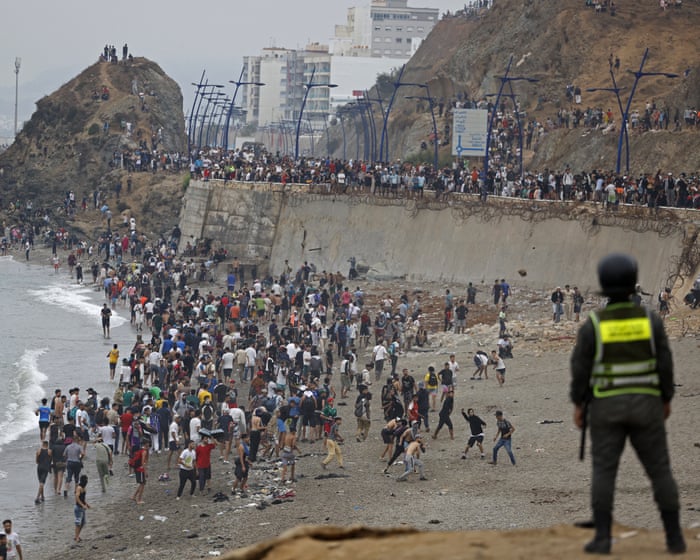
Spain’s Prime Minister Pedro Sánchez said there is no proof that the Moroccan government caused the large group of migrants to enter Ceuta last month. About 70,000 people crossed into Ceuta, creating a political and humanitarian challenge, but Spain is working with Morocco to handle the situation.
Key Facts
Around 70,000 migrants entered the Spanish enclave of Ceuta at the end of July.
Approximately 141 people died trying to enter Ceuta during this event.
Most migrants have returned to Morocco, but about 1,500 remain in Ceuta, including 1,200 minors.
Sánchez stated no evidence shows Morocco was behind the mass crossing.
The prime minister blamed criminal gangs and false information spread on social media for encouraging migration.
Tensions continue in Ceuta, with clashes between residents, migrants, and police.
Spain’s opposition parties criticize the government for not controlling the border crisis effectively.
Sánchez emphasized the need for cooperation between Spain and Morocco to solve the crisis.
Read the Original
Want the full story? Tap a source to open the original
article.
Heavy floods in Nepal have caused severe damage in the Rasuwa district, destroying villages like Syfrubesi. The national disaster agency reports that more than 4,200 people are missing after the floods.
Key Facts
Over 4,200 people are reported missing in Nepal due to floods.
The Rasuwa district is one of the areas hit hardest by the disaster.
Villages such as Syfrubesi have been left in ruins.
The BBC visited the affected area to report on the damage.
Local residents are shocked by the destruction caused by the floods.
The situation is part of a broader flooding event affecting the Nepal-Tibet region.
The national disaster agency is monitoring the ongoing crisis.
Read the Original
Want the full story? Tap a source to open the original
article.
Pakistan and China have said they will not follow new tough US sanctions on Iran, which aim to isolate Iran economically. The sanctions target Iran’s oil exports and financial connections, but several countries oppose them, and experts doubt they will force Iran to change its policies.
Key Facts
The US introduced very strict sanctions on Iran called “Operation Economic Outcast.”
Pakistan and China announced they will keep trading with Iran despite the sanctions.
The US says the sanctions are meant to cause serious economic harm if countries help Iran.
The sanctions focus on stopping Iran’s oil sales and limiting its access to global banks.
China buys over 80% of Iran’s oil exports and has threatened to respond with its own trade restrictions.
China previously limited exports of rare earth minerals, which are important for manufacturing electronics and cars.
The US has pulled out of many international organizations and often acts alone, ignoring UN decisions.
Many countries are worried that relying on US-controlled financial systems makes them vulnerable to US pressure.
Read the Original
Want the full story? Tap a source to open the original
article.
A South African airline flew two jets very close together at low height over a packed stadium before a rugby match between South Africa and New Zealand. The airline said the stunt was carefully planned and done with experienced pilots, following safety rules, despite some people calling it risky.
Key Facts
Two Airlink planes flew in close formation over Cape Town’s DHL stadium before the rugby match.
The jets flew less than 50 feet (15 meters) above the stadium roof, according to flight tracking data.
The stunt used flares and was meant as part of the pre-game event.
Airlink said the flight was planned with aviation authorities’ approval and followed safety speed and altitude limits.
Each plane was operated by three senior captains to ensure safety and precision.
Some people criticized the low flyover as dangerous, while others praised the pilots’ skill and saw it as a point of national pride.
Low-altitude flybys have been part of South African sports tradition since at least 1995.
The historical 1995 flyover linked with South Africa’s first black president Nelson Mandela and was symbolic of unity after apartheid.
Read the Original
Want the full story? Tap a source to open the original
article.
Rescue teams in Nepal are searching for thousands of people missing after flash floods caused by a glacier collapse in the Himalayas. Over 900 people have died, and nearly 5,000 are missing across Nepal and Tibet, with many trapped in tunnels damaged by the floods.
Key Facts
The floods began on August 26 when a glacier near Langtang Lirung peak collapsed, sending ice, rock, and water down into Nepal.
The flood affected Nepal’s Rasuwa, Nuwakot, and Dhading districts, causing major destruction.
More than 900 people have died, and about 5,000 are missing in Nepal and Tibet.
Around 21,000 security personnel, volunteers, and civilian workers are involved in rescue efforts in Nepal.
Nepal recently accepted help from China and India after initially rejecting foreign aid.
China has sent over 2,100 rescue workers and $33 million in relief, plus equipment to detect survivors.
India has sent army officers skilled in tunnel rescues, forensic teams for DNA identification, and supplies including portable generators and bridges.
Many missing people are believed to be trapped in tunnels of hydropower projects damaged or buried by flood debris.
Read the Original
Want the full story? Tap a source to open the original
article.
A recent flood in Nepal’s Rasuwa and Nuwakot regions has left more than 4,700 people missing and many behind in recovery efforts. The disaster was triggered by a large ice-and-rock collapse in the Himalayas, causing a surge of water and debris and creating a new lake that may cause another flood. Nepal urgently needs better early-warning systems, disaster risk planning, and climate-resilient infrastructure, with support from wealthy countries.
Key Facts
Over 4,700 people are missing after floods hit Nepal’s Rasuwa and Nuwakot areas.
A collapse of ice and rock in the high Himalayas caused flooding by sending water, rock, and sediment downstream.
A new lake has formed near the Nepal-Tibet border, posing a risk of a second flood.
Nepal lacks strong early-warning systems and preparedness for floods and glacial hazards.
Improved monitoring of glaciers, lakes, and rivers, plus better communication with communities, is urgently needed.
Infrastructure like roads, bridges, and public buildings must be built to resist floods and landslides.
Climate change is making Himalayan glaciers and mountain slopes more unstable, increasing disaster risk.
Wealthier nations should provide quick and direct financial aid to help Nepal recover and prepare for future disasters.
Read the Original
Want the full story? Tap a source to open the original
article.
Trade talks between the United States and Canada have broken down, risking a trade war between the two neighboring countries. The talks stalled over disputes that include protections for the French language in Canada and tariffs on steel, aluminum, and cars.
Key Facts
Jamieson Greer is the US trade representative handling the talks with Canada.
Canada accused US negotiators of wanting to weaken laws protecting the French language, especially in Quebec.
Canada requires streaming and online companies to promote Canadian content and the French language.
Greer denied the claim that the US is attacking French language protections, saying he supports French-speaking communities.
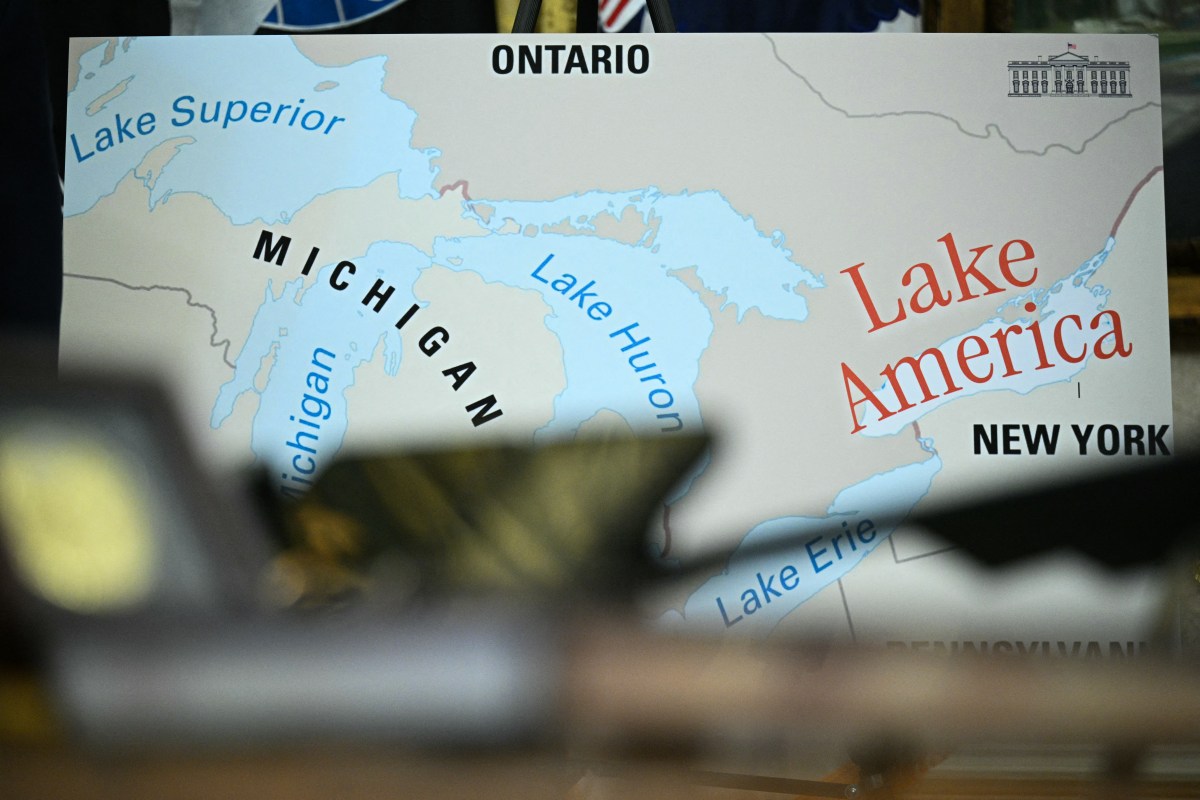
President Trump signed an executive order renaming Lake Ontario to "Lake America," escalating tensions.
The trade talks also involved disagreements over tariffs on Canadian steel, aluminum, and cars.
Howard Lutnick, US commerce secretary, opposed reducing tariffs as much as proposed.
Greer is described as calm and experienced, but his ability to influence President Trump’s aggressive trade approach is uncertain.
Read the Original
Want the full story? Tap a source to open the original
article.
Hydro One, a major Canadian power company, apologized after its outage map showed Lake Ontario labeled as “Lake America.” This mistake happened because of a third-party map using the new U.S. name following President Trump’s executive order to rename Lake Ontario in U.S. government systems.
Key Facts
Hydro One is the largest electricity provider in Ontario, Canada.
The company’s outage map mistakenly labeled Lake Ontario as “Lake America.”
The error came from a third-party mapping service, not Hydro One itself.
The U.S. government renamed Lake Ontario as “Lake America” through an executive order by President Donald Trump on August 27.
Google Maps shows “Lake America” to U.S. users but keeps “Lake Ontario” for Canadian users.
Canadian authorities and Ontario’s Premier Doug Ford reject the name change.
The rename is part of a broader dispute between the U.S. and Canada over trade tensions.
The name change has symbolic meaning and reflects strained U.S.-Canada relations.
Read the Original
Want the full story? Tap a source to open the original
article.
Spanish Prime Minister Pedro Sanchez said Russia and Israel spread false information about the recent large number of migrants arriving in Ceuta, a Spanish territory in North Africa. He mentioned that these actions aimed to criticize Spain and create division in Europe, and he denied that Morocco played a role in causing the migrant influx.
Key Facts
Over 70,000 migrants crossed into Ceuta from Morocco in late July.
Most migrants returned to Morocco quickly, but thousands remain in Ceuta.
Sanchez accused Russia and Israel of spreading false information on social media during the crisis.
The false information included claims that migrants entering by swimming could not be deported.
Sanchez said no intelligence showed Moroccan authorities were involved in the migrant influx.
Spain plans to give 168 million euros ($195 million) in aid to help Ceuta handle the crisis.
Residents of Ceuta have protested, citing security and hygiene problems linked to migrants.
Spain’s government estimates 3,500 to 7,000 migrants remain; local right-wing politicians say the number is at least 10,000.
Read the Original
Want the full story? Tap a source to open the original
article.
A Colombian rebel group called the Central General Staff, a breakaway faction from the old FARC guerrillas, said they kidnapped a Colombian soldier serving in the French Foreign Legion. They stated that the soldier, Jose Olger Melo Charry, is alive and in good health after being taken in southwest Colombia on August 6.
Key Facts
Jose Olger Melo Charry is a Colombian serving in the French Foreign Legion, an elite unit of the French Army.
Melo Charter was kidnapped on August 6 while traveling in Narino, Colombia.
The kidnapping was claimed by the Central General Staff, a dissident group formerly part of FARC guerrillas.
The rebels confirmed Melo Charry is alive, healthy, and receiving medical care and food.
Melo Charry had returned to Colombia on leave after joining the French Foreign Legion four years ago.
A woman traveling with Melo Charry was also seized but released shortly after.
The French Ministry of Defense is closely monitoring the case.
FARC is a former guerrilla army that signed a peace deal in 2016 but some factions remain active.
Read the Original
Want the full story? Tap a source to open the original
article.
Japan plans to increase its defense budget to about 8.9 trillion yen ($55.6 billion) next fiscal year. The country will focus on new technologies like drones, artificial intelligence (AI), long-range missiles, and hypersonic weapons to improve its self-defense and counterstrike abilities.
Key Facts
Japan’s proposed defense budget for the next fiscal year is 8.9 trillion yen ($55.6 billion), slightly higher than this year’s 8.8 trillion yen ($55 billion).
Japan is adapting its defense strategy to use drones and AI for better warfare tactics.
The government aims to develop low-cost unmanned weapons to cut expenses and reduce casualties.
Japan plans to coordinate attack drones with long-range cruise missiles for more effective counterstrikes.
New weapons may include unmanned drones launched from air or underwater and hypersonic missiles from submarines.
AI will be integrated into command systems to speed up decision-making and target selection.
Japan wants to combine foreign AI technology, including from the U.S., with domestic AI development.
The defense upgrade responds to China's increased military presence and follows a five-year strategy to boost Japan’s defense spending to about 2% of its gross domestic product (GDP).
Read the Original
Want the full story? Tap a source to open the original
article.
Mount Sinabung volcano on Indonesia’s Sumatra island erupted, sending black ash and smoke about 3,500 meters into the air. There are no reports of injuries or flight disruptions, but local people were warned to avoid areas within 6 kilometers of the volcano.
Key Facts
The eruption happened on Monday morning and produced a large ash column.
The volcano is 2,600 meters tall, and ash fell on nearby villages in Karo district, North Sumatra.
No casualties, evacuations, or flight disruptions have been reported so far.
Authorities raised the volcano alert level to “Watch,” the second-highest level.
Residents were given masks to protect against ash inhalation.
The safe zone was expanded to within 6 kilometers (3.7 miles) of the volcano’s summit.
Mount Sinabung has erupted several times in recent years, causing about 30,000 people to leave their homes.
Indonesia has more than 120 active volcanoes and is located on the Pacific “Ring of Fire,” making it prone to volcanic activity and earthquakes.
Read the Original
Want the full story? Tap a source to open the original
article.
Thousands of displaced people in southern Lebanon are living in public schools as shelters because their villages were destroyed or are occupied during the war between Israel and Hezbollah. With the school year starting soon, education is disrupted, and there is no political solution yet to allow them to return home.
Key Facts
About 200 families are sheltering in a public school in Tyre, a city in southern Lebanon.
Many families come from villages destroyed or occupied by Israeli forces or Hezbollah during recent fighting.
The school year in Lebanon is set to begin on September 15, 2026.
Thousands of displaced people still live in public schools used as shelters.
Negotiations between Israel, Lebanon, the U.S., and Iran are stalled with no solution in sight.
Lebanese education officials have a plan to reopen schools while keeping shelters for displaced families.
Families are anxious because they don’t know if they can return to their villages or if the crisis will worsen.
Lebanon’s education system has been strained by economic collapse, the COVID-19 pandemic, the 2020 Beirut explosion, and two recent wars.
Read the Original
Want the full story? Tap a source to open the original
article.
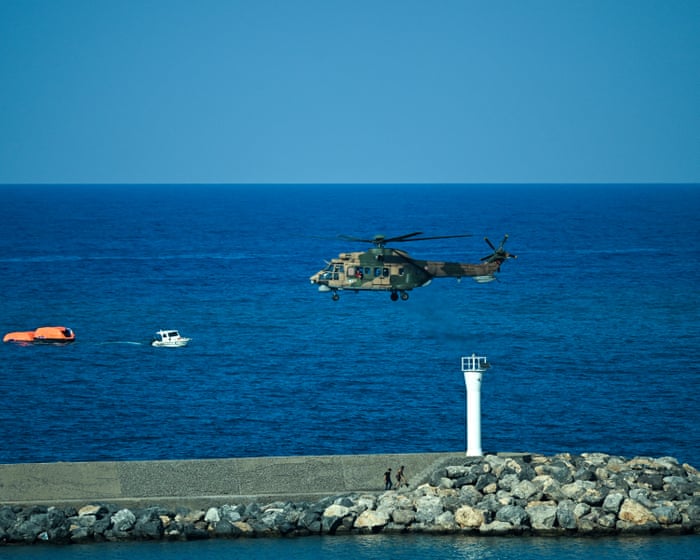
A ferry carrying 267 people capsized near northern Cyprus, killing at least eight and leaving about 18 to 19 people missing. Rescue teams, including divers from Turkey, continue searching the deep waters for survivors.
Key Facts
The ferry capsized off the port city of Kyrenia while traveling to the Turkish port of Taşucu.
At least eight people have died so far in the accident.
Around 18 to 19 people are still missing after the ferry flipped over.
The ferry was double-hulled and took in water before capsizing.
Survivors clung to the overturned ferry and were rescued by passing boats and the coastguard.
The sunken ferry lies more than 500 meters (1,640 feet) underwater.
Turkish divers have joined the search efforts.
The captain and crew have been detained for questioning by authorities.
Read the Original
Want the full story? Tap a source to open the original
article.
Tensions between the United States and Iran have increased after a pause of one month. The U.S. accused Iran of planning to use sea mines in the Strait of Hormuz, while Iran responded by attacking U.S. military bases in Jordan. The U.S. also announced plans to impose more economic sanctions on banks that work with Iran.
Key Facts
Hostilities between the U.S. and Iran resumed after one month without major conflict.
The U.S. claimed Iran was preparing to place sea mines in the Strait of Hormuz, a vital waterway for oil shipments.
Iran retaliated by attacking U.S. military bases located in Jordan.
The U.S. Treasury Secretary stated that additional sanctions would target banks doing business with Iran.
These events are part of ongoing tensions in the Middle East involving multiple countries.
The situation highlights the use of both military actions and financial measures in the conflict between the U.S. and Iran.
The article reflects continuing concern about security and economic impacts in the region.
Read the Original
Want the full story? Tap a source to open the original
article.
Leaders from China and Russia met in Kyrgyzstan for the Shanghai Cooperation Organisation (SCO) summit. The regional group aimed to reduce U.S. influence in global affairs while the U.S. held a separate G20 finance meeting.
Key Facts
The SCO summit took place in Kyrgyzstan.
Chinese President Xi Jinping and Russian President Vladimir Putin attended the summit.
The SCO group focuses on cooperation among member countries in Central Asia and beyond.
The leaders discussed pushing back against U.S. dominance in global politics and economics.
At the same time, the U.S. hosted G20 finance ministers to discuss global financial issues.
The U.S. is dealing with a large national debt and new challenges for its central bank.
The meeting reflects ongoing tensions between China-Russia and Western countries.
The SCO includes several Eurasian countries working together on security and economic matters.
Read the Original
Want the full story? Tap a source to open the original
article.